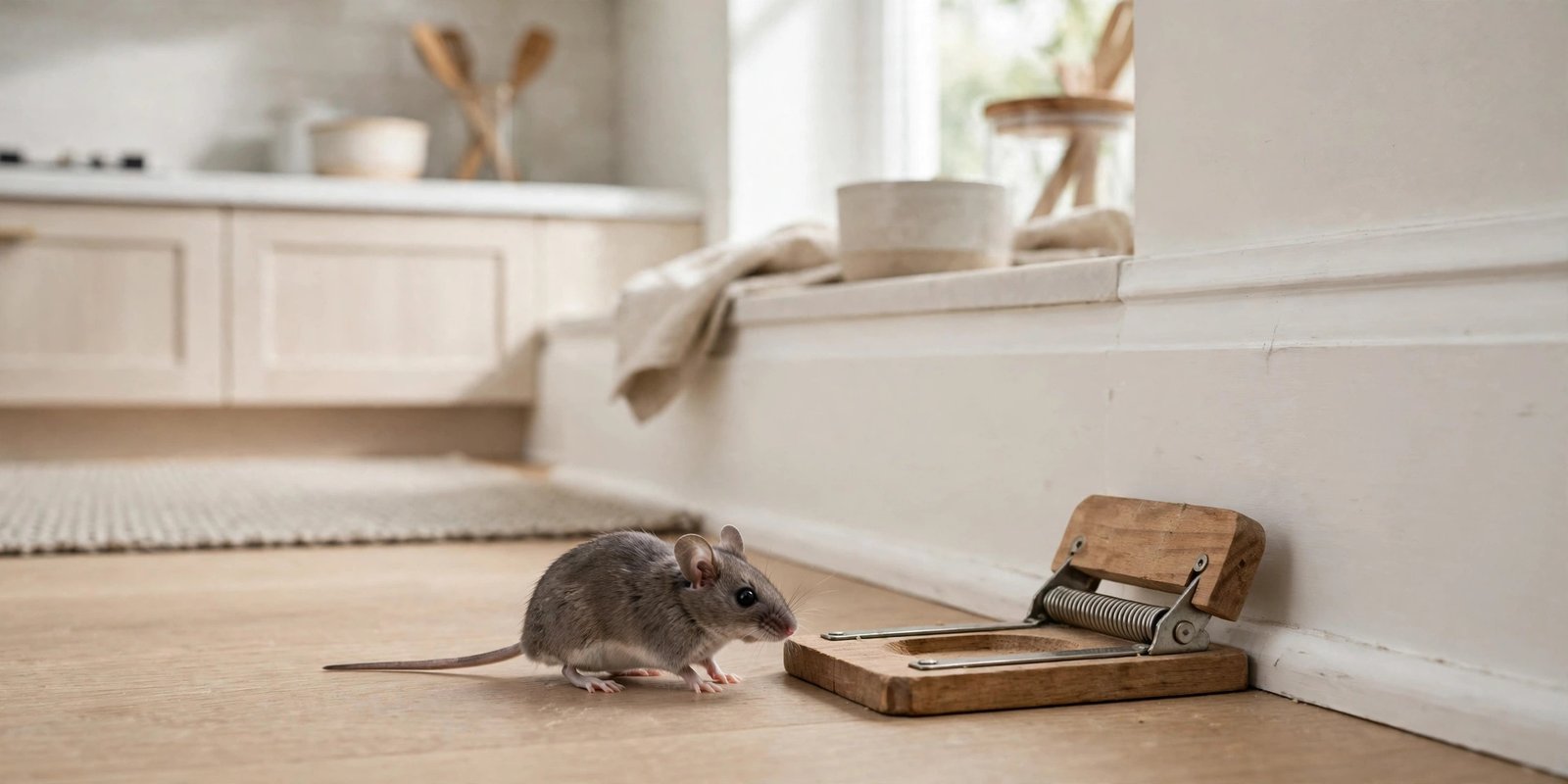

How to Get Rid of Mice in the House (and Keep Them Out)
Table of Contents
You hear it at 2 a.m.: a faint scratching inside the wall, or the soft patter of tiny feet across the kitchen ceiling. The next morning there are black rice-shaped pellets in the back of a cupboard and a gnawed corner on the cereal box. Learning how to get rid of mice in the house is not a job to put off — a single pair of mice can produce dozens of offspring in a year, and the longer they stay, the more damage they do to wiring, insulation, and stored food.
How Do You Know You Have Mice?
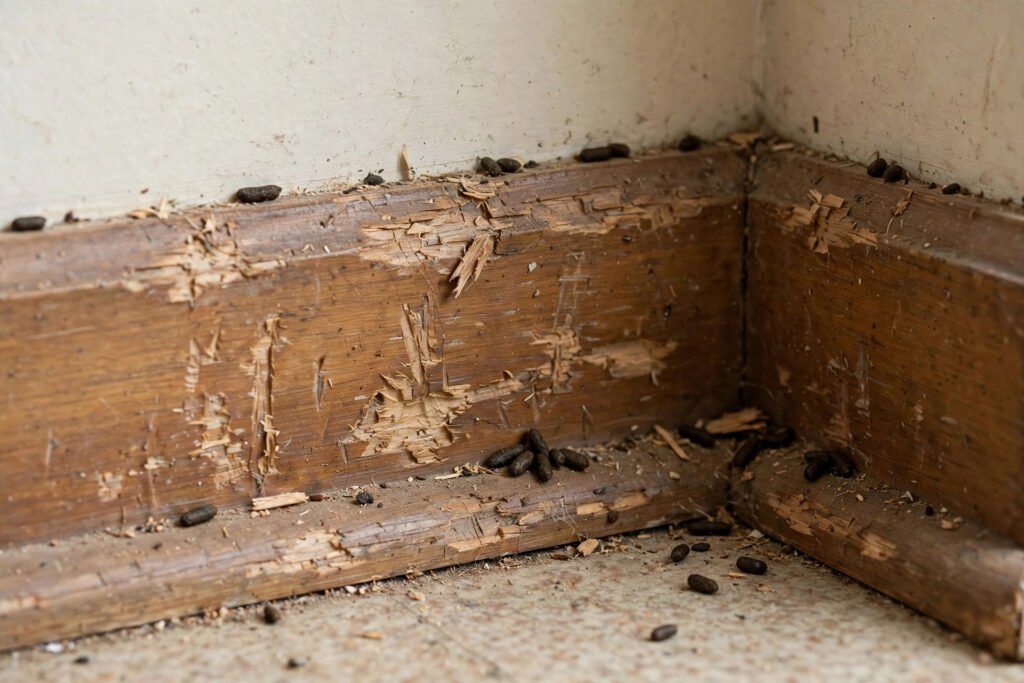
Mice are nocturnal and secretive, so you will almost always find the evidence before you see the animal. The classic signs are small dark droppings about the size of a grain of rice, usually along skirting boards, inside cupboards, or near food. Fresh droppings are dark and soft; old ones turn grey and crumbly. Gnaw marks are another giveaway: mice chew constantly to keep their teeth worn down, and they will work on wood, plastic, cardboard, and even soft metals. Listen at night for scratching or scurrying inside walls and ceilings, and look for greasy rub marks along skirting boards where mice travel the same route night after night. Shredded paper, fabric, or insulation tucked into a quiet corner is nesting material, and a faint ammonia-like smell in a closed cupboard is another sign.
One mouse is rarely one mouse. House mice breed fast: a female can have five to ten litters a year, with five or six pups in each. That is why the first week of action matters so much — every week you wait, the job gets bigger.
Why Mice Come Inside (and Why Autumn Is the Worst Time)
Mice do not invade your home because it is dirty. They come in for warmth, shelter, and food, and a house mouse can squeeze through a gap as small as 6 millimetres — about the diameter of a pencil. That means the gap around a pipe, a cracked vent cover, or a worn door sweep is a wide-open front door to a mouse.
Autumn is peak season. As temperatures drop, mice move indoors, and a warm kitchen with a pantry full of dry goods is exactly what they are looking for. Once inside, they stay close to food and water, nesting within a few metres of the kitchen.
Step 1: Find How They Are Getting In
Before you buy a single trap, spend twenty minutes playing detective. Start in the kitchen, the utility room, and the loft, then work your way around the outside of the house. Look for gaps where pipes and cables enter the building, cracks in the brickwork, broken air bricks, gaps under doors, and holes where the wall meets the roof.
In the evening, turn the lights off inside and have someone shine a torch around the outside at ground level while you watch from within — light leaking through a gap shows you exactly where the holes are. Check the garage too: mice often establish themselves there first and then move into the house through an internal door or a shared wall.
Step 2: Seal Every Entry Point
Sealing is the step most people skip — and the reason most mouse problems come back. Trapping removes the mice inside; sealing stops the next ones from arriving.
For small gaps, stuff the hole with wire wool (steel wool) first, then seal over it with caulk or expanding foam. Mice can chew through foam, wood, and plastic on their own, but they will not chew through steel wool. For larger holes, use cement, metal flashing, or purpose-made wire mesh. Fit brush strips or door sweeps to exterior doors, repair torn window screens, and cover vents and air bricks with fine galvanised mesh.
Check the spots people forget: the gap where the gas pipe enters the kitchen, the hole behind the washing machine waste pipe, the vent for the tumble dryer, and the edges of the loft hatch. Trim back shrubs and climbing plants that touch the walls, since mice use them as ladders to reach first-floor gaps, and keep firewood and garden clutter away from the house wall.
Step 3: Remove the Food and Water
Mice need very little food — a few grams a day — so even crumbs count. Move dry goods like flour, rice, cereal, pasta, and pet food into sealed glass, metal, or thick plastic containers. Cardboard boxes and thin plastic bags are no barrier at all; a mouse chews through them in seconds. Our guide on how to organize a pantry shows a storage system that keeps food sealed and visible at the same time.
Wipe down worktops, sweep the floor, and do not leave pet food out overnight — pick the bowl up after the evening feed. Empty the kitchen bin every night and use one with a tight-fitting lid. Fix dripping taps and wipe up standing water under the sink, because mice need water too. Outside, keep bird feeders away from the house, clean up fallen fruit, and store rubbish in bins with lids that close properly.
Step 4: Set Traps That Actually Work
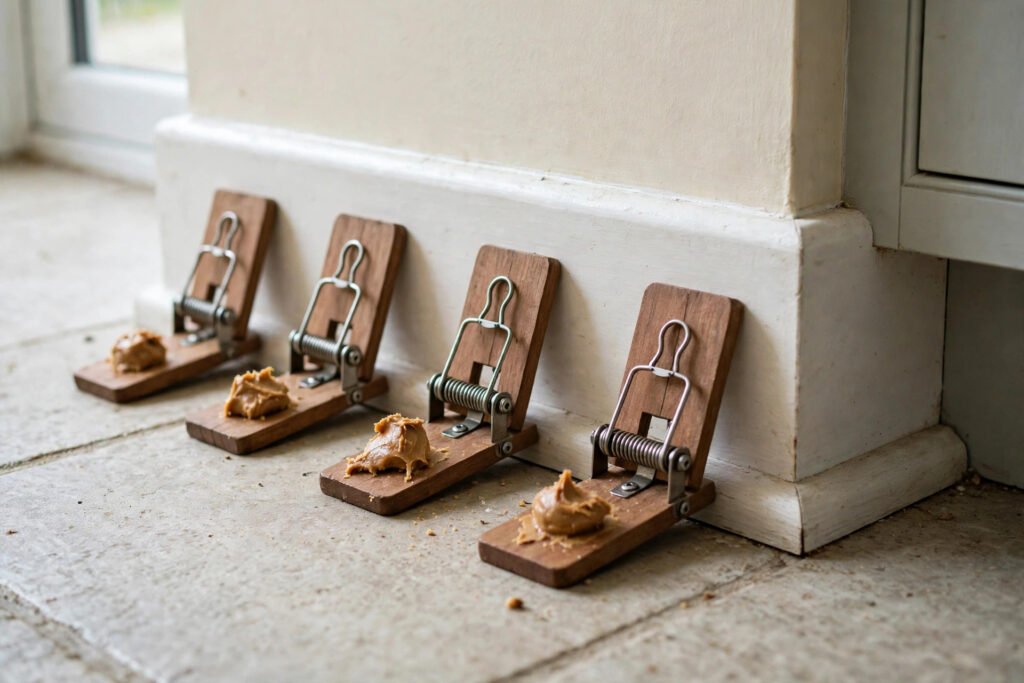
With the house sealed and the food locked away, it is time to deal with the mice already inside — the trapping stage of how to get rid of mice in the house. Snap traps are the most effective option for most homes: they kill instantly, they are cheap, and you can see the result. Place them tight against skirting boards, behind appliances, and inside cupboards, with the trigger end facing the wall, because mice run along edges rather than across open floor.
How many traps, and what bait?
Use more traps than you think you need. For a small problem, six to twelve traps is a realistic starting number; for a bigger one, double it. Mice are curious and will investigate a new object within a day or two, so spread traps along the runs you identified in step one. Bait them with something sticky and strongly scented: a smear of peanut butter, a small piece of chocolate, or a dab of hazelnut spread works far better than a cube of cheese, which mice can steal without setting the trap off.
Check traps every morning. A dead mouse left in a trap becomes a smell problem and a hygiene problem, so dispose of it promptly in a sealed bag in the outside bin, wearing gloves. Reset the trap and put it back in the same place — mice follow the same routes, so a trap that caught once is likely to catch again.
Live traps and electronic traps
Live-catch traps are a humane alternative, but they come with a real obligation: check them at least once a day and release the mouse at least a mile from your home, in proper cover, or it will find its way back. Electronic traps that kill with a shock work well and keep the result out of sight, but they cost far more per trap.
What about poison?
Poison baits should be a last resort, not a first step. They take days to work, a poisoned mouse often dies inside a wall cavity where you cannot reach it, and the smell can linger for weeks. Worse, poisoned mice are eaten by owls, cats, and dogs — secondary poisoning is a genuine risk to wildlife and pets. If you do use poison, use a tamper-resistant bait station, keep it well away from children and pets, and follow the label exactly. The US Environmental Protection Agency’s safe pest control guidance is a good starting point for the rules that apply in your area.
Step 5: Clean Up Droppings Safely
This is the step where most people make a dangerous mistake. Never sweep or vacuum mouse droppings, urine, or nesting material while they are dry. Mice can carry hantavirus and other diseases, and sweeping throws contaminated dust into the air, where it can be breathed in. The CDC’s guide to cleaning up after rodents is explicit on this point, and the method is simple.
First, open doors and windows and let the room air out for about 30 minutes. Put on rubber or plastic gloves, then spray the droppings with a household disinfectant or a bleach solution (about 1.5 cups of bleach per gallon of water) until everything is thoroughly wet. Let it soak for five minutes, then wipe it up with paper towels and put the towels in a covered bin. Mop hard surfaces with the same disinfectant, wash your gloved hands before removing the gloves, then wash your hands again with soap and warm water.
Dead mice and nests get the same treatment: spray, soak, then pick them up with gloved hands and double-bag them. For a heavy infestation, call a professional.
Step 6: Check, Repeat, and Monitor
Mouse removal is a campaign, not a single evening. Keep the traps set and check them daily for at least two weeks after the last catch. Mice are cautious around new objects at first, so catches often increase after the first few days. If a trap has not caught anything in a week, move it a metre or two along the same wall — small changes in position make a big difference.
Watch the droppings. Fresh droppings mean mice are still active; when they stop appearing and the traps stay empty for two full weeks, you are probably clear. A useful check is to sprinkle a thin line of flour along a skirting board at night — tiny footprints in the morning show whether anything is still passing through. If catches are not dropping after two weeks, a food source or an entry point is still open: go back to steps one to three and look again.
Step 7: Keep Them Out for Good
Learning how to get rid of mice in the house is only half the job; keeping them out is the other half. Make the sealing and food-storage habits permanent. Inspect the outside of the house every autumn before the cold arrives — new cracks appear, mortar crumbles, and a vent cover that was fine in spring can be loose by October. Keep the pantry in sealed containers all year, not just while there is a problem. A tidy strip of bare ground or gravel along the house wall removes the cover mice use to approach the building, and a few traps left set in the loft and garage through the winter act as an early warning system.
The same habits that keep mice out also keep out other pantry pests. Our guide on how to get rid of silverfish covers another common household invader with a very similar playbook: seal, dry out, and remove the food.
What Does Not Work (Despite What You Will Read Online)
Some popular mouse remedies sound appealing and do almost nothing. Ultrasonic repellers — plug-in devices that claim to drive mice away with high-frequency sound — have no reliable evidence behind them; mice quickly get used to the sound. Peppermint oil and mothballs are in the same category: they may make a cupboard smell nice, but they do not repel mice, and mothballs are a pesticide that should not be scattered around a home. A cat may catch the occasional bold mouse, but mice quickly learn to avoid the cat’s territory and nest somewhere it cannot reach.
The honest answer to how to get rid of mice in the house is unglamorous: sealing, food storage, and trapping, repeated patiently. The pest-control industry’s own guidance agrees — the Orkin guide to rodent control and the National Pest Management Association’s house mouse guide both put exclusion and sanitation ahead of any product.

When to Call a Professional
Most mouse problems are a DIY job, but call a professional if you are still catching mice every night after three weeks of proper trapping, if mice are in the wall cavities and you cannot find the entry points, or if anyone in the household is pregnant, immunocompromised, or very young. A good company will inspect the whole property, seal entry points, set and monitor traps over several visits, and give you a written plan — get the quote in writing, and be wary of any company that offers a single spray visit with no follow-up.
Frequently Asked Questions
How long does it take to get rid of mice in the house?
For a small infestation, expect one to three weeks of trapping after sealing and removing food; larger ones can take a month or more. The clock only starts once the entry points are sealed — until then, new mice replace the ones you trap.
Can mice climb walls and get into the loft?
Yes. Mice are excellent climbers and can scale rough brickwork, climb inside wall cavities, and run along pipes and cables — so sealing must cover the whole building, including first-floor gaps and the loft.
What is the best bait for mouse traps?
Peanut butter is the most reliable bait, followed by chocolate spread and hazelnut spread. Use a pea-sized smear pressed into the trigger so the mouse has to work at it. Cheese is traditional but often gets stolen without setting the trap off.
Do mice leave on their own?
Almost never. A house gives mice warmth, shelter, and food all year round, so the population only grows while they stay. If you have signs of mice, act now rather than hoping they move on.
Is it safe to clean up mouse droppings myself?
For a small amount in an accessible room, yes — follow the CDC method: air the room out, wear gloves, soak the droppings in disinfectant for five minutes, wipe them up with paper towels, and wash your hands. Never sweep or vacuum dry droppings. For heavy infestations, call a professional.
How do I know the mice are completely gone?
When no fresh droppings appear, traps stay empty, and a flour test shows no footprints for two full weeks, the mice are almost certainly gone. Keep monitoring for another month, and keep the entry points sealed.
Conclusion
Knowing how to get rid of mice in the house comes down to working in the right order: find the entry points, seal them with steel wool and caulk, lock the food away in sealed containers, trap the mice already inside, and clean up safely. Skip the sealing and the mice come back; skip the food storage and the traps work half as well.
Start tonight: set six traps along the kitchen skirting boards, put the cereal in a sealed jar, and book twenty minutes tomorrow to walk the outside of the house with a torch. In two weeks, with the traps empty and no fresh droppings, you will know the job is done — and with the gaps sealed, it should stay done.



