
Matcha vs Coffee: Caffeine, Health Benefits and Which Is Right for You
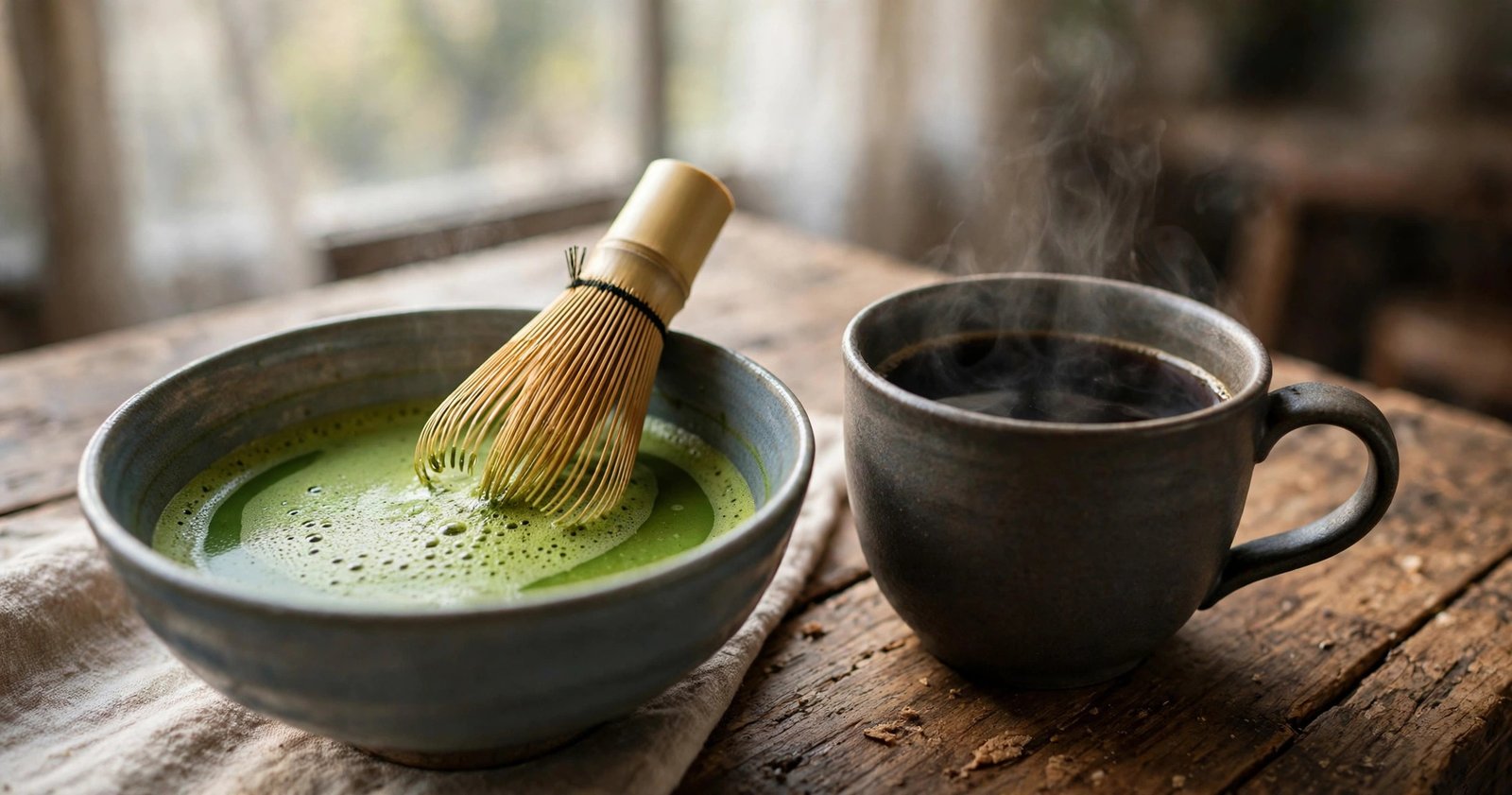
Some mornings you need a rocket launch. Other mornings you need a slow sunrise. That, in one sentence, is the matcha vs coffee debate — two beloved rituals, two completely different kinds of energy. Coffee hits fast and loud: you feel it in your chest within twenty minutes. Matcha arrives quietly and stays longer, like focus instead of a jolt. Both have real science behind them, both have loyal fans who will defend their cup to the death, and neither is the obvious “winner” — because the right choice depends on your body, your budget, and the kind of morning you’re trying to build. This guide lays out the real numbers on caffeine, explains the famous L-theanine effect, compares the health research honestly, and helps you pick the drink that actually suits your life.
Matcha vs Coffee: Caffeine Content Compared
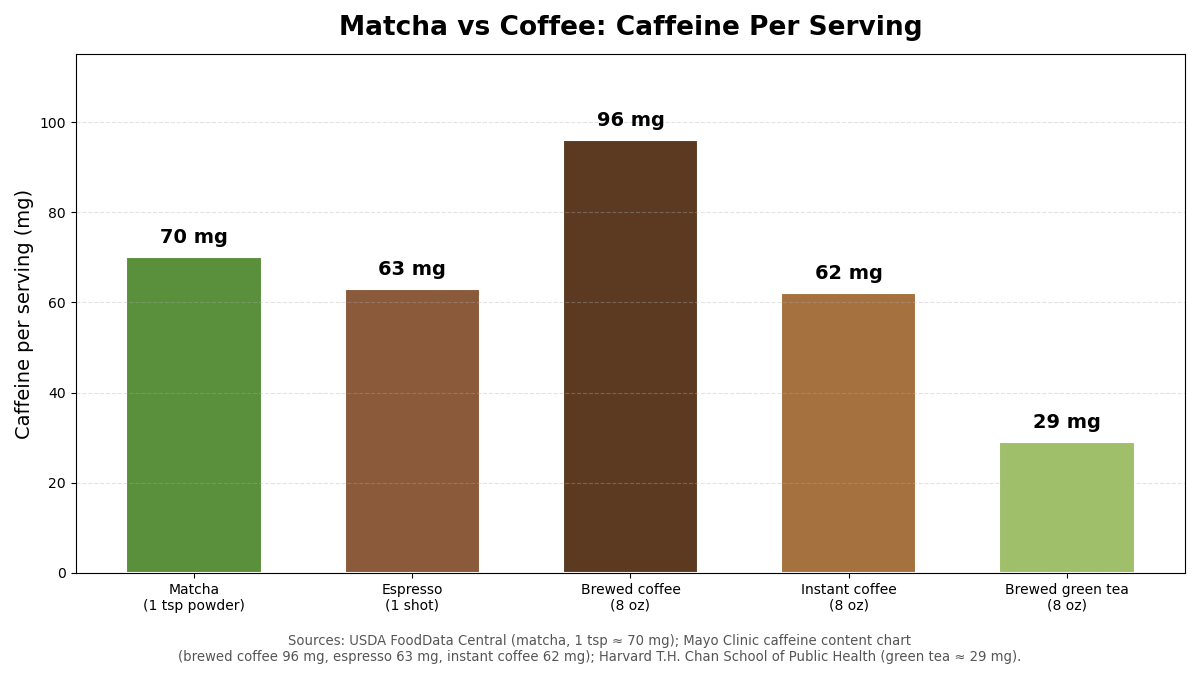
Let’s start with the numbers, because this is where most of the confusion lives. The honest answer is: matcha has less caffeine than a full cup of brewed coffee, but more than you’d expect from a tea — and it can match or beat an espresso shot depending on how you make it.
Here’s how the standard servings stack up:
- Matcha (1 tsp / ~2 g powder, whisked in water): about 70 mg of caffeine, according to USDA FoodData Central data.
- Brewed coffee (8 oz): about 96 mg, per Mayo Clinic’s caffeine chart.
- Espresso (1 oz shot): about 63 mg, per the same Mayo Clinic guide.
- Instant coffee (8 oz): about 62 mg.
- Brewed green tea (8 oz): about 29 mg — matcha delivers roughly 2.5× the caffeine of regular green tea because you consume the whole ground leaf.
Those are averages, and the range on matcha is wide. Healthline notes matcha contains roughly 19–44 mg of caffeine per gram, so a half-teaspoon serving lands around 38 mg while a generous two-teaspoon scoop can push past 130 mg — more than a standard cup of coffee. Your barista’s heavy hand (or your own) decides where you land. Coffee varies too: a big café drip can easily carry 200+ mg.
For context, most experts treat up to 400 mg of caffeine per day as safe for healthy adults. One cup of either drink leaves you comfortably below that line — but a triple-shot latte and a double matcha back-to-back would not.
The L-Theanine Difference: Why Matcha Energy Feels Calmer
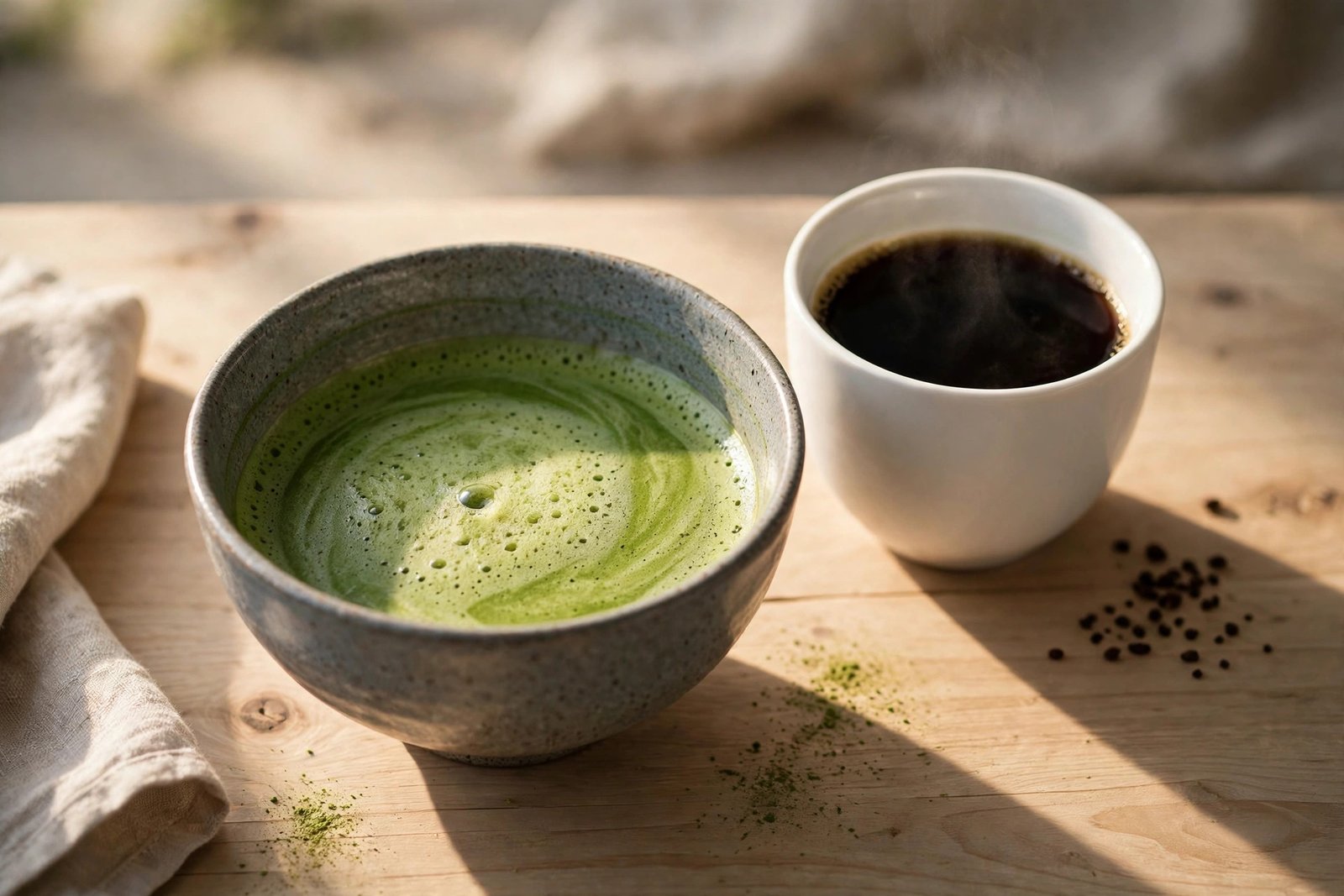
This is where the matcha vs coffee conversation gets genuinely interesting, because it’s not really about milligrams. Matcha contains a rare amino acid called L-theanine — found almost exclusively in tea leaves — that changes how caffeine feels.
L-theanine increases alpha-wave activity in the brain, the pattern associated with relaxed alertness (the same state people chase in meditation). When caffeine and L-theanine arrive together, you get caffeine’s wakefulness without caffeine’s edge: awake, but not wired. A systematic review of the research on caffeine and L-theanine found that the combination outperformed caffeine alone on attention-switching tasks, with participants reporting less tension and mental fatigue. One catch worth knowing: these were small lab studies, and the effects were modest — fractions of a second on computer tasks, not a superpower.
Practically, here’s what people report: coffee energy feels like a wave — sharp climb, peak, then a dip that sends you back to the kettle. Matcha energy feels like a plateau — a gentler climb to steady focus that tapers off over 4–6 hours. There’s a plausible reason beyond L-theanine: matcha’s caffeine is bound up with fiber and other leaf compounds (you’re drinking the whole powdered leaf, not an extracted brew), which likely slows absorption. No study has nailed down the exact mechanism, but the subjective experience is consistent enough that researchers keep studying it.
If coffee reliably makes you jittery, talkative-then-crashy, or anxious by 11 a.m., the L-theanine effect is the single best reason to try matcha for a week and compare.
Health Benefits: What the Research Actually Says
Both drinks are genuinely healthy by the standards of nutritional research. The difference is what kind of healthy.
What matcha brings to the table
Because you consume the entire leaf, matcha delivers a concentrated dose of catechins — especially EGCG (epigallocatechin gallate), the antioxidant most associated with green tea’s reputation. EGCG has been studied for heart-health support, anti-inflammatory effects, and modest metabolic benefits; matcha also provides small amounts of vitamin C, vitamin E, potassium, and chlorophyll from the shade-growing process that deepens its green color. The L-theanine research also links regular tea-theanine intake to better stress resilience under mental workload.
The honest caveat: most green-tea studies use brewed green tea or green-tea extract, not whisked matcha specifically. Matcha should deliver more of these compounds per cup than regular green tea, and lab analyses support that, but the big human-outcome trials on “matcha drinkers” specifically are still thin. Promising, not proven.
What coffee brings to the table
Coffee’s research base is deeper and comes from huge population studies. A large Harvard cohort study following more than 208,000 people found that moderate coffee drinkers (3–5 cups a day) had a lower risk of early death from cardiovascular disease, type 2 diabetes, neurological diseases like Parkinson’s, and even suicide. Coffee is also a major source of polyphenols — chlorogenic acids in particular — which may help reduce inflammation and insulin resistance.
Notably, many of those benefits showed up for decaffeinated coffee too, which suggests the health story is about coffee’s plant compounds, not just its caffeine. If you love coffee for health reasons, this is the strongest card in your hand.
The bottom line on benefits: Coffee wins on the depth of long-term population evidence. Matcha wins on the concentration of antioxidants per cup and the unique calm-focus effect. Neither will cancel out a bad diet or missing sleep — both are best viewed as small daily bonuses, not medicine.
Taste, Ritual, and Cost: The Daily Reality
Health research matters, but let’s be honest: you’ll pick the drink you actually enjoy making and drinking. Here’s the practical comparison nobody puts in the nutrition charts.
Taste. Coffee is bitter, roasty, and endlessly variable — fruity light roasts, chocolatey dark roasts, and everything between. It’s the more forgiving drink: even mediocre coffee is drinkable. Matcha is grassy, savory (umami), and slightly sweet when it’s good — and unpleasantly bitter when it’s bad. Cheap matcha whisked in water tastes like lawn clippings; good ceremonial-grade matcha whisked properly tastes like sweet green velvet. If you’re matcha-curious, don’t judge it by a gas-station matcha latte.
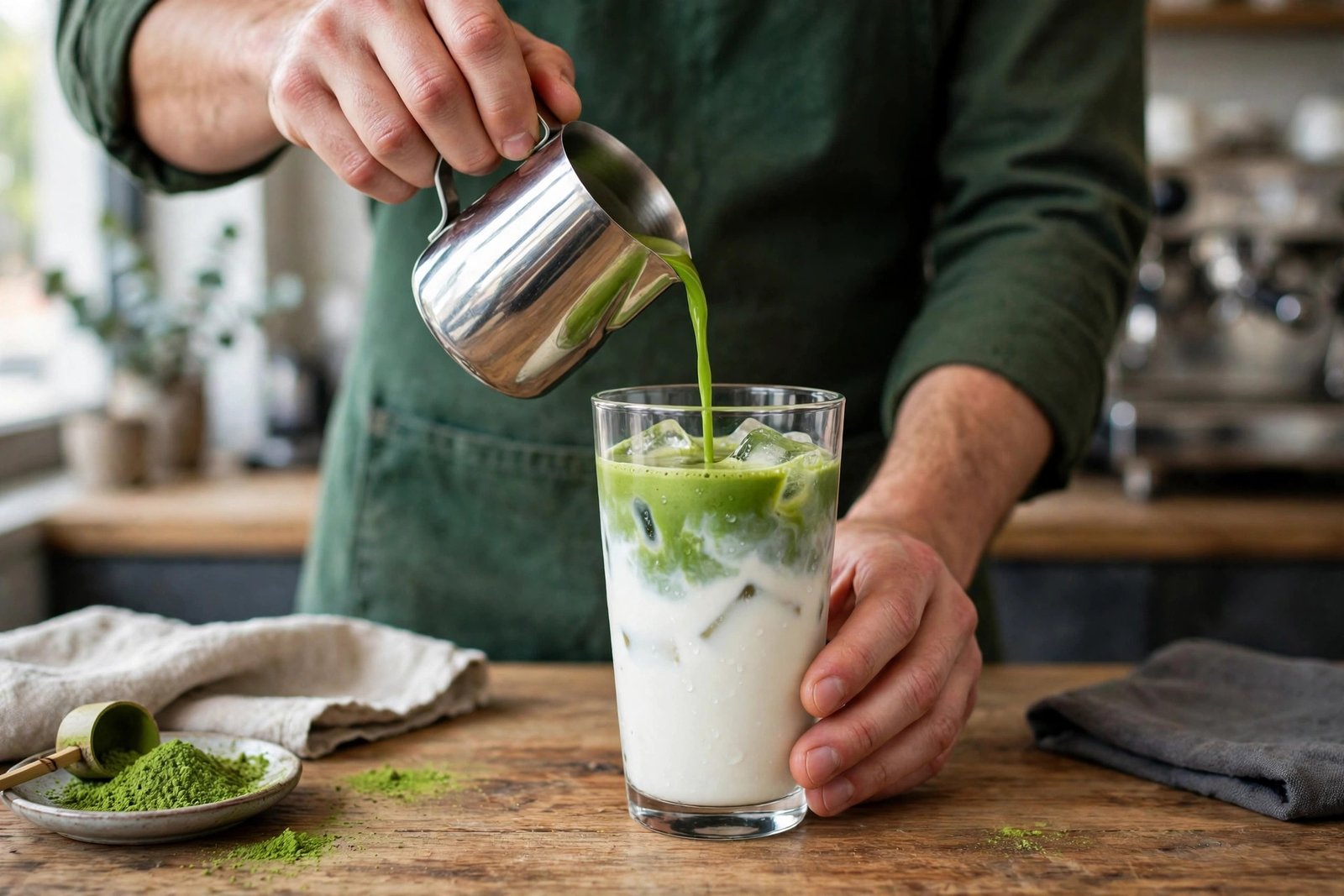
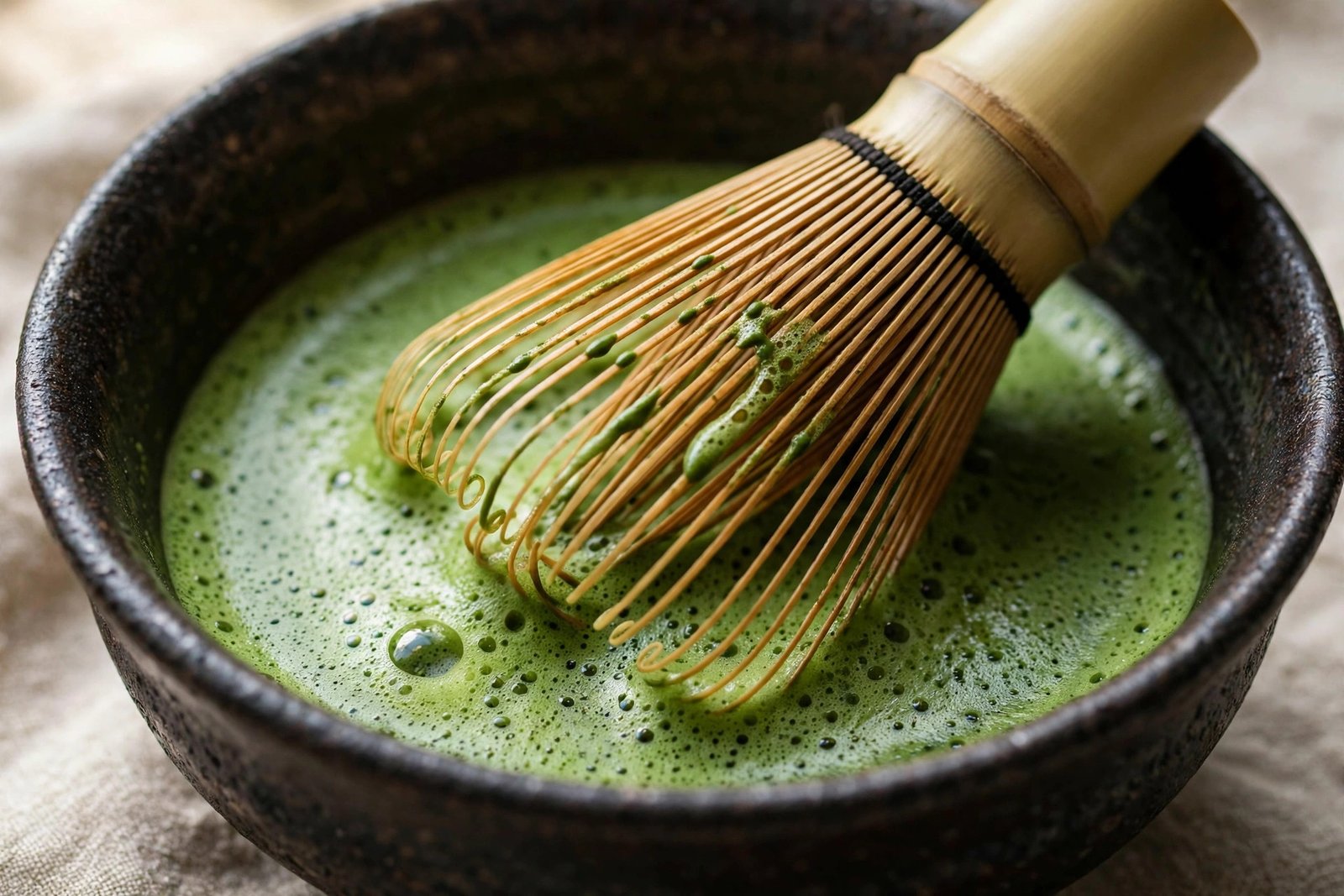
Ritual. Coffee fits a fast life: press a button, get espresso in 25 seconds. Matcha demands a pause — sift the powder, heat water to ~175°F (not boiling, which scorches it), whisk in a “W” motion until frothy. That two-minute ritual is either a delightful mindfulness break or an annoying chore, depending on your personality. Plenty of people split the difference with a matcha latte, which is just whisked matcha poured over milk (hot or iced).
Cost. This is coffee’s home turf. Decent whole-bean coffee runs a few cents per cup at home; even café prices are familiar territory. Ceremonial-grade matcha costs real money — $20–$40 for a tin that lasts a few weeks of daily use — and coffee prices have climbed lately too, but matcha remains the pricier daily habit. Culinary-grade matcha is cheaper and fine for lattes, where milk masks the bitterness.
Matcha vs Coffee: Who Should Pick Which?
General guidance, not medical advice — if you have a health condition, talk to your doctor. But here’s how the trade-offs usually break down:
- Choose matcha if: coffee makes you anxious or jittery; you want steady afternoon focus without a crash; you’re sensitive to caffeine but still want some; you enjoy a slower morning ritual; you’re cutting back on coffee but don’t want to go caffeine-free.
- Choose coffee if: you need maximum alertness fast (early shifts, long drives, workouts); you love the taste and the café culture; you want the deepest long-term research backing; budget matters — coffee is far cheaper per cup.
- If you deal with anxiety: matcha is usually the better bet, thanks to L-theanine. Many anxious coffee drinkers report that switching their first cup to matcha — while keeping a small coffee later if needed — smooths out the day.
- If you deal with acid reflux: coffee’s acidity (and its effect on the lower esophageal sphincter) bothers a lot of people; matcha is gentler for many. A cold brew coffee is the lowest-acid way to stay in the coffee camp.
- If you’re pregnant or trying to conceive: ACOG recommends keeping caffeine under 200 mg per day during pregnancy — that’s roughly two matcha servings or two small cups of coffee. Matcha’s lower per-serving caffeine makes it easier to stay under the line, but count everything, including chocolate and tea.
The third option nobody talks about: drink both. Plenty of people do coffee in the morning for the launch and matcha in the afternoon for the glide — staying under 400 mg total. The matcha vs coffee question doesn’t have to be either-or.
How to Make Each at Home: The Basics
Basic matcha (usucha): Sift 1 teaspoon (about 2 g) of matcha into a bowl to break up clumps. Add 2–3 oz of water heated to about 175°F — never boiling. Whisk briskly in a zigzag “W” or “M” motion for 15–20 seconds until a fine froth forms. Drink straight, or pour over 6–8 oz of milk (dairy or oat) for a latte. A bamboo whisk (chasen) is traditional and genuinely works better than a spoon, but a small milk frother gets you 80% of the way there.
Basic coffee: The method matters less than freshness — grind beans right before brewing if you can. A simple drip or French press with a 1:15 coffee-to-water ratio covers most people’s needs. Espresso drinkers wanting café-style drinks at home should know that decent espresso machines under $200 exist now, which changes the home-coffee math considerably.
Storage tip for both: matcha’s enemies are light, heat, and air — keep the tin sealed in a cool, dark spot and use it within a month or two of opening, or the color and flavor fade fast. Coffee’s enemy is staleness — buy whole beans in small bags and grind as you go.
FAQs
Does matcha have more caffeine than coffee?
Per serving, no — a standard 1-teaspoon matcha has about 70 mg of caffeine versus about 96 mg in an 8-oz cup of brewed coffee. But matcha can exceed a single espresso shot (63 mg), and a heavy two-teaspoon serving can top 130 mg. So it depends entirely on how strong you make each.
Is matcha healthier than coffee?
They’re healthy in different ways. Matcha delivers more antioxidants per cup (especially EGCG catechins) plus L-theanine for calm focus. Coffee has stronger long-term population evidence linking moderate intake to lower risks of type 2 diabetes, Parkinson’s, and cardiovascular death. Neither is clearly “healthier” overall — the research favors coffee on longevity data and matcha on per-cup antioxidant density.
Can I drink matcha every day?
For most healthy adults, yes — one to two servings a day (70–140 mg of caffeine) fits comfortably within the 400 mg daily guidance. Watch your total if you also drink coffee, tea, or energy drinks. And because matcha is made from whole tea leaves, it can concentrate lead from soil more than brewed tea does, so buy from reputable brands that test for heavy metals.
Why does matcha make me feel calm but coffee makes me jittery?
L-theanine. This amino acid, found almost exclusively in tea, promotes alpha brain-wave activity associated with relaxed alertness. Combined with caffeine, it smooths out the stimulant edge — research shows the combination improves attention-task performance with less reported tension than caffeine alone. Coffee has no meaningful L-theanine, so you feel caffeine’s full, unbuffered effect.
Can I drink matcha or coffee while pregnant?
Both are allowed in moderation: ACOG advises keeping total caffeine under 200 mg per day during pregnancy. That’s roughly two servings of matcha or one to two small cups of coffee — but remember to count all sources, including tea, soda, and chocolate. When in doubt, ask your OB.
What’s the cheapest way to switch from coffee to matcha?
Start with culinary-grade matcha ($10–$15 for a bag) and make lattes — milk hides the bitterness of lower grades, so you don’t need the $30 ceremonial tin to begin. A bamboo whisk is nice but optional; a handheld milk frother works. If you like it after two weeks, upgrade the powder.
The Verdict: Stop Choosing, Start Matching the Drink to the Day
After all the numbers and studies, the matcha vs coffee question has a refreshingly practical answer: coffee is the better launch vehicle — faster, stronger, cheaper, backed by decades of population research. Matcha is the better cruising altitude — steadier, calmer, gentler on anxious stomachs and anxious minds, with an antioxidant payload coffee can’t match per cup.
The people happiest with their caffeine aren’t loyal to one camp. They read the day: coffee before the 7 a.m. workout, matcha before the 2 p.m. deep-work block. Try each for a week, notice how your body actually responds — not how the internet says it should — and build your ritual around that. Your mornings will thank you.



