
You bake a beautiful cake, or you bring one home from the bakery, and by the next afternoon the sponge feels dry, the frosting looks tired, and nobody is quite as excited about a second slice. If you are wondering how to keep cake fresh longer, the answer is not one single trick. It depends on what kind of cake you have, whether it has been cut, how warm your kitchen is, and how long you need it to last. A plain sponge, a buttercream layer cake, a cream-cheese frosted carrot cake, and a cheesecake all play by different rules, and treating them all the same is how good cake goes stale, or worse, unsafe, before its time.
The good news is that most of this is preventable. Staling is mainly moisture loss, not sudden spoilage. With the right cover, temperature, and care around cut edges, cake can taste close to freshly baked for days, and for months from the freezer. This guide explains when the fridge helps, when it hurts, and how to decide for any cake.
How to Keep Cake Fresh Longer at Room Temperature
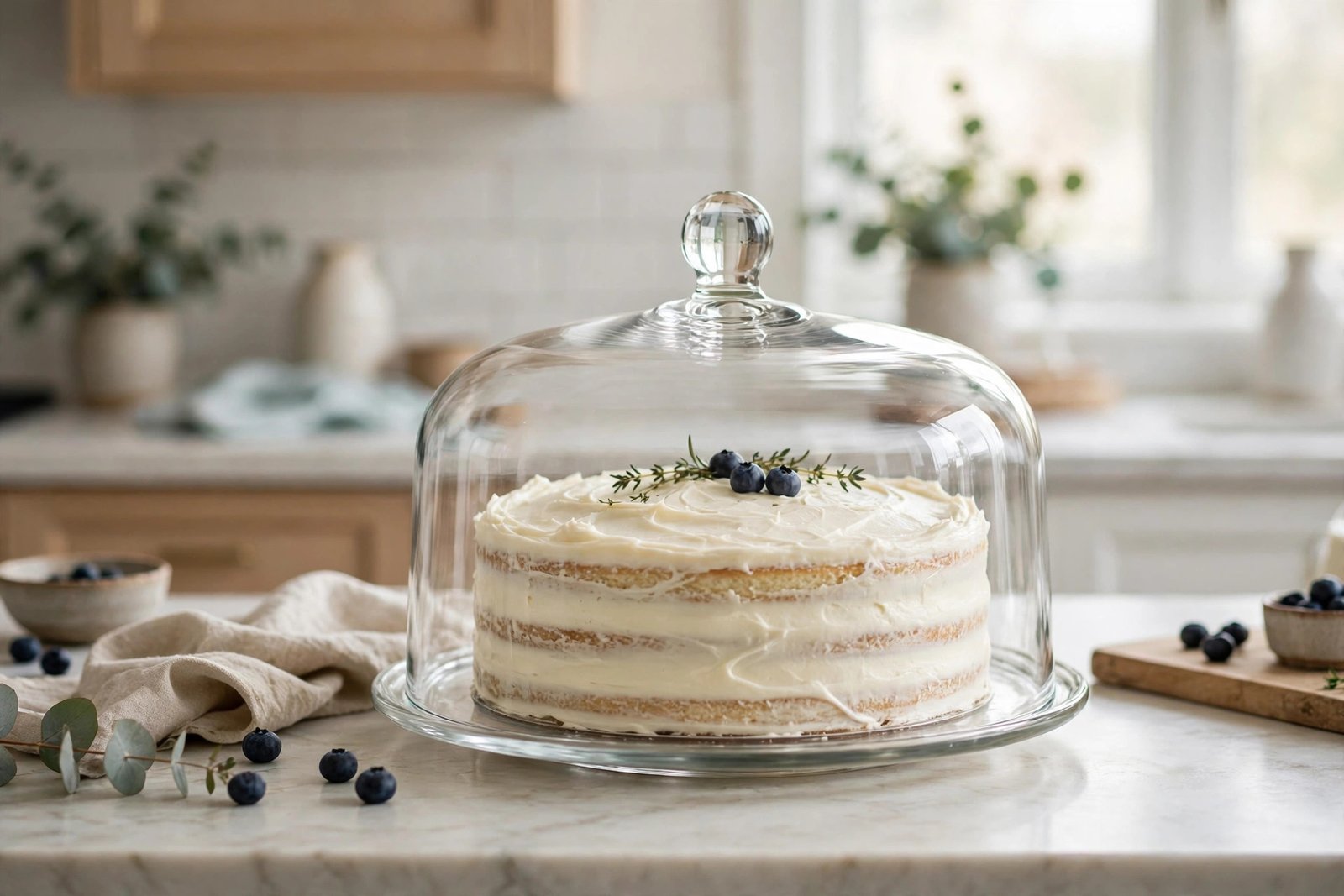
For many cakes, the counter is actually the best place, at least for a day or two. The first rule of how to keep cake fresh longer on the counter is to keep air away from the sponge. Air dries cake out faster than almost anything else, so a cake left uncovered on a plate will lose its soft crumb far sooner than the same cake kept under a dome, in a cake keeper, or in its bakery box with the lid closed. If you do not have a keeper, an upturned large bowl over a plate works well as a makeshift dome, as long as it clears the frosting without touching it.
Room temperature storage suits sturdy cakes best: plain sponge and butter cakes, pound cake, and cakes covered in buttercream, ganache, or fondant, with no perishable filling. In a cool kitchen, away from sunlight and radiators, these cakes generally stay at their best for one to two days. In a warm, humid kitchen, or one routinely above about 75 degrees Fahrenheit, do not gamble on the counter for more than a day; use the fridge instead.
Cool the cake completely before you cover it. Wrapping a warm cake traps steam, which makes the surface soggy and can make frosting slide. Once cool, cover it promptly, use a clean knife for each cut, and re-cover straight after serving. If you are not frosting it yet, wrap unfrosted layers tightly in plastic wrap once cool; they will hold far better than sitting bare under a tea towel. The same cool, dry, air-free principle applies elsewhere in the kitchen, as our guide to storing onions and potatoes so they last for months shows — only cake’s window is days, not months.
When Cake Must Go in the Fridge
Some cakes should never sit out for long, and this is a food safety matter, not just a taste preference. Any cake with cream cheese frosting, whipped cream, mascarpone, custard or pastry cream filling, mousse, or fresh fruit filling or topping is perishable. The same goes for cheesecake and for cakes filled with fresh cream. These cakes should go into the fridge once serving is over, and as a general food safety rule, perishable foods should not sit at room temperature for more than two hours. That two-hour window is the one public health guidance repeats for cooked leftovers and perishable foods, and it is a sensible line for a birthday cake left out through a long party.
In the fridge, cakes with dairy-rich frostings or fillings are generally best eaten within three to four days, in line with guidance for cooked leftovers kept at or below 40 degrees Fahrenheit. Smell alone is a poor test: a cake can look and smell normal while bacteria have had time to grow. Use the date you baked or opened it, and write that date on the container if you are likely to forget.
One exception is dense, alcohol-soaked fruitcake. Its high sugar content and low moisture mean well-wrapped fruitcake can last weeks at room temperature and months chilled. Do not apply fruitcake rules to a sponge cake, or sponge rules to a fruitcake.
How to Refrigerate Cake Without Drying It Out
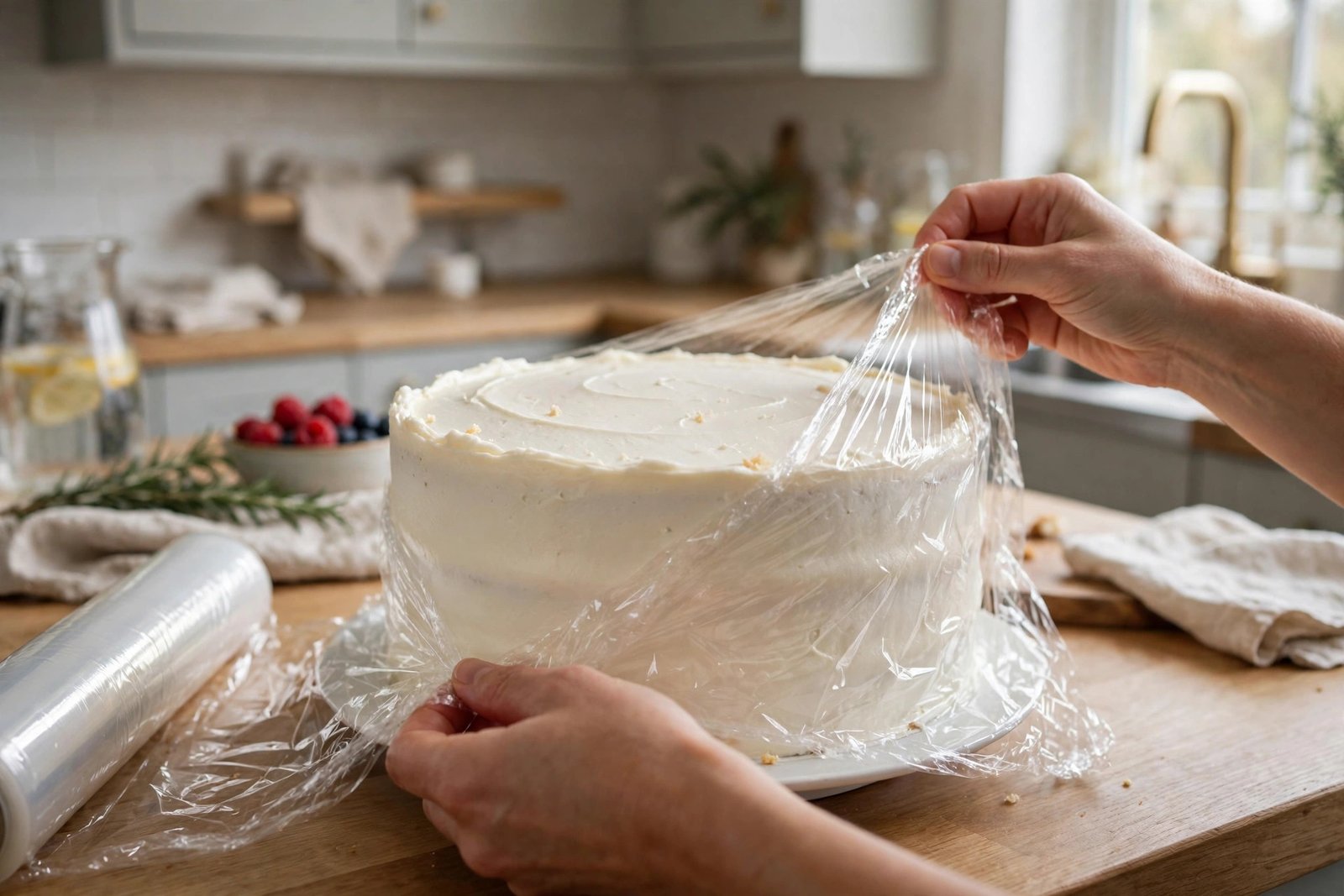
The fridge is the most common reason people complain that stored cake tastes dry. Cold, dry refrigerator air pulls moisture from exposed sponge, and an uncovered cake will also pick up smells from onions, leftovers, and anything else sharing the shelf. The fix is wrapping and a two-step method for frosted cakes. First, chill an unfrosted or frosted cake uncovered for about 20 to 30 minutes, just long enough for the frosting to firm up. Then wrap it snugly in plastic wrap, taking care not to press the wrap into soft frosting, and add a layer of foil or place it in an airtight container for extra protection.
For frosted cakes, push a few toothpicks into the top and sides so the wrap rests on them rather than squashing the decoration. For a cut cake, press plastic wrap directly against the exposed sponge before wrapping the whole cake; the cut face is where moisture escapes fastest.
Place the cake on a middle shelf, away from strong-smelling foods, and keep your fridge at or below 40 degrees Fahrenheit. Let a refrigerated cake sit at room temperature for 30 to 60 minutes before serving, so the butter in the sponge and frosting softens again.
Detailed wrapping advice varies by cake style, and the Craftsy guide to storing iced and uniced cakes is a useful companion read, especially on cooling fully before wrapping and on chilling frosted cakes before covering them. The MasterClass guide to storing cake makes the same core point from the other side: refrigeration is not the default for every cake, and for many cakes it dries them out unless they genuinely need chilling for safety.
Freezing Cake for Weeks or Months
Freezing is the most reliable answer to how to keep cake fresh longer when you need more than a few days. Most plain and buttercream-frosted cakes freeze well for two to three months without a noticeable loss of quality, and many bakers freeze unfrosted layers deliberately, because a cold, firm layer is actually easier to frost neatly. The trick is to protect the cake from air, which causes freezer burn, and to freeze it in a form you will actually use.
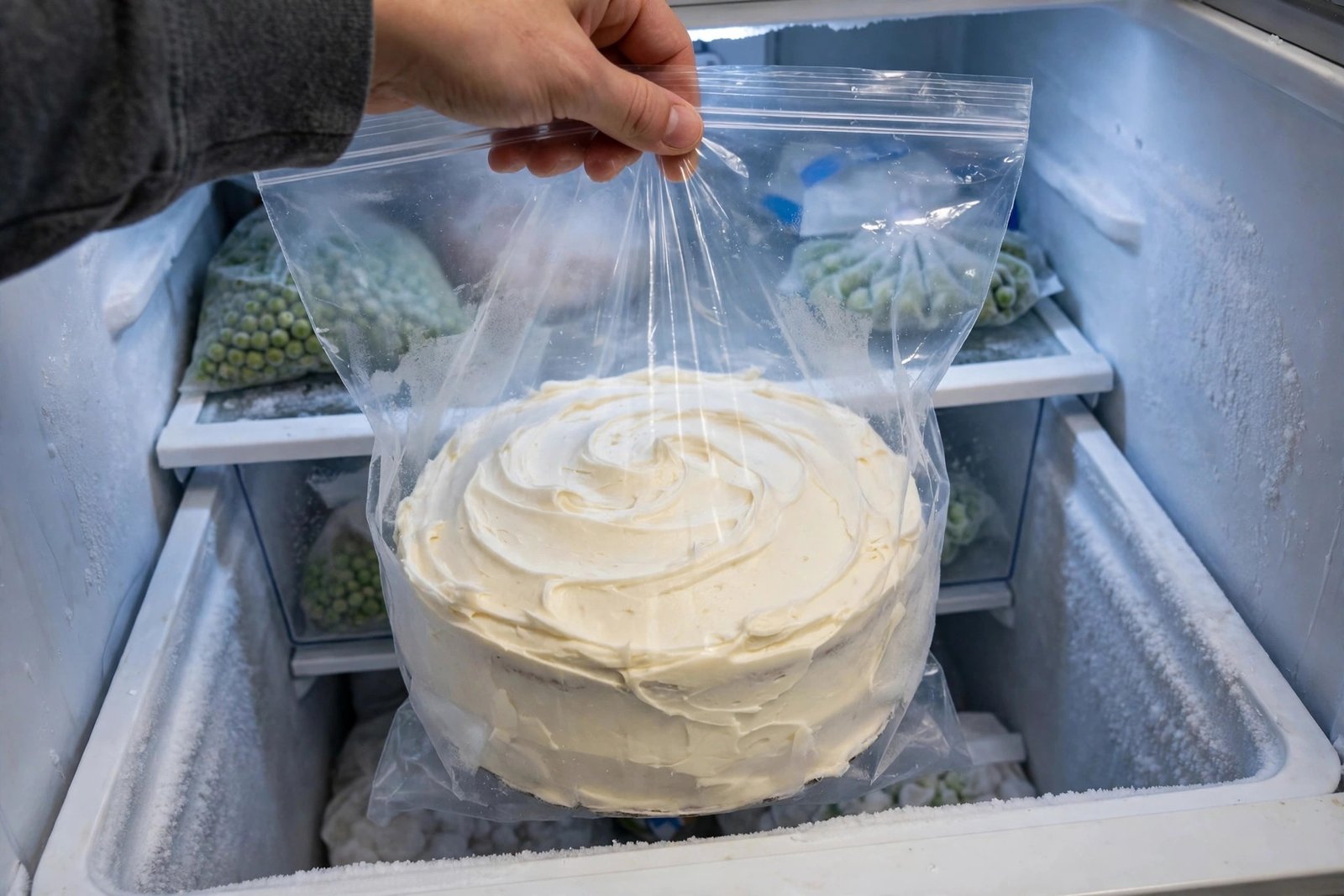
For unfrosted layers, wrap each layer tightly in plastic wrap, then add a layer of foil or slip it into a freezer bag with the air pressed out. Label the bag with the cake type and the date, because a mystery wrapped disc in the freezer is a cake nobody eats. For frosted cakes, chill the cake uncovered in the freezer for about an hour until the frosting is firm, then wrap it loosely but completely in plastic wrap, followed by foil. If you freeze slices instead of a whole cake, place a sheet of parchment between slices so you can lift out one serving at a time without thawing the rest.
Thawing matters as much as freezing. Move the cake from the freezer to the fridge and let it thaw slowly overnight, then bring it to room temperature for 30 to 60 minutes before serving. Thawing on the counter still wrapped helps the cake reabsorb a little moisture instead of drying out in the air, so resist the urge to unwrap it early to peek. Cakes with whipped cream toppings or fresh berries tend to lose texture after freezing, so freeze those only if you must, and expect a softer result. Cheesecake, by contrast, freezes well; wrap slices individually and thaw them in the fridge.
Storage times vary by source. A widely cited summary of USDA FoodKeeper data for commercial cakes gives up to six months in the freezer for best quality, while many baking guides use a more cautious two to three months for home-baked cakes. Both agree on the key distinction: food kept at 0 degrees Fahrenheit stays safe indefinitely, so the freezer window is about quality, not safety. Trim any dry, greyish freezer-burned patches before serving.
How to Store Cut Cake and Cupcakes
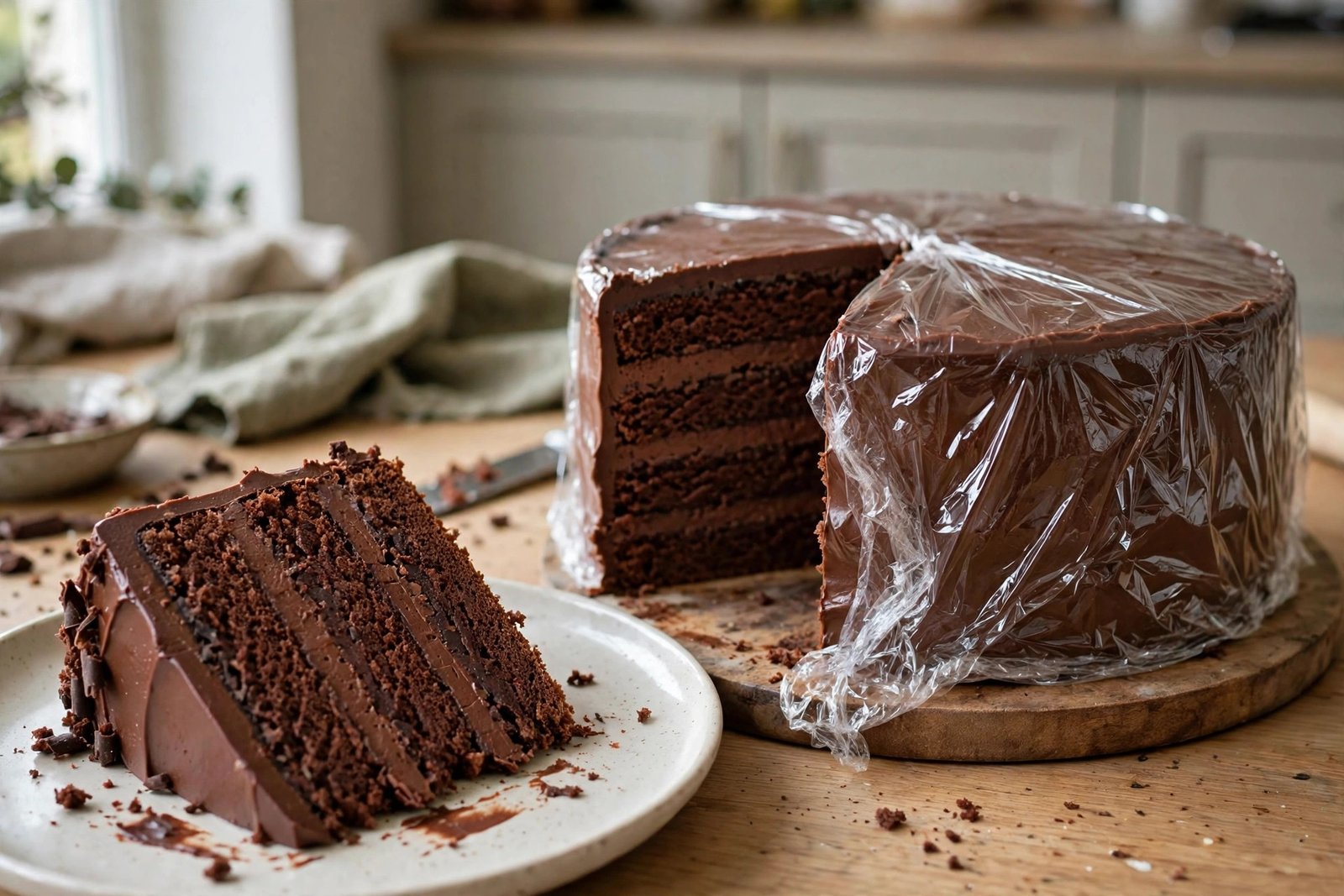
A whole cake is protected by its own crust and frosting. A cut cake is not. The moment you slice it, you expose a large, moist surface to the air, and that surface dries out first. The classic bakery solution is to re-seal the cut edge with frosting: spread a thin layer of the same frosting over the exposed sponge, and the cake will hold noticeably better. If you have no frosting left, press plastic wrap flat against the cut face, then cover the whole cake as usual. Both methods work; frosting tastes better, plastic wrap is quicker.
Cupcakes dry out faster than a large cake, so store frosted cupcakes in a single layer in an airtight container, not stacked: at room temperature for a day or two with buttercream, or in the fridge with cream cheese or whipped cream frosting. Unfrosted cupcakes freeze well in a freezer bag and thaw in about an hour. The same batch-and-freeze logic in our guide to meal prep for beginners applies here, including the labelling habit: date everything.
For transport, use a sturdy box or keeper, keep the cake cool and out of direct sun in the car, and refrigerate on arrival if it has a perishable filling. A cake that spends an afternoon in a hot car will not be rescued by perfect storage afterwards. If you are hosting, our guide to hosting a dinner party on a budget includes timing tips to avoid leaving food sitting out longer than needed.
How to Revive a Cake That Has Gone a Little Stale
Not every dry cake is a lost cake. If a plain sponge is a day past its best but shows no sign of mould or sourness, gentle warming can help: ten to fifteen seconds in the microwave for a single slice, or a few minutes in a low oven, wrapped loosely in foil, can soften the crumb and wake up the butter flavour. Serve warmed sponge with custard, cream, or ice cream, and the difference between fresh and day-old largely disappears. A simple syrup brushed lightly over a dry sponge layer, before frosting or serving, is another baker’s rescue: use a light sugar syrup, not a soaking, and let it absorb for a few minutes.
Stale cake also has a second life: dry sponge crumbs make trifle layers or cake pops, and slightly dry chocolate cake is forgiving under warm ganache. Do not try to rescue a cake that smells sour or shows mould. For porous baked goods, mould can reach below the visible surface, so cutting off the mouldy corner does not make the rest safe.
Signs Your Cake Is Past Its Best
Trust a short checklist rather than a single sense. Visible mould, in any colour, means the cake is done. A sour, alcoholic, or sharply unpleasant smell, a slimy or tacky frosting that was once smooth, or a filling that has separated or changed colour are all signs to discard it. Texture alone is different: dryness means staleness, not necessarily spoilage, and a dry but otherwise normal cake is usually safe to eat, just less enjoyable. If a perishable cake has been left out for many hours in a warm room, or has been in the fridge for well beyond the three to four day window for dairy fillings, do not taste-test your way to a decision. The safest choice is to throw it away.
Storage times vary by source, so do not be confused by different numbers online. The High Speed Training guide to storing cake gives room temperature, fridge, and freezer times by cake type, and the summary of how long cake lasts according to USDA FoodKeeper data explains why commercial figures can look longer: they count from purchase or opening, and separate quality from safety. Use the shorter window for perishable fillings.
Frequently Asked Questions (FAQ)
How long does cake last at room temperature?
Most sturdy cakes, such as plain sponge, pound cake, and buttercream-frosted cakes without perishable fillings, stay at their best for one to two days covered at room temperature in a cool kitchen. In a warm or humid kitchen, shorten that to a day and move the cake to the fridge sooner.
Should I refrigerate a buttercream cake?
Not necessarily. Buttercream itself is fairly stable at cool room temperature for a day or two, and refrigeration can dry the sponge. Refrigerate a buttercream cake if your kitchen is hot, if it will not be eaten within a couple of days, or if it also contains a perishable filling such as custard or fresh fruit.
Can you freeze a frosted cake?
Yes, most frosted cakes freeze well. Chill the cake uncovered until the frosting is firm, then wrap it completely in plastic wrap and foil. Thaw it overnight in the fridge, still wrapped, then bring it to room temperature for 30 to 60 minutes before serving. Whipped cream and fresh berry toppings are the main exceptions, as they can lose texture.
How do you keep a cut cake from drying out?
Cover the exposed sponge. Spread frosting over the cut face if you have any left, or press plastic wrap directly against the cut surface before covering the whole cake. Then store the cake under a dome, in a keeper, or wrapped, rather than leaving the cut face open to the air.
How long does cake last in the fridge?
It depends on the filling. Cakes with cream cheese, whipped cream, custard, or fresh fruit are best within three to four days. Sturdy cakes without perishable fillings can last longer in the fridge, but they will dry out unless wrapped very well, so the counter or freezer is often a better choice for them.
Is it safe to eat cake after a week in the fridge?
For a plain, well-wrapped cake, a week may only mean staleness, but for a cake with dairy or fruit filling, a week is beyond the safe window most food safety guidance suggests. If the cake has a perishable filling, has been out for hours, or shows mould or a sour smell, discard it rather than risking it.
Conclusion
Keeping cake fresh is about matching storage to the cake: sturdy cakes covered at room temperature for a day or two, perishable cakes refrigerated promptly and eaten within a few days, cut edges protected, and anything unfinished frozen in time. Bring refrigerated cake back to room temperature before serving, and label anything you freeze. Follow that chain for how to keep cake fresh longer, and later slices will taste far closer to the first, with far less good cake wasted.



