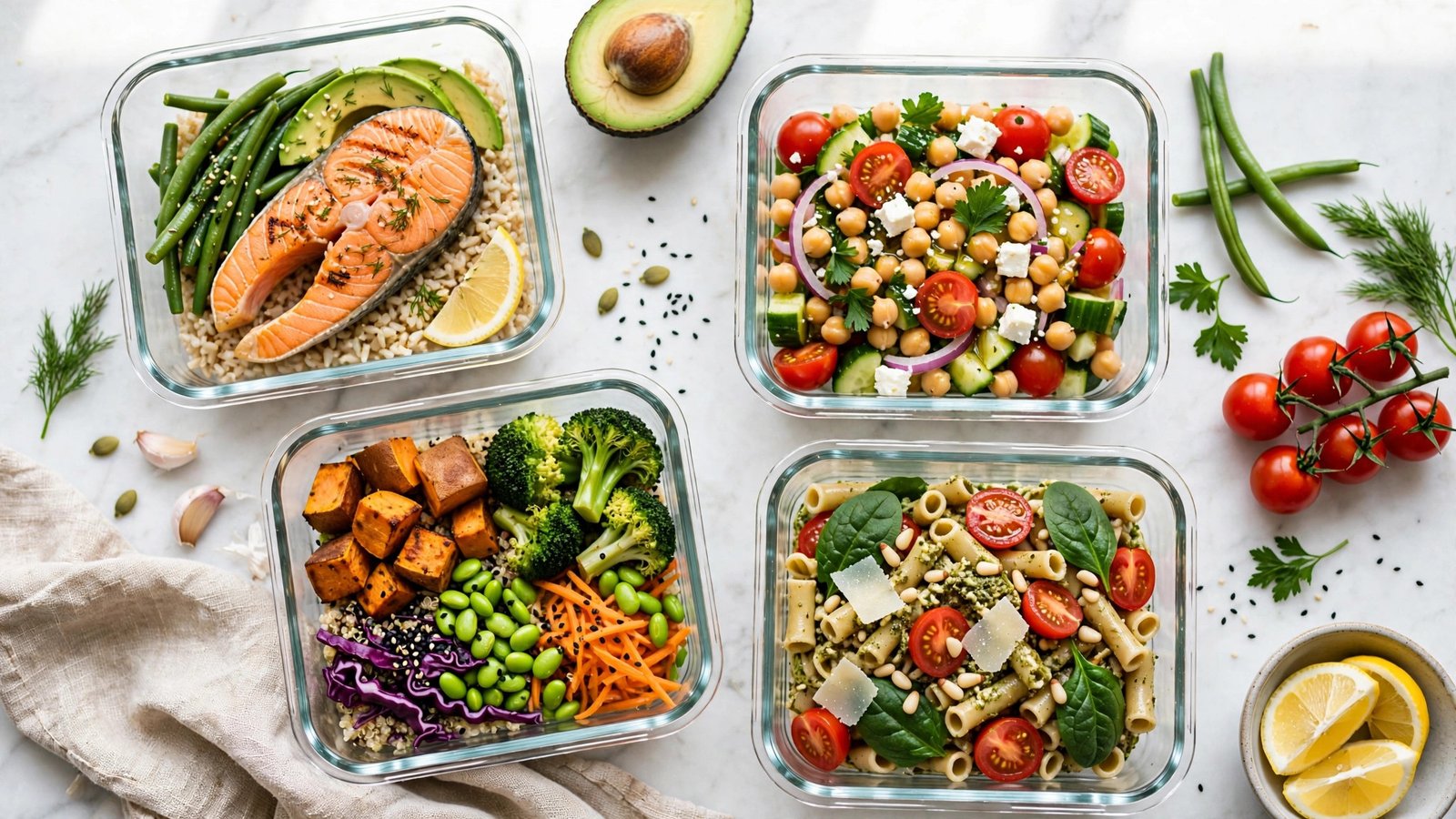

By Wednesday evening, most of us have given up. The chicken you bought on Sunday is sitting in the fridge, uncooked and suspicious-looking, and you’re scrolling a delivery app at 7:40 p.m. for the third time this week. It’s not laziness — it’s decision fatigue meeting an empty plan. That’s exactly the gap how to meal prep for beginners is designed to close: a simple, repeatable system that turns one focused cooking session into a week of ready-to-eat meals.
You don’t need to be a chef, own fancy equipment, or spend your whole Sunday in the kitchen. What you need is a system small enough to survive your first attempt. In this guide, I’ll walk you through the exact 5-step beginner method, the equipment worth buying (and what you can skip), a sample one-week plan, the food safety rules that matter, and the mistakes that sink most first-timers.
Why Meal Prep Works (Especially If You’re New to Cooking)
Meal prep isn’t really about cooking. It’s about removing the hundred tiny decisions that eat your willpower every day: what’s for dinner, do I have the ingredients, is that leftovers container still good? When the food is already made, eating well becomes the default instead of the aspiration.
Research-backed benefits aside, the practical wins are hard to argue with. One cooking session — usually two to three hours on a weekend — can cover four to five days of lunches and dinners. Your grocery trips get shorter because you shop from a list. Food waste drops because ingredients are bought with a purpose. And when the meal-planning strategies from the Academy of Nutrition and Dietetics emphasize, starting with foods you already have on hand saves money immediately.
The beginner advantage is real, too. Experienced cooks meal-prep elaborate menus; beginners should prep the basics and win on consistency. A boring week of chicken, rice, and roasted vegetables that you actually eat beats a beautiful week of ambitious recipes that never happen.
How to Meal Prep for Beginners: The 5-Step System
Forget the Instagram-worthy spreads of forty containers. The beginner system has five steps, and the first time through, you should prep only two or three days’ worth of meals. Success scales; ambition doesn’t.
Step 1: Pick 2–3 Simple Recipes
Choose recipes you already like eating, that share ingredients, and that hold up well after a few days. Sheet-pan chicken with vegetables, a big pot of chili or soup, and overnight oats are the classic beginner trio because they’re forgiving, cheap, and hard to mess up. Shared ingredients matter: if your chicken dish uses bell peppers and your grain bowls do too, you buy one bag instead of two.
Step 2: Write a Grocery List (and Check What You Have First)
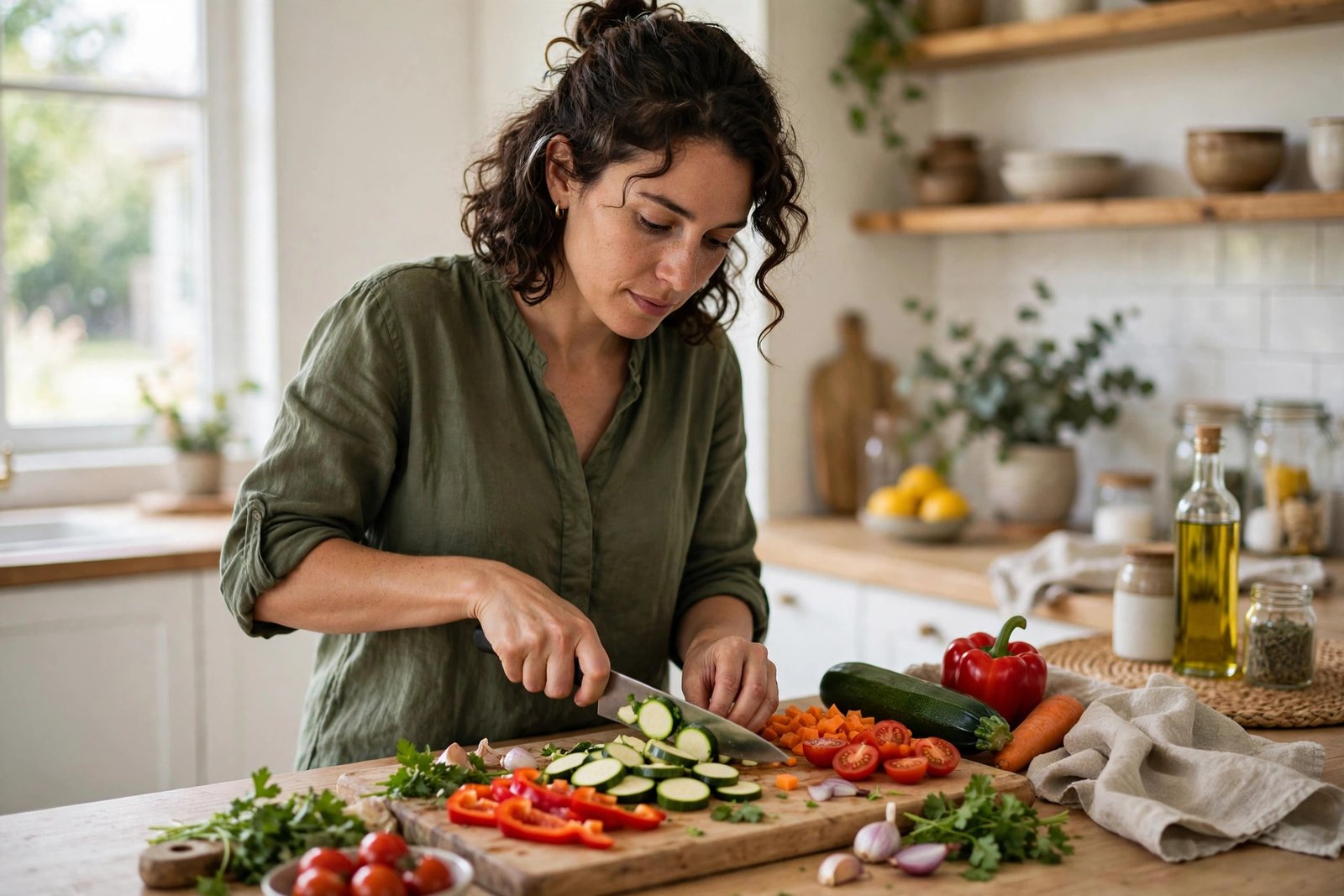
Before you write anything down, “shop” your own pantry, fridge, and freezer. The Academy of Nutrition and Dietetics specifically recommends this because rotating food you already own prevents waste and cuts your bill. Then write your list in the order you walk the store — produce, meat, dairy, dry goods — so you don’t backtrack and impulse-buy. Pair this habit with a broader strategy for saving money on groceries, and your weekly food bill can shrink noticeably.
Step 3: Run One Prep Session (2–3 Hours Max)
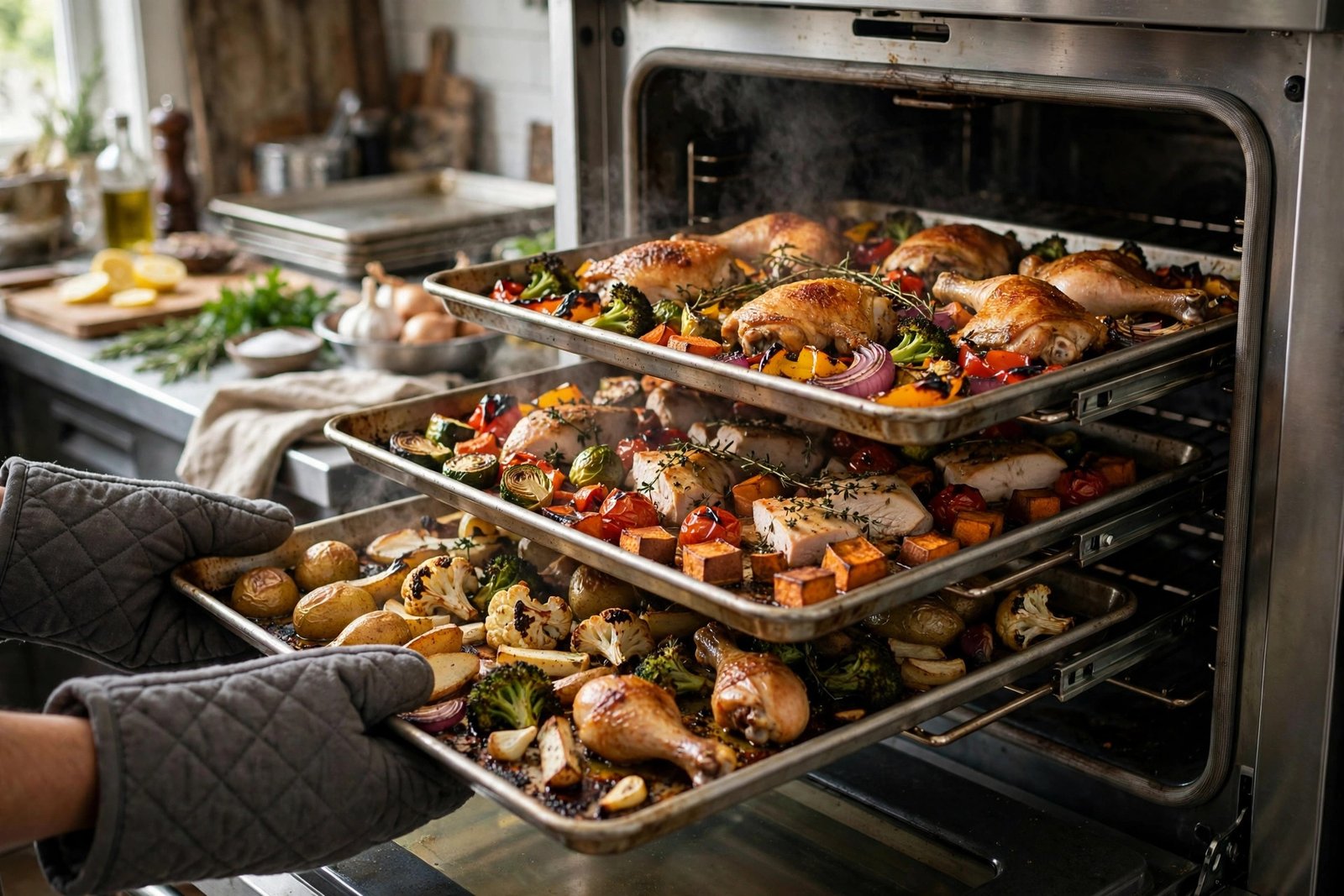
Block one session, ideally on a weekend day. Start with what takes longest: get grains and anything going in the oven working first, then chop and prep while they cook. This “passive time” overlap is the whole secret — the oven roasts your vegetables while you assemble tomorrow’s lunches. Work in this order: oven items, stovetop grains, proteins, then cold assembly (salads, snacks). Clean as you go; a sink full of dishes at the end is how beginners quit.
Step 4: Portion Into Containers
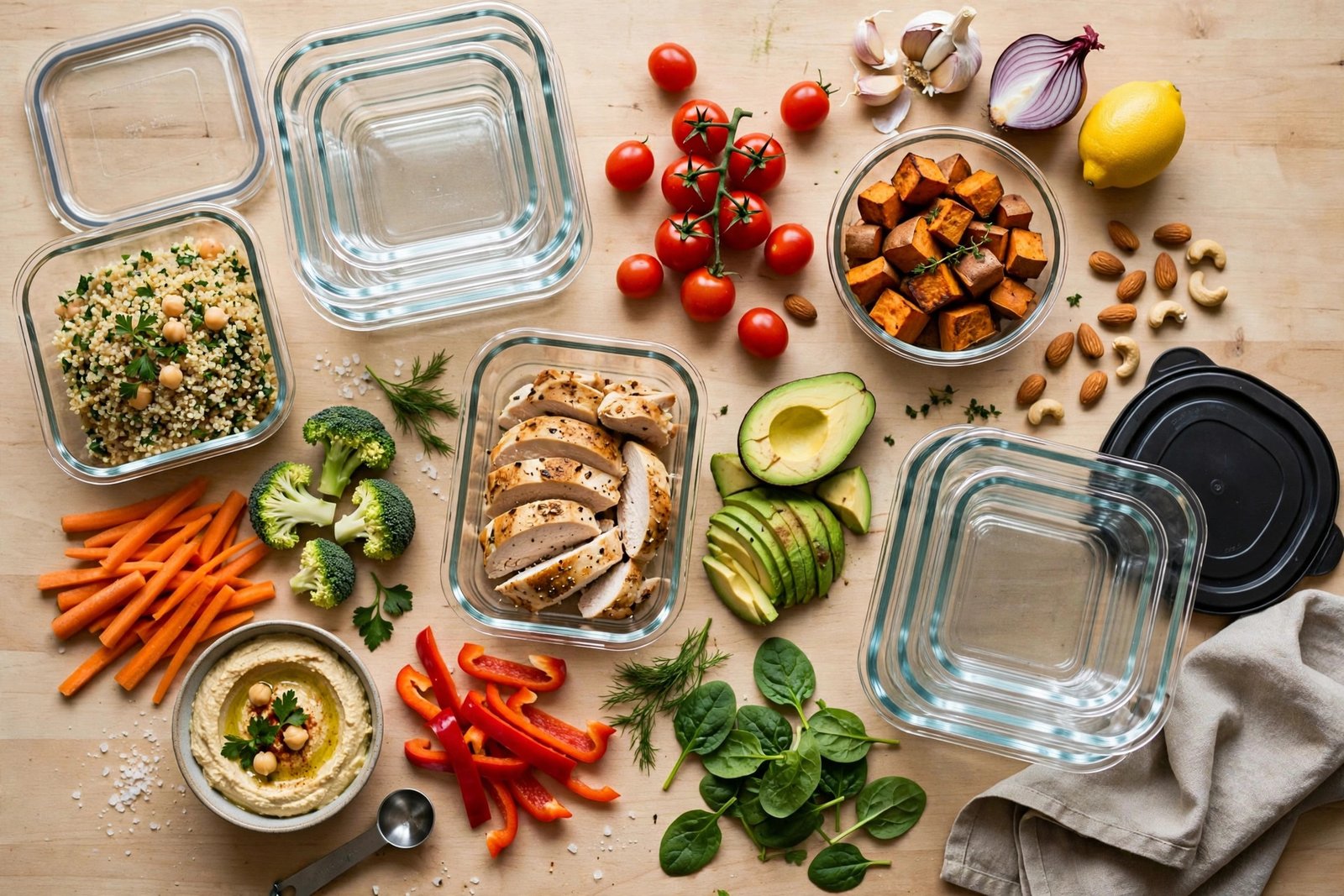
Portioning is what separates “I made food” from “I meal prepped.” Divide everything into individual grab-and-go containers right after cooking, while the food cools. This does three things: it controls portions without counting, it makes weekday eating a microwave-and-go event, and it cools food faster than one giant pot — which matters for safety. Keep sauces and dressings in separate small containers so nothing goes soggy.
Step 5: Store and Reheat Properly
Label every container with the contents and the date it was cooked — masking tape and a marker work fine. Refrigerate promptly, and reheat leftovers until they’re steaming hot throughout (the federal guideline is 165°F internal temperature). Soups, sauces, and gravies should come to a rolling boil. Full federal food safety guidelines on leftovers cover the details, and I break down the core rules in the food safety section below.
Meal Prep for Beginners: What Equipment You Actually Need
You need far less than social media suggests. Here’s the honest starter list:
- Glass or BPA-free airtight containers (6–8): Clear containers let you see what’s inside. Compartment containers are nice for keeping components separate but aren’t required.
- One large sheet pan and one stockpot or Dutch oven: These handle 80% of beginner prep — roasted vegetables, proteins, soups, and grains.
- A decent chef’s knife and a cutting board: Dull knives slow everything down and are genuinely dangerous. You don’t need a set — one sharp 8-inch knife covers prep.
- A food thermometer: A $10 instant-read thermometer removes all guessing about doneness and reheating.
- Freezer bags and masking tape: For freezing overflow portions and labeling everything.
That’s it. No vacuum sealer, no special appliances, no gadget aisle haul. If your kitchen feels chaotic, spend the saved money and an afternoon organizing a small kitchen on a budget — you’ll prep faster in a tidy space.
Meal Prep Methods Compared: Pick Your Style
Not all meal prep looks like forty identical containers. There are three main methods, and beginners often do best by starting with one and mixing over time.
| Method | What It Means | Time Cost | Best For |
|---|---|---|---|
| Batch cooking | One big recipe (chili, soup, curry) made in volume, split into portions | ~2 hours | Absolute beginners; minimal cleanup |
| Ingredient prep | Cook components — grains, proteins, chopped veg — and mix-and-match at mealtime | 2–3 hours | People who get bored eating the same thing daily |
| Full meals | Complete portioned meals, ready to reheat | 3–4 hours | Grab-and-go lunches for work weeks |
A Sample One-Week Beginner Meal Prep Plan
Here’s what a realistic first week looks like using a mix of batch cooking and ingredient prep. You cook on Sunday; the plan covers Monday through Thursday, with the weekend flexible.
| Day | Lunch | Dinner |
|---|---|---|
| Monday | Turkey chili over brown rice | Sheet-pan chicken + roasted vegetables |
| Tuesday | Turkey chili (leftovers) | Grain bowls: quinoa, chicken, roasted veg, hummus |
| Wednesday | Grain bowls (leftover components) | Freeze half the chili; reheat + simple salad |
| Thursday | Overnight oats + fruit (prepped Sunday night) | Leftovers or a fresh cook-up night |
Notice the strategy: three core recipes (turkey chili, sheet-pan chicken, overnight oats) create eight meals through smart reuse. Thursday is deliberately light — the biggest beginner trap is prepping so much food it goes bad. As for snacks, pre-portion nuts, cut vegetables, or fruit during your Sunday session and you’ll stop raiding the vending machine.
How Much Money Meal Prep Can Save You
Here’s the money argument in one chart. The U.S. Bureau of Labor Statistics’ Consumer Expenditure Survey for 2024 found that the average U.S. household spends $10,169 per year on food — $6,224 on food at home and $3,945 on food away from home, which includes restaurants, delivery, and takeout. Every dollar you shift from “away” to “at home” is a dollar meal prep puts back in your budget.
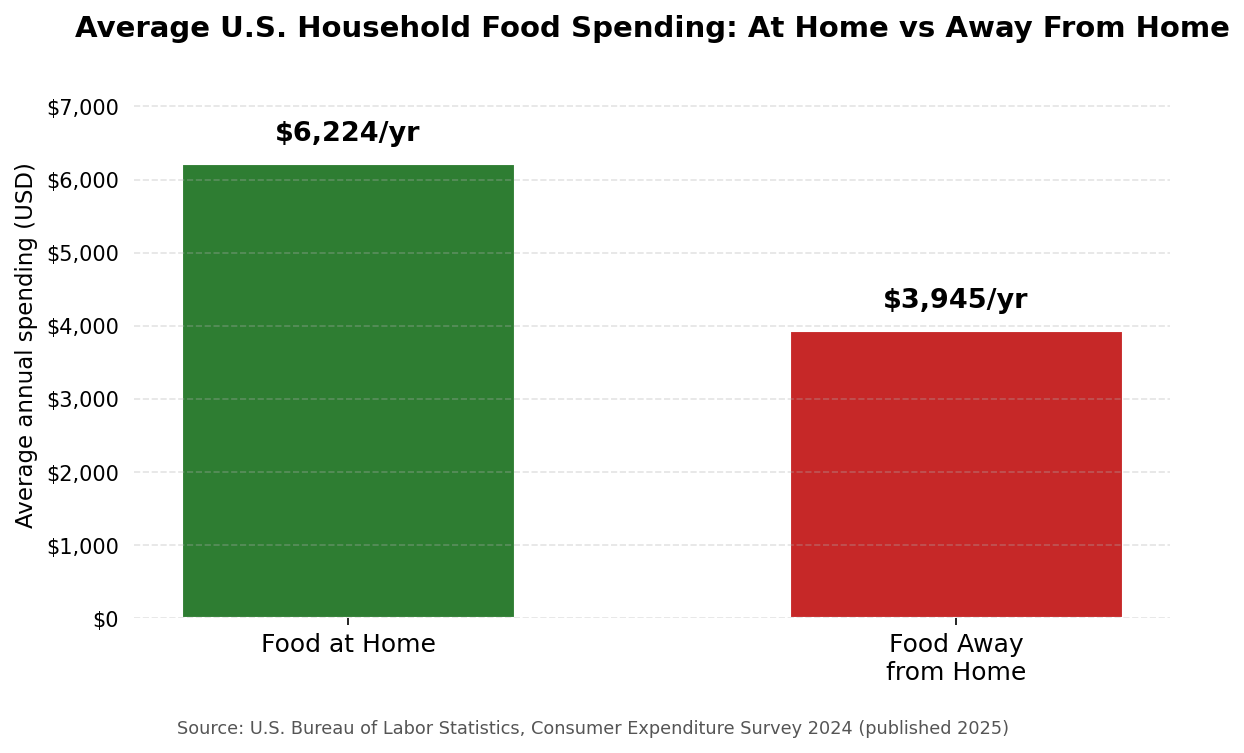
You don’t need to eliminate takeout entirely. Shifting just two or three restaurant meals a week to prepped food is where most beginners see the difference — and the U.S. Bureau of Labor Statistics’ full 2024 expenditure report is worth a read if you want the complete breakdown of where household money goes.
Food Safety Rules Every Beginner Must Know
This is the unglamorous section that keeps meal prep safe. The rules come straight from federal food safety guidance and the Centers for Disease Control and Prevention, and they’re non-negotiable:
- The 2-hour rule: Refrigerate cooked food within 2 hours of cooking (1 hour if the room is above 90°F). It’s fine to put hot food directly in the refrigerator — modern fridges handle it.
- The 3–4 day rule: Eat refrigerated cooked food within 3 to 4 days. If you won’t eat it by then, freeze it on day one instead of gambling on day five.
- The 165°F reheat rule: Reheat leftovers to at least 165°F internal temperature. Soups, sauces, and gravies should be brought to a rolling boil.
- Fridge and freezer temperatures: Keep your refrigerator at 40°F or below and your freezer at 0°F or below.
- Cool large batches fast: Divide big pots of soup or chili into smaller, shallow containers so they cool quickly instead of sitting in the bacterial “danger zone” (40–140°F).
- Label everything: Date and contents on every container. If you can’t identify it or remember when you made it, throw it out — when in doubt, throw it out.
A practical pattern beginners love: prep Sunday, eat Sunday through Wednesday from the fridge, and keep Thursday/Friday portions in the freezer from the start. Defrost overnight in the fridge (never on the counter).
Reheating Tips That Keep Food Tasting Good
Rubbery chicken and mushy pasta are why beginners quit meal prep by week three. Texture is a reheating problem, not a meal-prep problem:
- Microwave in intervals: Reheat in 1–2 minute bursts, stirring between, instead of blasting for five minutes. Food heats more evenly and doesn’t dry out.
- Add moisture back: Sprinkle a tablespoon of water over rice, pasta, or grains before microwaving and cover the dish — the steam rehydrates them.
- Separate the components: This is why you kept sauces and crunchy toppings separate. Reheat the base, then add the cold or fresh elements after.
- Use the oven for crispy food: Roasted vegetables and anything breaded reheat far better in a hot oven (400°F for 10 minutes) than in a microwave.
- Don’t reheat fish or eggs repeatedly: These are the two foods that go from fine to foul fastest. Reheat them once, eat them, and move on.
7 Beginner Mistakes (and How to Avoid Them)
- Prepping too much food. Start with 3–4 days of meals, not seven. Nothing kills motivation like throwing away Thursday’s untouched containers.
- Choosing complicated recipes. Your first month is about the habit, not the cuisine. Save the new cookbook for week six.
- No variety planning. The same chicken-and-rice five days straight is a fast track to ordering pizza. Prep two proteins or use the mix-and-match ingredient method.
- Skipping the labels. Mystery containers are the #1 source of food waste in beginner fridges.
- Prepping foods that don’t store well. Lettuce goes limp, fried food goes soggy, avocado browns. Prep components that survive: grains, roasted veg, cooked proteins, soups.
- Forgetting snacks. If lunch is prepped but 3 p.m. hunger isn’t, the vending machine wins. Prep snacks in the same session.
- Trying to be perfect. Missed a week? Prepped only two meals? That’s still two meals you didn’t have to cook. Keep the bar low until the habit is automatic.
One more home-base tip: a cluttered, disorganized kitchen makes prep sessions drag. If yours needs it, a weekend pass of decluttering your home — kitchen included — pays for itself in faster, less stressful prep sessions.
Frequently Asked Questions
How long does it take to meal prep for a week?
Most beginners spend two to three hours on one weekend session to cover four to five days of lunches and dinners. Batch cooking a single recipe takes closer to two hours; full portioned meals with multiple recipes can take three to four. The session gets faster every week as you learn the rhythm — by month two, most people do it in under two hours.
How long does meal-prepped food last in the fridge?
Eat refrigerated cooked meals within 3 to 4 days, per federal food safety guidance. If you want your Sunday prep to cover Friday, freeze the later-week portions on Sunday and thaw them in the refrigerator the night before you plan to eat them.
What are the easiest meals to prep as a beginner?
Soups, stews, and chili (nearly impossible to mess up and they freeze beautifully), sheet-pan proteins with roasted vegetables, grain bowls from prepped components, and overnight oats for breakfast. All share ingredients, reheat well, and survive 3–4 days in the fridge.
Do I need special containers for meal prep?
No. Any airtight, microwave-safe containers work. Glass containers last longer and don’t stain, but your existing plastic containers are perfectly fine to start with. The important thing is that they seal well and you have enough of them — six to eight individual containers is a good starter count.
Is meal prep actually cheaper than eating out?
Yes. The average U.S. household spends $3,945 per year on food away from home versus $6,224 at home, according to the 2024 BLS Consumer Expenditure Survey — and restaurant and delivery prices carry steep markups over grocery ingredients. Cooking a week’s lunches for the price of two takeout orders is a realistic beginner experience.
Can you meal prep if you have a tiny kitchen?
Absolutely. Stick to one-pot and one-pan recipes that need minimal counter space, and prep in stages (cook the grains while vegetables roast, assemble while proteins rest). Many beginners in studio apartments meal prep successfully with just a sheet pan, a stockpot, and a sharp knife.
Your First Prep Session: Start This Weekend
Here’s the whole beginner playbook in one paragraph: pick two simple recipes that share ingredients, check what you already own, shop from a list, spend one two-to-three-hour session cooking with the oven and stovetop running in parallel, portion everything into labeled containers, refrigerate within two hours, and eat it within four days. Then do it again next weekend.
Your first week won’t be perfect. You’ll overcook something, underestimate portions, or discover you hate reheated sweet potatoes. That’s fine — you still fed yourself well for days, spent less money, and learned exactly what to fix next time. Learning how to meal prep for beginners is a skill, and like any skill, week three looks dramatically better than week one. The containers are waiting.




[…] latte without any added sugar — the brew is sweet enough on its own. Batch brewing is essentially meal prepping for your mornings: one Sunday batch covers your entire work […]