
How to Keep a Real Christmas Tree Alive All Season Long

There is a special kind of holiday heartbreak that arrives around December 15th: the tree you put up the weekend after Thanksgiving looked magnificent, and now the needles rain onto the floor every time someone walks past — with ten days to go.
The good news is that learning how to keep a real christmas tree alive is not complicated. It comes down to a handful of habits: buying a genuinely fresh tree, cutting the trunk before you set it up, and giving it far more water than most people expect. Get those three right, and a well-cared-for tree will stay green and fragrant for four to five weeks.
This guide walks through every step, from picking the tree to taking it down.
Pick a Fresh Tree — and Pick It at the Right Time
Everything starts at the lot. A tree that was cut weeks ago and left sitting in the sun will never recover, no matter how much water you give it. Freshness is the one thing you cannot fix later, so spend your time here.
Timing matters as much as freshness. Buy your tree the weekend after Thanksgiving at the earliest: a well-cared-for real tree lasts about four to five weeks indoors, so it will look good on Christmas Day. Buy one in mid-November and you are asking it to survive six or seven weeks, which is beyond what even a healthy tree can manage.
At the lot, run the shake test before you commit. Grab the trunk and give the tree a firm shake. A few loose brown needles falling is normal, especially from the inside of the tree. But if a handful of green needles showers down, walk away — that tree is already drying out. Stand it up and check it is full on all sides, with no big bare patches.
Next, bend a few needles between your fingers. On a fresh fir, the needles bend without snapping. On spruces, they should feel sharp and springy, not brittle. Run your hand along a branch: the needles should stay put, not come away in your palm. The trunk should feel slightly sticky with sap, not dry and grey.
If you cannot set the tree up the same day, store it outside in a cool, sheltered spot with the trunk standing in a bucket of water. Keeping it cool and wet slows the drying.
Make a Fresh Cut Before It Goes in the Stand
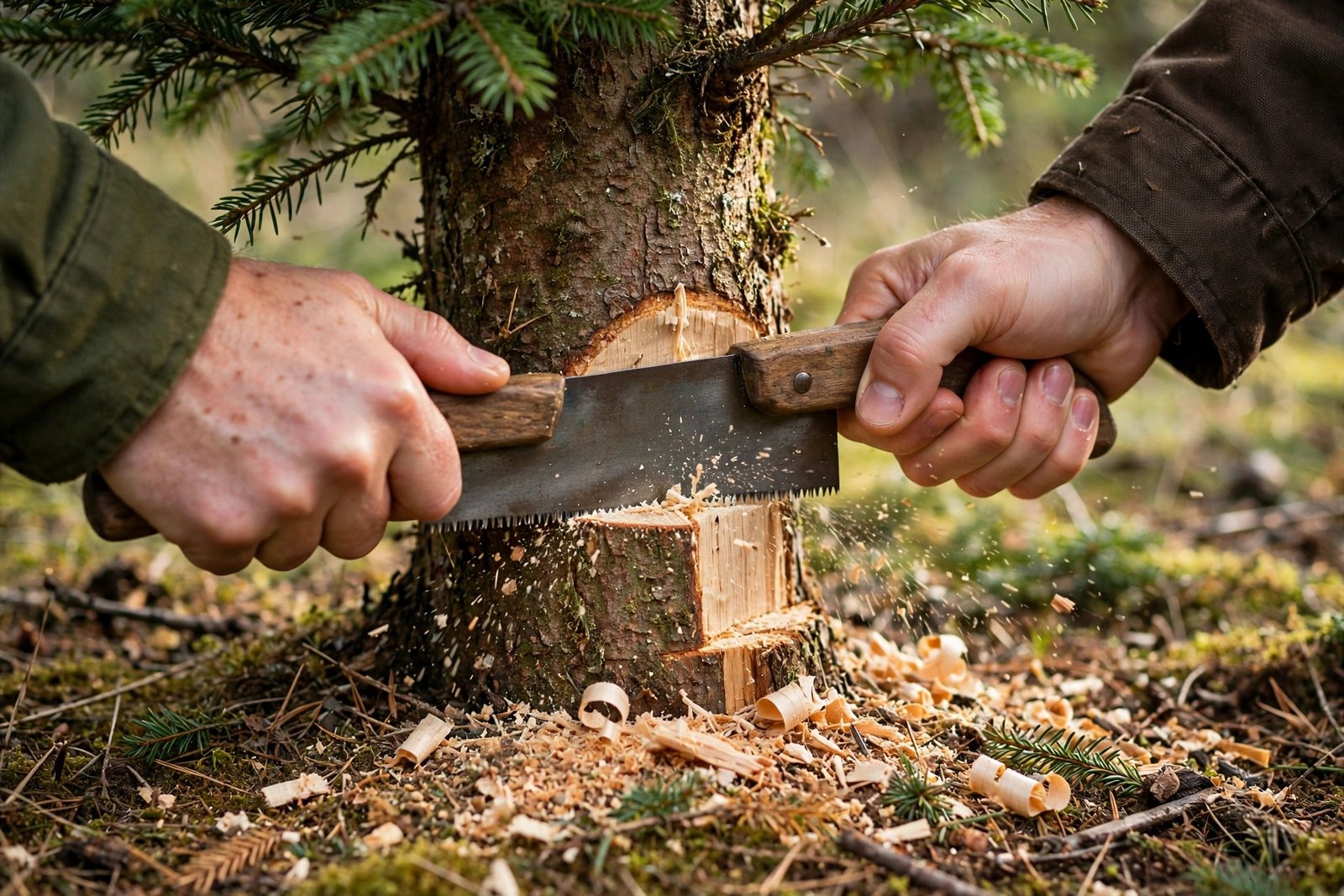
Ask any grower how to keep a real christmas tree alive and the fresh cut is the first thing they will mention. Before your tree goes into its stand, saw a fresh slice off the base of the trunk — between half an inch and one inch thick. That single cut is the difference between a tree that drinks and a tree that slowly starves.
The reason is sap. Within hours of being cut, a tree seals the cut end of its trunk with sap, the same way a scab forms on a wound. That seal blocks water from travelling up into the branches. A fresh cut reopens the trunk’s water channels so the tree can drink again. If your tree was cut more than a few hours before you set it up, this step is not optional.
Make the cut straight across, perpendicular to the trunk. Never cut it at an angle, and never carve a V-shape into the base. Both are old folk advice, and both do more harm than good. An angled cut reduces the surface area sitting in the water and makes the tree wobble in the stand. A V-cut can split the trunk under the tree’s weight. A flat, level cut gives the tree the widest possible drinking surface and the most stable seat.
Use a sharp handsaw and take your time. A clean cut matters more than a fast one, because a ragged, torn surface seals over faster than a smooth one. Once the cut is made, get the tree into water within a few hours — the longer a fresh cut sits in dry air, the faster it seals again. And do not peel the bark off the bottom few inches of the trunk: the tree drinks through the cut surface at the base, not through the bark.
How to Keep a Real Christmas Tree Alive: The Water Rule
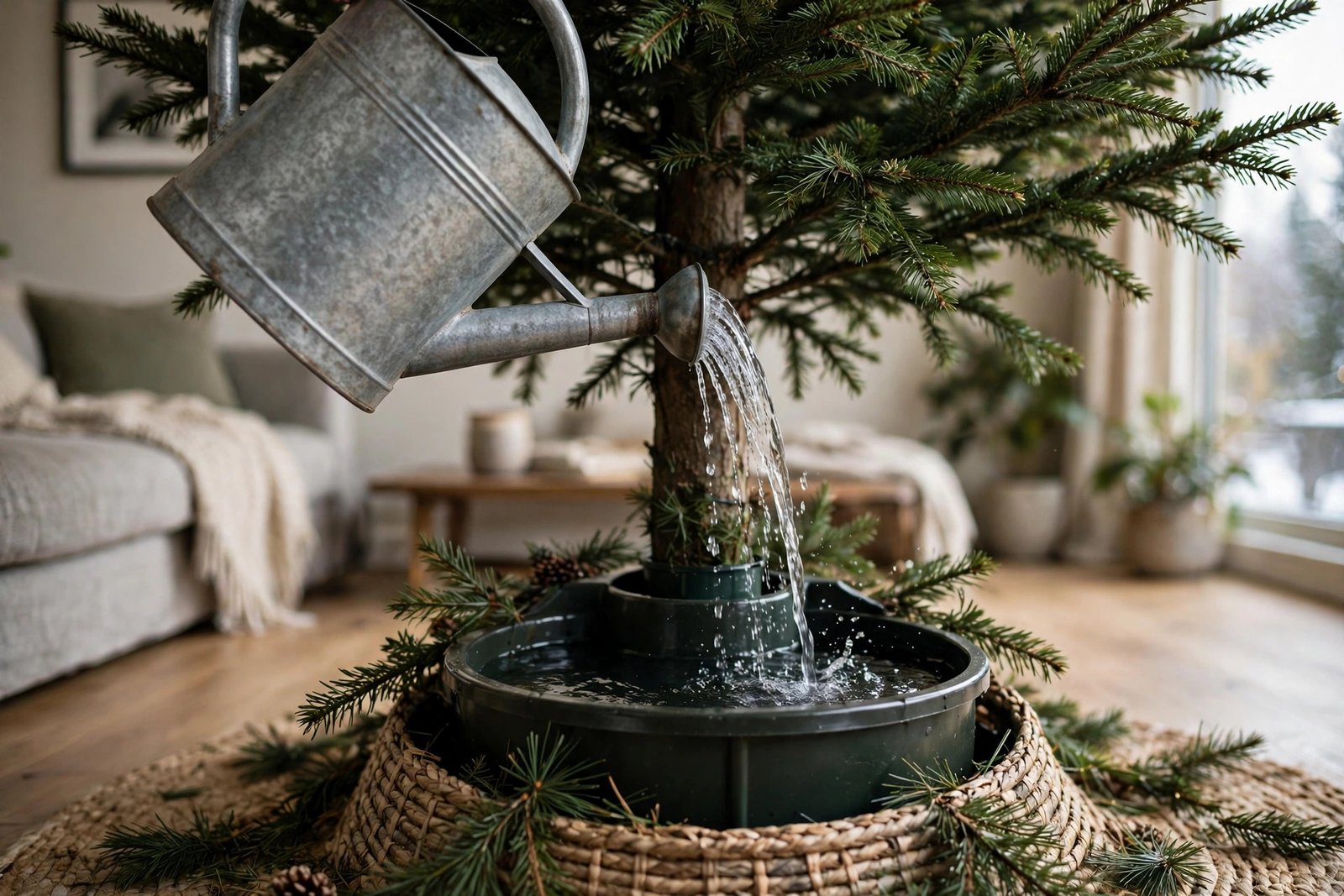
If one rule decides whether your tree makes it to Christmas, it is this: water, water, and more water. A cut tree is still a living thing, and it keeps losing moisture through its needles every hour it stands in your heated living room. The only way to replace that moisture is through the trunk.
The National Christmas Tree Association gives a simple rule of thumb: a tree needs about one quart of water per day for every inch of trunk diameter. For a typical six-foot tree, that works out to roughly a gallon of water a day, especially in the first week. It can drink a full gallon in its first 24 hours indoors.
Check the water level twice a day for the first week, then daily. And never let the water drop below the base of the trunk. If the cut end is exposed to air for even a few hours, sap seals it again, and the tree will stop drinking even after you refill the stand. If that happens, you will need to take the tree down and make another fresh cut.
The size of your stand matters here. Many stands hold far less water than people realise, and a small reservoir means you are refilling constantly or, worse, letting it run dry overnight. A stand that holds a gallon or more gives you a comfortable margin and means the tree is never left thirsty while you are at work or asleep. Use plain tap water — the tree only cares that it is there.
The Additives Test: What Actually Helps (and What Hurts)
Every December, the same home remedies circulate: a spoonful of sugar in the water, an aspirin tablet, a splash of bleach, a packet of commercial tree preservative. They all promise a longer-lasting tree. Most do nothing. Some actively kill it.
The clearest evidence comes from a test by the American Society for Horticultural Science, which tried a range of common additives and measured how many needles the trees lost. Plain water outperformed every additive tested. Trees given bleach lost 99.5% of their needles — essentially the whole tree, dropped to the floor. Trees given aspirin lost 72.3% of their needles, far worse than plain water. Sugar and commercial preservatives did no better than water.
| What you add to the water | Needle loss (where measured) | Verdict |
|---|---|---|
| Plain water | Lowest of all treatments tested | Best — use this |
| Sugar | Not measured as a percentage | No benefit over water |
| Aspirin | 72.3% needle loss | Much worse than water — skip it |
| Bleach | 99.5% needle loss | Near-total needle loss — never use it |
| Commercial preservative | Not measured as a percentage | No better than plain water |
The lesson is simple and cheap: plain tap water is the best thing you can put in the stand. The Epic Gardening team reaches the same conclusion in their tree-care guides, and the National Christmas Tree Association is equally blunt — additives do not extend a tree’s life.
Choose a Species That Holds Its Needles
Not all Christmas trees are equal when it comes to staying power. Some species hold their needles for weeks; others start shedding the moment you bring them indoors. Choosing the right species is part of how to keep a real christmas tree alive for the full four to five weeks, and most lots carry at least two or three species to pick from.
Fraser fir is the gold standard for most households. It holds its needles superbly, has a mild, pleasant scent, and keeps its shape well. Noble fir is right up there too, with excellent needle retention and sturdy branches that handle heavy ornaments. Douglas fir is the budget-friendly classic: good needle retention, a sweet scent, and a full, soft shape. Balsam fir smells the strongest of the lot — that classic Christmas scent — but its needle retention is only fair, so it suits people who put the tree up closer to Christmas.
| Species | Needle retention | Scent | Price |
|---|---|---|---|
| Fraser fir | Excellent | Mild | Higher |
| Noble fir | Excellent | Mild | Premium |
| Douglas fir | Good | Sweet | Budget-friendly |
| Balsam fir | Fair | Strong | Budget-friendly |
Species matters, but it is not destiny. A fresh Douglas fir that is watered daily will outlast a neglected Fraser fir every time. Think of species as a head start, not a guarantee. The Chicago Botanic Garden has a useful guide to choosing between firs, spruces, and pines if your lot carries more than the usual four.
Keep It Cool and Away From Heat
Placement is the part of how to keep a real christmas tree alive that most people overlook. Where you put the tree matters almost as much as how you water it. Heat is the enemy: every degree of warm, dry air speeds up the moisture loss from the needles, and a tree parked next to a heat source can dry out in days rather than weeks.
Keep the tree away from fireplaces, radiators, and heat vents. The fireplace is the most tempting spot in the room, but resist it. A dry tree near an open flame is also a genuine fire hazard: the National Fire Protection Association warns that a dried-out Christmas tree can catch fire and burn with shocking speed, so distance from heat is a safety issue as well as a freshness issue.
The same goes for heating vents in the floor. A vent blowing warm air straight up into the lower branches will dry out one side of the tree while the other side stays green, leaving you with a tree that sheds on one side only. If the only spot in the room is near a vent, close or redirect that vent for the season. Sunlight counts as heat too, so keep the tree out of direct sunbeams, and turn the thermostat down a degree or two at night, when nobody is in the room.
Small Daily Habits That Stretch Its Life
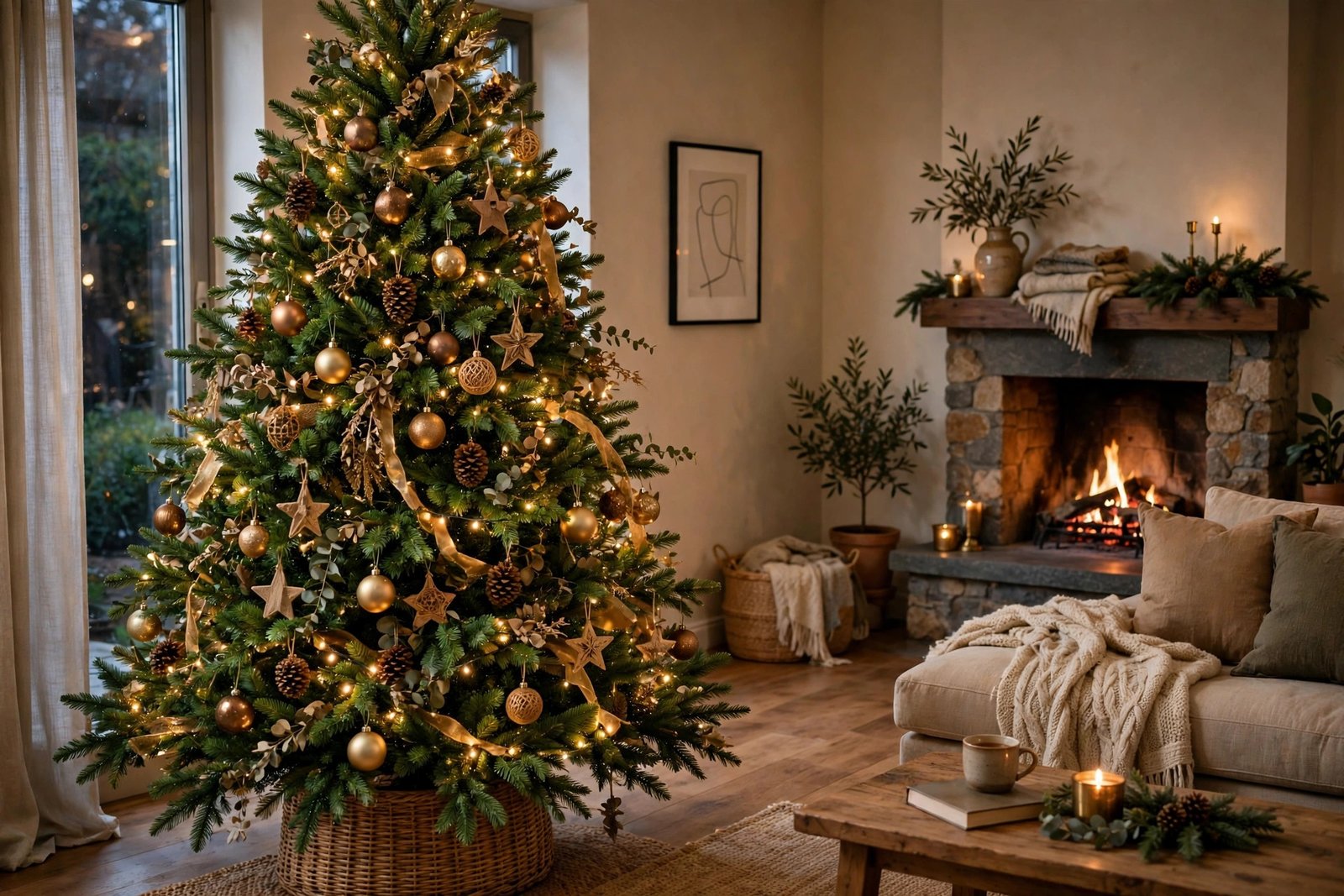
Once the tree is up, watered, and away from heat, the rest is maintenance. None of it is hard, and none of it takes more than a couple of minutes a day.
First, make the water check part of your morning routine, like feeding the cat. Lift the tree skirt, look at the reservoir, and top it up. A tree that drinks a gallon a day will empty a small stand by evening, so do not rely on memory. If you go away for a weekend, ask someone to check it.
Second, use LED lights instead of old incandescent strings. LEDs run far cooler, which means less heat on the branches and less drying. If you still have incandescent lights, keep them on a timer and switch them off when you leave the house or go to bed. The Family Handyman has a good rundown of LED options and timers if you are replacing an old set this year.
Third, be gentle when you decorate. Heavy ornaments pull branches down, and every broken branch is a wound that dries the tree out faster. Hang the heaviest ornaments close to the trunk, where the branches are strongest, and keep the delicate ones toward the tips. Our guide to how to decorate a Christmas tree covers the order that keeps a tree looking full without overloading it.
Knowing When It Is Time to Say Goodbye
Even with perfect care, a real tree has a limit. Around the four-to-five-week mark, it will start to tell you it is done: needles rain down when you brush past, the branches droop and will not spring back, and the trunk feels dry and light. It may also stop drinking altogether.
When you see those signs, take the tree down promptly. A dry tree is a fire risk, and it will only get drier. Many towns run tree recycling or mulching programs in January, turning old trees into mulch for parks and gardens, so check your local council’s collection dates before you drag it to the curb.
Before the tree goes, save a few branches. They make a lovely Christmas wreath for the front door, and fresh cuttings can stretch your Christmas garland for another week or two.
Frequently Asked Questions
How long will a real Christmas tree last indoors?
A well-cared-for tree lasts four to five weeks indoors, counting from when it was cut — not when you brought it home. Buy the weekend after Thanksgiving at the earliest and keep it watered from day one.
What is the single most important thing for keeping a tree alive?
Water. Everything in this guide on how to keep a real christmas tree alive works only if the trunk stays submerged. A six-foot tree can drink about a gallon a day, and if the water level drops below the cut end of the trunk, sap seals it and the tree stops drinking altogether.
Should I add sugar, aspirin, or bleach to the tree water?
No. In the American Society for Horticultural Science test, plain water beat every additive. Bleach caused 99.5% needle loss, aspirin caused 72.3% needle loss, and sugar and commercial preservatives did no better than water. Use plain tap water.
How much water does a Christmas tree need each day?
The National Christmas Tree Association recommends about one quart of water per day for each inch of trunk diameter. A typical six-foot tree needs roughly a gallon a day in its first week. Check the stand twice a day at first, then daily.
Can I put my Christmas tree near the fireplace?
No. Keep it well away from fireplaces, radiators, heat vents, and direct sunlight. Heat dries the needles fast, and a dry tree near an open flame is a serious fire hazard. Keep candles and open flames away from it too.
Conclusion
Keeping a real Christmas tree alive all season is not a mystery and it is not expensive. Buy it fresh, buy it at the right time, cut half an inch off the base, and keep the stand full of plain tap water. Keep it away from heat, use cool LED lights, and check the water every day.
That is the whole secret, and it is the difference between a tree that is still green and fragrant on Christmas morning and one that has been shedding needles since mid-December. A well-cared-for tree is also the safest tree — green needles do not catch fire the way dry ones do. Our guide on how to keep pipes from freezing covers the other cold-weather job worth doing before the holidays. Enjoy the tree — and the season.



