
How to Keep Pipes From Freezing: 9 Ways to Protect Your Home This Winter
The first hard freeze of winter always arrives sooner than expected, and it has a way of finding the one pipe you forgot about. The one under the kitchen sink on the outside wall. The one in the garage. The outdoor tap you meant to drain in October. When that pipe freezes, the water inside expands, the pipe can split, and the real damage starts when the ice thaws and water pours out. Knowing how to keep pipes from freezing is one of the cheapest forms of home insurance there is — a few dollars of foam and a couple of hours of work can save you a burst pipe, a flooded room, and a bill that runs into thousands.
This guide walks through why pipes freeze, which pipes are most at risk, and nine practical ways to stop it happening. It also covers what to do if a pipe has already frozen, where to find your main shut-off valve, and what prevention really costs compared with a burst pipe.
Why Pipes Freeze — and Which Ones Are at Risk
Water inside a pipe freezes when the temperature around it falls to 32°F or below. As water turns to ice it expands, and that pressure can split copper, plastic, and PEX pipe alike. The risk is highest for pipes in unheated spaces — basements, crawl spaces, attics, garages, and exterior walls — and for the outdoor taps and hoses that most people forget about until it is too late. This guide to stopping pipes freezing from CLA Developments is a useful primer on where the risk concentrates in a typical home.
Freezing is not a one-night event. In many homes, pipes only freeze when the temperature falls well below freezing and stays there for hours, or when wind chill pushes cold air through small gaps in walls and foundations. That is why the same house can survive a mild cold snap and then flood in a long one: it is the duration of the cold, not just the temperature, that matters. A pipe that froze and thawed once without bursting is a warning, not a pass — the next freeze may be the one that splits it.
How to Keep Pipes From Freezing: 9 Ways to Protect Your Home
1. Insulate Exposed Pipes With Foam Sleeves
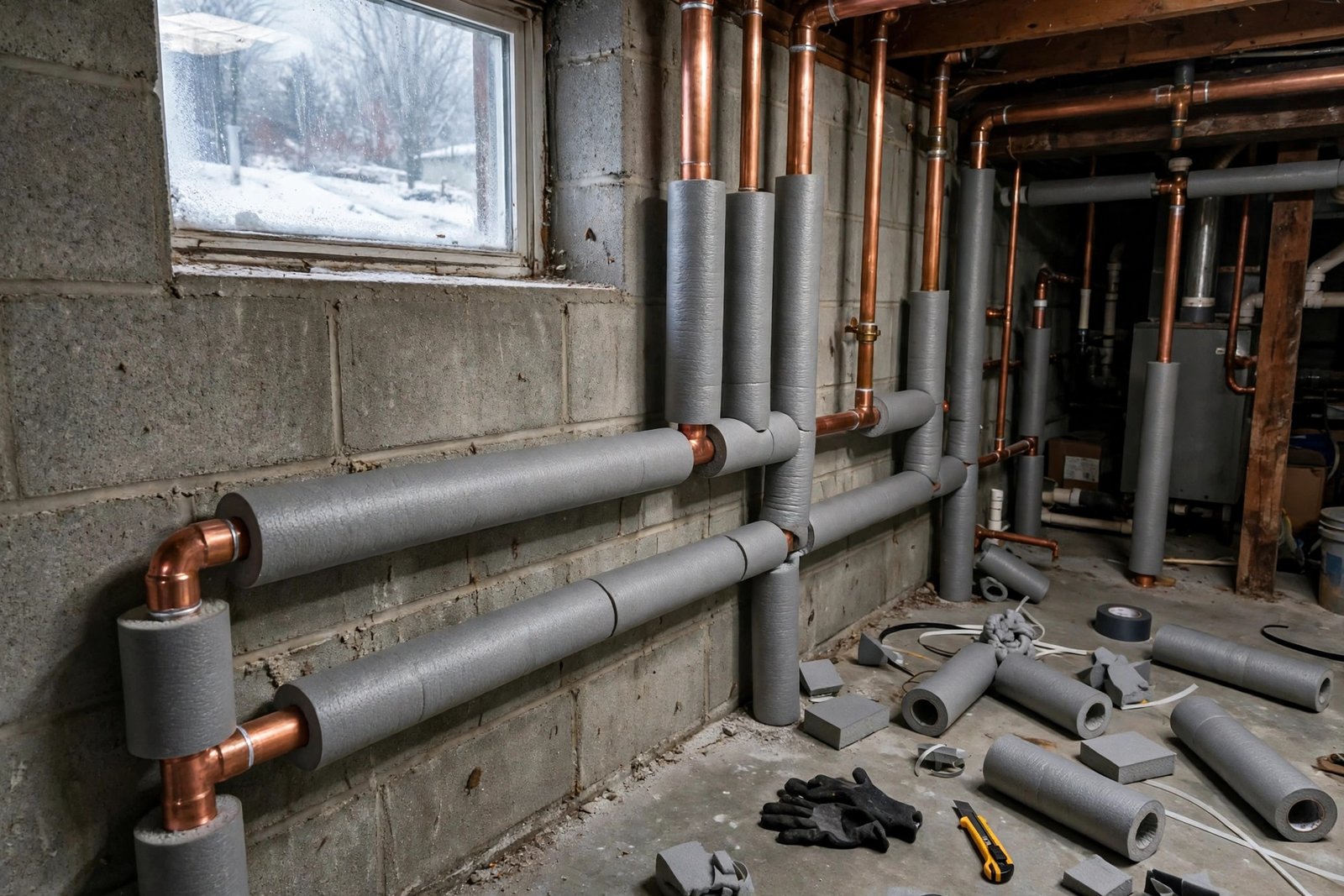
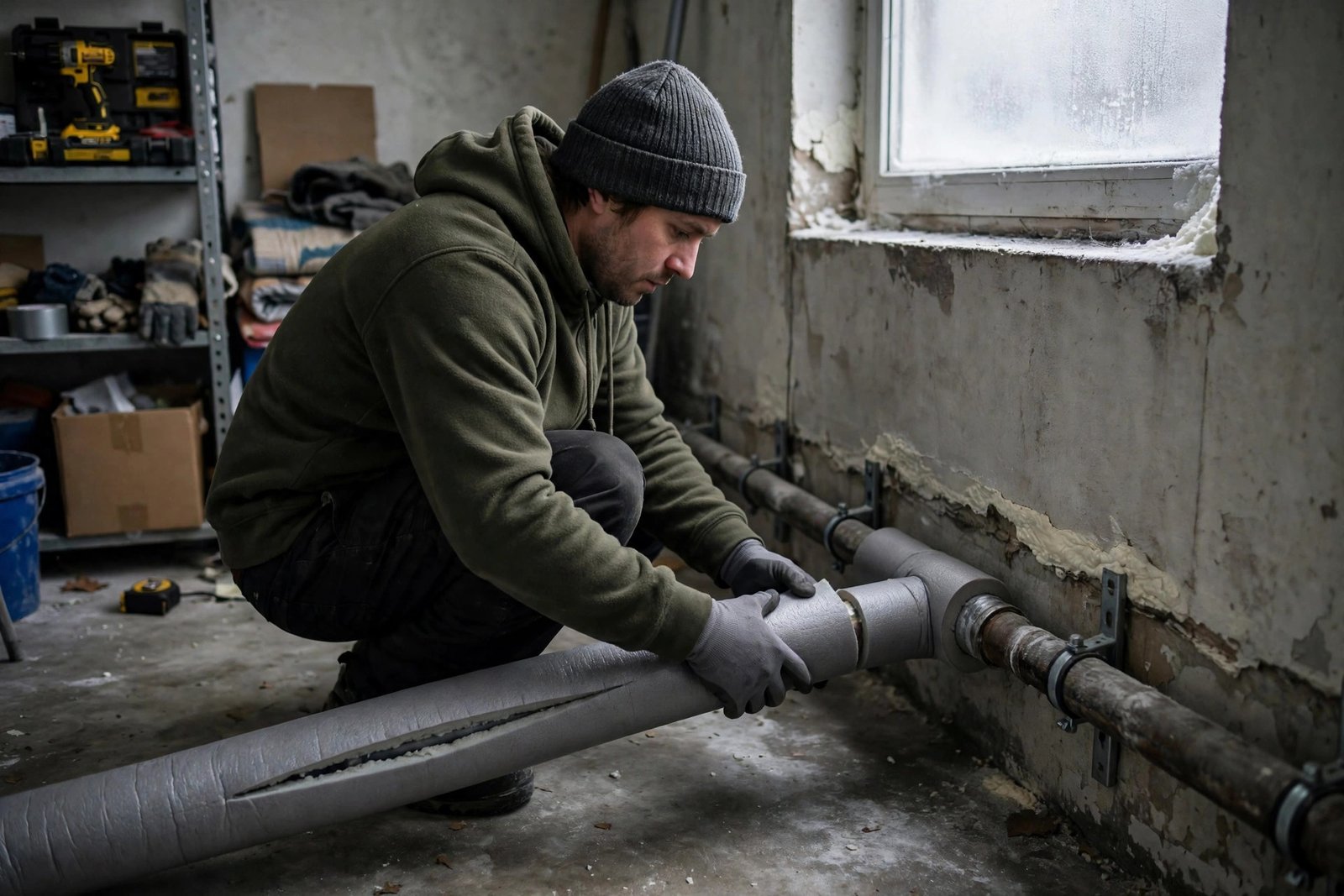
The single most effective and cheapest fix is foam pipe insulation. Cut a foam sleeve to length, slip it over the exposed pipe, and tape the seams. Pay special attention to pipes in basements, crawl spaces, attics, garages, and anywhere a pipe runs along an outside wall. Insulate the whole run, not just the easy middle section — a single uninsulated elbow is enough for the cold to get in. The Family Handyman guide to preventing frozen pipes explains the same step-by-step approach, and it is a good check on the details if this is your first time insulating a pipe run.
2. Drain Outdoor Lines and Disconnect Hoses
Before the first hard frost, disconnect garden hoses from outdoor taps, drain them, and store them somewhere dry. Water left in a hose can freeze back into the tap and then into the pipe inside the wall, which is exactly how outdoor taps split. If your outdoor taps have frost-proof sillcocks, they help, but only if the hose is removed — a connected hose defeats the design. If you use an irrigation system, have it blown out before winter as well.
3. Shut Off and Drain Outside Taps
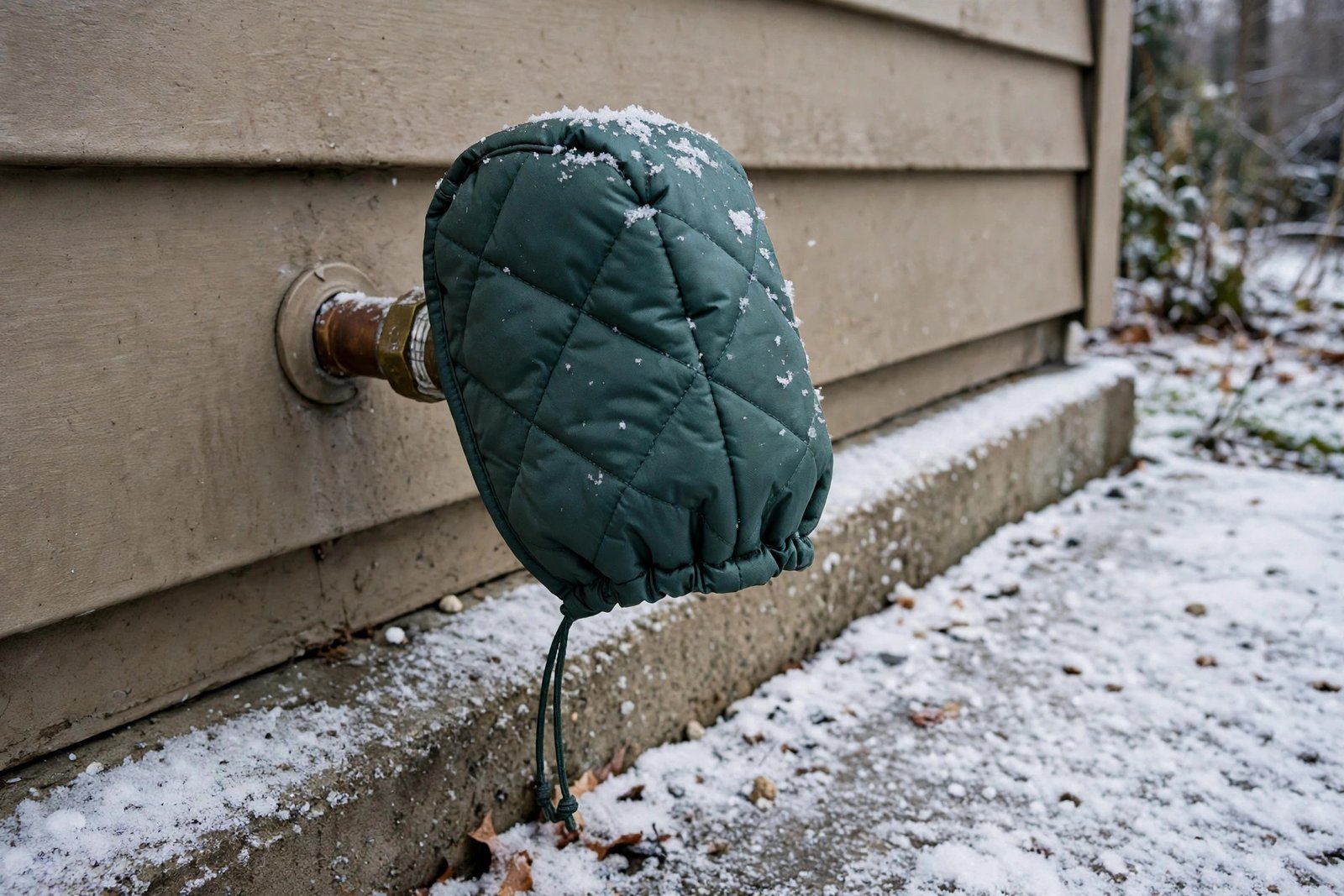
If your outdoor taps have their own shut-off valves, turn them off and leave the taps open so any remaining water drains out. If you have a separate drain valve on that line, use it. Then fit an insulated faucet cover over the outside tap — it is a cheap foam dome that stops cold air reaching the metal. For taps without a shut-off valve, a fitted cover plus insulation on the pipe run behind it is the next best option. A tap that is left shut but full of water is a tap that is waiting to split.
4. Seal Air Leaks Where Pipes Pass Through Walls
Cold air reaches pipes through gaps where they pass through walls, floors, and foundations, and through cracks around windows, dryer vents, and the point where the water service enters the house. Seal those gaps with caulk or expanding foam, and check the rim joists in the basement where pipes often pass close to the outside. The same gaps that let in cold air also let in warm air in summer, so sealing them pays for itself twice — and if you want the wider picture on keeping heating costs down, our guide on how to save money on heating in winter covers the other big wins.
5. Keep Garage Doors Closed
Water pipes often run through garages, and a garage can drop to near-freezing overnight if the door is left open. Keep the door closed, especially on cold nights, and if the garage is unheated, insulate any exposed pipes there first. Do not heat a garage with a space heater left running overnight — it is a fire risk and an expensive one. If your garage has a water heater or a laundry sink, those pipes need insulation too.
6. Open Cabinet Doors Under Sinks on Exterior Walls
Pipes under a kitchen or bathroom sink on an exterior wall are vulnerable because the cabinet door blocks warm air from reaching them. On very cold nights, open the cabinet doors so warm air from the room can circulate around the pipes. This is especially important for sinks on north-facing walls. If you have small children or pets, remove cleaning products from the cabinet first — an open door is not worth a poisoning risk.
7. Let Faucets Drip in Extreme Cold
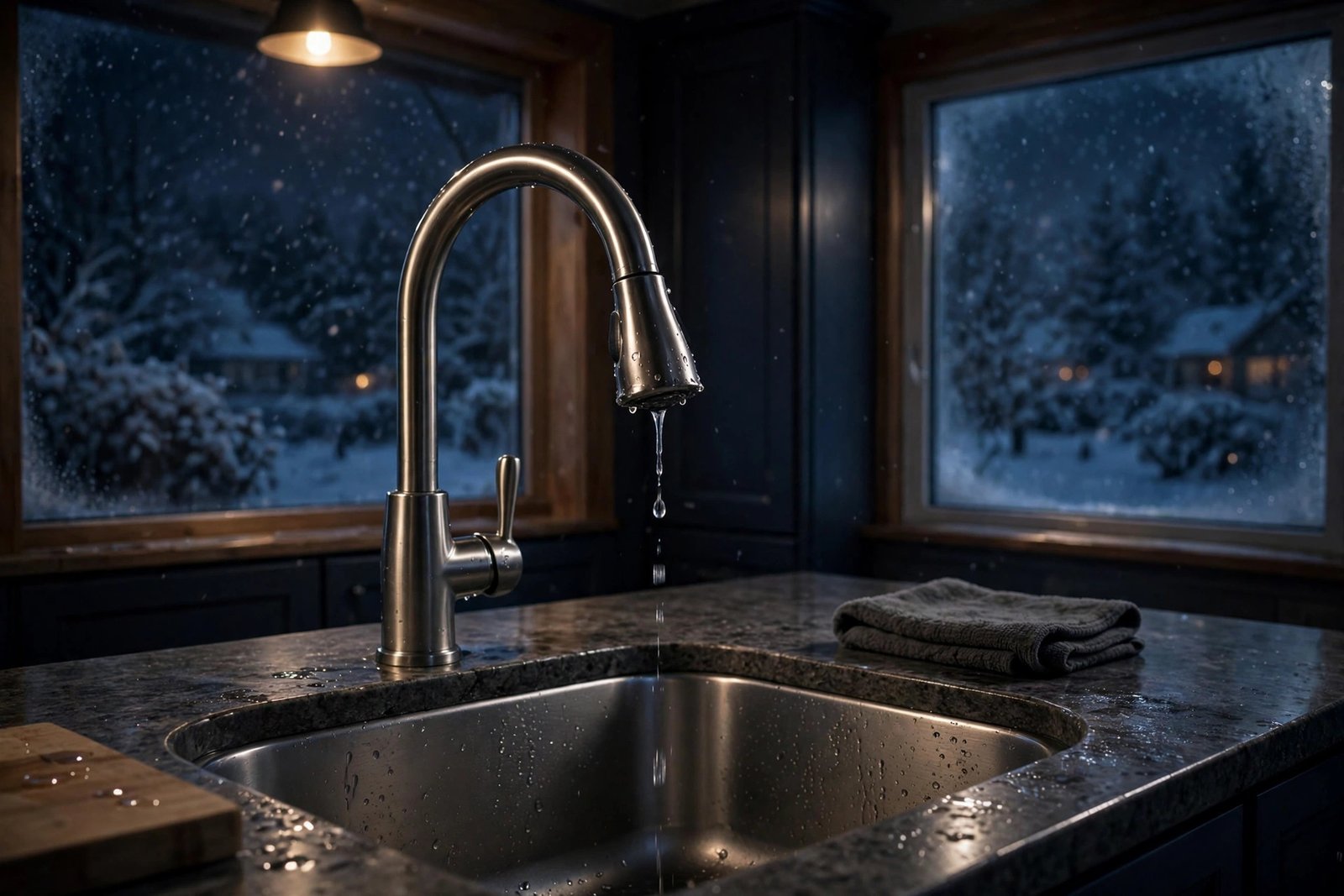
A slow drip keeps water moving, which makes it harder for ice to form inside a pipe. On nights when the forecast is below about 20°F, let a faucet on an exterior wall drip at a slow, steady rate — a thin stream about the width of a pencil lead is enough. Let both the hot and cold taps drip, because both lines can freeze. The extra water costs a few cents; a burst pipe costs thousands. Do not leave a faucet dripping all winter — only on the coldest nights, and only for the taps on outside walls.
8. Keep the Thermostat Steady Day and Night
Turning the heating down at night can save energy, but if the temperature falls below about 55°F, pipes in cold corners of the house can freeze. Keep the thermostat at 55°F or higher through the winter, day and night, even when you are out for the day. A steady temperature is safer than a large overnight drop, and the extra heating cost is small compared with a repair bill. If your heating system has a frost-protection setting, make sure it is switched on.
9. Protect Pipes While You Are Away
If you are going away in winter, do not turn the heating off. Set the thermostat to at least 55°F, open the cabinet doors under sinks on outside walls, and ask someone to check the house every day or two. If you will be away for a long time, consider shutting off the main water supply and draining the system — a house with no water in its pipes cannot flood. If you do drain the system, remember to turn the water heater off first, and to drain it as well if it is a tank model. Leave a key and your phone number with the person checking the house, and tell them where the main shut-off valve is.
What to Do If a Pipe Freezes
If a tap stops running in cold weather, a pipe has probably frozen. Turn off the main water supply first, then open the affected tap so the water can flow out when the ice melts. Warm the frozen section gently with a hair dryer, a heating pad, or towels soaked in hot water, working from the tap end back towards the frozen section so the melting water has somewhere to go. Never use a blowtorch or any other open flame — it can start a fire, and it can also heat the pipe unevenly and make it burst. The Red Cross guide to frozen pipes sets out the same steps, and it is worth reading before you start.
If the pipe has already burst, turn off the water at the main shut-off valve, open all taps to drain the system, and call a plumber. If you can reach the burst section, wrap it with a towel or tape to slow the leak while you wait. Take photos of the damage for your insurer, and start drying the area as soon as the water is off — mould can start within a day or two in a damp room. If the burst is behind a wall, do not try to open the wall yourself unless you know what you are doing; leave it to a professional.
Find Your Main Shut-Off Valve Before Winter
Most homes have a main shut-off valve where the water enters the house — often in the basement, a utility room, or under the kitchen sink. It may be a wheel valve or a lever handle. Find it now, before winter, and check that it turns. If it is stiff, have a plumber free it up. Show everyone in the household where it is and how to turn it off. If you have a water meter, the shut-off is usually nearby. A valve you cannot find or cannot turn is no use in an emergency, and a burst pipe can release hundreds of litres an hour.
While you are at it, check that your water heater is working well and that your home is properly winterized. A failing water heater in winter is a cold shower waiting to happen, and knowing how much it costs to replace a water heater helps you plan for it rather than face it as an emergency. For the full picture, our guide on how to winterize your home covers the roof, the gutters, the heating system, and everything else that winter tests.
What Prevention Costs — and What a Burst Pipe Costs
A small amount of prevention is far cheaper than a repair. Below are typical figures to give you a sense of scale — your local prices will vary, but the gap between prevention and repair does not.
| Item | Typical cost | What it prevents |
|---|---|---|
| Foam pipe insulation sleeves | $0.50–$1.50 per linear foot | Exposed pipes freezing in unheated spaces |
| Insulated faucet covers | Inexpensive DIY item | Outdoor hose bibs freezing and splitting |
| Heat tape | Inexpensive DIY item | Freezing in the most exposed pipe runs |
| A burst pipe | No fixed figure — water damage, emergency plumber call-out, drying and restoration | — |
Look at it as insurance. A few dollars spent on foam sleeves and faucet covers in autumn can save you a repair bill in the thousands in January. The most expensive item in the table is the one you are trying to avoid.
Frequently Asked Questions
At what temperature do pipes freeze?
Water inside a pipe freezes at 32°F, but a pipe usually only freezes when the temperature around it stays well below freezing for hours. Wind chill and gaps in walls can make a pipe freeze even when the air temperature is only just below freezing.
Which pipes are most likely to freeze?
Pipes in unheated spaces are at the greatest risk: basements, crawl spaces, attics, garages, and exterior walls. Outdoor taps and hoses are also high risk, and so are pipes under sinks on outside walls.
Should I let my faucets drip all winter?
No. You only need to let a faucet drip on very cold nights, when the forecast is below about 20°F, and only for taps on outside walls. Let both the hot and cold taps drip at a slow, steady rate.
Can I thaw a frozen pipe with a blowtorch?
No. Never use a blowtorch or any open flame to thaw a pipe. Use a hair dryer, a heating pad, or towels soaked in hot water, and work from the tap end back towards the frozen section.
What temperature should I leave the heat at when I go away?
Leave the thermostat at 55°F or higher when you go away in winter. If you will be away for a long time, consider shutting off the main water supply and draining the system.
Is foam pipe insulation hard to install?
No. Foam pipe insulation is easy to fit. Cut it to length with a utility knife, slip it over the pipe, and tape the seams. Pay special attention to elbows and joints, where the cold can get in.
Conclusion
A burst pipe is one of those winter problems that is easy to prevent and expensive to fix. Insulating exposed pipes, disconnecting hoses, draining outdoor taps, sealing air leaks, and keeping the thermostat steady are all small jobs that together make your home far more resilient. None of them needs a plumber, and none of them costs much.
Winter is hard enough on a home without adding a flood to the list. Take a few hours this autumn to work through the nine steps, find your main shut-off valve, and check that your water heater is in good shape. The first hard freeze will arrive sooner than you expect — but this time, the one pipe you forgot about will already be protected.



