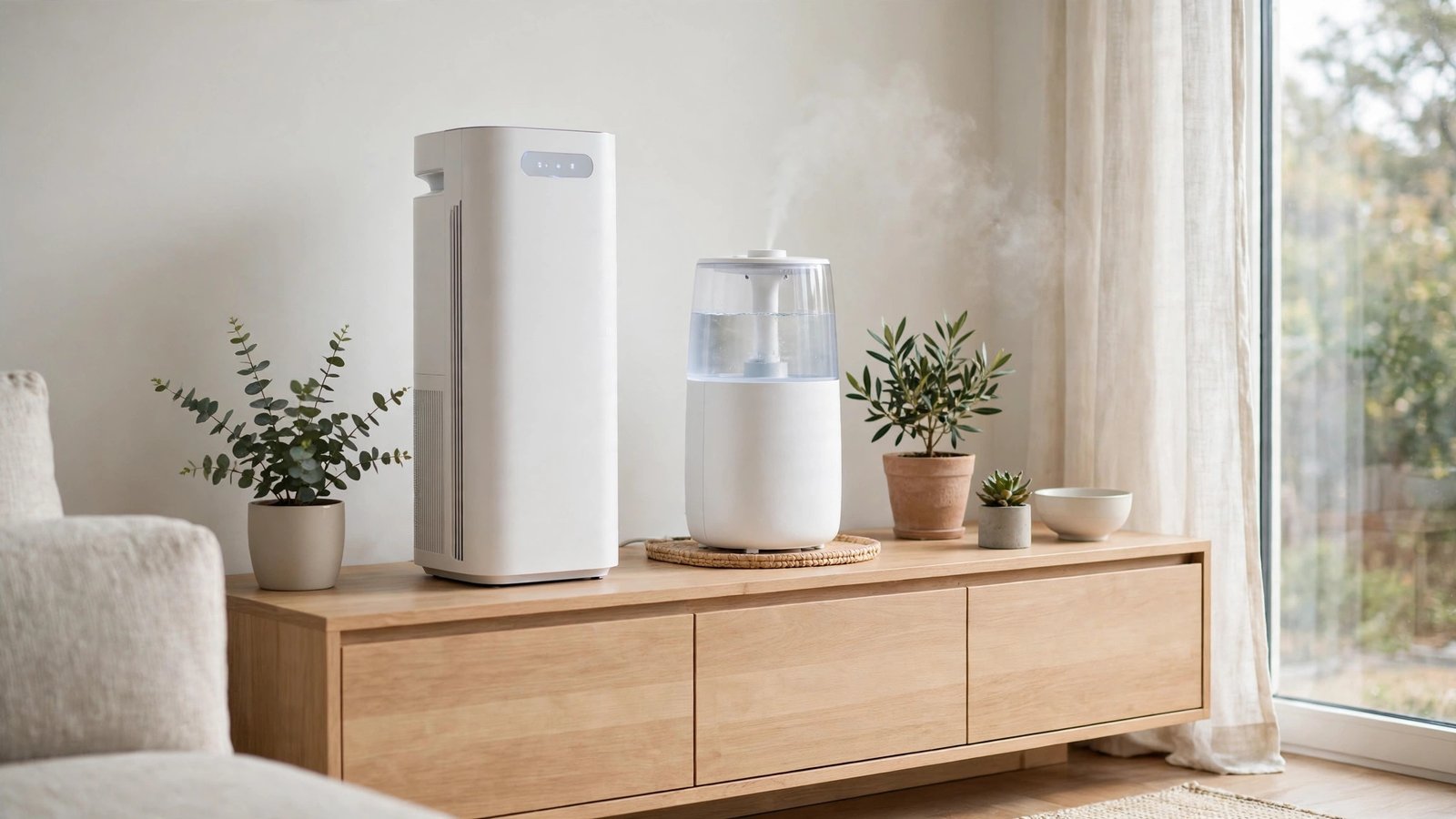

Air Purifier vs Humidifier: Which One Does Your Home Actually Need?
You wake up with a scratchy throat, a stuffy nose, and a bedroom that feels like a desert. Your first instinct is to buy a machine that fixes it. But which one? The whole air purifier vs humidifier question trips up millions of shoppers every winter, because the two devices look similar, sit on the same store shelves, and both promise “better air.” They do completely different jobs, though, and buying the wrong one won’t fix your problem — and in some cases it can make things worse.
Here’s the difference in one sentence: an air purifier cleans the air you breathe; a humidifier changes how wet that air feels. One removes particles, the other adds moisture. Keep reading and you’ll know exactly which one your symptoms are asking for, when you genuinely need both, and the maintenance mistakes that turn either device into a health hazard.
The Short Answer: Air Purifier vs Humidifier Solve Different Problems
If you’re sneezing, sniffling, or reacting to dust, pet dander, and pollen, you want an air purifier. If your skin is flaky, your lips are cracked, your throat feels like sandpaper, and you get nosebleeds or static shocks, you want a humidifier. That’s the whole air purifier vs humidifier debate in a nutshell: particles versus dryness.
The confusion is understandable. Both machines sit in the corner humming quietly. Both claim to help you breathe easier. But the relief an air purifier brings has nothing to do with the relief a humidifier brings. One filters what’s floating in the air. The other puts water vapor into the air. Once you frame it that way, the right choice usually picks itself.
What an Air Purifier Actually Does
An air purifier is a fan with filters. It pulls room air through a series of filters and blows cleaner air back out. The star of the show is the HEPA filter — high efficiency particulate air — a dense pleated mesh that traps at least 99.97% of airborne particles 0.3 microns in size, including dust, pollen, mold spores, pet dander, and many bacteria, according to the U.S. Environmental Protection Agency’s definition of a true HEPA filter. Since Americans spend roughly 90% of their time indoors, the EPA treats indoor air quality as a serious health topic, and filtration is one of its recommended tools alongside source control and ventilation.
What does that mean for your symptoms? If you have seasonal allergies, a dusty house, or a dog that sheds, an air purifier physically removes the tiny particles that irritate your nose and eyes. It runs continuously, cycling the room’s air through its filters several times per hour. If you’re shopping specifically for allergy relief, our guide to the best air purifier for allergies breaks down the features that actually matter, like CADR ratings and room coverage.
What a purifier cannot do is add a single drop of moisture to the air. It won’t stop your dry cough, it won’t soften your cracked skin, and it won’t end nosebleeds. A purifier doesn’t change humidity at all — it just moves air through a filter. That’s worth stating clearly, because it’s the single biggest misconception in the air purifier vs humidifier conversation.
Air purifiers also have limits worth knowing. They can’t remove settled dust from your carpets and shelves — they only catch what’s floating. Regular decluttering your home matters because every extra surface collects dust that eventually gets kicked back into the air. And on gases and smells, a plain HEPA filter does nothing; you need a separate activated carbon filter for odors, smoke, and chemical fumes.

What a Humidifier Actually Does
A humidifier adds moisture to the air. That’s it. It releases water vapor or a fine cool mist, raising your home’s relative humidity into the comfortable 30–50% range that health experts recommend for indoor spaces. In winter, when heating systems suck moisture out of the air, indoor humidity can drop into the teens — and that’s when the misery starts.
Dry air pulls moisture from everything it touches: your skin, your sinuses, your throat, even your wood floors and furniture. A humidifier soothes dry, irritated sinuses and can ease a stuffy nose, according to Mayo Clinic guidance. It helps with cracked lips, bloody noses, dry skin, and that rough morning throat. It can even reduce static electricity and keep wooden furniture from cracking.
But a humidifier does nothing for dust, pollen, or pet dander. It doesn’t filter, trap, or remove particles. If anything, it can make an allergy situation slightly worse if you overdo it: humid air helps dust mites and mold thrive, which are themselves major allergy triggers. This is why the Mayo Clinic recommends checking room humidity with a hygrometer and keeping the unit scrupulously clean — mold or bacteria can grow in a neglected tank and get misted straight into your lungs.
The Full air purifier vs humidifier Comparison: Side by Side
| Feature | Air Purifier | Humidifier |
|---|---|---|
| Main job | Removes airborne particles (dust, pollen, pet dander, mold spores) | Adds moisture to dry air |
| Core technology | HEPA filter (+ optional carbon filter) | Ultrasonic mist, evaporative wick, or steam |
| Best for | Allergies, asthma triggers, dusty homes, pet owners, smoke and odors | Dry skin, cracked lips, nosebleeds, dry cough, static shocks, winter dryness |
| Changes humidity? | No — air stays just as dry | Yes — raises relative humidity |
| Removes particles? | Yes — up to 99.97% of 0.3-micron particles with true HEPA | No — can worsen dust-mite and mold problems if overused |
| Main risk | Neglected filters lose effectiveness; some ionizers produce ozone | Mold and bacteria in dirty tanks; over-humidifying feeds dust mites |
| Ongoing upkeep | Replace filters every 3–12 months per manufacturer guidance | Rinse tank daily, deep-clean weekly, use distilled water |
Which Problem Do You Actually Have? A Symptom Decoder
Stop shopping for a device and start diagnosing the complaint. The air purifier vs humidifier decision gets easy once you match your symptoms to the right fix:
Choose an air purifier if:
- You sneeze, sniffle, or get itchy eyes indoors — especially around pets, after dusting, or in spring and fall.
- You notice visible dust settling quickly on furniture, or you live near a busy road, a construction site, or a wildfire-prone area.
- Someone in the home has asthma and airborne triggers set it off.
- You want to remove cooking smells, smoke, or musty odors (look for a model with an activated carbon filter too).
Choose a humidifier if:
- Your skin itches, your lips crack, and your nose bleeds — the classic winter-dryness package.
- You wake up with a dry, scratchy throat every morning and drink water without relief.
- Static shocks zap you every time you touch a doorknob.
- Your wooden floors are gapping or your acoustic guitar keeps going out of tune (yes, dry air does that).
- A simple hygrometer reads below 30% in your bedroom.
Can You Use an Air Purifier and a Humidifier Together?
Yes — and in winter, running both is often the best setup. Dry, particle-filled air is the worst of both worlds, and the two devices don’t fight each other. The purifier handles what’s floating in the air; the humidifier handles how dry the air feels.
There are two practical rules. First, keep them a few feet apart so the purifier’s intake doesn’t pull in the humidifier’s mist plume — damp filters clog faster and can grow mold. Second, the humidifier can make the purifier’s job slightly easier: moist air weighs particles down a little, helping the largest ones settle where the purifier’s airflow can process them. And if you’re wondering whether two devices are overkill, think of it this way: one solves allergies, the other solves dryness. If you have both problems, you need both tools.
The Risks Nobody Mentions on the Box
Both machines are safe when maintained. Both can cause real problems when they’re not. On the humidifier side, the danger is biological: stagnant water breeds mold and bacteria, and an ultrasonic cool-mist unit will happily aerosolize whatever is growing in its tank and broadcast it around your bedroom. The Mayo Clinic’s cool-mist humidifier guidance is explicit: empty and dry the tank daily, deep-clean it regularly, and consider distilled or purified water to cut down on mineral buildup and microbial growth. Keep indoor humidity in the 30–50% range; above 50% you’re feeding the very dust mites and mold spores you were trying to escape. Dirty humidifiers are also one of the classic sources of the musty smell that a deep-cleaned washing machine won’t fix — appliances that hold water all develop the same problem when neglected.
On the purifier side, the danger is complacency. A HEPA filter you haven’t changed in a year is just an expensive fan. Filters saturate, airflow drops, and performance falls off a cliff. Also be wary of cheap “ionic” or “ozone” purifiers marketed as filterless miracles: ozone is a lung irritant, and the EPA’s own guidance flags ozone-generating air cleaners as devices to avoid. Stick with mechanical HEPA filtration from a reputable brand.
One more honest note: neither device replaces the basics. No purifier compensates for a house that never gets vacuumed, and no humidifier compensates for never drinking water. Fix the big stuff first, then let the machines handle the margins.
How to Choose: A Quick Decision Framework
Run through these three questions and you’ll land on the right answer:
1. What’s your main complaint? Sneezing and itchy eyes point to the purifier. Cracked skin and dry throat point to the humidifier. Both point to both.
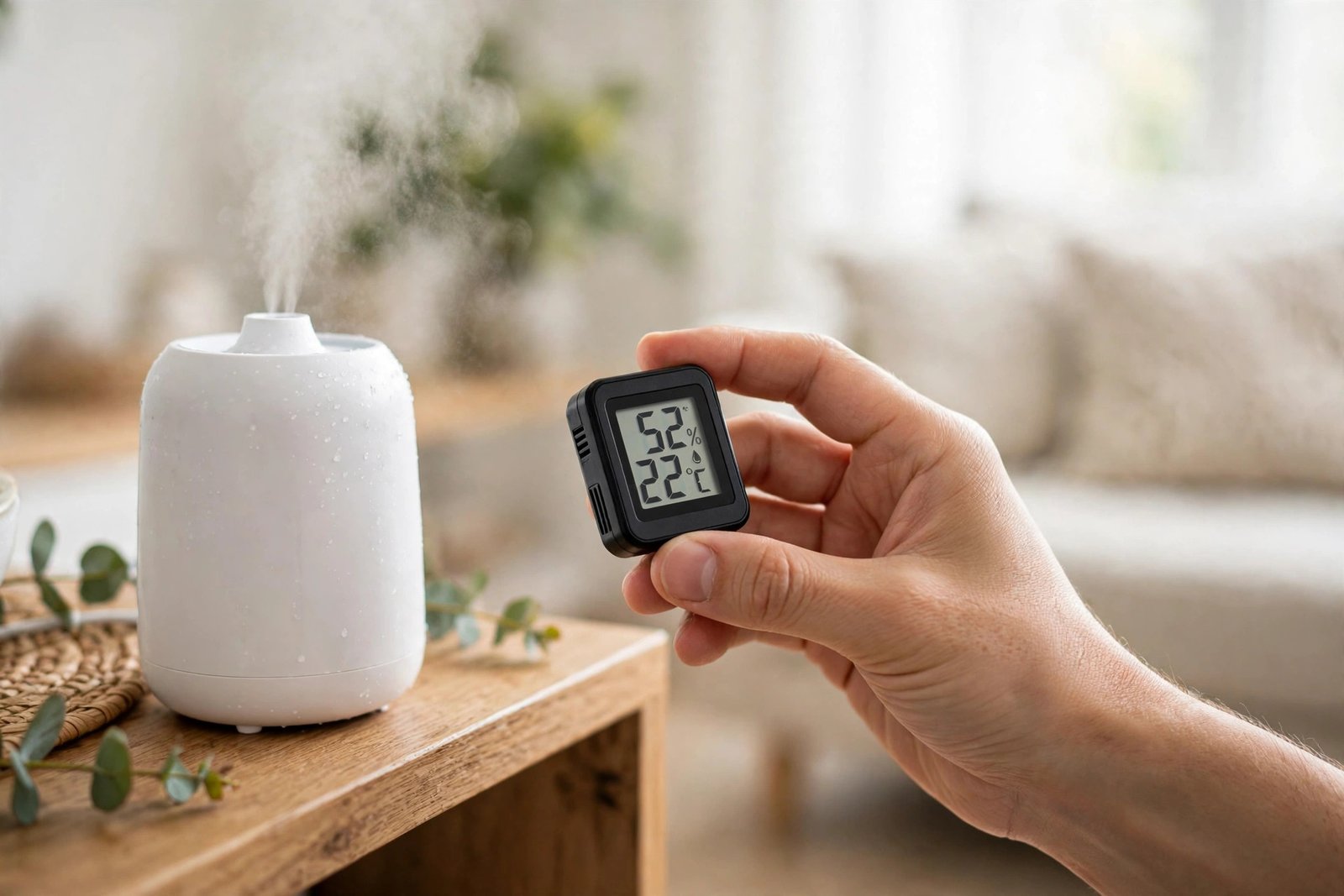
2. What does a hygrometer say? Before buying a humidifier, spend a few dollars on a hygrometer and check your actual indoor humidity. If it already sits between 30% and 50%, you don’t have a humidity problem — adding more moisture invites mold for no benefit.
3. What can you commit to maintaining? An air purifier asks for a filter swap a few times a year. A humidifier asks for daily rinsing and weekly scrubbing. Buy the one you’ll actually care for, because a neglected device of either type is worse than none.
When shopping, size the device to your room. For purifiers, check the CADR (clean air delivery rate) against your room’s square footage. For humidifiers, check the tank size against how many hours you want it to run overnight. And whichever you buy, put it where it can do its job — a purifier choked in a corner behind a curtain isn’t purifying much.
Frequently Asked Questions
Do I need an air purifier or a humidifier for allergies?
For most allergies, an air purifier is the right call. It removes the pollen, dust, and pet dander that trigger allergic reactions. A humidifier won’t remove allergens — and if it pushes humidity above 50%, it can actually encourage dust mites and mold, making allergies worse. The one exception: if your allergy symptoms come with severely dry, irritated sinuses, using both can help, with humidity kept in the 30–50% range.
Will an air purifier help with dry air?
No. This is the most common misunderstanding in the air purifier vs humidifier debate. An air purifier filters particles out of the air but does not add or remove moisture. If your problem is dry skin, a scratchy throat, or static electricity, a purifier will not help — you need a humidifier.
Is it safe to sleep with a humidifier on all night?
Yes, as long as the unit is clean and humidity stays in the 30–50% range. Empty and rinse the tank daily, and use a hygrometer to make sure you’re not over-humidifying. The Mayo Clinic also recommends cool-mist models over steam vaporizers around children, since hot steam units pose a burn risk if tipped or touched.
Can a humidifier make you sick?
It can if it’s dirty or overused. Mold and bacteria can grow in a neglected tank and be released into the air with the mist, triggering flu-like symptoms, allergies, or respiratory irritation — especially in people with asthma. Daily rinsing, weekly deep-cleaning, and distilled water prevent most problems.
Does a humidifier help with dust?
Not really. A humidifier doesn’t filter or remove dust from the air. It may help very slightly by making the heaviest particles settle faster, but for a dusty home you need an air purifier with a true HEPA filter — plus regular dusting and decluttering to cut the source.
Conclusion
The air purifier vs humidifier question only feels hard because the two devices look alike on the shelf. Once you know the difference — purifiers clean the air, humidifiers wet it — the answer usually writes itself. Allergies, dust, and pet dander call for a purifier. Dry skin, cracked lips, and scratchy throats call for a humidifier. Winter, with its combination of closed windows and bone-dry heated air, often calls for both.
Whichever you choose, buy the device that fits your room, size it properly, and actually maintain it. A clean, well-sized machine of either type will do more for your comfort than the fanciest model left to collect dust. Your lungs will notice the difference within days.



