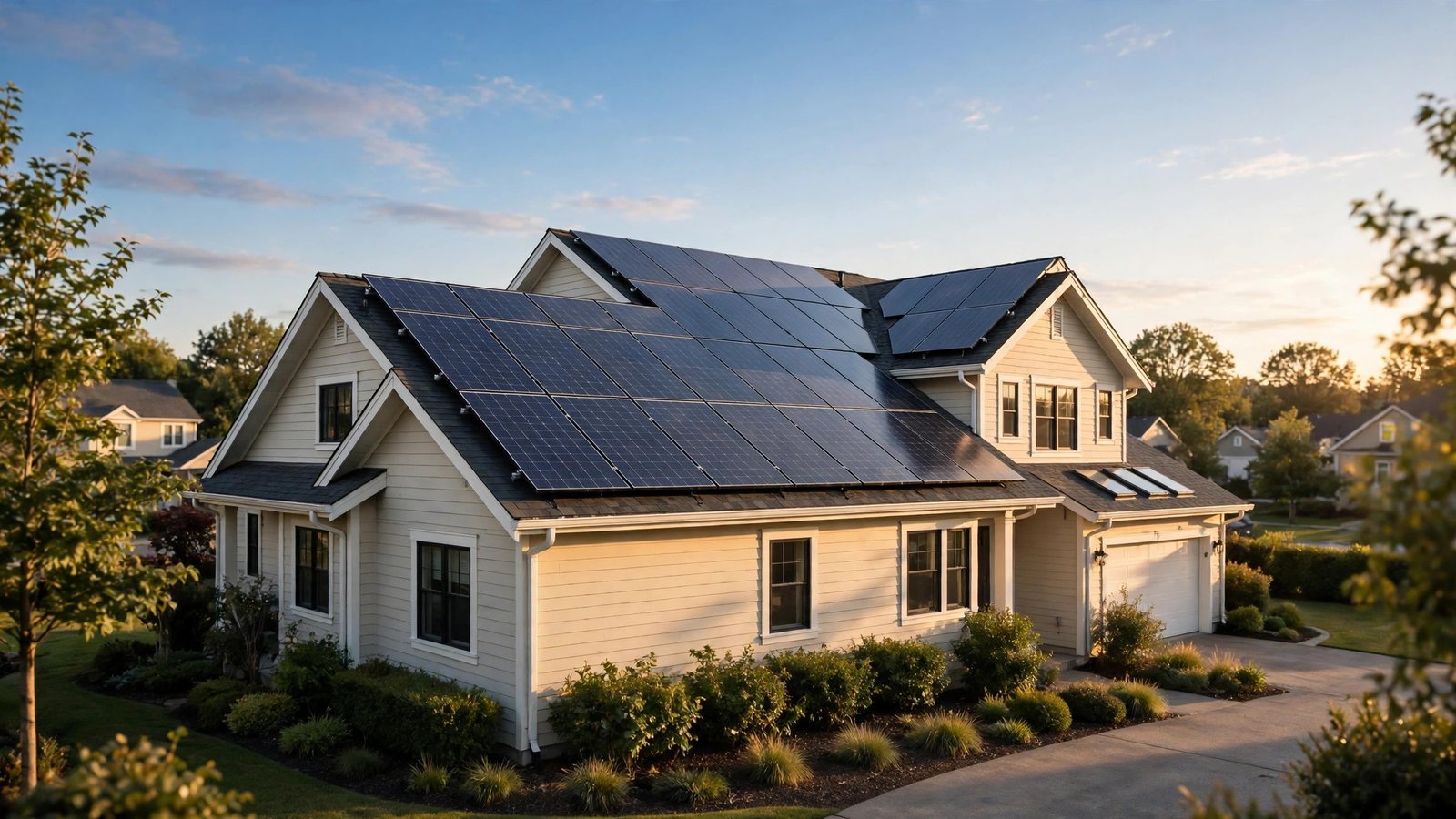

If you have been thinking about solar panels, the first question is always the money: how much does it cost to install solar panels in 2026? The honest answer is that most American homeowners pay between $18,261 and $36,409 for a professionally installed system, with a national average of $27,097, according to Angi’s 2026 cost data drawn from 2,546 verified projects. That is the gross price before any incentives — and in 2026, the incentive picture has changed completely, because the 30 percent federal tax credit that shaped solar pricing for years ended on December 31, 2025.
This guide breaks down what you actually pay, what drives the price, and whether solar still makes sense now that the federal credit is gone. Every figure comes from published 2026 cost data, and every price is a range.
How Much Does It Cost to Install Solar Panels? The Short Answer
For a typical American home, a solar installation costs about $2.50 to $3.50 per watt before incentives, according to data from NREL, EnergySage, and SolarReviews cited by Solar Panels Network’s 2026 cost guide. Most homes install a system between 6 and 10 kilowatts, which puts the total somewhere between $15,000 and $35,000 before incentives. Panels are only 40 to 45 percent of that total; the rest is labor, the inverter, mounting, wiring, permits, and installer margin.
System size is the biggest single factor in the final bill, and the relationship is straightforward: bigger system, bigger price, but a lower cost per watt. Here is what the published 2026 ranges look like by system size, before incentives.
| System size | Typical panels | Installed cost range (2026) | Best for |
|---|---|---|---|
| 4 kW | 10–12 | $8,000–$13,000 | Small home or low usage |
| 8 kW | 20 | $20,000–$28,000 | Standard 2,000 sq ft home |
| 10 kW | 25 | $25,000–$35,000 | Larger home or high usage |
| 12 kW | 30 | $30,000–$42,000 | Large home, EV, or heat pump |
Those ranges come from Angi’s 2026 data for the 4 kW system and Solar Panels Network’s 2026 guide for the larger sizes. Your own quote will land somewhere in or near these bands — if a quote comes in far below them, ask what is missing, and if it comes in far above, get a second quote before signing anything.
What Is Actually Included in the Price?
A solar quote is not a price for panels. It is a price for a finished, working system, and the hardware is less than half of it. On a typical $25,000 system, roughly $10,000 to $11,000 covers hardware — panels, inverter, racking, wiring, and monitoring — and the rest covers labor, permitting fees of $300 to $1,500, the utility interconnection application, and the installer’s overhead and profit.
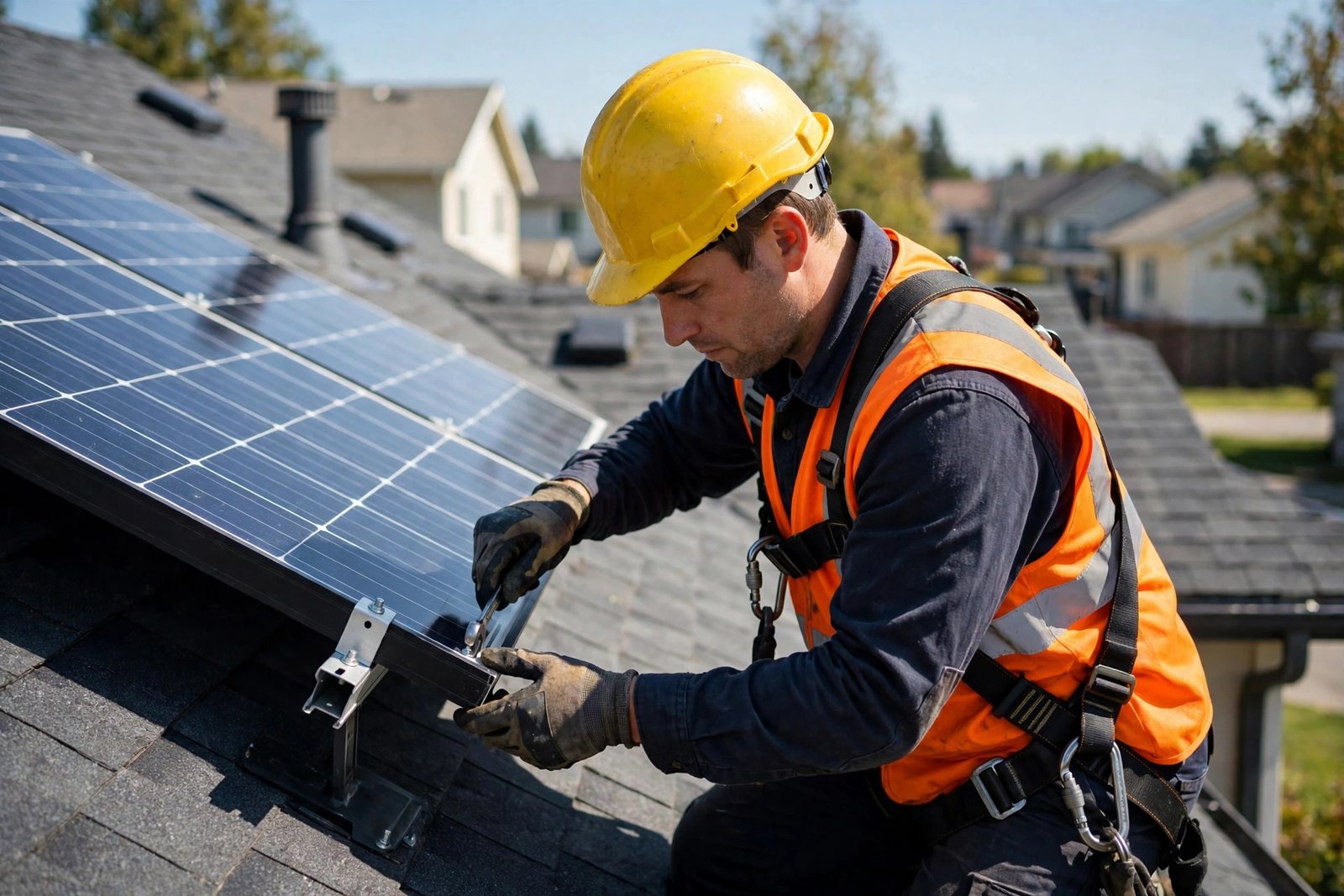
Labor alone runs $0.50 to $1.00 per watt, or $50 to $100 per hour, depending on how the installer prices the job. Permitting is the part homeowners most often underestimate: some cities approve a residential solar permit in days, others take weeks, and the fees vary widely. None of this is optional — a system installed without permits and utility permission cannot legally connect to the grid, and it can cause real problems when you sell the house.
The 30% Federal Tax Credit Is Gone — What That Means in 2026
Here is the change that makes most 2026 solar cost guides out of date: the 30 percent federal Residential Clean Energy Credit, known as Section 25D, ended on December 31, 2025. The One Big Beautiful Bill Act, signed on July 4, 2025, terminated the credit nearly a decade ahead of its original schedule — there was no phase-down and no transition period. If your system was installed and operating by December 31, 2025, you can still claim the 30 percent credit on your 2025 tax return. If it is installed in 2026 or later, you cannot. The GreenLancer guide to the solar tax credit change confirms the IRS position directly: the credit is not available for property placed in service after December 31, 2025.
That single change adds thousands to the effective cost of a 2026 system. On a $27,000 average installation, the old credit would have been worth about $8,100. Without it, payback periods stretch — one 2026 analysis puts the typical payback at roughly nine years instead of seven.
There are still ways to cut the cost. State and utility incentives are now the main lever: several states run solar rebate programs, and Washington DC, Delaware, Maryland, Ohio, Pennsylvania, and Virginia have active SREC programs that pay you for the clean energy your system produces. The most reliable place to check what is available where you live is DSIRE, the national database of state and utility incentives. Leases and power purchase agreements are also worth a look in 2026: because the leasing company owns the system, it can still claim the commercial solar credit, and some of that benefit shows up as a lower price to you — though you give up ownership and the long-term savings that come with it.
What Drives Your Price Up or Down?
Two neighbors with identical houses can get quotes thousands of dollars apart, and the reasons are usually visible on the roof. A simple, south-facing roof with new shingles is the cheapest install; a steep roof, a roof with multiple angles, or a roof that needs repairs first all add labor hours. And if your roof has less than ten years of life left, replace it first — removing and reinstalling panels later costs far more.
The second is panel type. Standard monocrystalline panels are the default in 2026 — most installs use 400 to 450 watt panels — and they are the cheapest option per watt. Premium panels from brands like Maxeon or REC cost more but produce more power from the same roof space, which matters if your roof is small. The third is the inverter: a standard string inverter is the cheapest, while microinverters or power optimizers cost more but perform better when part of the roof is shaded.
Location matters as much as hardware: labor rates, permit fees, and competition vary by state. How much does it cost to install solar panels in your state is therefore a question worth answering with local quotes rather than national averages. Get three quotes and compare them line by line — quotes for the same system routinely differ by thousands of dollars, usually in the soft costs: sales commission, overhead, and margin.
Should You Add a Battery?
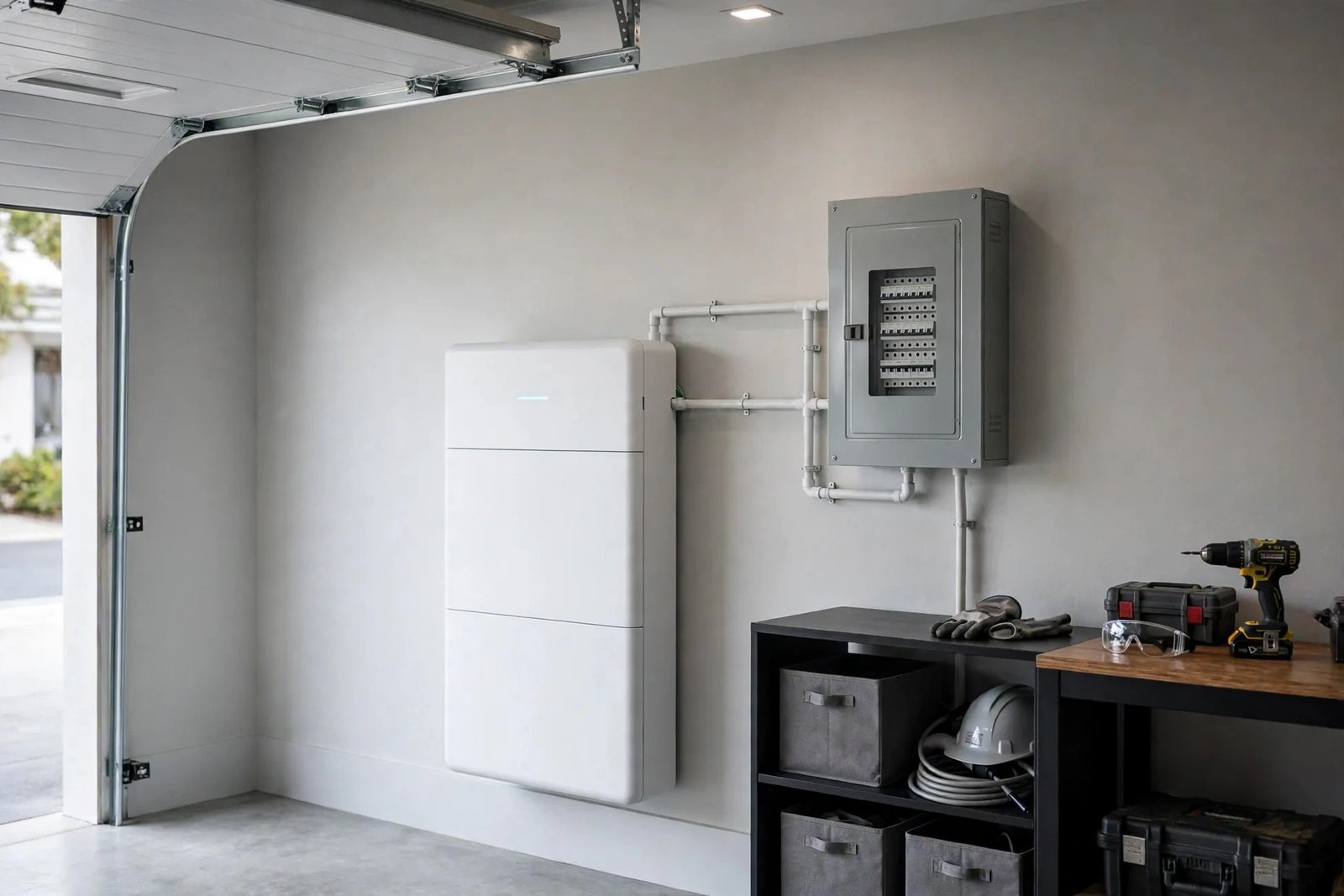
A home battery is the most common add-on, and the most expensive one. A modern 10 kWh lithium battery typically adds $7,000 to $12,000 installed, and the old 30 percent federal credit for batteries ended on the same date as the solar credit — December 31, 2025. Whether a battery is worth it depends on what you want it for. If your goal is backup power, a battery is the only way to keep the lights on during an outage, because a standard grid-tied system shuts off for safety reasons. If your goal is saving money, the math is tighter: a battery pays only where rates vary a lot by time of day, or where your utility pays very little for the power you send back.
For most homeowners, the sensible order is panels first, battery later. Batteries are modular, prices keep falling, and you can add one in a few years when the economics are clearer. If you do buy a battery now, size it to your actual needs — a 10 kWh unit covers the essentials (fridge, lights, internet, a few outlets) for most of a day, and going bigger mostly buys comfort rather than savings.
How Long Until Solar Pays for Itself?
Payback is the number that decides whether solar is a good investment for your house, and it depends on three things: what you paid, what electricity costs where you live, and how much power your system produces. Without the federal credit, the typical payback period is now roughly nine years, up from about seven — and the panels keep producing for 25 to 30 years after that. Over its life, a system effectively locks in your electricity rate at roughly 6 to 8 cents per kWh, against a national residential average that was around 16.8 cents per kWh in 2025 and is expected to keep climbing.
The fastest payback is in states with high electricity rates and strong sunshine — California, Hawaii, Massachusetts, and Connecticut lead the list. Net metering rules matter too: if your utility credits you at the full retail rate for power you send to the grid, payback is faster than if it pays a low wholesale rate. Before you sign, ask your installer for a payback estimate based on your actual bills, and check whether your utility has changed its net metering rules recently.
There is also a simpler way to think about it: a solar system is a 25-year purchase of electricity at a fixed price. If you plan to stay in your home for at least ten years and your roof is in good shape, the numbers usually work. If you plan to move in three years, they usually do not — unless solar adds resale value in your market, which it often does, but not always by the full cost of the system.
Ways to Cut the Cost Without Cutting Corners
The cheapest system is not the best deal — the best deal is a well-installed system at a fair price. Start by getting at least three quotes and comparing them on the same basis: same system size, same panel wattage, same inverter type. A quote that is far below the others usually means cheaper panels, a smaller system than you need, or costs that will appear later as change orders. Ask every installer for a cash price and a financed price separately: solar loans often carry dealer fees of 20 to 30 percent baked into the price, so a system quoted at $30,000 financed might cost $24,000 in cash.
Paying cash gives the lowest total cost, but a loan still beats a lease or PPA for most homeowners, because you keep the system, the savings, and any state incentives. If you do finance, compare the loan against a home equity loan — our guide on what a home equity loan is explains how that option works. And check your state’s incentive programs before you sign: a rebate or SREC program can be worth thousands, and the EnergyScout guide to maximizing solar credits in 2026 is a useful checklist of what still exists after the federal credit ended.
Finally, time your purchase. Installers are busiest in spring and summer, and some offer better pricing in the slower winter months. And do not skip the roof: if your roof has less than ten years of life left, replace it first. Paying to remove and reinstall panels later costs far more than doing the roof before the panels go on.

Is Solar Still Worth It in 2026?
Yes — for the right house, and with honest expectations. Solar without the 30 percent credit costs more upfront and pays back more slowly, but the core value has not changed: you buy 25 years of electricity at a fixed price, your bills drop from day one, and your home gains a system that many buyers will pay extra for. The homes where solar makes the least sense are the same as ever: a shaded roof, a roof that needs replacing, a move planned within a few years, or electricity so cheap that the payback stretches past fifteen years.
The biggest mistake in 2026 is using old information. Any guide, calculator, or installer quote that still subtracts 30 percent for the federal credit is working from a rule that no longer exists. Get quotes based on today’s rules, check your state incentives on DSIRE, and run the payback math on your own bills. For a related way to cut your energy bills without a big installation, see our guide on how to lower your electric bill in winter, and if your home needs other big-ticket work first, our guide on how much it costs to replace a water heater uses the same approach of real 2026 price ranges.
Frequently Asked Questions
How much does it cost to install solar panels on an average home?
Most homeowners pay $18,261 to $36,409, with a national average of $27,097 in 2026, according to Angi’s data from 2,546 verified projects. A typical 8 kW system — the most common residential size — runs $20,000 to $28,000 before incentives.
Is the 30% federal solar tax credit still available in 2026?
No. The 30 percent Residential Clean Energy Credit ended for systems placed in service after December 31, 2025. If your system was installed and operating by that date, you can still claim it on your 2025 return. State incentives and SREC programs still exist, and leasing companies can still claim the commercial credit.
How much do solar panels cost per watt in 2026?
About $2.50 to $3.50 per watt installed, before incentives, according to data from NREL, EnergySage, and SolarReviews. Larger systems usually cost less per watt than smaller ones, and prices vary by state, roof complexity, and installer.
How long do solar panels last?
Most panels carry a 25-year performance warranty and routinely operate for 30 years or more. Inverters typically last 10 to 15 years and may need replacing once during the system’s life.
Do solar panels increase home value?
Usually, yes — owned systems tend to add value, especially in markets where buyers understand the electricity savings. Leased systems are more complicated: some buyers do not want to take over a lease, so an owned system is the safer choice if resale value matters to you.
Can I install solar panels myself to save money?
DIY installation can cut costs substantially — component-only systems run about $1.15 to $1.50 per watt — but it is a serious electrical and roofing project. You still need permits, utility interconnection approval, and an electrician for the final hookup in most areas, and a DIY install may void panel warranties. For most homeowners, a professional install is worth the premium.
Conclusion
So how much does it cost to install solar panels in 2026? For most homes, $18,000 to $36,000 before incentives, with the average near $27,000 — and, for the first time in years, that is the real price, with no 30 percent federal credit to subtract. The system size you need, the state of your roof, and the installer you choose move the number more than any other factors, and the spread between quotes for the same job can be thousands of dollars.
Get three quotes, compare them line by line, check your state incentives, and run the payback math on your own electricity bills. If the numbers work for your house, solar is still a good buy in 2026 — it just takes a couple of years longer to pay for itself than it did in 2025. And if the numbers do not work, wait: panel prices keep falling, and a better roof or a better incentive program may change the answer next year.



