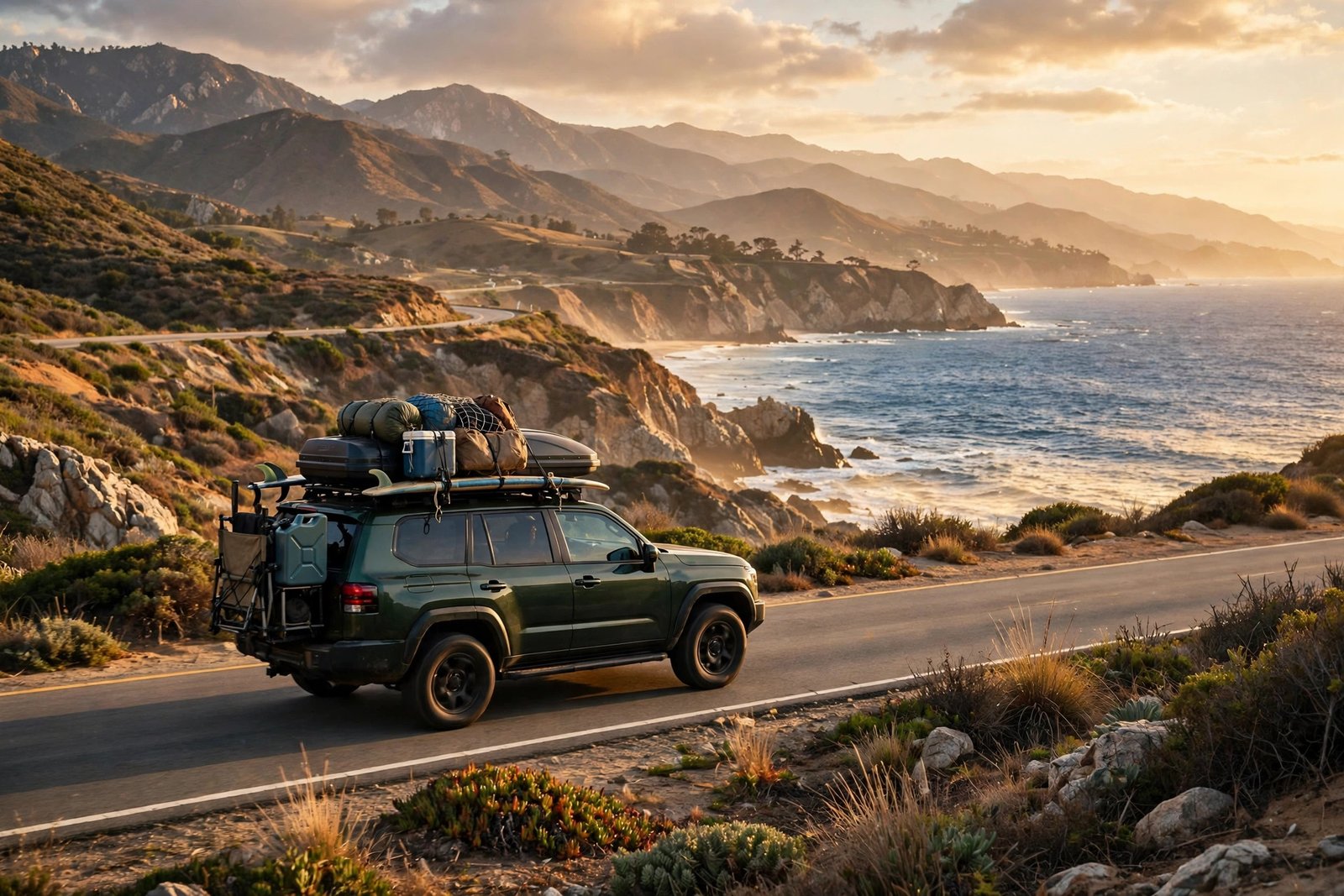

The best road trips rarely start with a full tank and an open wallet. They start with a map, a realistic number, and a willingness to trade a few luxuries for a lot more miles. If you want to learn how to plan a road trip on a budget, the secret is not to squeeze every cent until the trip stops being fun. It is to decide, before you leave, where your money actually buys happiness — and where it just disappears. A good diner breakfast with a view? Worth it. A third night in an overpriced hotel you only sleep in? Probably not.
This guide walks through the whole process, step by step: choosing a route that fits your days and your fuel tank, setting a budget you can actually stick to, and finding the small savings that add up to hundreds of dollars over a week on the road. You will also find a worked example for a five-day trip, so you can see how the numbers behave in real life rather than in theory.
How to Plan a Road Trip on a Budget: Start With the Route, Not the Hotel
Most people book accommodation first and then try to fit a route around it. Flip that order. Your route decides your mileage, your mileage decides your fuel bill, and your fuel bill is usually the largest unavoidable cost on a driving holiday. Start by pinning your start and end points, then ask a simple question: how far do you genuinely want to drive each day? For most travellers, 250 to 350 miles a day feels relaxed. Push past 450 miles and the trip turns into a commute with scenery flashing past the window.
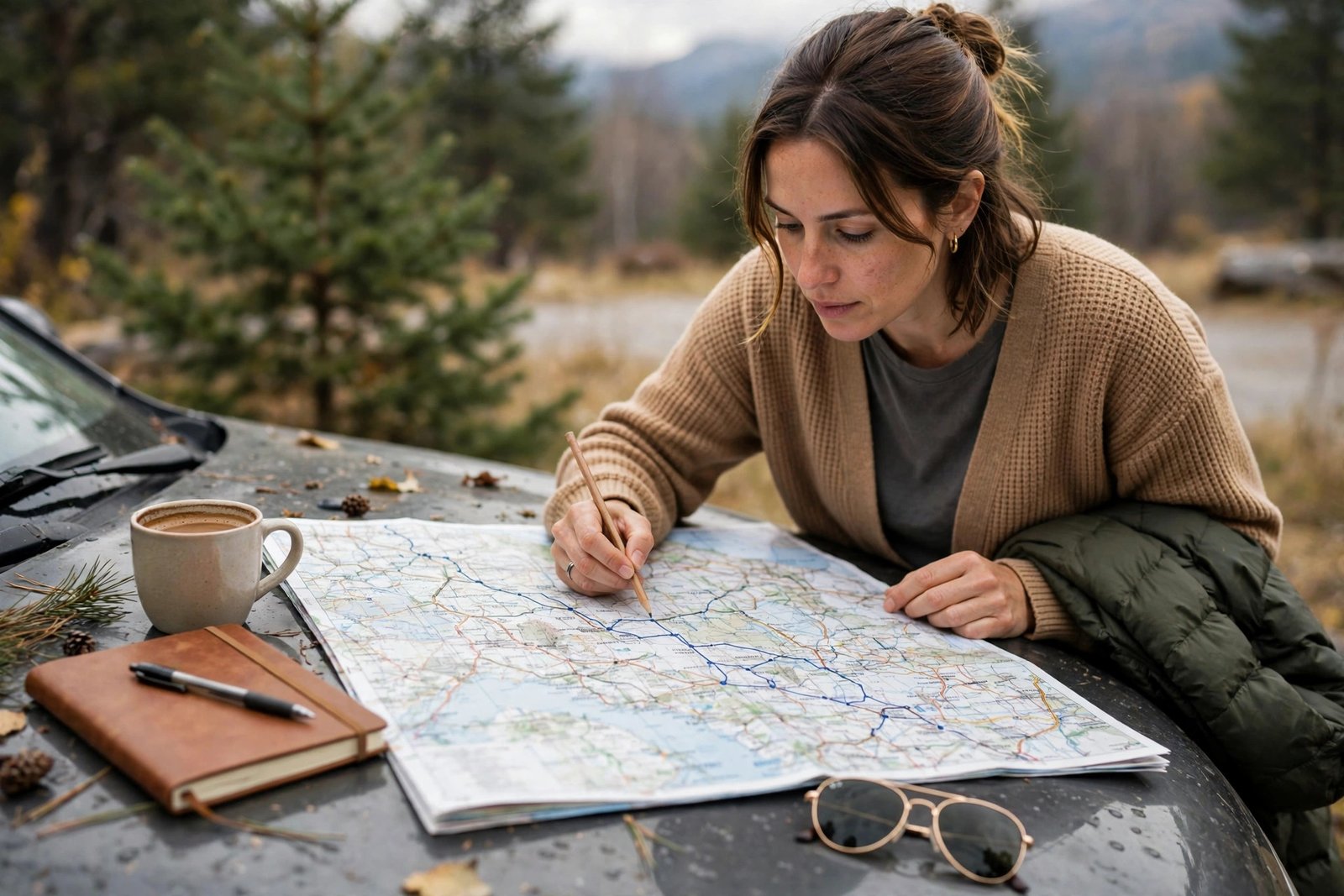
Plot the route with a proper trip planner rather than guessing from a paper map alone. A tool like road trip planner Roadtrippers lets you add stops, see distances between them, and spot where a small detour adds a great stop without adding an extra driving day.
Build in one flexible day if you can. Weather closes a mountain pass, a town festival tempts you to stay longer, or you simply find a beach worth a second morning.
Set a Total Budget Before You Book Anything
Once the route is roughly set, work out the total you are comfortable spending, then split it into five buckets: fuel, lodging, food, activities, and a contingency fund. Writing those five numbers down — even roughly — changes how you make every later decision, and that discipline is at the heart of how to plan a road trip on a budget. A $90 hotel stops looking like a bargain when you realise it eats the money you had set aside for two days of activities.
Be honest about who is paying. If two friends are splitting fuel and lodging, say so in the budget from the start. If one person is covering the car and another is covering food, the totals still need to add up.
Track spending as you go, even if it is just a note on your phone each evening. Ten minutes at dinner, adding up the day’s fuel, food, and lodging, keeps small overspends visible before they become a nasty surprise at the end of the trip. If you are also thinking about cheap flights for a future trip, the same habit applies: the cheapest headline price means little if the extras quietly double it.
A Worked Example: Five Days on the Road
The table below is an example, not a promise. Prices vary by region, season, and how many people are travelling, and the point is the shape of the budget, not any single line. Notice how food and lodging together cost more than fuel, and how the contingency line protects the rest of the plan.
| Budget item | Example cost (5 days, 2 people) | Notes |
|---|---|---|
| Fuel (about 1,200 miles) | $180 | Assumes roughly 30 miles per gallon; check your own car’s real figure |
| Food and groceries | $320 | Mostly groceries and picnics, plus a few café meals |
| Lodging (4 nights, mixed) | $380 | Two camping nights, one motel, one night with friends or a budget stay |
| Activities and entry fees | $120 | Free hikes and beaches plus a couple of paid attractions |
| Contingency (about 10%) | $100 | Tyre repair, a toll, a weather-forced extra night |
| Total | $1,100 | About $550 per person for five days |
If that total looks high, raise the lodging line first — that is usually where real-world prices surprise people.
Cut Fuel Costs Without Driving Like a Miser
Fuel is the cost most people overpay through habit rather than necessity. The single most useful habit is checking prices before you fill up. cheap gas prices on GasBuddy can show you where the next town’s stations are charging far less than the motorway service station you are standing at, and the difference is often enough to pay for lunch. Filling up in a larger town, away from motorway exits and tourist hotspots, is usually cheaper for the same reason: stations there compete for local drivers, not captive travellers.
Then there are the driving habits that cost nothing and genuinely help. Keep your tyres at the pressure recommended in the car manual, not a guess — under-inflated tyres increase rolling resistance and fuel use, and they wear out faster too. Keep your speed steady rather than surging and braking, use cruise control on flat motorways where it is safe, and take the roof box off when you do not need it.
Finally, do the boring maths once: your car’s real fuel economy on a long run, not the brochure figure. Fill the tank, note the mileage, drive a few hundred miles, fill it again, and divide. That one number is essential when you are learning how to plan a road trip on a budget, because it lets you price any route honestly and stops optimistic guesses from quietly wrecking your budget on day two.
Eat Well for Less: The Cooler Is Your Best Friend
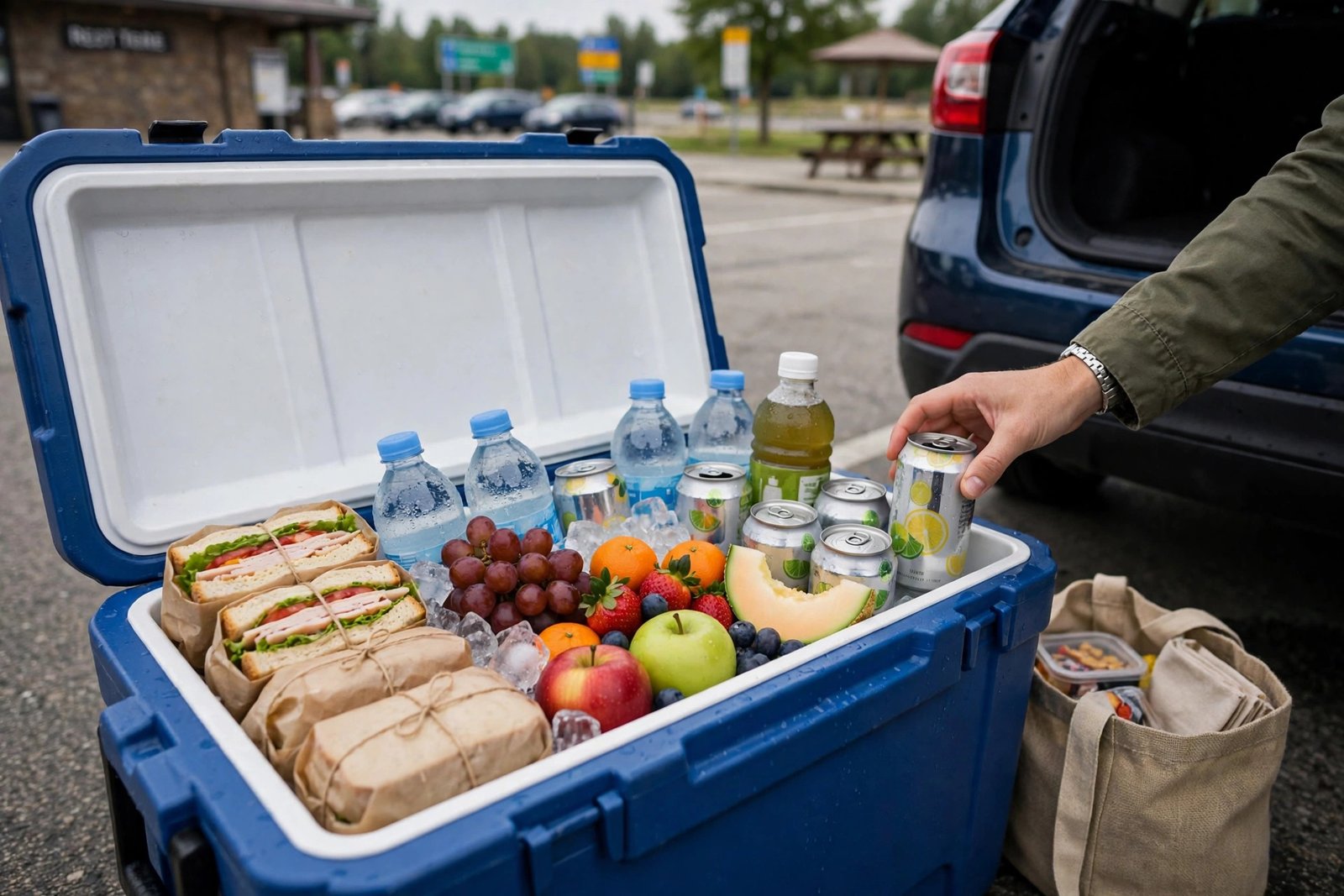
Restaurant meals are where road-trip budgets go to die — not because one meal is expensive, but because three meals a day, for several days, multiply fast. The fix is not to eat badly. It is to change the mix. Buy breakfast and lunch supplies at a supermarket at the start of each day or two, keep them in a cooler, and save restaurant spending for one good meal a day, ideally dinner, where sitting down actually adds something to the trip.
A workable cooler kit is simple: bread, cheese, cold meats or a vegetarian equivalent, fruit, yoghurt, water, and snacks that survive a warm car, like nuts and crackers.
When you do eat out, eat where locals eat. A busy lunchtime café a few streets from the main tourist strip is usually cheaper and better than the place with the biggest sign. Ask at a campsite, a petrol station, or your motel reception: people who live somewhere almost always know the one place that is both good and fairly priced. And if you are travelling abroad and worried about staying connected while you hunt for those recommendations, our guide to avoiding roaming charges abroad can save you a separate headache.
Mix Your Lodging: Camping, Motels, and the Occasional Treat
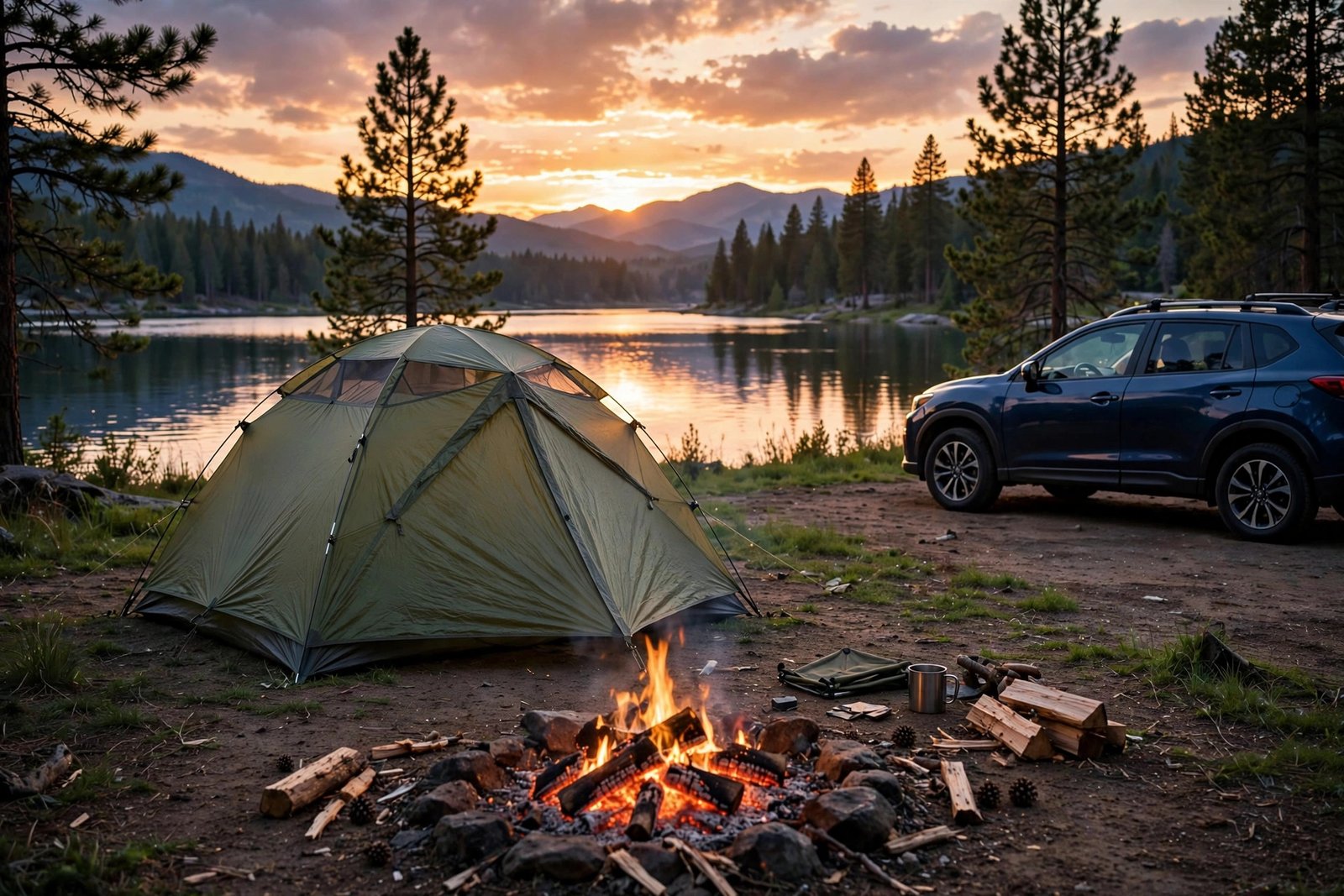
Lodging is the easiest budget line to control because you have so many options, and mixing them is smarter than picking one style for the whole trip. Camping is the cheapest option where it is available, and on a summer trip it can be the most memorable night of all — but it only saves money if you already own, or can borrow, the gear. Buying a full camping setup for one trip wipes out the saving, so borrow first, buy later, and only if you plan to camp again.
Budget motels and small guesthouses fill the middle ground, and choosing between them wisely is a core skill in how to plan a road trip on a budget. Book the nights where you genuinely need a proper bed, a shower, and a good night’s sleep before a long drive, and be flexible about the rest. Prices often drop sharply a short drive from the headline destination, so sleeping twenty minutes outside a popular town and driving in for the day can save a surprising amount without costing you the experience.
Do not overlook the free or nearly free options: staying with friends or family along the route, house-sitting swaps, and, where it is legal and safe, well-reviewed overnight stops for campervans. Whatever you choose, pack light and pack smart; a good travel backpack for 2026 makes the constant packing and unpacking of a mixed-lodging trip far less painful.
Free and Low-Cost Attractions Beat Expensive Ones More Often Than You Think
Some of the best road-trip stops cost nothing: a coastal walk, a viewpoint at sunset, a farmers’ market, a small-town main street, a free museum day. Build your days around one paid highlight at most, and let the free stops fill the rest. You will remember the unexpected beach you found on a detour far longer than the third paid attraction you queued for because a guidebook told you to.
National parks deserve a special mention. In the United States, the America the Beautiful pass costs $80 for U.S. residents for a year of entry to federal recreation sites, according to the Department of the Interior’s 2026 announcement, and it can pay for itself in just a few park visits — check the current details on the national parks passes page before you buy, since nonresident pricing differs. Elsewhere, look for regional passes, heritage cards, and free-entry days, and always check whether a park charges for parking or timed entry on top of admission, so the price you budget is the price you actually pay.
Also use the free infrastructure that towns provide: public libraries for wifi and a quiet break, community pools on a hot day, and local events listings. A town festival, a free concert in a park, or a weekend market costs little and gives you a story that no ticketed attraction can match. For route ideas and seasonal events, recreation passes and bookings on Recreation.gov is a useful starting point for federal sites in the United States.
Keep a Contingency Buffer — and Protect It
Every road trip has a surprise. A tyre picks up a nail, a road closes and adds fifty miles, a campsite is full and the only alternative is a motel, or someone gets a cold and needs a rest day. A contingency buffer of around 10% of your total budget turns those moments from trip-ruining crises into minor annoyances. The trick is to treat it as spent in your head: it is not spare money for souvenirs on day one, it is the fund that lets you keep going on day four.
Before you leave, do the checks that prevent the expensive surprises. Service the car if it is due, check tyres including the spare, top up fluids, and make sure your breakdown cover is valid for the whole route.
Finally, agree on a daily spending rhythm with your travelling companions. A short check-in each evening — what we spent, what tomorrow looks like, whether anything needs to change — takes five minutes and prevents the silent resentment that builds when one person is counting pennies and another is ordering dessert without thinking. Learning how to plan a road trip on a budget is, in the end, as much about that honesty as it is about fuel prices.
Frequently Asked Questions
How much should I budget per day for a road trip?
It depends on your region, your car, and your lodging mix, but the worked example above — roughly $220 a day for two people, or $110 per person — is a realistic starting point for a mixed camping and motel trip in many areas. Raise the lodging line for expensive cities, lower it if you camp most nights, and always add a contingency of about 10%.
Is it cheaper to camp every night?
Usually, yes, if you already own the gear and campsite fees are modest. But camping every night can be tiring on a long trip, especially in bad weather, and a tired driver is a safety issue, not just a comfort one. Most budget travellers find that mixing two or three camping nights with occasional motel nights gives the best balance of cost and rest.
How can I save on fuel on a long drive?
Check prices before you fill up, fill up away from motorway service stations where possible, keep tyres correctly inflated, drive at a steady speed, and remove roof boxes when you do not need them. Together, those habits typically save more than any single fuel discount card.
Should I book all accommodation in advance?
Book the nights that matter — arrival night, nights in very popular places, and nights before a long driving day — and leave the rest flexible where you can. Full advance booking gives certainty but removes your ability to change plans when you discover a place worth an extra day, which is often the best part of a road trip.
What is the biggest budget mistake road trippers make?
Eating every meal at restaurants and booking the most expensive lodging in the most popular town. Either habit alone can double a trip’s cost. Change the mix — groceries and picnics for most meals, lodging a short drive from the hotspot — and the savings appear without the trip feeling cheap.
Do I need a special pass for national parks?
Not always, but a pass can save money if you visit several parks in a year. Check the official pass page for the country you are visiting, compare the pass price with the entry fees for the parks on your route, and remember that parking, timed entry, and camping are often charged separately.
Conclusion
If you take one idea from this guide to how to plan a road trip on a budget, let it be this: a budget road trip is not a lesser road trip. Planned well, it is often a better one: slower days, picnics in better places, nights under canvas instead of in identical hotel rooms, and the satisfaction of coming home without a credit-card bill that spoils the memories. Set the route first, split the budget into five honest buckets, keep a contingency fund you do not raid on day one, and let the free stops do more of the work than the expensive ones. The road will do the rest.



