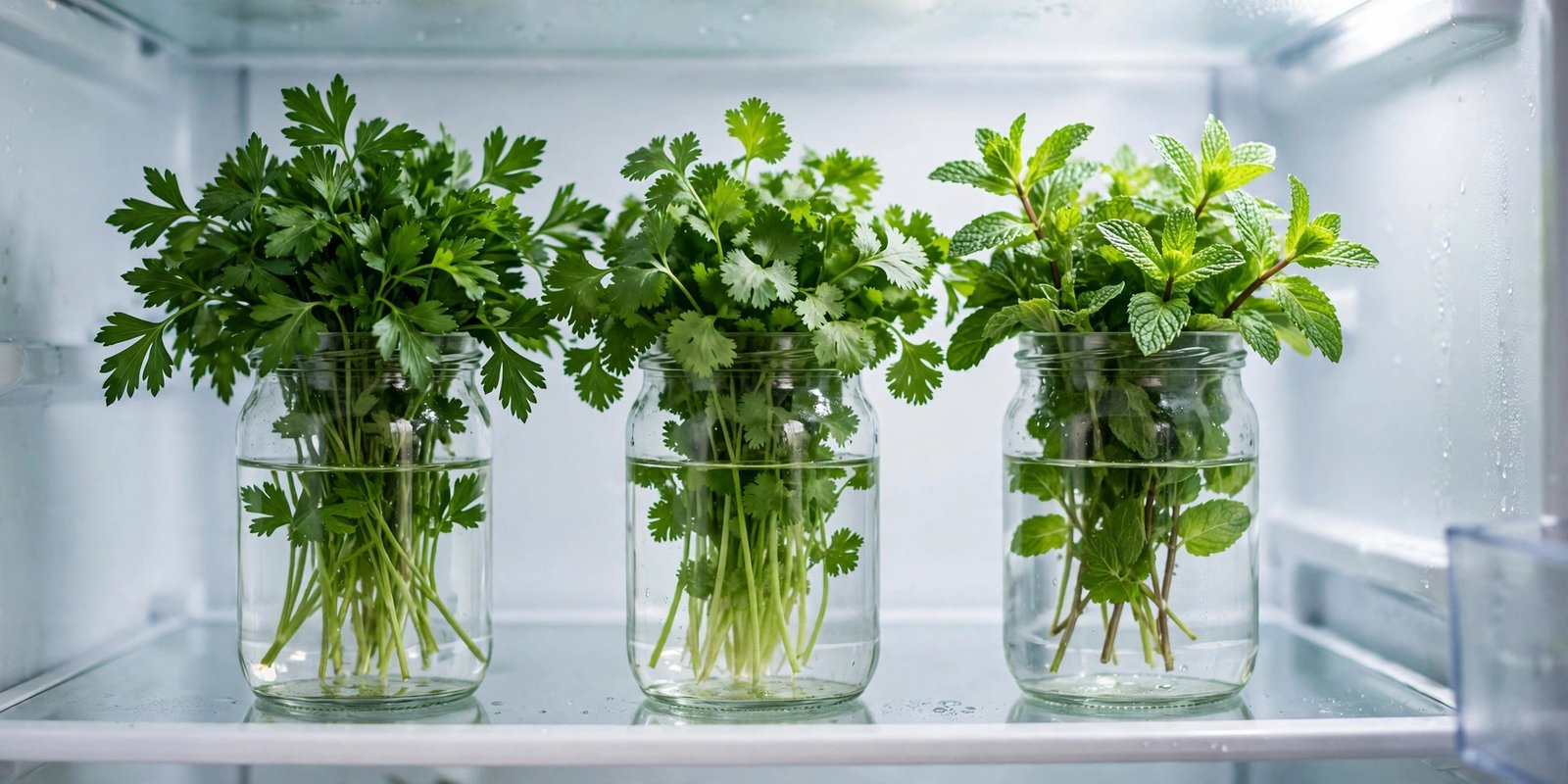

You buy a beautiful bunch of parsley on Sunday, full of plans for tabbouleh, and by Wednesday it is a limp, blackened mess at the bottom of the crisper drawer. Learning how to store fresh herbs in the fridge properly fixes that, and it is simpler than most guides make it sound. The method depends on the herb: tender herbs such as parsley, cilantro, mint, and dill last longest standing upright in a jar of water, while woody herbs such as rosemary, thyme, sage, and oregano do better wrapped loosely in a damp towel. Basil is the one exception — it hates the cold, and it belongs on the counter. Get the method right and most bunches stay fresh for two to three weeks, which turns a weekly gamble into a reliable habit.
Most bunches fail for the same two reasons: they dry out, or they sit in trapped moisture and rot. Good storage controls both. Water at the stem ends keeps the bunch hydrated, air circulation stops condensation from pooling, and a cool, steady fridge slows the enzymes that turn leaves yellow and limp. A few simple steps cover all of it, and this guide walks through the jar method, the damp-towel method, the basil exception, realistic shelf lives, and the mistakes that waste the most herbs.
Why Fresh Herbs Go Bad So Fast
Fresh herbs are still alive when you buy them. Their stems keep drawing up water, their leaves keep breathing, and the enzymes inside keep breaking down flavour compounds. In a warm kitchen, that process runs fast. In a fridge, it slows down, but only if the herbs stay hydrated and do not sit in water. A bunch left loose in the crisper drawer dries out from the fridge’s low humidity; a bunch sealed in a wet bag rots from trapped moisture. The right method balances the two.
Temperature matters too. The U.S. Food and Drug Administration recommends keeping a fridge at or below 40°F (4°C), and that range suits most herbs. If the fridge runs warm, herbs age faster and the risk of bacterial growth rises. FoodSafety.gov storage charts are a useful reference for how long fresh foods keep under proper refrigeration. According to the USDA, most fresh herbs keep for 7–10 days under good conditions, and some — properly stored parsley and cilantro — can stretch to two or three weeks.
First, Know Your Herb: Tender vs. Woody
Before you reach for a jar or a paper towel, sort your herbs into two groups. This single distinction determines which method to use, and getting it wrong is the most common reason a bunch fails. Tender herbs and woody herbs have different structures, different water needs, and different enemies.
Tender herbs
Tender herbs have soft stems and thin, delicate leaves. Parsley, cilantro, mint, and dill belong here, along with chervil, tarragon, and chives. They lose water fast through their leaves, so they need a steady water supply at the stem ends. Without it, they wilt within a day. With a jar of water and a loose cover, they stay crisp and bright for weeks.
Woody herbs
Woody herbs have firm stems and tougher, lower-moisture leaves. Rosemary, thyme, sage, and oregano belong here, along with bay and winter savoury. They hold water well and rot easily if they sit wet. A damp towel gives them just enough moisture without drowning them, and a bag with a little air keeps the towel from drying out.
How to Store Fresh Herbs in the Fridge: The Jar Method Step by Step
This is the method recommended by Oregon State University Extension for herbs such as parsley, cilantro, mint, and dill. It takes about five minutes to set up, and the bunch then looks after itself for a week or two. The steps below work for a standard supermarket bunch.
Step 1: Trim the stem ends.
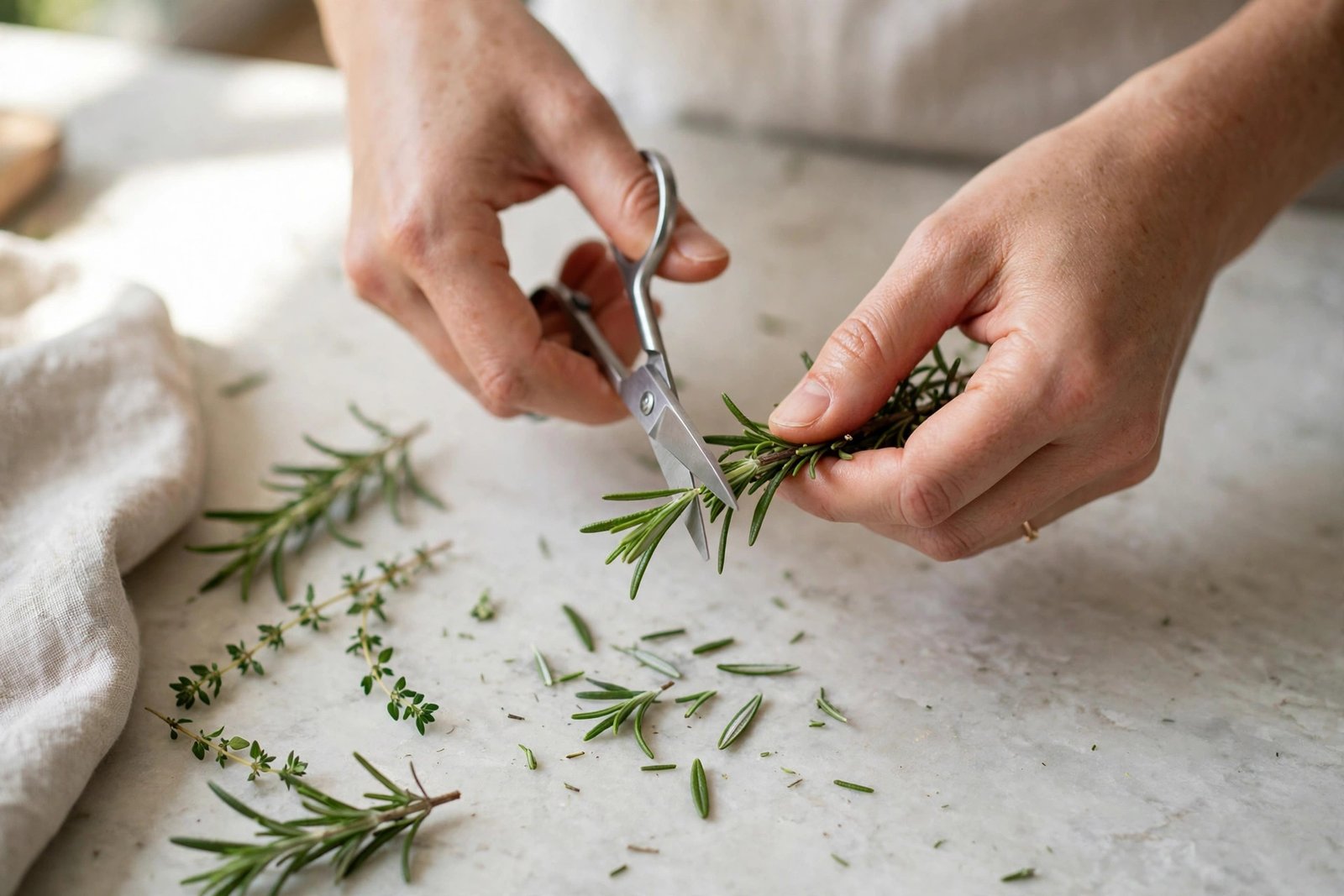
Use clean scissors to cut about half a centimetre off the bottom of each stem. Stems seal over after harvest, and a fresh cut reopens them so they can drink water again.
Step 2: Stand the bunch in a jar of cold water.
Use a jar or a tall glass with 2–3 centimetres of cold water. Stand the bunch upright so the cut ends are submerged but the leaves stay dry. Leaves sitting in water rot quickly and turn the water cloudy.
Step 3: Cover loosely with a bag.
Slip a plastic bag over the top like a tent and secure it loosely around the jar with an elastic band. The bag traps humidity around the leaves without sealing them airtight. It also stops the leaves from drying out in the fridge’s low humidity.
Step 4: Refrigerate in a stable spot.
Put the jar on a middle shelf where the temperature is steady. Avoid the door, where the temperature swings every time it opens, and keep the jar away from the back wall, where leaves can freeze against the cold surface.
Step 5: Change the water every two to three days.
Lift out the bunch, tip out the old water, rinse the jar, and refill with fresh cold water. If the water smells sour or looks cloudy, change it sooner. Fresh water keeps bacteria down and the stems drinking.
Step 6: Remove yellowed leaves.
Each time you change the water, pick out any leaves that have turned yellow or soft. One rotting leaf spreads quickly to its neighbours, and a clean bunch lasts far longer than a bunch left to decay.
For the full Extension guidance behind this method, see the Oregon State University Extension herb storage guide. If you want to freeze the surplus instead, our guide to freezing fresh herbs covers the methods that keep flavour best.
The Damp-Towel Method for Woody Herbs
Woody herbs prefer a drier home. For rosemary, thyme, sage, and oregano, the damp-towel wrap is often more reliable than the jar. These herbs hold their own moisture well, and standing them in water can make their stems slimy within days.
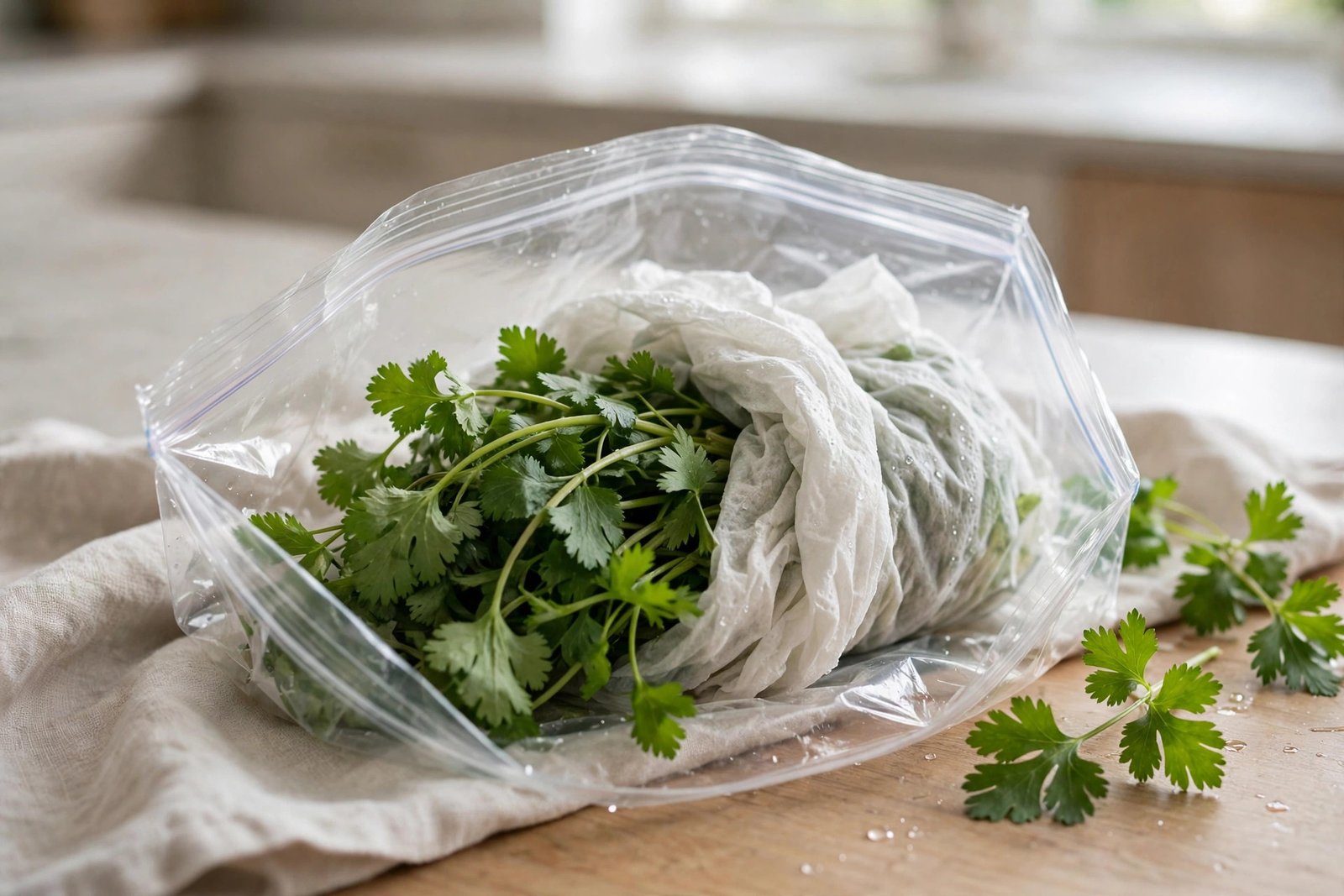
Start with a clean paper towel or a thin tea towel. Dampen it lightly — it should feel like a wrung-out sponge, not wet. Lay the herbs in a single layer on the towel, roll it up loosely, and place the roll inside an unsealed plastic bag or a reusable container with the lid ajar. The towel keeps the humidity around the leaves steady while the open bag lets excess moisture escape.
Done this way, soft herbs wrapped in a damp towel can keep for about 10–14 days, and woody herbs often last two to three weeks. Check the towel every few days. If it feels dry, dampen it again. If it feels soggy, replace it with a fresh one.
The Basil Exception: Keep It on the Counter
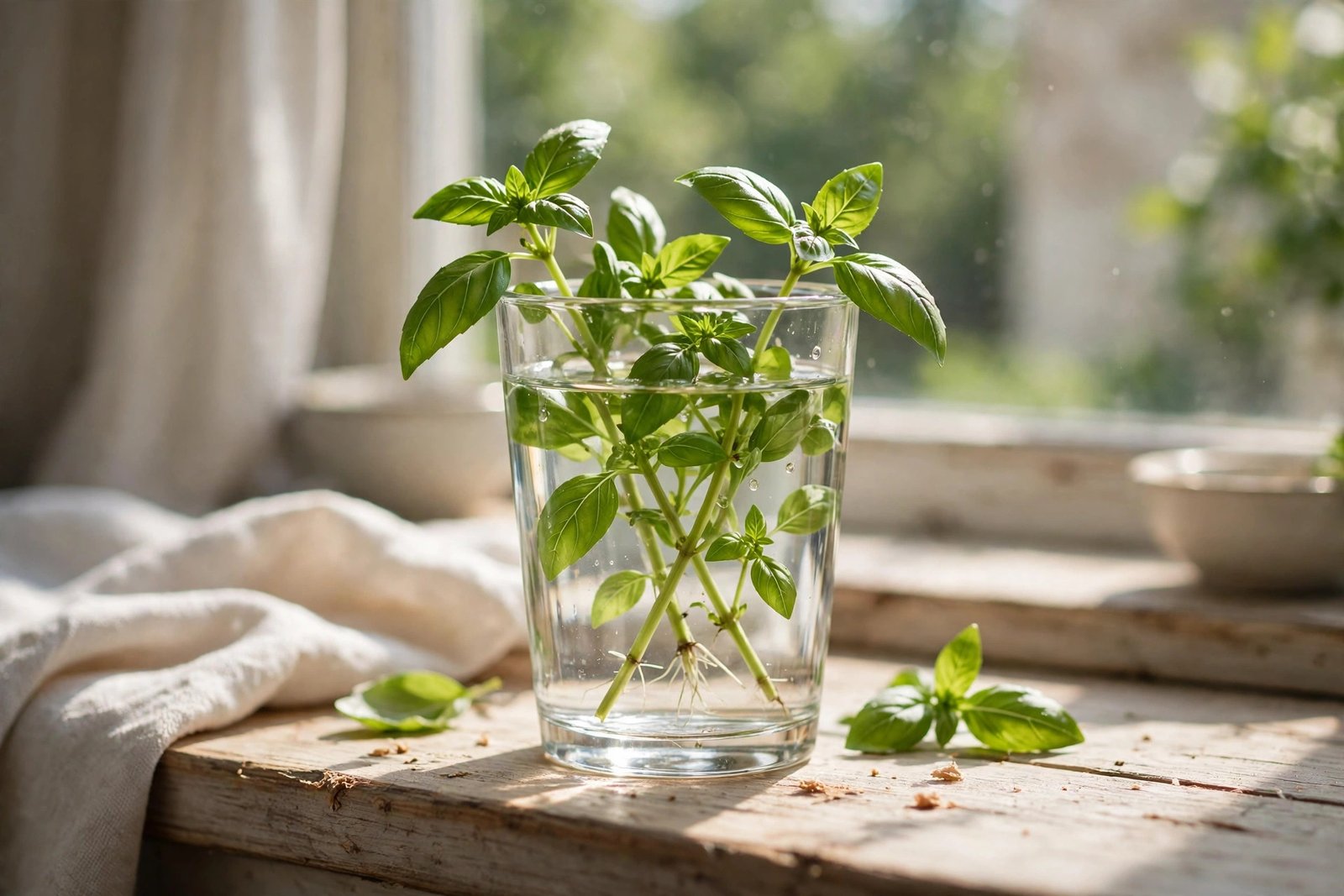
Basil is the exception that proves the rule, and it is the herb most people store wrong. Basil suffers chilling injury below about 10°C (50°F), so it turns black and limp in a standard fridge. Even a night in a cold fridge can ruin a bunch. It also wilts fast if its stems dry out, so the best home for basil is a glass of water on the kitchen counter.
Research from UC Davis, published in Frontiers in Plant Science in 2023, looked at exactly this problem. The researchers stored basil at several temperatures and found that a short cold treatment of 4°C for up to 12 hours caused only a small rise in phenolic content, while cold storage for 24 hours or more pushed the plant to release a volatile compound called benzaldehyde, which gives off an almond-like smell and damages the tissue. In practice, the takeaway is simple: a cold fridge harms basil quickly, and the counter is safer.
If your kitchen is very warm, keep the glass away from the stove and out of a sunny window, but do not refrigerate basil. Change the water every couple of days, trim the stems when they look brown, and treat the bunch as a cut flower — the method is the same, and the basil will last about a week.
How Long Do Fresh Herbs Really Last?
Exact shelf life depends on how fresh the bunch was when you bought it, how you store it, and how often the fridge door opens. The figures below assume a fresh bunch, the right method, and a fridge at or below 40°F (4°C).
Basil on the counter in water lasts about a week, sometimes a little more in a cool kitchen. Herbs that prefer the fridge — the tender herbs in the jar method — typically keep for one to three weeks, depending on the variety and how fresh they were to begin with. Woody herbs wrapped in a damp towel often keep for three to four weeks. Herbs that are already wilting, yellowing, or smelling sour will not recover, whatever method you use.
Five Mistakes That Kill Fresh Herbs
1. Washing before storing.
Never wash herbs before storing unless you dry them thoroughly afterwards. Water left on the leaves invites mould. Wash herbs just before you use them. If you do rinse a bunch, spin it dry in a salad spinner or pat it gently between clean towels until no visible water remains.
2. Storing herbs next to ripening fruit.
Apples, bananas, and some other fruit release ethylene gas as they ripen, and that gas speeds up yellowing and decay in leafy herbs. Keep herbs away from the fruit bowl, and use a separate crisper drawer if you can.
3. Sealing bags airtight.
Herbs need some air. A bag sealed tight with wet leaves inside becomes a greenhouse for slime. Leave the bag open a crack, or use a container with the lid ajar, so moisture can escape.
4. Keeping herbs in oil at room temperature.
Homemade herb-infused oil stored at room temperature carries a real botulism risk. The bacterium Clostridium botulinum can grow in the low-oxygen environment of oil, and garlic and herbs in oil have caused outbreaks. For safety, check food preservation resources. Store homemade herb oil in the fridge and use it within a few days, or freeze it.
5. Storing everything the same way.
The biggest mistake is treating all herbs alike. Basil in the fridge, rosemary drowning in a jar, cilantro left loose in the crisper — each one fails for a different reason. The same care applies across the kitchen: storing onions and potatoes and keeping bananas fresh longer use the same principle — the right temperature, the right humidity, and the right neighbours.
What to Do With Herbs That Are Already Wilting
A wilted bunch is not always a lost bunch. If the leaves are limp but still green and smell fresh, try reviving them. Trim the stems, stand the bunch in cold water for 15–20 minutes, and many herbs will perk up. Parsley and cilantro respond particularly well. If the leaves are yellow, black, or slimy, compost the bunch — no amount of cold water will bring it back.
The Spruce Eats herb guides have practical recipes and storage tips for most common herbs.
Frequently Asked Questions
Can I store all fresh herbs the same way?
No. Tender herbs such as parsley, cilantro, mint, and dill do best standing in a jar of water in the fridge, while woody herbs such as rosemary, thyme, and sage prefer a damp-towel wrap. Basil is the exception: keep it on the counter in water. The method matters more than the container.
How long do fresh herbs last in the fridge?
The USDA FoodKeeper guidance gives 7–10 days in the fridge as a general figure, and 1–2 months in the freezer for herbs frozen for later use. With the jar method and fresh water, parsley and cilantro can stay usable for two to three weeks, and woody herbs in a damp towel often last three to four weeks.
Should I wash herbs before putting them in the fridge?
No, unless you dry them thoroughly first. Washing leaves moisture on the leaves, which encourages mould and slime. Wash herbs just before you cook with them, and dry them well after rinsing.
Why did my herbs turn slimy in the fridge?
Sliminess usually means too much trapped moisture, water that was not changed, or damaged leaves left in the bunch. Start with a fresh bunch, trim the stems, change the water every two to three days, and remove yellowed leaves promptly.
Can I revive wilted herbs?
Often, yes. Trim the stems and stand the herbs in cold water for 15–20 minutes. Parsley and cilantro usually perk up. Basil, mint, and dill respond well too. If the leaves are yellow or slimy, the bunch is past saving.
Is it safe to store herbs in oil?
Not at room temperature. Homemade herb oil kept on the counter can allow Clostridium botulinum, the bacterium that causes botulism, to grow. Store homemade herb oil in the fridge and use it within a few days, or freeze it in small portions.
Conclusion
Fresh herbs do not have to be a use-it-or-lose-it purchase. With the jar method for tender herbs, a damp-towel wrap for woody herbs, and a glass of water on the counter for basil, a single bunch can stretch across two or three weeks of cooking. Once you know how to store fresh herbs in the fridge this way, the crisper drawer stops being a graveyard and starts being a pantry. Buy the bunch, store it properly, and use it down to the last leaf.



