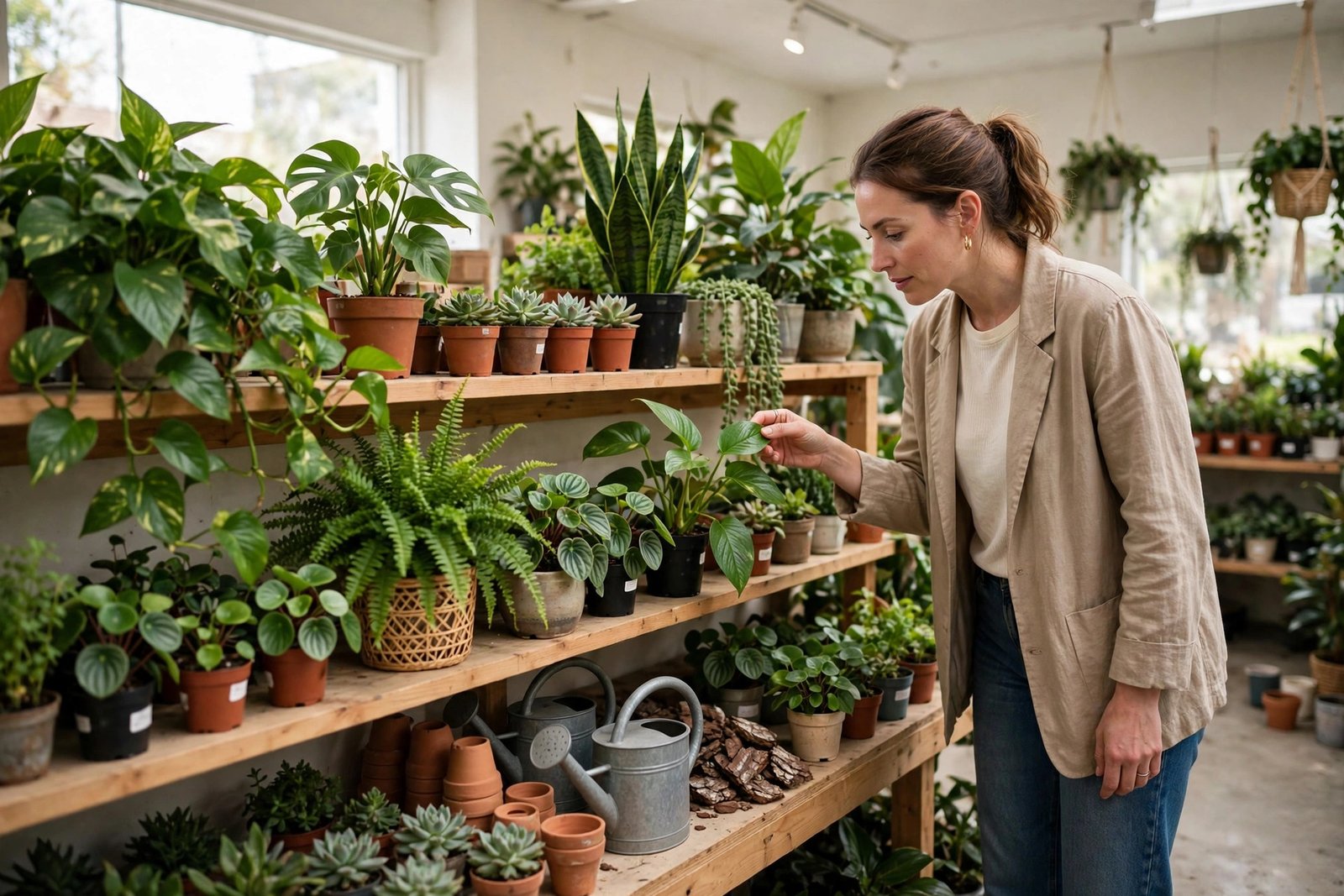

Everyone has done it: you walk into a garden centre for one small plant and walk out with a wilting monstera that dies within a month. The mistakes to avoid when buying a houseplant are rarely about how much you love plants, and almost always about what you did not check before you paid. A plant that looks gorgeous on the shelf can already be carrying pests, sitting in rotting roots, or doomed by the light in the room you plan to put it in. This guide walks through the mistakes to avoid when buying a houseplant, what to inspect in the shop, and how to bring home a plant with a real chance of thriving.
Mistakes to Avoid When Buying a Houseplant: Start With Light, Not Looks
The single biggest of the mistakes to avoid when buying a houseplant is choosing a plant for how it looks rather than for the conditions you actually have. A fiddle-leaf fig in a dim corner is in trouble before you even pay, no matter how carefully you water it afterwards. Light is the one thing you cannot easily fix: you can change a pot, adjust watering, and treat pests, but you cannot talk a sun-loving plant into thriving in a north-facing room with one small window.
Before you shop, work out what light your intended spot really gets. Watch it through the day. A spot that gets a few hours of direct sun is very different from a bright room that never sees a direct ray, and both are very different from a genuinely dark corner. Then match the plant to that light, not to the label’s optimistic promise. Labels that say “low light” often mean “tolerates lower light for a while,” not “thrives with almost no light.” If you are not sure, ask the shop staff what the plant was growing in, and be honest about your room. A good nursery would rather sell you a pothos that survives than a calathea that dies, because a returning customer is worth more than one impulse sale.
Mistake 2: Skipping the Pest Check
Never judge a houseplant only from the top. Pests hide where you do not look: under leaves, in leaf joints, along stems, and near new growth. The DIY Garden guide to nursery buying mistakes puts pest-checking first for good reason, because spider mites, mealybugs, scale, and thrips can all hitchhike home on a single plant and spread to your whole collection within weeks.
Do a quick inspection in the shop. Turn a few leaves over and look for fine webbing, cottony white clumps, hard brown bumps on stems, tiny moving specks, silver streaking, or sticky residue on the leaves. Sticky residue matters even if you cannot see an insect: it is honeydew from sap-sucking pests, and it means something is actively feeding. Check the neighbours on the shelf too. If the plants around yours are crawling with pests, yours has probably been exposed even if it looks clean. If you spot a problem, leave that plant behind, no matter how good the discount is. A cheap infested plant is the most expensive plant you will ever buy, because treating a houseful of plants costs far more than the saving.
Even a clean-looking plant deserves quarantine at home. Keep it separate from your other plants for at least one to two weeks, check it again a few days after bringing it home, and only move it into the group once you are confident. If you have ever battled tiny flies over your pots, our guide to getting rid of fruit flies in plants shows why new plants are one of the most common ways an infestation arrives, and our guide to natural fruit fly remedies covers the kitchen side of the same problem.

Mistake 3: Ignoring the Roots and Soil
Leaves tell you about today; roots tell you about next month. A plant can look lush on top while its roots are rotting underneath, and by the time the leaves show it, recovery is much harder. Before you buy, look at the soil and, if the shop allows it, gently lift the plant to peek at the root ball. Many reputable nurseries welcome a gentle check, especially if you ask politely.
Healthy roots are usually light-coloured, firm, and fibrous, with fine feeder roots visible. Dark, mushy, or foul-smelling roots signal rot, and a solid brick of roots circling tightly around the pot means the plant has been confined too long. A few roots poking from the drainage holes are normal, but masses of roots escaping from the base suggest neglect and a plant that urgently needs repotting. The soil itself tells a story too: it should be lightly moist, not waterlogged and not bone dry. Soil that smells sour or fermented has been sitting anaerobic, and green mould on the surface suggests chronic overwatering and neglect on the shelf.
Press gently near the soil line as well. The stem base should feel firm and stable. A mushy, soft, or blackened base is a sign of rot at the crown, and that kind of damage is much harder to reverse than a pest problem. If the stem wobbles loosely in the pot, the root system may already be too damaged to anchor it, which is a clear walk-away sign.
Mistake 4: Buying a Pot With No Drainage
One of the quietest mistakes to avoid when buying a houseplant is bringing home a pot that cannot drain. Pretty ceramic pots with a solid base look wonderful on the shelf, but they trap water at the roots and quietly cause rot. The plant sits in a puddle after every watering, the roots suffocate, and the leaves yellow for reasons that look mysterious until you tip the pot and find standing water.
Treat the decorative pot as an outer cover, not the plant’s home. Keep the plant in its plastic nursery pot, which has drainage holes, and set that inside the decorative cover, tipping out any water that collects after watering. If you do want to plant directly into a decorative pot, check that it has a hole, and that the hole is not taped shut from transport. As a rule, when you do repot, choose a new pot only one to two inches larger in diameter than the current root ball. A small plant in a huge pot is a classic overwatering trap, because all that extra soil stays wet long after the roots have had enough.
Mistake 5: Assuming Damaged Leaves Do Not Matter
A few damaged leaves on an otherwise healthy plant are normal; plants get bumped on shelves and in transit. But widespread yellowing, brown crispy edges, pale bleached patches, or wilting across the whole plant are not cosmetic. They are symptoms, and they tell you the plant is already stressed, underwatered, overwatered, sun-scorched, or pest-damaged. Buying a stressed plant means you start your relationship in rescue mode, and not every plant recovers.
Look at the pattern, not just the presence, of damage. Yellow lower leaves alone can mean natural ageing, but yellowing across the whole plant with soggy soil points to root trouble, and blackened, mushy patches mean rot, which you often cannot fix. Buy flowering plants with plenty of buds still to open rather than in full flower, since a plant in full bloom will fade fast at home. And if a plant is wilting in the shop despite moist soil, walk away: wilting with wet soil means the roots have stopped working, not that it needs a drink.

Mistake 6: Buying a Plant You Cannot Identify
A vague common name is not enough. Many plants share common names, and care advice for one can kill another. “Palm” could mean a dozen species with different light and water needs, and a mislabelled plant can send you home with entirely wrong care instructions. Before you buy, confirm the botanical name on the label, and if the label is missing or vague, ask staff or look the plant up on your phone before you pay.
Identification matters for safety too. Some popular houseplants are toxic to pets and children if chewed, including pothos, dieffenbachia, philodendrons, and peace lilies. That does not mean you cannot own them, but it does mean you should know what you are bringing home and place it out of reach if you share your home with curious toddlers or cats. The Leaf and Thrive guide to choosing a healthy houseplant makes the same point: confirm the species, not just the common name, before you commit.
Identification also protects your wallet. Rare or variegated plants command high prices because they are fashionable or slow to propagate, but a variety that costs a fortune one year is often cheap and common the next once propagation catches up. Paying a hype price for a plant you cannot even name is the worst version of this mistake. Buy the plant, not the trend.
Mistake 7: Starting With a Difficult Plant
Some plants punish small mistakes and others forgive them. Calatheas, maidenhair ferns, and many rare aroids are beautiful, but they demand consistent humidity, careful watering, and stable conditions that beginners rarely have yet. Starting with one as your first plant is setting yourself up for a discouraging failure that has nothing to do with your talent as a plant owner.
Start with something tough, learn its rhythms, and add the demanding plants once your routine is steady. A pothos, snake plant, or spider plant will tolerate a missed watering and a less-than-perfect window while you learn. That early success teaches you what healthy growth looks like, which makes it far easier to spot trouble in a fussier plant later. The Plantastic Haven nursery buying guide makes the same recommendation: match the plant to your experience as well as to your light, and leave empty-handed rather than buying a plant you cannot yet keep alive.
Mistake 8: Impulse-Buying More Plants Than You Can Care For
Five plants you barely watch will struggle more than one you tend properly. Every plant needs regular watering, turning, and inspection, and that time adds up. Before you buy, be honest about how many plants you can realistically check each week. If the answer is three, buy three, and enjoy them properly rather than watching eight slowly decline.
Impulse buying also bypasses every check in this guide. The plant you grab on the way to the till is the one you did not inspect for pests, did not match to your light, and did not identify. Make a rule: if you did not plan to buy it, you still run the full inspection before it goes in the basket. That single pause prevents most bad purchases. And give yourself permission to leave empty-handed. The right plant two weeks from now will always beat the wrong one bought today.
Mistake 9: Forgetting Transport and the First Two Weeks
The journey home can undo a perfect purchase. In winter, a tropical plant left in a cold car boot can be chilled beyond recovery in a short time, and in summer the same car becomes an oven. Carry plants inside the car, protected from cold wind and direct heat, and ask the shop for a paper wrap or sleeve if one is offered. Avoid putting a plant in a hot or cold draught near an open window on the way home, and do not leave it in the car while you run other errands.
Once home, resist the urge to repot immediately. Repotting is stressful, and a plant that has just changed homes is already stressed. Unless the soil is failing, the plant is severely rootbound, or pests or rot are present, leave it in its nursery pot for a few weeks while it adjusts. Water only when the soil needs it, keep it in stable light, and watch for pests during quarantine. If you want a calmer home environment for your new plants overall, our guide to making your home smell good naturally has low-effort ideas that pair well with a growing indoor garden.

Frequently Asked Questions (FAQ)
What is the first thing to check when buying a houseplant?
Match the plant to your light first, then inspect for pests. Light is the hardest condition to fix after purchase, and pests are the easiest problem to import by accident, so those two checks come before anything else.
Should I repot a new houseplant straight away?
Usually not. Let it settle for a few weeks in its nursery pot unless the soil is failing, the plant is severely rootbound, or you find pests or rot. Repotting adds stress on top of the move, and most plants do better if you wait.
How do I tell if a houseplant has pests in the shop?
Look under leaves and in leaf joints for fine webbing, cottony clumps, hard bumps on stems, tiny moving insects, silver streaking, or sticky residue. Check the neighbouring plants too, since pests spread across a shelf.
Is it worth buying a discounted plant that looks unhealthy?
Only if you know exactly what is wrong and you can fix it, such as simple underwatering in an otherwise healthy plant. Avoid discounted plants with pests, mushy stems, or root rot, because those problems spread or prove hard to reverse.
Can I buy a houseplant if I have pets?
Yes, but check toxicity first. Popular plants like pothos, philodendrons, and peace lilies are toxic if chewed, so either choose pet-safe plants or place toxic ones well out of reach. Confirm the species before you buy, not just the common name.
Why do my new houseplants keep dying within weeks?
The most common reasons are a light mismatch, hidden pests or root rot that were present at purchase, a pot without drainage, or repotting shock in the first days. Running the checks in this guide before you buy addresses all four.
Conclusion
The mistakes to avoid when buying a houseplant come down to one habit: inspect before you buy, and match the plant to your home rather than to your wish list. Check the light, check under the leaves, check the roots and soil, confirm the name, make sure the pot drains, and start with plants your experience can support. Quarantine the new arrival, hold off on repotting, and protect it on the journey home. Do those things, and the plant you bring home has a real chance, not just a hopeful one. The best houseplant purchase is rarely the prettiest one on the shelf. It is the healthy one that fits your light, your routine, and your home, and it will reward you by still being alive, and growing, a year from now.



