Space Heater vs Central Heating: Which One Actually Costs Less?
Every winter, the same question comes up in cold living rooms across the country: is it cheaper to run a little space heater in the room you are sitting in, or to heat the whole house with the central system? The answer most people expect — that the small heater must be cheaper because it is small — turns out to be wrong most of the time. The space heater vs central heating debate is not about the size of the appliance. It is about the price of the heat itself, and electric resistance heat is one of the most expensive ways to make warmth that exists.
That does not mean a space heater never wins. Used the right way — heating one occupied room while the rest of the house runs cooler — it can genuinely cut your bill. Used the wrong way, as an extra heater on top of a central system already running at full temperature, it just adds cost. This guide does the real math with the U.S. average electricity rate and explains exactly when each option is the cheaper choice.
Space Heater vs Central Heating: The Real Math
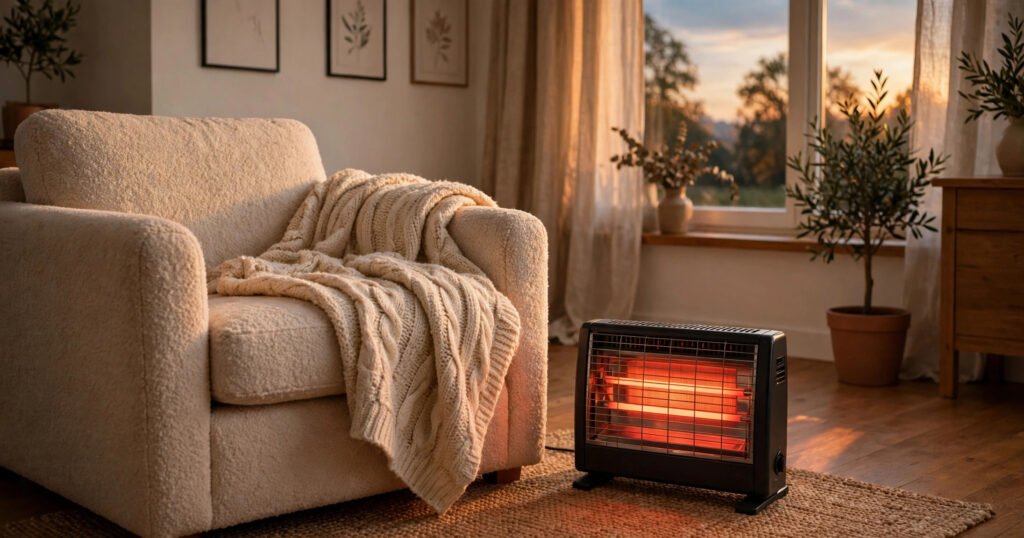
Start with the basic fact that decides almost everything in this comparison: a space heater makes heat with electricity, and electricity is expensive heat. A standard space heater draws 1,500 watts. At the U.S. average residential electricity rate of 18.16 cents per kilowatt-hour, reported by the U.S. Energy Information Administration for August 2026, that heater costs about $0.27 per hour to run. The June 2026 average was 18.34 cents per kilowatt-hour, which gives essentially the same result.
Run that heater for 8 hours a day, and the cost adds up fast: roughly $2.18 a day, or about $65 to $67 a month. That is for heating one room. Heat a second room with a second heater and you have doubled it. A 1,500-watt heater always uses 1.5 kilowatts, and at the average rate that is always about 27 cents an hour.
Now compare that with what the same amount of heat costs from a central system. A 1,500-watt heater produces about 5,100 BTU of heat per hour. Getting that same 5,100 BTU from a 90% efficient gas furnace costs roughly $0.08 to $0.09 — about a third of the space heater’s cost. Getting it from a heat pump costs roughly $0.09 to $0.11, again about a third. Per unit of heat, resistance heating costs about three times as much as a gas furnace or a heat pump. That is why heating a whole house with space heaters is almost always a bad idea.
| Heat source | Cost for the same 5,100 BTU of heat | Cost per hour (1,500W equivalent) |
|---|---|---|
| Electric space heater (resistance) | ~$0.27 | ~$0.27 |
| 90% gas furnace | ~$0.08–0.09 | ~$0.08–0.09 |
| Heat pump | ~$0.09–0.11 | ~$0.09–0.11 |
Your own rate may be higher or lower, but the three-to-one gap does not close, because it comes from the price of the fuel, not the appliance.
How Much Does a Space Heater Cost to Run?
The headline number is $0.27 an hour for a standard 1,500-watt heater at the national average rate. But your real cost depends on your local rate, how many hours it runs, and whether it runs at full power the whole time. Many heaters have a thermostat and a low setting that cycles the heater on and off once the room reaches temperature. A heater on its low setting costs about half as much per hour while it is running, and one that cycles off costs less again. The $0.27-an-hour figure is the worst case: full power, all the time.
That distinction matters because it is where people fool themselves. A heater that runs flat out for 8 hours a day costs $65 to $67 a month. A heater with a thermostat that keeps a small, well-insulated room warm might run at half that. The room matters as much as the heater: a small bedroom with the door closed needs far less heat than a large living room with high ceilings and drafty windows. Before you buy a heater, check the room — our guide on how to insulate your windows for winter covers the cheap fixes that help most.
What Central Heating Costs for the Same Warmth
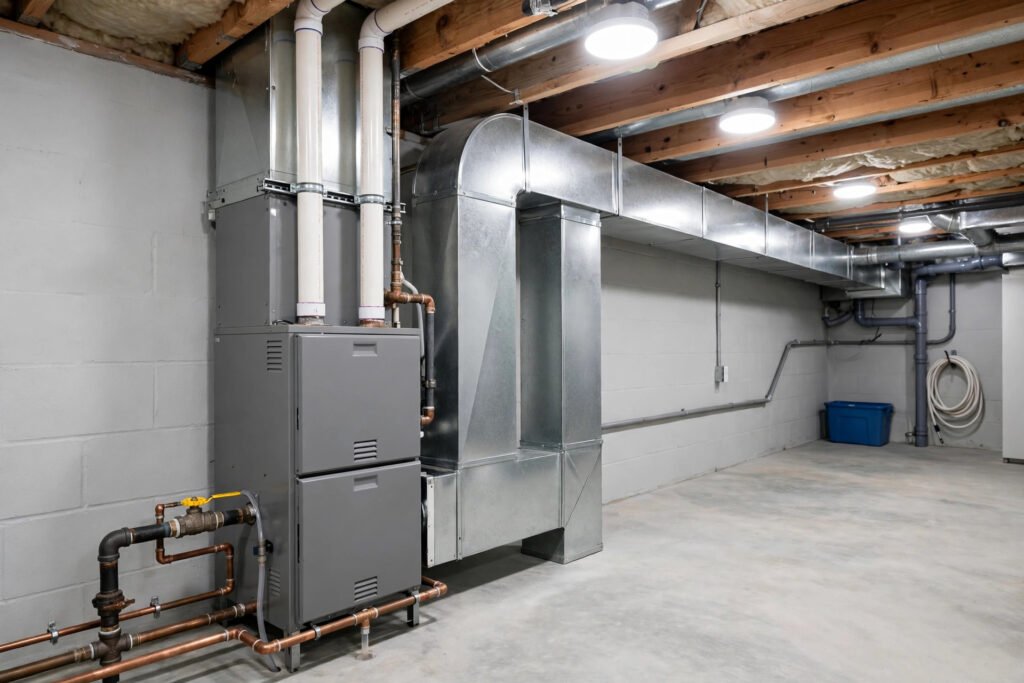
Central heating looks expensive on the bill because the bill covers the whole house. But per unit of heat, it is far cheaper than a space heater. A 90% gas furnace turns 90 cents of every dollar of gas into heat in your home, and gas is simply a cheaper fuel than electricity per unit of energy. The same 5,100 BTU that costs about $0.27 from a space heater costs about $0.08 to $0.09 from that furnace. A heat pump does even better on efficiency — it moves heat rather than making it — and lands at about $0.09 to $0.11 for the same warmth.
That is why the standard advice from energy experts is to heat the whole house with the central system and use a space heater only as a supplement, not a replacement. The Department of Energy’s guidance is clear: the cheapest heat is the heat you do not need, which is why insulation, sealing drafts, and a sensible thermostat setting save more than any appliance choice. Energy.gov publishes the full guidance, including the thermostat strategy below.
The one case where central heating loses is the empty house. A furnace heating five rooms so that one person can sit comfortably in one of them is wasting most of its output. That is the one scenario where a space heater earns its keep.
When a Space Heater Actually Wins
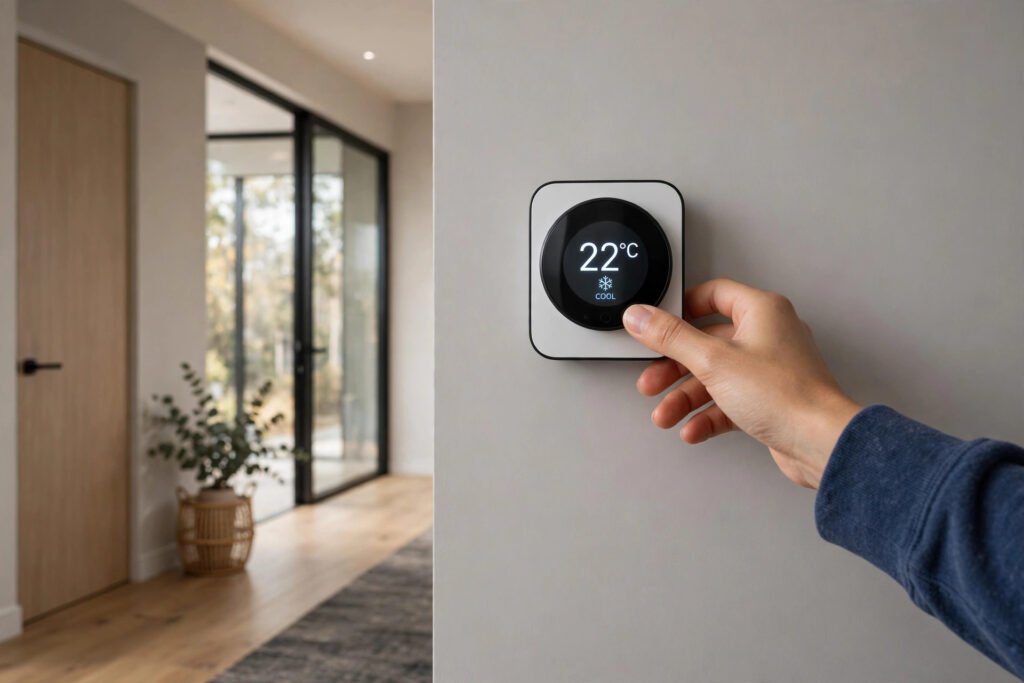
A space heater wins when it lets you turn the central thermostat down. That is the whole trick, and it is the only one. The U.S. Department of Energy says that turning your thermostat back 7 to 10 degrees Fahrenheit for 8 hours a day can save up to 10% of your yearly heating and cooling costs. A space heater makes that strategy livable: you drop the whole house to 62 or 65 degrees, and you keep the one room you are sitting in comfortable with the heater.
Turn the thermostat down 7 to 10 degrees for the 8 hours you spend in your home office, and the furnace runs far less during those hours. The saving across the whole house is larger than the $0.27 an hour the space heater costs — because the furnace was heating every room, and the heater is heating one. The space heater vs central heating question, in this scenario, is not really a contest between two heaters. It is a contest between heating one room and heating a whole house, and one room almost always wins.
If your household gathers in one living room after dinner, a space heater plus a lowered thermostat can cut the evening’s heating cost noticeably. The key word is “plus” — the heater only saves money when the thermostat actually goes down. If the thermostat stays where it was, the heater is just an extra $0.27 an hour on top of a bill that has not changed.
There are also situations where a space heater is the only practical option: a room the central system does not reach well, or a home office in a converted garage. In those cases the comparison is space heater versus a cold room, and the heater wins by default. Our roundup of the best space heater picks for 2026 covers models with thermostats and safety shut-offs.
When Central Heating Is the Cheaper Choice
Central heating wins in almost every other situation. If more than one room is occupied, the space heater’s advantage disappears: two heaters cost about $0.54 an hour, three cost about $0.81, and at that point you are paying far more than the central system would cost to heat the same space — while getting less even, less comfortable heat. A family spread across a living room, a kitchen, and two bedrooms should simply run the furnace.
Central heating also wins on comfort and safety. A furnace heats evenly, with no hot spot beside the heater and cold corners across the room. It has no exposed heating element, no cord to trip over, and no risk of being knocked over by a child or a pet. It runs while you sleep, which a space heater should never do. And it adds no extra load to your electrical circuits.
The clearest rule of thumb is this: if the central system is already running and keeping the house at a temperature you find comfortable, a space heater adds cost and nothing else. Turn it off. If the house is cold in one room and fine everywhere else, fix the room — check the vents, the insulation, and the windows — before you reach for a plug-in heater. And if the central system is broken, get it fixed: running a house on plug-in heaters is one of the most expensive ways to stay warm. Our guide on how to save money on heating in winter covers the fixes that pay for themselves fastest.

Safety Rules You Should Never Skip
Space heaters are involved in a large share of home heating fires, and almost all of those fires are preventable. The U.S. Consumer Product Safety Commission’s rules are simple and non-negotiable. Keep at least three feet of clearance around the heater — no curtains, bedding, furniture, or clothing within that zone. Never leave a space heater running unattended, and never run one while you sleep. Plug it directly into a wall outlet, never into an extension cord or a power strip, and keep it on a flat, stable surface.
Buy a heater with modern safety features: tip-over shut-off, overheat protection, and a thermostat. The U.S. Consumer Product Safety Commission publishes the full safety guidance, and Consumer Reports tests heaters for these features. A heater that shuts itself off when it tips over is not a luxury — it is the difference between a scare and a fire.
Central heating has its own maintenance rules, and neglecting them costs money as well as safety. Change the furnace filter regularly, keep vents unblocked, and have the system serviced before winter. A dirty filter makes the furnace work harder, and a blocked vent leaves rooms cold.
How to Cut Your Heating Bill Either Way
Whichever system you use, the cheapest heat is the heat you do not lose. The Department of Energy’s thermostat guidance is the single most effective free step: turn the thermostat back 7 to 10 degrees Fahrenheit for 8 hours a day — while you sleep, or while the house is empty — and you can save up to 10% of your yearly heating and cooling costs. A programmable thermostat makes that automatic.
Beyond the thermostat, the fixes are unglamorous and effective: seal drafts around windows and doors, insulate the attic, close the curtains at night, and keep the heat where you are. Our guide on how to lower your electric bill in winter covers the full list. The U.S. Energy Information Administration publishes the average residential electricity rates used in this article, and HomeGuide has useful cost comparisons for heating systems if you are weighing a bigger upgrade.
The space heater question, in the end, is a thermostat question. Buy the heater if it lets you turn the central system down and heat one room instead of a whole house. Skip it if the house is already warm — in that case, the $0.27 an hour is money spent for warmth you already have.
Frequently Asked Questions
Is it cheaper to use a space heater or central heating?
Central heating is cheaper per unit of heat — about a third of the cost. A 1,500-watt space heater costs about $0.27 an hour at the average U.S. electricity rate, while the same 5,100 BTU costs about $0.08 to $0.09 from a 90% gas furnace and about $0.09 to $0.11 from a heat pump. A space heater only saves money when it lets you turn the central thermostat down and heat one room instead of the whole house.
How much does it cost to run a space heater for 8 hours a day?
About $65 to $67 a month for a standard 1,500-watt heater at the U.S. average residential rate of 18.16 cents per kilowatt-hour (EIA, August 2026). That assumes full power for the full 8 hours; a heater with a thermostat that cycles on and off will cost less.
Can a space heater heat a whole house?
Not practically, and not cheaply. One heater warms one room. Heating a whole house with plug-in heaters means running several of them at about $0.27 an hour each, which costs far more than a central furnace or heat pump for the same warmth. Use a space heater for one occupied room, not as a replacement for central heating.
Is it safe to leave a space heater on overnight?
No. The U.S. Consumer Product Safety Commission says never to leave a space heater running unattended, and never to run one while you sleep. Keep three feet of clearance around it, plug it directly into a wall outlet, and choose a model with tip-over shut-off and overheat protection.
Does turning down the thermostat really save money?
Yes. The U.S. Department of Energy says turning your thermostat back 7 to 10 degrees Fahrenheit for 8 hours a day can save up to 10% of your yearly heating and cooling costs. It works whether you heat with gas, a heat pump, or electricity.
What size space heater do I need for one room?
A standard 1,500-watt heater is designed for a single room of ordinary size, and it produces about 5,100 BTU of heat per hour. The room matters more than the heater: a small, well-insulated room with the door closed will stay warm on far less power than a large, drafty one. If the room never gets warm, fix the drafts and insulation first.
Conclusion
The space heater vs central heating question has a clear answer, and it is not the one most people expect. Per unit of heat, a space heater costs about three times as much as a gas furnace or a heat pump: about $0.27 an hour for 5,100 BTU, against $0.08 to $0.09 from a 90% furnace and $0.09 to $0.11 from a heat pump. Heating a whole house with plug-in heaters is one of the most expensive ways to stay warm.
But the space heater has one genuine win: it lets you turn the central thermostat down 7 to 10 degrees and heat the one room you are actually sitting in. Do that, and the heater pays for itself. Run it on top of a central system already keeping the whole house warm, and it is $0.27 an hour for nothing. The heater is not the decision. The thermostat is.