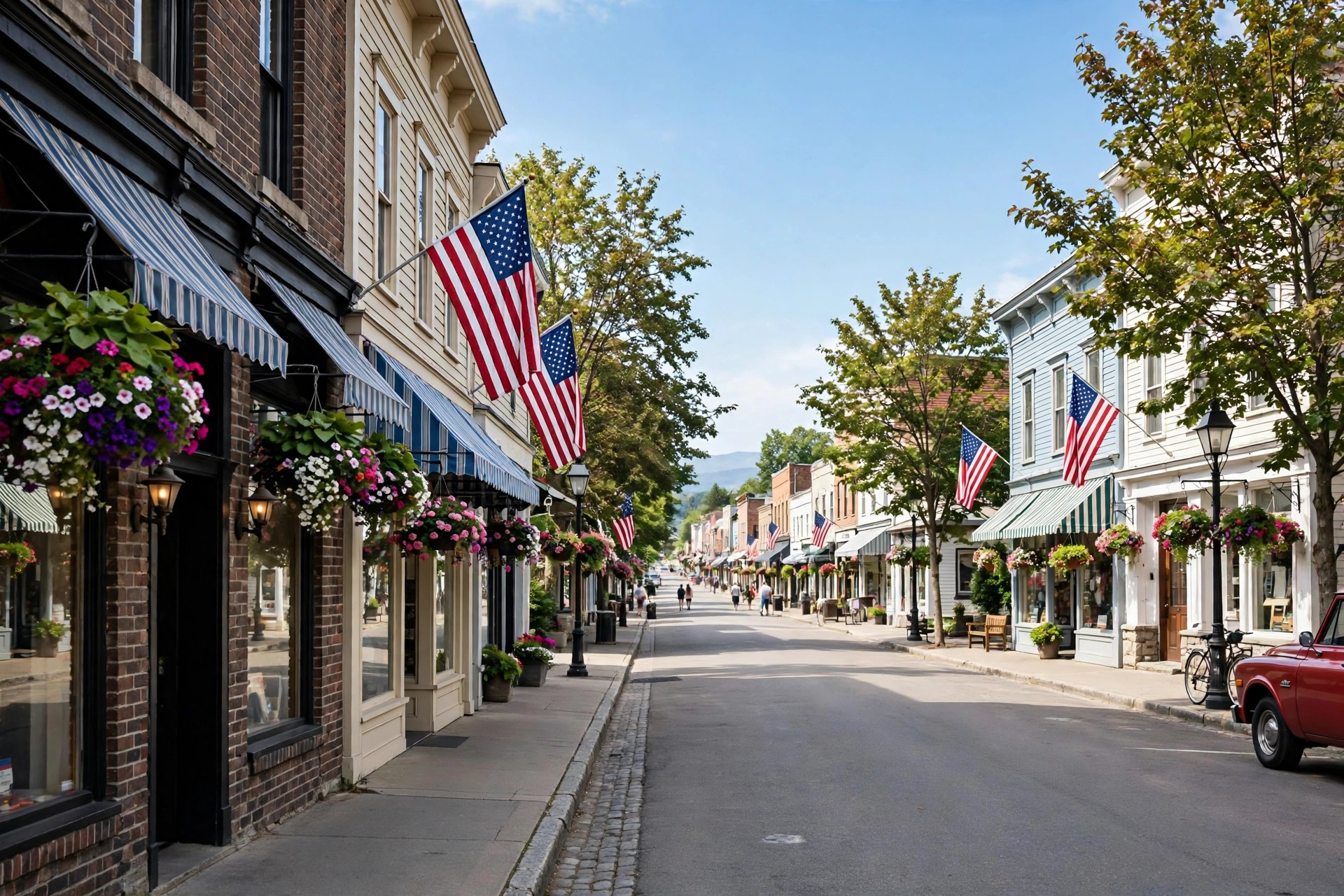

Looking for small business ideas for small towns? You are in the right place. Small towns are quietly some of the best places to start a business: rent is a fraction of city prices, competition is thin or nonexistent, and word of mouth travels fast when everyone knows everyone. The catch is that you need ideas that match real rural demand — not city trends transplanted into a town of 8,000 people.
This guide covers 25 small business ideas for small towns, grouped into services, food, retail, and online businesses. Every idea includes a typical startup-cost range and an honest explanation of why it fits small-town life. Costs are framed as “typically $X–$Y” because real numbers depend on your location and how lean you start.
Why Small Towns Are Underrated for Starting a Business
Big cities get the startup glory, but small towns offer advantages money can’t buy. Commercial rent can be 60–80% cheaper than in metro areas. Many essential services simply don’t exist locally, which means the first decent provider often owns the market. And in a small community, a reputation for honest work spreads faster than any ad campaign.
The flip side: your customer base is smaller, so you need businesses with repeat demand or the ability to serve surrounding towns too. The ideas below are filtered for exactly that — low overhead, steady local demand, and room to grow without a big-city budget. If you are starting from zero, these side hustles you can start with no money are a good way to build cash before committing to a storefront.
25 Small Business Ideas for Small Towns
Home & Personal Services
Service businesses are the classic small-town winners: low startup costs, no inventory, and demand that never really disappears.
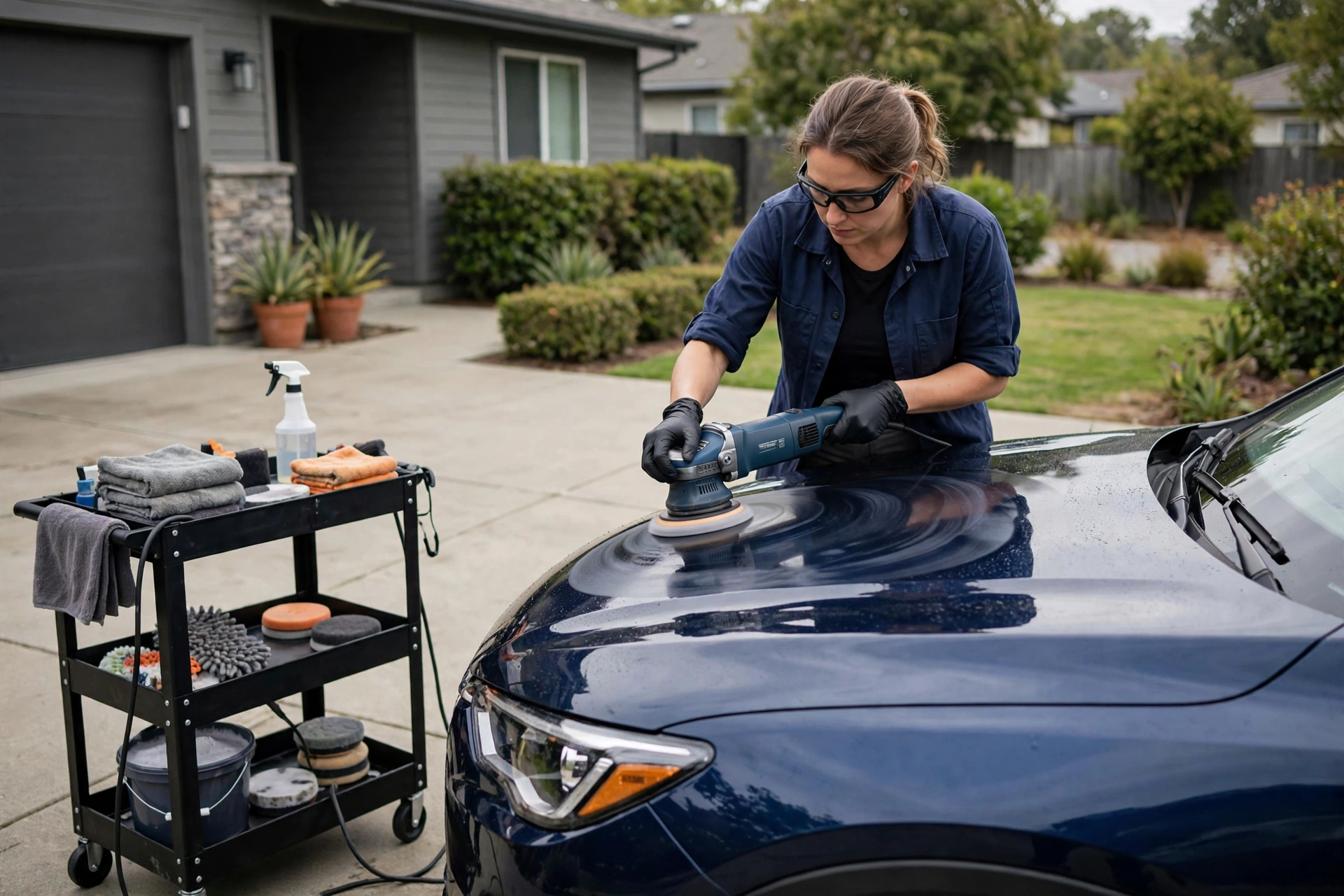
1. Mobile Car Detailing
Typical startup cost: $500–$2,000 for supplies, a vacuum, and a pressure washer.
Small towns rarely have a dedicated detailing shop, and driving 40 minutes to the city for one is a hassle people will gladly pay to avoid. You go to the customer, which means no rent at all. Fleet work for local businesses (plumbers, realtors, delivery drivers) can become steady repeat income.
2. Lawn Care & Yard Cleanup
Typical startup cost: $1,000–$3,000 for a mower, trimmer, and trailer.
Suburban-style lawns surround most small towns, and plenty of homeowners — especially older residents — happily outsource mowing. Seasonal cleanups, leaf removal, and snow clearing (where relevant) fill the gaps between mowing months and keep revenue year-round.
3. House Cleaning Service
Typical startup cost: $500–$2,500 for supplies, insurance, and basic marketing.
Trust is everything in this business, and in a small town your reputation is your advertising. Start with friends and neighbors, then let referrals do the rest. Recurring weekly or biweekly clients create predictable income fast. Here is a practical walkthrough of how to start a cleaning business with no money if your budget is near zero.
4. Handyman Services
Typical startup cost: $1,000–$4,000 for tools, a ladder, and liability insurance.
Every small town has more leaky faucets and broken fences than qualified people to fix them. If you are handy, this is one of the highest-demand, lowest-competition trades in rural America. Specializing — say, in drywall repair or deck work — lets you charge more than a general “guy with tools.”
5. Pet Sitting & Dog Walking
Typical startup cost: $200–$1,000 for insurance, a website, and basic gear.
Boarding kennels are scarce outside cities, and pet owners worry about leaving animals with strangers. A trusted local sitter who does in-home visits fills a real gap. Add dog walking for commuters and you have two revenue streams from one client list.
6. Senior Errand & Companion Service
Typical startup cost: $200–$800, mostly insurance and a reliable car.
Small towns skew older, and many seniors need help with groceries, prescriptions, rides to appointments, and simple companionship. Families often pay for this gladly. It is meaningful work with genuinely low competition — most towns have nobody offering it formally.
7. Mobile Notary & Document Services
Typical startup cost: $300–$1,200 for commission, seal, insurance, and a printer.
Real estate closings, wills, and power-of-attorney documents all need notarization, and rural residents hate driving to the city for a five-minute signature. Loan-signing appointments pay especially well once you are certified and on signing-service lists.
8. Pressure Washing
Typical startup cost: $800–$2,500 for a commercial-grade washer and surface cleaner.
Driveways, siding, decks, and farm outbuildings all need periodic washing, and almost nobody in a small town owns the equipment. It is visual, satisfying work that photographs well — before-and-after photos on a simple Facebook page can book you out for weeks.
Food & Drink
Food businesses thrive on routine: the same customers, several times a week. In towns with few dining options, a good food business becomes a community fixture.
9. Home Bakery
Typical startup cost: $1,000–$5,000 for equipment upgrades, packaging, and permits.
Most states have cottage food laws letting you sell baked goods from home with minimal licensing. Custom cakes, sourdough loaves, and farmers market pastries all sell well where the nearest artisan bakery is an hour away. Start at markets and take pre-orders before committing to a storefront.

10. Farmers Market Food Stall
Typical startup cost: $1,500–$6,000 for a tent, equipment, and initial inventory.
A stall is the cheapest way to test a food concept with real customers. Breakfast burritos, smoked meats, tamales, kettle corn — find the gap in your local market and own it. Successful stalls often graduate into food trucks or permanent spots.
11. Coffee Cart or Mobile Espresso Bar
Typical startup cost: $5,000–$20,000 for a cart, espresso machine, and permits.
Many small towns have no specialty coffee at all. A cart at the Saturday market, outside the hardware store, or at youth sports tournaments can do brisk business. Event catering (weddings, graduations) adds high-margin bookings on weekends.
12. Meal Prep for Busy Families
Typical startup cost: $500–$2,000 for containers, a website, and initial groceries.
Two-income households exist in small towns too, and nobody has time to cook every night. Weekly meal-prep subscriptions — five dinners delivered Sunday — solve a real problem. Start with ten families and grow by referral; the model scales without a storefront.
13. Specialty Jams, Honey & Preserves
Typical startup cost: $300–$1,500 for jars, labels, and ingredients.
Tourists and locals alike buy local food products as gifts. If your area grows berries, apples, or keeps bees, you have a built-in story. Sell at markets, gift shops, and online; holiday gift sets can carry the whole year.
14. Small-Town Diner or Lunch Counter
Typical startup cost: $15,000–$60,000 depending on whether you lease an existing kitchen.
This is the biggest bet on the list, but a good diner becomes the town’s living room. Breakfast and lunch crowds of workers, retirees, and travelers provide steady traffic. Taking over a closed restaurant space — equipment included — dramatically cuts the startup cost.
Retail & Local Goods
Retail works in small towns when you sell what people currently drive 30+ minutes to buy — or offer something with a story.
15. Thrift / Consignment Store
Typical startup cost: $5,000–$25,000 for first rent, fixtures, and signage.
Secondhand shopping is mainstream now, and small towns often have zero options. Consignment models reduce your inventory risk since you only pay sellers when items sell. A well-organized store with fair prices becomes a weekly habit for bargain hunters.
16. Gift & Craft Shop
Typical startup cost: $3,000–$12,000 for initial stock and a small lease.
Every town needs a place to buy a birthday gift without driving to the city. Stock local artisans on consignment alongside curated gifts, and you support the community while differentiating from big-box stores. Tourist traffic, if your town gets any, is pure bonus.
17. Mobile Boutique / Pop-Up Shop
Typical startup cost: $2,000–$8,000 for inventory and a trailer or tent setup.
Can’t justify a year-round lease? Bring the store to the customers: school events, festivals, church fundraisers, and parking-lot pop-ups. Women’s clothing, accessories, and home décor do well in this format, and your “rent” is a per-event fee.
18. Plant Nursery & Garden Center
Typical startup cost: $2,000–$10,000 for starter plants, soil, and a greenhouse or hoop house.
Rural homeowners garden seriously, and the nearest nursery is often far away. Sell vegetable starts in spring, mums in fall, and offer advice — expertise is your edge over big-box garden departments. Landscaping services pair naturally with retail plant sales.
19. Small Engine & Auto Repair Shop
Typical startup cost: $3,000–$15,000 for tools, a lift or jacks, and diagnostic equipment.
Mowers, chainsaws, ATVs, and aging pickup trucks all break, and dealerships are far away. If you can fix things, this trade has a permanent waiting list in most rural areas. Honest pricing builds the kind of loyalty that keeps bays full for decades.
20. Bait, Tackle & Outdoor Gear Shop
Typical startup cost: $4,000–$15,000 for initial inventory.
Near lakes, rivers, or hunting land, this is a license to print goodwill. Live bait, tackle, licenses, and local fishing intel draw anglers daily. Add a small coffee counter and it becomes the morning gathering spot — and morning gathering spots sell a lot of tackle.
Online & Home-Based
Your town may be small, but the internet makes your market as big as you want. These businesses need little more than skills and a laptop.
21. Freelance Bookkeeping
Typical startup cost: $300–$1,500 for software, certification courses, and a website.
Local contractors, farmers, and shop owners all need books done and hate doing them. Start with businesses in your own town — in-person trust wins clients — then take on remote clients for scale. Monthly retainers make income beautifully predictable.
22. Tutoring (In-Person + Online)
Typical startup cost: $100–$800, mostly marketing and materials.
Rural schools are stretched thin, and parents worry about their kids falling behind. In-person sessions build trust locally; online sessions expand your hours and rates. Test prep for college-bound students commands the highest fees.
23. Print-on-Demand & Craft Store
Typical startup cost: $200–$1,000 for designs, samples, and shop setup.
Design once, sell forever: t-shirts, mugs, and posters with local pride themes (“Lake Life,” town names, regional jokes) sell to locals and former residents alike. Pair it with handmade goods on the same storefront for two income streams from one shop.
24. Social Media Management for Local Businesses
Typical startup cost: $100–$500 for tools and a portfolio site.
That hardware store with a dead Facebook page? The diner that never posts? They know they need help and have no idea where to find it. Managing a few local accounts at a monthly retainer is recurring revenue built on relationships you already have.
25. Virtual Assistant Services
Typical startup cost: $100–$600 for a computer you likely own, software, and a simple website.
Busy professionals everywhere need inbox management, scheduling, and admin help. Small-town living costs mean you can charge competitive rates while keeping more of what you earn. Specializing — real estate VAs, podcast VAs — raises rates fast.
Startup Costs at a Glance
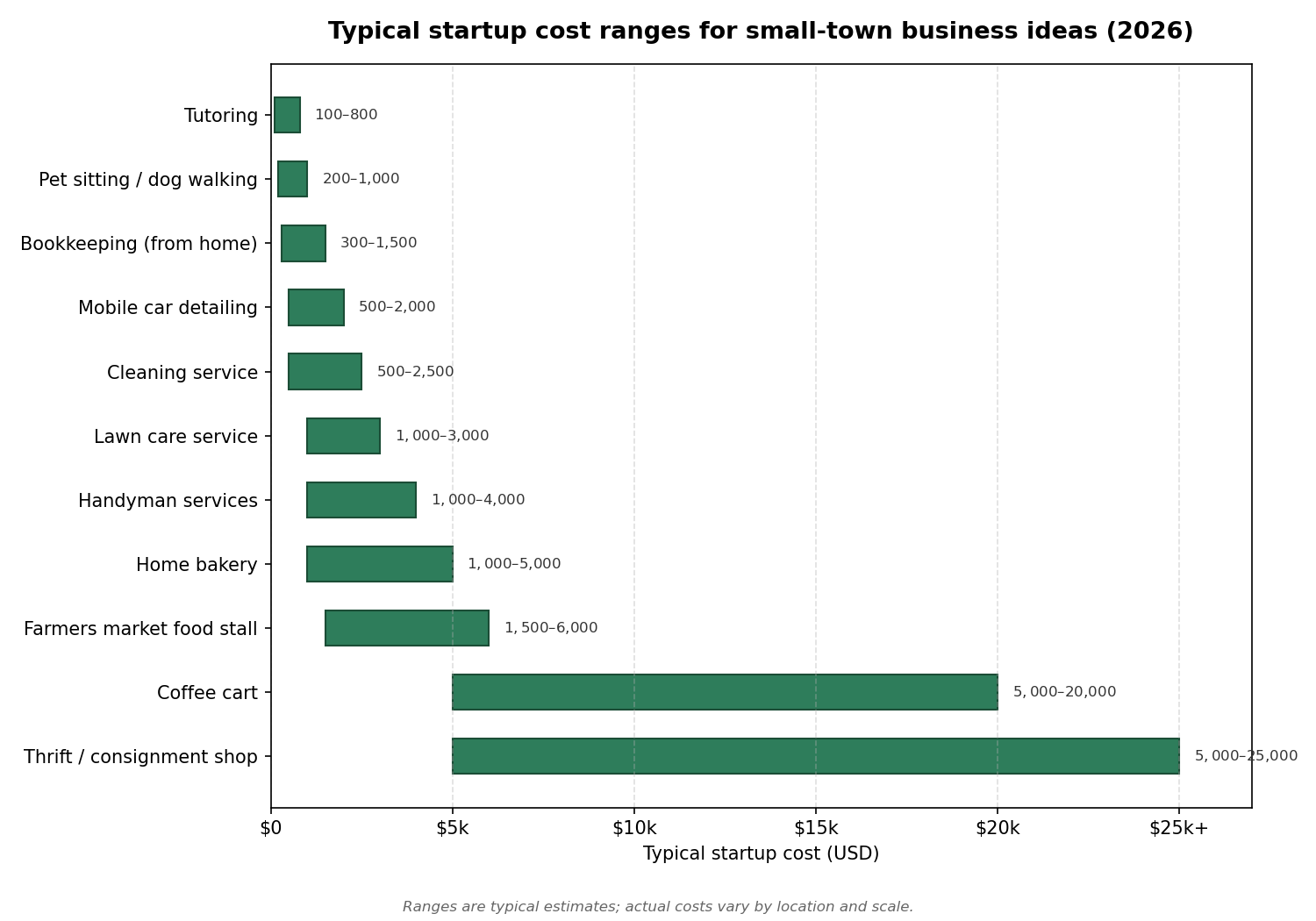
Here is how the most popular small business ideas for small towns compare on upfront investment. Remember: these are typical ranges, not guarantees — buying used equipment and starting from home can cut most of these figures dramatically. Before committing, it pays to learn how to budget on a low income so your launch fund stretches as far as possible.
| Business Idea | Typical Startup Cost | Key Skills Needed | Demand Type |
|---|---|---|---|
| Pet sitting / dog walking | $200–$1,000 | Animal care, trustworthiness | Repeat local |
| Virtual assistant | $100–$600 | Organization, communication | Repeat local |
| Mobile car detailing | $500–$2,000 | Detailing technique, customer service | Repeat local |
| Cleaning service | $500–$2,500 | Thoroughness, reliability | Repeat local |
| Lawn care | $1,000–$3,000 | Equipment operation, stamina | Seasonal repeat |
| Handyman services | $1,000–$4,000 | Carpentry, plumbing basics | On-demand local |
| Home bakery | $1,000–$5,000 | Baking, food safety | Repeat + events |
| Freelance bookkeeping | $300–$1,500 | Accounting basics, software | Monthly retainer |
| Coffee cart | $5,000–$20,000 | Barista skills, permits | Daily foot traffic |
| Thrift / consignment store | $5,000–$25,000 | Merchandising, pricing | Walk-in retail |
Funding and Free Help for Rural Startups
You don’t have to fund everything from savings. The SBA’s small business resources include loan programs designed for Main Street businesses, and many are friendlier to rural borrowers than banks. For free one-on-one guidance, free mentoring through SCORE pairs you with experienced business owners who have done this before. If your town qualifies as rural, USDA rural business programs offer grants and loans specifically for non-metro areas. And once revenue starts, the IRS small business tax center is the authoritative place to understand self-employment tax obligations.
Frequently Asked Questions
What is the cheapest business to start in a small town?
Service businesses you run from home are cheapest — pet sitting, virtual assisting, tutoring, and social media management typically need under $1,000 to launch. You are selling skills and time, not inventory or retail space.
What business is most needed in a small town?
It varies by town, but the most consistent gaps are in everyday services: cleaning, lawn care, handyman work, auto repair, and childcare. Walk your main street, ask neighbors what they drive out of town for, and you will find your answer fast.
Can a small town support a new business with a tiny population?
Yes, if you pick something with repeat demand or serve surrounding towns too. A cleaning service with 20 biweekly clients or a bookkeeper with 15 monthly retainers can thrive in a town of 5,000. Mobile and online models expand your reach even further.
Do I need a business license in a small town?
Usually yes — requirements vary by state, county, and town, and food businesses face additional health permits. Check with your town clerk and county office before launching; the SBA’s small business resources also explain common licensing steps.
How do I market a business in a small town?
Word of mouth dominates: do excellent work and ask happy customers to tell friends. A simple Facebook business page, flyers on community boards, and sponsoring a youth sports team go further than paid ads. Showing up at town events makes you a familiar face, which is half the battle.
Should I start online or open a storefront first?
Start lean — from home, mobile, or a market stall — and let customer demand justify a storefront later. Most failed small-town retail stories start with a lease signed before the first sale. Prove the concept cheap, then expand.
Conclusion
The best small business ideas for small towns share three traits: low overhead, genuine local demand, and the ability to start before you are “ready.” You don’t need a big-city budget or a revolutionary concept — you need to solve a problem your neighbors already have and show up consistently. Pick one of these small business ideas for small towns that matches your skills, validate it with ten conversations around town, and start small. In a small town, a good reputation compounds faster than any marketing budget.




[…] and retail spaces later. If you live somewhere with fewer households nearby, check out these small business ideas for small towns for complementary services you can bundle with […]
[…] is what makes a company description memorable. If you’re still choosing a direction, browsing small business ideas can spark a concept worth building a plan […]