
Here is the uncomfortable truth about healthy snacks for weight loss: most of the packaged bars and “100-calorie packs” sold for dieters are engineered to leave you hungry. They spike your blood sugar, deliver almost no protein or fiber, and send you back to the kitchen an hour later — which is exactly how a “sensible snack” quietly becomes 400 extra calories a day. The fix is not willpower; it is choosing snacks built from the two nutrients that actually keep you full: protein and fiber. Dietitians consistently recommend dietitian-approved snacks for weight loss built around exactly those two, and every pick below earns its place with real numbers, not marketing.
What Makes a Snack Good for Weight Loss?
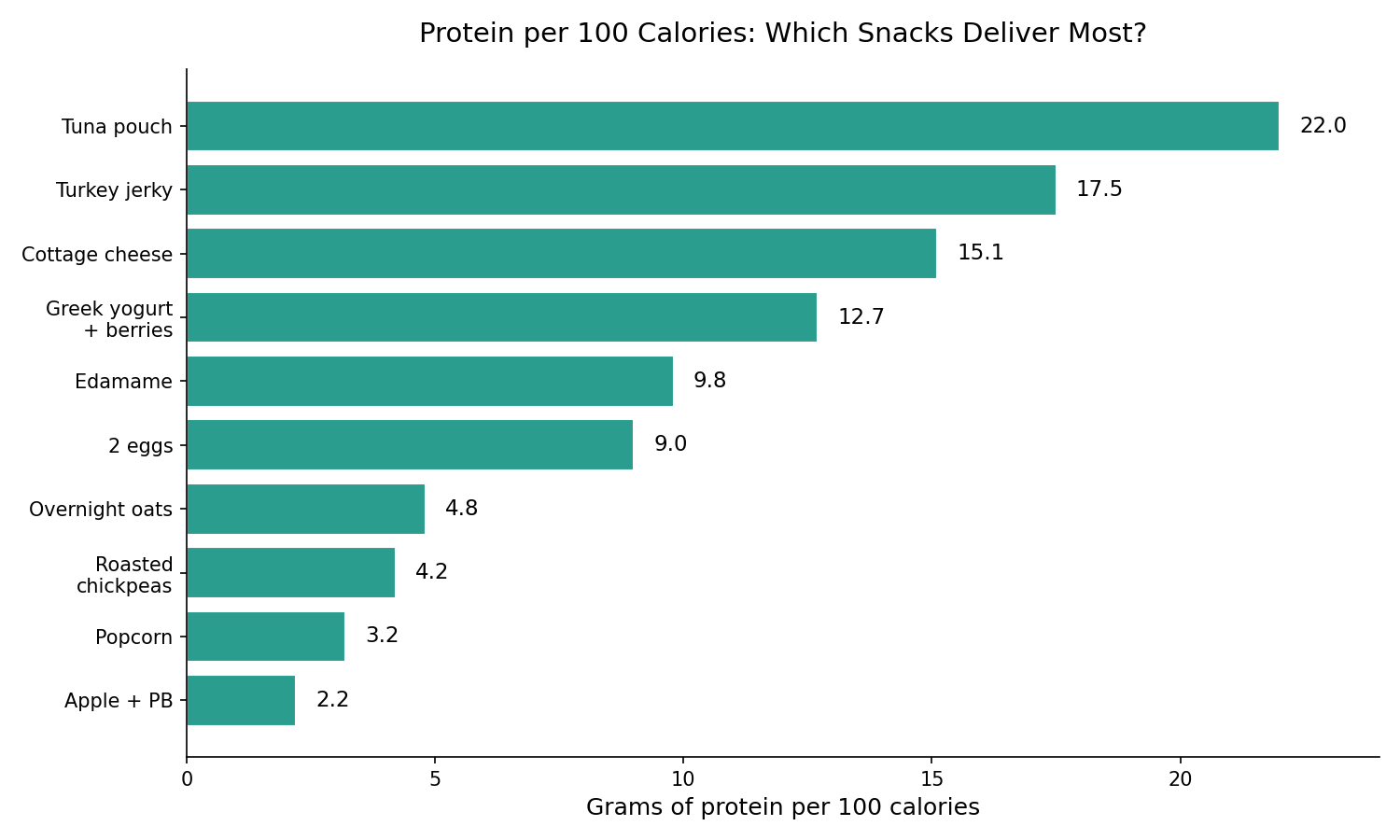
Before the list, the two-minute science, because it changes how you shop. Protein is the most satiating macronutrient — it slows digestion, steadies blood sugar, and triggers fullness hormones more effectively than carbs or fat. Fiber does similar work by adding bulk that keeps food in your stomach longer, and feeds the gut bacteria linked to healthier weight. The research consensus, summarized well by nutrition writers citing the underlying studies, is that snacks high in fiber and protein are the ones associated with better weight outcomes, while processed high-glycemic snacks are associated with weight gain. Some nutrition guides now rank healthy snacks by protein per calorie for exactly this reason.
Practically, aim for a snack with at least 5–8 grams of protein or 3+ grams of fiber (ideally both), under about 200 calories, and made from foods you can identify. Every snack below lists approximate calories, protein, and fiber per serving — figures based on USDA-verified nutrition data, with the caveat that brands vary, so treat numbers as close estimates and check your own labels.
The 14 Best Healthy Snacks for Weight Loss
1. Plain Greek yogurt with berries
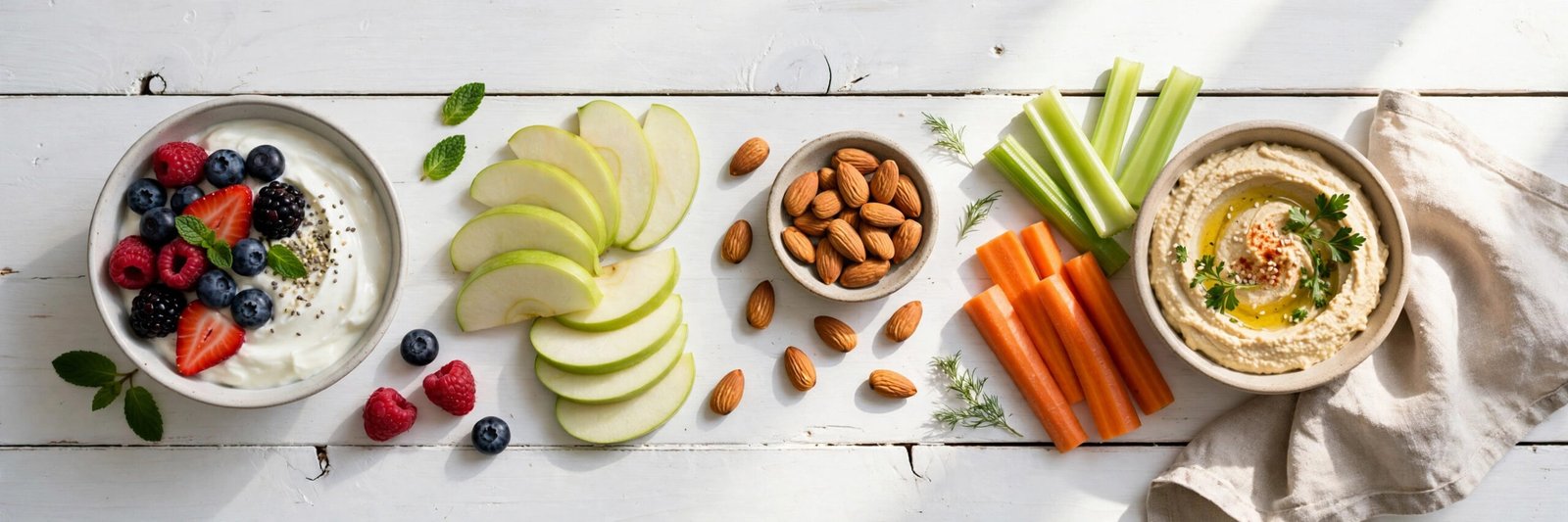
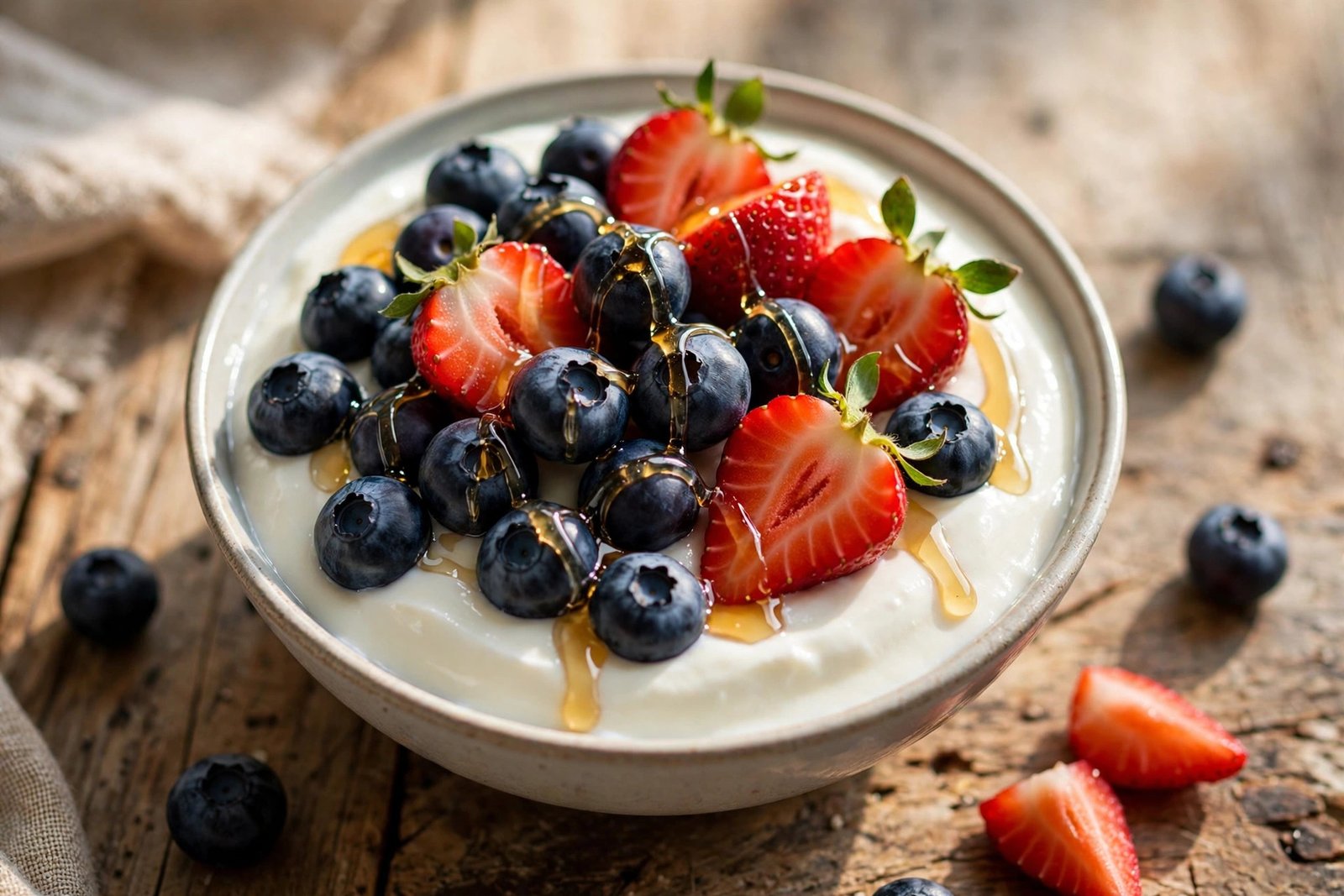
The undisputed champion of this list. A 170g container of plain nonfat Greek yogurt delivers about 104 calories and roughly 17.5 grams of protein — more protein per calorie than almost anything else here — with live cultures for gut health. Add half a cup of blueberries (about 42 calories, 1.8g fiber) and you have a genuinely filling snack under 150 calories. Skip the flavored tubs: they can carry 14+ extra grams of sugar per serving. Buy plain and add the fruit yourself.
2. Two hard-boiled eggs
Boring, cheap, and brutally effective. Two large eggs give you about 140 calories and 12.6 grams of complete protein with all nine essential amino acids, plus choline for brain health. They travel well, need no refrigeration for a few hours, and the protein-to-calorie ratio beats most “protein bars” at a tenth of the price. A pinch of everything-bagel seasoning makes them feel like a real snack instead of a chore.
3. Apple slices with a tablespoon of peanut butter
A medium apple brings about 95 calories and 4.4 grams of fiber; a tablespoon of natural peanut butter adds roughly 94 calories and 3.6 grams of protein. Together you get the classic fiber-plus-fat-plus-protein trio that keeps blood sugar flat for hours. The one rule: buy peanut butter whose ingredients list reads “peanuts, salt” — the big-brand versions add sugar and palm oil that undo the point.
4. Cottage cheese with pineapple
Do not sleep on cottage cheese. A cup of low-fat cottage cheese packs roughly 28 grams of protein for about 185 calories, which is why it keeps showing up in roundups of healthy snacks that support weight loss. Half a cup of pineapple chunks (around 40 calories) adds sweetness and vitamin C without a sugar crash. If the texture bothers you, blend it — it becomes a high-protein mousse.
5. Hummus with vegetable sticks
Three tablespoons of hummus (about 75 calories, 3.4g protein, 2.6g fiber) with a cup of carrot, celery, and bell pepper sticks (roughly 35 calories) is one of the highest-volume snacks you can eat for ~110 calories. The fiber from the chickpeas and the crunch from the vegetables make it feel like a much bigger meal, and the healthy fats in the tahini and olive oil slow everything down. Make a batch of hummus on meal prep day and portion it into small containers.
6. A measured ounce of mixed nuts
Nuts are calorie-dense — about 172 calories per ounce — which is exactly why you measure them. That ounce delivers 6 grams of protein, 3 grams of fiber, and the unsaturated fats that studies link to better appetite control. People who pre-portion nuts eat significantly less than people who eat from the bag; that is the entire tip. Buy raw or dry-roasted, unsalted, and portion into 1-ounce containers or snack bags on Sunday.
7. Air-popped popcorn
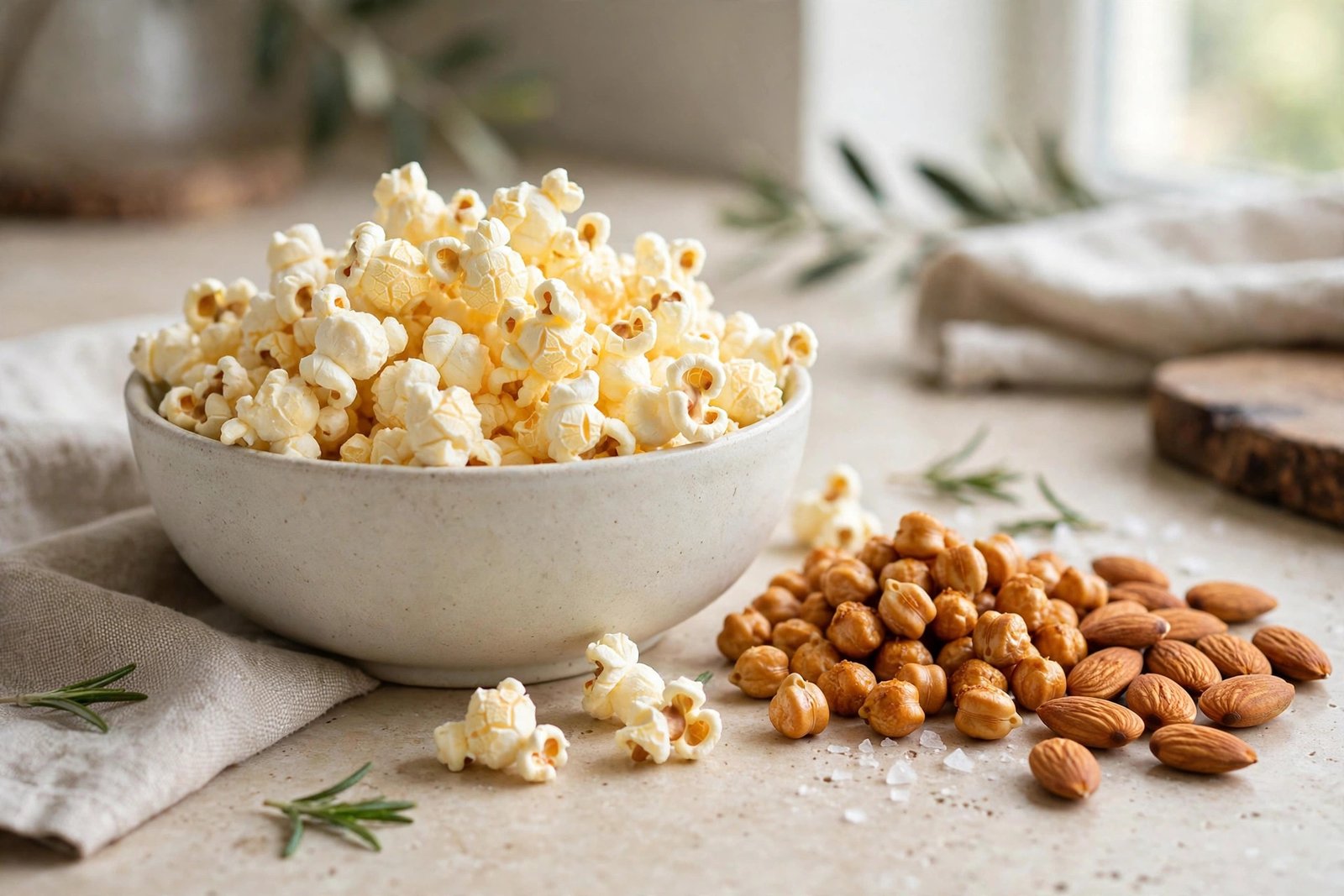
Three cups of air-popped popcorn have about 93 calories and 3.6 grams of fiber — it is essentially a whole grain you can eat by the handful. The movie-theater version drenched in butter oil is a different food entirely; at home, pop kernels in a paper bag in the microwave or a lidded pot, then season with salt, smoked paprika, or nutritional yeast. Avoid the “butter lover’s” microwave bags, which add saturated fat and sodium for no nutritional reason.
8. Edamame, shelled and salted
A cup of shelled edamame delivers roughly 18 grams of plant protein and 8 grams of fiber for about 188 calories — numbers that rival a protein shake with far more micronutrients, including folate, iron, and magnesium. Buy them frozen, microwave for three minutes, toss with sea salt and a squeeze of lime. They are also one of the few snacks that genuinely works warm, which makes them feel like dinner’s little sibling rather than diet food.
9. A tuna pouch
The single best protein-per-calorie value on this list: a 3-ounce pouch of tuna in water has about 100 calories and roughly 22 grams of protein. Squeeze pouches need no draining and no can opener, so they work at a desk. Mix with a spoonful of Greek yogurt instead of mayo, add diced celery and mustard, and eat it on cucumber rounds or in lettuce cups. One caution: stick to a few pouches a week if you are mindful of mercury, and vary your protein sources.
10. Overnight oats
Half a cup of dry rolled oats (150 calories, 5g protein, 4g fiber) soaked overnight in half a cup of skim milk (42 calories, 4.2g protein) becomes a grab-and-go breakfast-snack hybrid of about 190 calories with 9 grams of protein. Top with cinnamon and a few sliced strawberries. The beta-glucan fiber in oats is one of the best-studied fibers for satiety — it forms a gel in your stomach that slows digestion measurably.
11. Turkey jerky
A 1-ounce serving of turkey jerky runs about 80 calories with roughly 14 grams of protein, making it the most portable protein on this list — no fridge, no prep, no utensils. The tradeoff is sodium, which is high in most brands, so read labels and treat jerky as a travel/emergency snack rather than a daily staple. Look for versions with under 400mg sodium and no added sugar where possible.
12. Roasted chickpeas
An ounce of roasted chickpeas gives you about 120 calories, 5 grams of protein, and 3.5 grams of fiber with the crunch of a chip. Toss drained canned chickpeas with a teaspoon of olive oil, salt, and smoked paprika, roast at 400°F (200°C) for 25–30 minutes, and you have a batch that keeps for days. They cost almost nothing — one more reason saving money on groceries and eating well are not opposites.
13. Half an avocado on whole-grain toast
Half an avocado (about 110 calories, 4.6g fiber) mashed on a slice of whole-grain toast (about 80 calories, 2g fiber, 4g protein) lands near 190 calories with a fullness factor way beyond its size, thanks to monounsaturated fats and fiber. Add red pepper flakes and a squeeze of lemon. This one works best as a mini-meal snack — the kind you eat at 4pm so dinner does not turn into a binge at 6.
14. Banana with a tablespoon of peanut butter
A medium banana (105 calories, 3.1g fiber, plus potassium and vitamin B6) with a tablespoon of natural peanut butter (about 94 calories, 3.6g protein) is the pre-workout snack that doubles as a dessert substitute. The combination of quick carbs and slow-digesting fat and protein keeps energy steady instead of spiky. Freeze banana slices for ten minutes first and it genuinely tastes like ice cream with none of the aftermath.
15. Baked kale chips
One cup of baked kale chips has roughly 40 calories and 3 grams of fiber, with a surprising amount of vitamin K and vitamin A. Massage torn kale with a teaspoon of olive oil and sea salt, bake at 300°F (150°C) for about 20 minutes, and they shatter like chips. They will not fill you up the way the protein picks do — pair them with one of those if you are genuinely hungry — but for pure crunch-craving replacement, nothing on this list is lighter.
Healthy Snacks for Weight Loss: Nutrition at a Glance
| Snack (serving) | Calories | Protein | Fiber | Why it works |
|---|---|---|---|---|
| Greek yogurt + berries (170g + ½ cup) | ~146 | ~18.5g | ~1.8g | Highest protein per calorie of the dairy picks |
| 2 hard-boiled eggs | ~140 | ~12.6g | 0g | Complete protein, zero prep beyond boiling |
| Apple + 1 tbsp peanut butter | ~189 | ~4.1g | ~5.4g | Fiber + fat + protein steadies blood sugar |
| Cottage cheese + pineapple (1 cup + ½ cup) | ~225 | ~28g | ~0.9g | Casein protein digests slowly, long fullness |
| Hummus + veggies (3 tbsp + 1 cup) | ~110 | ~3.4g | ~5.1g | High volume for the calories; great crunch |
| Mixed nuts (1 oz, measured) | ~172 | ~6g | ~3g | Healthy fats curb appetite; portion is key |
| Air-popped popcorn (3 cups) | ~93 | ~3g | ~3.6g | Whole grain, huge portion, under 100 cal |
| Edamame (1 cup shelled) | ~188 | ~18.4g | ~8g | Protein + fiber double hit, warm option |
| Tuna pouch (3 oz in water) | ~100 | ~22g | Best protein-per-calorie ratio on the list | |
| Overnight oats (½ cup dry + milk) | ~192 | ~9.2g | ~4g | Beta-glucan fiber slows digestion |
| Turkey jerky (1 oz) | ~80 | ~14g | 0g | Most portable protein; watch sodium |
| Roasted chickpeas (1 oz) | ~120 | ~5g | ~3.5g | Chip-like crunch, pennies per serving |
| Avocado toast (½ avocado + slice) | ~190 | ~5.4g | ~6.6g | Monounsaturated fats + fiber mini-meal |
| Banana + 1 tbsp peanut butter | ~199 | ~4.9g | ~4.1g | Steady-energy pre-workout or dessert swap |
| Baked kale chips (1 cup) | ~40 | ~2g | ~3g | Lightest crunch replacement on the list |
5 Snacking Rules That Make the List Work
A list is only as good as the habits around it. First, pre-portion everything — the nuts research is clear that bag-eating defeats the math. Second, pair carbs with protein or fat: an apple alone is a 20-minute snack, an apple with peanut butter is a two-hour one. Third, eat at a table, not a screen; distracted eating reliably increases how much you take in. Fourth, drink water first — mild dehydration mimics hunger convincingly. Fifth, plan the snack like a meal: people who keep two or three of these ready in the fridge snack on them; people who do not, snack on whatever is open. Dr. Andrew Weil’s long-standing advice on waistline-friendly snacking within an anti-inflammatory diet makes the same point from a different angle — small, whole-food, high-nutrient choices between meals beat both skipping and grazing.

Frequently Asked Questions
What are the healthiest snacks for weight loss?
The best picks combine protein and fiber with modest calories: Greek yogurt, eggs, edamame, tuna, cottage cheese, and hummus with vegetables lead most dietitian lists. What matters most is the pattern — snacks built from whole foods with at least 5–8g of protein or 3g+ of fiber keep you fuller than processed “diet” snacks at the same calories.
How many snacks should I eat per day to lose weight?
There is no magic number — it depends on your total calorie target and meal sizes. Most people do well with one or two planned snacks of 100–200 calories each between meals. The key word is planned: spontaneous snacking is where extra calories sneak in.
Are nuts good for weight loss if they are so high in calories?
Yes, in measured portions. An ounce of nuts (about a small handful) delivers protein, fiber, and healthy fats that support satiety. The research problem is not nuts, it is portions — pre-portion 1-ounce servings and they belong on any weight-loss snack list.
Can I snack at night and still lose weight?
Night snacking does not inherently stop weight loss; total daily calories do. But late-night snacking tends to be larger, more processed, and more distracted. If you are hungry in the evening, pick one of the high-protein options above — Greek yogurt or cottage cheese — and portion it before you sit down.
What snacks should I avoid when trying to lose weight?
The biggest saboteurs are processed snacks high in refined carbs and added sugar with little protein or fiber: chips, candy, pastries, sugary granola bars, and sweetened drinks. They spike blood sugar and leave you hungrier than before. You do not have to ban them forever — but they should not be your default snack.
Is fruit okay for weight loss, or is the sugar a problem?
Whole fruit is fine and genuinely helpful — the fiber slows sugar absorption, and fruit eaters consistently show better weight outcomes than people who avoid it. The problem is fruit juice and dried fruit, which concentrate the sugar without the fiber. Eat the apple; skip the apple juice.
Conclusion
Weight-loss snacking is not about eating less often — it is about making each snack do more work. Every item on this list earns its calories with protein, fiber, or both, which is why a 150-calorie Greek yogurt leaves you satisfied while a 150-calorie granola bar leaves you hunting for more. Stock two or three of these at a time, pre-portion the calorie-dense ones, and the space between meals stops being the danger zone. That is the whole strategy: not willpower, just better defaults within arm’s reach.