
If your morning cup suddenly costs like a small luxury, you’re not imagining it. Arabica coffee futures hit an all-time high of $9.72 per pound in February 2026, and the average bag of ground coffee at the grocery store now costs nearly double what it did five years ago. The question on everyone’s lips — why is coffee so expensive — has a more interesting answer than simple inflation. It’s a story of drought in Brazil, a futures market that rewards panic, tariffs landing on your espresso, and a supply chain where everyone takes a cut before the beans reach your grinder.
The good news: prices have started to ease from the peak, and analysts expect further relief — but your café latte may never return to 2021 prices. Here’s what’s really driving the cost of your cup, and what you can do about it.
The data behind the record coffee prices
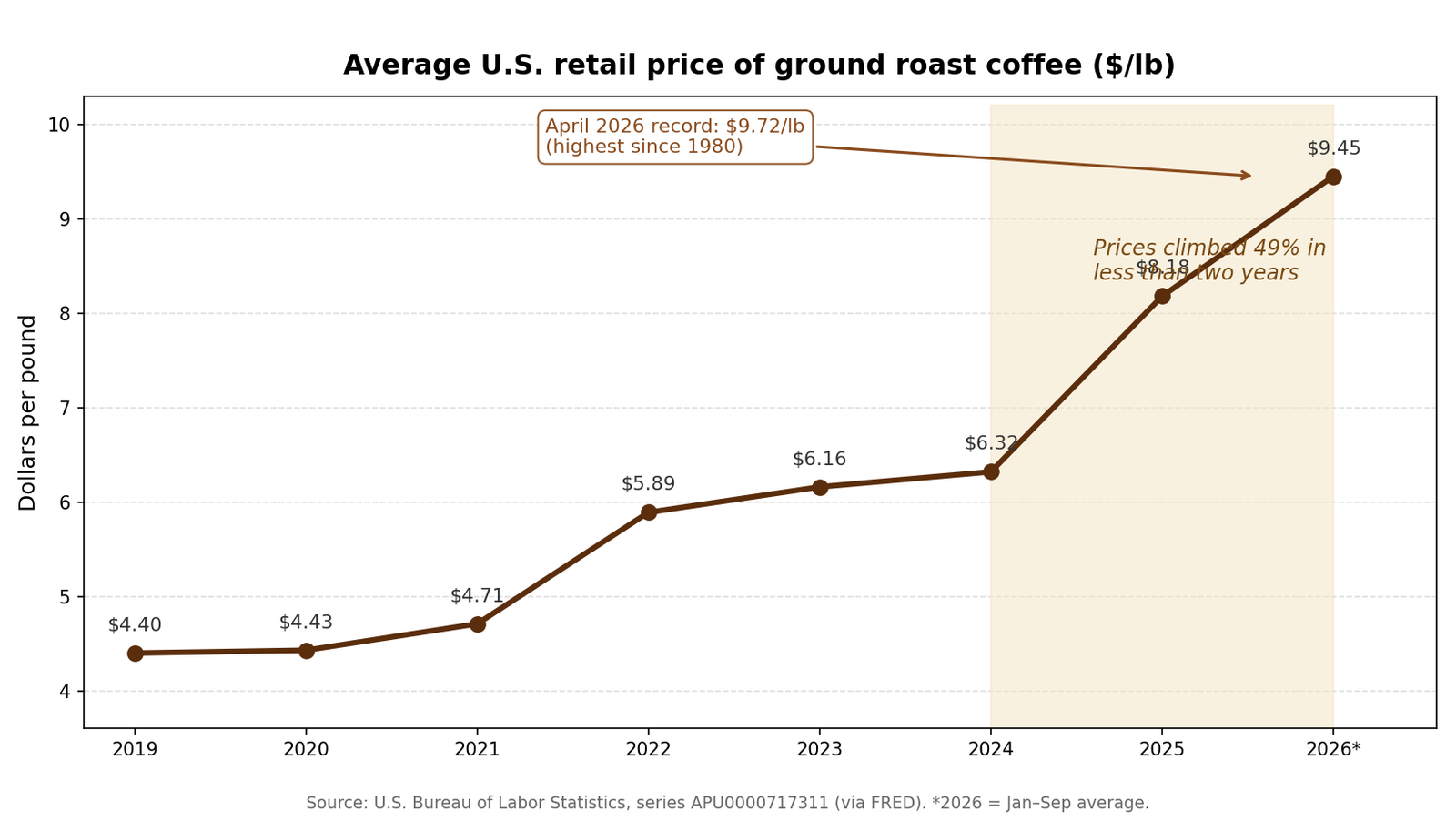
The numbers are stark. According to the U.S. Bureau of Labor Statistics, the average retail price of ground roast coffee climbed from about $4.30 per pound in early 2020 to roughly $8.50 per pound by early 2026 — and the International Coffee Organization’s composite indicator price averaged 245.27 U.S. cents per pound in 2025, up more than 60 percent from the year before. Arabica futures — the benchmark “C” contract traded in New York — surged to a record $9.72/lb in February 2026 before retreating to around $7.50 by the fall.
But the grocery-store price tells only half the story. The Specialty Coffee Association’s 2025 pricing data shows the average price of a brewed cup at an independent U.S. café reached $4.25, with lattes averaging $5.75 — and in major coastal cities, $7-plus drinks are now routine. When the raw commodity doubles, the café cup follows, just with a lag.
The 7 real reasons coffee is so expensive
1. Brazil’s droughts broke the supply math
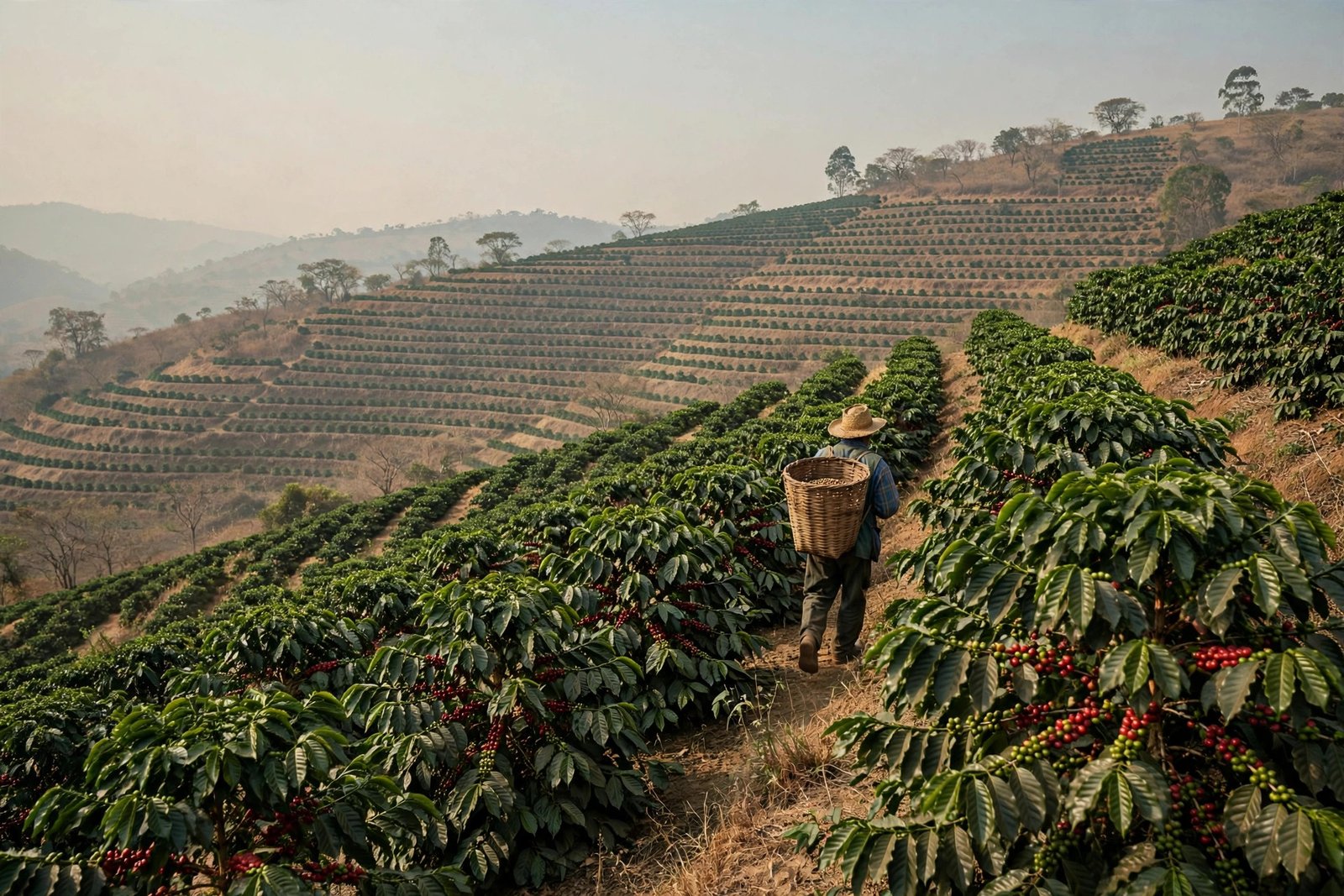
Roughly a third of the world’s coffee comes from Brazil, and the country’s arabica belt has endured repeated drought in recent growing seasons. The 2024–25 drought was the worst in decades across key regions like Minas Gerais and São Paulo: reservoirs fell, flowering was poor, and the 2025 harvest came in well below expectations. CONAB, Brazil’s crop agency, cut its production estimates more than once, and each cut sent futures higher.
Coffee is a tree crop — you can’t just plant more and fix a shortfall next quarter. A damaged harvest echoes for seasons, because stressed trees produce less the following year too. When the world’s biggest supplier sneezes for two years running, the whole market catches a cold.
2. Vietnam’s robusta shortfall squeezed the blends
While arabica grabs the headlines, robusta — the hardier bean used in espresso blends and instant coffee — had its own crisis. Vietnam, the world’s robusta giant, suffered drought in its Central Highlands growing region, and its 2024–25 output fell sharply. Robusta futures on the London exchange hit their own records, and because roasters blend the two beans, pain in either market lifts the price of the bag on your shelf.
The double squeeze is what made 2025–26 unusual: normally when arabica spikes, buyers shift toward robusta and damp the rally. This time both markets were tight at once, so there was nowhere to hide.
3. The futures market turned weather into panic
Physical shortages explain high prices; they don’t fully explain record prices. For that, look at the futures market. Coffee is one of the most volatile soft commodities, and when inventories in ICE-monitored warehouses fall to multi-year lows — as they did through 2025 — every weather headline triggers outsized moves. Speculative funds piled in, momentum traders amplified the swings, and roasters hedging future needs added commercial buying on top.
The result: arabica’s spike to $9.72/lb overshot what supply and demand alone would dictate. Analysts at Rabobank and others noted that the speed of the rally bore the fingerprints of positioning, not just agronomy. Futures giveth volatility on the way up — and they can taketh away just as fast, which is why prices retreated once Brazil’s 2026 outlook improved.
4. Tariffs added a direct tax to your cup
In 2025 the U.S. imposed new tariffs affecting coffee imports, including a widely reported 50 percent duty on Brazilian coffee that took effect in August 2025. The U.S. imports virtually all of its coffee — Hawaii and Puerto Rico produce a rounding error of domestic supply — so an import tariff lands almost entirely on American drinkers.
The industry math is unforgiving: green coffee is roughly half the cost of a roasted bag, so a 50 percent tariff on the bean translates to something like a 20–25 percent increase at retail, phased in as old inventory clears. Roasters absorbed what they could, then passed the rest on. If your favorite bag jumped $3–4 in late 2025, tariffs were a meaningful share of it.
5. Everyone in the chain takes a cut — and costs rose at every step
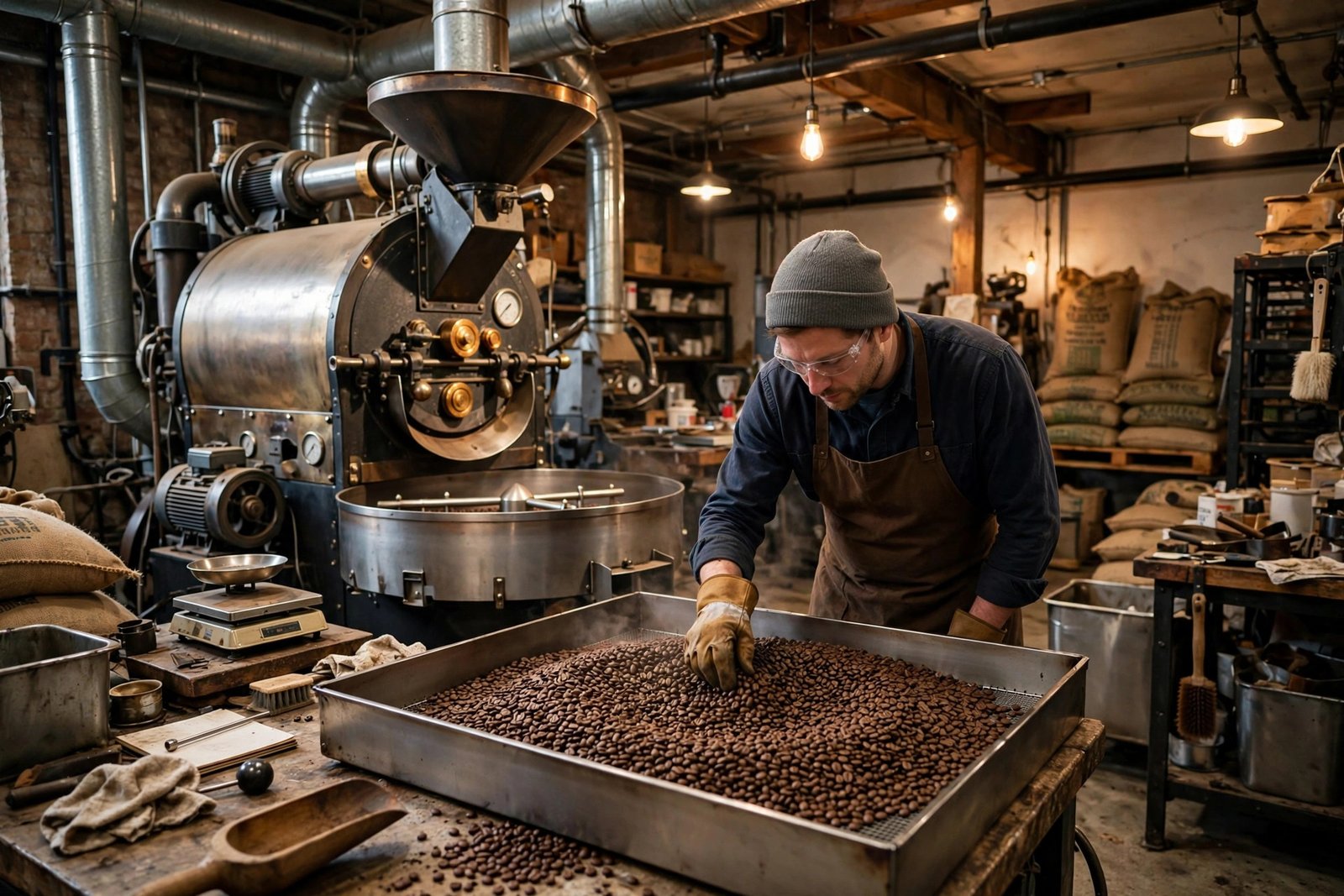
Green coffee is only the beginning. Between the farm and your cup, the beans are shipped, warehoused, roasted (natural gas isn’t free), packaged, distributed, and brewed by someone paying rent and wages. Freight rates, packaging, energy, and café labor all inflated through 2022–2025, and each link in the chain protects its margin.
This is why the café latte rose even faster than the grocery bag: for a coffee shop, the bean is maybe 15–20 percent of the cost of serving you. When rent, wages, milk, and cups all rise alongside the commodity, a $1 increase in bean cost can mean a $2 increase on the menu board. The barista’s paycheck matters more to your latte price than the farm gate does.
6. Climate change is repricing coffee’s geography
Step back and the droughts look less like bad luck and more like a trend. Coffee arabica is a finicky plant: it wants stable temperatures between about 18–22°C, distinct wet and dry seasons, and altitude. Climate models have been projecting for years that suitable arabica land will shrink dramatically by 2050, pushing cultivation uphill and toward new regions.
What we’re living through may be the market starting to price that future in. Insurers, lenders, and traders all now treat Brazilian frost and drought as recurring risks rather than freak events, and that risk premium sits in the futures curve. Your expensive cup is, in part, the first installment on coffee’s climate adaptation — new varieties, new regions, and higher baseline costs.
7. Demand keeps growing anyway
Here’s the quiet kicker: consumption keeps rising. The National Coffee Association’s 2025 trends report found daily coffee drinking at multi-decade highs in the U.S., and global demand growth — led by Asia and emerging markets — has outpaced production in four of the last five seasons according to ICO data. When supply shocks hit a market where demand never blinks, prices don’t just spike; they ratchet.
Premiumization adds a layer: the fastest-growing segments are specialty and single-origin coffees, where drinkers willingly pay more. The average cup price rises both because beans cost more and because we’re collectively drinking fancier coffee than we used to.
Will coffee prices come down?
The honest answer: partially. Futures have already retreated from the February peak as Brazil’s 2026 crop outlook improved and speculative positions unwound. Rabobank and other forecasters expect the ICO composite price to ease further through late 2026 — but to settle well above 2023 levels, not return to them. The structural forces (climate risk, tariffs while they last, café cost inflation) argue against a full round trip.
For grocery coffee, expect gradual relief on the shelf through late 2026 as cheaper contracted beans work through roasters’ pipelines — typically a 3–6 month lag. For café drinks, don’t hold your breath: menu prices are famously sticky downward, and shops are still catching up on years of cost increases. The $7 latte is probably here to stay.
| Price point | Early 2020 | Peak (early 2026) | Late 2026 (est.) |
|---|---|---|---|
| Arabica futures (per lb) | ~$1.20 | $9.72 | ~$7.50 |
| Retail ground coffee (per lb) | ~$4.30 | ~$8.80 | ~$8.50 |
| Café brewed cup (avg.) | ~$3.00 | $4.25 | $4.25 |
| Café latte (avg.) | ~$4.25 | $5.75 | $5.75 |
6 smart ways to save on coffee without suffering
You don’t have to quit your ritual — just get strategic about it:
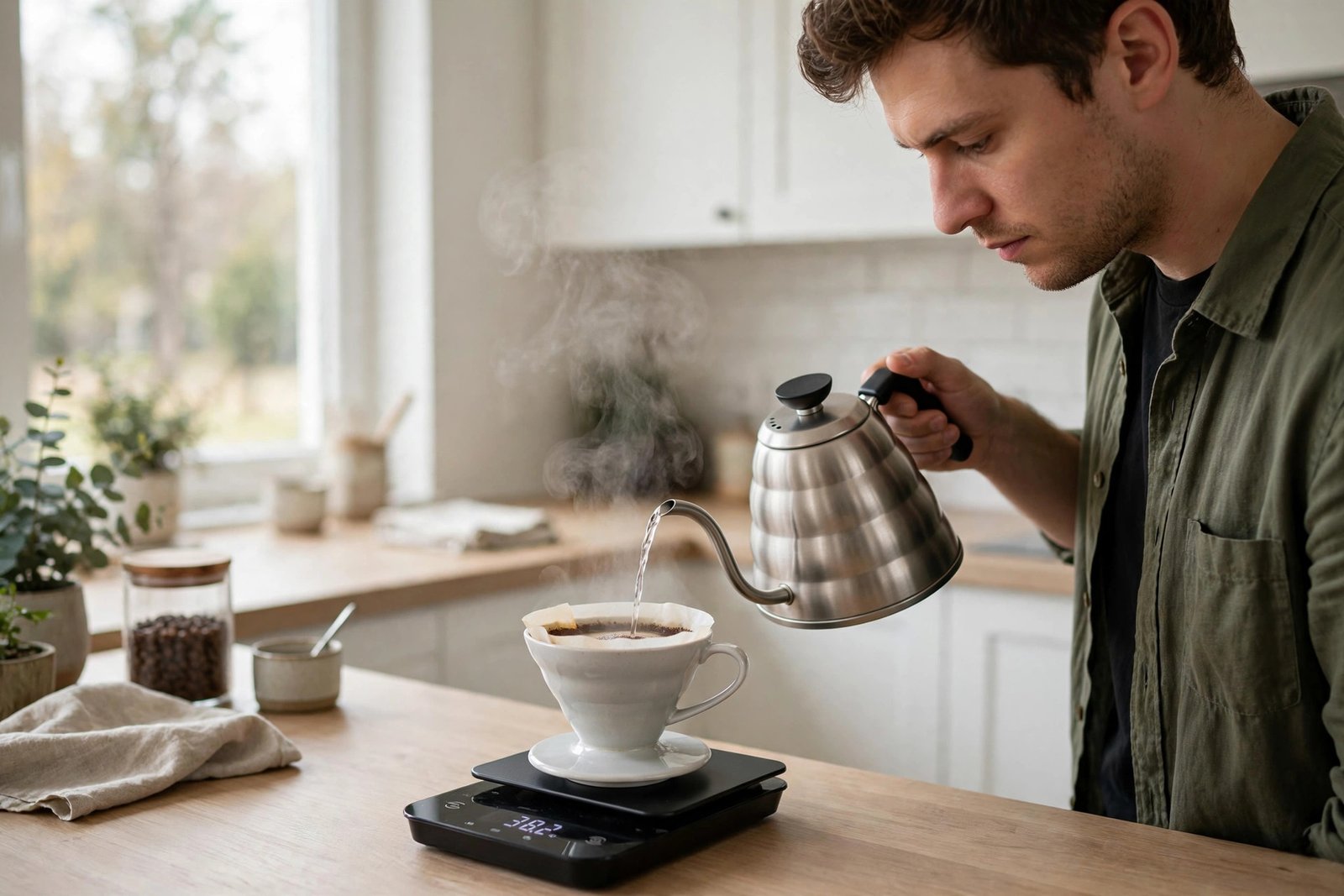
- Brew at home more often. Even premium beans at $18/lb make a cup for under $0.75. Every café cup you replace with a home brew saves $3–5. A decent grinder and a pour-over setup pay for themselves in weeks — and a good budget coffee maker costs less than a month of café lattes.
- Buy whole bean in bigger bags. The per-pound price drops meaningfully at 2-lb and 5-lb sizes, and whole beans stay fresh longer than ground. Split a 5-lb bag with a friend if that’s too much for one household.
- Try blends with robusta. Espresso blends cut with quality robusta cost less than 100% arabica and make a bolder, more crema-rich shot. The snobbery is outdated; the savings are real.
- Watch for sales and subscribe. Roasters discount subscriptions 10–15 percent, and grocery sales still happen — stock up when your brand dips under its average price.
- Cut the milk, not the coffee. If lattes are breaking you, a brewed coffee or Americano delivers the caffeine for roughly half the price. Oat milk upcharges are pure margin.
- Make cold brew concentrate. A $16 bag of beans yields two weeks of cold brew at a fraction of the café price — and summer is when the craving (and the markup) peaks.
Frequently asked questions
Why did coffee prices spike in 2026?
A rare convergence: severe drought cut both Brazilian arabica and Vietnamese robusta harvests, ICE warehouse inventories fell to multi-year lows, speculative funds amplified the rally, and new U.S. tariffs on Brazilian coffee added a direct cost. Arabica futures hit a record $9.72/lb in February 2026.
Will coffee get cheaper in late 2026?
Likely, modestly. Futures have retreated as Brazil’s crop outlook improved, and grocery prices should ease with a 3–6 month lag. But structural costs — climate risk, café wages and rent — mean prices will settle well above 2021–2023 levels.
Is it cheaper to make coffee at home?
Dramatically. A home-brewed cup from $18/lb beans costs under $0.75, versus $4.25+ at a café. Brewing at home is the single biggest lever most drinkers have.
Do tariffs affect coffee prices?
Yes. The U.S. imports nearly all its coffee, so the 2025 tariffs on Brazilian coffee — reportedly 50 percent — flow through to retail as roasters work through old inventory, adding roughly 20–25 percent to affected bags.
What’s the difference between arabica and robusta prices?
Arabica is the premium bean (smoother, pricier); robusta is hardier with more caffeine and historically costs about half as much. Both hit records in 2025–26, which is unusual — normally buyers substitute toward whichever is cheaper.
The bottom line
Coffee is so expensive because a climate-driven supply crunch collided with a speculative futures rally, new tariffs, and years of cost inflation at every step from port to café. The $9.72/lb peak was the market screaming; the retreat since is it catching its breath. Prices will ease, but the era of the $3 latte is over — the new normal is higher, and the smartest money stays on the home brewer.