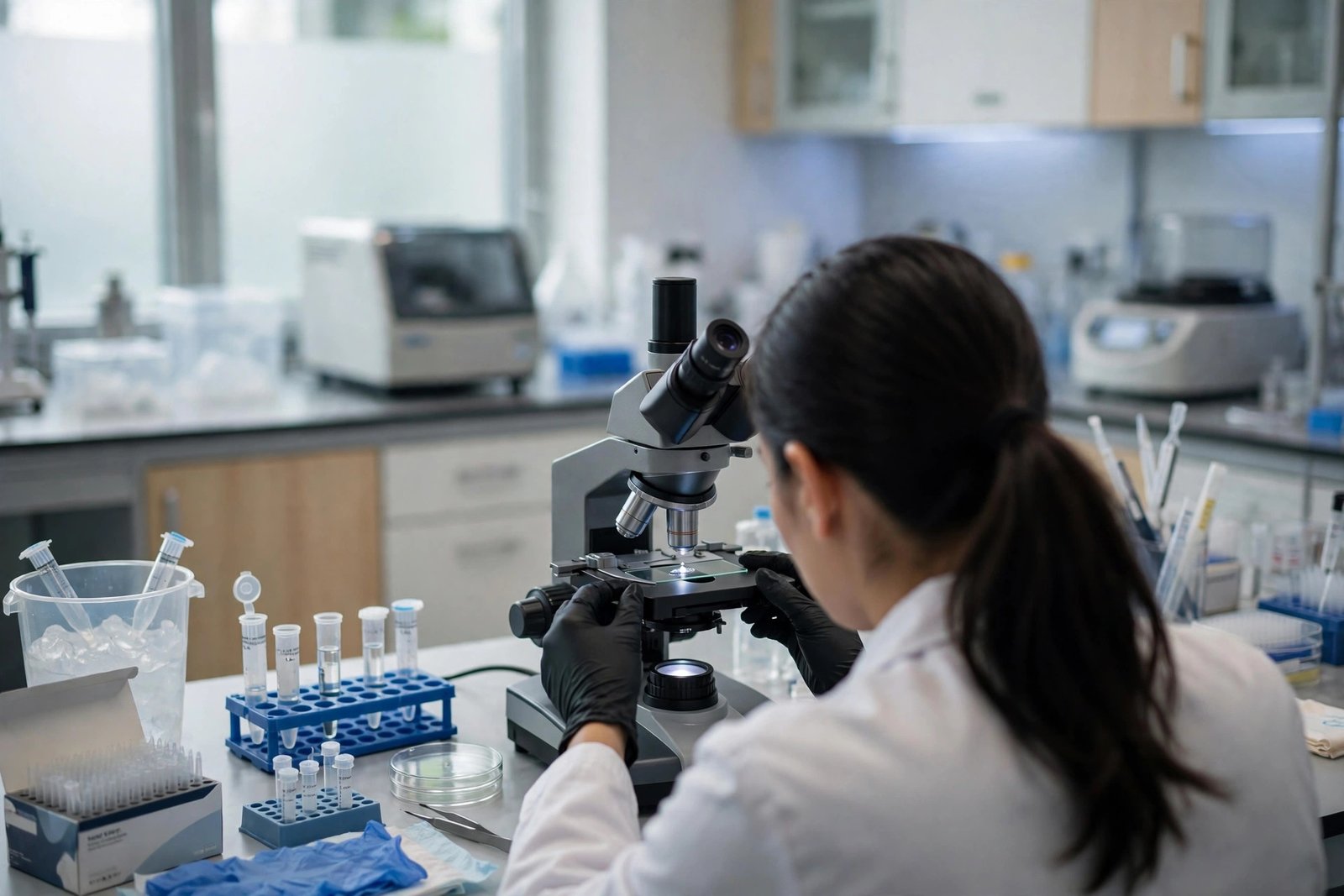

On October 27, 2026, the prader-willi silent genes study october 2026 gave families living with a rare genetic condition something they rarely get: a genuinely new direction. Researchers at WEHI, the Walter and Eliza Hall Institute in Australia, reported a world-first discovery — that removing a protein called SMCHD1 lifts a genetic “brake” that keeps healthy genes switched off in Prader-Willi syndrome, restoring gene activity in patient-derived cells and in animal models without causing problems elsewhere in the body. It is the kind of finding that sounds almost too neat to be real: the healthy genes were there all along, silenced but intact, waiting for someone to find the switch.
To understand why this matters, you need to understand what Prader-Willi syndrome does. About 400,000 people worldwide live with the condition, which affects the brain and causes lifelong physical and developmental challenges. It is not a condition caused by a missing gene in the usual sense. The genetic material is present, but in people with Prader-Willi syndrome, key genes are silenced — switched off by the body’s own regulatory machinery, like lights in a house where someone has taped every switch in the off position. The wiring is fine. The power is connected. But nothing turns on.
What the WEHI team found is, in effect, the tape. SMCHD1 is a protein that helps keep those genes quiet, and when researchers removed it in laboratory experiments, the silenced genes woke up. Gene activity was restored in cells derived from patients and in animal models — and, crucially, the researchers reported that this happened without causing problems elsewhere in the body. That last detail is what separates an interesting laboratory observation from a potential path toward treatment. Many interventions that switch genes on do so indiscriminately, with side effects that make them unusable. Selectivity — waking the right genes without disturbing the rest — is the whole game.
What the Prader-Willi Silent Genes Study October 2026 Found
At the heart of the discovery is a simple but powerful idea: silencing is reversible. For decades, much of genetic medicine has focused on replacing or repairing faulty genes. That approach works in some conditions, but it is enormously difficult — delivering a corrected gene into the right cells, in the right amount, without triggering an immune response or disrupting something else, is one of the hardest problems in medicine. The WEHI approach sidesteps it. If the healthy gene is already sitting in the cell, silenced by a regulatory brake, then the treatment does not need to deliver anything new. It just needs to release the brake.
SMCHD1 is that brake, or at least a central part of it. Proteins like SMCHD1 belong to the cell’s epigenetic machinery — the system of chemical tags and structural proteins that decides which genes are read and which are ignored, without changing the underlying DNA code itself. Think of DNA as a library and epigenetics as the librarian: the books are all on the shelves, but the librarian decides which ones can be borrowed. In Prader-Willi syndrome, the librarian has locked away books the body desperately needs. Removing SMCHD1, in the WEHI experiments, unlocked them.
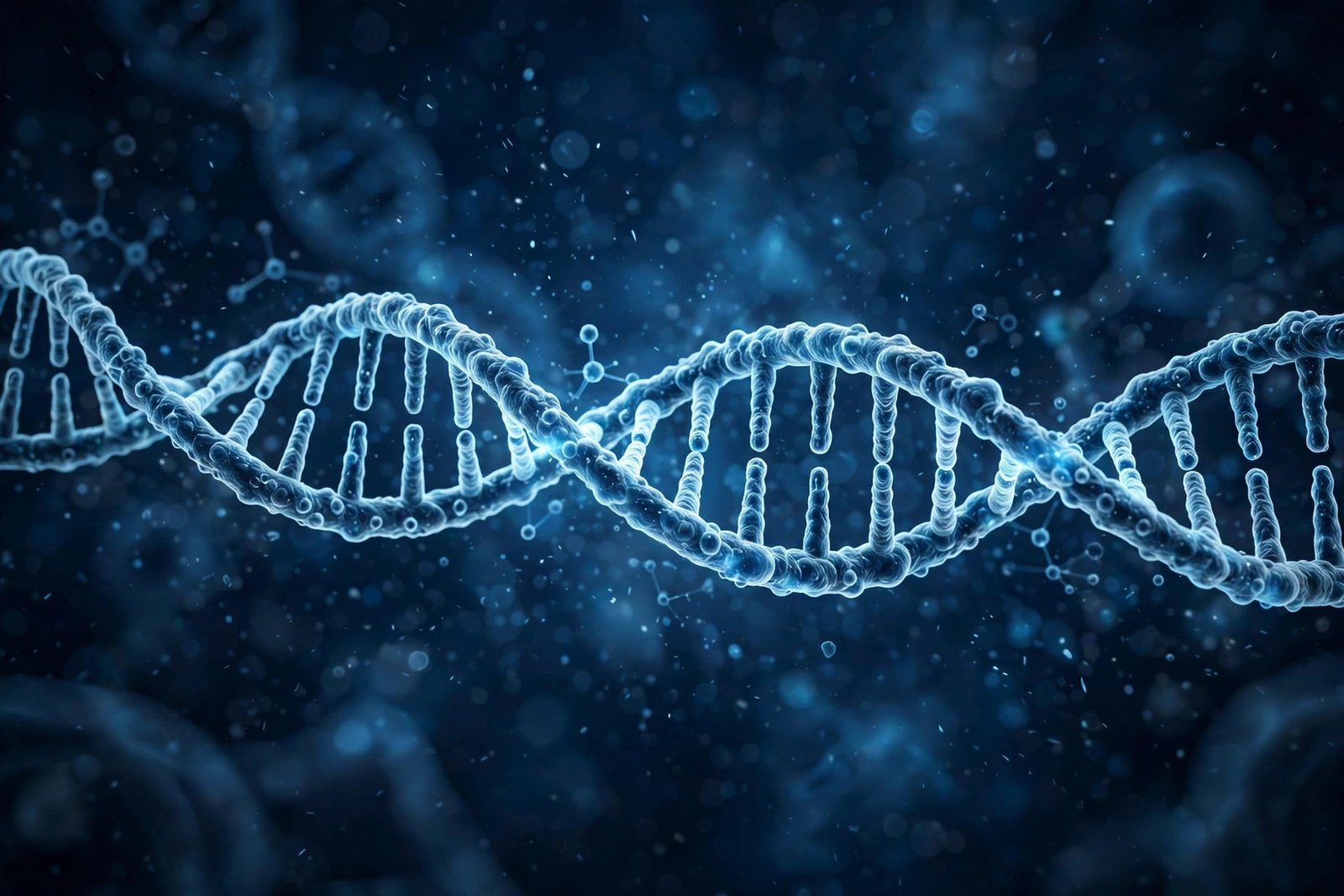
The evidence so far comes from two levels of experiment, and both matter. First, patient-derived cells — cells taken from people with Prader-Willi syndrome and grown in the laboratory — showed restored gene activity when SMCHD1 was removed. That is important because it shows the mechanism works in human biology, not just in a simplified model system. Second, animal models showed the same restoration, which lets researchers observe the effect in a whole living organism, where interactions between tissues and organs can reveal problems that a dish of cells never would. The researchers reported no problems elsewhere in the body in these models — a finding that, if it holds up, removes one of the biggest obstacles between a laboratory discovery and a medicine.
It is worth being clear about what “restoring gene activity” means in practical terms. Genes are instructions, and when they are read, the cell produces proteins that carry out jobs — regulating appetite, guiding development, supporting brain function. In Prader-Willi syndrome, the silencing of these genes contributes to the condition’s lifelong physical and developmental challenges. Restoring their activity does not instantly undo years of development, and it is not a cure in the sense most people imagine one. But it is the first necessary step toward any treatment that works by this route: before you can fix what silenced genes do, you have to prove you can switch them back on safely. That is what this study did.
Why This Discovery Is Different
Rare genetic disorders are often described as “untreatable,” and for most of history that was simply true. The standard of care for Prader-Willi syndrome has been management, not treatment: supporting development, managing symptoms, helping families cope with challenges that never fully go away. Families learn to live with the condition rather than expecting it to change. A discovery that points toward a fundamentally different approach — not managing symptoms but addressing the underlying silencing — is therefore significant even at this early stage.
The approach is also different because it is, in principle, generalizable. The epigenetic machinery that silences genes in Prader-Willi syndrome operates in other conditions too, and a method for safely releasing a specific genetic brake could have implications beyond a single syndrome. That is a long way from proven — the researchers’ work is specific to Prader-Willi syndrome, and no claims should be stretched beyond what the study showed — but it is one reason the discovery has drawn attention beyond the rare-disease community. When a field finds a new lever, everyone watches to see what else it can move.
There is a third reason this finding stands out: the path from laboratory to medicine is already being walked. The discovery is being advanced towards potential new medicines through Togglelux Therapeutics, a spinout company from WEHI. That matters because many promising academic discoveries stall in the gap between a published paper and a drug-development program — the so-called valley of death, where no one will fund the expensive, risky work of turning a mechanism into a medicine. A dedicated spinout does not guarantee success, but it does mean the work has a vehicle, a team, and a commercial reason to keep moving. For families, that is a meaningful difference between a headline and a hope.
None of this should be oversold. Spinouts fail. Animal results do not always translate to humans. Safety in a model organism is not safety in a person. But the structure here — a clear mechanism, human-cell evidence, animal-model evidence, no observed off-target problems, and a company formed to develop it — is exactly the structure that serious drug development is built on. It is the beginning of a road, not the end of one.
What We Know / What We Don’t Know Yet
What we know
- On October 27, 2026, researchers at WEHI (the Walter and Eliza Hall Institute, Australia) reported a world-first study on Prader-Willi syndrome.
- Removing a protein called SMCHD1 lifts a genetic “brake” that silences healthy genes in Prader-Willi syndrome.
- Gene activity was restored in patient-derived cells and in animal models.
- The researchers reported that this happened without causing problems elsewhere in the body.
- About 400,000 people worldwide live with Prader-Willi syndrome, a condition affecting the brain that causes lifelong physical and developmental challenges.
- The discovery is being advanced towards potential new medicines through WEHI spinout Togglelux Therapeutics.
What we don’t know yet
The prader-willi silent genes study october 2026 is early research, and it is essential to say plainly what it is not: it is not an available treatment. No medicine based on this discovery exists yet, and no timeline for patients was given in the reports of the study. The journey from restoring gene activity in cells and animal models to a safe, approved medicine for people involves years of work — optimizing how the brake is released, testing safety in larger and more complex systems, running clinical trials, and satisfying regulators. Some discoveries make that journey; many do not. Families should treat this as a promising scientific advance, not as a treatment they can ask their doctor about tomorrow. Anyone looking for general, everyday health guidance in the meantime can find it in our guide to improving gut health naturally, which covers evidence-based habits that support overall wellbeing.
There are also scientific questions the study has not yet answered, at least in the reports available. How completely is gene activity restored, and does that restoration translate into measurable improvements in the symptoms of the condition? Can the brake be released in a targeted way in a living person, rather than in cells and animal models? And what happens over the long term when a regulatory protein is removed — does the body compensate, or does the effect last? These are the questions the next phase of research, including the work at Togglelux Therapeutics, will have to answer. Until it does, the honest summary is this: a door has been found and opened in the laboratory, and the path beyond it is real but long.
What This Means for Families Right Now
For the families of the roughly 400,000 people living with Prader-Willi syndrome, the most useful response to this news is informed patience. That is the practical meaning of the prader-willi silent genes study october 2026 for families today: the discovery changes the scientific outlook for the condition in a real way — it identifies a mechanism and a route toward treatment that did not exist before — but it does not change anyone’s care plan today. The right move is to stay informed through reliable sources, to discuss any new research with the clinicians who know the individual patient’s situation, and to be wary of anyone offering treatments based on early findings. Genuine medical progress moves through trials and approvals precisely so that hope is not sold before it is earned.

It is also worth noting what the study represents for rare-disease research more broadly. Rare conditions are often neglected by drug development because the patient population is small and the economics are difficult. A discovery like this one — made at a public research institute, then carried forward by a dedicated spinout — shows one model for how that gap can be bridged: public science finds the mechanism, and a focused company takes on the long work of turning it into a medicine. If Togglelux Therapeutics succeeds, it will not just help people with Prader-Willi syndrome; it will demonstrate that the model works, and encourage similar efforts for other rare conditions.
For readers who want to follow the story at its source, the WEHI announcement on switching on healthy silent genes lays out the discovery in the institute’s own terms, and the WEHI institute homepage provides background on the organization’s broader research program. Both are worth bookmarking if you want to track this story as it develops — the next updates will likely come from these sources before they reach the general news.
Frequently Asked Questions
What is Prader-Willi syndrome?
Prader-Willi syndrome is a rare genetic condition affecting the brain that causes lifelong physical and developmental challenges. About 400,000 people worldwide live with it. In this condition, key genes are silenced by the body’s own regulatory machinery rather than being absent, which is why the new research focuses on switching them back on.
What did the WEHI researchers discover?
The researchers found that removing a protein called SMCHD1 lifts a genetic “brake” that silences healthy genes in Prader-Willi syndrome. In their experiments, this restored gene activity in patient-derived cells and in animal models, without causing problems elsewhere in the body.
What is SMCHD1?
SMCHD1 is a protein involved in the cell’s epigenetic machinery — the system that decides which genes are read and which are ignored, without changing the DNA code itself. In Prader-Willi syndrome, it helps keep healthy genes switched off. Removing it, in the WEHI experiments, allowed those genes to become active again.
Is this a treatment I can get now?
No. This is early research, not an available treatment, and no timeline for patients was given in the reports of the prader-willi silent genes study october 2026. The discovery is being advanced towards potential new medicines through WEHI spinout Togglelux Therapeutics, but any medicine would need years of development and clinical testing first.
Why does it matter that there were no problems elsewhere in the body?
Because selectivity is the hardest part of gene-targeted medicine. Many interventions that switch genes on do so broadly, causing side effects that make them unusable. The researchers’ report that gene activity was restored without problems elsewhere in the body suggests the SMCHD1 approach is targeted enough to be worth developing further — though this still needs to be confirmed in humans.
Conclusion
Health research moves in steps like this one — a laboratory finding today, years of testing before any patient benefit. For another recent example of how a single study can change the outlook for patients, see our coverage of the FDA approval of dostarlimab for rectal cancer, where trial results moved a treatment from promising data to real clinical use.
The image at the center of this story is a hopeful one: healthy genes, present but silenced, waiting in the cells of people with Prader-Willi syndrome — and a protein brake that, once removed, lets them switch back on. On October 27, 2026, WEHI researchers showed that this is possible in patient-derived cells and animal models, safely as far as those experiments could tell, and a new company, Togglelux Therapeutics, is now carrying the discovery toward potential medicines. That is a long way from a treatment, and honesty demands that the distance be stated clearly. But it is also a genuine turning point: for the first time, the conversation about Prader-Willi syndrome includes not just how to manage the condition, but how its underlying cause might one day be addressed. For 400,000 people and their families, that is news worth understanding — and worth watching closely as the science moves forward.



