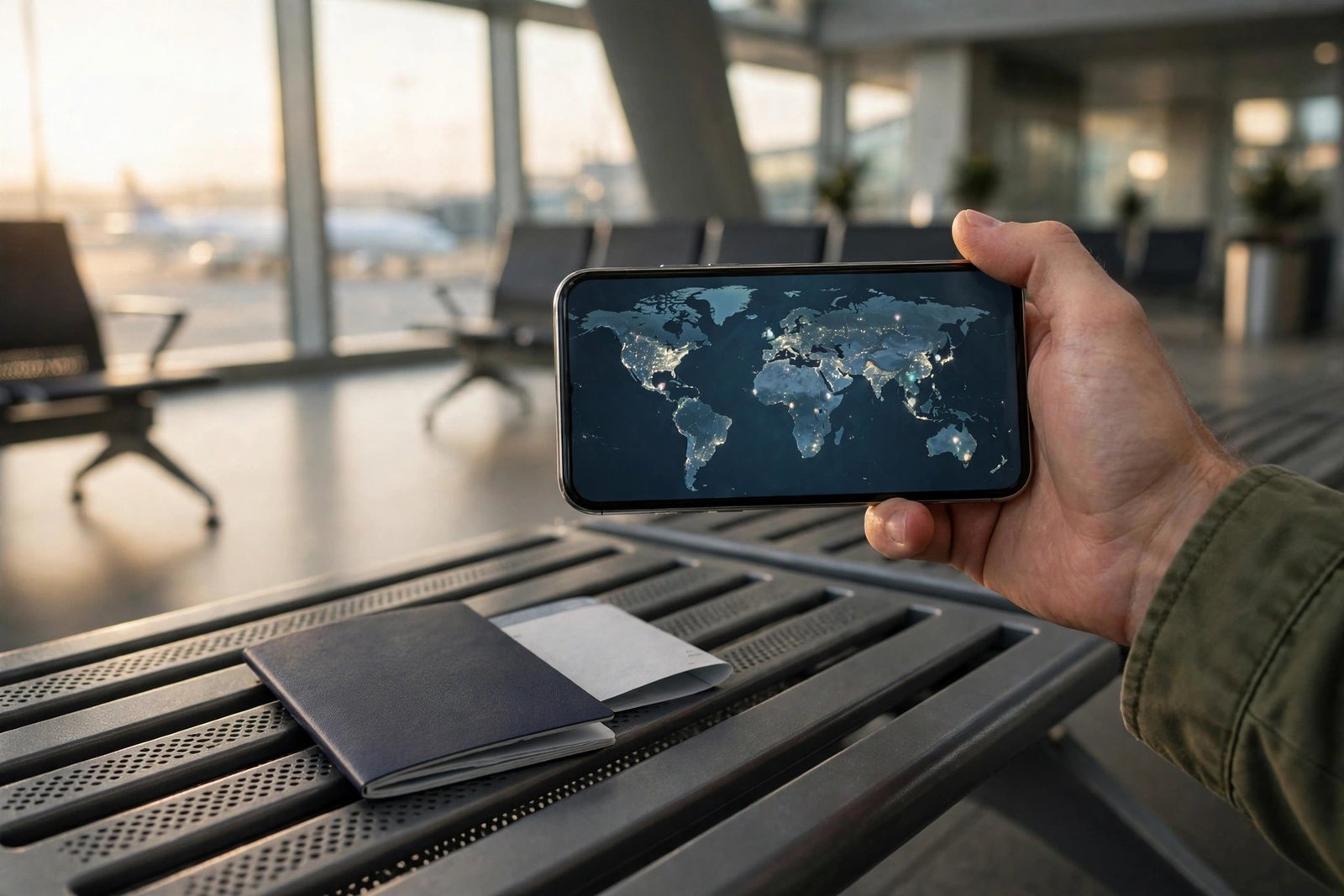

eSIM vs Physical SIM: The Honest Travel Comparison for 2026
You land in a new country. Your phone buzzes with the dreaded “Welcome abroad” text, and you can practically hear your wallet opening. What you do in the next ten minutes determines whether you spend the trip connected for a few dollars or come home to a phone bill that ruins the memories. That decision comes down to the “esim vs physical sim” question, and it matters more in 2026 than it ever has.
The old playbook was simple: buy a local physical SIM at the airport kiosk, swap it into your phone, and pray the tiny ejector tool didn’t roll under a seat. But embedded SIMs — eSIMs — have rewritten the rules. Most modern phones now carry a chip that downloads a carrier plan the way you’d download an app, no plastic card required.
So which one should you actually use for travel? I spent the last few months testing both across multiple trips, and this is the honest comparison the carrier stores and the eSIM resellers won’t give you.
What an eSIM Actually Is (and What a Physical SIM Does Differently)
Before picking a winner, it helps to know exactly what you’re comparing.
The physical SIM card
A physical SIM is the little gold-and-plastic chip you’ve been swapping between phones for twenty years. It stores your carrier credentials, slides into a tray on the side of your phone, and works the moment you insert it — no Wi-Fi, no app, no setup wizard. Lose it, and you’re offline until you get a replacement. It is beautifully simple, and that simplicity is its superpower.
The eSIM
An eSIM is a reprogrammable chip soldered directly onto your phone’s circuit board. Instead of inserting a card, you download a carrier profile — usually by scanning a QR code or tapping a link — and your phone connects. The technology standard is published by the GSMA, which publishes the eSIM specification used by carriers and phone makers worldwide. One phone can store multiple profiles — your home carrier, a Japan plan, a Europe plan — and you switch between them in Settings.
The physical SIM is a thing you carry. The eSIM is a thing your phone becomes. Everything else flows from that difference.
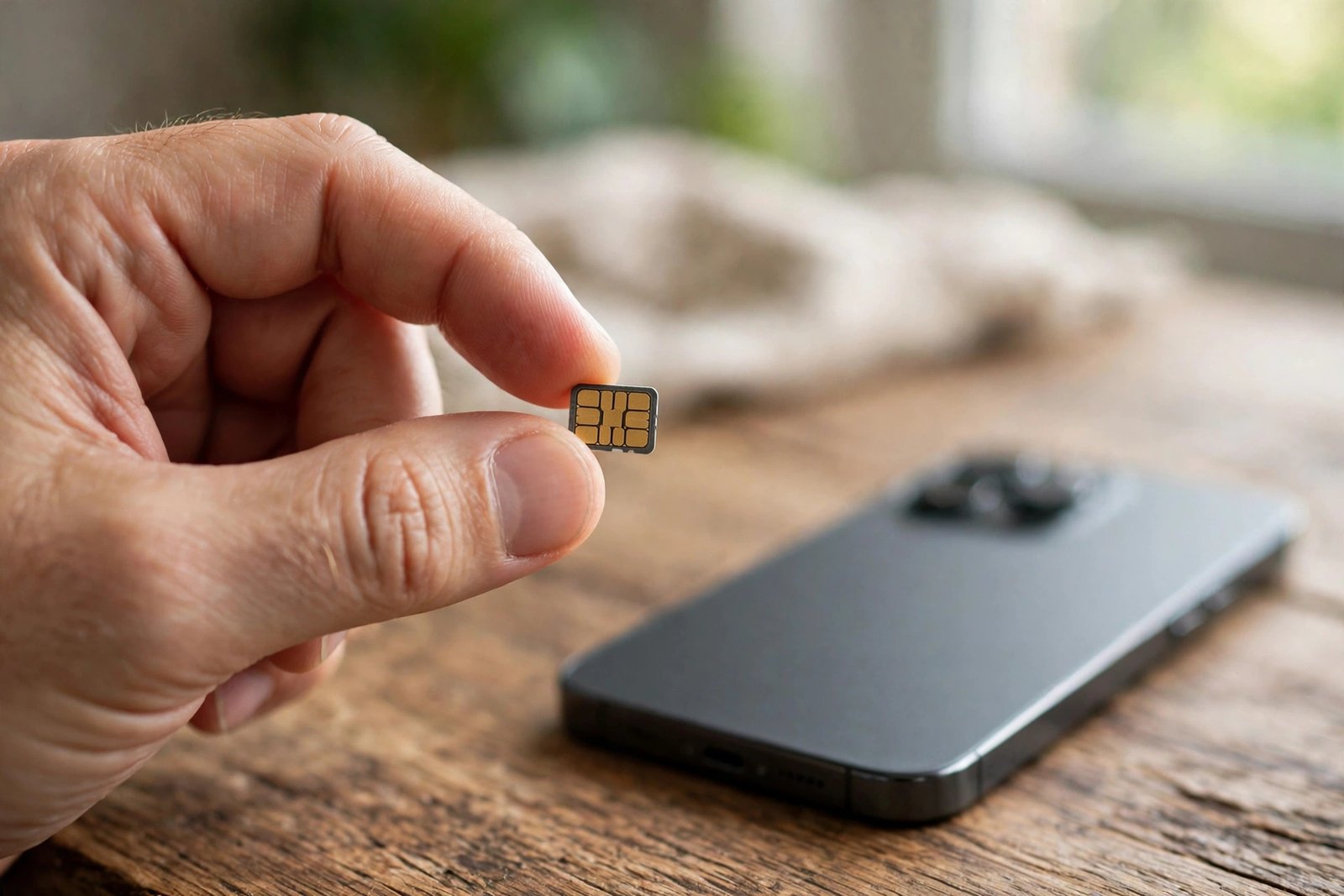
esim vs physical sim: the full comparison
Here is the head-to-head, one category at a time:
| Feature | eSIM | Physical SIM |
|---|---|---|
| What it is | Embedded, reprogrammable chip | Removable plastic card |
| Switching plans | Download a profile in minutes; store several | Eject tray, swap card, one plan per slot |
| Setup needs | Internet connection + QR code or carrier app | Just the card and an ejector tool |
| Dual numbers | Store multiple profiles; run two lines at once on most phones | One line per slot (some phones have two trays) |
| Device compatibility | Needs an eSIM-capable, usually carrier-unlocked phone | Works in any unlocked phone with a matching tray |
| Buying for travel | Buy and install before you fly | Buy at an airport kiosk or store after landing |
| Theft protection | Can’t be removed by a thief | Can be removed, lost, or swapped into another phone |
| Switching devices | Transfer profiles through your carrier | Move the card in seconds |
When you run the esim vs physical sim comparison across setup speed, flexibility, and travel convenience, the eSIM wins most rounds. But “most” isn’t “all” — and the rounds it loses genuinely matter.
Activation: Scan a QR Code or Hunt for a Paperclip
This is where the eSIM feels like the future. On an iPhone, you go to Settings → Cellular → Add eSIM, point the camera at a QR code from your carrier or a travel eSIM marketplace like Airalo, and the plan installs itself in a couple of minutes. On a Pixel or Samsung phone, the path is Settings → Network & internet → SIMs → Add SIM, and the idea is the same.
The critical detail: that first-time download needs an internet connection. So the smart move is installing your travel eSIM the night before you fly, on home Wi-Fi, with the plan set to activate on arrival. Land, toggle the line on, and you’re on local data before the seatbelt sign goes off.
The physical SIM plays this in reverse. It needs nothing to set up — no internet, no account, no app — but it needs you to physically be somewhere you can buy one. That usually means an airport kiosk, a carrier store downtown, or a corner shop, sometimes with passport registration (many countries require ID for prepaid SIMs). If your flight lands at 1 a.m., your “simple” SIM purchase might wait until morning.

Dual SIM and Dual Active: the Real Reason Travelers Switch
Here’s the feature that actually changes how you travel. Most eSIM-capable phones can run two lines at the same time — your home number stays active for calls, texts, and those all-important two-factor authentication codes, while the eSIM handles local data. Apple documents dual-SIM behavior on its support pages, and every major phone maker now ships it.
The esim vs physical sim argument gets interesting here, because a physical SIM can do dual-line duty too — if your phone has two trays, or a tray plus eSIM. But the eSIM version is better in one specific way: you can keep adding profiles. A frequent traveler can hold a home line, a UK plan, a Japan plan, and a regional Europe plan on one phone and flip between them like playlists. Try doing that with a stack of nano-SIMs in your wallet and see how long they survive.
One warning that applies to both: your phone must be carrier-unlocked for any of this to work. A phone locked to one carrier will reject other carriers’ profiles and cards alike, eSIM or plastic.
The iPhone 14 Problem: eSIM-Only Is Already Here
If you carry a recent iPhone bought in the United States, this debate may be over before it starts. iPhone 14 models and later purchased in the US can only be activated with an eSIM — there is no physical SIM tray at all.
That doesn’t mean physical SIMs are dead everywhere. International iPhone models still ship with a nano-SIM tray alongside eSIM, and most Android flagships (Samsung Galaxy S series, Google Pixel) keep both options. But the direction of travel is obvious: the tray is disappearing, and carriers have noticed. Even where you can still choose, choosing means knowing what each option costs you in time and flexibility.
Cost: What Each Option Does to Your Travel Budget
Let’s talk money without inventing numbers. Roaming on your home plan abroad is almost always the most expensive way to stay connected — which is exactly why our guide to ways to avoid roaming charges abroad exists. A local plan, whether eSIM or physical, usually costs a fraction of roaming. The difference between the two SIM types is less about price and more about when and how you pay.
With a travel eSIM, you buy the plan from home, see the price upfront, and install it before departure. No haggling, no surprise “tourist price” at the kiosk. With a physical SIM, prices vary by vendor — airport kiosks often charge more than city-center stores, and you’ll sometimes pay a premium for the convenience of buying at arrivals.
The honest caveat: travel eSIMs are usually data-focused. Many plans don’t include a local phone number for voice calls, which matters if you need to call hotels, restaurants, or a tour operator. A local physical SIM from a real carrier almost always includes voice and SMS. If your trip involves a lot of actual phone calls, check what’s included before you commit to either.

Security: What Happens When Your Phone Gets Stolen
This one rarely makes the comparison lists, and it should. A thief who steals your phone can pop a physical SIM out in seconds and drop it into another phone — potentially intercepting your calls and SMS verification codes. An eSIM can’t be physically removed. Disabling it requires unlocking the phone itself, which buys you time to locate the device or wipe it remotely.
The flip side: eSIM profiles live and die by your phone. If your phone dies completely and you need connectivity on a borrowed device right now, moving a physical SIM takes ten seconds. Restoring eSIM profiles onto a replacement phone means going through your carrier’s transfer process — doable, but not instant, and miserable without Wi-Fi.
When the Physical SIM Still Wins
The eSIM is the better travel tool most of the time. But the physical SIM keeps winning in a handful of real situations:
- Older or budget phones. Plenty of perfectly good phones don’t support eSIM. If yours is one of them, the debate is moot.
- Countries with patchy eSIM support. Not every carrier in every country supports eSIM activation for visitors. In those places, a local physical SIM remains the only option — and honestly, the cheapest.
- Long stays. For a semester abroad or a multi-month work assignment, a proper local contract SIM from a physical store often beats any travel eSIM on data allowances.
- Device hoppers. Reviewers, families sharing phones, or anyone who swaps devices often will always find a physical card easier to move.
- Dead-simple reliability. No app, no QR code, no compatibility list. Put the card in. It works.
There’s also the planning angle: if you’re still in the early stages of trip planning — finding cheap flights for your trip and picking from the best travel backpacks for 2026 — sorting your connectivity early, whichever SIM you choose, is one less thing to solve at the arrivals hall.
Frequently Asked Questions
Can I use an eSIM and a physical SIM at the same time?
Yes, on most modern phones. This is the classic traveler setup: your physical SIM keeps your home number active while a travel eSIM provides cheap local data. Check your phone’s specs for dual-SIM support first — virtually all eSIM-capable iPhones, Pixels, and Galaxy phones support it.
Do I need to remove my physical SIM to use an eSIM?
No. eSIM profiles live on the phone’s embedded chip, completely separate from the SIM tray. You can leave your physical SIM in place, turn off its data roaming, and let the eSIM handle data abroad. Just remember to disable data roaming on your home line so it doesn’t quietly rack up charges in the background.
Is an eSIM safer than a physical SIM?
In one specific way, yes: it can’t be physically removed and swapped into another phone, which protects you against SIM-swap theft after a phone robbery. For day-to-day security, though, both are equally dependent on your carrier’s account protections and your phone’s lock screen.
Who wins the esim vs physical sim debate for travel?
For short and medium trips, the eSIM wins: buy before you fly, install on Wi-Fi, land connected, keep your home number live for two-factor codes. For long stays, budget phones, or countries where local carriers don’t support eSIM well, the physical SIM still earns its place.
Can I switch my eSIM back to a physical SIM later?
Usually, yes. Most carriers can move your line between an eSIM profile and a physical card on request — sometimes instantly through the carrier app, sometimes requiring a store visit or a new card. The line itself doesn’t care which form the SIM takes.
Does an eSIM drain battery faster than a physical SIM?
No meaningful difference. Both are just the credential your phone’s cellular radio uses to join a network. Battery life depends on signal strength, network generation (5G vs 4G), and how much data you’re moving — not on whether the SIM is embedded or plastic.
Conclusion: Which One Should You Choose?
So, in the esim vs physical sim decision, the verdict is refreshingly practical rather than ideological. Get an eSIM for your next trip if your phone supports it: install a travel data plan before you leave, keep your home line alive for calls and verification codes, and skip the airport kiosk entirely. Stick with a physical SIM if your phone or destination doesn’t play nicely with eSIM, if you’re staying long enough to want a real local contract, or if you just want the dumb-simple reliability of a card that works in any unlocked phone ever made.
The best answer for frequent travelers, honestly, is both. A home number on one line and a stack of travel eSIM profiles on the other is the closest thing to a universal connectivity setup that exists in 2026 — and your future self, landing at midnight in a country whose language you don’t speak, will be very glad you sorted it before takeoff.



