
How Much Does It Cost to Charge an Electric Car at Home? 2026 Guide
You plug in, you sleep, you drive. Home charging is the quiet superpower of EV ownership — no gas stations, no waiting rooms, no pump prices staring you down. But the question almost every new EV buyer asks first is a fair one: how much does it cost to charge an electric car at home? The short answer is pleasantly boring: for most American drivers, roughly the cost of a streaming subscription and a takeout dinner each month. The long answer is more interesting, because your actual number depends on your electricity rate, your car’s battery, and how clever you get with your charging schedule. This guide walks through the real 2026 numbers — no marketing gloss, just sourced rates and simple math. Put simply, how does it cost to charge an electric car at home comes down to your rate, your battery size, and how far you drive. That, in short, is the answer to how much does it cost to charge an electric car at home. Most drivers care less about a single full charge than about how much does it cost to charge an electric car at home over a month. Once you know that, how much does it cost to charge an electric car at home stops being a mystery and becomes a simple monthly line item. For a household that drives daily, how much does it cost to charge an electric car at home is a budget question worth answering before signing up for a new rate plan. In short, knowing how much does it cost to charge an electric car at home helps you compare home charging with public charging on equal terms. That is why how much does it cost to charge an electric car at home matters more than any single full-charge price.
how much does it cost to charge an electric car at home in 2026?
Let’s start with the number that matters most: the U.S. average residential electricity price. The U.S. Energy Information Administration forecasts an average of 18.2 cents per kilowatt-hour for U.S. homes in 2026 (its September 2026 Short-Term Energy Outlook; July 2026 actual data came in at 18.31 cents). The cost of a full home charge comes down to one simple formula:
Full charge cost = battery capacity (kWh) × your electricity rate ($/kWh)
To work out how much does it cost to charge an electric car at home for one full charge, multiply your EV’s battery size by your rate. Here is what that looks like at the national average rate for some of the country’s most popular EVs:
- Tesla Model 3 (about 75 kWh usable battery): 75 × $0.182 = $13.65 per full charge
- Hyundai IONIQ 5 (about 84 kWh): 84 × $0.182 = $15.29 per full charge
- Ford Mustang Mach-E Extended Range (about 91 kWh): 91 × $0.182 = $16.56 per full charge
- Chevrolet Equinox EV (about 85 kWh): 85 × $0.182 = $15.47 per full charge
Those are full, zero-to-100% fills, which you will almost never do at home — most owners top up from 20–30% back to 80–90% overnight, so a typical night costs $9 to $13 at the national average. Battery sizes vary slightly by model year and trim, so treat these as close approximations, but the math holds no matter which EV you own. If you’re still weighing the switch, our electric vs hybrid breakdown walks through which drivetrain actually saves more money in 2026.
What it costs per month for an average driver
A full charge is a fun number to quote, but monthly cost is the one your budget feels. The average American drives about 13,489 miles a year, or roughly 1,125 miles a month. A typical modern EV uses about 29 kWh to travel 100 miles (the EPA’s median efficiency across certified models — the Tesla Model 3 sits around 25–26 kWh/100 mi, the IONIQ 5 around 28–29, per EPA fuel economy ratings).
The math: 1,125 miles × 0.29 kWh/mile = about 326 kWh of electricity per month. At 18.2 cents per kWh, that comes to roughly $59 per month — less than most households spend on streaming services, and far less than gasoline. At that same mileage, a 27-mpg gas car at AAA’s $4.29 per gallon national average (Oct 23, 2026) would burn through about $179 in fuel. Home charging isn’t just cheaper than gas; it is roughly one-third the cost.
Keep in mind that your real monthly figure depends heavily on where you live. EIA’s July 2026 state data shows Louisiana at 12.72 cents per kWh and Hawaii at 48 cents — meaning the same EV costs a Louisiana driver about $41 a month and a Hawaii driver about $157. More on that gap below.
Level 1 vs Level 2: does the charger type change the cost?
Charging level changes how fast you charge, not how much each kilowatt-hour costs. Your utility bills you per kWh regardless of whether it flows through a standard wall outlet or a dedicated 240-volt charger. But the charger you use still shapes your total costs in two real ways.
Level 1 is the charging cable that comes with most EVs, plugged into an ordinary 120-volt outlet. It delivers about 1.4 kW — roughly 3 to 5 miles of range per hour. There is no extra equipment to buy, so the upfront cost is essentially zero. The catch: a full charge can take 24 to 48 hours, and because the car sits awake longer while charging, slightly more energy is lost to overhead. It works for low-mileage drivers and plug-in hybrids with small batteries.
Level 2 is the 240-volt wallbox most EV owners install in their garage. It delivers 7 to 11 kW (some up to 19.2 kW), adding roughly 20 to 40 miles of range per hour — enough to fully recharge almost any EV overnight. The electricity itself costs exactly the same as Level 1, but the hardware and installation are the big-ticket item here, covered in the installation section below. For drivers covering more than about 40 miles a day, Level 2 is effectively mandatory, and its scheduling features are what unlock the cheap overnight rates that slash your bill.
Your rate matters more than your car: time-of-use and state differences
Time-of-use plans are the biggest lever for how much does it cost to charge an electric car at home on a monthly basis — more than which EV you buy. Utilities across the country are moving toward rate plans that price electricity by time of day: expensive when demand peaks in the late afternoon and evening, cheap when it slumps overnight. Since your car sits in the garage for 10 to 12 hours every night, it is the perfect appliance for this game.
The spread can be dramatic. Georgia Power’s overnight EV rate runs as low as 2.19 cents per kWh — at that price, a 300 kWh month of driving costs under $7. California’s PG&E, by contrast, charges EV drivers about 23 cents in the cheapest overnight hours but up to 54 cents during the 4–9 p.m. summer peak, according to published utility tariffs. That means a California driver who schedules charging for after midnight pays less than half what a peak-hour charger pays, for the exact same electrons.
How to take advantage:
- Ask your utility about an EV or time-of-use rate plan. Many utilities offer EV-specific tariffs that are not the default — you have to enroll. Savings of 20–40% versus standard rates are typical for drivers who can shift most charging to overnight hours.
- Use your car’s or charger’s scheduled charging. Every EV and most smart Level 2 chargers let you set “start after 11 p.m.” or similar rules. Set it once and forget it — this is the single highest-value habit in home EV charging.
- Know your peak window. The expensive hours are usually 4–9 p.m. on weekdays. Running the dryer and charging the car outside that window compounds your savings.
- Check utility rebates. Many utilities offer $250 to $1,000+ in rebates on home charger installations, plus ongoing off-peak discounts. The DOE’s Alternative Fuels Data Center maintains a searchable database of every state and utility incentive.
Home charging vs public charging vs gas: the 2026 cost-per-mile picture
Home charging wins the cost game so decisively that the real comparison is worth putting on a chart. Using 2026 data — EIA’s 18.2¢/kWh residential forecast, Paren’s Q2 2026 finding of 53.8 cents per kWh as the average U.S. DC fast-charging rate, AAA’s $4.29 per gallon national average (Oct 23, 2026), and a median EV efficiency of 29 kWh per 100 miles — the per-mile costs look like this:

Two things jump out. First, home charging at about 5.3 cents per mile costs roughly one-third of gasoline. Second, public DC fast charging at 15.6 cents per mile costs essentially the same as a gas car — which is fine for road trips (it is what fast chargers are for) but a terrible everyday strategy. This is why experienced EV owners follow what the industry calls the 80/20 pattern: the vast majority of charging happens at home overnight, and fast chargers are reserved for road trips. If you are comparing the full picture of EV running costs — insurance included — see our explainer on why car insurance is so expensive, since EVs carry their own insurance quirks.
What about the charger installation cost?
The electricity is cheap; getting the charger on the wall is where the real money goes. According to Qmerit’s 2026 installation data, a standard Level 2 home charger installation runs $749 to $2,500, averaging about $1,700. That figure typically bundles the charger unit itself ($300–$600), an electrician’s labor ($400–$800 for a straightforward job), materials like wire and conduit, and the permit (usually $50–$300). The Qmerit’s 2026 home charging cost data confirms this range across thousands of U.S. installs.
Two things can move that number substantially:
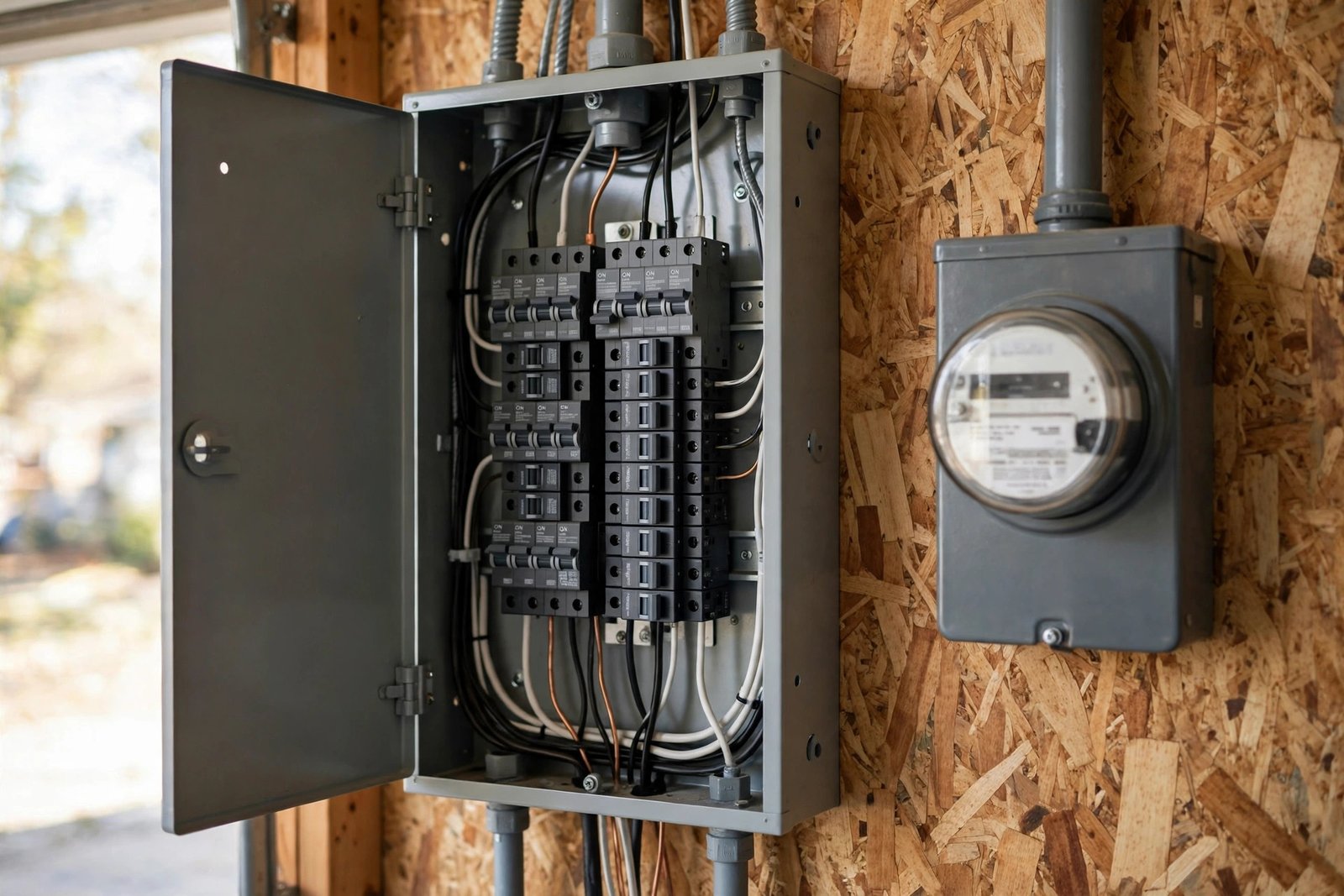
- Distance from your electrical panel. A charger mounted six feet from the panel on the garage wall is the cheapest job. A detached garage across the yard means trenching, conduit, and long cable runs — each foot adds material and labor. This single variable is the most common reason quotes exceed $2,500.
- Panel capacity. If your home’s electrical panel has a spare 240V circuit, you’re golden. Older homes on 100-amp service may need a panel upgrade, which Argonne National Laboratory data puts at roughly $1,300 to $3,000 — and worst-case full service replacements can reach $7,000+. Get an electrician’s assessment before budgeting.
The good news: offsets are everywhere. Utility rebates of $250–$1,000+ are common, and a federal tax credit can cover up to 30% of installation costs (up to $1,000) for qualifying installations — check the current IRS rules for eligibility in your area. Planning these alongside other year-end moves? Our guide on how to reduce your tax bill before year-end covers the timing. Even at the full $1,700, the installation pays for itself fast: saving ~$120 a month versus gasoline means the charger is paid off in about 14 months.
Five ways to keep your home charging bill as low as possible
- Charge overnight on a time-of-use rate. This is the 80/20 move — one enrollment and one schedule setting can cut your charging cost by 20–40%.
- Charge to 80%, not 100%. Most manufacturers recommend an 80% daily limit anyway for battery health; the last 20% also charges slower and wastes more energy as heat.
- Precondition while plugged in. Heating or cooling the cabin from wall power before you leave means the battery doesn’t spend its own energy doing it — a meaningful saving in winter.
- Keep the battery in its comfort zone. Extreme cold increases charging losses. If you have a garage, parking inside in winter measurably improves efficiency.
- Check your rate annually. Utilities change tariffs and add EV plans regularly. The plan that was cheapest last year may not be cheapest this year — a 10-minute review each fall is worth real money.
FAQ
On average, how much does it cost to charge an electric car at home each month?
About $50–$70 per month for an average driver at the 2026 U.S. average residential rate of 18.2 cents per kWh. That assumes roughly 1,125 miles of driving a month in a typical EV (about 29 kWh/100 mi). Drivers on cheap overnight time-of-use rates can pay under $30; drivers in high-rate states like California or Hawaii can pay $100+.
Is it cheaper to charge an EV at home or at a public charger?
Home charging is dramatically cheaper. At 2026 U.S. averages, home charging costs about 5.3 cents per mile while public DC fast charging averages 15.6 cents per mile — nearly three times as much. Reserve fast chargers for road trips and do the bulk of your charging in your own garage.
How much does it cost to install a home EV charger?
A standard Level 2 installation averages about $1,700 in 2026, with most jobs falling between $749 and $2,500. If your electrical panel needs an upgrade to support the charger, add $1,300–$3,000. Utility rebates and a federal tax credit (up to $1,000 for qualifying installs) can offset a large share.
Does charging at home raise your electric bill a lot?
It raises it noticeably but modestly — about $59 a month for average driving at national-average rates, on top of a typical U.S. household electric bill of roughly $159–$165. In exchange, you’re eliminating most or all of a $150–$200 monthly gasoline bill. The net effect is almost always a large saving.
What is the cheapest time to charge an EV at home?
Overnight, typically between 11 p.m. and 6 a.m., when utilities offer their lowest time-of-use rates. Some EV-specific tariffs (like Georgia Power’s overnight plan) drop as low as 2.19 cents per kWh — at which point a full month of driving costs less than a fancy coffee. Set scheduled charging in your car or charger app and never think about it again.
Can I charge an EV with just a regular wall outlet?
Yes — Level 1 charging from a standard 120V outlet works, adding about 3–5 miles of range per hour with no installation cost. It is adequate if you drive under ~30 miles a day. For most drivers, a 240V Level 2 charger (20–40 miles of range per hour) is worth the ~$1,700 installation for the overnight convenience and access to scheduled off-peak rates.
The bottom line
By now you know how much does it cost to charge an electric car at home in 2026 — around $14 to $17 per full charge, about $59 a month for average driving, and roughly 5 cents a mile. That is one-third the cost of gasoline, and with time-of-use rates it can drop even further. The charger installation (about $1,700 on average) is the one real upfront cost, and at typical gas savings it pays for itself in well under two years. For the vast majority of drivers, the garage plug is the cheapest fuel pump in America — it is just already in your house.



