
They appear out of nowhere: one tiny fly hovering over the banana bowl, then three, then a whole cloud every time you open the fruit drawer. Learning how to get rid of fruit flies naturally is mostly about understanding one thing — the flies you see are only the tip of the problem. For every adult buzzing around your kitchen, there may be hundreds of eggs and larvae tucked into a forgotten potato, a damp drain, or a splash of juice under the trash can. Kill the adults and you feel better for a day; find the breeding site and the problem actually ends.
This guide follows a source-first system: identify the fly, hunt down and remove the breeding site, then mop up the remaining adults with simple homemade traps — no sprays, no chemicals near your food.
First, Make Sure They Are Fruit Flies
Not every tiny kitchen fly is a fruit fly, and the treatment depends on the identification. Fruit flies (Drosophila) are small — about 3 to 4 millimeters — tan or brownish, with red eyes and a rounded body. They hover around fruit, juice, wine, and fermenting food, and they are slow, lazy fliers that you can often catch with your hand.
Fungus gnats are the main lookalike. They are darker, slimmer, and mosquito-like, with long legs and antennae, and they hover around houseplants rather than fruit. If the flies are worst near your potted plants and you see them walking on the soil surface, you almost certainly have fungus gnats, and the fix is letting the top inch of potting soil dry out between waterings — fruit traps will not solve a gnat problem. Drain flies are another confusion: small, fuzzy, moth-like flies that sit on bathroom or kitchen walls near drains. They need a drain treatment, not a fruit trap.
The University of Minnesota Extension’s guide to fruit flies in the home is a good identification reference, with clear descriptions of the common indoor species. If your flies match the fruit-fly description — small, tan, red-eyed, fruit-obsessed — read on.
Why Fruit Flies Show Up (and Why They Multiply So Fast)
Fruit flies are drawn to fermenting organic matter: overripe fruit, spilled juice, wine residue, and the thin film of organic gunk inside drains and garbage disposals. A single female can lay hundreds of eggs on the surface of fermenting food, and in warm kitchen conditions the full life cycle — egg, larva, pupa, adult — can complete in about a week. That is why a handful of flies on Monday can become a swarm by the weekend, and why killing the adults you see barely dents the population: new adults are emerging from the breeding site every day.
That is why the source-first approach matters: traps cannot outpace a breeding site producing new flies daily. Remove the source, and the remaining adults live only a few days.
Step 1: Find the Breeding Site
Work through the kitchen systematically, and do not stop at the first suspect. Fruit flies often breed in more than one spot.
The fruit bowl and the pantry
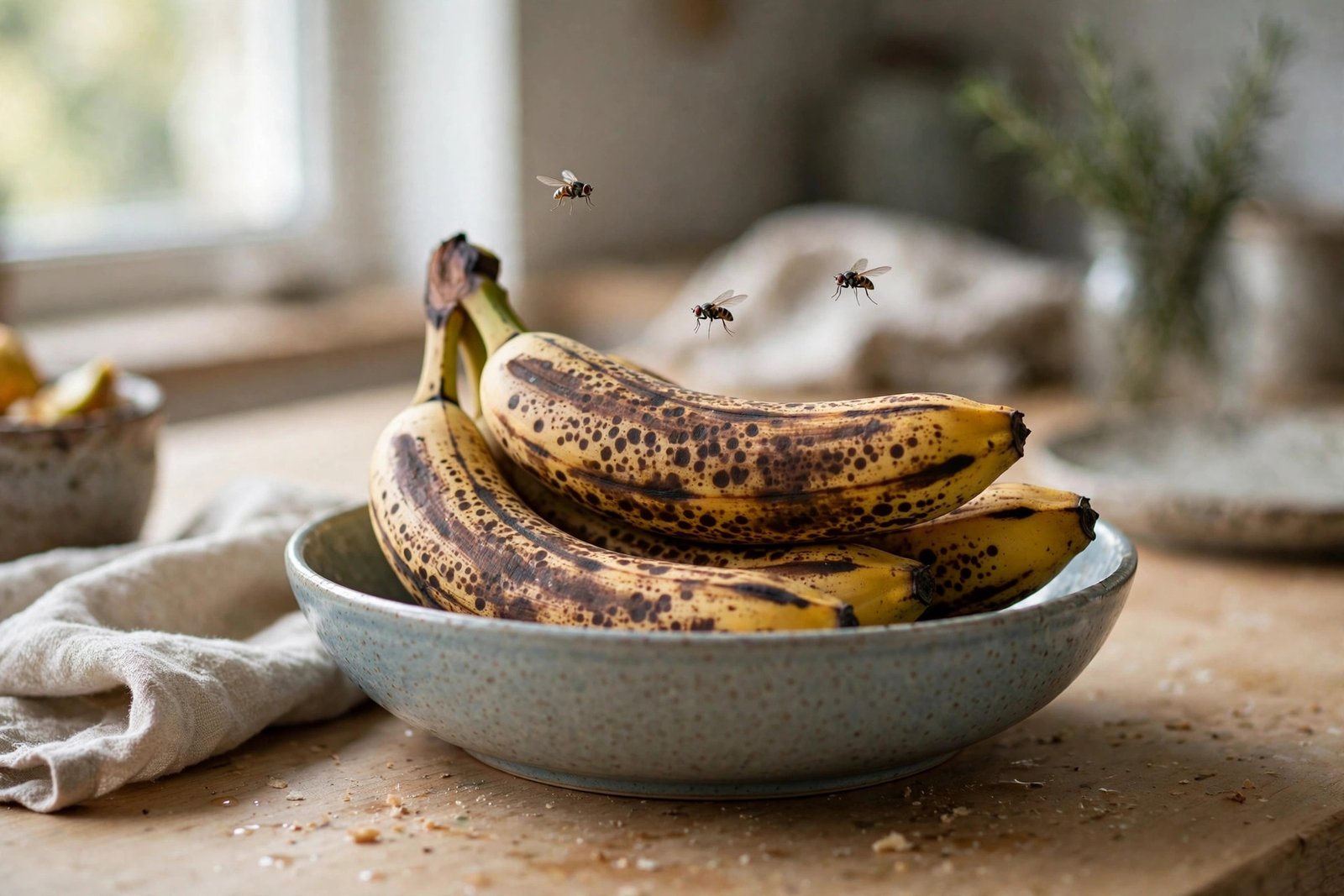
Check every piece of fruit, including the ones you forgot: the onion that sprouted in the pantry, the potato gone soft at the back of the cupboard, the banana peel in the compost caddy. Fruit flies breed in the skin and flesh of overripe produce, so anything soft, leaking, or fermented goes straight into a sealed bag and out of the house. Wipe the fruit bowl and the shelf underneath — spilled juice dries into a sticky film that keeps attracting flies long after the fruit is gone.
The drain and garbage disposal
Kitchen drains are the most overlooked breeding site in the house. The slimy biofilm inside the drain and disposal is a perfect nursery. Pour boiling water down the drain, then scrub the drain opening and the disposal’s rubber splash guard with a bottle brush and hot, soapy water. The splash guard is the part most people miss: lift its flaps and clean both sides, because food residue collects underneath. Repeat the boiling-water flush daily for a few days during an infestation.
The trash can and recycling bin
Empty the trash and recycling, then wash the cans themselves — especially the bottom, where leaked juice pools, and the lid, where sticky residue collects. Rinse bottles and cans before they go into recycling: a single unrinsed wine bottle can support a breeding population. During an active infestation, take trash out daily and keep the can lid closed.
The hidden spots
Check under the sink for leaks (damp cabinet floors breed flies and mold), behind the fridge for spilled drips, inside the dishwasher filter, and around the mop bucket. A single damp sponge left in the sink can harbor larvae. If you have a compost bin, keep it sealed and empty it frequently during an infestation, or move it outside until the flies are gone. Penn State Extension’s fruit fly fact sheet lists the same range of household breeding sites and stresses that eliminating them is the only lasting control.
Step 2: Remove the Source and Break the Cycle
Once you have found the breeding sites, act on all of them in one pass. Throw out overripe produce, clean the drains, wash the cans, wipe the surfaces. Then change the conditions that let the problem start:
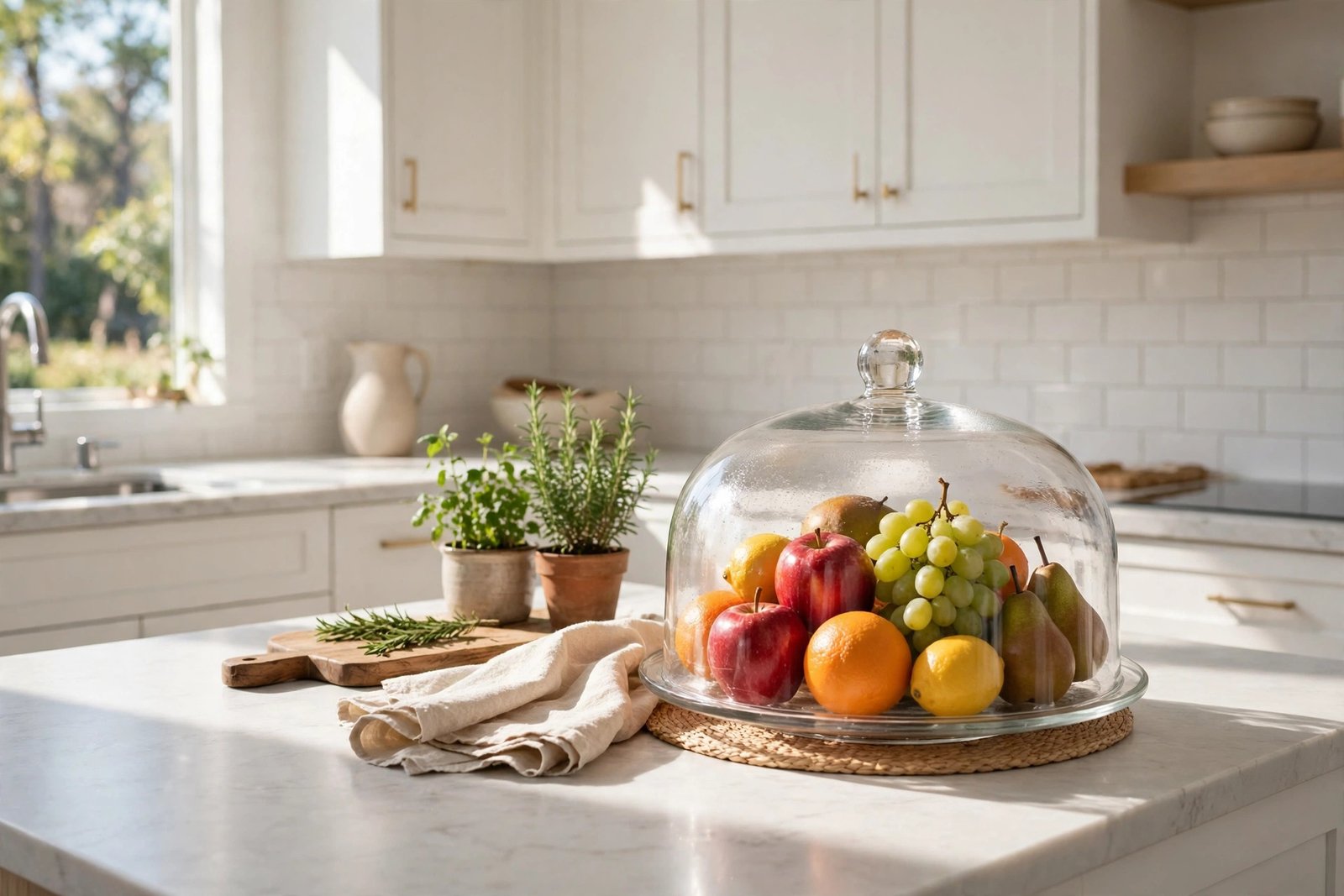
Store fruit properly. Keep counter fruit in a covered bowl or under a mesh food cover, and refrigerate anything ripe that you will not eat within a day or two. Fruit flies cannot reach refrigerated produce, and cold storage slows fermentation.
Fix the moisture. Wipe sinks dry after use, fix dripping taps, and do not leave damp sponges or dishcloths sitting in the sink. Fruit flies need moist organic matter to breed; a dry kitchen is a hostile one.
Clean as you cook. Rinse cutting boards and knives after handling fruit, wipe juice spills immediately, and rinse the sink after pouring out old drinks. The five-second wipe now prevents a week of flies later.
Seal the compost. If you compost indoors, use a lidded caddy with a tight seal and empty it every day or two during warm weather. Vegetable scraps ferment fast, and an open caddy is an open invitation.
This is also a good moment to look at the kitchen as a whole: our guide to how to declutter your home covers the room-by-room system that makes deep cleaning — and spotting problems early — much easier.
Step 3: Set Traps for the Remaining Adults
With the breeding sites gone, the adults already in the air will die off within days. Traps speed that up and let you see the population dropping, which tells you the source removal worked. All of these use ingredients you already have.
The apple cider vinegar trap (the classic)
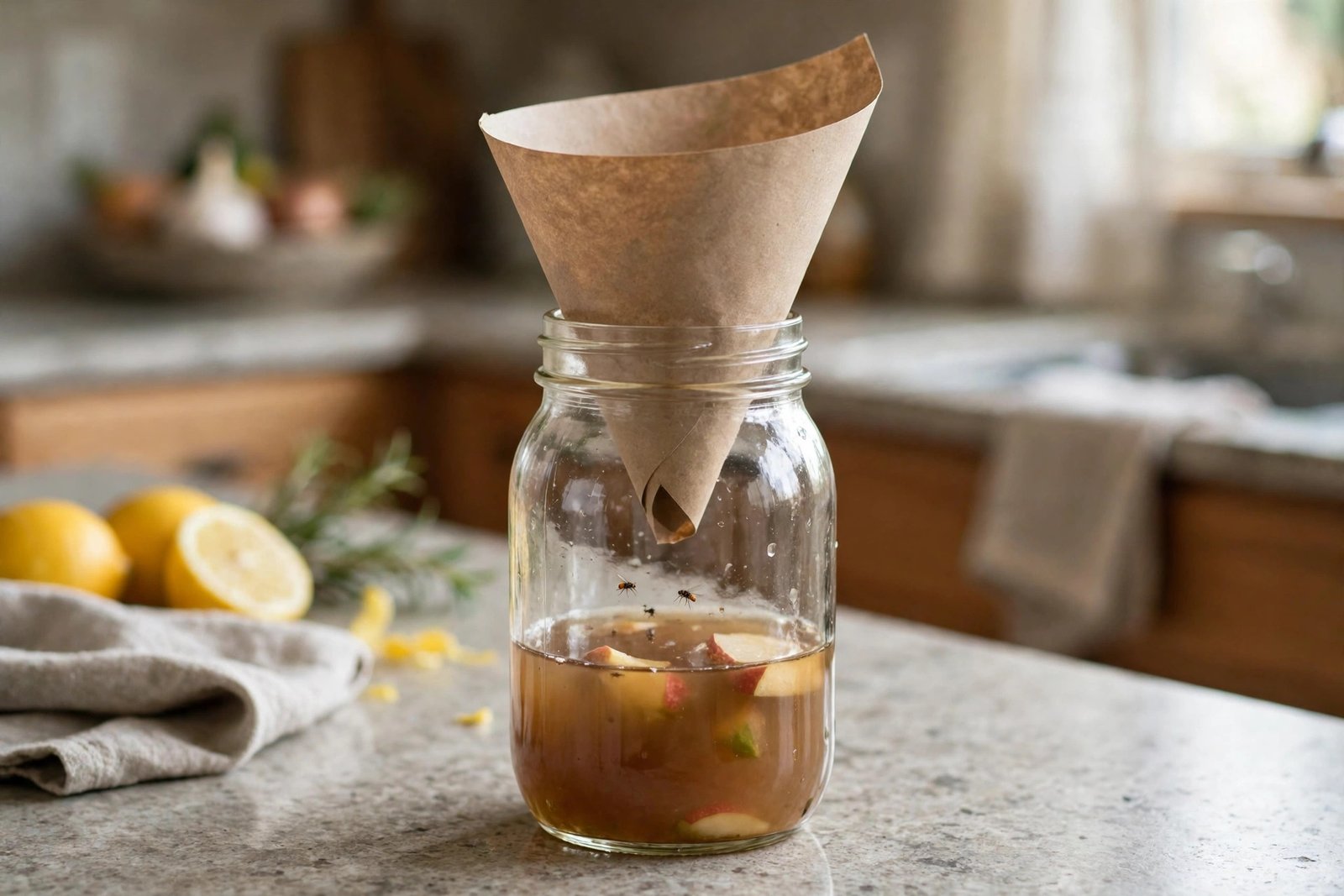
Pour a few centimeters of apple cider vinegar into a jar or small bowl, add a drop of dish soap, and cover the top with plastic wrap pierced with a few small holes — or roll a paper cone with a narrow opening and set it in the jar’s mouth. The vinegar’s fermenting smell draws the flies in; the dish soap breaks the surface tension so they sink instead of landing and flying off; the cone or wrap makes it hard for them to find their way out. Place one trap near the fruit bowl and one near the sink. Replace the vinegar every two to three days, because it loses its smell as it evaporates.
The wine or beer trap
A small amount of leftover red wine or beer in a bottle with a narrow neck works the same way — flies enter for the fermenting smell and cannot easily escape. This is a good use for the last splash of a bottle you would otherwise pour away, and it costs nothing extra.
The overripe fruit trap
Put a piece of overripe banana or peach in a jar, cover with pierced plastic wrap, and leave it out overnight. This trap is especially effective because it mimics the exact thing the flies were breeding in. Dispose of the whole jar — sealed in a bag — once it has caught a good number, and do not leave it out for days, or it becomes a new breeding site itself.
One warning: traps are a mop-up tool, not the solution. If yours keep filling up day after day, you have missed a breeding site — recheck the drain, the disposal splash guard, and the trash can.
How to Get Rid of Fruit Flies Naturally in Drains
Drains deserve their own section because they are the breeding site people treat last and should treat first. If your flies cluster around the sink even when there is no fruit out, the drain is almost certainly the source.
Start mechanically: scrub the drain opening and the disposal splash guard with a brush, hot water, and dish soap. Then pour a kettle of boiling water down the drain to flush loose organic matter. Some people recommend a baking soda and vinegar flush; it fizzes satisfyingly, but the fizz does not actually scour the biofilm off the pipe walls — the brush does. Follow the flush with an enzyme-based drain cleaner if the problem persists; enzyme cleaners digest the organic film without harsh chemicals and are safe for septic systems. The University of California’s integrated pest management program recommends the same source-removal approach for indoor flies, and their fruit fly pest notes are a solid, science-based reference for the whole system.
For a persistent drain infestation, repeat the scrub-and-flush daily for a week to remove the biofilm where eggs and larvae live.
While you are cleaning the kitchen’s wet areas, remember that drains are not the only appliance that harbors grime — our guide to how to deep clean a washing machine applies the same source-removal principle to a different machine.
Preventing the Next Invasion
Once the flies are gone, a few habits keep them gone:
Buy less, more often. Smaller fruit purchases mean less overripe produce sitting around. Eat the ripest fruit first, and refrigerate the rest.
Clean the drains monthly. A quick scrub and boiling-water flush once a month keeps the biofilm from building back up.
Rinse before recycling. Every bottle, can, and jar that held something sweet gets a rinse before it goes in the bin.
Seal and empty trash regularly. A lidded can, emptied often, removes the easiest breeding site in the house.
Keep an eye on houseplants. Overwatered plants attract fungus gnats, which are easy to mistake for fruit flies. Let soil dry between waterings and remove dead leaves from pots.

What Not to Do
A few common responses make things worse or waste money. Do not spray insecticide around food preparation areas: it is unnecessary for fruit flies, it leaves residue where you cook, and it does nothing about the breeding site. Do not buy an ultrasonic pest repeller: there is no credible evidence these devices repel fruit flies, and the money is better spent on a fruit bowl cover. Do not leave a vinegar trap out for weeks without changing it: evaporated, stale vinegar stops attracting flies, and a trap full of dead flies and fermenting liquid becomes part of the problem. And do not ignore a persistent infestation: if flies keep coming back after thorough source removal, there may be a hidden leak, a forgotten food source in a wall void, or a drain problem worth a plumber’s look.
One more thing to avoid: panic-renovating. Fruit flies live in food residue, not in walls — if you are planning a kitchen refresh anyway, our guide to how to remove wallpaper is there for you, but new wallpaper will not solve a drain problem.
Frequently Asked Questions
How long does it take to get rid of fruit flies naturally?
Once the breeding site is removed, the adult population collapses within a few days, because adults live only a short time and no new ones are emerging. Most infestations clear within a week of thorough source removal plus trapping. If numbers are not dropping after a week, a breeding site has been missed — recheck drains, the disposal splash guard, and the trash can.
What is the best homemade fruit fly trap?
The apple cider vinegar trap with a drop of dish soap is the most reliable: the vinegar attracts the flies, the soap breaks the surface tension so they sink, and a pierced plastic wrap or paper cone keeps them from escaping. Replace the vinegar every two to three days to keep the smell strong.
Are fruit flies harmful?
Fruit flies are mostly a nuisance rather than a disease risk, but they do carry bacteria from the rotting material they breed in onto food surfaces, so food they have walked on should be washed or discarded. The bigger issue is what their presence signals: fermenting food and damp organic residue that should be cleaned up anyway.
Why do fruit flies keep coming back?
Because a breeding site survived the cleanup. The usual survivors are drain biofilm, the disposal splash guard, the bottom of the trash can, or a forgotten piece of produce in a pantry corner. Learning how to get rid of fruit flies naturally means learning to search thoroughly — the flies always tell you where the food is.
Do fruit flies come from the fruit itself?
Not exactly. Fruit fly eggs are sometimes already on fruit when you buy it, but the flies in your kitchen usually arrive as adults attracted by the smell of ripening fruit, then lay their own eggs on it. Washing fruit when you bring it home and refrigerating ripe produce breaks the cycle either way.
Can I use bleach to kill fruit flies in drains?
Bleach kills adult flies it contacts, but it does not scour biofilm off pipe walls, and it is harsh on plumbing and septic systems. A brush, hot soapy water, and boiling water are more effective for drain breeding sites, with an enzyme drain cleaner as the backup for stubborn cases.
Conclusion: Find the Source, and the Flies Follow It Out
Knowing how to get rid of fruit flies naturally comes down to one discipline: find the breeding site before you reach for the trap. Identify the fly, search the fruit bowl, the pantry, the drains, the trash can, and the hidden damp spots, remove every source in one thorough pass, and then mop up the remaining adults with a vinegar trap. Keep the kitchen dry, refrigerate ripe fruit, rinse your recycling, and clean the drains monthly — and the next cloud of tiny flies will never get started. It is a weekend job at most, and the kitchen you get back is cleaner in every way, not just fly-free.