

You are standing at the counter, the menu is long, and the two drinks at the top of the cold section look almost identical in the photos. If you are trying to settle iced latte vs iced coffee before you order, you are not alone, because cafes rarely explain what is actually in the glass. One drink is mostly coffee, the other is mostly milk, and that single difference changes the taste, the calories, the caffeine, and how much you enjoy it on a hot afternoon. This guide compares both drinks honestly, with typical numbers, simple home recipes, and a clear verdict for different kinds of drinkers.
The short answer is this: iced coffee is brewed coffee chilled and poured over ice, usually served black or with just a splash of milk. An iced latte is espresso poured over ice and topped with a lot of cold milk, usually about three parts milk to one part espresso. If you want a bold, refreshing, low-calorie drink, iced coffee wins. If you want something smooth, creamy, and gentle on your stomach, the latte wins. The rest of this article explains why, and when each one is the better pick.
Iced Latte vs Iced Coffee: The Core Difference
The real difference between iced latte vs iced coffee is not the ice, and it is not the temperature. It is the coffee base and the milk ratio. An iced latte always starts with espresso, a small, concentrated shot made by forcing hot water through finely ground coffee under pressure. Iced coffee starts with brewed coffee, made by drip machine, pour-over, French press, or cold brew, and then chilled. Espresso tastes intense in a tiny volume, while brewed coffee gives you a much larger volume of coffee in the glass.
That base decides everything else. In a typical iced latte, espresso makes up roughly a quarter of the drink and cold milk makes up roughly three quarters, before ice. In a typical iced coffee, brewed coffee makes up roughly 90 percent of the drink, with milk optional and usually only a splash. One coffee guide puts it neatly: iced coffee is brewed coffee plus ice with milk optional, while an iced latte is espresso plus cold milk plus ice, with milk essential rather than optional, as explained in this iced coffee vs iced latte guide.
What Is an Iced Coffee, Exactly?
Iced coffee is the simpler drink, and that simplicity is its strength. You brew coffee hot, cool it down, and pour it over ice. Or you brew it cold from the start as cold brew, steeping coarse grounds in cold water for many hours. Either way, the flavour stays front and centre: bright, a little bitter, sometimes fruity or nutty depending on the beans, and very refreshing when it is done well.
The classic mistake at home is brewing a normal pot of hot coffee, pouring it straight over ice, and wondering why it tastes thin and watery. The ice melts, dilutes the coffee, and leaves you with a pale imitation. The fix is to brew it stronger than usual, roughly double strength, or to use cold brew concentrate, so melting ice brings it to normal strength rather than below it. Our guide to how to make cold brew coffee at home walks through the concentrate method step by step, and it is the easiest way to get cafe-quality iced coffee without special equipment.
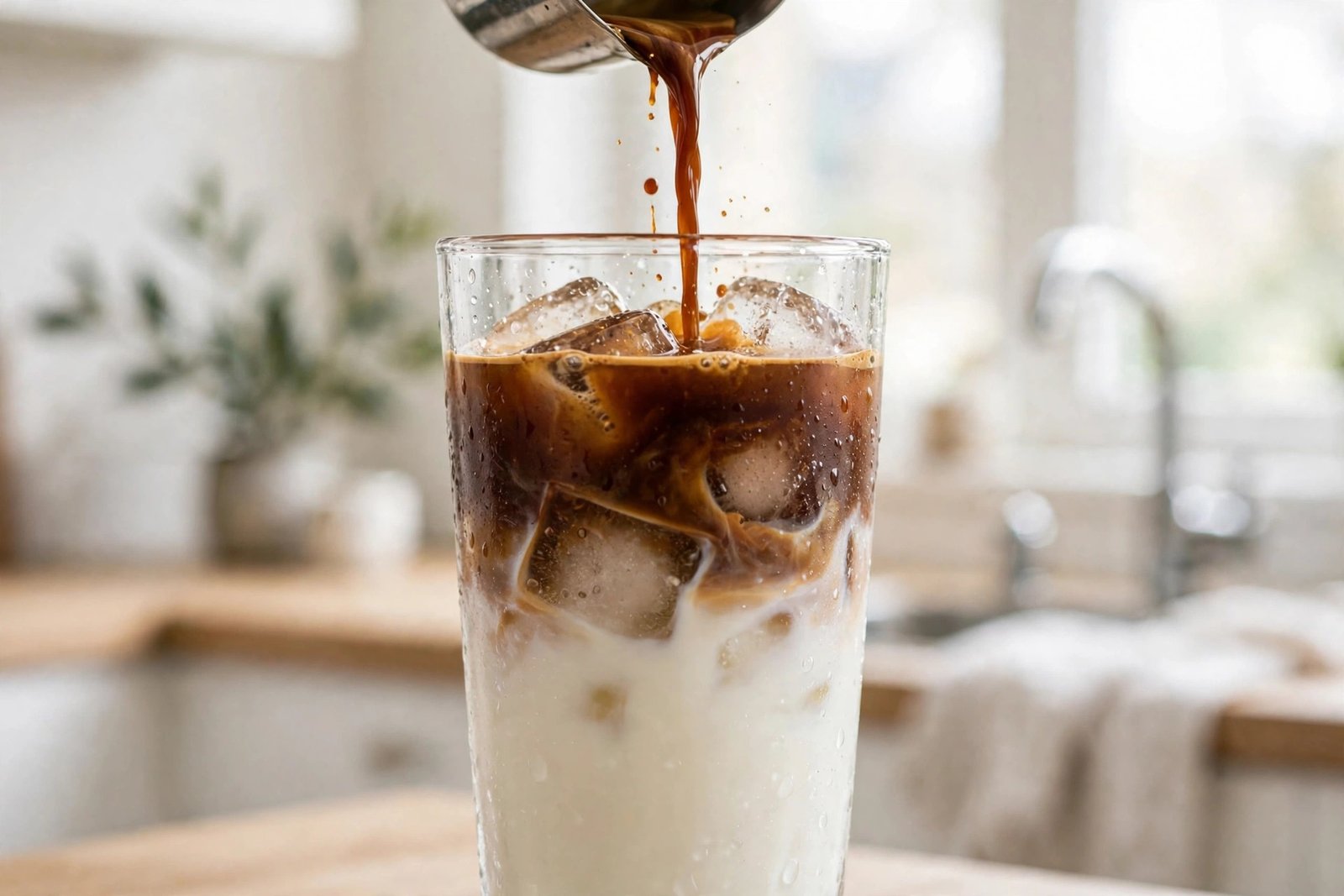
What Is an Iced Latte, Exactly?
An iced latte is a milk drink first and a coffee drink second, at least by volume. A standard version uses one or two shots of espresso, poured over ice, then topped with cold milk. The milk softens the espresso, rounds off its bitterness, and gives the drink a smooth, almost silky texture. It is less about tasting the individual bean and more about enjoying a balanced, creamy, refreshing drink.
The milk you choose matters more here than in iced coffee, because there is so much of it. Whole milk gives the richest, sweetest result, and it is the default in most cafes. Two percent milk is lighter but still creamy. Oat milk has become the favourite plant-based option for lattes because it adds natural sweetness, while almond milk is thinner and lets more espresso flavour through. If you are comparing milk options more broadly, our oat milk vs almond milk comparison covers taste, nutrition, and which one works best in coffee.
Iced Latte vs Iced Coffee: Side-by-Side Comparison
The table below summarises the differences that matter when you are choosing. Ranges vary by cafe, size, and recipe, so treat these as typical values for a 12 to 16 ounce drink, not as exact promises from any one shop.
| Feature | Iced Coffee | Iced Latte |
|---|---|---|
| Coffee base | Brewed coffee, drip, pour-over, French press, or cold brew | Espresso, usually one or two shots |
| Milk ratio | None, or a splash, roughly 10 percent | High, roughly 75 percent of the drink |
| Taste | Bold, bright, sometimes bitter, bean flavour forward | Smooth, mellow, creamy, milk forward |
| Texture | Light, crisp, water-like | Rich, silky, substantial |
| Caffeine, typical 12 to 16 ounce drink | About 95 to 165 mg, depending on brew strength | About 63 to 175 mg, depending on one or two shots |
| Calories, unsweetened | About 2 to 10 calories black, a little more with a splash of milk | About 100 to 200 calories with whole milk, less with skim |
| Best for | Hot days, coffee lovers, lower-calorie routines | Creamy comfort, gentler flavour, flavoured drinks |
| Home equipment needed | Any brewer, plus ice | Espresso machine, moka pot, or strong brewed concentrate as a stand-in |
Notice how close the caffeine ranges are. That surprises most people, because espresso feels stronger. Per ounce, espresso is indeed much more concentrated, but you drink far fewer ounces of it in a latte than you drink brewed coffee in an iced coffee. One detailed comparison notes that a double-shot iced latte lands around 136 mg of caffeine, while brewed iced coffee can range from about 172 to 223 mg depending on the brewing method, as shown in this iced coffee vs iced latte caffeine comparison.
Caffeine: Which One Is Stronger?
There is no single honest answer to which drink has more caffeine, because it depends on the recipe. A small iced coffee made from a mild brew can have less caffeine than a large double-shot iced latte, and a strong cold brew can have more caffeine than either. As a iced latte vs iced coffee comparison notes, a single shot of espresso contains roughly 63 mg of caffeine, so a double-shot latte contains roughly 126 mg. A standard 8 ounce cup of brewed coffee contains roughly 95 mg, but iced coffee is usually served in a larger glass, so the total climbs with size.
If caffeine is your main goal, iced coffee usually wins on a like-for-like size basis, because the glass is mostly coffee. If you are sensitive to caffeine, a single-shot latte is a good middle ground: you get the coffee flavour and a gentle lift, buffered by milk, without the larger dose of a big iced coffee. Either way, do not judge strength by taste alone. A latte tastes milder because of the milk, not because the espresso in it is weak.

Calories and Health: The Honest Trade-Off
On calories, there is no contest. Black iced coffee has almost no calories, roughly 2 to 5 calories per 12 ounce serving, and even with a splash of milk it stays very low. An iced latte made with whole milk adds roughly 110 calories from three quarters of a cup of milk alone, and a larger cafe latte can reach 150 to 200 calories before any syrup. Switching to skim milk drops that to roughly 65 calories for the same amount of milk, and oat milk usually sits somewhere in between, depending on the brand.
That does not make the latte a bad drink. Milk brings protein, calcium, and staying power that black coffee does not, and many people find a latte keeps them satisfied until lunch in a way that black iced coffee does not. The health question is really about what else is in the glass. An unsweetened latte with whole milk is a reasonable, filling drink, while a sweetened latte with syrup and whipped cream is a different category altogether, and it is the syrup and cream, not the milk itself, that pushes it into dessert territory.
How to Make Each One at Home
Easy iced coffee at home
Brew your coffee at double strength using your usual method, then let it cool for a few minutes before pouring it over a full glass of ice. Do not pour boiling coffee directly over a small handful of ice, or you will melt it all and end up with lukewarm, diluted coffee. Better still, make a batch of cold brew concentrate on Sunday: combine coarse grounds and cold water, steep for 12 to 16 hours, strain, and keep the concentrate in the fridge for up to a week. Dilute it with cold water and ice to taste, and you have iced coffee in under a minute all week. Use large ice cubes if you can, since they melt more slowly and keep the drink strong for longer.
Easy iced latte at home, with or without an espresso machine
If you have an espresso machine, pull a double shot directly over ice, then pour cold milk over the top and stir. The order matters: espresso over ice first, milk second, gives you those pretty layers before you stir, and it chills the espresso quickly. If you do not have an espresso machine, a moka pot or a very strong AeroPress brew makes a good stand-in. It will not be true espresso, but once it is mixed with milk and ice, the difference is small. Start with one part espresso to three parts milk and adjust from there, and use cold milk straight from the fridge so the drink stays refreshing. Making lattes at home is also one of the fastest coffee savings there is, which matters when cafe prices keep climbing, as explained in our guide to why coffee is so expensive.
Which Should You Choose?
Choose iced coffee if you love the taste of coffee itself, you want the lowest-calorie option, you need a bigger caffeine lift, or you are drinking it on a very hot day and want something crisp and refreshing. It is also the better choice if you are brewing at home without an espresso machine, because good iced coffee needs almost no special equipment.
Choose an iced latte if you prefer smooth and creamy over bold and bitter, if straight black coffee upsets your stomach, if you want a drink that feels like a small meal, or if you love flavoured coffee drinks. It is also the kinder introduction for someone who is new to coffee, because the milk takes the edge off without removing the coffee character entirely. Try each one on different days and notice which one you find yourself wanting again.

Common Mistakes to Avoid
The most common mistake with iced coffee is using old, weak coffee and hoping ice will fix it. It will not. Brew strong, brew fresh, and use plenty of ice. The most common mistake with iced lattes is assuming they are low calorie because they taste light. Milk calories add up, and syrup calories add up faster, so check the recipe if calories matter to you. Clean your equipment regularly, too: stale coffee oils in a brewer or espresso machine will ruin both drinks, however good your beans are. Our guide to how to clean a coffee maker covers the routine by machine type, and it is worth doing monthly if you brew daily. Finally, do not confuse iced coffee with cold brew: cold brew is a method for making iced coffee, not a separate drink, and it tastes smoother and less acidic than hot-brewed coffee chilled over ice.
Frequently Asked Questions
Is an iced latte stronger than iced coffee?
Not necessarily. Espresso is stronger per ounce, but a latte contains much less coffee by volume than an iced coffee, because most of the glass is milk. Depending on size and shot count, the two drinks often land in a similar caffeine range, roughly 95 to 175 mg for a typical 12 to 16 ounce serving. Taste is a poor guide: the latte tastes milder because of the milk, not because it is caffeine-free.
Does an iced latte have more calories than iced coffee?
Yes, usually. Black iced coffee has only a few calories, while an unsweetened iced latte with whole milk typically has 100 to 200 calories, depending on size and milk type. Skim milk or a smaller size brings that down, while syrup and whipped cream push it up. If calories are your main concern, iced coffee is the clear winner.
Can I make an iced latte without an espresso machine?
Yes. A moka pot, an AeroPress with a fine grind and short brew, or a very strong French press brew all work as stand-ins. The result will not be true espresso, but mixed with cold milk and ice, it makes a very convincing iced latte at home. Focus on a strong, fresh brew and the right milk ratio rather than on perfect espresso.
Why does my homemade iced coffee taste watery?
Almost always because the coffee was brewed at normal strength and then diluted by melting ice. Brew it at double strength, use a full glass of ice, or switch to cold brew concentrate, which is designed to be diluted. Large ice cubes also help, because they melt more slowly and keep the drink strong for longer.
Which is better for someone new to coffee?
An iced latte is usually the gentler starting point, because milk softens bitterness and acidity. Start with a single-shot latte, try different milks, and move towards iced coffee as your taste for bolder coffee develops. There is no wrong order, and many coffee lovers drink both depending on the day.
Is cold brew the same as iced coffee?
Cold brew is one way to make iced coffee, not a different drink. It is made by steeping grounds in cold water for 12 to 24 hours, giving a smoother, less acidic taste, while hot-brewed coffee chilled over ice tastes brighter and more acidic. Both are served cold over ice.
Conclusion
When it comes to iced latte vs iced coffee, there is no universal winner, only a better drink for the moment you are in. Iced coffee is bold, refreshing, low in calories, and true to the bean. An iced latte is smooth, creamy, filling, and forgiving, the drink you reach for when you want comfort as much as caffeine. Try both, notice which one you actually enjoy rather than which one sounds healthier or fancier, and then make that one your regular order.



