
That first cup of the morning should taste like coffee, not like the inside of a neglected appliance. If your brew has started tasting bitter, sour, or just vaguely stale — or if your machine has slowed to a sad dribble — learning how to clean a coffee maker properly is the fix, and it is probably overdue. Coffee oils go rancid, mineral scale builds up inside the heating element, and damp, warm parts grow mold and bacteria faster than most people realize. A clean machine does not just taste better; it brews hotter, lasts longer, and uses less energy.
This guide covers every common machine type — drip, single-serve pod, and espresso — plus the daily, weekly, and monthly routine that keeps all of them in top shape. You will also learn when to descale, whether vinegar or citric acid is the better descaler for your machine, and the mistakes that can actually damage your brewer.
Why Cleaning Your Coffee Maker Matters More Than You Think
Coffee makers are warm, wet, and full of organic residue — an ideal environment for microbes, which is why regular cleaning is a food-safety issue, not just a taste issue. Even without the microbiology, the taste case alone is convincing: stale coffee oils coat the carafe, the filter basket, and the internal tubing, and they turn rancid within days, adding a cardboard-like bitterness to every pot.
Scale is the other enemy. If you live in a hard-water area, dissolved calcium and magnesium deposit inside the heating element and water lines every time you brew. The buildup acts like insulation, so the machine heats water less efficiently and brews at a lower temperature — and under-extracted, lukewarm coffee tastes sour and weak. Descaling dissolves that mineral layer and restores proper brewing temperature. If your machine has been brewing slowly, making odd gurgling noises, or producing less coffee than usual, scale is the most likely culprit.
How to Clean a Coffee Maker: Drip Machines
Drip machines are the most common home brewers, and they are also the most forgiving to clean. Here is the full routine.
Daily: the two-minute habit
After your last pot of the day, discard the used grounds and rinse the carafe and filter basket with hot, soapy water. Wipe down the warming plate once it has cooled — spilled coffee bakes onto the plate and burns, which smells terrible and can stain permanently. Leave the reservoir lid open for an hour so the inside dries out; a sealed, damp reservoir is where mold gets its start.
Weekly: wash the removable parts
Once a week, wash the carafe, filter basket, and any reusable filter thoroughly in hot, soapy water, or run them through the dishwasher if the manufacturer says they are dishwasher-safe. Wipe the exterior of the machine and the area under the carafe, where drips collect. If your machine has a reusable mesh filter, soak it in hot, soapy water for ten minutes to dissolve trapped oils — a clogged mesh filter is a common cause of slow brewing.
Monthly: descale
Descaling is the deep clean that matters most. Fill the reservoir with a descaling solution (see the vinegar vs. citric acid section below), run half a brew cycle, switch the machine off, and let the solution sit in the machine for 30 to 60 minutes so it can dissolve scale. Then finish the brew cycle, discard the solution, and run two to three full cycles of fresh water to rinse. Some machines have a dedicated clean or descale button — if yours does, use it, because it runs a programmed cycle with proper soak times. Keurig’s own guidance for its brewers follows the same pattern of solution, soak, and thorough rinsing, and the principle is identical for drip machines: the Keurig descaling instructions are a good model for the process even if your machine is a different brand.

How to Clean a Single-Serve Pod Machine
Pod machines like Keurig and Nespresso brewers have small internal water lines and needle punctures that drip machines do not, so they need a slightly different routine — and they need it more often, because their small parts clog faster.
Daily and weekly care
Remove the used pod after every brew; a spent pod left in the holder grows mold within a day or two. Empty and rinse the drip tray and the pod holder daily, and wash the removable water reservoir weekly with hot, soapy water. Wipe the outside of the machine and the area around the pod holder, where coffee grounds scatter.
Cleaning the needles
Every few weeks, check the puncture needles that pierce the pod. Coffee grounds clog them, which causes partial brews or grounds in your cup. Unplug the machine, then straighten a paperclip and gently clear each needle hole, following your manufacturer’s instructions for accessing them.
Descaling a pod machine
Pod machines should be descaled every three to six months, or whenever the descale indicator lights up. The process is the same in outline: empty the reservoir, fill it with descaling solution, run brew cycles without a pod until the reservoir is empty (with soak pauses if your manual recommends them), then run several fresh-water cycles to rinse. Nespresso publishes detailed descaling instructions for its machines, and the key warning applies to every brand: never use vinegar in a machine whose manufacturer forbids it, because some pod brewers have parts that vinegar can damage. When in doubt, use the manufacturer’s own descaler or citric acid.
If you are still choosing a pod brewer, or you are curious about how pod machines compare with traditional brewers, our guide to the best espresso machine under $200 covers what to look for in a budget machine — and a machine you can descale easily should be high on that list.
How to Clean an Espresso Machine
Espresso machines are the most hands-on of the three types, but they reward the effort with dramatically better coffee. There are two parts to espresso cleaning: the daily backflush routine and the periodic descale.
After every shot
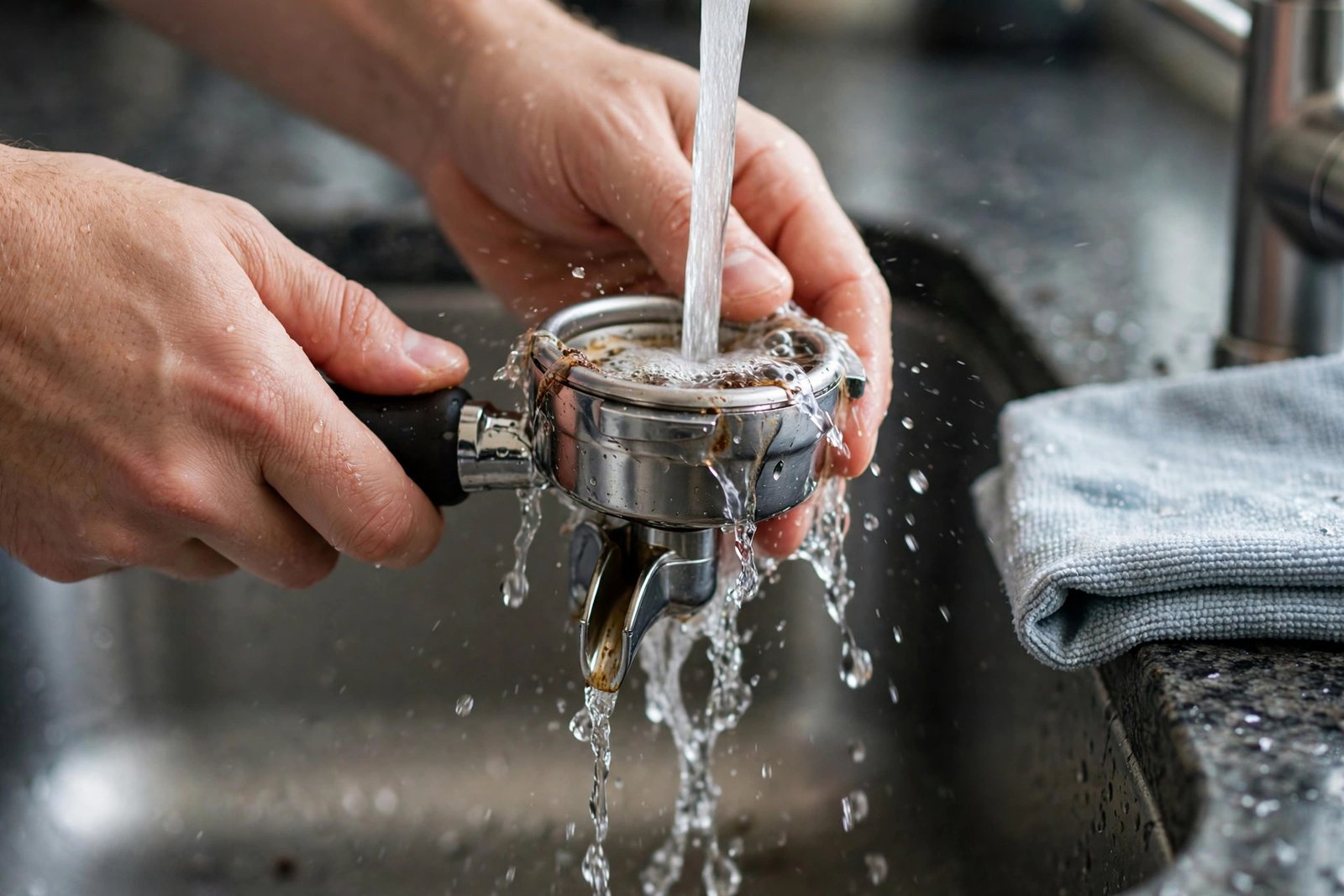
Purge the steam wand immediately after steaming milk by blasting steam into a cup of clean water, then wiping the wand with a damp cloth. This prevents dried milk from clogging the wand tip. Knock out the spent puck, rinse the portafilter and basket, and wipe the group head gasket.
Weekly: backflush and soak
If your machine has a three-way solenoid valve (most mid-range and better machines do), backflush weekly with plain water: insert a blind filter basket, run the pump for a few seconds, release, and repeat several times. This flushes coffee oils out of the group head. Every one to two weeks, backflush with a dedicated espresso machine cleaner such as Cafiza, following the product’s instructions, and soak the portafilter, basket, and dispersion screen in the same solution to dissolve oil buildup. Breville’s support pages describe the same backflush-and-soak pattern for its machines, and the Breville support center is worth bookmarking for model-specific cleaning guides.
Descaling an espresso machine
Espresso machines should be descaled every two to three months with heavy use, or per the manufacturer’s indicator. Use a descaler approved for espresso machines — citric-acid-based descalers are the usual recommendation — and follow the machine’s descale program exactly, because espresso boilers are more sensitive to improper descaling than drip machines. Never run vinegar through a prosumer espresso machine unless the manufacturer explicitly allows it: vinegar can damage seals and leave a taste that takes many flushes to remove.
Your Coffee Maker Cleaning Schedule at a Glance
Here is the routine in one place. Tape it inside a kitchen cupboard if it helps.
| Frequency | What to do | Applies to |
|---|---|---|
| Daily | Discard grounds/pods, rinse carafe and filter parts, wipe warming plate and drip tray, leave reservoir lid open to dry | All machines |
| Weekly | Wash removable parts in hot soapy water, wipe exterior, clean steam wand and group head | All machines |
| Monthly | Descale drip machines; clean pod needles; backflush espresso machines | All machines |
| Every 2–3 months | Descale espresso machines; deep-clean reservoir and water lines | Espresso and heavy-use machines |
| Every 3–6 months | Descale pod machines (or when the indicator lights up) | Pod machines |
The daily rinse matters most: machines that get a quick daily clean rarely develop the stubborn problems that force heroic deep cleans. Think of it the way you think about how to deep clean a washing machine: regular light maintenance beats occasional rescue missions, every time.
Vinegar vs. Citric Acid: Which Descaler Should You Use?
White vinegar is the classic home descaler: cheap, widely available, and effective at dissolving calcium scale. The standard mixture is equal parts white vinegar and water. It works well in most drip machines. Its downsides are real, though: it smells strong, it can leave a lingering taste if you skimp on the rinse cycles, and some manufacturers explicitly warn against it because acetic acid can degrade rubber seals and gaskets over time.
Citric acid is the quieter professional choice. It is the active ingredient in most commercial descalers, it dissolves scale just as effectively, it is odorless, and it rinses clean with no aftertaste. Dissolve one to two tablespoons of food-grade citric acid per quart of water, run it through the machine the same way you would a vinegar solution, and rinse thoroughly. Citric acid is also gentler on seals than vinegar, which is why it is the safer default for espresso and pod machines.
For a basic drip machine, either works — vinegar if you want the cheapest option, citric acid if you want no smell and no aftertaste. For pod and espresso machines, citric acid or the manufacturer’s own descaler is the safer bet. Whichever you choose, never skip the rinse cycles.
What Never to Use on a Coffee Maker
Some cleaning products that work fine elsewhere will ruin a coffee maker. Never use bleach: it is far too harsh for parts that touch your drink, it can damage seals, and it is difficult to rinse completely out of internal tubing. Never use abrasive scouring pads or powders on a glass carafe or a non-stick warming plate — they scratch surfaces that then stain faster. Never put a whole coffee maker in the dishwasher unless the manual says so; only the removable parts are usually dishwasher-safe. Never use flavored or apple cider vinegar for descaling: only plain distilled white vinegar, because sugars and flavor compounds leave residue. And never run a descaling solution through a machine and then brew coffee without rinsing first — the descaler is not something you want in your cup.
One more mistake to avoid: using tap water in a very hard-water area without ever descaling. If your kettle furs up quickly, your coffee maker is scaling up too — descale monthly, or switch to filtered water, which slows scale buildup dramatically.

How to Clean a Coffee Maker You Have Neglected
If you inherited a machine, bought one secondhand, or simply have not cleaned yours in a year, do not panic — but do not just brew coffee in it either. Start with a full wash of every removable part in hot, soapy water. Then run two descaling cycles back to back, with a long soak between them, to attack the heavy scale. Inspect the reservoir with a flashlight: if you see pink or black slime, scrub it with a bottle brush and soapy water, then run a descaling cycle and several rinse cycles. Replace the water filter if the machine has one, and replace any cracked or stained carafe. A neglected machine can usually be rescued in an afternoon — and the first clean pot afterward will taste like a different machine entirely.
While you are in deep-cleaning mode, it is worth remembering that your coffee ritual does not end at the machine. If you brew iced coffee in summer, our guide to how to make cold brew coffee covers the slower, gentler method that skips the machine altogether — and a cold brew jar needs the same kind of regular cleaning attention as any other coffee gear.
Frequently Asked Questions
How often should you clean a coffee maker?
Rinse the carafe and filter parts daily, wash removable parts weekly, and descale monthly for drip machines or every two to six months for pod and espresso machines depending on use and water hardness. Learning how to clean a coffee maker on a schedule — rather than waiting for problems — is what keeps coffee tasting right and machines lasting years.
Can I use vinegar to clean my coffee maker?
Yes, for most drip machines: equal parts white vinegar and water, run through a brew cycle with a soak, followed by two to three fresh-water rinse cycles. Skip vinegar for machines whose manufacturer forbids it, and use citric acid or the brand’s own descaler for espresso and pod machines instead.
How do I get rid of mold in my coffee maker?
Wash all removable parts in hot, soapy water, scrub the reservoir with a bottle brush, and run a descaling cycle followed by thorough rinsing. Leave the reservoir lid open between uses so the inside dries. If mold keeps returning, the machine is staying damp — the drying step matters as much as the scrubbing.
Why does my coffee taste bitter even with fresh beans?
Rancid coffee oils and scale are the most common causes. A thorough wash of the carafe, filter basket, and group head, plus a descale, usually fixes it. If the bitterness persists, check your brewing temperature and grind size — but clean the machine first, because it is the cheapest fix.
Is it safe to use citric acid to descale a coffee maker?
Yes. Food-grade citric acid is the active ingredient in most commercial descalers, it is odorless, and it rinses clean. Dissolve one to two tablespoons per quart of water, run it through the machine, and rinse with two to three tanks of fresh water.
How long should a coffee maker last?
A well-maintained drip machine typically lasts five years or more, and a good espresso machine can last a decade with regular backflushing and descaling. Neglect — especially never descaling in a hard-water area — is what kills machines early.
Conclusion: Clean Machine, Better Coffee
Knowing how to clean a coffee maker is one of those small domestic skills that pays off every single morning. A two-minute daily rinse, a weekly wash, and a monthly descale are all it takes to keep your coffee tasting like it should and your machine running for years. Pick the routine that matches your machine type, choose citric acid if you want the safest all-round descaler, and never let a cleaning product anywhere near your brewer that you would not want in your cup. Your tomorrow-morning self — the one holding a genuinely good cup of coffee — will be grateful.