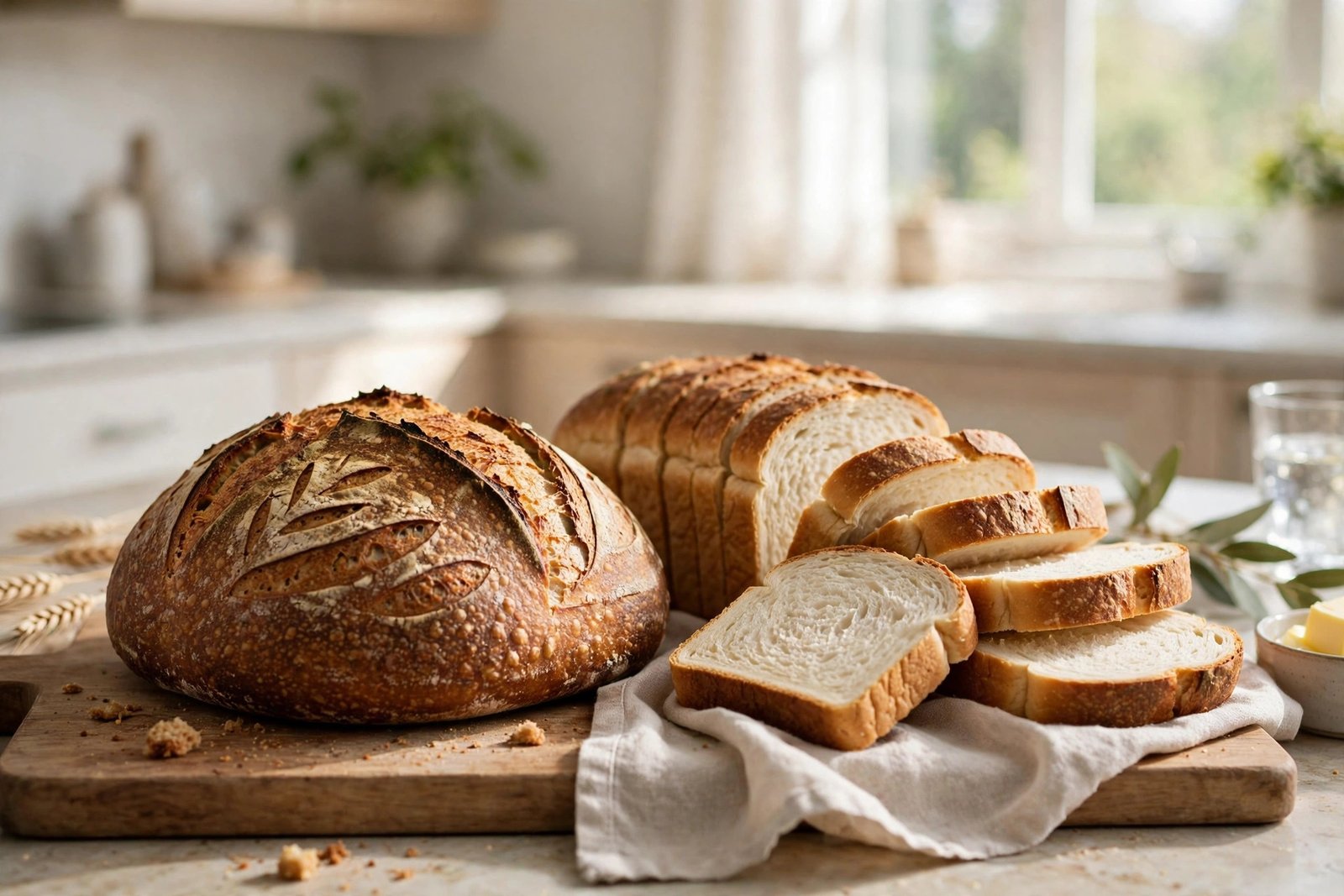

You bought a beautiful loaf of sourdough on Saturday, ate half of it, and by Wednesday the rest is hard enough to tap on the counter. Or you baked two loaves and can only eat one before it goes stale. Learning how to freeze bread solves both problems: the freezer is the single best place to keep bread fresh, far better than the fridge and far better than the counter once the first day has passed. Done right, a frozen loaf thaws tasting almost exactly as it did the day you bought or baked it.
The reason is simple chemistry. Bread goes stale not because it dries out, but because of starch retrogradation — the starch molecules inside the crumb slowly realign and crystallize, turning soft bread firm and dry. That process runs fastest at refrigerator temperatures, around 40 degrees Fahrenheit, which is why bread actually goes stale faster in the fridge than on the counter. Freezing, at 0 degrees Fahrenheit or below, all but stops it. The trick is knowing how to freeze bread properly, so it comes out of the freezer tasting fresh instead of dry, icy, or faintly of everything else in the freezer.
Why Freezing Beats the Fridge Every Time
The fridge is the most common bread storage mistake in home kitchens. It feels like the safe, sensible place for food, but for bread it is the worst of both worlds: cold enough to accelerate staling, not cold enough to stop it. A loaf kept in the fridge will go stale in two or three days, while the same loaf on the counter lasts longer. The freezer is the only storage method that genuinely pauses the clock.
The numbers back it up. The USDA FoodKeeper database — the storage guide maintained by the Food Safety and Inspection Service — gives store-bought bread 3 to 5 months in the freezer for best quality, and whole wheat bread 3 months. Those are quality windows, not safety limits: the USDA is clear that food kept constantly at 0 degrees Fahrenheit stays safe indefinitely, and only the taste and texture decline over time. So a loaf that has sat in the freezer for four months is perfectly safe to eat — it just may not taste its best. The Listonic guide to keeping bread fresh lays out the same FoodKeeper numbers by bread type, and notes that homemade bread, which lacks preservatives, has a shorter pantry life of just 3 to 5 days — another reason to freeze it the day you bake it.
How to Freeze Bread: The Step-by-Step Method
The whole process takes about ten minutes of hands-on work, plus cooling time. The rule that governs everything is simple: air is the enemy. Every step below is about keeping air away from the bread.
Step 1: Freeze it while it is fresh
Freeze bread on the day you buy or bake it, while it is still at its best. Freezing does not improve bread — it preserves whatever quality the bread has when it goes in. A loaf that is already two days stale will come out two days stale. If you baked the bread yourself, let it cool completely first, which takes at least two hours for a full loaf. Wrapping warm bread traps steam inside the package, and that steam turns into ice crystals and accelerates freezer burn.
Step 2: Slice before you freeze
For sandwich bread, baguettes, and most loaves, slice before freezing. Pre-sliced bread lets you take out exactly what you need — two slices for toast, four for sandwiches — without thawing the whole loaf. Cut crusty loaves into slices about an inch thick, and separate the slices with small squares of parchment paper if they tend to stick together. For a loaf you plan to serve whole at the table, such as a round sourdough, you can freeze it unsliced, but expect to thaw the whole thing at once.
Step 3: Wrap it tight — twice
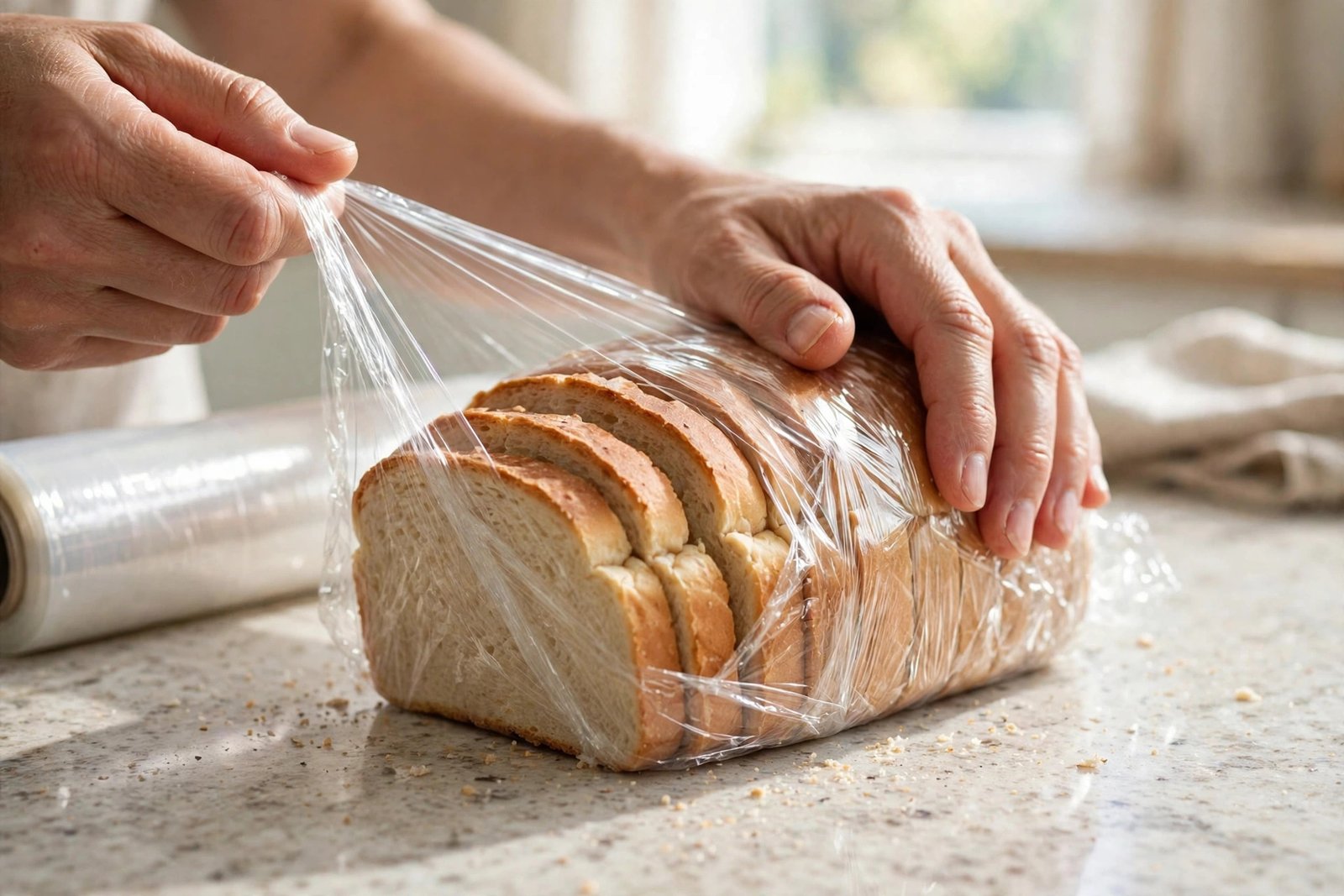
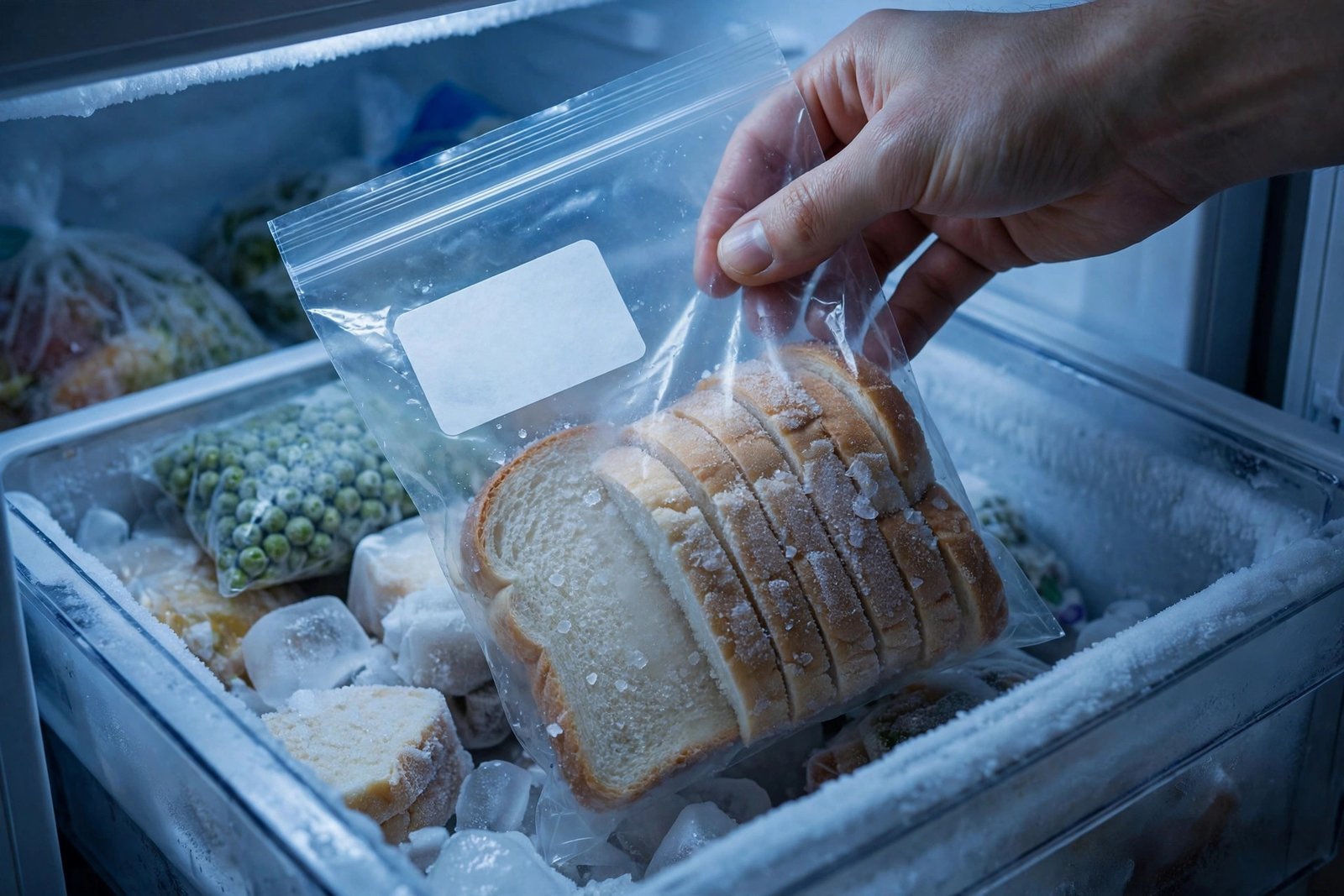
Wrap the loaf or slices tightly in a layer of plastic wrap, pressed close against the surface with no air pockets, then add a second layer: aluminum foil, freezer paper, or a heavy-duty freezer bag with the air pressed out. Double-wrapping is what locks in freshness and prevents freezer burn, which is the dry, icy patches that form when air reaches the bread’s surface. A vacuum sealer works even better if you own one. Do not use ordinary sandwich bags or produce bags — they let too much air through. And label the package with the type of bread and the date you froze it, because frozen wheat and frozen sourdough look identical after a week. The Taste of Home guide to freezing bread recommends the same double-wrap method, and adds that labeling matters because the first-in, first-out rule only works if you can tell the loaves apart.
Step 4: Freeze it flat, then stack
Lay the wrapped loaf flat in a single layer in the freezer for the first hour or two, so it freezes quickly and evenly, then stack it however you like. Fast freezing matters because it forms smaller ice crystals, which do less damage to the crumb. Put the bread toward the back of the freezer, away from the door, where the temperature is steadiest. If you are freezing several loaves, freeze them one at a time rather than loading the freezer with warm packages at once.
How Long Does Bread Last in the Freezer?
For best quality, use frozen bread within three months — that is the conservative target most bakers and the USDA FoodKeeper numbers support. Store-bought bread keeps 3 to 5 months, whole wheat bread 3 months, and rolls and buns about the same as sandwich bread. After the window passes, the bread is still safe, but the texture turns drier and the flavor flattens, especially if the wrapping was not airtight.
The single biggest factor is not time but packaging. A tightly double-wrapped loaf kept at a steady 0 degrees Fahrenheit will taste good at three months; a loosely wrapped loaf in a frost-prone freezer can taste tired after three weeks. Freezer burn is a quality problem, not a safety problem — the affected parts are dry and flavorless, but harmless. Trim them off if they bother you, or toast the bread, which hides a multitude of freezer sins.
How to Thaw Frozen Bread
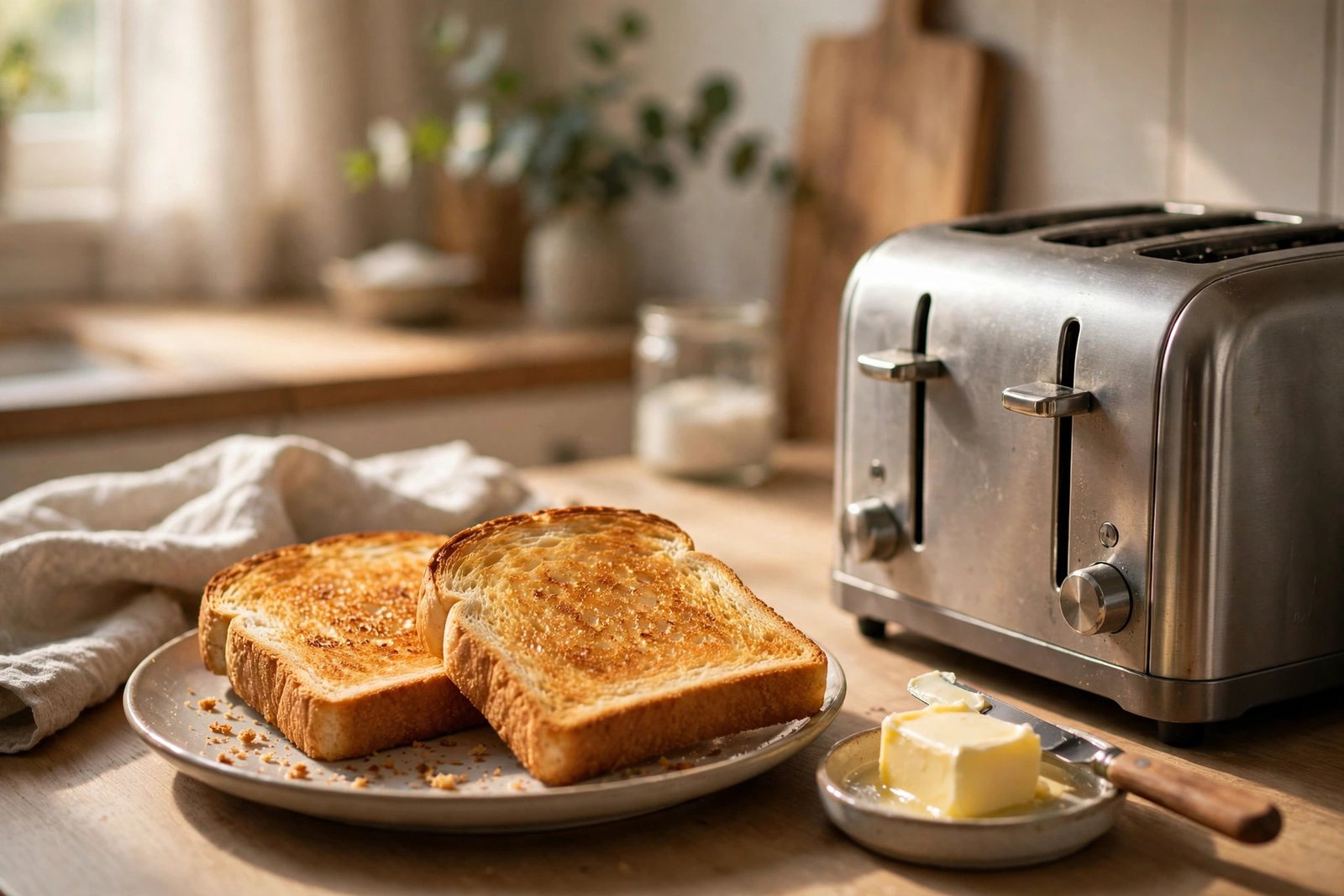
The right thawing method depends on what you are doing with the bread. For toast or sandwiches, you do not need to thaw at all: pull slices straight from the freezer into the toaster, or let them sit on the counter for about 30 minutes. They toast beautifully from frozen, and for sandwiches with cold fillings, a thawed slice is ready in half an hour.
For a whole loaf you want to serve at the table, thaw it in its wrapping on the counter for about one to two hours — thawing in the wrap lets moisture go back into the crumb instead of evaporating into the air. Then refresh it: run the thawed loaf briefly under water, yes really, and place it directly on a rack in a 350-degree Fahrenheit oven for 5 to 10 minutes. The oven evaporates the surface water and re-crisps the crust, and the loaf comes out tasting close to freshly baked. This trick works for crusty breads such as sourdough and baguettes; soft sandwich bread does not need it.
You can also reheat bread straight from frozen without thawing. Preheat the oven to 325 degrees Fahrenheit, place the frozen bread on a baking sheet, and heat until it is warmed through — about 15 to 20 minutes for a whole loaf, less for slices or rolls. This is the fastest way to rescue a loaf for dinner when you forgot to take it out earlier.
What Freezes Well — and What Does Not
Almost every everyday bread freezes well: sandwich loaves, whole wheat, sourdough, baguettes, rolls, buns, bagels, and pita. Breads with a high moisture content and a sturdy crumb hold up best, and enriched breads such as brioche and challah freeze well too, though their soft crusts go a little softer on thawing. Homemade bread freezes just as well as store-bought, provided you freeze it the day you bake it.
Delicate pastry-style breads are the exception. Croissants, danishes, and other laminated pastries freeze acceptably, but they lose some of their flaky crispness, and cream-filled or custard-filled breads do not freeze well at all — the fillings separate and turn watery. Flatbreads such as naan and tortillas freeze very well, and they thaw in minutes, which makes them ideal freezer staples. If you bake often, our comparison of hand mixer vs stand mixer will help you pick the right tool for the dough in the first place.
Common Mistakes When Freezing Bread
The most common mistake is freezing bread that is still warm. The trapped steam becomes condensation, then ice crystals, then freezer burn — and the loaf comes out soggy in the middle and icy on the outside. Always wait until the loaf is completely cool to the touch, inside and out.
The second mistake is wrapping loosely or using the wrong bag. A single layer of thin plastic, or a bag with air still in it, is barely better than no wrapping at all. Press the wrap against the bread, squeeze the air out of the bag, and double-wrap. The third mistake is refreezing bread that was thawed on the counter: once bread has thawed at room temperature, refreezing it is possible but the quality drops sharply, because each thaw cycle dries the crumb further. Only refreeze bread that was thawed in the fridge, and only if it has not been left out. The Larder Lane guide to freezing bread puts it plainly: all bread freezes, safely indefinite at 0 degrees Fahrenheit, for about three months for best quality — and the difference between freezer bread that works and freezer bread that ends up dry and tasteless is the wrap.
The fourth mistake is freezing bread you do not need to freeze. A loaf you will finish in two days belongs on the counter in a bread box or a linen bag, not in the freezer. Save the freezer for the second loaf, the bulk buy, and the bread you baked ahead. And never store bread in the fridge as a compromise — it goes stale faster there than anywhere else. For more on keeping baked goods fresh, see our guide on how to keep cake fresh longer, which covers the same storage principles for cakes.
Freezing Bread to Waste Less Food
Freezing bread is also one of the easiest ways to cut food waste in a household. Bread is one of the most commonly thrown-away foods, and most of it is thrown away because it went stale before anyone finished it — a particular shame when it is a good bakery loaf that cost several dollars. A freezer routine fixes that: buy or bake in bulk, freeze half on day one, and thaw only what you need. Slices frozen in portions of two or four make it effortless, with no more thawing a whole loaf for a single sandwich.
It also saves money. Bakery bread and artisan loaves are not cheap, and throwing away half a loaf every week adds up to real money over a year. Freezing lets you buy the good bread, enjoy it at its best, and waste none of it. Keep a small rotation going — one loaf on the counter, one in the freezer — and the system runs itself. If you like make-ahead breakfasts built around bread, our guide on how to make overnight oats pairs well with a freezer stocked with good bread.
Frequently Asked Questions
Can you freeze bread?
Yes. Almost all bread freezes well, and learning how to freeze bread properly is the difference between a loaf that thaws fresh and one that thaws dry and tasteless. For best quality, freeze it while fresh, wrap it tightly in two layers, and use it within three months. At 0 degrees Fahrenheit it stays safe indefinitely — the three-month window is about taste and texture, not safety.
How long does bread last in the freezer?
Store-bought bread keeps 3 to 5 months for best quality, according to the USDA FoodKeeper database, and whole wheat bread keeps 3 months. After that it is still safe to eat, but the texture gets drier and the flavor flatter. Good wrapping matters more than the exact number of weeks.
Should I freeze bread sliced or whole?
Sliced, whenever you can. Pre-sliced bread lets you take out exactly what you need without thawing the whole loaf, and slices toast straight from frozen. Freeze a loaf whole only if you plan to serve it whole at the table.
Can you refreeze bread after thawing?
Technically yes, but with caveats. Only refreeze bread that was thawed in the fridge and has not been left out at room temperature, and expect the quality to drop — each freeze-thaw cycle dries the crumb further. Bread thawed on the counter should not be refrozen.
Does freezing bread kill mold?
No. Freezing stops mold from growing, but it does not kill mold that is already there, and moldy bread should be thrown away, not frozen. Freeze bread while it is fresh, before any mold appears, and discard any loaf with visible mold.
Why does my frozen bread taste like the freezer?
Because air reached it. Loose wrapping lets the bread absorb odors from other food and dry out at the same time. Wrap tightly in two layers — plastic wrap pressed against the surface, then foil or a freezer bag with the air squeezed out — and store the bread away from strong-smelling items such as fish or onions.
Conclusion
Knowing how to freeze bread is a small kitchen habit with a real payoff: no more stale half-loaves, no more wasted bakery bread, and a freezer that hands you fresh-tasting bread whenever you need it. Freeze it fresh, slice it first, wrap it tight in two layers, label it, and use it within three months.
Start with the loaf in your kitchen right now. If you will not finish it in the next two days, slice it, wrap it, and put it in the freezer tonight — and tomorrow morning, toast a slice straight from frozen and taste the difference a proper freeze makes.



