
How to Make Overnight Oats: The Perfect Base Recipe
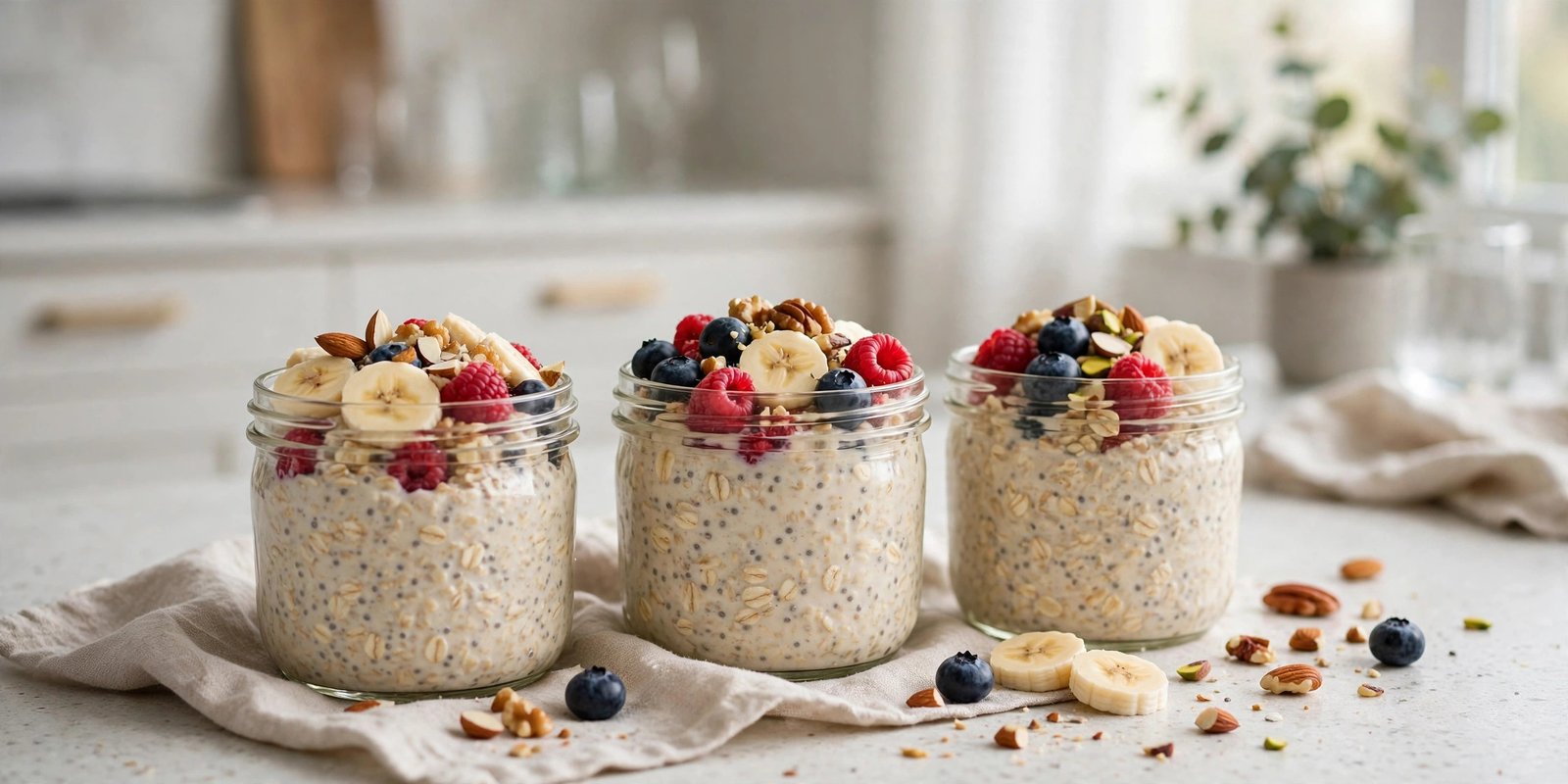
Mornings are hard enough without cooking breakfast from scratch. That is the whole appeal of overnight oats: five minutes of stirring the night before, and a cold, creamy breakfast is waiting in the fridge when you wake up. Learning how to make overnight oats properly is mostly about one thing — the ratio. Get that right and the oats turn soft and spoonable instead of soupy or cement-like.
The method could hardly be simpler. You mix rolled oats with milk, add a spoonful of yogurt or chia seeds if you like, seal the jar, and let the fridge do the work while you sleep. There is no cooking and no special equipment. This guide covers the perfect base recipe, the ratio that works every time, five variations, how long a batch keeps, and the mistakes that turn a good jar into a bad one.
What Are Overnight Oats, Exactly?
Overnight oats are a no-cook way of making oatmeal. Instead of boiling oats on the stove, you soak raw rolled oats in liquid in the refrigerator for at least six hours, usually overnight. During that slow soak, the oats absorb the liquid and soften into a thick, creamy porridge that is eaten cold, straight from the jar. Soaking also breaks down some starches and reduces the oats’ natural phytic acid, which helps your body use the nutrients more efficiently.
The result is closer to a cold porridge than to the hot oatmeal you grew up with, and that is the point. It is a make-ahead breakfast built for busy mornings, gym bags, and school runs. A single jar is one serving, and because the recipe scales so easily, you can line up four or five jars on a Sunday night and have breakfast sorted until Thursday. If you already batch-cook your week, this fits neatly into a system for meal prep for beginners.
How to Make Overnight Oats: The Base Recipe
Everything below starts from one ratio. Master it, and every variation in this guide is just a change of toppings. The classic base is a 1:1 ratio of rolled oats to milk — half a cup of oats to half a cup of milk — with a quarter cup of Greek yogurt and a tablespoon of chia seeds for extra creaminess. The KitchPrep overnight oats ratio guide puts it the same way: a simple 1:1 base, then tune the texture with yogurt, chia, or nut butter.
For one serving, you need half a cup of old-fashioned rolled oats, half a cup of milk (dairy or plant-based), a quarter cup of plain Greek yogurt, a tablespoon of chia seeds, and a teaspoon or two of honey or maple syrup. A pinch of salt and a splash of vanilla extract round out the flavor. That is the whole list: no protein powder, no special oats, no blender.
Step 1: Pick the right oats
Use old-fashioned rolled oats, the flat flakes sold as “old-fashioned” or “rolled” oats. They are the only type that softens properly in a cold soak while keeping a pleasant chew. Quick oats absorb liquid too fast and turn to mush by morning. Steel-cut oats are the opposite problem: they stay hard and gritty no matter how long they soak, because their thick pieces need actual heat to break down. Flat flakes are right; tiny hard pieces are steel-cut, and fine powdery flakes are instant oats.
Step 2: Mix everything in the jar
Add the oats, milk, yogurt, chia seeds, sweetener, salt, and vanilla to a jar or a small container with a tight lid. A wide-mouth mason jar works best, because it is easy to stir in and easy to eat from. Stir thoroughly, scraping the bottom and corners so no dry oats are left hiding. Dry pockets are the most common reason a jar comes out uneven, with a dry clump at the bottom and soup on top. Give it a second stir after a minute, once the chia seeds have started to swell.
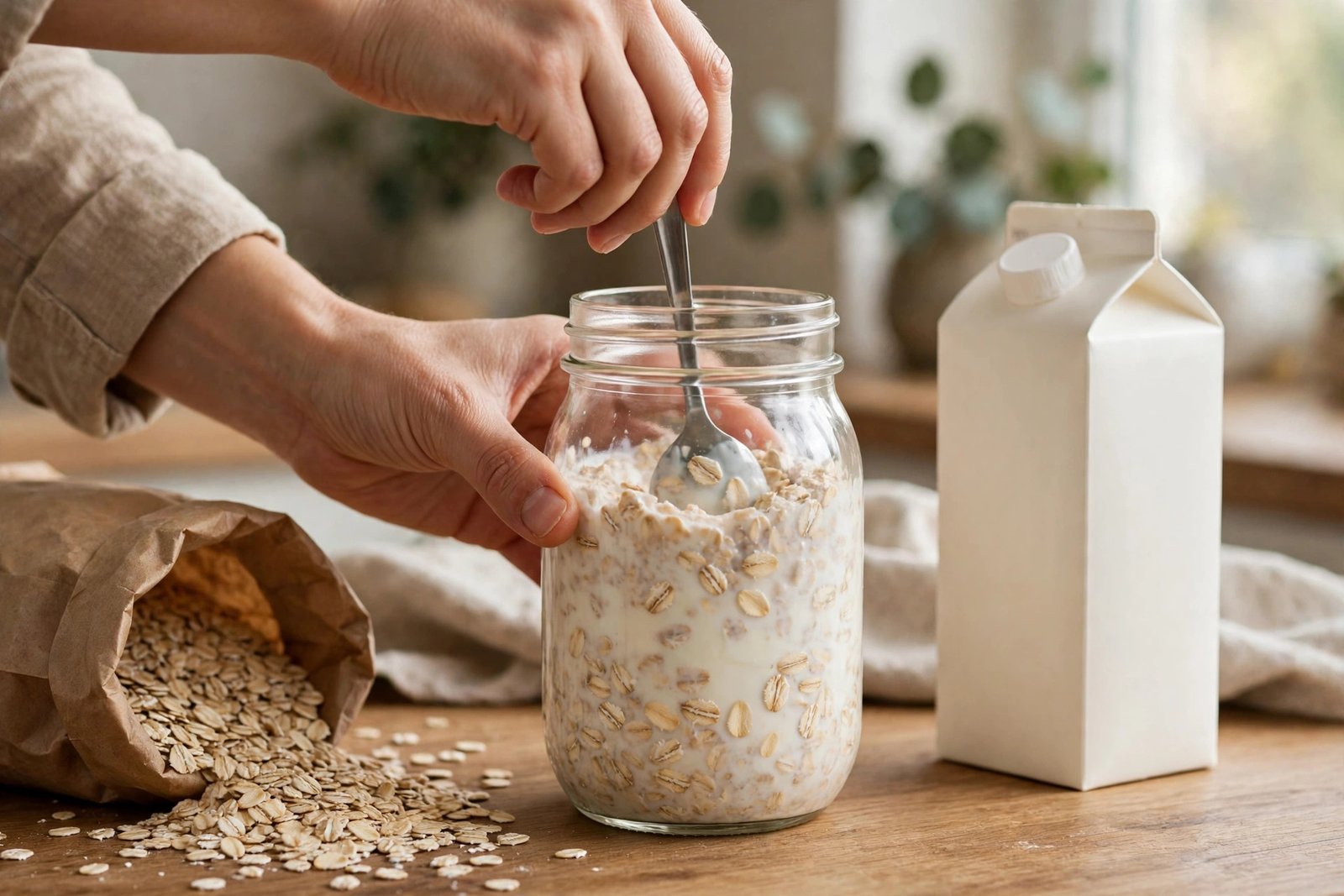
Step 3: Seal it and refrigerate overnight
Put the lid on and refrigerate for at least six hours. Eight to twelve hours is ideal, which is why the recipe is built around an overnight rest. If you are in a rush, four hours will give you something edible, but the texture will be noticeably thinner and chewier. Do not leave the jar on the counter to soak: room-temperature soaking is a food safety risk, and the fridge is what makes the method safe.
Step 4: Top and eat in the morning
In the morning, open the jar and give it a good stir. The oats will have thickened considerably, and a quick stir brings the texture back to smooth and spoonable. If it is thicker than you like, add a splash of milk. Then add your toppings: fresh berries, sliced banana, chopped nuts, a drizzle of nut butter, or granola for crunch. Add fresh fruit in the morning rather than the night before, because fruit mixed into the jar softens and ferments sooner. Eat the oats cold, straight from the jar, or let the jar sit on the counter for ten minutes if ice-cold breakfast is not your thing.
Five Easy Overnight Oats Variations
Once you know how to make overnight oats by heart, the fun starts. These five variations all use the same base, with the flavors stirred in the night before or added as toppings in the morning. Each one makes a single serving.
1. Berry and almond
Stir a handful of blueberries and raspberries into the base, or layer them on top in the morning. Add a spoonful of almond butter and a few sliced almonds for crunch. The berries bleed a little color into the oats overnight, and the almond butter adds richness without much extra sugar. Frozen berries work well too: stir them in frozen the night before and they thaw in the fridge, chilling the oats and releasing their juice.
2. Peanut butter and banana
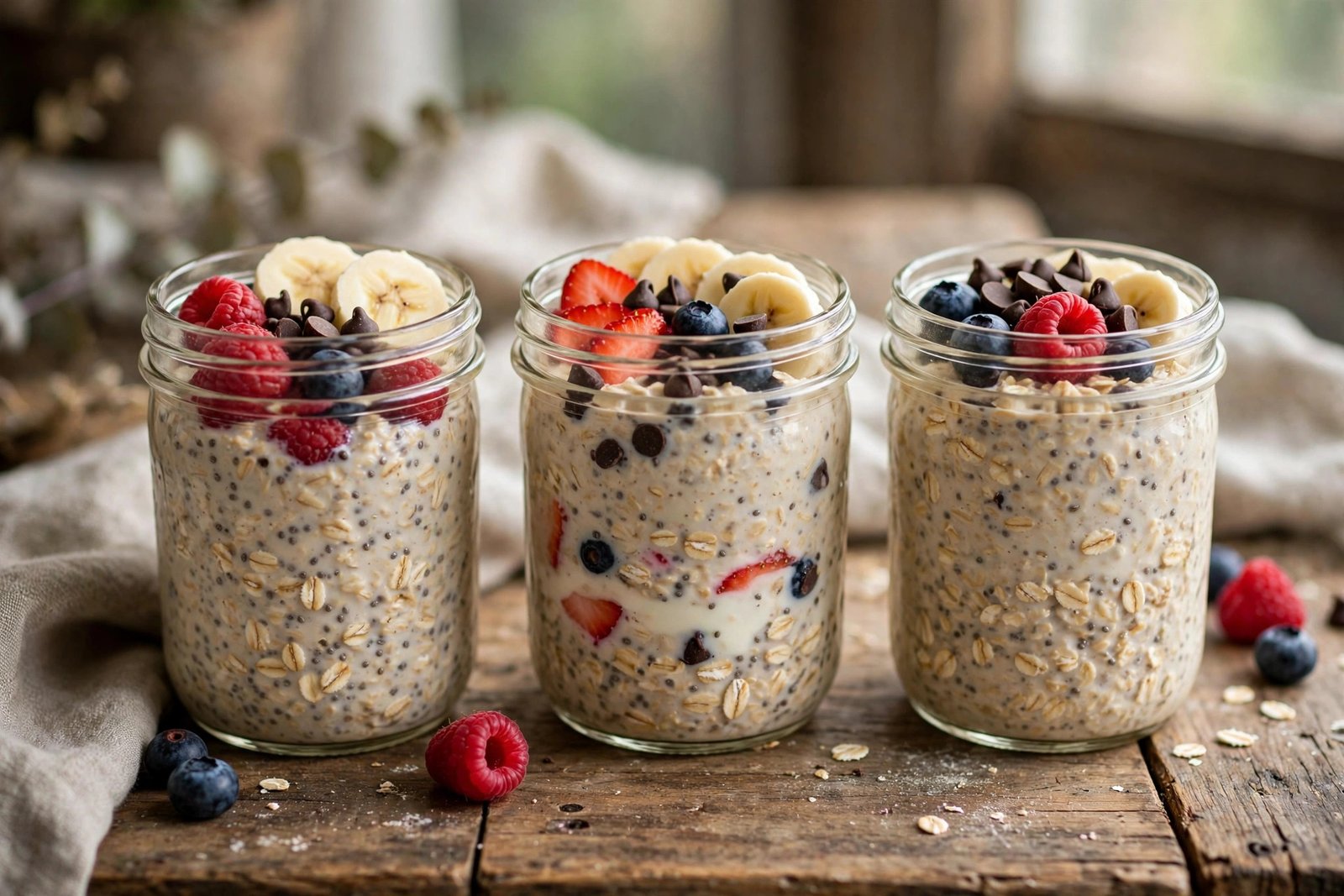
The classic. Stir a tablespoon of peanut butter into the base before refrigerating, and top with sliced banana and a few chocolate chips in the morning. The peanut butter makes the oats taste almost like dessert, and the banana adds natural sweetness, so you can skip the honey entirely.
3. Chocolate and cherry
Stir a tablespoon of cocoa powder and an extra teaspoon of maple syrup into the base, and top with halved cherries and dark chocolate chips in the morning. The cocoa turns the oats a deep brown, and the cherries cut through the richness. Frozen cherries are a good stand-in when fresh ones are out of season.
4. Tropical mango and coconut
Use coconut milk instead of dairy milk in the base, and stir in a few spoonfuls of diced mango. Top with toasted coconut flakes and a squeeze of lime in the morning. The coconut milk makes the oats extra creamy, and the mango keeps for a couple of days in the jar without going soft. For more on choosing between plant milks, see our comparison of oat milk vs almond milk.
5. Apple cinnamon
Stir half a diced apple, a pinch of cinnamon, and a pinch of nutmeg into the base before refrigerating. In the morning, add chopped walnuts and a drizzle of maple syrup. It tastes like apple pie filling, and the apple holds its crunch overnight far better than berries do.
How Long Do Overnight Oats Last in the Fridge?
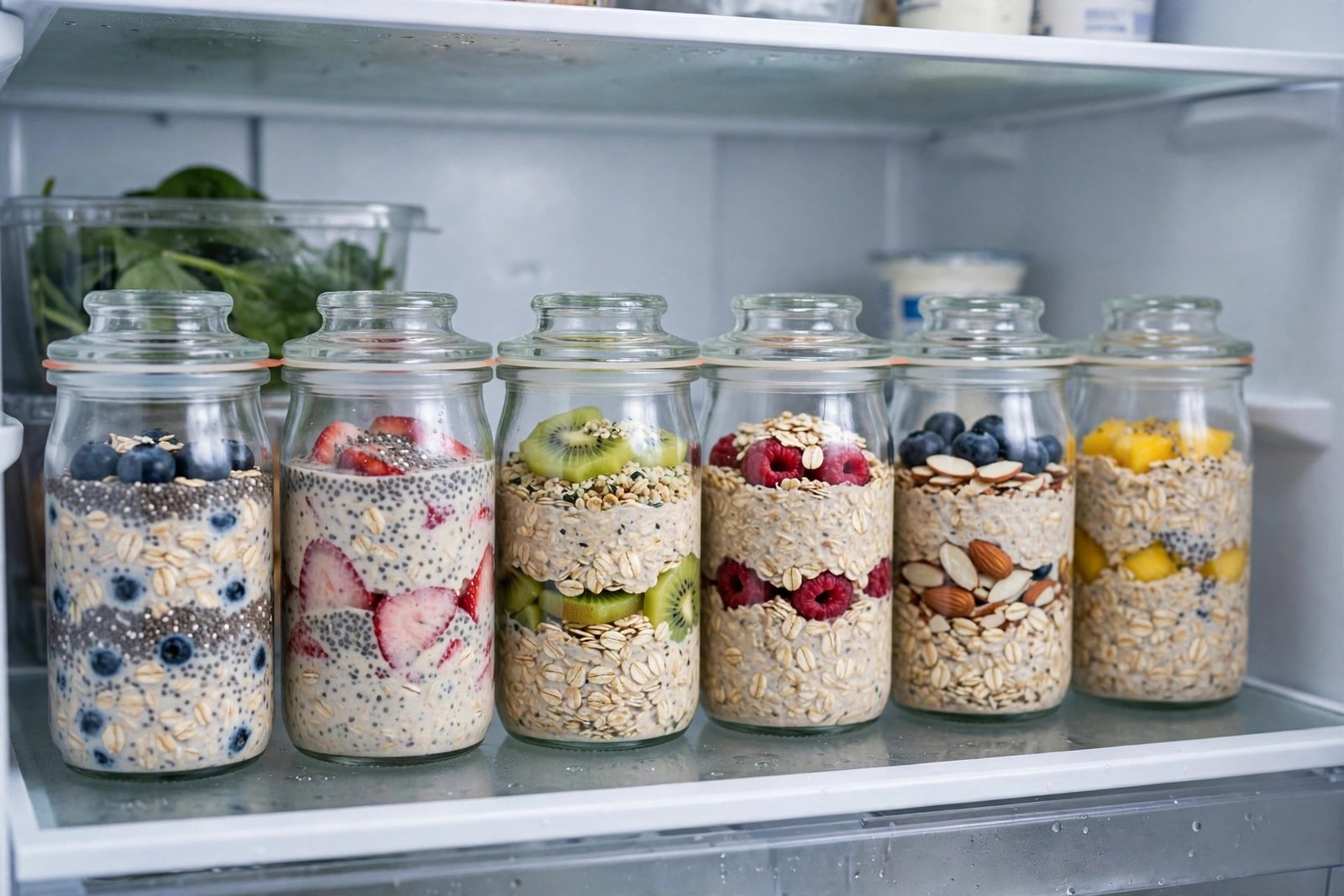
Overnight oats keep for three to five days in the fridge in a sealed container at or below 40 degrees Fahrenheit (4 degrees Celsius). That is the consistent guidance from recipe and storage sources, and it lines up with the federal food safety rules. The Fridge.com overnight oats storage guide adds a useful refinement: plain oats soaked in milk keep the full three to five days, while jars mixed with fresh fruit or yogurt are best eaten within two to three days. Taste and texture are best on days one to three.
Those numbers sit comfortably inside the official rules. The FoodSafety.gov cold food storage chart lists most cooked leftovers and prepared foods at three to four days in a refrigerator kept at 40 degrees Fahrenheit or below, and the USDA’s advice is to refrigerate perishable food within two hours and eat leftovers within three to four days. Treat five days as the absolute maximum, and make four jars at a time rather than seven. If you want a full week covered, mix the second batch midweek.
Your senses are a useful backstop, but not a guarantee. Discard a jar if you see mold, if the liquid has separated far beyond a light layer on top, or if it smells sour beyond a mild yogurt tang. A little liquid separation is normal — just stir it back in. Freezing is an option if you want to prep further ahead: freeze the plain base only, without fresh fruit or toppings, for one to two months, then thaw a jar overnight in the fridge. The texture after thawing is slightly softer than fresh, but it holds up well.
Common Mistakes to Avoid When Making Overnight Oats
Most failures when learning how to make overnight oats come from a small handful of avoidable errors. The first is the wrong oat. Quick oats turn to glue, steel-cut oats stay crunchy, and only rolled oats give you the creamy texture the recipe promises. The second is the wrong ratio. Too much milk and the jar is soup; too little and the oats stay dry in the middle. Start with the 1:1 ratio and adjust from there, but change only one thing at a time so you know what worked.
The third mistake is skipping the stir. Oats settle, chia seeds clump, and sweetener sinks, so stir thoroughly when you mix the jar and again in the morning. The fourth is adding toppings too early: fresh fruit, granola, and nuts all go soggy when they sit in liquid overnight. Mix the base the night before and add the good stuff in the morning. The fifth is a loose lid, which lets the oats pick up fridge smells and dry out at the edges. And the sixth is making a week’s worth at once — five days is the ceiling, and the last two days are never as good as the first three. For a broader look at where batch cooking goes wrong, see our guide to the mistakes to avoid when meal prepping.
Why Overnight Oats Are Worth the Habit
Beyond convenience, there is a real nutritional case for this breakfast. Oats are rich in soluble fiber, including beta-glucan, the fiber most closely linked to steady energy and healthy cholesterol levels. A jar built on the base recipe — oats, milk, yogurt, chia — delivers fiber, protein, and calcium before you have even added fruit, and it keeps you full far longer than a pastry or a bowl of sugary cereal. They are filling, cheap, and hard to get wrong once the ratio is set.
They are also cheap in a way that matters. A bag of rolled oats costs very little per serving, and the milk, yogurt, and toppings are things most kitchens already have. Compare that with a coffee-shop breakfast or a delivery order, and a week of overnight oats pays for itself by Tuesday. Pair a jar with a glass of water and a cup of coffee — our guide on how to make cold brew coffee at home covers a batch method that pairs well with a fridge full of breakfast jars.
Frequently Asked Questions
Can I use water instead of milk in overnight oats?
Yes, but the result is thinner and less creamy. Milk adds body, protein, and flavor that water cannot match. If you want a dairy-free jar, use a plant milk such as oat, almond, or soy milk rather than water. Water works in a pinch, but add yogurt or nut butter to bring back some richness.
Do I have to use chia seeds?
No. Chia seeds are optional. They thicken the oats and add fiber and healthy fats, but the recipe works fine without them. If you leave them out, reduce the milk by a tablespoon or two. Ground flaxseed is a good substitute.
Can I heat overnight oats?
Yes. Although they are designed to be eaten cold, you can warm a jar in the microwave for 60 to 90 seconds, stirring halfway through. The texture becomes closer to regular oatmeal. Do not heat a jar with fresh fruit or yogurt toppings already mixed in — warm the plain base first, then add toppings after.
Why are my overnight oats runny?
Usually the ratio is off, the soak was too short, or the chia seeds were skipped without adjusting the milk. Check that you used half a cup of oats to half a cup of milk and that the jar soaked for at least six hours. If the jar is still runny in the morning, stir in a tablespoon of chia seeds or a spoonful of yogurt and give it another hour in the fridge.
Can I make overnight oats without yogurt?
Yes. Yogurt adds creaminess and tang, but it is not essential. Leave it out and use a little extra milk, or replace it with a spoonful of nut butter. Jars made without yogurt actually keep slightly longer, since yogurt is one of the ingredients that shortens the storage window.
Are overnight oats healthy?
Yes, when the base is built on whole ingredients. Rolled oats, milk, yogurt, chia seeds, fruit, and nuts make a fiber-rich, filling breakfast. The healthiness drops when the jar is loaded with sweetened yogurt, chocolate sauce, or large amounts of added sugar. Keep the sweetener to a teaspoon or two and let the fruit do most of the sweetening.
Conclusion
Learning how to make overnight oats comes down to one ratio, one jar, and one night in the fridge. Half a cup of rolled oats, half a cup of milk, a quarter cup of yogurt, and a spoonful of chia seeds, stirred well and left overnight, gives you a creamy, filling breakfast with almost no morning effort. Add toppings in the morning, keep the batch to four jars or fewer, and eat them within five days.
Start with the plain base recipe this week, and try one variation at a time until you find your favorite. The berry and almond jar is the safest first try, and the peanut butter and banana jar is the one most people come back to.



