
Best Artificial Christmas Tree 2026: 7 Picks for Every Room and Budget
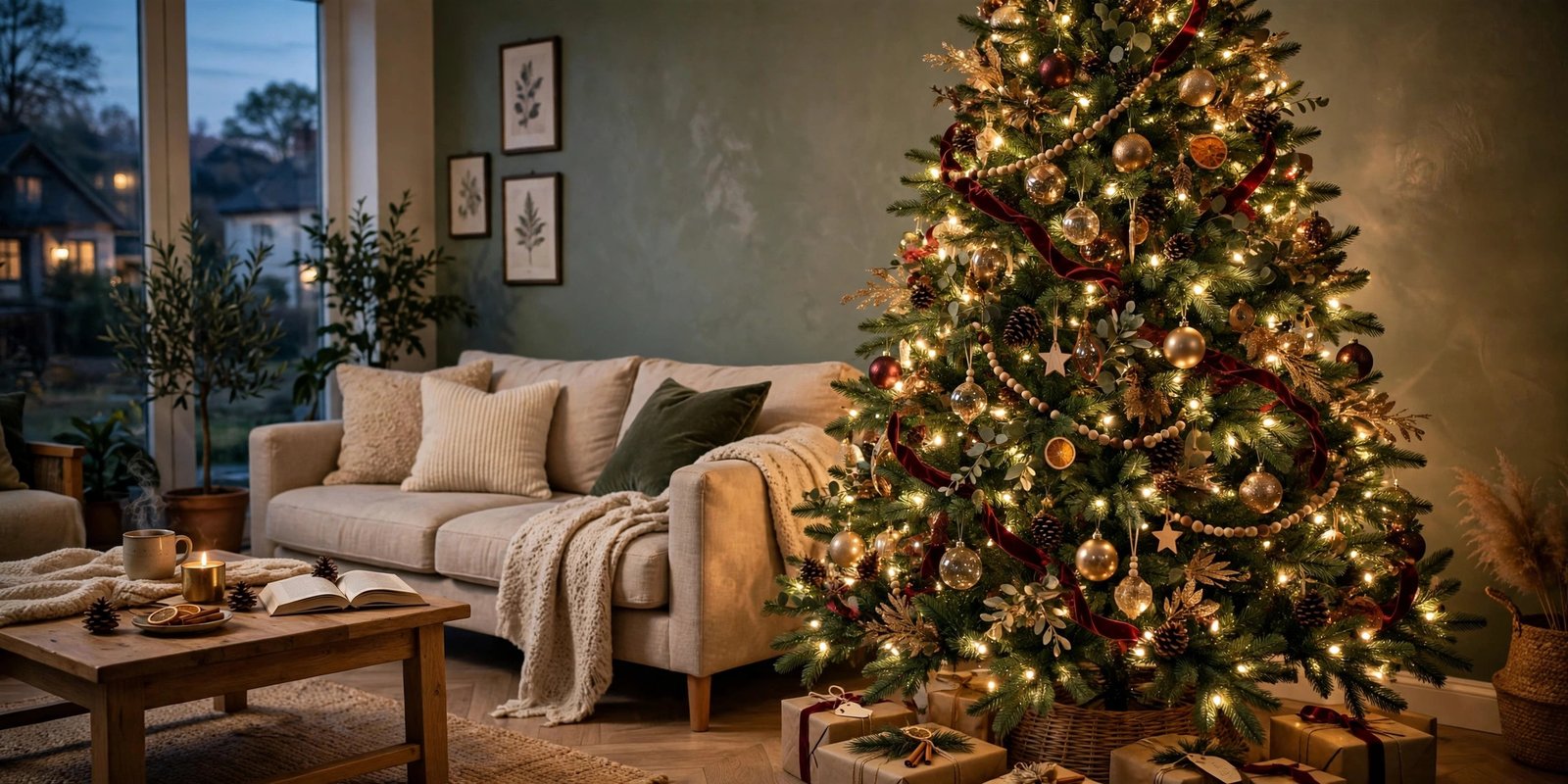
Buying the best artificial Christmas tree 2026 has to offer sounds simple until you open a retailer’s website and face 200 near-identical options, prices from $50 to $1,500, and a wall of jargon about PE tips, PVC needles, and “True Needle” foliage. Three things decide whether a tree looks like a photo or a green traffic cone: branch material, tip count, and shape. This guide cuts through the noise with seven picks by use — most realistic, best value, best pre-lit, small spaces, slim, flocked, and budget — with every price verified against a real retailer listing in November 2026. Prices move fast in November — check the listing before you buy.
How to Choose an Artificial Christmas Tree
Shop by more than height alone: a 7.5-foot tree can look sparse or lush depending on its branch material and tip count.
Measure First: Height, Width, and the Ceiling
Measure your ceiling, then subtract at least a foot for the tree topper and the stand — a 7.5-foot tree needs an 8.5-foot ceiling to look right. Then measure the floor space: a full 7.5-foot tree is usually 55 to 60 inches wide at the base, while a slim tree is 30 inches or less. If the tree will sit in a corner or beside a sofa, width matters more than height. For more on getting the house ready for the season, see our guide on how to winterize your home before the tree goes up.
PE vs PVC: The One Difference That Decides How Real It Looks
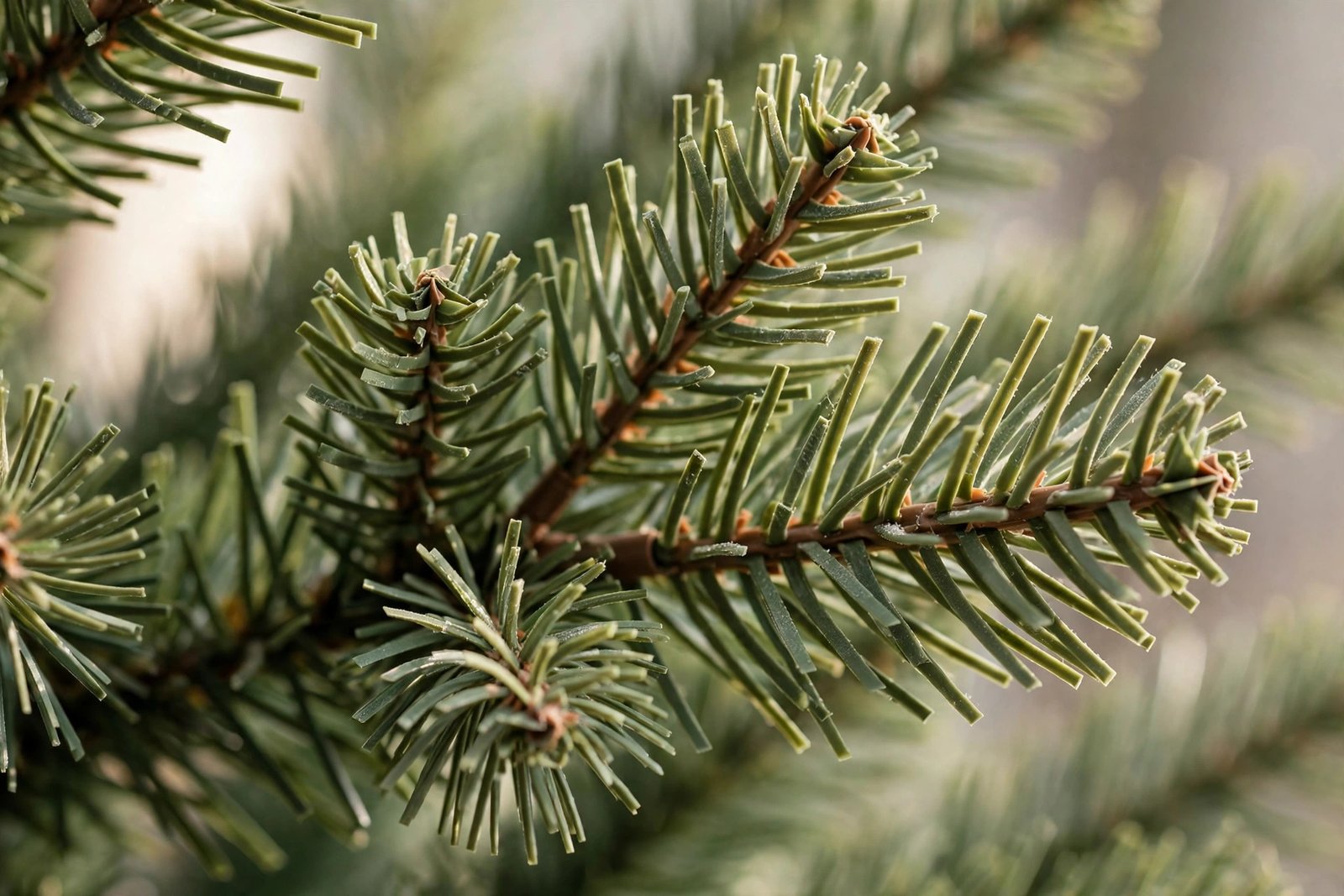
Almost every artificial tree is made from one of two plastics, and the difference is visible from across the room. PE — polyethylene — is molded from real branch cuttings, so each tip has the shape, taper, and slight irregularity of a real evergreen needle. PVC — polyvinyl chloride — is cut from flat sheets into strips, so the tips look flatter and more uniform. PE looks real; PVC looks like a tree from a school play. Most trees mix the two: PE on the outer tips where your eye lands, PVC on the inner branches where it fills out the shape. For most living rooms a PE/PVC mix is the sweet spot — realistic where it counts, affordable where it does not. The rule that never fails: the higher the PE share, the more realistic the tree, and the higher the price.
Tip Count: The Number That Predicts Fullness
Tip count is the number of branch ends on the tree, and it is the best single predictor of how full a tree looks. As a rough guide, a 7.5-foot tree with under 1,000 tips will look sparse once ornaments are on it; 1,000 to 1,500 tips looks decent; and 1,800 or more looks properly lush. But tip count alone is not enough — a tree with 2,000 thin PVC tips can look worse than a tree with 1,200 molded PE tips, because PE tips are wider. Read tip count together with the material, never on its own.
Pre-Lit or Unlit? Lights, Warranties, and the Replacement Problem
Pre-lit trees save an hour of untangling lights every December, and most now use LEDs that stay lit if one bulb fails. The catch is the long term: if a light string dies after a few seasons, replacing it means restringing the tree by hand or living with a dark section. Unlit trees never have that problem, and they cost less, but you will spend an evening wrapping lights every year. If you buy pre-lit, look for lights that connect through the pole — one plug at the base lights the whole tree — and check the listing for a light warranty before you buy.
Best Artificial Christmas Tree 2026: Our 7 Picks
Every pick below was chosen for a specific job, and every price was verified against a real retailer listing or price tracker in November 2026.
1. Most Realistic: Balsam Hill BH Fraser Fir, 7.5 ft
Balsam Hill’s BH Fraser Fir uses the company’s True Needle foliage — PE tips molded from real Fraser fir branches, with 40 tip variations. The 7.5-foot LED clear version was listed at $949 on Amazon as of November 13, 2026, down from a $1,449 list price, and it comes with the Easy Plug system, which lights the whole tree from a single connection at the base. It is the closest thing to a real Fraser fir that does not drop needles on your floor. See the full range on the Balsam Hill Christmas tree collection.
2. Best Value: National Tree Company Feel Real Downswept Douglas Fir, 7.5 ft
The National Tree Company Feel Real Downswept Douglas Fir is the cheapest tree that still looks good. The 7.5-foot pre-lit version has 1,867 branch tips, about 37% of them PE, with 750 dual-color LEDs that switch between warm white and multicolor, and a width of about 59 inches. Its street price swings roughly between $300 and $650 depending on the retailer and the sale, so the trick is to buy it when it is at the low end of that band. Check the price on the National Tree Company website and Amazon before you commit.
3. Best Pre-Lit: Home Depot Grand Duchess 7.5 ft SMART
Home Depot’s Grand Duchess is the tree that goes viral every year, and the 2026 version adds smart lighting to the formula. The 7.5-foot SMART Grand Duchess is listed at $349, and it is the rare pre-lit tree that feels like a genuine upgrade rather than a gimmick: app-controlled lights, a full shape, and build quality that reviewers consistently rate above its price. It sells out fast — do not wait for Black Friday. Browse the current stock at The Home Depot Christmas tree range.
4. Best for Small Spaces: National Tree Company Kingswood Fir, 6 ft
Small rooms punish full-size trees. The National Tree Company Kingswood Fir in the 6-foot size is the fix: about 27 inches wide, 629 tips, and 200 clear incandescent lights, listed around $149 at Home Depot. That width means it fits beside a sofa or in a bedroom corner without swallowing the room, and the hinged metal construction keeps setup to a few minutes. The foliage is PVC, so it will not fool anyone up close, but with ornaments on it reads as a proper Christmas tree.
5. Best Slim: VEIKOUS Traditional Green LED Slim Pencil Tree, 6 ft
Slim trees are the hardest category to buy well, because a bad one looks like a green broom handle with baubles. The VEIKOUS 6-foot slim pencil tree is the budget answer: listed around $79.72 at Home Depot, pre-lit with LEDs, and narrow enough for a hallway, a studio flat, or the gap between two pieces of furniture. It will not win a realism contest, but it is the cheapest way to get a lit tree into a space where a full tree does not fit. See it alongside the other slim options in the slim artificial Christmas trees on Amazon.
6. Best Flocked: Home Depot Grand Duchess Snow-Flocked 7.5 ft SMART
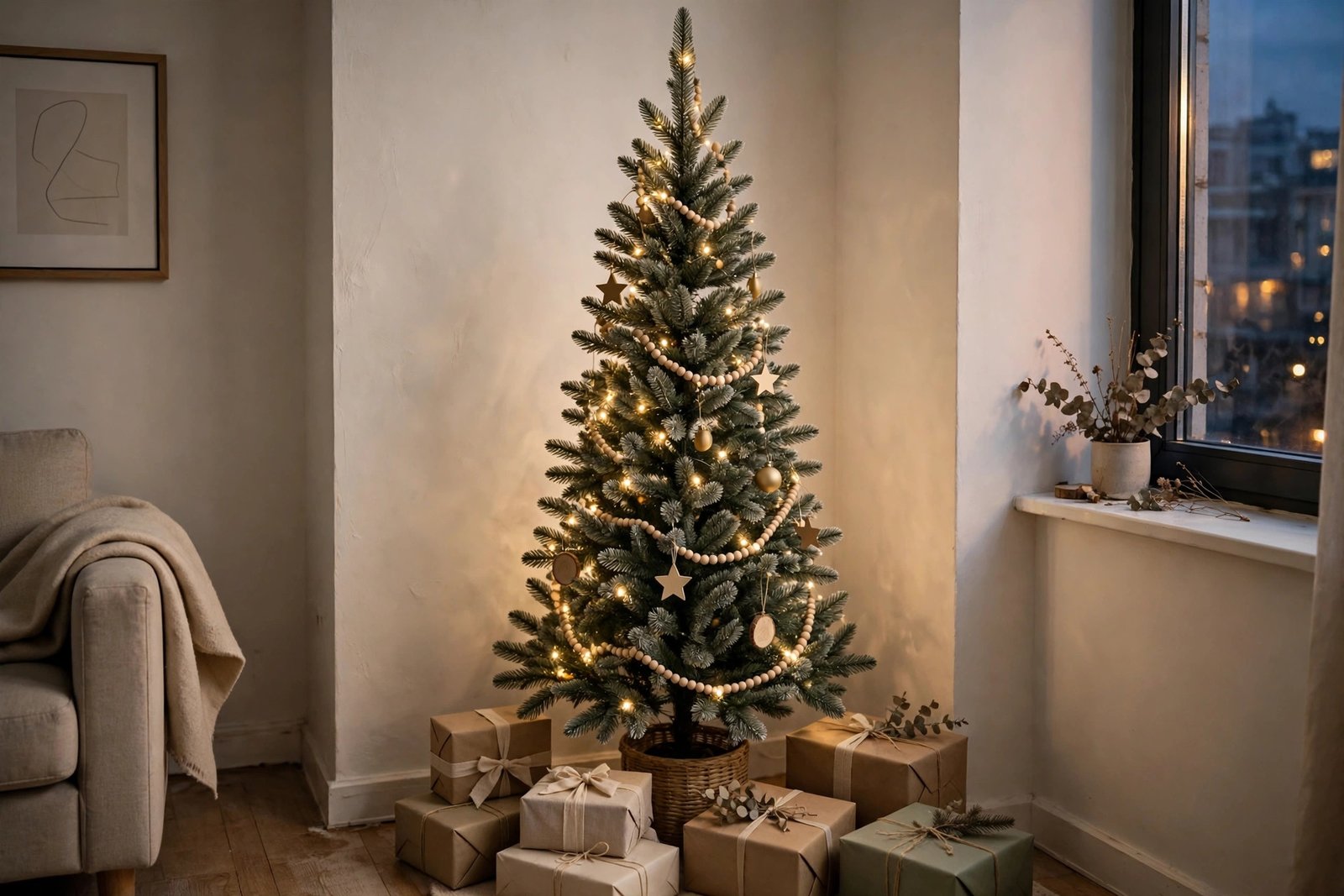
Flocked trees — the ones dusted with fake snow — either look magical or look like they were left out in a snowstorm, and the difference is the quality of the flocking. The snow-flocked version of the Grand Duchess, also 7.5 feet with smart lighting, is listed at $399, and it gets the balance right: enough white to read as snow, not so much that the green disappears. One warning: flocking sheds. Put a sheet under the tree while you set it up and expect extra vacuuming in December. If you have pets that chew, skip flocked trees entirely — the coating is not something you want a dog or cat eating.
7. Best Budget: Home Depot Festive Pine LED, 6.5 ft
The cheapest tree worth buying is the Home Depot Festive Pine, a 6.5-foot pre-lit LED tree listed at $49.98. It is not realistic, it is not lush, and nobody will mistake it for a Balsam Hill — but it is a complete, lit Christmas tree for the price of a takeaway dinner, and for a first apartment, a kids’ room, or a second tree in the hallway, that is a perfectly good deal. Spend the money you save on ornaments — they do more for how a tree looks than the branches ever will. See also our guide to how to save money on heating in winter.
The 7 Picks at a Glance
| Pick | Height | Tip count | PE vs PVC | Lights | Warranty | Nov 2026 price |
|---|---|---|---|---|---|---|
| Balsam Hill BH Fraser Fir | 7.5 ft | — (40 tip variations) | PE (True Needle) | LED clear | — | $949 (Amazon, Nov 13) |
| NTC Feel Real Downswept Douglas Fir | 7.5 ft | 1,867 | PE/PVC mix (~37% PE) | 750 dual-color LED | — | ~$300–$650 |
| Home Depot Grand Duchess SMART | 7.5 ft | — | — | LED (smart) | — | $349 |
| NTC Kingswood Fir | 6 ft | 629 | PVC | 200 clear incandescent | — | ~$149 |
| VEIKOUS Slim Pencil Tree | 6 ft | — | — | LED | — | ~$79.72 |
| Grand Duchess Snow-Flocked SMART | 7.5 ft | — | — | LED (smart) | — | $399 |
| Home Depot Festive Pine LED | 6.5 ft | — | — | LED | — | $49.98 |
Figures marked “—” were not stated on the retailer’s listing at the time of writing — check the listing before you buy, and confirm warranty terms there rather than assuming coverage. Prices are November 2026 snapshots and move fast around Black Friday. A recent price check found Lowe’s listing a National Tree Company pre-lit spruce at $153 — the same size of tree can vary a lot between stores. See the current range at Lowe’s Christmas tree selection.
When to Buy: Timing Your Purchase for the Best Price
Artificial trees are at their most expensive in the first two weeks of November, when demand peaks and early buyers pay full price. The best prices usually appear in Black Friday week, when retailers discount trees by 20 to 40%, and again in the week after Christmas, when leftover stock can drop by half or more. If you need a tree this Christmas, buy during Black Friday week. If you can wait a year, the post-Christmas clearance is the cheapest tree you will ever buy, and a good tree lasts a decade.
Fluffing, Shaping, and Storing Your Tree
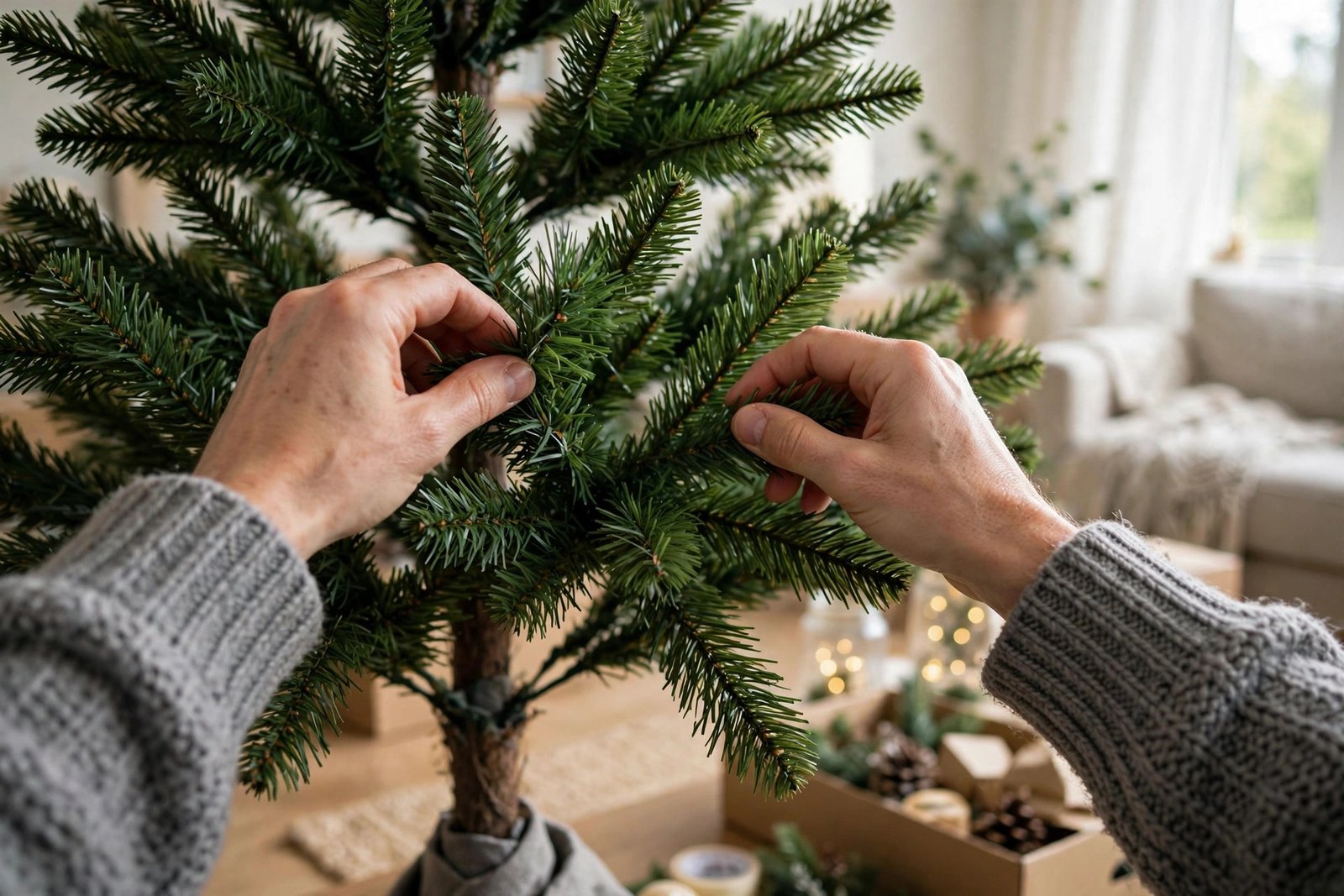
A new artificial tree looks terrible straight out of the box. The branches arrive compressed flat, and the tree only becomes a tree after fluffing — pulling every branch tip outward and arranging it so the tree looks full from every angle. Budget 30 to 45 minutes for a 7.5-foot tree, work from the bottom up, and fluff each branch in a fan shape rather than pulling tips straight out. Do not skip it.
Storage matters just as much. A tree kept in its original box, in a dry place, will last ten years or more; a tree stuffed into a damp garage in a bin bag will look tired after three. If the original box is gone, a purpose-made tree storage bag costs less than $30 and protects the branches from being crushed. Keep the tree away from radiators and damp, coil the light strings loosely, and label the sections if your tree comes apart into three pieces — it will save you twenty minutes next December. See also the best winter boots for 2026 and the best space heater for 2026 guides.
Frequently Asked Questions About Artificial Christmas Trees
How long does an artificial Christmas tree last?
A good artificial tree lasts 10 years or more with proper storage — dry, out of direct sunlight, and not crushed under other boxes. Cheap PVC trees tend to look tired after 3 to 5 years, while PE trees hold their shape far longer. A $150 tree used for 10 years costs $15 a year, far less than a real tree every December.
Are artificial trees better than real trees?
It depends on what you value. Artificial trees cost less over time, make no mess, and carry no allergy risk from pollen or mold, but they are made of plastic and will eventually go to landfill. Real trees are biodegradable and smell wonderful, but they cost $60 to $100 every year, drop needles, and need watering. Keep an artificial tree for 5 to 10 years and it is usually the cheaper, lower-effort choice.
What size artificial Christmas tree should I buy?
For a standard living room with 8-foot ceilings, a 7.5-foot tree is the default — it fills the room without touching the ceiling once the topper is on. For ceilings under 8 feet, go 6 or 6.5 feet. For 9-foot or higher ceilings, an 8.5 or 9-foot tree looks better than a 7.5-foot tree that leaves a gap at the top. Measure the width too: a full 7.5-foot tree needs about 5 feet of floor diameter.
Is PE or PVC better for an artificial Christmas tree?
PE is better for realism — it is molded from real branches and looks like a real evergreen up close. PVC is cheaper and fills out the inner branches well, but it looks flat and plastic from a short distance. For most buyers, a PE/PVC mix is the best value.
Are pre-lit artificial trees worth it?
Usually, yes — if you buy a quality one. Pre-lit trees save an hour of setup every year and the lights are evenly spaced in a way that is hard to match by hand. The risk is a dead light string after a few seasons, so buy from a retailer with a stated light warranty and keep the box and receipt. If you love wrapping your own lights, an unlit tree costs less and never has the problem.
When is the cheapest time to buy an artificial Christmas tree?
The cheapest time is the week after Christmas, when retailers clear leftover stock at 40 to 70% off. If you need a tree this year, Black Friday week is the next best window, with discounts of 20 to 40% at most major retailers.
Conclusion
The best artificial Christmas tree 2026 has to offer is not one tree — it is the right tree for your room, your budget, and how much realism matters to you. If you want the most realistic tree money can buy, the Balsam Hill BH Fraser Fir at $949 is the answer. If you want the best balance of looks and price, the National Tree Company Downswept Douglas Fir in the $300–$650 band is hard to beat. If your budget is tight, the $49.98 Festive Pine will still give you a lit tree and a proper Christmas — and the money you save will buy the ornaments that make any tree look good. Measure first, check the tip count and material, fluff it properly, and buy during Black Friday week.



