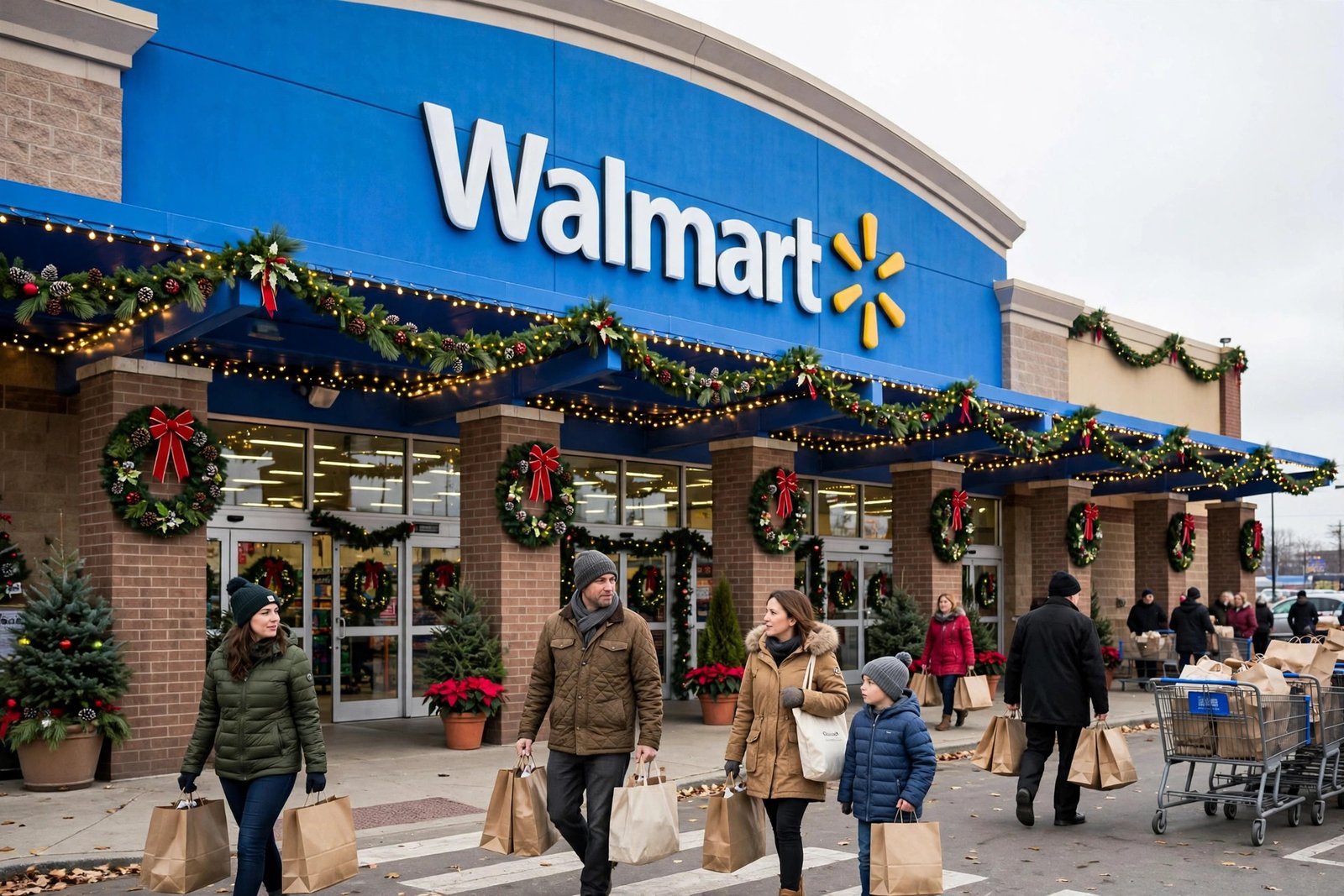

Walmart Holiday Outlook November 2026: Raised Forecasts, Rising Fuel Costs
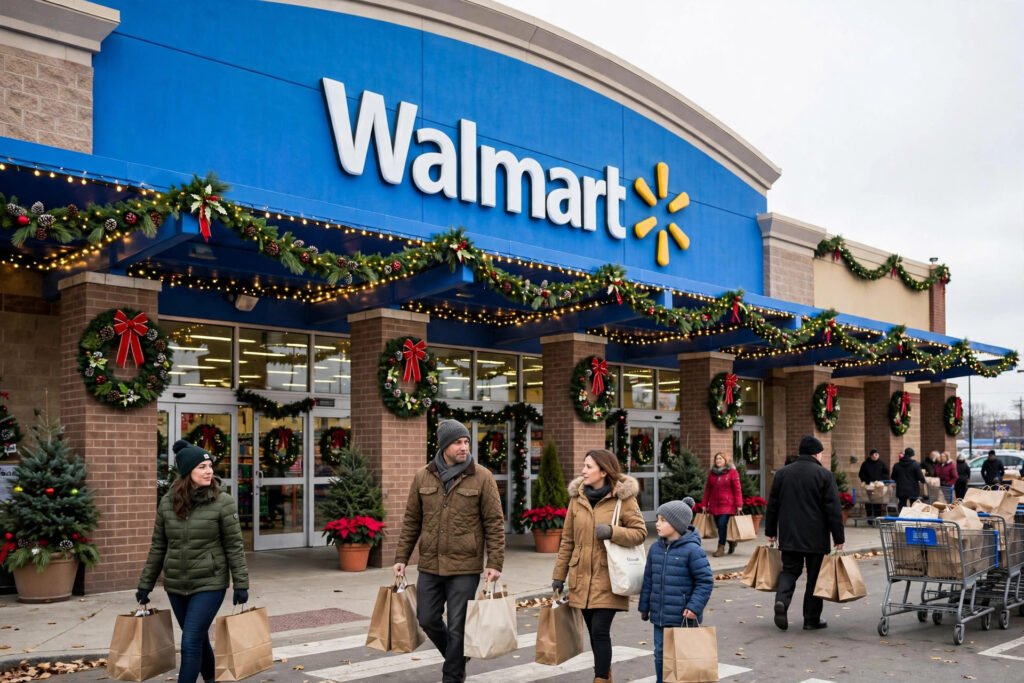
The walmart holiday outlook november 2026 arrived on Thursday, November 19, 2026, with a message that was good and bad at the same time. Walmart beat Wall Street’s expectations for the third quarter, raised its forecasts for the full year, and said its holiday season is off to a strong start. Then its shares fell about 1%, because the new forecasts were not quite as strong as analysts had hoped — and because a $2 billion fuel bill is eating into the money Walmart uses to keep prices low.
That split verdict says a lot about the American consumer at the end of 2026: people are still spending at Walmart, but hunting for value harder than ever, while the cost of moving goods has jumped. This article explains what Walmart reported, why the market was underwhelmed, what the $2 billion diesel problem means, and what it signals for shoppers heading into Black Friday and Christmas.
Walmart Holiday Outlook November 2026: The Quarter in Numbers
Walmart’s fiscal third quarter — the three months ended October 31, 2026 — came in ahead of expectations on almost every line. Total revenue rose 5.2% to $188.84 billion, beating the $187.27 billion analysts had expected, according to data compiled by LSEG. Adjusted earnings per share were $0.65, a penny above the $0.64 consensus. On a GAAP basis, earnings were $0.62 per share, and net income was $4.95 billion, down 19.5% from a year earlier.
That fall in net income needs explaining, because it looks alarming next to the revenue beat. It was driven by what happened below the operating line: Walmart booked a $341 million loss on equity and other investments in the quarter, against a $2.08 billion gain a year earlier, largely because of a fall in the share price of its investment in Symbotic. Operating income, the cleaner measure of how the stores actually performed, rose 16.0% to $7.77 billion.
Walmart U.S., the heart of the business, produced net sales of $125 billion, up 3.6%. Comparable sales excluding fuel rose 2.9%, in line with estimates, though growth has slowed from last year’s pace. The digital business was the star again: global e-commerce sales grew 17%, US e-commerce sales jumped 23%, and the global advertising business grew 25%. Membership fee revenue rose 17% too, helped by a new bundled membership combining Walmart+ and Sam’s Club Plus for $120 a year.
| Q3 FY27 figure | Result | Change |
|---|---|---|
| Total revenue | $188.84 billion | +5.2% (+4.5% constant currency) |
| Adjusted EPS | $0.65 | +4.8% (vs $0.64 expected) |
| GAAP EPS | $0.62 | −19.5% |
| Net income | $4.95 billion | −19.5% |
| Operating income | $7.77 billion | +16.0% |
| Walmart U.S. net sales | $125 billion | +3.6% |
| U.S. comparable sales (ex-fuel) | — | +2.9% |
| Global e-commerce sales | — | +17% |
| U.S. e-commerce sales | — | +23% |
| Global advertising | — | +25% |
| Membership fee revenue | — | +17% |
Then came the guidance, which is what the walmart holiday outlook november 2026 is really about. Walmart raised its full-year forecasts for the third time this year. It now expects fiscal 2027 net sales to grow 4.9% to 5.2% in constant currency, up from 4% to 5%. Adjusted operating income is expected to grow 8% to 8.6%, up from 7% to 8.5%. Adjusted earnings per share are now guided to $2.84 to $2.89, up from $2.80 to $2.87.
| Fiscal 2027 guidance | Previous forecast | New forecast (Nov 19) |
|---|---|---|
| Net sales growth (constant currency) | 4.0% – 5.0% | 4.9% – 5.2% |
| Adjusted operating income growth | 7.0% – 8.5% | 8.0% – 8.6% |
| Adjusted EPS | $2.80 – $2.87 | $2.84 – $2.89 |
Read those numbers carefully, because the gap between them and what analysts wanted is the whole story of the share price. Analysts had expected full-year sales growth of 5.5%, according to LSEG, and earnings per share of about $2.89. Walmart’s new sales forecast tops out at 5.2%, below that expectation, and its earnings range only reaches $2.89 at the very top. The company raised its forecasts, but it raised them to a level the market had already moved past.
The Beat — and Why the Stock Still Fell
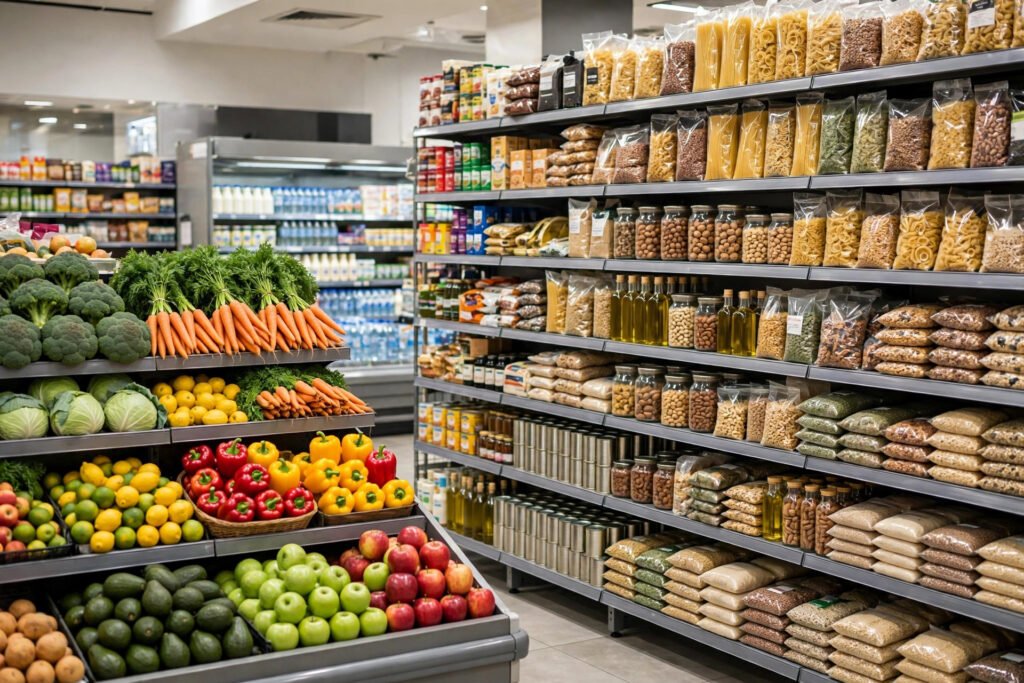
Beating estimates and watching your shares fall is a strange experience, but it happens often enough in earnings season to have a name: a good quarter priced in. Walmart’s shares had already risen strongly into the report, and the market had already assumed a solid quarter and a guidance raise. What it got was a solid quarter and a guidance raise — just not quite as large as the one it had imagined.
Shares slipped about 1% to around $126 on Thursday, even as the broader market fell more than 2% on the same day. In that context, a 1% fall was actually a sign of relative strength. But it was still a fall, and it was the third time this year that Walmart raised guidance only to see investors ask for more. The pattern is familiar to anyone who follows the stock: the company keeps beating its own forecasts, and the market keeps raising the bar.
The $2 Billion Fuel Problem
The most important number in the walmart holiday outlook november 2026 may not be in the earnings table at all. It is $2 billion: the extra diesel and transportation costs Walmart expects to absorb this year because fuel prices have surged. Chief financial officer John David Rainey put the figure at roughly $2 billion in added costs, and Furner warned that it could hamper efforts to keep prices low as shoppers head into the holidays.
The scale of the problem is easy to miss. Two billion dollars is about what Walmart earns in a good week, and it is money that cannot be spent on price cuts, wages, or store improvements. Worse, Walmart’s whole strategy depends on being the cheapest option. When transport costs rise, the company faces an ugly choice: absorb the cost and accept thinner margins, or pass it on and risk losing the price advantage that brings shoppers through the door. Furner said the company would do “everything we can in terms of efficiency” and added that pricing “really depends on transportation costs and input costs as we move forward.”
There are offsets. Walmart said it received nearly $3 billion in tariff refunds after the US Supreme Court ruled that the president’s emergency-authority tariffs were unlawful, and it is redirecting that money into lower prices. That is a one-off windfall, though, not a permanent fix. If diesel prices stay high — the US average retail price stood at $6.13 a gallon in mid-November, up more than 60% from a year earlier — the fuel bill will keep biting long after the refund is spent.
For shoppers, the practical effect is subtle but real. Walmart has cut prices on about 7,700 items, well above its historical range of 5,000 to 5,500. But it is doing so while its own costs are rising, so the room for further cuts is shrinking.
The Holiday Playbook: 7,700 Price Cuts and a $3.50 Dinner
If the fuel bill is the worry, the holiday playbook is the answer. Walmart is going into the most important shopping weeks of the year with an unusually aggressive value offer, and the early signs are that shoppers are responding.
The centrepiece is the holiday meal basket: 26 items, including a Butterball turkey, stuffing, mashed potatoes and gravy, cranberry sauce, green bean casserole and pumpkin pie, for $35 — enough to feed ten people at $3.50 each. That is down from $4 per person last year, and the basket is about 12% cheaper than a year ago. It is the lowest price since Walmart launched the programme in 2022. Furner said on the earnings call that Walmart had already sold one million more Thanksgiving turkeys this November than a year earlier.
The price cuts go well beyond the dinner table. The roughly 7,700 rollbacks span groceries and general merchandise, and Furner said they helped deliver some of Walmart’s strongest grocery market share gains in three years. That matters because grocery is the traffic driver: people who come in for cheap food stay to buy everything else. The company is also leaning on delivery, with store-fulfilled deliveries growing more than 40% in the quarter and expedited deliveries up more than 50%.
For readers planning their own holiday spending, our guide to how much you should spend on Christmas gifts sets out a simple budgeting framework, and our explainer on what Black Friday is covers the history and the traps of the biggest shopping day of the year.

The Digital Engine: E-Commerce, Advertising and Membership
Look past the stores and Walmart’s third quarter was a digital story. Global e-commerce sales rose 17%, US e-commerce rose 23%, and the US marketplace — third-party sellers using Walmart’s platform — grew 49%, its third consecutive quarter above 45%. Store-fulfilled pickup and delivery did most of the work: the stores double as warehouses, so an online order can be picked and delivered from the shop down the road rather than a distant depot.
Advertising is the quieter success. Walmart’s global advertising business grew 25%, and the US advertising business grew 37%. Selling ads to the brands that sell through Walmart is a high-margin business, and the finance chief has said the US online business would be close to break-even without any advertising income.
Membership is the third leg. Global membership fee revenue rose 17%, and the company launched a combined $120-a-year membership bundling Walmart+ with Sam’s Club Plus in the quarter. Furner said about two million people had newly joined Sam’s Club since the bundle launched. Sam’s Club itself had a strong quarter, with revenue of $25.9 billion, up 10%, and e-commerce up 30%.
What It Means for Shoppers This Christmas
What does all of this mean for someone doing their holiday shopping? Three things.
First, expect genuine bargains, but shop early and compare. Walmart’s 7,700 price cuts are real, and the $3.50-per-person holiday meal is the cheapest version of the basket since the programme began. But the company is under cost pressure, so the deepest discounts will be on the items it most wants to move, concentrated around Black Friday and Cyber Monday.
Second, expect delivery to be the battleground. Store-fulfilled delivery is up more than 40%, aimed at shoppers who want groceries and gifts brought to the door the same day. Check the fees and minimums first: the service is convenient, but not always the cheapest way to shop.
Third, do not read Walmart’s caution as a warning about the consumer. The company still raised its forecasts for the third time this year, and its sales are still growing. Shoppers are choosing carefully and rewarding the retailer that makes value easiest — which is why Walmart keeps gaining grocery market share even while its costs rise.
Our coverage of the November 2026 Fed minutes explains the interest-rate backdrop behind all of this: borrowing costs shape what shoppers can spend, and the Fed’s thinking matters as much as any single retailer’s results. And if you are buying for colleagues as well as family, our best gifts for coworkers in 2026 rounds up ideas at every budget.

What to Watch Into Black Friday and Christmas
The next six weeks will decide whether Walmart’s raised forecasts were cautious or optimistic. A few things are worth watching.
Frequently Asked Questions
What did Walmart report for Q3 2026?
Walmart reported fiscal third-quarter revenue of $188.84 billion, up 5.2% year over year, and adjusted earnings per share of $0.65, beating the $0.64 analysts expected. The quarter ended October 31, 2026, and results were announced on Thursday, November 19, 2026. GAAP earnings were $0.62 per share, and net income fell 19.5% to $4.95 billion.
Did Walmart raise its guidance?
Yes. The walmart holiday outlook november 2026 raised fiscal 2027 guidance for the third time this year: net sales growth of 4.9% to 5.2% (was 4% to 5%), adjusted EPS of $2.84 to $2.89 (was $2.80 to $2.87), and adjusted operating income growth of 8% to 8.6% (was 7% to 8.5%). However, the new sales forecast came in below analysts’ expectation of 5.5% growth, which is why the shares fell.
Why did Walmart shares fall after good results?
Because the market had expected more. Walmart beat third-quarter estimates, but its raised full-year sales forecast of 4.9% to 5.2% growth was below the 5.5% analysts expected, and its earnings range only reaches the $2.89 consensus at the top. Shares slipped about 1% to around $126 on November 19, on a day the wider market fell more than 2%.
What is Walmart’s $2 billion fuel problem?
Rising diesel and transportation costs have added about $2 billion in extra expenses for Walmart this year, according to chief financial officer John David Rainey. The company is absorbing the cost to keep prices low, but chief executive John Furner warned it could hamper efforts to hold prices down through the holidays.
How much is Walmart’s holiday meal basket?
Walmart’s 2026 holiday meal basket costs $35 and feeds ten people — $3.50 per person. It includes 26 items, among them a Butterball turkey, stuffing, mashed potatoes and gravy, cranberry sauce, green bean casserole and pumpkin pie. It is about 12% cheaper than last year and is available through Christmas Eve. Walmart said it had already sold one million more turkeys this November than a year earlier.
How fast is Walmart’s e-commerce business growing?
Global e-commerce sales grew 17% in the third quarter, and US e-commerce sales grew 23%. Store-fulfilled deliveries rose more than 40%, and the US marketplace grew 49%. The global advertising business grew 25% and membership fee revenue rose 17%. E-commerce now represents about 24% of Walmart’s net sales.
Conclusion
The walmart holiday outlook november 2026 is a story of two forces pulling in opposite directions. On one side, a retailer doing almost everything right: sales beating estimates, forecasts raised for the third time this year, and a holiday offer — 7,700 price cuts and a $3.50 dinner — that is genuinely good value for shoppers feeling the pinch.
On the other side, a $2 billion fuel bill that the company cannot control, a sales forecast that came in below what analysts wanted, and a share price that fell even on a day of good news. The market’s message was blunt: beating estimates is no longer enough. Walmart has to beat the expectations that its own success has created.
For shoppers, the outlook is better than it is for shareholders. The price cuts are real, the meal basket is the cheapest it has been since 2022, and the delivery network is faster than ever. For now, the world’s largest retailer is betting that value wins the holidays — and a million extra turkeys sold suggests shoppers agree.
For the full picture, read Reuters’ report on Walmart’s raised forecasts, Walmart’s Q3 FY27 earnings release, Walmart’s guide to its holiday meal basket, and the Motley Fool’s transcript of the earnings call.



