
Fed Minutes November 2026: Almost Every Official Expects More Rate Hikes
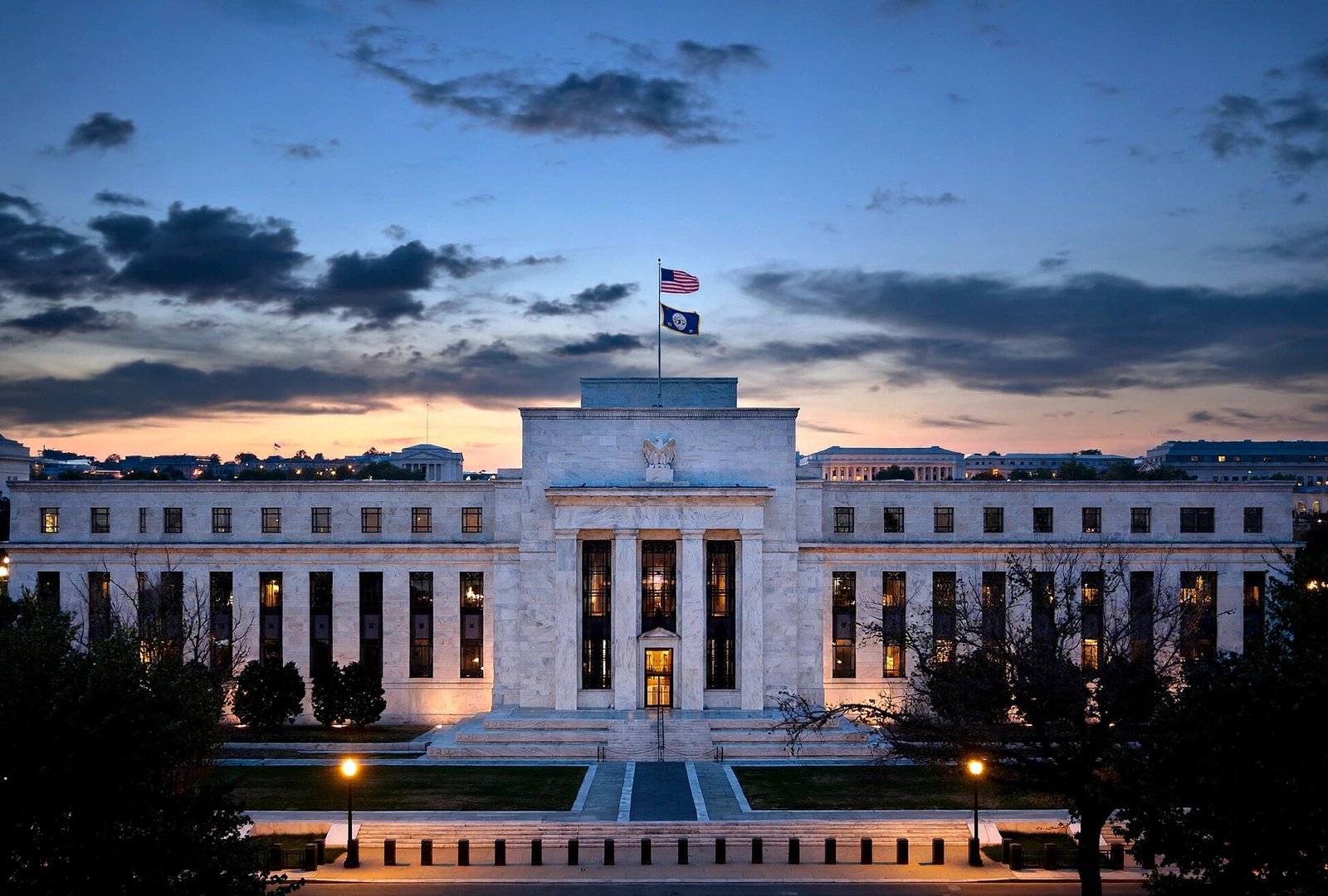
The Federal Reserve held interest rates steady in October — and then told the world it probably won’t stay that way. The fed minutes november 2026 rate hikes story landed on Wednesday, November 18, 2026, when the Fed published the record of its October 27–28 meeting, and the message was blunter than traders expected: almost every official thinks more rate hikes are coming.
This was not a routine release. The minutes turned a quiet hold into a hawkish signal, put a bigger December move on the table, and flagged two risks — AI investment debt and hedge-fund leverage — that the Fed had not talked about this way before. Here is what the minutes actually say, what they mean for December, and what they mean for your mortgage, your savings, and your credit card.
The Fed Minutes November 2026 Rate Hikes in Brief
The Federal Open Market Committee met on October 27–28, 2026, and voted 10–2 to hold the federal funds rate at 3.75% to 4%. Two officials — Governor Lisa Cook and Cleveland Fed President Beth Hammack — dissented, because they wanted a quarter-point increase right away. The minutes of that meeting were released on November 18 at 2 p.m. Eastern, three weeks after the decision, as is standard practice. You can read the full record in the Federal Reserve’s official minutes.
The headline line in the minutes is the one markets seized on: “almost all participants judged that, under their baseline outlooks for inflation and the labor market, further action to raise the target range for the federal funds rate would likely be appropriate in the months ahead, in order to ensure a timely return of inflation to the 2 percent objective.” In plain English, nearly everyone on the committee thinks rates need to go higher, and soon.
The minutes also revealed that a couple of participants said an increase of more than 25 basis points could be considered at the December meeting if incoming inflation data disappointed. That is the first time this cycle that a half-point move has been openly discussed in the official record, and it changed the conversation overnight.
| Key number | What happened |
|---|---|
| Federal funds rate | Held at 3.75%–4% |
| October vote | 10–2 to hold |
| Dissenters | Lisa Cook and Beth Hammack (both wanted +25bp) |
| Forward signal | “Almost all” expect further hikes |
| December option | A couple open to more than 25bp |
| Next meeting | December 8–9, 2026 |
| Market odds (Dec) | Above 90% for a 25bp hike (CME FedWatch) |
| Inflation target | 2% |
What the Minutes Actually Said
Fed minutes are not press releases. They are a detailed record of what was argued behind closed doors, published three weeks later, and traders read them the way lawyers read contracts — word by word. Three passages matter most this time.
First, the near-unanimity on more hikes. “Almost all participants” is about as close to consensus as the Fed ever gets, and it is a much stronger signal than the October statement itself gave. The October statement had simply announced the hold and repeated the commitment to containing inflation, without a clear signal about December. The minutes filled in that gap: the hold was a pause, not a peak.
Second, the debate over pace. Some participants described the October hold as a close call, and a few shared the dissenters’ view that a hike was warranted on the spot. A couple went further, saying a move of more than 25 basis points could be considered in December if the inflation data came in unfavourable. That is not a promise of a half-point hike. It is a warning that one is on the table.
Third, the new risks. The minutes flagged the AI buildout — the enormous investment pouring into artificial intelligence infrastructure — and hedge-fund leverage as financial-stability concerns. The worry is that heavy borrowing to fund AI projects, combined with leveraged bets in financial markets, could amplify trouble if conditions turn.
The Two Dissenters: Cook and Hammack
Lisa Cook and Beth Hammack did not dissent lightly. A dissent at the Fed is a public disagreement with the chair, and it is rare — two dissents at the same meeting is rarer still. Both wanted a quarter-point increase in October, and both had the same reason: inflation is still too high, and waiting risks letting it settle in.

The numbers back their impatience. Staff estimates cited in the minutes put September headline PCE inflation at 3.6% and core PCE at 3.1% — well above the Fed’s 2% target. When inflation runs a full point and a half above target, every month of waiting is a month in which high prices become normal. The Bureau of Labor Statistics publishes the consumer price data the committee watches most closely, and the November report lands before the December meeting. That is the fear the dissenters were voicing: not that inflation will spike, but that it will stop falling.
Governor Christopher Waller, who voted with the majority in October, has since gone further than the dissenters. In remarks in London on November 10, he said he would back at least a quarter-point hike in December, and that a half-point move should be considered if core inflation ran at about 0.3% or more for a third month. Core inflation then came in at exactly 0.3% — by his own test, the bar was met. On November 18, Waller told CNBC that he still favours weighing a half-point December hike, warning that “hiking only 25 basis points would put our credibility at risk.”
December Is Now the Live Meeting
Everything in the fed minutes november 2026 rate hikes points to December 8–9, the committee’s last scheduled meeting of 2026. That meeting will come with updated economic projections, fresh inflation and jobs data, and a decision that markets have already largely made up their minds about.
The base case is a quarter-point hike. Interest-rate futures priced roughly 27 basis points of tightening for December after the minutes, and about 62 basis points across the next three meetings. The New York Fed’s survey of dealers, summarised in the minutes, already pointed to one hike in December and another in March 2027.
The live question is whether it will be 25 or 50 basis points. The minutes put the half-point option on the record, Waller is arguing for it in public, and after the inflation report the odds of a half-point move jumped from near zero to about 13.6%, according to CME’s FedWatch tool. That is still a long shot — but it was not a conversation at all a month ago. What happens between now and December 8 matters enormously: the November consumer price report lands before the meeting, and a hot reading would strengthen the case for the bigger move.
Chair Kevin Warsh, who led the October meeting, said afterwards that officials had “made clear our readiness to act as needed” — a line that reads very differently now that the minutes show how many of them were ready to act in October itself. For anyone trying to read the Fed, the message is that the committee is not divided over whether to hike. It is divided over how fast.
The New Worries: AI Debt and Hedge-Fund Leverage
The most surprising passage in the fed minutes november 2026 rate hikes has nothing to do with the December decision. It is the warning about AI investment and hedge-fund leverage — two risks that barely featured in Fed communications a year ago.
The AI buildout is the biggest capital-spending boom in a generation. Companies are borrowing heavily to build data centres, buy chips, and lay power infrastructure, on the assumption that AI revenues will eventually justify the cost. The Fed’s concern, as reflected in the minutes, is what happens if that assumption is wrong — or even just early. Debt taken on for projects that take years to pay off can become a problem quickly if borrowing costs keep rising, which is exactly what the Fed itself is causing.

Hedge-fund leverage is the other half of the worry. Leveraged funds borrow to amplify their bets, and when many funds hold similar positions, a sudden move can force selling that pushes prices further — the kind of spiral that turns a market wobble into a rout. The minutes do not name names or predict a crisis. But the fact that the committee discussed leverage as a financial-stability risk, in the same document that signals more hikes, tells you the Fed is aware that its own tightening could be the trigger.
None of this changes the December decision. If anything, it reinforces the hawkish tilt: officials who worry about debt-fuelled excess are more, not less, inclined to raise rates. But it is worth remembering that the Fed is now juggling two fears at once — inflation that will not come down, and a financial system carrying more leverage than it did a year ago. Our Nvidia Q3 earnings results from November 2026 show how the AI spending boom the Fed is now worrying about looks from the corporate side.
What the Market Did Next
The fed minutes november 2026 rate hikes landed in a market that had already priced in much of this. Reuters reported that CME FedWatch pricing implied a near-certain 25-basis-point hike in December, and readings of the CME FedWatch tool cited after the release put the odds of a quarter-point December hike above 90%. Stocks slipped on the day as the hawkish tone sank in, and gold held near recent highs.
The bond market’s reaction was more telling than the stock market’s. When the Fed signals more hikes, yields on short-term government debt rise, and borrowing costs across the economy follow. Mortgage rates, car loans, and credit card rates all take their cue from where traders think the fed funds rate is heading — and after November 18, traders think it is heading higher, for longer, than they believed a month ago.
For savers, there is a silver lining. Higher policy rates usually mean better yields on savings accounts, money market funds, and certificates of deposit — the same accounts that pay almost nothing when rates are low. The trade-off is the one the Fed always imposes: savers win, borrowers pay, and the economy slows a little. Our earlier coverage of the Fed rate hike in 2026 explains how that trade-off played out the last time the committee moved.
What It Means for You
The fed minutes november 2026 rate hikes are a policy document, but their effects land in household budgets. Here is the practical translation, based on what the committee signalled and what markets now expect.
| Area | What to expect | What you can do |
|---|---|---|
| Mortgages | Rates likely to stay high or rise after December | Lock a rate if you are buying; think twice before an adjustable-rate loan |
| Savings accounts | Yields may edge higher | Compare high-yield accounts; move idle cash out of near-zero accounts |
| Credit cards | APR rises follow Fed hikes within a billing cycle or two | Pay down balances now; avoid carrying new debt into 2027 |
| Car loans | Financing gets more expensive | Consider buying before December if you were already planning to |
| Stocks | Higher rates pressure valuations, especially growth stocks | Do not panic-sell on a headline; review your emergency fund first |
| Jobs | Tighter policy can cool hiring over time | Build a cushion — see how much emergency fund you need |
The single most useful step is the least exciting one: check your emergency fund. If you do not have one, the Fed’s own trajectory is the reason to build it. Our guide on how much emergency fund you need walks through the math. And if you want the full context on the October decision itself, read our report on the FOMC meeting in October 2026.
One caution: do not make big financial decisions on a single release. The minutes are a record of a meeting that happened three weeks ago, and the December decision will depend on data that does not exist yet. The November inflation report, due before the meeting, could strengthen or weaken the case for a half-point move.
Frequently Asked Questions
What did the Fed minutes November 2026 rate hikes reveal?
The minutes of the October 27–28 FOMC meeting, released November 18, 2026, showed that almost all officials expect further rate hikes, that two officials dissented in favour of an immediate quarter-point increase, and that a couple of participants were open to a move of more than 25 basis points in December if inflation data disappointed.
Did the Fed raise rates in October 2026?
No. The committee voted 10–2 to hold the federal funds rate at 3.75% to 4%. Governor Lisa Cook and Cleveland Fed President Beth Hammack dissented, preferring a quarter-point increase at that meeting.
When is the next Fed meeting?
December 8–9, 2026. It is the committee’s last scheduled meeting of the year and will include updated economic projections. Markets expect a quarter-point hike, with a smaller chance of a half-point move.
What are the odds of a December rate hike?
Readings of the CME FedWatch tool cited after the minutes put the odds of a 25-basis-point December hike above 90%. The odds of a larger, 50-basis-point move were around 13.6% after the inflation report — a long shot, but one that was near zero a month earlier.
Why is the Fed worried about AI debt?
The minutes flagged heavy borrowing to fund AI infrastructure and hedge-fund leverage as financial-stability risks. The concern is that debt taken on for long-payoff AI projects, combined with leveraged market bets, could amplify trouble if borrowing costs keep rising or AI revenues arrive later than expected.
Will a December hike affect my mortgage?
Probably, if you are borrowing. Mortgage rates take their cue from where traders think the fed funds rate is heading, and a December hike would keep rates high or push them higher. If you are buying, locking a rate before December is worth discussing with your lender. Existing fixed-rate mortgages are unaffected.
The Bottom Line
The fed minutes november 2026 rate hikes story is simple once you strip away the jargon: the Fed paused in October, almost nobody on the committee thinks the pause should last, and December is when the argument gets settled. A quarter-point hike is the base case, a half-point move is on the table if inflation disappoints, and the new warnings about AI debt and hedge-fund leverage show a committee that is watching more than just prices.
For households, the message is practical, not dramatic. Borrowing is likely to stay expensive into 2027, savings yields may improve slightly, and the December 8–9 meeting is the date that matters. Keep an eye on the November inflation report when it lands — that number will do more to decide between 25 and 50 basis points than anything the minutes said.



