
Christmas Ham vs Turkey: Taste, Cost, Nutrition, and the Real Winner
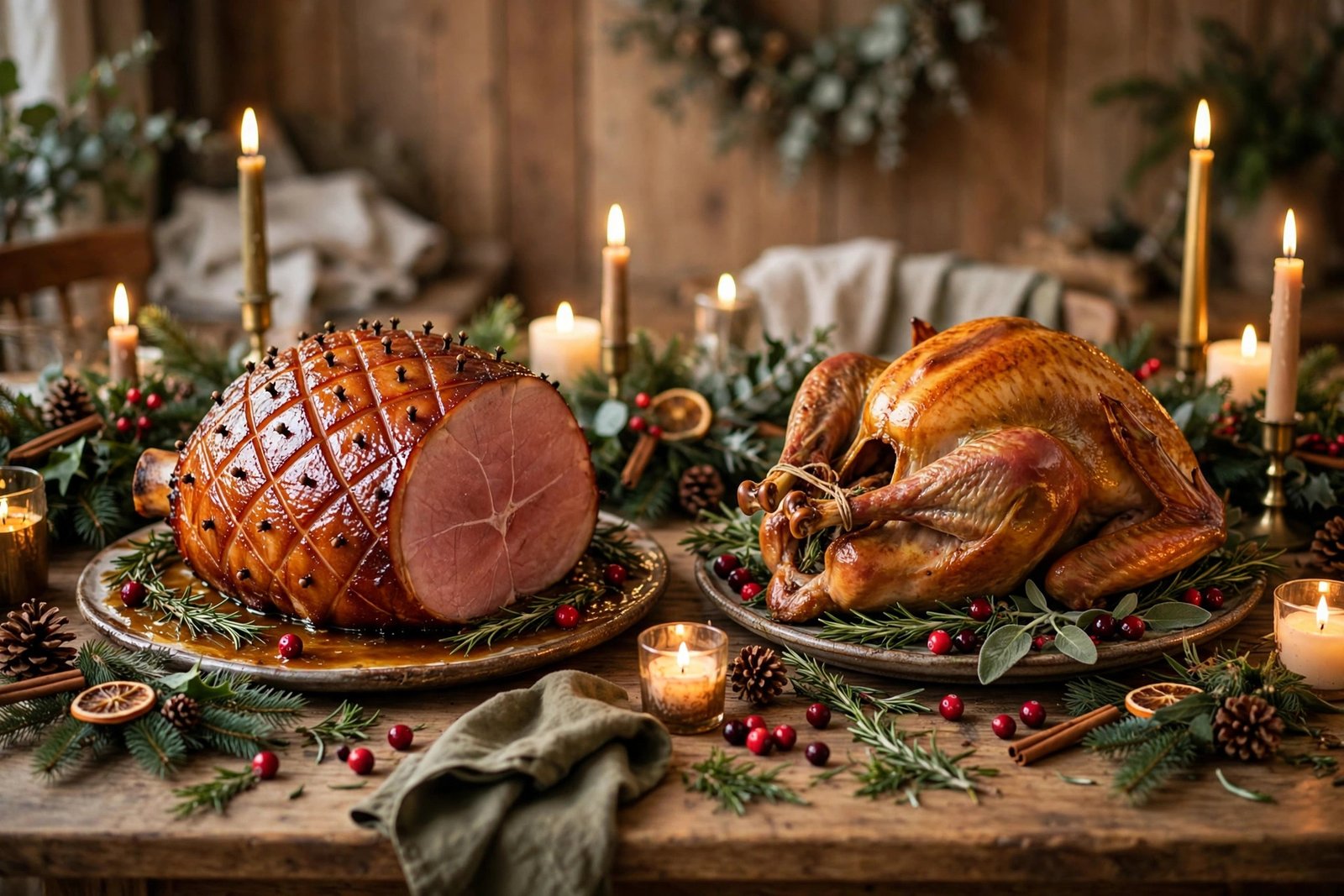
Every December, the same argument breaks out in kitchens across the country: ham or turkey for Christmas dinner? It is one of the oldest food debates of the season, and it never quite gets settled — because both sides have a point. Christmas ham vs turkey is not really a contest with one right answer. It is a choice between two very different kinds of Christmas dinner.
Ham is sweet, salty, and almost impossible to mess up. Turkey is leaner, grander, and carries the full weight of the holiday tradition. One arrives at the table ready to eat. The other demands a day of planning, a thawed bird, and a meat thermometer. The right choice depends on your crowd, your budget, your kitchen, and how much work you actually want to do on Christmas Day.
This guide compares the two head to head — taste, cost, prep time, nutrition, and leftovers — with verified numbers, so you can pick the centrepiece that fits your Christmas rather than the one tradition tells you to serve.
Christmas Ham vs Turkey: The Head-to-Head Table
Here is the whole debate on one table. If you only read one section of this guide, make it this one.
| Factor | Ham | Turkey |
|---|---|---|
| Taste | Sweet, salty, rich; honey glaze suits sweet sides | Mild, savoury; herb-heavy sides suit it best |
| Prep time | Usually pre-cooked — heat and serve in 1–2 hours | Thawing plus hours of roasting; a full day’s work |
| Cost per serving | Higher per pound; cured and processed | Generally cheaper per pound |
| Protein (per 3 oz) | About 18g | About 25g |
| Fat (per 3 oz) | About 5g | About 1g |
| Sodium (per 3 oz) | 1,000mg or more | About 60mg |
| Nitrites | Added as part of curing | None added |
| Leftovers | Great in sandwiches, soups, and fried rice | Great in sandwiches, pies, curries, and stock |
The table tells the story at a glance. Turkey wins on nutrition and price. Ham wins on ease and flavour. Neither wins outright — and that is the honest answer to the whole debate.
Taste: Sweet and Salty vs Mild and Savoury
Taste is where the argument usually starts, and it is also where it is hardest to settle, because it comes down to what your family likes. Ham brings a bold, sweet-and-salty flavour that needs very little help. A honey glaze, a brown-sugar crust, or a simple pineapple ring is enough. The meat itself does the talking, and even people who do not cook can make a ham taste impressive.
Turkey is subtler. On its own, turkey is mild — some would say bland — and it depends entirely on what you do with it. A well-brined, well-seasoned turkey with herb butter under the skin is genuinely delicious. A dry, unseasoned turkey is the stuff of Christmas horror stories. The difference between the two is preparation, and that is the whole point: turkey rewards effort, and punishes laziness.
Sides matter too. Ham’s sweetness pairs naturally with sweet sides — glazed carrots, sweet potato casserole, cranberry sauce. Turkey suits herb-heavy sides — sage stuffing, rosemary roast potatoes, green beans with garlic. If your family’s favourite sides lean sweet, ham fits the menu. If they lean savoury and herby, turkey does. That is the heart of the christmas ham vs turkey debate: ham brings the flavour, turkey brings the tradition.
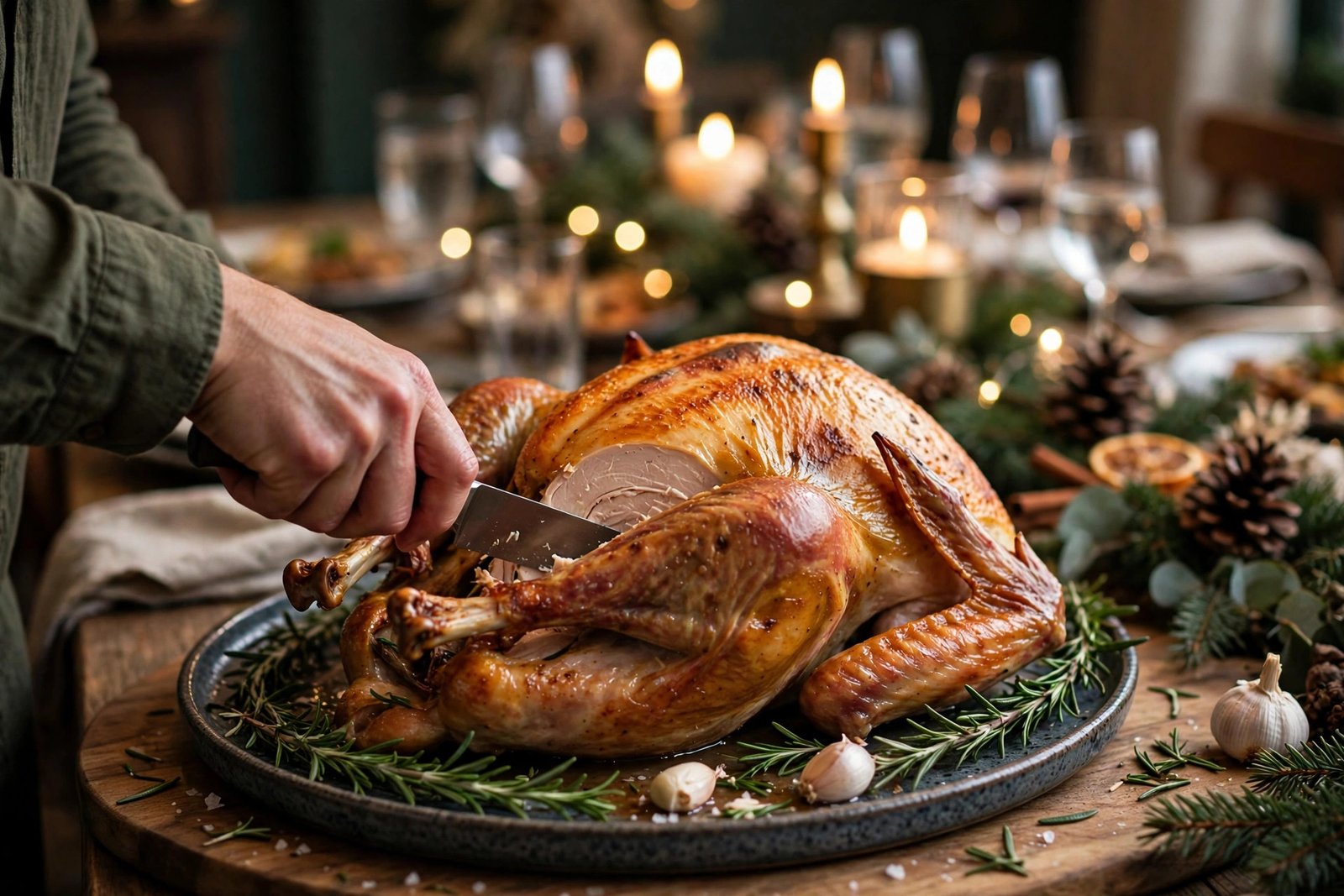
There is also the question of the table itself. A turkey is a centrepiece in the old-fashioned sense: big, golden, carved in front of everyone. A ham is a centrepiece too, but a quieter one — sliced, not carved, and often served from the kitchen rather than the table. If the ceremony of carving matters to your Christmas, turkey has the edge.
Prep Time and Effort: The Real Difference
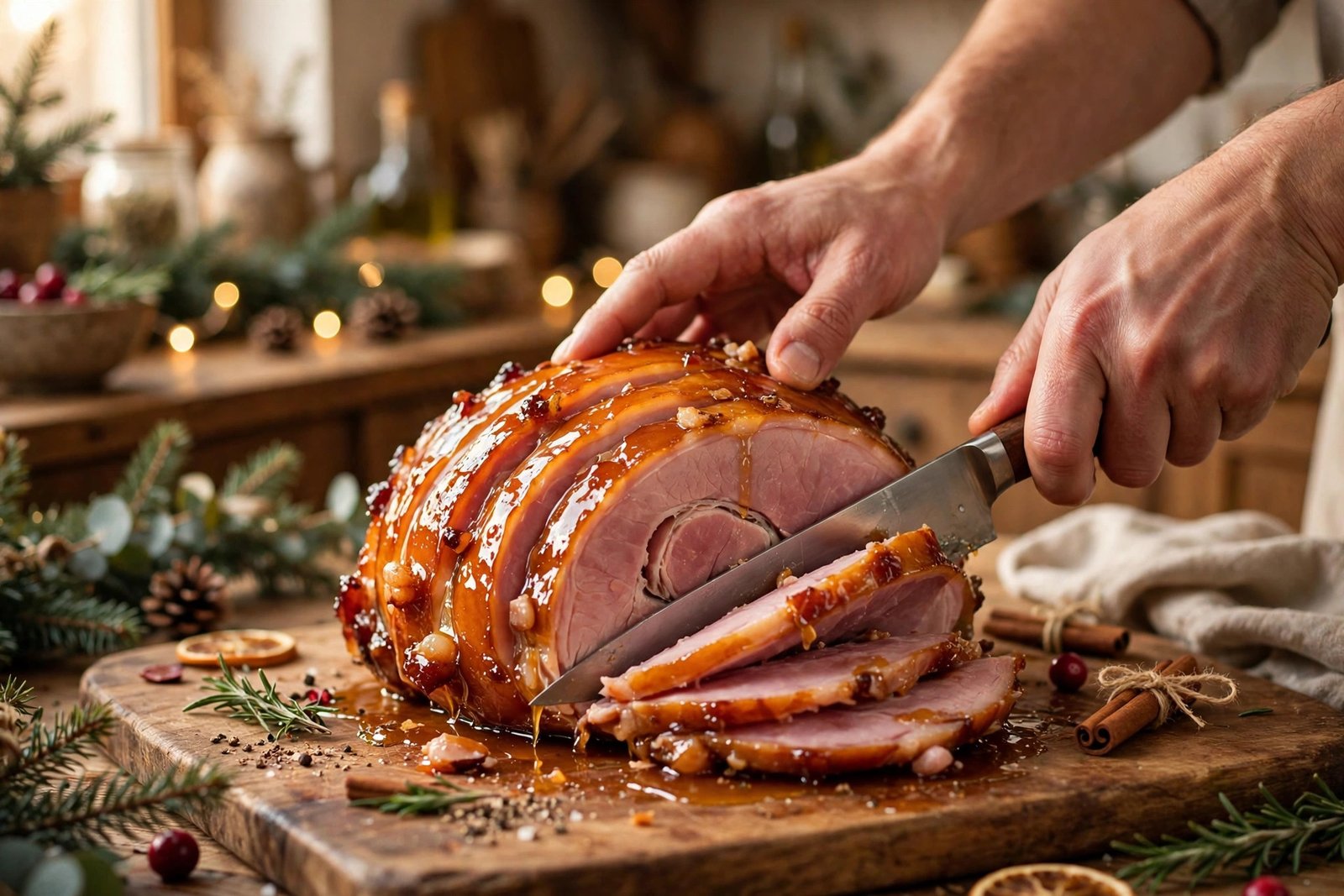
This is where ham wins by a mile, and it is the reason so many families have quietly switched. Most Christmas hams are sold pre-cooked. You take it out of the fridge, score the fat, spread on a glaze, and heat it through — usually one to two hours in the oven. There is no thawing schedule, no brining, no basting, and almost no risk of serving something undercooked.
Turkey is a project. A frozen bird needs days to thaw in the fridge — roughly a day for every four pounds, so a large turkey needs the better part of a week. Then comes brining or seasoning, stuffing, roasting for hours, basting, resting, and carving. It is a full day’s work, and it demands oven space, a roasting pan, and a meat thermometer you trust.
That effort is not wasted — a well-cooked turkey is a triumph — but be honest with yourself about how much cooking you want to do on Christmas Day. If you want to spend the day with your family rather than in the kitchen, ham is the pragmatic choice. If cooking the Christmas dinner is itself the tradition you love, turkey is the reward.
One practical tip either way: buy a meat thermometer and use it. The USDA safe internal temperature for turkey is 165°F, measured in the thickest part of the thigh. For pre-cooked ham, reheat to 140°F. A thermometer costs very little and removes all the guesswork — and all the food-safety worry — from the day.
Nutrition: The Numbers Favour Turkey
On nutrition, the contest is not close. Per 3 oz serving, turkey has about 25g of protein and about 1g of fat, while ham has about 18g of protein and about 5g of fat. Turkey has roughly one and a half times the protein of ham, with a fraction of the fat. For anyone watching their weight or their heart, turkey is the clear winner.
The sodium gap is even bigger. A 3 oz serving of ham can carry 1,000mg of sodium or more — nearly half a day’s recommended limit in a single modest portion. The same serving of turkey has about 60mg. If anyone at your table is watching their blood pressure, ham is the one to serve in small portions, or to skip entirely.
Then there is the question of processing. Ham is a cured, processed meat, and curing involves added nitrites. Turkey, cooked fresh at home, has none added. That does not make ham dangerous in the quantities most people eat at Christmas, but it is a real difference, and it is worth knowing about when you are choosing what to serve your family.
None of this means you should ban ham. Christmas dinner is one meal, not a diet plan, and a small portion of ham alongside a big plate of vegetables is a perfectly reasonable choice. But if nutrition is the deciding factor for your household, the numbers point firmly at turkey.
Cost: Turkey Is Cheaper, Ham Is Simpler
Turkey is generally cheaper per pound than ham, and the gap widens at Christmas, when whole turkeys are often sold at a loss to draw shoppers in. A large turkey feeds a crowd for relatively little money, which is one reason it became the traditional choice in the first place.
Ham costs more per pound, but the comparison is not quite as simple as it looks. A bone-in ham gives you a bone for soup or stock, and a spiral-sliced ham has almost no waste — every slice is usable. Turkey, by contrast, has bones, skin, and parts nobody eats, so the price per edible pound is closer than the shelf price suggests.
The real cost question is how many people you are feeding. For a small table of four to six, a half ham is often the better buy: no waste, no days of leftovers, no giant bird taking over the fridge. For a big gathering of twelve or more, turkey’s low per-pound price wins easily. Work out the cost per serving, not the cost per bird, and the right answer usually becomes obvious.
Christmas ham vs turkey on cost also depends on what you already own. If you need to buy a roasting pan, a thermometer, and a carving set for the turkey, add that to the bill. If the ham just needs a baking dish you already have, the real cost of ham drops. Count the whole meal, not just the meat.
Leftovers: Both Win, Differently
Christmas leftovers are half the joy of the holiday, and both meats shine here — in different ways. Ham leftovers are the more versatile of the two. Diced ham goes into soups, fried rice, omelettes, and pasta. Sliced ham makes sandwiches that need nothing more than bread and mustard. And the ham bone, simmered for hours, makes one of the best soups of the year.
Turkey leftovers are the more traditional of the two. Turkey sandwiches on Boxing Day are practically a ritual, and turkey curry, turkey pie, and turkey soup all have their loyal fans. The carcass makes a rich stock, and the dark meat — often overlooked on the day — is the best part of the leftovers, moist and full of flavour.
The honest difference is quantity. A turkey leaves you with far more meat than a ham does, which is wonderful if your family loves leftovers and a burden if they do not. A ham gives you a manageable amount — enough for a few days of sandwiches, not a week of turkey in every meal. If your family groans at the sight of turkey on day three, ham is the kinder choice.
Whichever you serve, store leftovers properly: refrigerate within two hours of serving, eat them within three to four days, and reheat thoroughly. Good food-safety habits are part of a good Christmas, not an afterthought. Guidance from FoodSafety.gov covers the safe temperatures and storage times for both meats.
Which Should You Serve? The Decision Table
| Your Christmas | Serve this | Why |
|---|---|---|
| Small crowd (4–6) | Ham | No waste, no giant bird, easy to scale |
| Big crowd (12+) | Turkey | Cheapest per serving, feeds everyone |
| Health-first table | Turkey | More protein, far less fat and sodium |
| Tight budget | Turkey | Lower per-pound price |
| No-fuss Christmas | Ham | Pre-cooked, heat and serve |
| Love the ceremony | Turkey | The carving moment is the tradition |
| Can’t decide | Both | A small ham and a small turkey, or ham plus a turkey breast |
The last row is worth taking seriously. Serving both is not a cop-out — it is what a growing number of families actually do. A small spiral ham alongside a turkey breast gives everyone a choice, covers the sweet and the savoury, and ends the argument entirely. It is the simplest answer to the christmas ham vs turkey question: stop choosing, and serve both.
How to Serve Both Without Doubling the Work
If you do serve both, keep it simple. Cook the turkey the traditional way, and treat the ham as the easy second dish — a small pre-cooked ham, glazed and heated in the same oven once the turkey comes out to rest. The turkey rests for half an hour anyway, and that is exactly the window a small ham needs.
Balance the sides so both meats have a partner: something sweet for the ham, something herby for the turkey. And carve the turkey at the table while the ham is sliced in the kitchen — the ceremony stays, and nobody has to wait. For more on planning the whole meal, see our guides to how to host Christmas dinner, how to make Christmas punch, how to make Christmas cake, and how to make eggnog from scratch.

For more detail on the comparison, the guides at The Kitchen Today and CookinDocs both publish head-to-head breakdowns, and Red Table Meats explains the curing process behind a good ham. For cooking technique, Serious Eats has tested turkey methods in depth.
Frequently Asked Questions
Is ham or turkey healthier at Christmas?
Turkey is healthier by the numbers: about 25g of protein and 1g of fat per 3 oz, against ham’s 18g of protein and 5g of fat, and about 60mg of sodium against ham’s 1,000mg or more. Ham is also a cured, processed meat with added nitrites. That said, Christmas dinner is one meal — a modest portion of ham with plenty of vegetables is a perfectly reasonable choice.
Is ham or turkey cheaper for Christmas dinner?
Turkey is generally cheaper per pound, and a whole turkey is usually the best value for a large crowd. Ham costs more per pound but has less waste, so for a small table of four to six, a half ham can be the better buy. Work out the cost per serving, not the cost per bird, before you decide.
Can you serve both ham and turkey at Christmas?
Yes — and more families do it every year. A small spiral ham alongside a turkey breast gives everyone a choice and ends the debate. Heat the ham while the turkey rests, keep the sides balanced between sweet and herby, and carve the turkey at the table for the ceremony.
How long does it take to cook a Christmas turkey?
Allow roughly a day of thawing in the fridge for every four pounds of bird, plus several hours of roasting depending on size. A large turkey needs the better part of a week to thaw. Always check the thickest part of the thigh with a meat thermometer — the USDA safe temperature is 165°F.
How do you reheat a pre-cooked Christmas ham?
Score the fat, spread on your glaze, and heat in a moderate oven until the ham reaches 140°F inside — usually one to two hours depending on size. Cover it loosely with foil so it does not dry out, and glaze it again near the end for a sticky finish.
What sides go best with ham and turkey?
Ham’s sweetness suits sweet sides — glazed carrots, sweet potato casserole, cranberry sauce. Turkey suits herb-heavy sides — sage stuffing, rosemary roast potatoes, green beans with garlic. If you serve both, offer one sweet and one herby side so each meat has a partner.
Conclusion
So who wins Christmas ham vs turkey? The honest answer is that the winner is the one that fits your Christmas. Turkey wins on nutrition and price, and it carries the ceremony of the carving. Ham wins on ease and flavour, and it lets you spend Christmas Day with your family instead of in the kitchen.
If you love cooking and you have a crowd, serve the turkey. If you want a relaxed day and a table full of happy people, serve the ham. And if you truly cannot choose, serve both — a small ham and a turkey breast, sweet sides and herby sides, and no argument at all. That is the Christmas dinner everyone remembers fondly, whichever meat they reach for first.



