
How to Make Christmas Punch for a Crowd (4 Recipes, One Bowl)

Learning how to make Christmas punch is the single best shortcut to hosting a crowd at Christmas. One big bowl on the table, a ladle, and a stack of glasses — and suddenly you are not playing bartender all evening. Guests serve themselves, the drink looks spectacular, and you actually get to enjoy your own party.
Christmas punch is not one recipe. It is a formula: something sweet, something tart, something fizzy, and something warmly spiced. This guide gives you four versions — the classic cranberry-ginger punch, a champagne version, a hot Mexican ponche, and a zero-proof option — plus the ice ring that keeps it cold without watering it down.
What Is Christmas Punch?
Christmas punch is a large-batch festive drink served from a bowl, usually built on cranberry or citrus juice, ginger ale or sparkling wine, and warm spices like cinnamon and star anise. It sits somewhere between a cocktail and a fruit juice: sweet enough to feel celebratory, tart enough to stay refreshing, and pretty enough to be the centrepiece of the drinks table.
The tradition comes from the old English punch bowls of the 17th and 18th centuries, when punch — from the Hindi word “panch”, meaning five, for its five ingredients — was the party drink of choice. The Christmas version swaps in cranberries, oranges and cinnamon, and it has stayed popular because it solves the hardest problem of holiday hosting: serving drinks to twenty people without spending the evening behind the bar.
A good punch follows three rules. The first rule when you learn how to make Christmas punch is to make it in bulk — one gallon serves about sixteen cups, so a single batch covers most parties. Second, add anything fizzy last, just before serving, or the bubbles will be gone by the time guests arrive. Third, chill everything before it goes in the bowl; a punch that starts warm never really gets cold.
How to Make Christmas Punch: The Classic Cranberry-Ginger Recipe
This is the version to learn first. It takes fifteen minutes, serves sixteen, and it is the one most people picture when they hear the words Christmas punch.
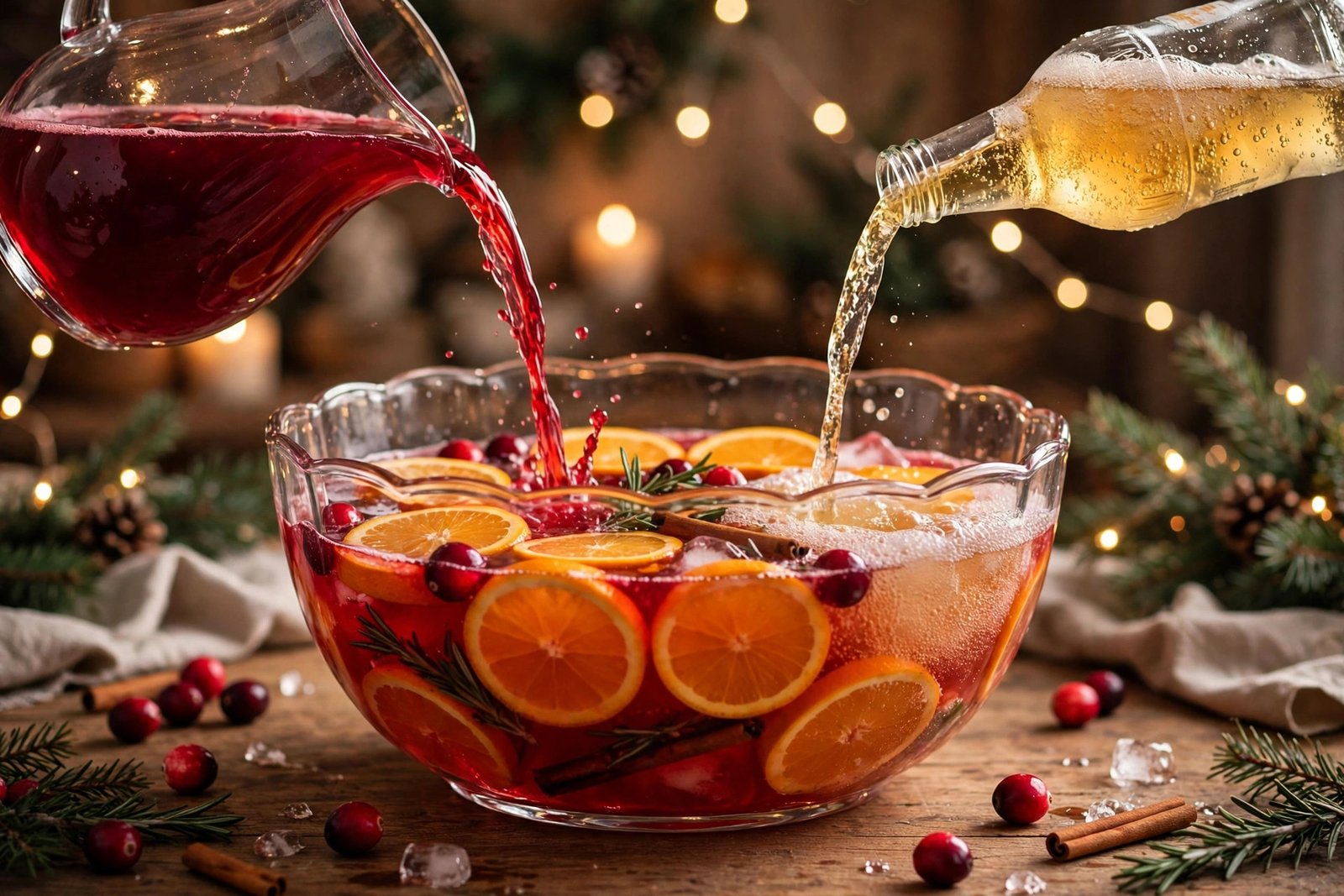
Ingredients (1 gallon, about 16 cups): 4 cups cranberry juice, 2 cups pineapple juice, 2 cups ginger ale, 1 cup orange juice, ½ cup cinnamon simple syrup (equal parts sugar and water simmered with 2 cinnamon sticks, then cooled), 1 orange sliced, 1 cup fresh cranberries, 2 cinnamon sticks, fresh rosemary sprigs for garnish.
Step 1 — Make the cinnamon syrup. Combine ½ cup of sugar and ½ cup of water in a small pan with 2 cinnamon sticks. Simmer for 5 minutes until the sugar dissolves, then leave it to cool completely. This can be made up to four days ahead and kept in the fridge.
Step 2 — Chill everything. Put the cranberry juice, pineapple juice and orange juice in the fridge the night before. A punch made with room-temperature juice will melt the ice ring in minutes and taste flat.
Step 3 — Combine the juices. Pour the cranberry, pineapple and orange juices into the punch bowl with the cooled cinnamon syrup. Stir gently. Add the orange slices and fresh cranberries — they float and make the bowl look like Christmas.
Step 4 — Add the fizz last. Just before guests arrive, pour in the ginger ale and give it one gentle stir. Adding it early is the most common punch mistake: the carbonation escapes and the drink goes flat.
Step 5 — Add the ice ring and serve. Float the ice ring in the bowl (see the ice-ring section below), set out a ladle and glasses, and let people help themselves. Garnish each glass with a rosemary sprig — it looks like a tiny pine branch and smells wonderful.
For another take on the same classic, Taste of Home’s Christmas punch recipes cover several good variations, and A Couple Cooks’ holiday punch is a reliable starting point.
Recipe 2: Champagne Christmas Punch
The champagne version is the same idea with more sparkle and less sweetness. It is the one to serve at a New Year’s Eve party or a drinks-only gathering where people are standing around with glasses in their hands.
Swap the ginger ale for a bottle of chilled prosecco or champagne, and cut the pineapple juice to 1 cup so the wine’s dryness comes through. Keep the cranberry juice at 4 cups and the cinnamon syrup at ½ cup, and add about ½ cup of orange liqueur if you like. Stir the juices and syrup together, then add the prosecco last, pouring it gently down the side of the bowl so it keeps its bubbles.
This version is lighter, drier and more elegant, and it disappears faster than the classic. Budget one bottle of prosecco per eight guests if it is the only drink, and keep a second bottle chilled as a backup. Serve it in champagne flutes or wine glasses — the narrower glass keeps the fizz alive longer.
Recipe 3: Mexican Ponche Navideño (Hot Christmas Punch)
Ponche navideño is Mexico’s traditional Christmas punch, and it is completely different from the cold cranberry version: hot, spiced, and full of soft cooked fruit that you eat with a spoon as you drink. It is served during Las Posadas, the nine nights of celebration from December 16 to 24, and it makes the whole house smell like Christmas. For the full traditional method, The Kitchn’s ponche navideño recipe is the clearest guide we found, and Abasto’s Mexican Christmas punch covers the ingredient swaps well.
The essential ingredients are guava, tejocote (a small Mexican hawthorn fruit, like a tart crab apple), sugarcane, piloncillo (unrefined cane sugar, sold in cones), cinnamon, tamarind and dried fruit — prunes and raisins. If you cannot find tejocote, use crab apples. If you cannot find piloncillo, use dark brown sugar.
Put 4 quarts of water in a large pot with 2 cinnamon sticks, 5 tamarind pods and 8 ounces of tejocotes. Bring to a boil, then simmer for about 10 minutes until the tejocotes are soft. Fish them out, peel them, halve them and remove the seeds, then return them to the pot. Add 6 guavas, 2 apples, 1 pear, 2 sugarcane sticks, prunes, raisins, an orange and the piloncillo, and simmer for at least 30 minutes — 40 minutes is better. Ladle it into mugs with chunks of fruit in each cup, and add a splash of rum, brandy or tequila per cup if you like. The spiked version is called ponche con piquete — punch with a sting.
Recipe 4: Zero-Proof Christmas Punch
Every party has people who are not drinking — designated drivers, pregnant guests, kids, and people who simply prefer it. A zero-proof punch that tastes like a treat, not an afterthought, keeps everyone included.
Use the classic recipe as the base — cranberry, pineapple and orange juice with cinnamon syrup — and replace the ginger ale with a good sparkling apple cider or a non-alcoholic sparkling wine. Add a splash of pomegranate juice for colour and depth, and float the same orange slices, cranberries and rosemary. The trick is to make it look identical to the alcoholic version: same bowl, same garnish, same ceremony.
If you are serving both versions at one party, label them clearly but quietly — a small card next to each bowl, or different coloured ladles. And always put the zero-proof bowl in the more prominent spot.
Which Version Should You Make?
| Version | Base | Alcohol | Prep time | Serves |
|---|---|---|---|---|
| Classic cranberry-ginger | Cranberry + pineapple juice, ginger ale | None (spike per glass) | 15 minutes | ~16 cups |
| Champagne | Cranberry juice, prosecco | Prosecco + optional liqueur | 15 minutes | ~16 cups |
| Mexican ponche | Water, guava, tejocote, piloncillo | Optional rum/brandy per cup | 1 hour | 12–15 mugs |
| Zero-proof | Cranberry + pineapple juice, sparkling cider | None | 15 minutes | ~16 cups |
If you can only make one version when you learn how to make Christmas punch, make the classic. It suits the widest range of guests, it is the quickest, and it is the easiest to spike or keep sober per glass. If you have time for a second bowl, add the ponche — the hot/cold contrast is what guests remember.
The Ice Ring That Keeps Punch Cold Without Watering It Down
Ice cubes are the enemy of a good punch: they melt fast, dilute the drink, and sink out of sight. An ice ring solves all three problems. It is a large block of ice that melts slowly, looks beautiful, and keeps the punch cold for hours.
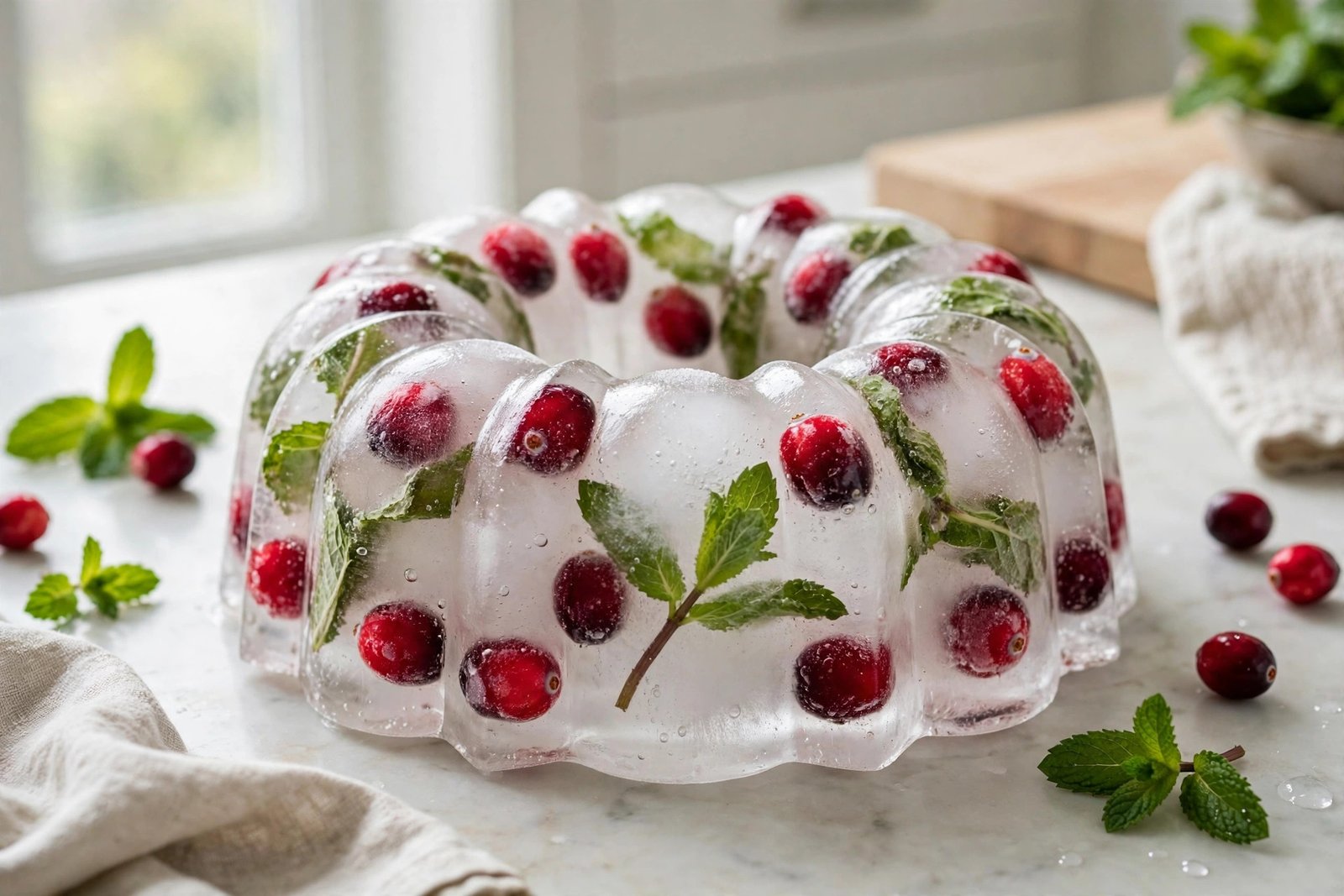
Arrange cranberries, orange slices and mint leaves in a Bundt pan, fill it with water, and freeze for at least 8 hours — overnight is better. To release it, dip the pan briefly in warm water and turn it out onto a plate. Float it in the punch bowl just before serving. As it melts, it releases the fruit into the punch, which looks even better an hour in than it did at the start.
Make the ring the day before the party, not the morning of — a half-frozen ring cracks and clouds the punch. Use filtered water if your tap water is hard: it freezes clearer, and the fruit shows through better. If you do not own a Bundt pan, a large mixing bowl or a loaf tin works too.
Make-Ahead Timeline
Christmas punch rewards a little planning. Almost everything can be done before the day, so the only job left when guests arrive is adding the fizz and the ice ring.
| When | What to do |
|---|---|
| 4 days before | Make the cinnamon syrup; refrigerate. Buy the juices and fruit. |
| Day before | Freeze the ice ring (8+ hours). Chill all juices overnight. |
| 30 minutes before | Combine juices + syrup in the bowl; add orange slices and cranberries. |
| Just before serving | Add ginger ale or prosecco; float the ice ring; set out glasses. |
Leftovers keep for up to four days in the fridge, covered — but only the juice base. Once the fizz is in, it goes flat within hours, so store any leftover base separately and add fresh ginger ale when you serve it again. The ponche keeps even better: refrigerate it and reheat gently on the stove.
How to Spike It (and How Not To)
The safest way to serve alcohol at a mixed-age party is to spike by the glass, not by the bowl. Keep the punch itself alcohol-free, and set out a bottle of rum, vodka or bourbon next to the bowl with a small measuring jigger. The standard ratio is 2 ounces of rum per 8-ounce cup of punch.
Spiking the whole bowl causes two problems. First, you cannot un-spike it when a teenager or a non-drinker wants a glass. Second, you lose control of the strength: a bowl that starts at a gentle 5% can end up much stronger after a well-meaning guest tops it up. For more on balancing a punch, Serious Eats’ cocktail guides explain dilution and balance better than anyone.
Dark rum is the classic choice for cranberry punch — its molasses notes suit the cinnamon. Vodka is the neutral choice if you want the fruit to shine. Bourbon works well in the champagne version, and tequila or brandy suits the ponche. Whatever you choose, use a decent bottle: cheap spirits taste cheap in a punch.
Serving, Scaling and Leftovers
One gallon serves about sixteen 8-ounce cups, which covers most parties. For a bigger crowd, double the recipe — but make it in two bowls rather than one giant one. A second bowl on a side table keeps the queue short and the punch cold.
Choose your punch bowl with care. A wide, shallow bowl looks better than a deep narrow one, because guests can see the fruit and the ice ring. Glass is best: the red of the cranberry juice is half the decoration. If you do not own a punch bowl, a large trifle bowl, a clean stockpot or even a big salad bowl will do — nobody has ever complained about the vessel when the punch tastes good.
Set out small glasses, not big ones. An 8-ounce cup is the right size: guests finish it while it is still cold and fizzy, then come back for more. Large glasses go warm and flat before they are empty. And put the ladle in the bowl, not next to it — a ladle on the tablecloth drips everywhere within minutes.
If you are building the full Christmas drinks table, our mulled wine is the hot counterpart to this punch, and our eggnog from scratch covers the creamy option. For the food side, see our guide to hosting Christmas dinner, and finish the evening with hot cocoa bombs.
Frequently Asked Questions
How far in advance can I make Christmas punch?
The juice base and cinnamon syrup can be made up to four days ahead and kept in the fridge. The ice ring needs at least 8 hours in the freezer, so make it the day before. Only add the fizzy element — ginger ale or prosecco — just before serving, or it will go flat.
Can I make Christmas punch without alcohol?
Yes — the classic and zero-proof recipes in this guide are alcohol-free by design, and they are the versions we recommend for mixed-age parties. If you want to know how to make Christmas punch without alcohol, start with the classic recipe and spike individual glasses with 2 ounces of rum per cup if guests want it.
Why did my punch go flat?
Almost always because the fizzy element went in too early, or the juices were not chilled. Add ginger ale or prosecco at the last minute, chill everything overnight first, and pour the fizz gently down the side of the bowl.
How long does leftover Christmas punch keep?
The juice base keeps up to four days refrigerated and covered. Once fizz is added it goes flat within hours, so store leftover base separately and add fresh ginger ale when you serve it again. Ponche reheats well on the stove.
What can I use instead of tejocote in ponche?
Crab apples are the closest substitute — small, tart and apple-like, just like tejocote. In a pinch, use a firm tart apple cut into chunks. The ponche will still be delicious; the tejocote is traditional, not essential.
Conclusion
Knowing how to make Christmas punch is really about one decision: cold and fizzy, or hot and spiced. The classic cranberry-ginger version covers most parties, the champagne version covers the glamorous ones, the ponche covers the cold nights, and the zero-proof version makes sure nobody is left out.

Make the syrup and the ice ring the day before, chill everything overnight, and add the fizz at the last minute. Do that, and the punch will take care of itself — which is exactly what a good party drink should do.



