
Stuffing vs Dressing: What’s the Real Difference (and Which Should You Make)?
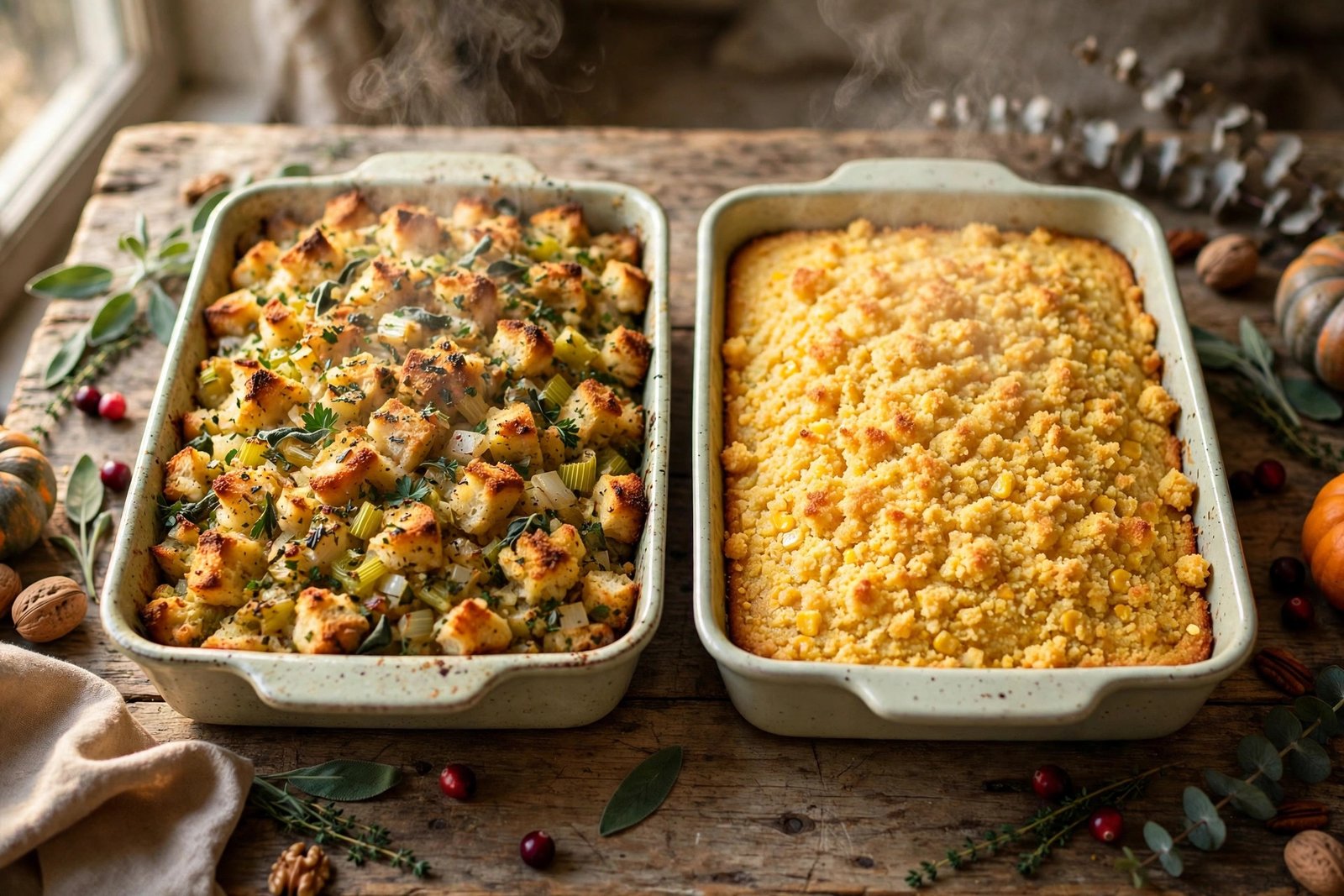
Every Thanksgiving, the same argument breaks out somewhere between the turkey carving and the pie: is it stuffing, or is it dressing? The answer matters more than most dinner-table debates, because the stuffing vs dressing question is really two questions at once — what you call it, and where you cook it. Get either one wrong and you can end up with a dish that is dry, unsafe, or simply not the one your family remembers.
Here is the short version. Stuffing is cooked inside the bird. Dressing is cooked in a separate dish. That is the whole technical difference, and it is the only one that food-safety experts care about. In this guide, we settle the stuffing vs dressing debate properly: the definitions, the regional map, the safety rules, full recipes for both, and an honest verdict on which one belongs on your table today.
Stuffing vs Dressing: The Short Answer
If you only remember one sentence from this article, make it this one: stuffing goes inside the turkey, dressing goes in a baking dish. The ingredients are often nearly identical — bread cubes, celery, onion, butter, broth, and sage — but the cooking location changes everything about the result.
When bread cubes are packed into the cavity of a roasting turkey, they soak up the bird’s juices as it cooks. The result is moist, rich, and deeply savory, with a soft, almost spoonable texture. The trade-off is control: the stuffing can only be as done as the turkey allows.
Dressing, baked on its own, is the opposite bargain. You control the moisture, the browning, and the timing completely. The top goes golden and crisp while the inside stays tender. You can make it a day ahead and reheat it without drama.
None of this means one is “correct” and the other is wrong. Plenty of families in the North call the dish in the casserole “stuffing” and have done so for generations, while plenty of Southern cooks would never dream of putting bread inside a bird.
Why Two Names for One Dish?
The double name is an accident of American history. In the nineteenth century, cookbooks called the dish stuffing, because that is what you did with it — you stuffed it into the bird. The word “dressing” was already in use for sauces and for preparing meat, and by the early twentieth century it had attached itself to the same mixture cooked outside the bird.
The divide roughly follows the Mason-Dixon line. The Northeast and Midwest tend to say stuffing, even when the dish never sees the inside of a turkey. The South says dressing, almost without exception. The West is a mix, and it often follows wherever the cook’s family came from.
The Regional Map: Who Calls It What
Region shapes more than the name. It shapes the bread, the seasoning, and the texture people expect. A Southern cook reaching for cornbread is making dressing the way her grandmother did. A New England cook reaching for a crusty white loaf is doing the same thing in a different dialect.
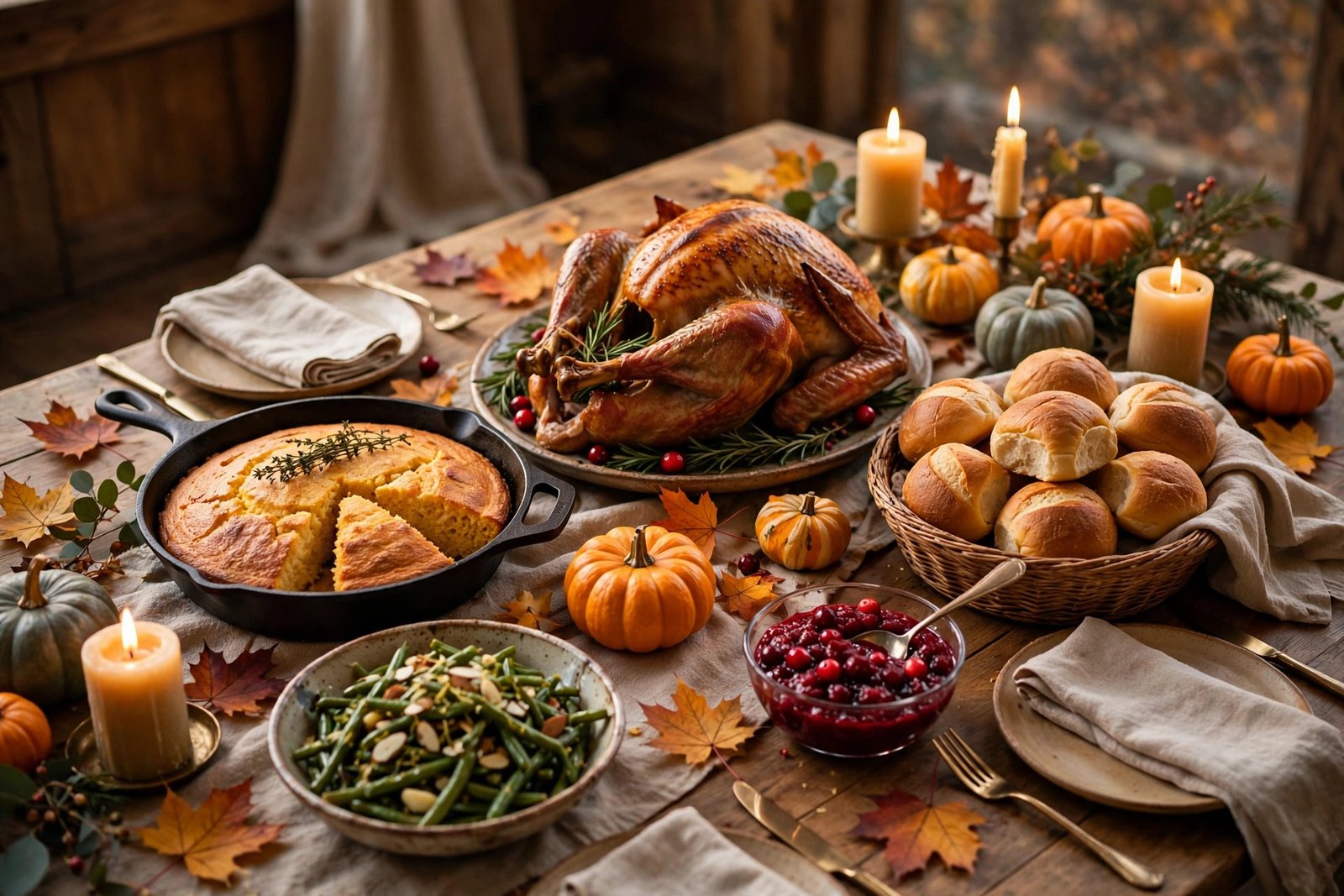
The table below is a general guide, not a law. Families move, recipes travel, and plenty of Southern tables now serve a white-bread version while plenty of Northern tables have adopted cornbread.
| Region | Usual name | Usual bread | Typical style |
|---|---|---|---|
| South | Dressing | Cornbread | Moist, spoonable, baked in a dish, often with sausage |
| Northeast | Stuffing | White or sourdough | Herb-forward, often with chestnuts or apples |
| Midwest | Stuffing | White bread, sometimes wild rice | Buttery, sage-heavy, baked or in-bird |
| West Coast | Mixed | Sourdough or cornbread | Varies by family origin; sourdough is common |
| Mid-Atlantic | Stuffing | White bread | Oyster stuffing is a classic coastal variation |
The cornbread divide is the most visible regional marker. Cornbread dressing is crumbly and tender, and it drinks up broth in a way that sliced white bread does not. White-bread stuffing holds its cube shape better, giving a chewier bite. If you want to explore how the regions differ, regional stuffing traditions vary even more than the names suggest — oyster stuffing on the Chesapeake, sausage in the Midwest, apples and chestnuts in New England.
The Safety Question: What the USDA Actually Says
This is the part of the debate that is not a matter of opinion. The U.S. Department of Agriculture recommends cooking stuffing separately from the turkey. Its reasoning is straightforward: stuffing inside a bird is an excellent place for bacteria to grow, and it is hard to heat the center of a packed cavity evenly. If you do stuff the bird, the center of the stuffing must reach 165°F, the same safe minimum as the turkey itself.
The risk is real because of how heat moves. A turkey cooks from the outside in, and the cavity is the last place to heat up. Even when the thigh reads 165°F, the stuffing in the middle can lag behind — and the warm, moist environment inside a bird is exactly where bacteria multiply fastest.
Stuffing inside the bird also changes the turkey’s cooking time. A stuffed bird needs roughly 15 to 30 minutes longer in the oven than an unstuffed bird of the same weight, because the dense filling slows heat transfer. Food-safety specialists at the USDA explain how to cook turkey stuffing safely, and their first recommendation is the separate dish. If you are learning how to cook a turkey for a crowd, keeping the stuffing out of the bird removes one of the biggest timing variables from the day.
If you do choose to stuff the bird, the rules are non-negotiable. Mix wet and dry ingredients at the last moment, spoon the mixture in loosely — about three-quarters of a cup per pound of turkey — just before the bird goes into an oven set to at least 325°F. Never stuff a turkey the night before, and never refrigerate uncooked stuffing. Let the turkey stand 20 minutes after roasting and check the stuffing’s center with a thermometer before removing it.
Dressing sidesteps all of this. Baked in a dish, it heats evenly, and a thermometer reading is easy to take from any part of the pan. You can prepare it the day before, refrigerate it, and bake it while the turkey rests.
Taste and Texture: What Each Version Does Best
Put the safety question aside and the honest truth is that in-bird stuffing tastes wonderful. The bread absorbs turkey drippings, onion, and sage as the bird roasts, and no amount of added broth quite reproduces that flavor. The texture is soft and yielding, almost like a savory bread pudding.
Dressing answers with texture. Because it bakes in a shallow dish, the top layer crisps and browns while the middle stays moist — a contrast in-bird stuffing can never deliver, because the inside of a turkey is a steamy, enclosed space. Dressing also needs more attention with broth: too little and it dries out, too much and it turns to mush. Add broth a little at a time until the mixture is damp but not soggy, cover the dish with foil for the first half of baking, then uncover it to crisp the top.
Classic Bread Stuffing (Cooked in a Dish)
This is the version to make if you want the flavor of traditional stuffing with the safety and convenience of dressing. If you want to make stuffing from scratch, this is the recipe to start with.
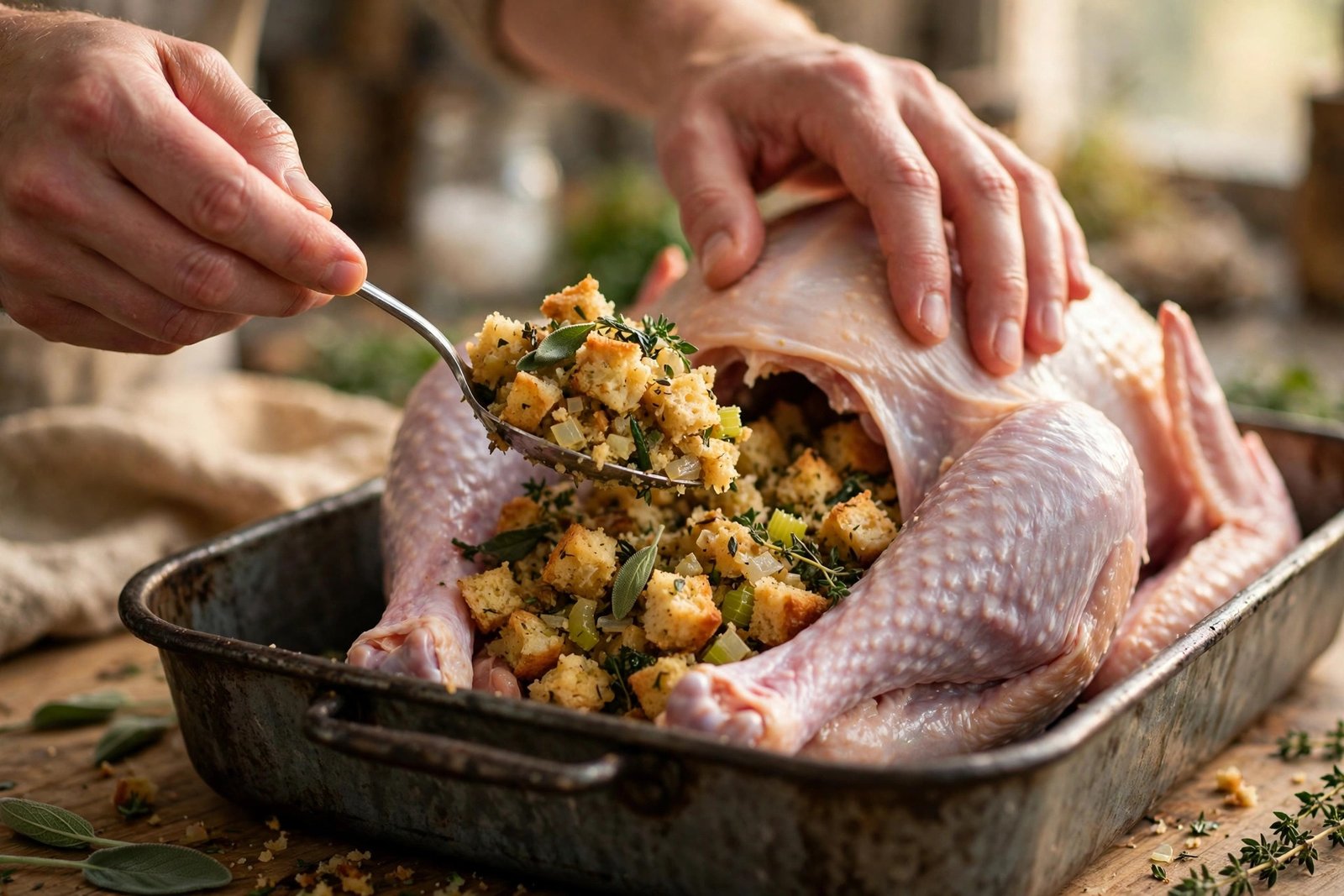
Ingredients (serves 8–10): 1 large loaf of day-old white bread, cut into 1-inch cubes (about 10 cups); 1 stick (8 tablespoons) unsalted butter; 2 medium onions, diced; 4 celery stalks, diced; 2 cloves garlic, minced; 2 tablespoons fresh sage, chopped (or 2 teaspoons dried); 1 tablespoon fresh thyme leaves; 3 to 4 cups low-sodium chicken or turkey broth; 2 large eggs, beaten; salt and black pepper to taste.
Method: Dry the bread cubes first — spread them on a baking sheet and leave them out overnight, or bake at 250°F for 20 minutes. Melt the butter in a large skillet, cook the onion and celery until soft, about 8 minutes, then add the garlic, sage, and thyme for one more minute. Combine the bread, vegetables, and eggs in a large bowl, adding broth a cup at a time until the mixture is moist but not soggy. Season, transfer to a buttered 9×13-inch dish, cover with foil, and bake at 350°F for 30 minutes. Uncover and bake 15 more minutes until the top is golden.
The make-ahead trick: assemble the whole dish the day before, cover it tightly, and refrigerate. Add a splash of extra broth before baking, since the bread will absorb moisture overnight. That single step takes an hour of stress out of Thanksgiving morning.
Southern Cornbread Dressing (The Classic Dressing)
Real Southern cornbread dressing starts with cornbread, not a loaf. The cornbread is baked a day ahead, crumbled, and mixed with broth until it reaches a thick, spoonable consistency. The result is tender all the way through, with a crisp top.
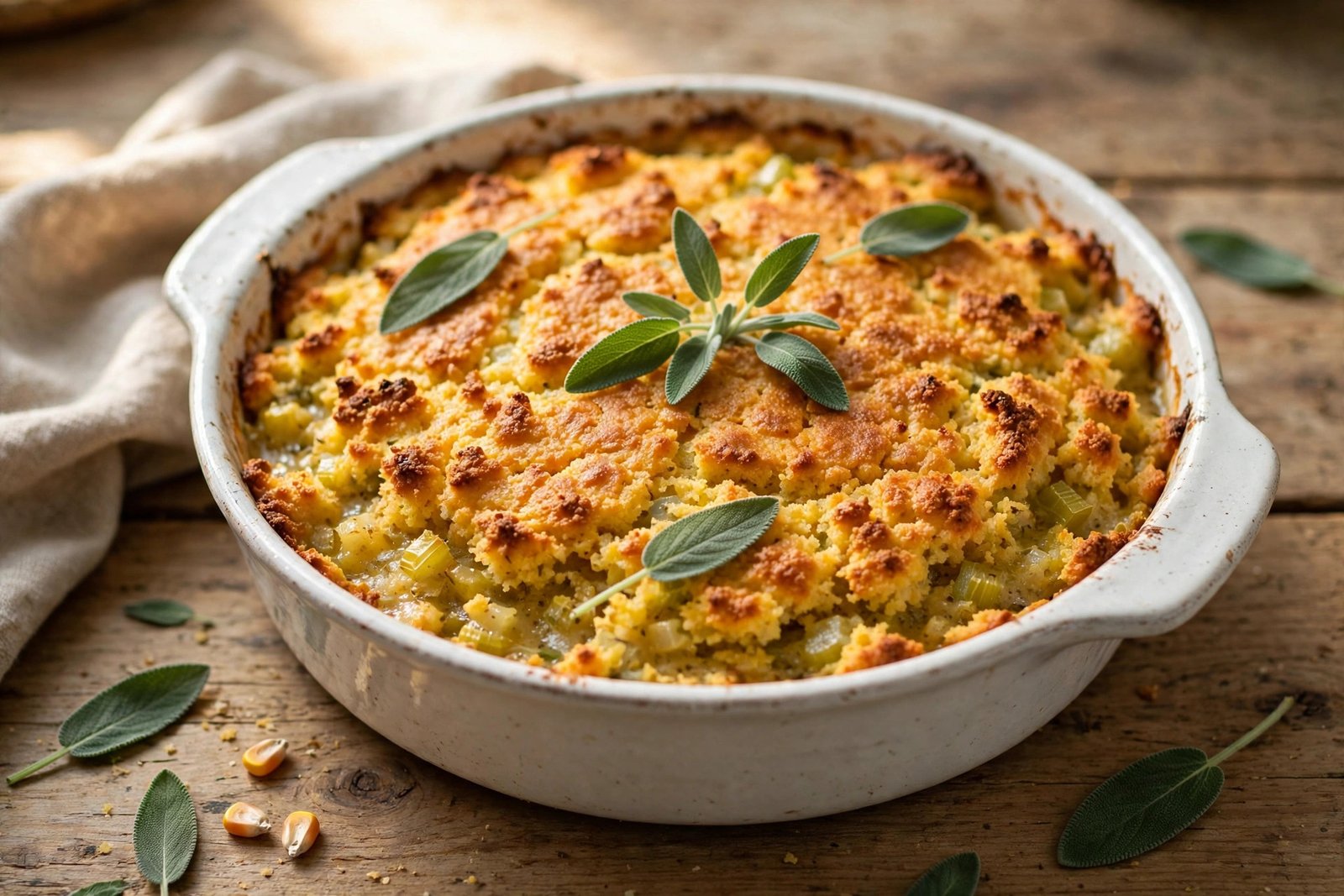
Ingredients (serves 8–10): 1 pan of unsweetened cornbread (about 8 cups crumbled); 2 cups crumbled day-old biscuits or white bread; 1 stick butter; 1 large onion, diced; 3 celery stalks, diced; 2 hard-boiled eggs, chopped; 4 cups turkey or chicken broth; 1 teaspoon poultry seasoning; 1 teaspoon dried sage; salt and black pepper.
Method: Crumble the cornbread and biscuits into a large bowl — the pieces should be coarse, not fine crumbs. Cook the onion and celery in the butter until soft, then add the vegetables, eggs, and seasonings to the bowl. Pour in the broth gradually, stirring, until the mixture is wet and spoonable — wetter than you think it should be. Pour into a buttered 9×13-inch dish and bake at 375°F for 35 to 45 minutes, until the top is deeply golden. Let it rest 10 minutes before serving.
Two things make or break this recipe. First, the cornbread must be unsweetened — sweet cornbread turns the dressing into dessert. Second, do not skimp on the broth. Cornbread dressing that looks too wet going into the oven comes out right; cornbread dressing that looks right going in comes out dry.
Stuffing vs Dressing, Head to Head
Side by side, the differences are easy to see. This table settles the stuffing vs dressing comparison at a glance.
| Stuffing (in the bird) | Dressing (in a dish) | |
|---|---|---|
| Where it cooks | Inside the turkey cavity | Separate baking dish |
| Typical bread | White, sourdough, or whole wheat | Cornbread in the South; any bread elsewhere |
| Texture | Soft, moist, uniform | Crisp golden top, tender center |
| Flavor | Rich with turkey drippings | Cleaner, more control over seasoning |
| Safety | Riskier; center must reach 165°F | Safer; USDA-recommended method |
| Make-ahead | No — must go in just before roasting | Yes — assemble a day ahead |
| Effect on turkey | Adds 15–30 minutes to cook time | None — turkey cooks faster |
| Best for | Small gatherings, tradition-first cooks | Large crowds, first-time hosts, busy kitchens |
Quantity matters too. A turkey cavity holds only about three-quarters of a cup of stuffing per pound of bird, while a 9×13-inch dish of dressing can be doubled without a second turkey.
Which Should You Make? The Honest Verdict
For most cooks, most years, dressing wins. It is safer, easier to time, simpler to make ahead, and it produces the crisp-topped texture that in-bird stuffing cannot match. The USDA recommends it, and every professional chef who cooks Thanksgiving for a crowd will tell you the same thing.
But there is a real case for stuffing in the bird, and it is not only nostalgia. If your gathering is small, if your turkey is modest, if you own a good instant-read thermometer and you are willing to use it, the flavor of stuffing cooked in the bird is genuinely special. Just follow the USDA rules exactly — stuff loosely, just before roasting, oven at 325°F or higher, center of the stuffing to 165°F — and accept the extra cooking time.
Whatever you choose, pair it well. If you are deciding between the two main dishes, our Christmas ham vs turkey comparison covers the same kind of trade-off. And if you are cooking a smaller bird this year, our guide to how to roast a turkey breast keeps the same flavors with far less fuss. For more inspiration, browse classic stuffing recipes and bread stuffing techniques.
Frequently Asked Questions
Is it called stuffing or dressing?
Both names are correct, and the choice is regional. In general, stuffing is the mixture cooked inside the bird, and dressing is the same mixture cooked in a separate dish. In the South, the dish is almost always called dressing and is usually cornbread-based. In the North and Midwest, it is usually called stuffing even when baked in a dish.
Can I make dressing the day before Thanksgiving?
Yes. Assemble the dressing completely, cover it tightly, and refrigerate it for up to 24 hours. Add a splash of broth before baking, and add 5 to 10 minutes to the baking time if it goes into the oven cold.
How much stuffing do I need per person?
Plan on about three-quarters of a cup per person as a side dish. A 9×13-inch dish holds roughly 10 to 12 cups, which serves 10 to 12 people. A turkey cavity holds about three-quarters of a cup per pound of bird.
What temperature does stuffing need to reach?
165°F, measured at the center of the stuffing with a food thermometer. This applies whether the stuffing is inside the bird or in a dish. If the stuffing is in the bird, the turkey must also reach 165°F in the thigh, and the stuffing should stay in the bird until it reaches temperature.
Can I freeze leftover stuffing or dressing?
Yes. Cool it quickly, pack it into shallow airtight containers, and freeze for up to a month for the best quality. Thaw overnight in the refrigerator and reheat to 165°F. Do not stuff a turkey with leftover cooked stuffing.
Why is my dressing dry?
Almost always, not enough broth — or the dish baked uncovered for too long. Add broth until the mixture is visibly moist before baking, cover with foil for the first half of the bake, and uncover only for the final 15 minutes to crisp the top.
Conclusion
The stuffing vs dressing debate will never truly end, because it was never really about the cooking method. It is about which kitchen you grew up in and which texture tastes like Thanksgiving to you.
But on the practical questions, the answers are clear. Dressing, baked in a dish, is the safer, easier, more flexible choice for most tables, and the USDA recommends it for good reason. In-bird stuffing is delicious and traditional, and it is perfectly fine to make — provided you follow the temperature rules exactly. If you cannot decide, make both. Happy Thanksgiving — and may your top be golden, your center be moist, and your thermometer read 165.



