
Candle vs Diffuser: Which One Wins on Scent, Safety, and Cost?

Walk into any home-goods shop and you will see the same fork in the road: a wall of scented candles on one side, a shelf of diffusers on the other. The candle vs diffuser question sounds simple — which one makes your home smell better? — but the honest answer depends on your room, your budget, and whether you have kids or pets.
Candles win on atmosphere and instant impact; diffusers win on safety, control, and cost over time. And “diffuser” is not one product — it is three very different machines hiding under one word.
This guide compares them properly: how each works, how fast the scent travels, what the safety data says, and what each costs per month. For scent without lighting anything, see our guide to make your home smell good naturally.
Candle vs Diffuser at a Glance
If you only have thirty seconds, here is the whole comparison in one table.
| Scented candle | Reed diffuser | Ultrasonic diffuser | Nebulizing diffuser | |
|---|---|---|---|---|
| Flame | Open flame | None | None | None |
| Scent strength | Strong once lit | Subtle, steady | Adjustable, light to medium | Strongest of all |
| Coverage | One room | Roughly 100–200 sq ft | Roughly 200–400 sq ft | 400–1,000 sq ft |
| Lifespan | 40–60 hours per jar | 3–6 months per fill | Device lasts years; oil per session | Device lasts years; oil used fast |
| Cost per month | ~$20–30 | ~$5–15 | ~$3–5 (plus device) | ~$15–25 (plus device) |
| Upkeep | Trim wick, mind the flame | Flip reeds weekly | Refill water, clean tank weekly | Clean glass reservoir, timer use |
| Best for | Evenings, baths, dinner parties | Bathrooms, hallways, guest rooms | Bedrooms, offices, small rooms | Large rooms, scent lovers |
A candle is a mood product for an evening; a reed diffuser is background scent you forget for months; the electric diffusers are tools you control session by session.
How a Scented Candle Actually Works
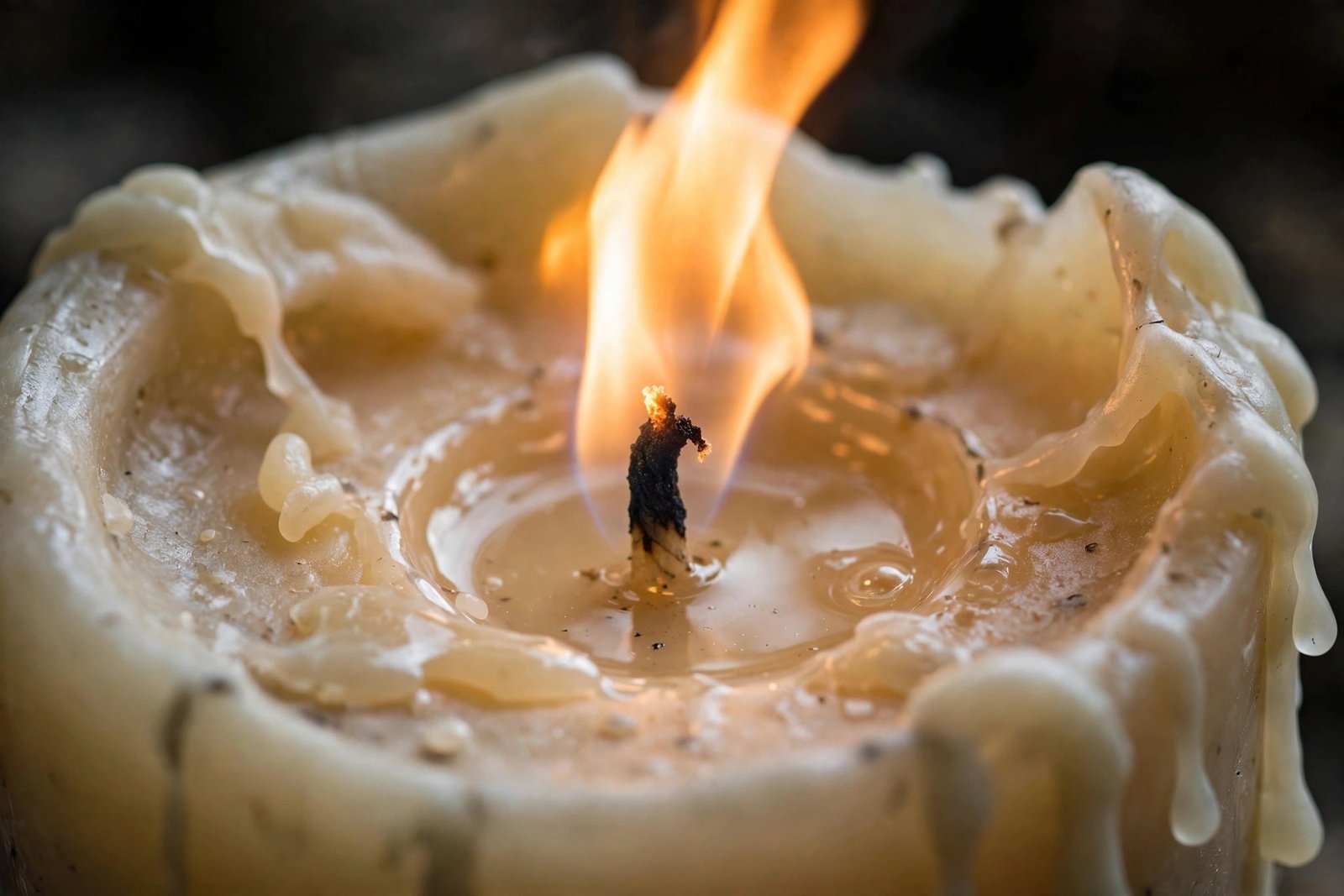
A candle is the oldest home-fragrance technology we have. The flame melts the wax, the melted wax releases the fragrance oil suspended in it, and warm air carries the scent around the room. That is why a candle needs time: until the wax pool spreads edge to edge, the throw stays weak. Give a jar candle fifteen to thirty minutes and the whole room notices; light it five minutes before guests arrive and nobody will.
What is inside the jar matters. Most scented candles carry roughly 6–10% fragrance oil by weight of wax, at least for soy wax, the common baseline in candle-making guides. More oil means a stronger throw but a faster burn and more soot, so good makers balance the two.
Burn time is where candles lose the value argument. A typical mid-size jar burns for roughly 40–60 hours, so at three hours an evening you are through it in two to three weeks. Fine as a treat; expensive as everyday scent.
Then there is the mess: wax drips, soot marks, and the occasional disaster on soft furnishings. If that happens, here is how to remove candle wax from carpet before it sets. A candle is a small open fire: wonderful while watched, unforgiving when ignored.
The Three Diffuser Types, Explained
Ask for a diffuser and you could walk out with any of three machines. They share a name and almost nothing else — pick the type first, the brand second.
Reed diffusers: the set-and-forget option
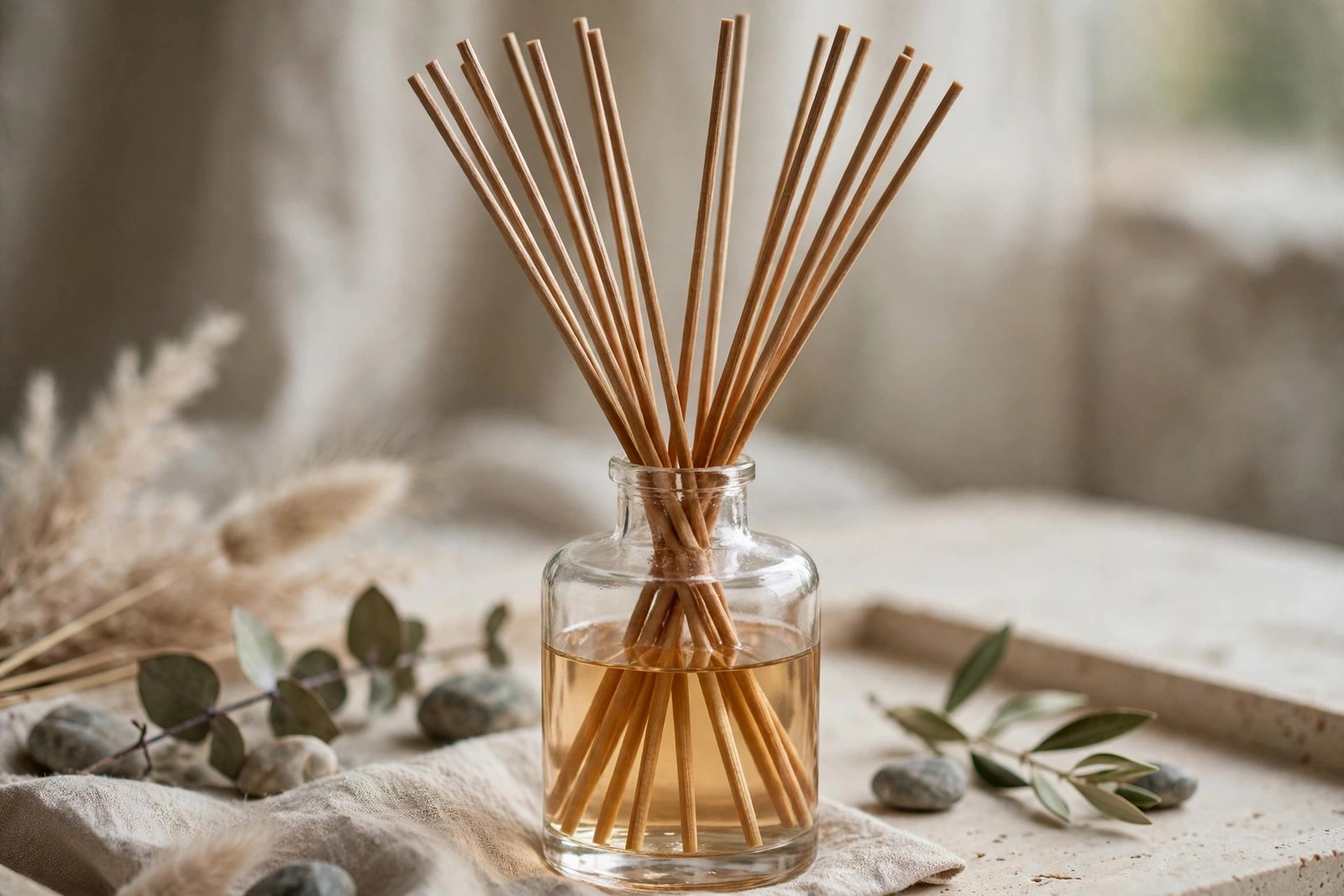
A reed diffuser is a bottle of fragrance oil with rattan sticks standing in it. The reeds draw the oil up by capillary action, and the scent evaporates off the exposed sticks. No flame, no electricity, no noise — set it down and forget about it for months.
A typical 4-oz reed diffuser lasts around four months, with most brands quoting three to six months depending on reed count and airflow. More reeds mean a stronger scent and a shorter life. Flip the reeds weekly, and replace them when you refill — old reeds clog and the throw fades.
The trade-off is strength: roughly 100–200 sq ft, a bathroom or small bedroom, and it will not fill an open-plan living room. It cannot be paused, so it keeps working while you are on holiday. And the oil stains wood, so keep the bottle on a tray, away from table edges and cats with tails.
Ultrasonic diffusers: the everyday all-rounder
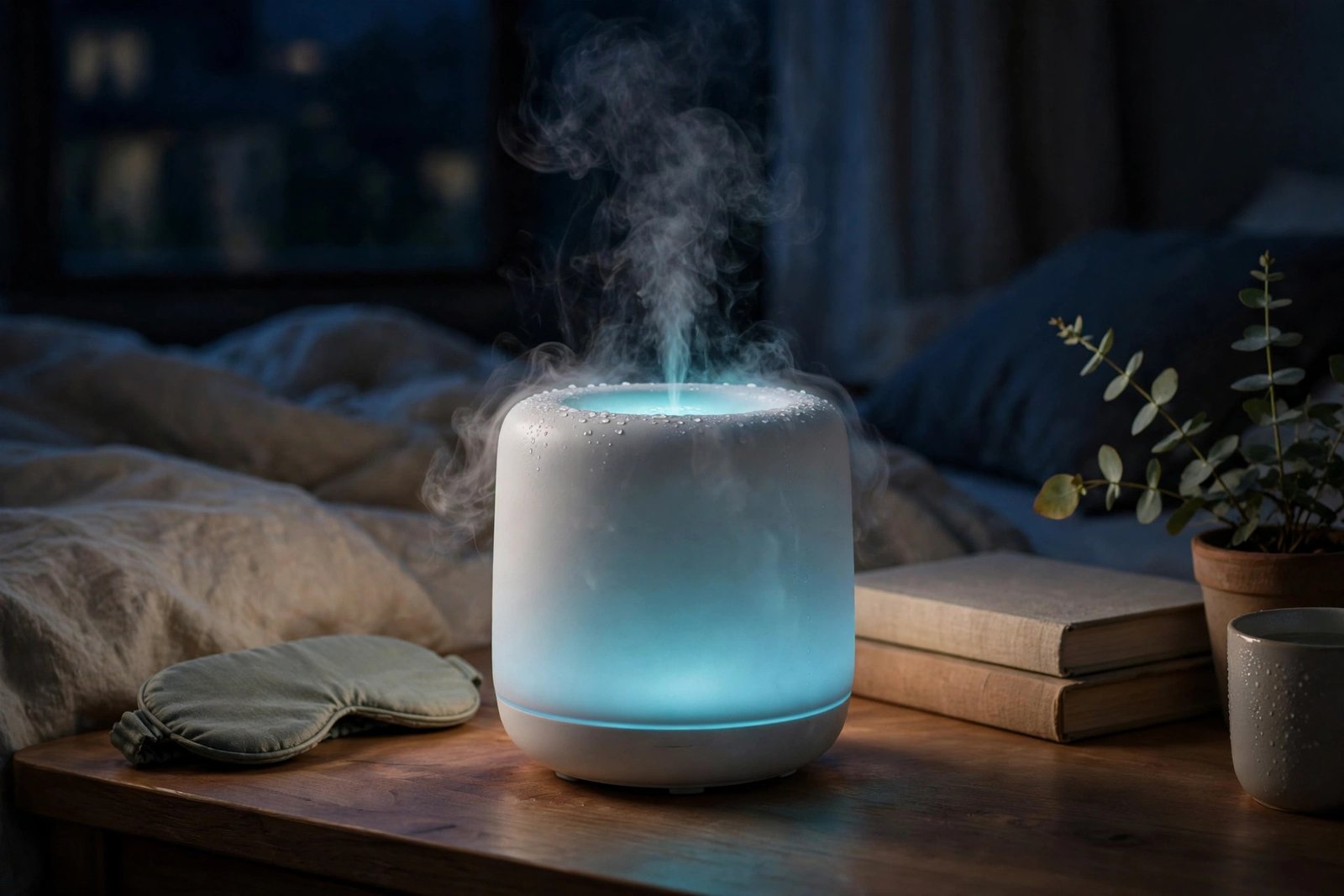
An ultrasonic diffuser is a small water tank with a vibrating plate. Add water and a few drops of oil, and the plate shakes the mixture into a cool, fine mist. You control the strength with the drops: 3–5 for a small room, 5–8 for a medium one, according to Gya Labs’ essential oil diffuser vs candle guide.
It is the fastest option: the mist is usually noticeable within about five minutes, where a candle needs fifteen to thirty minutes to build a melt pool. It is also the most flexible — change the oil and you change the scent — and most units have timers and a soft bedroom light.
The price is maintenance: refill the tank every few hours of use and clean it weekly, or the water goes stale. Use distilled water if yours is hard. It also adds a little moisture to the air — welcome in a dry winter bedroom, but it is not a humidifier, so read our air purifier vs humidifier comparison or Aromify’s diffuser vs humidifier explainer first.
Nebulizing diffusers: the purist’s choice
A nebulizing diffuser uses pressurized air to turn pure, undiluted essential oil into a fine dry mist — no water, no heat. The scent is the strongest of any diffuser type, and it can fill an open-plan space of 400–1,000 sq ft.
That strength has two costs: it drinks oil, and the little air pump hums. Use it on a timer — short bursts through the day — and both the oil bill and the noise stay under control.
It is the right pick if you want the room to smell like the oil bottle, not a watered-down version. For most households it is overkill; an ultrasonic unit does the job more cheaply.
Scent Strength and Coverage: Who Fills a Room Faster?
Speed is where the formats separate. An ultrasonic diffuser starts working in minutes, a nebulizing diffuser faster still, and a candle needs its warm-up time. A reed diffuser never really “starts” — it is always on, always faint, and you notice it most when you walk back into the room.
In the candle vs diffuser contest, speed matters less than reach. A candle’s throw is strong but local: one room, maybe a doorway. A reed diffuser is honest about its limits at roughly 100–200 sq ft, an ultrasonic unit covers 200–400 sq ft, a nebulizing unit stretches to 400–1,000 sq ft and beyond.
Safety: Flame, Soot, and the December Problem
Here is where the comparison stops being a matter of taste. U.S. fire departments respond to an average of roughly 7,600 home fires started by candles each year, according to the NFPA’s home candle fire report — about 21 fires a day. In three of every five candle fires, the candle was too close to something that could catch fire.
That is the sharpest edge in the candle vs diffuser safety comparison, and the fix is simple: keep candles at least 12 inches from anything that can burn, never leave one burning in an empty room, and blow it out before bed.
December makes it worse. Candle fires peak in December, which accounts for about 12% of the year’s total, and Christmas Day sees roughly two and a half times the daily average. More candles, more decorations, more distraction. If you buy one thing for the holidays, make it flameless candles for the rooms you cannot watch — or switch those rooms to diffusers.
Then there is the air itself. The EPA’s 2001 review of candles and incense found that soot output varies enormously between candles — one type can produce as much as 100 times more soot than another. That is a literature review, not a health ruling, but it explains the black film some candle lovers find on walls and ceilings. The same report flagged lead-core wicks; they were banned in the U.S. in 2003, so check the label on old stock or imports. Read the EPA’s 2001 review of candles and incense for the detail.
Diffusers are not risk-free, only differently risky. A reed diffuser cannot start a fire, but its oil is concentrated and stains anything it touches. An ultrasonic diffuser is safe in a bedroom, but a dirty tank breeds bacteria. None of these risks is dramatic, and none involves an open flame.
What It Costs Per Month
Sticker prices lie. A $25 candle looks cheaper than a $40 diffuser until you count how often you replace it. The honest comparison is cost per month, so here is a worked example with typical high-street and online prices — not quotes for a specific brand.
| Option | Typical upfront cost | Typical consumable | Assumed use | Cost per month |
|---|---|---|---|---|
| Scented candle | $20–30 per jar | A new jar every 2–3 weeks | 3 hours a night, most nights | ~$20–30 |
| Reed diffuser | $20–50 per bottle | Refill every 3–6 months | Always on | ~$5–15 |
| Ultrasonic diffuser | $25–40 device | Essential oil, a few drops a session | 1–2 hours a day | ~$3–5 |
| Nebulizing diffuser | $60–120+ device | Pure oil, used undiluted | Timed bursts daily | ~$15–25 |
The math is simple. A mid-size candle burns for roughly 40–60 hours, so at three hours a night you finish a jar in two to three weeks — about one and a half jars a month. A reed diffuser costs a few dollars a month once bought, because one fill works around the clock for three to six months. An ultrasonic diffuser is cheapest to run, since a $10 bottle of essential oil lasts for months at a few drops a session.
The candle vs diffuser cost question therefore has two answers. Over a single month, the candle looks affordable. Over a year, the diffuser wins by a wide margin — unless you count atmosphere as part of the value, in which case the candle was never competing on price.
Pets, Kids, and Sensitive Noses
If a cat, a dog, or a small child shares your home, the choice gets narrower. Cats are the special case: their livers lack some of the enzymes that break down the compounds in many essential oils, so tea tree, eucalyptus, peppermint, cinnamon, citrus, wintergreen, and pine can build up to harmful levels. Birds are sensitive too — their respiratory systems are delicate. Dogs cope better, but a level you barely notice can overwhelm a nose far more sensitive than yours.
The candle vs diffuser question gets more complicated here, because neither side is automatically safe. A candle adds soot and a flame a cat can knock over, so never burn one unsupervised where a pet can reach it. A diffuser adds continuous airborne oil, so keep it in a ventilated room the animal can leave, use fewer reeds or drops than suggested, and skip the flagged oils around cats and birds.
For children, the same logic applies: flameless options remove the burn and fire risk, and a reed diffuser on a high shelf beats a candle on a low table. This is general guidance, not veterinary or medical advice — if a pet or child shows symptoms around a fragrance product, stop using it and ask your vet or doctor.
Which One Should You Buy?
Buy the format that fits the room and the routine. A bathroom or hallway wants a reed diffuser: silent, always on, no flame, no outlet. A bedroom wants an ultrasonic diffuser: fast, adjustable, safe for an hour before sleep. A large living room wants a big candle, or a nebulizing diffuser for the far sofa.
And a dinner party wants a candle, full stop. No diffuser reproduces the light of a flame across a table. Scent is only half of what a candle sells; the other half is the glow — which is why a beautiful candle is one of the easiest gifts for mom.
Most homes end up with a mix: a reed diffuser in the bathroom, an ultrasonic diffuser by the bed, a candle for evenings in the room.
Frequently Asked Questions
Are diffusers safer than candles?
Yes, in the ways that matter most. Diffusers have no flame, so they cannot start a fire, and U.S. fire data attributes roughly 7,600 home fires a year to candles. Diffusers carry smaller risks — concentrated oil, dirty tanks, strong scent — but none burns your house down.
Do diffusers make a room smell as strong as a candle?
A nebulizing diffuser can match or beat a candle for strength. An ultrasonic diffuser comes close for an hour, then fades when the session ends. A reed diffuser never matches a candle’s peak strength; it trades intensity for a constant low background. Light a candle for guests; use a diffuser for all-day scent.
How long does a reed diffuser last?
A typical 4-oz reed diffuser lasts around four months, with most brands quoting three to six months depending on reed count and airflow. Flip the reeds weekly, and replace them when you refill — old reeds clog.
Can I use a diffuser around cats and dogs?
Use one with care. Avoid tea tree, eucalyptus, peppermint, cinnamon, citrus, wintergreen, and pine oils around cats, keep the room ventilated, and make sure your pet can leave. A low-strength reed diffuser is the gentlest option; a nebulizing diffuser in a closed room needs the most care.
Is a diffuser cheaper than candles in the long run?
Yes. A reed diffuser costs roughly $5–15 a month and an ultrasonic diffuser roughly $3–5 a month in consumables, against roughly $20–30 a month for a candle burned most evenings. The device pays for itself in months; after that, only oil.
Why do candles cause so much soot?
Soot comes from incomplete combustion, and the EPA’s 2001 review found one candle type can produce as much as 100 times more soot than another. Long wicks, draughts, and too much fragrance oil make it worse — trim the wick to a quarter of an inch before each burn and keep the candle out of draughts.
Conclusion
So which one wins? The candle vs diffuser debate has no single winner, because the two products are not fighting over the same job. A candle is the best thing in the house for an evening you want to feel special — the light, the scent, the struck match. A diffuser is the best thing for every other hour of the week: cheaper, safer, always on, and adjustable to the room.
Buy a reed diffuser for the bathroom and keep your candles for the living room after dark. You will spend less, worry less, and your home will smell good far more of the time.



