
Gas Fireplace vs Electric Fireplace: Which One Should You Buy in 2026?
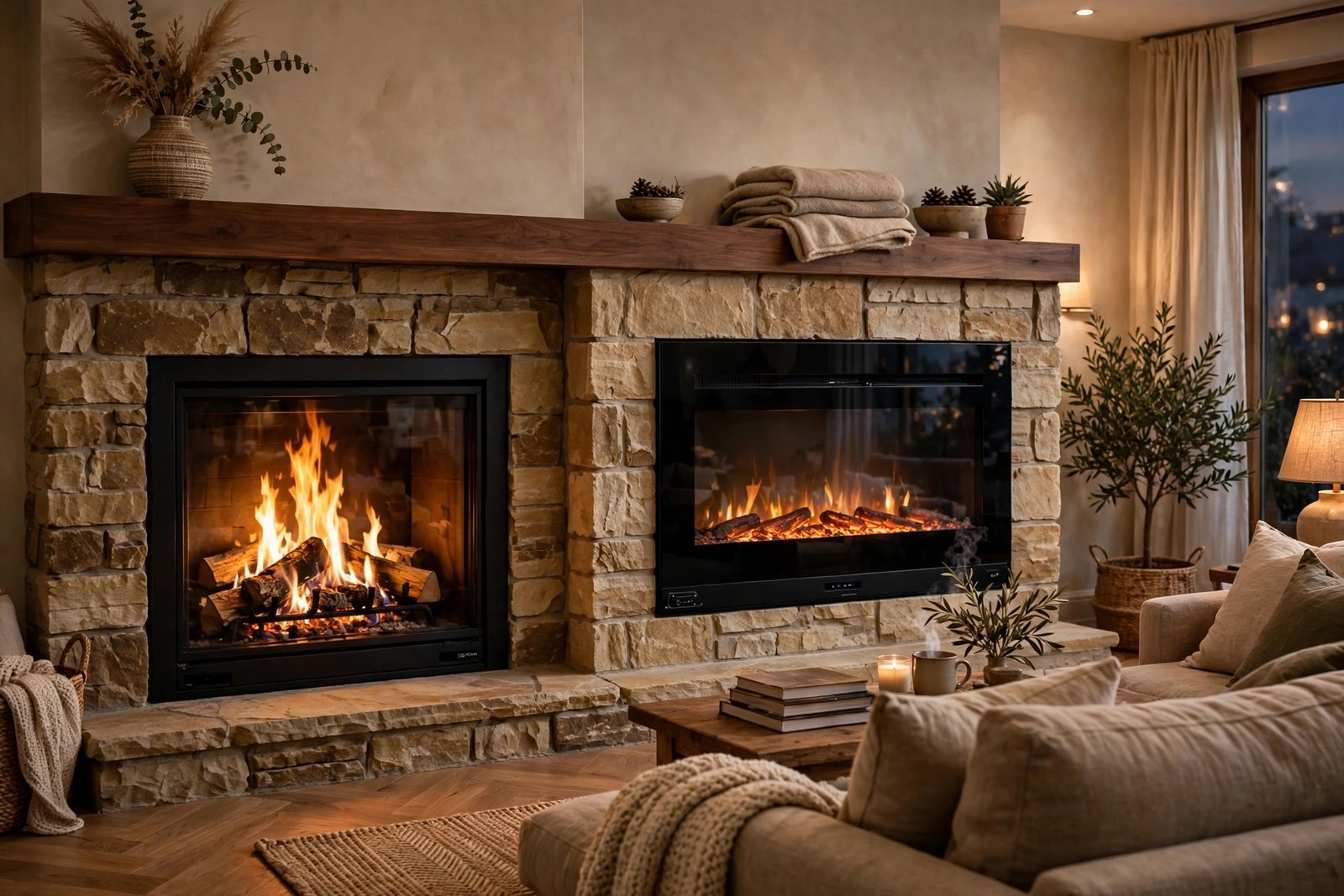
Last January, my neighbor spent a weekend pricing fireplaces. She wanted heat she could feel, not just a pretty glow. The gas showroom quoted one number, the electric aisle another, and by Sunday she was more confused than when she started. If that sounds familiar, this guide is for you.
The gas fireplace vs electric fireplace decision is not really about which one looks better. It is about how much heat you need, what your house already has, what you are willing to spend up front, and whether you want warmth when the power goes out. Get those four answers right and the choice mostly makes itself.
Here is the short version. Gas fireplaces burn real fuel and throw real heat — typically 20,000 to 40,000 BTU per hour — enough to warm a large living room. Electric fireplaces top out around 5,000 BTU, enough for a bedroom and not much more. Gas costs more to install and needs a professional, a gas line, and venting. Electric plugs into a standard outlet and can be running tonight.
Gas Fireplace vs Electric Fireplace at a Glance
Before the detail, here is the head-to-head comparison. If you only read one part of this article, read this table.
| Factor | Gas Fireplace | Electric Fireplace |
|---|---|---|
| Heat output | 20,000–40,000 BTU/hr (large room) | Up to ~5,000 BTU/hr (up to ~400 sq ft) |
| Efficiency | Direct-vent 70–85%; vent-free 92–99% | ~100% of electricity converted to heat at point of use |
| Install cost | $1,500–$4,000 basic insert/simple install; $3,000–$7,000+ full direct-vent build | $200–$2,500 for most units; often DIY |
| Running cost | Varies with gas prices; usually cheaper per unit of heat | ~$0.20/hr at full power ($0.13/kWh); flame-only mode costs pennies |
| Maintenance | Annual professional service | Almost none; occasional dusting |
| Lifespan | 15–25 years with regular service | 10–20 years |
| Power outage | Works (millivolt and battery-ignition models) | Does not work |
| Best for | Real heating, large rooms, cold climates, outages | Renters, apartments, bedrooms, easy ambiance |
That table is the shape of the answer. The rest of this guide fills in the numbers behind it.
How Much Heat Do You Actually Get?
In the gas fireplace vs electric fireplace comparison, heat output is where the gap is widest — and it is the single most important difference between the two.
A typical residential gas fireplace is rated at 20,000 to 40,000 BTU per hour of heat input. What matters is the output — the heat that actually reaches you. A direct-vent model at 70–85% efficiency turns a 30,000 BTU input into roughly 21,000 to 25,500 BTU of usable heat: enough to heat a large living room as zone heating and let you turn the central thermostat down.

An electric fireplace is a different animal. Most plug-in models draw a maximum of 1,500 watts on a standard 120-volt outlet — about 5,000 BTU per hour, a hard ceiling for a normal household circuit, and generally rated for rooms up to about 400 square feet.
Plainly put: a mid-range gas fireplace delivers roughly four to six times the heat of an electric one. For bedroom ambiance, electric is plenty. To genuinely warm a draughty living room in January, only gas can do the job on its own.
Room size is the practical test: allow about 20 BTU per square foot. A 300-square-foot bedroom needs about 6,000 BTU, which an electric fireplace can nearly cover. A 600-square-foot living room needs about 12,000 BTU, beyond any standard electric model. A 1,000-square-foot open-plan area needs about 20,000 BTU — gas territory.
That is physics, not a flaw. Knowing the ceiling before you buy saves you the most common electric fireplace complaint: “It looks lovely, but it barely warms the room.” The box said 5,000 BTU all along.
Efficiency: What the Percentages Really Mean
Efficiency numbers get thrown around in showrooms, and they confuse people because gas and electric efficiency are measured in completely different ways.
An electric fireplace converts close to 100% of the electricity it uses into heat at the point of use — nothing goes up a chimney, because there is no chimney. That sounds unbeatable, and at the unit itself it is. Your bill only shows what you used, so for your household budget the 100% figure is the one that matters.
When you compare a gas fireplace vs electric fireplace on efficiency, gas depends on the venting type. A direct-vent model, which draws combustion air from outside and vents exhaust outside through a sealed pipe, typically runs at 70–85% efficiency. A vent-free model keeps nearly all its heat in the room — 92–99% efficient — because nothing is vented. That comes with a catch: vent-free models release combustion byproducts, including moisture, into your living space, and they are restricted or banned in some places. California bans them outright, so always check local code first.
The honest reading: electric wins on efficiency at the unit, gas wins on total heat delivered. A 100%-efficient heater making 5,000 BTU still only makes 5,000 BTU. Efficiency matters for running costs; output matters for whether you feel warm.
Installation: The Part Nobody Budgets For
Installation is where the two options diverge most in hassle, and it is why many people who want gas end up buying electric.
An electric fireplace is famously easy. Most models plug into a standard 120-volt outlet — no vent, no gas line, no chimney. Hang one on a wall in an afternoon or wheel a freestanding stove into the corner and switch it on. Larger built-ins may need a dedicated circuit, but that is an electrician’s half-day, not a construction project. For renters, you can take it with you when you move.
Gas is a different project: a licensed professional, a gas line, venting (for direct-vent models, a sealed pipe through an exterior wall or roof), permits, and a pressure test. A new gas line can add $500 to $2,000. A straightforward insert or basic install often lands at $1,500–$4,000; a full direct-vent installation typically runs $3,000–$7,000 or more all-in.

Do not cut corners: gas line work without proper certification is illegal in many areas and dangerous everywhere. The U.S. Department of Energy’s guide to gas fireplaces explains the venting and safety basics — read it before you get quotes. Get two or three quotes from licensed installers, itemized by unit, venting, gas line, and labor.
There is also a timing difference. An electric fireplace can be a same-day purchase; a gas installation is a project of quotes, permits, and scheduling. Plan gas work for autumn at the latest — not the first freezing weekend of the year, when every installer is booked solid.
Running Costs: What You Will Actually Pay Each Winter
Running costs are the next big question in any gas fireplace vs electric fireplace comparison. For electric, the maths is easy: a 1,500-watt fireplace uses 1.5 kWh per hour at full heat, about $0.20 an hour at the national average of $0.13 per kWh. Four hours an evening is roughly $0.80 a day, or $24 a month daily — less if the thermostat cycles the heater. Flame-only mode costs pennies a day, so you get the look all year, even in summer, for almost nothing.
Gas running costs vary by region and season, so compare cost per unit of heat. In most of the United States, natural gas delivers a BTU for less money than electricity, which is why gas usually wins on running costs for the same amount of warmth. The gas fireplace cost guides on Angi are a good place to compare installed prices and running-cost estimates for your area.
One catch: gas only wins if you actually use the heat. A gas fireplace idling in an empty room is burning money. Both types reward zone heating — warm the room you are in, turn the central heating down — and used that way, either one can trim your heating bill.
Do the payback sum before you buy gas: extra install cost divided by yearly saving. If gas costs $3,000 more and saves $150 a year, payback is twenty years — longer than the fireplace will last. Buy electric and spend the difference on insulation instead. If you run the fireplace every evening all winter in a cold climate, payback can be a few years, and gas looks like the smart buy. Our guide to saving money on heating in winter applies the same thinking to the whole house.
Maintenance, Lifespan, and Safety
Gas fireplaces need looking after. A gas unit should be serviced by a professional once a year: burner cleaning, ignition checks, vent inspection, and a carbon monoxide safety check. With regular service, a gas fireplace typically lasts 15 to 25 years. Without it, expect fewer years, more breakdowns, and possibly a voided warranty.
An electric fireplace asks almost nothing: dust it, wipe the glass, and check the LED flame effect. No burner, no vent, no combustion, no carbon monoxide risk. Lifespan is typically 10 to 20 years; the most common failures, the heating element or fan, are usually cheap to replace.
Safety deserves a straight answer. A properly installed direct-vent gas fireplace is safe: the combustion chamber is sealed, it draws air from outside, and it vents exhaust outside. A vent-free model is different, because its combustion byproducts stay in the room. That is why the EPA’s indoor air quality guidance and the CDC have raised concerns about unvented gas appliances, and why some states and cities restrict or ban them. If you choose vent-free, follow the room-size and ventilation rules exactly, fit a carbon monoxide detector, and never use it in a bedroom or bathroom.
Electric fireplaces have simpler safety rules: no extension leads, do not cover the unit, and keep fabrics clear of the heat outlet. The glass stays far cooler than a gas unit’s, which is one reason electric models are popular in homes with small children or pets.
What Happens When the Power Goes Out?
This is the question that settles the debate for a lot of buyers, and it is the one most often forgotten until the first winter storm.
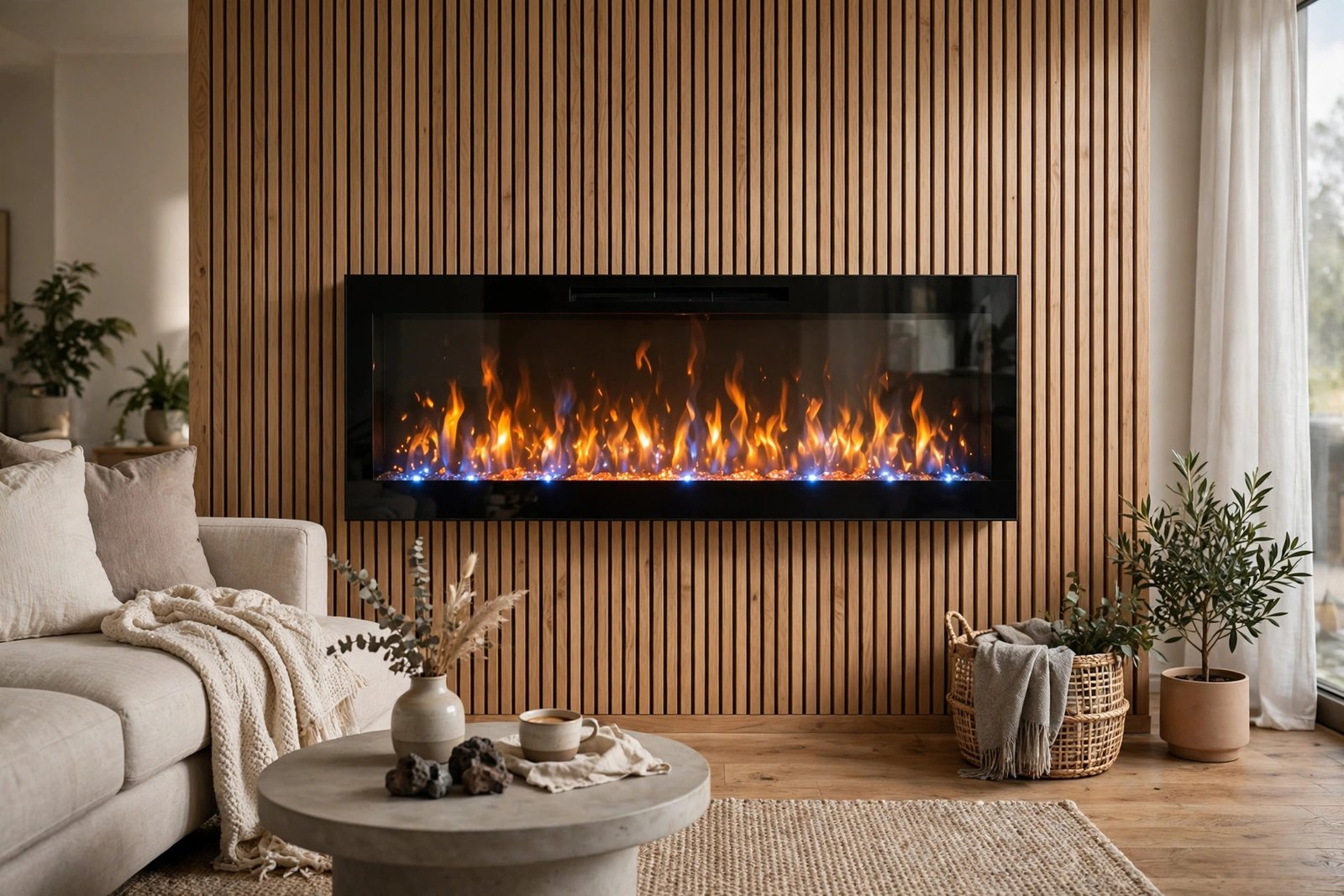
An electric fireplace stops completely in a power cut. No heat, no flame effect, nothing. With reliable power and mild winters, that is a minor inconvenience. With ice storms or an ageing grid, it is a real weakness — the moment you most want heat is the moment it disappears.
Many gas fireplaces keep working without mains power. Millivolt ignition generates its own current from the pilot light, so the burner lights with no grid power; electronic-ignition models often have a battery backup. That makes gas a genuine resilience feature in a winter outage. One limit: the electric blower fan will not run, so the heat stays closer to the unit.
Which One Suits Your Home?
By now you probably have a leaning in the gas fireplace vs electric fireplace debate. Here is how to check it against your actual situation.
Choose gas if: you want real heat for a large room; you already have a gas supply; you live in a cold climate and will use it most winter evenings; you want heat during power cuts; or you have an existing fireplace opening that takes an insert. Gas rewards heavy use.
Choose electric if: you rent or live in an apartment; you want ambiance more than heat; the room is under 400 square feet; or you want the easiest installation and the coolest, simplest option for a home with small children. Electric rewards light, flexible use — and flame-only mode gives value all year.
There is also a middle path: gas in the living room, a small electric unit in the bedroom. You are not choosing a team for life — just the right tool for each room.
Before you buy, check insulation and draughts — a fireplace in a leaky room pours heat into the street. Our guide to insulating windows for winter is a cheap first step. Compare real models at Home Depot’s gas fireplace range, check Consumer Reports’ gas fireplace guidance, and weigh a space heater for small rooms — see our best space heater picks for 2026 and our space heater vs central heating guide.
Frequently Asked Questions
Is a gas fireplace cheaper to run than an electric fireplace?
Usually, yes, for the same amount of heat — natural gas generally costs less per BTU than electricity. But an electric fireplace costs only about $0.20 an hour at full power, so for a small room used briefly, electric can be cheaper in practice. Either way, the real saving comes from zone heating: warm the room you are in and turn the central heating down.
Can an electric fireplace heat a whole house?
No. A standard electric fireplace produces up to about 5,000 BTU per hour, enough for a room of up to roughly 400 square feet. It is a supplemental, single-room heater, not a whole-home heating system.
Do gas fireplaces work during a power outage?
Many do. Models with millivolt ignition generate their own power from the pilot light and need no mains electricity, and many electronic-ignition models have a battery backup. The burner keeps producing heat, although any electric blower fan will not run.
Are vent-free gas fireplaces safe?
Vent-free models are legal in most states but banned in California and restricted in some other states and municipalities, and the EPA and CDC have raised indoor air quality concerns. If you use one, follow the room-size and ventilation rules exactly, fit a carbon monoxide detector, and never use it in a bedroom or bathroom.
How long does a gas fireplace last?
With annual professional servicing, a gas fireplace typically lasts 15 to 25 years. Electric fireplaces typically last 10 to 20 years with almost no maintenance.
Can I install an electric fireplace myself?
Most freestanding and wall-mounted electric fireplaces are designed for DIY installation: hang it, plug it into a standard outlet, and switch it on. Gas fireplaces always need a licensed professional for the gas line and venting.
Conclusion
The gas fireplace vs electric fireplace question has no single right answer, but it does have a right answer for your house. If you need real heat for a big room, you live somewhere cold, and you want warmth when the power fails, gas is the honest choice — and it is worth paying a professional to install it properly. If you want easy ambiance, a warm bedroom, a renter-friendly option, or a fireplace you can fit this weekend for a few hundred dollars, electric is the honest choice, and you will enjoy it every evening.
Measure your room, check your gas supply, get two quotes if you lean towards gas, and look at the flame in person if you lean towards electric. The best fireplace is not the one with the biggest BTU number. It is the one that fits your room and the way you actually live — and gets used, not just admired.



