
How to Keep a Christmas Tree Fresh Longer: The Complete 2026 Guide
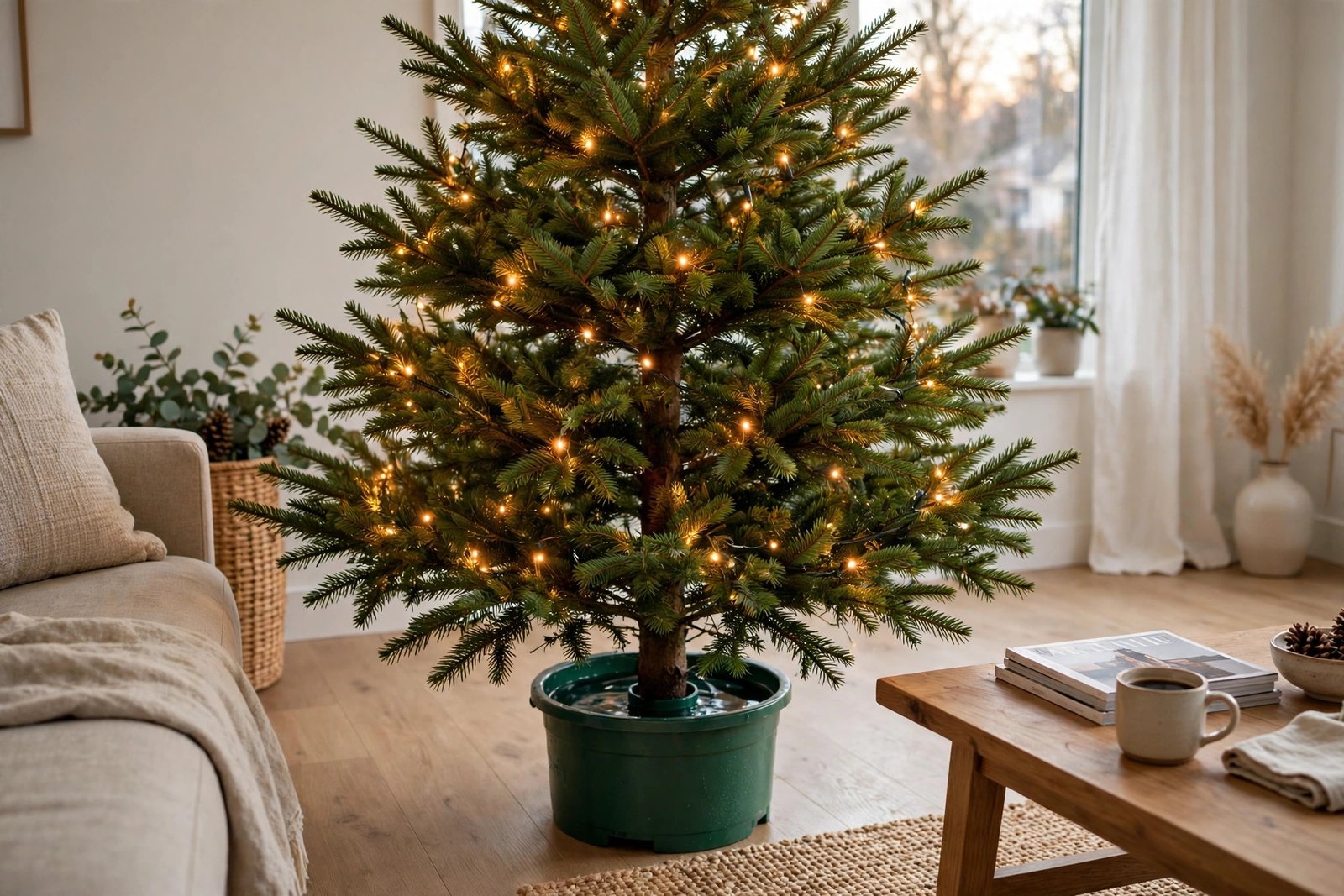
Nothing beats the smell of a real Christmas tree — until the needles start raining down on the carpet two weeks before Christmas. If your tree has ever turned dry and sad by mid-December, you are not alone. The good news is that a dry tree is almost always preventable, and learning how to keep a Christmas tree fresh longer comes down to a handful of simple habits, not expensive additives or secret tricks.
A healthy, well-watered tree can stay green and fragrant for four to six weeks — so a tree bought the weekend after Thanksgiving can still look great on Christmas morning. Here is every step that matters.
Why Most Christmas Trees Dry Out Too Fast
A cut Christmas tree is still a living thing. Even after it leaves the farm, it keeps drinking water through the cut end of its trunk, and it keeps losing moisture through its needles. Freshness is a balance between those two forces: the moment the tree cannot drink fast enough to replace what it loses, the needles dry and drop.
Three things tip that balance against you: a sealed cut, an empty stand, and heat. Within a few hours of cutting, sap seals over the trunk end and blocks water uptake. Once the water level drops below the cut, the trunk seals again, and no amount of refilling reopens it without a fresh cut. And a tree next to a radiator or fireplace loses moisture far faster than one in a cool corner.
Notice what is not on that list: additives and folk remedies. The National Christmas Tree Association is clear that plain tap water is best, and some additives can actually increase needle loss.
Step 1: Buy a Fresh Tree in the First Place
Every freshness strategy starts at the lot. A tree cut weeks ago and left sitting in the sun will never last as long as one cut days ago, no matter how carefully you water it. Ask the seller when the trees were cut. At a choose-and-cut farm, the answer is today; at a lot, trees cut within the past week are a good find.
Do the shake test before you pay: lift the tree a few inches and drop it on its butt end. A few loose brown needles from the interior is normal; a shower of green needles is a warning sign. Fresh needles bend without snapping and feel supple, not brittle — if they crumble in your hand, keep looking.
Check the colour and scent, too. A fresh fir looks deep green with a slight sheen, and its needles feel slightly sticky with resin and smell strongly of pine. A tree with almost no scent has probably been cut for a while.
Once you have picked your tree, get it home and into water fast. If it must wait overnight, keep it in a cool, shaded spot out of the wind — a tree left in a hot car starts drying before it ever meets your stand.
Step 2: Make a Fresh Cut Before It Goes in the Stand
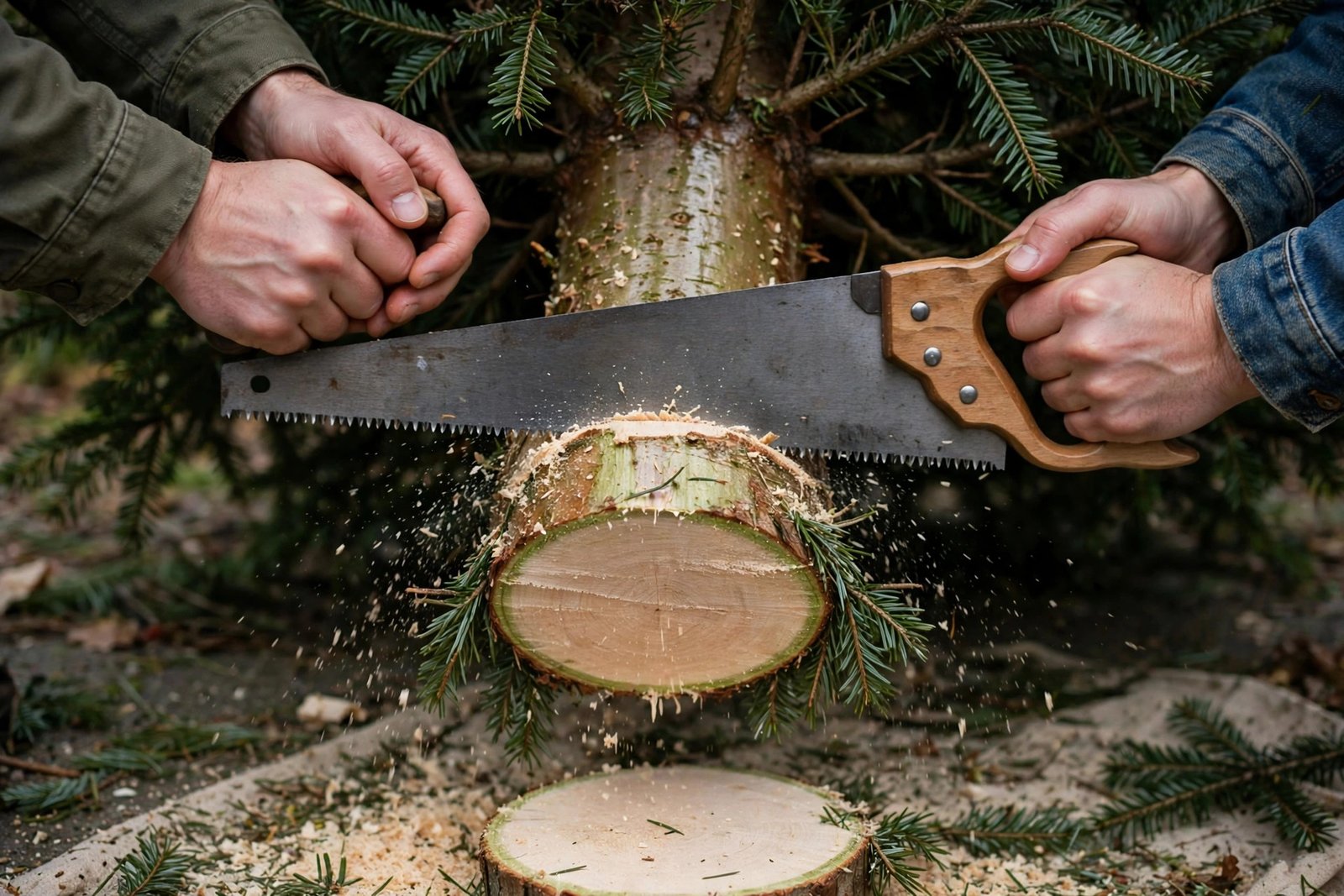
This is the most important step, and the one most people skip. The cut end of the trunk seals over with sap within about three to six hours of cutting, according to the National Christmas Tree Association. Once sealed, the tree can barely drink, no matter how much water sits in the stand.
The fix is simple: saw a thin, straight disk off the bottom of the trunk right before you set the tree up. About half an inch is enough, says the NCTA; some extension services suggest up to an inch. The cut must be straight across, not angled — an angled cut lets the trunk sit unevenly and can leave part of it above the water.
Do not drill a hole in the base, and do not whittle the sides down to make it fit a too-small stand — the outer rings are where the tree takes up water. If the trunk does not fit, get a bigger stand.
Timing matters as much as technique. Make the fresh cut at home, just before the tree goes into the stand — not at the lot an hour before you leave. If more than a few hours pass between the cut and the water, the trunk starts sealing again.
Step 3: The Water Rule — How to Keep a Christmas Tree Fresh Longer With Plain Water
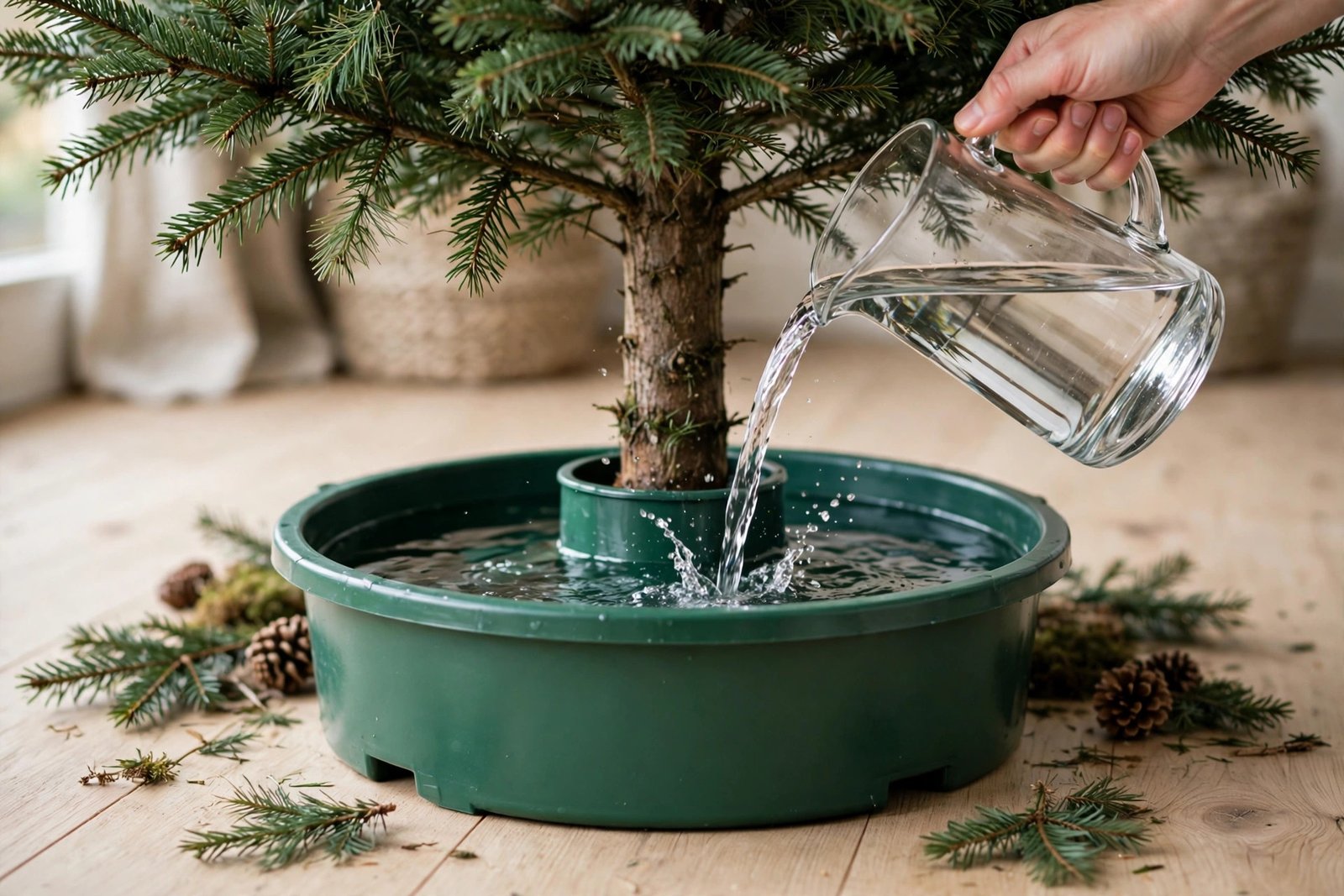
Here is the rule that does more than anything else: keep the cut end of the trunk under water at all times. A tree can drink a gallon of water in its first day in the stand, and it drinks most heavily in the first 48 to 72 hours.
Your stand needs to be big enough: the National Christmas Tree Association recommends at least one quart of water for every inch of trunk diameter. A four-inch trunk needs at least a gallon, a six-inch trunk a gallon and a half. Check the capacity with the tree in it — the trunk takes up space, so usable capacity is less than the printed number.
Check the water level every single day — this habit separates trees that last six weeks from trees that last two. A stand can still look full while the water has dropped below the cut end, and once the trunk is out of the water, it seals. If that happens, the only fix is to take the tree down, cut another half inch off, and start again.
Keep a watering can nearby so topping up takes seconds.
And what goes in the water? Plain tap water, nothing else. That is the advice from the National Christmas Tree Association, backed up by Mississippi State University Extension, which notes that a tree can use up to two gallons a day in the first few days.
Step 4: Put the Tree in the Right Spot
Where your tree stands matters almost as much as how you water it. Heat is the enemy: keep the tree away from fireplaces, radiators, heating vents, and sunny south-facing windows. A tree next to a heat source can dry out in days, while the same tree in a cool corner lasts weeks.
Choose the coolest spot in the room that still shows the tree off — a corner away from the heating vent is ideal. If your living room runs warm, a small room humidifier nearby can help, since dry winter air pulls moisture out of the needles. Keep it a few feet away so it does not drip on the lights.
Turn the tree occasionally if one side faces a heat source, and prefer LED lights — they run much cooler than incandescent strings. If you still use incandescent lights, read our guide to how to hang Christmas lights safely before you decorate.
Which Species Lasts Longest? A Comparison

Not all Christmas trees are equal when it comes to staying fresh. Some hold their needles for weeks; others start shedding within days, even with perfect care. Choosing the right species is part of how to keep a Christmas tree fresh longer for the full season.
| Species | Needle retention | Typical lifespan with good care | Notes |
|---|---|---|---|
| Fraser fir | Excellent | 5–6 weeks | The gold standard; strong branches, pleasant scent, holds needles best. |
| Noble fir | Excellent | 5–6 weeks | Sturdy, upswept branches; great for heavy ornaments; keeps its colour well. |
| Douglas fir | Good | 4–5 weeks | Soft needles and a sweet scent, but sheds sooner than Fraser or Noble fir. |
| Scotch pine | Good | 4–5 weeks | Excellent needle retention; needles stay on even when dry, but less fragrant. |
| Spruce (blue or Norway) | Fair | 3–4 weeks | Beautiful shape and colour, but sharp needles and the fastest to drop. |
Fraser fir and Noble fir are the safest bets if you put your tree up early. Douglas fir is lovely, but buy it a week later if you want it at its best on Christmas Day. Spruce looks wonderful for two weeks, then sheds — only choose it if you decorate close to Christmas.
If you are torn between a real tree and a fake one, our best artificial Christmas tree 2026 guide breaks down the options, and our comparison of real versus artificial trees covers the cost and the trade-offs.
The Myths: What Does NOT Keep a Tree Fresh
Every December, the same folk remedies circulate online. They sound convincing, but the research says they do not work — and a few actively hurt the tree.
Sugar in the water
The theory is that sugar feeds the tree. In practice, sugar feeds bacteria in the stand water, which clog the cut end of the trunk. Skip it.
Aspirin in the water
Aspirin is sometimes recommended for cut flowers, but there is no evidence it helps Christmas trees, and the salicylic acid can damage the trunk tissue. Plain water wins again.
Vodka, bleach, or 7UP
Adding alcohol or bleach is meant to kill bacteria, and the sugary soda is meant to feed the tree. Both ideas backfire: alcohol and bleach damage the cells at the cut end that do the drinking, and sugary drinks feed the same bacteria you are trying to kill.
The bottom line is boring but true: a fresh cut, a big stand, plain water, and a cool spot are the whole secret of how to keep a Christmas tree fresh longer. Everything else is marketing or folklore.
Lights, Safety, and Fire Prevention
A dry tree is not just an ugly tree — it is a fire risk. According to the National Fire Protection Association, Christmas trees are involved in an average of about 160 home fires a year in the United States. A well-watered tree is far harder to ignite than a dry one.
Use lights labelled for indoor use and in good condition — no frayed wires or cracked bulbs. Do not overload outlets, never connect more strings than the manufacturer allows, and switch the lights off when you leave the house or go to bed. Keep the tree at least three feet from heat sources, including candles.
LED lights are the safer choice: they run cooler and last longer. If you are shopping, our best Christmas lights 2026 roundup compares the top options for real trees.
How Long Will Your Tree Actually Last?
With the full routine — fresh cut, big stand, daily water, cool spot — a Fraser or Noble fir should stay green and hold its needles for five to six weeks. Douglas fir and Scotch pine are good for four to five weeks. Spruce is the shortest-lived at three to four weeks.
The calendar matters, too: a Fraser fir bought the weekend after Thanksgiving will still look good on Christmas Day, while a spruce bought the same weekend will be shedding.
Watch for the signs the tree is done: needles browning from the inside out, dry and brittle branches, and a water level that has not dropped in two or three days. A tree that has stopped drinking is a fire risk, even if it still looks green from across the room.
Troubleshooting: When Your Tree Is Drying Out Anyway
Sometimes you do everything right and the tree still struggles. Here is how to keep a Christmas tree fresh longer when problems appear.
Needles dropping in the first week
Heavy needle drop in week one usually means the tree was already old when you bought it, or the cut sealed before it reached water. You cannot fix an old tree, but you can slow the decline: move it to the coolest spot you have and check the water twice a day.
The water level never drops
If the stand stays full for days, the trunk has sealed and the tree is not drinking. The fix is a fresh cut — take the tree down, saw another half inch off the trunk, and put it straight back into water. It is a hassle with ornaments on, but a tree that is not drinking is a tree that is drying.
Frequently Asked Questions
How long does a real Christmas tree last indoors?
Four to six weeks with proper care. Fraser fir and Noble fir last the longest, at five to six weeks; spruce the shortest, at three to four weeks. A tree that is not watered daily may only last two weeks.
How much water does a Christmas tree need per day?
A fresh tree can drink up to a gallon a day in its first few days. The National Christmas Tree Association recommends a stand holding at least one quart of water per inch of trunk diameter — a four-inch trunk needs at least a gallon. Check the level daily and never let it drop below the cut end.
Should I put sugar or aspirin in my Christmas tree water?
No. Sugar, aspirin, vodka, bleach, and commercial preservatives do not improve needle retention, and some make it worse. Plain tap water is best, per the National Christmas Tree Association and university extension services.
How to keep a Christmas tree fresh longer if I buy it early?
Buy a Fraser or Noble fir, which hold needles the longest. Make a fresh half-inch cut just before setup, use a stand holding at least a quart of water per inch of trunk diameter, check the water daily, and keep the tree in the coolest spot in the room. With that routine, a tree bought after Thanksgiving will still look good on Christmas Day.
Why is my Christmas tree dropping needles?
Usually a sealed trunk cut, an empty stand, or heat. If the cut sealed before the tree reached water, it cannot drink; if the water dropped below the cut, it sealed again. Check the water and the placement, and cut a fresh half inch off the trunk if the tree has stopped drinking.
When should I take my Christmas tree down?
When the needles brown from the inside out, the branches feel dry and brittle, or the water level stops dropping for two or three days. A dry tree is a fire risk, so do not keep it up past its useful life. Many towns run tree recycling or mulching programmes in January.
Conclusion
Keeping a Christmas tree fresh is not complicated, and it does not require special products. Choose a fresh tree, cut a thin slice off the trunk before setup, use a stand that holds a quart of water per inch of trunk, check the water daily, and keep the tree cool. That is the whole system for how to keep a Christmas tree fresh longer, and it works because it matches how a cut tree actually drinks.
The payoff is a tree that stays green, fragrant, and safe from the weekend after Thanksgiving right through Christmas Day. Pair these habits with a healthy poinsettia — our guide to how to keep a poinsettia alive covers the other classic Christmas plant.



