
How to Keep a Poinsettia Alive Past Christmas (and Get It to Bloom Again)
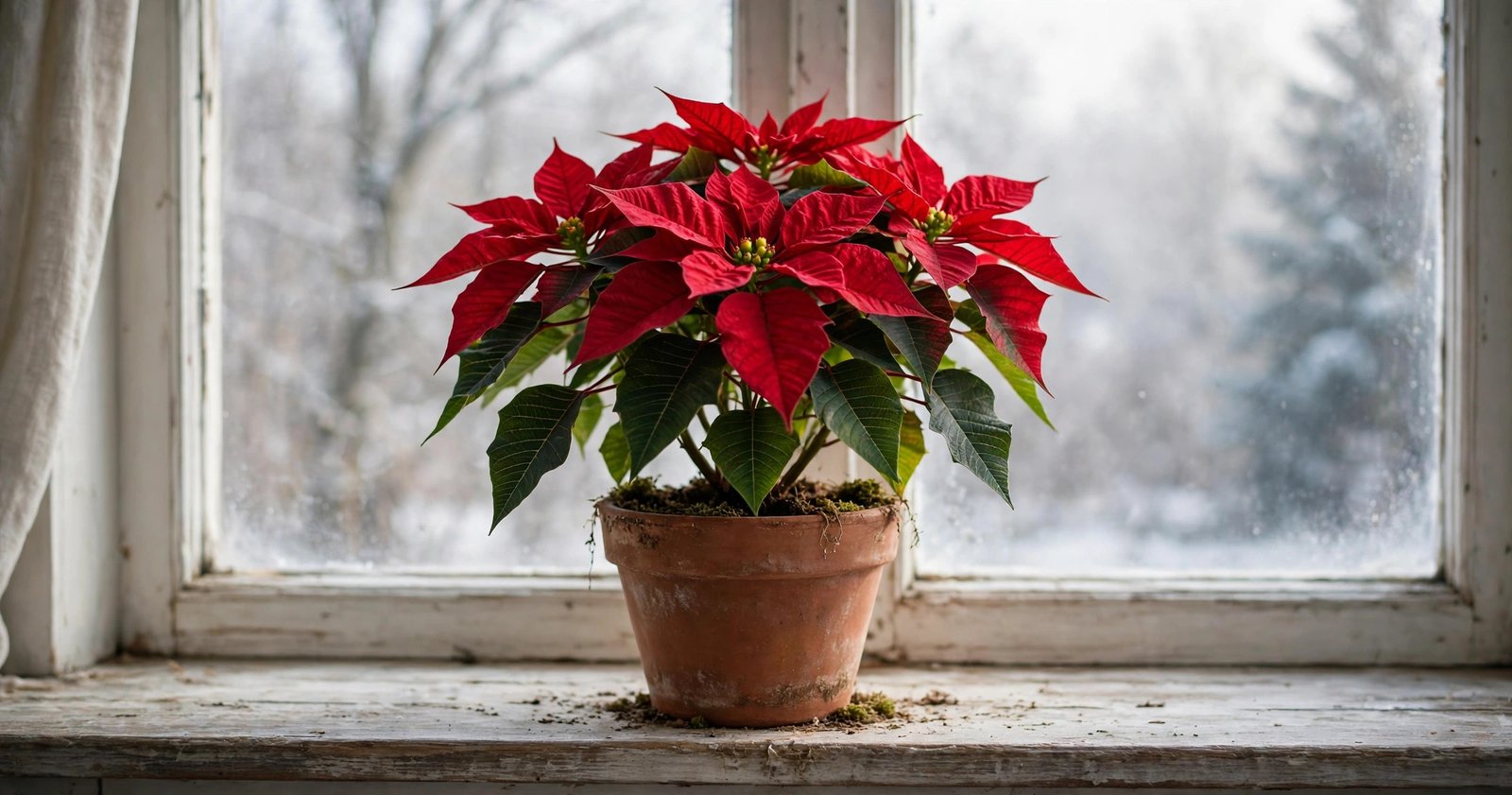
Every December, millions of us bring home a poinsettia, set it on the mantel, and watch it slowly fall apart. The red bracts fade, the leaves yellow and drop, and by mid-January the plant is a bare stick in a pot, heading for the bin. It feels like bad luck — it usually isn’t. Learning how to keep a poinsettia alive is mostly a matter of avoiding five specific mistakes, and most of them happen in the first forty-eight hours you own the plant.
Poinsettias are not delicate flowers or disposable decorations. They are tropical shrubs from Mexico that can live for years and turn red again every winter. A store-bought poinsettia has already survived a greenhouse, a delivery truck, and a shop floor before it reaches your living room. What follows is the full routine: picking a healthy plant, getting it home unchilled, watering and placing it, and the ten-week schedule that gets it to bloom again.
Why Most Poinsettias Die by New Year’s Day
A poinsettia rarely dies from one big disaster. It dies from a chain of small ones. The plant is tired from the shop, chilled on the way to the car, drowned in its foil wrapper, then parked against a cold window or a hot radiator. Alone, each is survivable; together, they strip the plant bare.
Each link in that chain is easy to break. Once you know what kills them, keeping one alive past Christmas becomes a short checklist. The five killers below strike in order, from the garden center to your windowsill.
How to Keep a Poinsettia Alive: Killer #1 — A Tired Plant at the Store
The biggest factor in how long your poinsettia lasts is decided before you pay for it. A plant that has been sitting in a drafty supermarket entrance for a week is already halfway to the compost bin, and no amount of good care at home will fully save it. So shop like a gardener, not like a decorator.
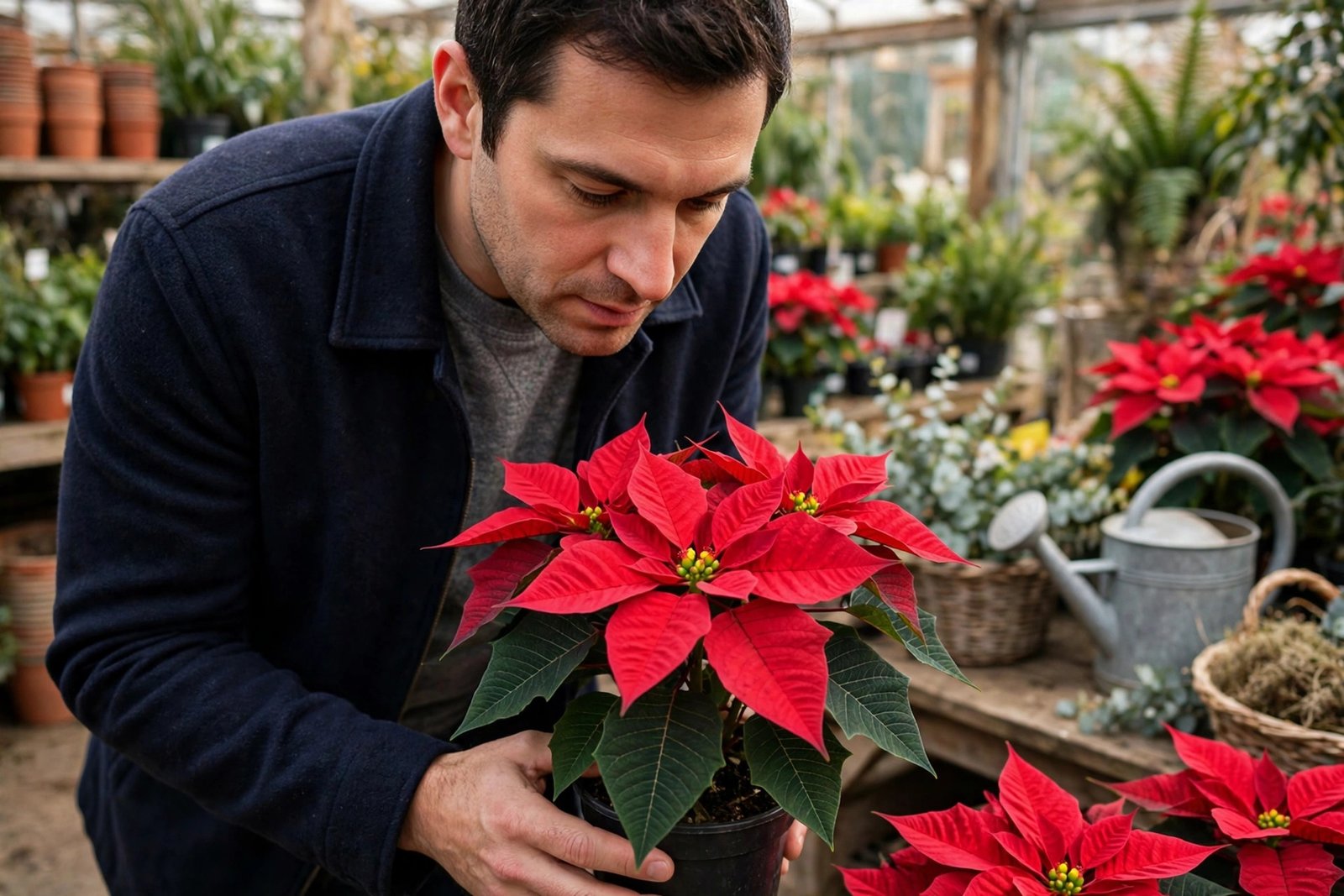
The red parts are not flowers but bracts, colored leaves. The real flowers are the small yellow buds in the center, called cyathia — on a fresh plant they are tight, closed, and free of pollen dust. If they are open or shedding pollen, the plant is past its peak. Illinois Extension’s poinsettia care guide makes the same point: once the flowers have shed their pollen, the bracts and leaves start to drop.
Check the leaves all the way down to the soil — a healthy plant is green from top to bottom. Yellow, spotted, or missing lower leaves mean overwatering, chilling, or too much dark. Buy from a garden center rather than a sidewalk display when you can, and shop for the plant last so it spends as little time as possible in a cold car. The same checks apply to every plant you bring home — see our guide to the mistakes to avoid when buying a houseplant.
Killer #2: The Cold Ride Home
Poinsettias are tropical, from the warm hills of Mexico, with no tolerance for cold at all. A few minutes in freezing air injures the bracts, though the blackened edges often do not show for a day or two.
Illinois Extension is blunt: poinsettias are very sensitive to cold, and below 50°F the plant should be covered for the trip. A paper sleeve or a plastic bag is enough for the walk to the car, but the car itself needs to be warm — never leave a poinsettia in a cold car, and never put it in the boot. At home, unpack it straight away and water if the soil feels dry. A few limp leaves after a cold trip usually recover in a warm, bright spot within a day.
Killer #3: The Foil Skirt That Drowns the Roots
Almost every store poinsettia comes wrapped in a shiny foil skirt, and that foil is the quietest killer on this list. It has no drainage holes, so water pools in the bottom and the roots sit in it — and poinsettia roots rot fast in standing water.
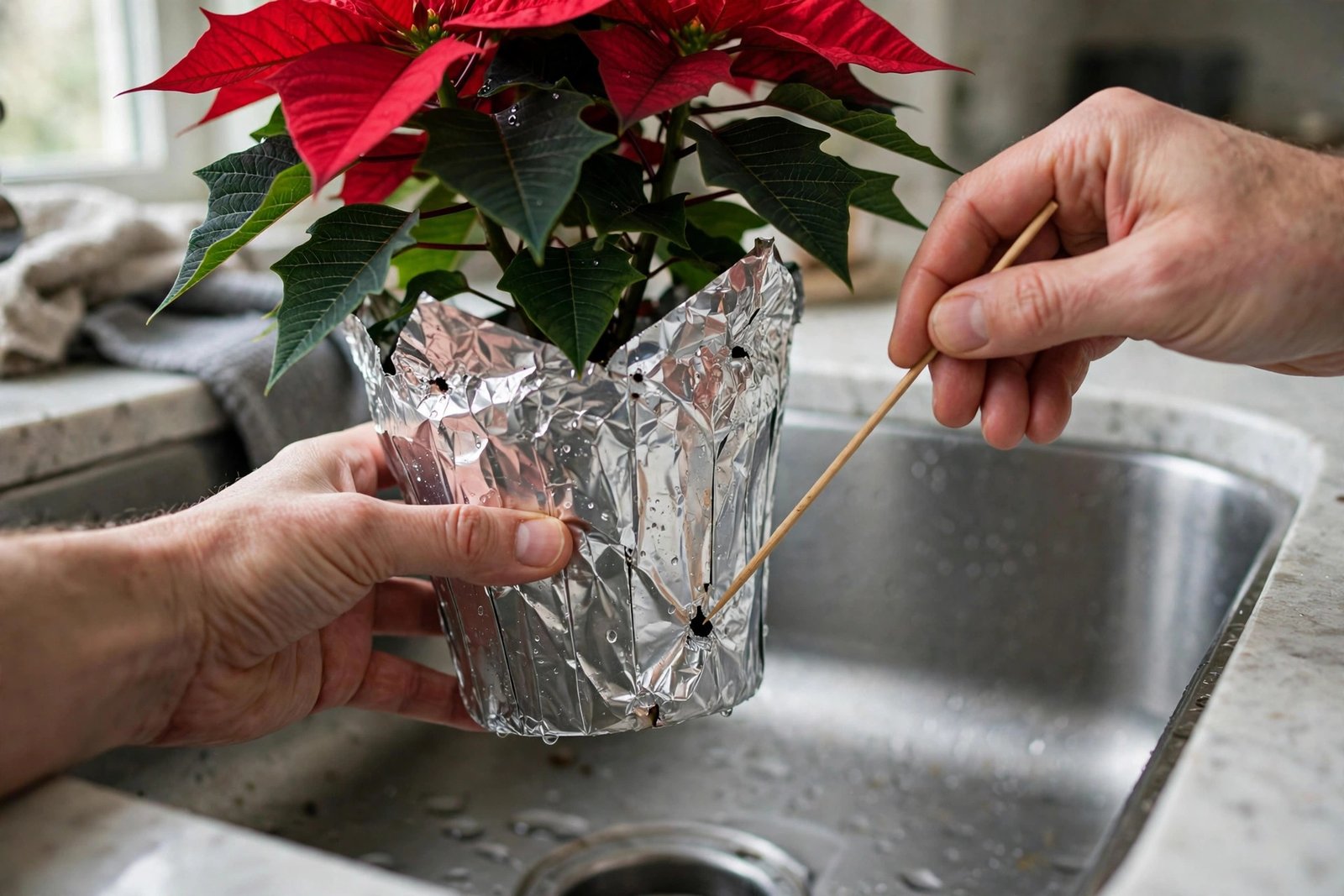
Fix it the moment you get home. Either take the foil off completely and set the pot in a saucer or a decorative cover pot, or poke several drainage holes in the bottom of the foil and stand the plant in a sink or saucer so the excess water can escape. The rule is simple and non-negotiable: never let a poinsettia sit in water.
Poinsettias like their soil moist but not soggy. Push a finger an inch into the soil and water only when the top feels dry — thoroughly, until it runs out of the drainage holes, then tip the excess away after ten minutes. That is usually every few days in a warm room, weekly in a cool one. Skip fertilizer while the plant is in bloom — Clemson’s poinsettia fact sheet advises against feeding a flowering poinsettia.
Killer #4: Cold Glass and Drafts
Where you put the plant matters as much as how you water it. Poinsettias want bright, indirect light for at least six hours a day, and they want steady temperatures. The two worst spots in most homes are the windowsill and the hallway — and the windowsill is where most people put them.
The glass itself is cold in December. Leaves touching a cold windowpane chill and drop, and a plant in the blast of cold air every time the front door opens has the same problem. Illinois Extension advises keeping the plant away from drafts, cold or warm, and warns against letting leaves touch cold windows. Pull the pot a few inches back from the glass and away from exterior doors. Warm drafts are just as bad: a plant above a radiator dries out and drops its leaves just as fast. A bright spot a few feet into the room is almost always better than a photogenic spot on the sill. The same logic applies indoors generally — once you have winterized your home, your plants benefit from the same sealed windows you do.
Killer #5: Too Much Heat
The last killer is the one hiding in plain sight: the average living room is simply too warm for a poinsettia. These plants hold their color longest in a cool room. Illinois Extension puts the ideal daytime temperature at 60 to 70°F, with nights around 55°F, and warns that warmer indoor temperatures make the plant decline sooner. A room kept at 75°F or above will shorten the display by weeks.
You do not need to turn your house into a fridge — a bright spare bedroom or sunroom is often enough. If it must live in the main living room, keep it away from heat sources and accept that it will fade sooner.
The Daily Routine That Keeps a Poinsettia Alive
Once the five killers are handled, daily care is simple. Give it bright, indirect light for at least six hours a day. Keep the room between 60 and 70°F by day and a little cooler at night. Water only when the top inch of soil feels dry, water thoroughly, and let the excess drain away. Keep it away from cold windows, drafts, and heat, and do not fertilize while it blooms.
That is the whole routine — no misting schedule, no special food, no secret trick. Most poinsettias that die in January were killed by one of the five killers in December. A well-cared-for plant can hold its color for several weeks to several months, according to Illinois Extension — prevention in December, not rescue in January, is the real secret of how to keep a poinsettia alive.
What to Do After Christmas
When the bracts fade in late winter, do not throw the plant away. Cut the stems back to six to eight inches, keep watering when the soil dries, and move it to your brightest window. In late spring, once nights stay above 50°F, move it outside to a sheltered spot with morning sun, or repot it into a slightly larger pot.
Through the summer, treat it like any other houseplant: water when dry, feed every two to three weeks with a balanced fertilizer, and pinch the tips back once or twice to keep it bushy — Clemson advises not pinching after September 1, so the new growth can mature before the reblooming treatment. Bring it back indoors in September, before the nights turn cold.
How to Get Your Poinsettia to Bloom Again
Poinsettias are short-day plants: they only turn red when the nights get long. To get yours to color up again for next Christmas, give it a strict light routine for eight to ten weeks, starting in early October.
The schedule is simple but unforgiving. From the first week of October, the plant needs 14 hours of complete darkness every night and six to eight hours of bright light every day — into a dark closet or under a light-proof box at around 5 p.m., back into the light at 8 a.m. Even a brief flash of light at night can delay the coloring or stop it. Keep the plant at 60 to 70°F, water normally, and do not fertilize once the color starts to show.
| When | What to do |
|---|---|
| March–April | Cut stems back to 6–8 inches when the bracts fade; keep watering |
| May–June | Move outside once nights stay above 50°F; repot if needed |
| June–August | Water and feed every 2–3 weeks; pinch tips to keep it bushy |
| September | Bring indoors before cold nights; stop pinching after September 1 |
| Early October | Start 14 hours of darkness nightly, 6–8 hours of bright light daily |
| Early–mid December | Bracts color up after 8–10 weeks; stop the darkness treatment |
After eight to ten weeks, the bracts start to show color, usually in late November or early December — then you can stop the routine and put the plant on display. Gardeners’ World agrees the darkness routine is the one step you cannot skip or shorten, so set a daily alarm for it in October.
Are Poinsettias Poisonous to Cats and Dogs?
Yes, but far less than the old stories suggest. The ASPCA lists poinsettia as toxic to dogs, cats, and horses, because its milky sap irritates the mouth and stomach and can cause drooling or vomiting — but in the same listing it calls the plant “generally over-rated in toxicity.” Pet Poison Helpline rates it only mildly toxic: a pet that chews a leaf may drool or vomit once, and the symptoms normally pass on their own.
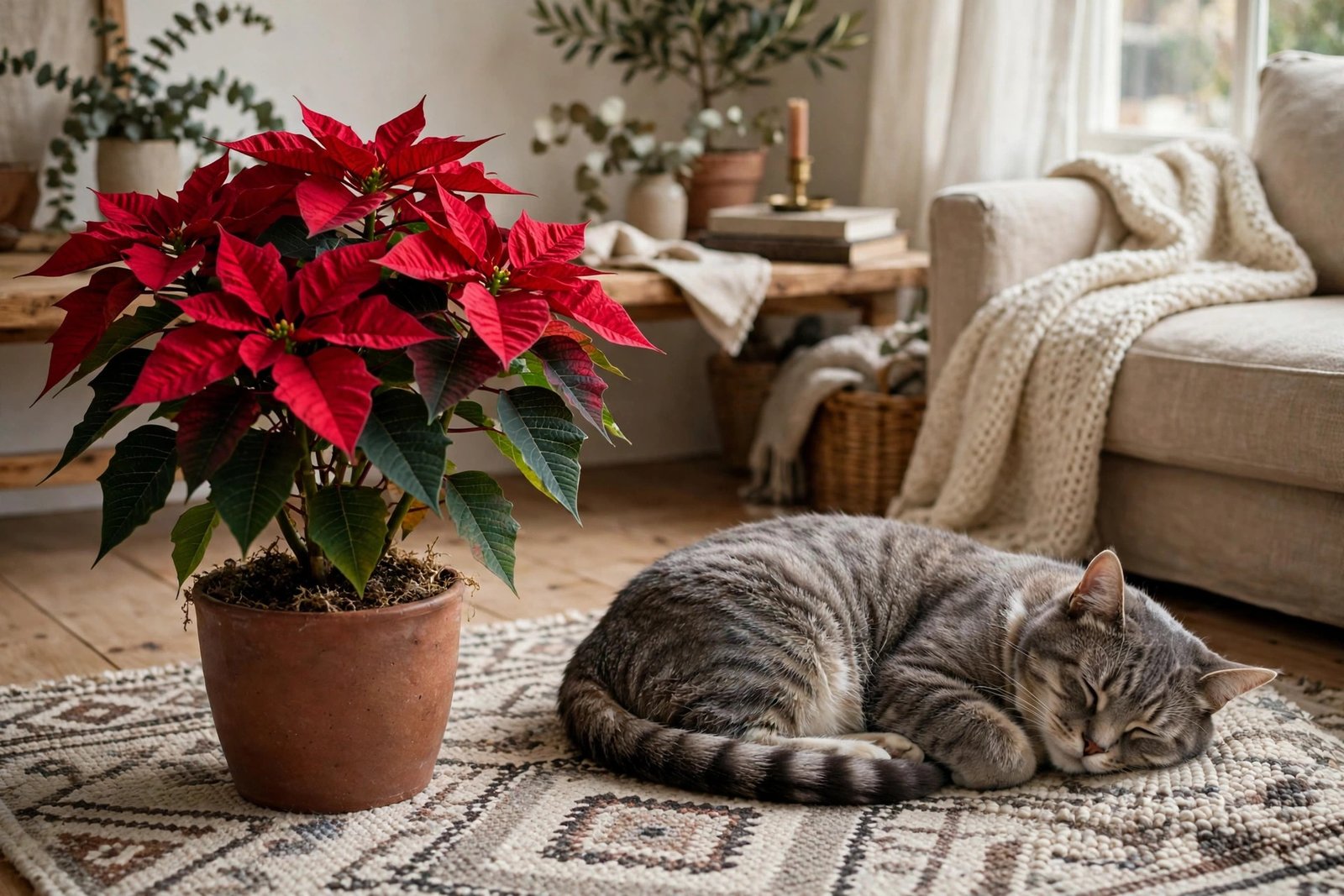
The scary reputation traces to one unproven 1919 report blaming a child’s death on a leaf; a later review of more than 22,000 exposures found no fatalities and only mild symptoms. The sap can still irritate skin and eyes, so the plant is not harmless — but there is no need to banish it from a home with pets. Put it on a high shelf, and call your vet or the ASPCA Animal Poison Control Center at (888) 426-4435 if your pet eats a lot or vomits more than once.
Troubleshooting: Why Is My Poinsettia Dropping Leaves?
Leaf drop is the poinsettia’s way of telling you something changed, and the pattern points at the cause. Leaves dropping from the bottom, yellow first, usually mean overwatering or roots sitting in water — check the foil and the drainage. Leaves dropping all over, a day or two after you brought it home, usually mean a cold shock on the trip. Yellow leaves near a window mean cold glass or a draft; crisp leaves near a radiator mean too much heat.
One or two leaves dropping is normal in the first week as the plant adjusts. A cascade is a signal, not a death sentence: fix the cause, pick up the fallen leaves so they do not rot, and give it a week. Green, firm stems will usually push out new growth. The same logic applies to other holiday keeping — our guide on how to keep cake fresh longer also starts with storage conditions, not a new recipe.
Frequently Asked Questions
How long do poinsettias last indoors?
With bright indirect light, 60 to 70°F, and watering only when the soil is dry, a poinsettia can hold its color for several weeks to several months. Most early deaths come from chilling, overwatering, or heat — fix those three and January is easy.
How often should I water a poinsettia?
Water when the top inch of soil feels dry, and water thoroughly until it drains out of the bottom. In a warm room that is usually every few days; in a cool room, about once a week. Always empty the saucer afterwards — standing water rots the roots.
Can a poinsettia survive outside in winter?
No, not in most of the United States. Poinsettias are tropical plants hardy only in USDA zones 9 to 11, and temperatures below 50°F can cause chilling injury. They can go out in late spring once nights stay above 50°F, but must come back in well before autumn’s first cold nights.
Why are my poinsettia leaves turning yellow?
Yellow leaves usually mean too much water, roots sitting in water inside the foil, or a cold draft. Check the drainage first, then the position. Let soggy soil dry out before watering again, and remove yellow leaves so they do not rot.
Will my poinsettia turn red again next year?
Yes, with the darkness treatment: from early October, 14 hours of total darkness every night and six to eight hours of bright light every day, for eight to ten weeks. Even small amounts of light at night can delay the color, so be strict.
Are poinsettias safe around children?
Yes, with normal supervision. Poinsettias are not poisonous in the way the old stories suggest — a review of more than 22,000 exposures found no serious poisonings. A nibbled leaf may cause mild mouth irritation, so keep the plant out of toddlers’ reach. HGTV’s poinsettia care tips give the same reassurance for family homes.
Conclusion
Keeping a poinsettia alive past Christmas comes down to five decisions: buy a fresh plant with tight yellow centers, keep it warm on the ride home, give its roots drainage, keep it away from cold glass and drafts, and keep the room cool. Do those five things and the color lasts well into the new year. Keep it through summer, give it ten strict weeks of long nights in autumn, and it will turn red again next Christmas. That is the payoff of learning how to keep a poinsettia alive — and it costs nothing but attention.



