
How to Make a Christmas Centerpiece That Looks Store-Bought

Learning how to make a Christmas centerpiece is the fastest way to make your whole dining room look like you hired a florist. One low, lush arrangement in the middle of the table does more than a dozen scattered decorations — it pulls the eye, it smells like December, and it makes even a weeknight supper feel like an occasion.
The shop-bought look is mostly technique, not talent. With a handful of evergreen branches, a few candles and about half an hour, you can build something that looks like it cost fifty dollars. This guide shows you three methods, from a five-minute jar arrangement to a floral-foam showpiece, plus which greenery lasts longest and how to keep candles safe around dry needles.
What a Christmas Centerpiece Actually Needs to Do
A centerpiece has one job above all others: look beautiful without getting in the way. That sounds obvious, but it is where most homemade attempts go wrong. A towering arrangement blocks conversation, sheds needles into the gravy, and forces everyone to peer around it. Keep the finished height under about 30 centimetres — roughly 12 to 14 inches — and run it about one-half to two-thirds of the table’s length.
It also needs to survive. Fresh greenery indoors lasts around three to four weeks if you mist it lightly every few days and keep it away from radiators and heat vents, according to the University of Illinois Extension.
What You’ll Need
Before you start learning how to make a Christmas centerpiece, gather everything in one place — nothing kills a crafting afternoon faster than running out of floral wire halfway through.
For every method: sharp secateurs or strong scissors, floral wire (22-gauge is a good all-rounder), a waterproof tray, plate or shallow bowl as a base, and gardening gloves for prickly pine or holly.
Greenery (choose two or three types): pine, fir, cedar and eucalyptus are the classics. Pine is full and forgiving, fir holds its needles well, cedar drapes beautifully, and eucalyptus adds silvery contrast and dries in place, keeping its shape for months.
Decorations: pinecones, dried orange slices, cinnamon sticks, fresh cranberries, a few baubles, and ribbon. You do not need all of them — pick three and repeat them. Repetition is what makes an arrangement look designed rather than random.
Candles (optional): pillar candles in sturdy holders, or battery-operated flameless candles. If you use real candles, add a small tray or glass hurricane to catch wax and shield the flame from dry needles.
How to Make a Christmas Centerpiece: The 5-Minute Jar Method
This is the method for people who want a beautiful table tonight. It takes about five minutes per jar, costs almost nothing, and looks far more expensive than it is. Make three jars in a row down the centre of the table and you have a full centerpiece.

Step 1 — Choose your jars. Mason jars, old jam jars or any clear glass container will do. A mix of heights looks better than three identical jars, so use one tall jar in the middle and two shorter ones at the sides.
Step 2 — Add the greenery. Push a small sprig of rosemary, cedar or fir into each jar, letting the tips poke above the rim. Rosemary is ideal: sturdy, fragrant, and shaped like a tiny Christmas tree.
Step 3 — Add the cranberries. Drop a generous handful of fresh cranberries into each jar. They sink to the bottom and glow red through the glass.
Step 4 — Fill with water. Pour in water until the jar is about three-quarters full, nudging the greenery back into place with a chopstick if it shifts.
Step 5 — Float the candle. Set a floating candle on top of each jar and light it. The whole thing takes about ten minutes from start to finish.
Change the water every two days and the berries stay bright. Keep the jars on a tray — it catches drips and pulls the three jars together into one deliberate-looking centerpiece. For more Christmas centerpiece ideas in this quick style, Julie Blanner’s seasonal tables are a good place to browse.
Method 2: The Classic Wreath Ring
The wreath ring is the traditional way to build a Christmas centerpiece, and the one that looks most like the florist version. Lay a fresh evergreen wreath flat on the table, put candles in the middle, and you are essentially done.
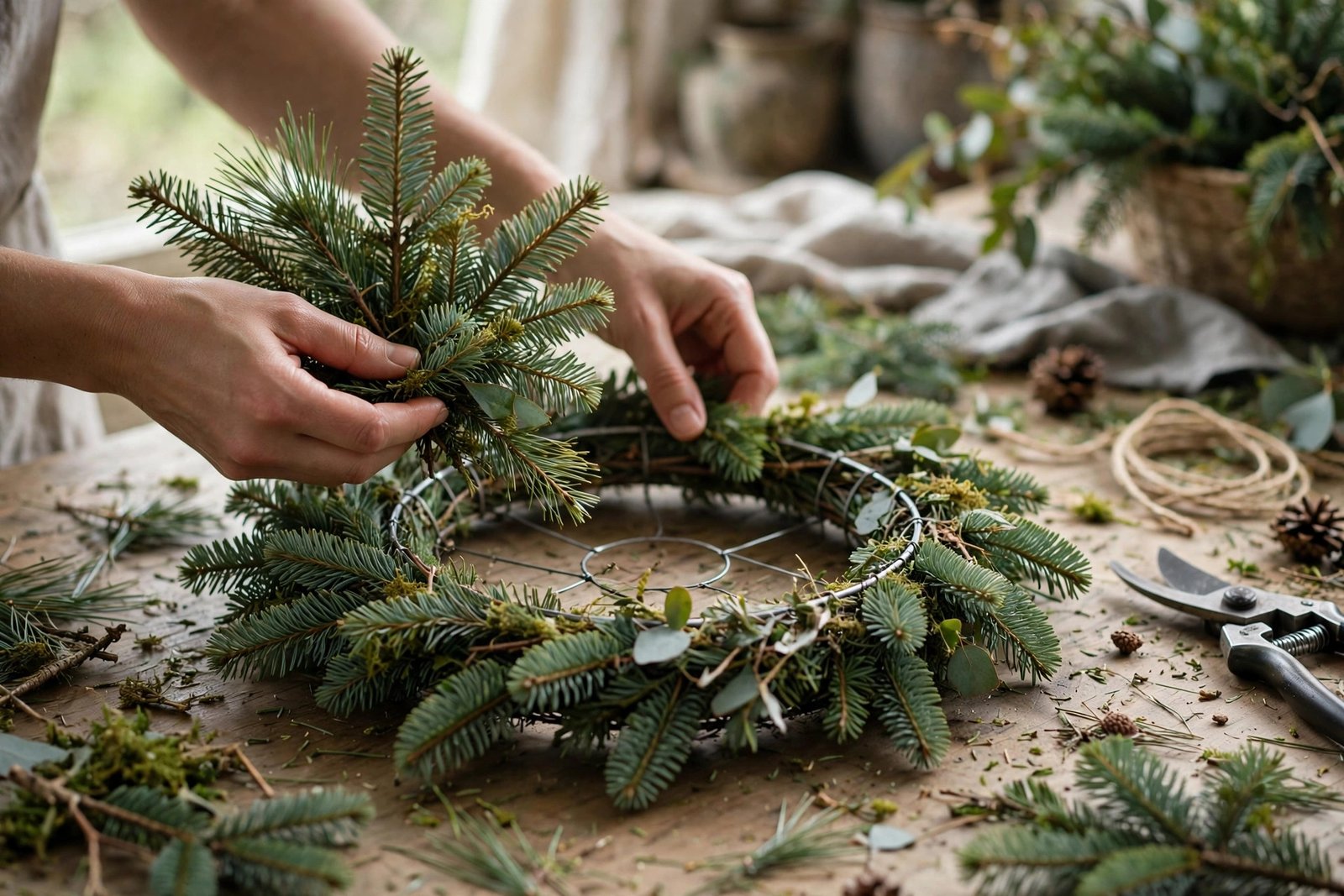
Start with a ring base. Buy a foam wreath form from a craft shop, or bend a wire coat hanger into a circle. If you already have a Christmas wreath hanging on your door, the same techniques apply — just lay it flat instead of hanging it.
Layer the greenery in one direction. Work your way around the ring, tucking each branch under the previous one so all the tips point the same way. Overlap generously — the most common beginner mistake is leaving gaps where the foam shows through.
Mix your greens. A ring made from a single type of greenery looks flat. Combine fir for structure, cedar for soft draping tips, and a few sprigs of eucalyptus for silvery contrast.
Add the candles last. Push three candle holders into the centre of the ring, spacing them evenly, and trim the greenery back from each holder so no needles touch the flame. Tall tapers in burgundy or cream look classic; chunky pillars feel more modern. Never leave lit candles unattended.
Finish with accents. Wire in pinecones, tuck in dried orange slices and cinnamon sticks in odd numbers — threes, fives and sevens — and finish with a length of velvet ribbon tied in a loose bow.
A fresh wreath ring lasts three to four weeks indoors, misted every two to three days and kept away from heat vents.
Method 3: The Floral Foam Showpiece
Floral foam is the method florists actually use, and the one to choose if you want a tall, sculpted arrangement that holds its shape for weeks. It takes about 30 to 45 minutes, but the result is the most polished of the three.
Soak the foam first. Place the foam block in a sink full of water and let it sink on its own — do not push it under, or you will trap air pockets inside. A fully soaked block feels heavy and dark green all the way through.
Anchor the foam. Set the soaked block in a waterproof container and secure it with floral tape or a few pins. A shallow ceramic bowl, a wooden box lined with plastic, or a loaf tin wrapped in ribbon all work — the container is part of the look.
Build the shape. Push your longest greenery stems into the foam first to set the length and width, then fill in the middle with shorter pieces, turning the container as you go so the shape stays even from every seat.
Add height in the middle. A few taller stems in the centre — a sprig of pine, a branch of berries, a dried orange slice on a wire — give the arrangement a gentle peak. Keep the peak modest: remember the 30-centimetre rule.
Water it. Top up the foam every two to three days. Because the stems sit in water, a foam arrangement lasts the full four weeks of December, and the greenery stays supple instead of going brittle.
Which Method Should You Choose?
| Method | Time | Cost | Skill level | How long it lasts |
|---|---|---|---|---|
| Jar candles | 5–10 minutes | Under $10 | Beginner | Several days (refresh the water) |
| Wreath ring | 30–45 minutes | $15–$25 | Easy | 3–4 weeks with misting |
| Floral foam | 30–45 minutes | $20–$30 | Intermediate | 3–4 weeks with watering |
If you are short on time, start with the jars — you can always build a wreath ring the following weekend and swap it in. If this is your first time learning how to make a Christmas centerpiece, the wreath ring is the most forgiving: mistakes disappear under the next layer of greenery.
Choosing Greenery That Lasts
Not all evergreens behave the same indoors. Some drop needles within days; others hold for a month. A florist centerpiece easily costs $50 to $80 — the same look built at home from garden clippings and a few supermarket buys usually comes in under $20.
| Greenery | Scent | Needle retention | Flexibility |
|---|---|---|---|
| Pine | Strong, resinous | Good — holds 3–4 weeks | Stiff, good for structure |
| Fir | Fresh, citrusy | Excellent — best needle holder | Moderate |
| Cedar | Sweet, woodsy | Good — dries gracefully | Very flexible, drapes well |
| Eucalyptus | Clean, medicinal | Dries in place, keeps shape for months | Flexible when fresh |
Fir is the safest single choice if you can only buy one type — it holds its needles longest and looks full. Cedar drapes over the edge of a tray and softens the whole arrangement. Eucalyptus adds colour contrast, and because it dries in place you can reuse it next year. Better Homes & Gardens has a useful guide to evergreen Christmas centerpieces if you want more combinations to try.
Avoid holly with sharp leaves if small children will be at the table, and skip any greenery that is already shedding in the shop.
Candle Safety: The Part You Must Not Skip
A centerpiece with candles is beautiful, and it is also the one decoration in your home that deliberately combines an open flame with dry plant material. The U.S. National Fire Protection Association (NFPA) reports that more than one-third of home decoration fires are started by candles, and more than two in five happen because decorations were placed too close to a heat source.
Keep flames 12 inches from anything that can burn. That is the NFPA’s distance for lit candles. Trim greenery back from every candle holder, and check the gap again once the candles are lit.
Use flameless candles inside greenery. Battery-operated LED candles look convincingly real now — many even flicker — and they remove the risk entirely. The U.S. Fire Administration recommends considering a battery candle, and the NFPA’s own guidance points the same way. For more on keeping decorations fire-safe, see the NFPA’s winter holiday safety guidance.
Never leave candles unattended, and use sturdy holders. Blow them out before you leave the room, before you go to bed, and before the last guest leaves. Christmas Day is the peak day for candle fires in the United States. A candle in a jam jar is safer than a taper in a wobbly holder, so place holders on a stable, level surface away from table edges.
Keep the arrangement away from heat. Do not set a fresh-greenery centerpiece next to a radiator, a heat vent or a sunny window. Dry heat turns green needles brown in days and makes the whole arrangement far more flammable.
Styling It Like a Professional
Once the structure is built, styling is what makes it look store-bought. A few professional habits make a surprising difference.
Repeat, don’t scatter. Three pinecones in a row look intentional; one pinecone, one bauble and one cinnamon stick look like leftovers. Pick three accent types and repeat each one three or five times.
Add something edible. A few clementines, a small bowl of walnuts in their shells, or a scattering of star anise make the centerpiece feel like part of the meal.
Make the dried oranges yourself. Slice oranges about a quarter-inch thick, pat them dry, and bake at 200°F for two to three hours, flipping once halfway, until stiff and translucent. They glow like stained glass when candlelight hits them. Make a big batch — the extras work on the tree, the mantel and gift tags too.
Match the room, not the shop. A centerpiece in a rustic farmhouse kitchen wants pinecones, twine and wooden beads; in a modern dining room it wants white candles, eucalyptus and a single metallic accent. For more ideas on pulling a whole room together, see our guide to decorating a Christmas tree, and Livingetc’s Christmas table ideas show how the pros balance a full festive table.
Keeping It Fresh All Season
A centerpiece built in early December needs to survive until Christmas Day. Mist the greenery lightly every two to three days, top up floral foam so it never dries out, and change jar water every two days. Move the arrangement away from the radiator if you notice needles browning at the tips.
When individual sprigs start to look tired, pull them out and replace them with fresh ones — a five-minute refresh once a week beats rebuilding the whole thing. After Christmas, the dry parts — pinecones, dried oranges, cinnamon sticks — can be stored for next year; our guide on how to store Christmas decorations covers the boxes and labels. Leftover greenery also works woven into a Christmas garland for the mantel.
Frequently Asked Questions
How long does a fresh Christmas centerpiece last?
About three to four weeks indoors if you mist it every few days and keep it away from heat. A floral-foam base with water lasts longest. If you want to know how to make a Christmas centerpiece that survives until the big day, give the stems water.
Can I use real candles in a Christmas centerpiece?
Yes, but only with care. Keep every flame at least 12 inches from greenery, use sturdy non-tip holders, trim needles back from the flame, and never leave candles unattended. Flameless LED candles are the safer choice inside greenery.
What greenery lasts longest in a centerpiece?
Fir holds its needles best, followed by pine and cedar. Eucalyptus dries in place and keeps its shape for months.
How do I keep my centerpiece from shedding needles?
Soak cut greenery in water overnight before building, mist it every two to three days, and use a floral-foam base so stems stay wet. Keep it away from radiators and sunny windows — dry heat is what makes needles drop.
How much does it cost to make a Christmas centerpiece?
Usually $10 to $30. The jar method costs under $10, a wreath ring runs $15 to $25, and a floral-foam showpiece $20 to $30. A comparable florist centerpiece typically costs $50 to $80.
Can I make a Christmas centerpiece without floral foam?
Absolutely. The jar method needs no foam at all, and a wreath ring built on a wire form works without it. You can also use a kenzan (a spiky flower frog) in a shallow bowl, or pack greenery tightly into a vase.
Conclusion
Knowing how to make a Christmas centerpiece is really about three decisions: pick a method that matches your time, choose greenery that lasts, and respect the candle. The five-minute jar version will carry a weeknight dinner beautifully, the wreath ring looks like it came from a florist, and the floral-foam build is the showpiece for Christmas Day itself.
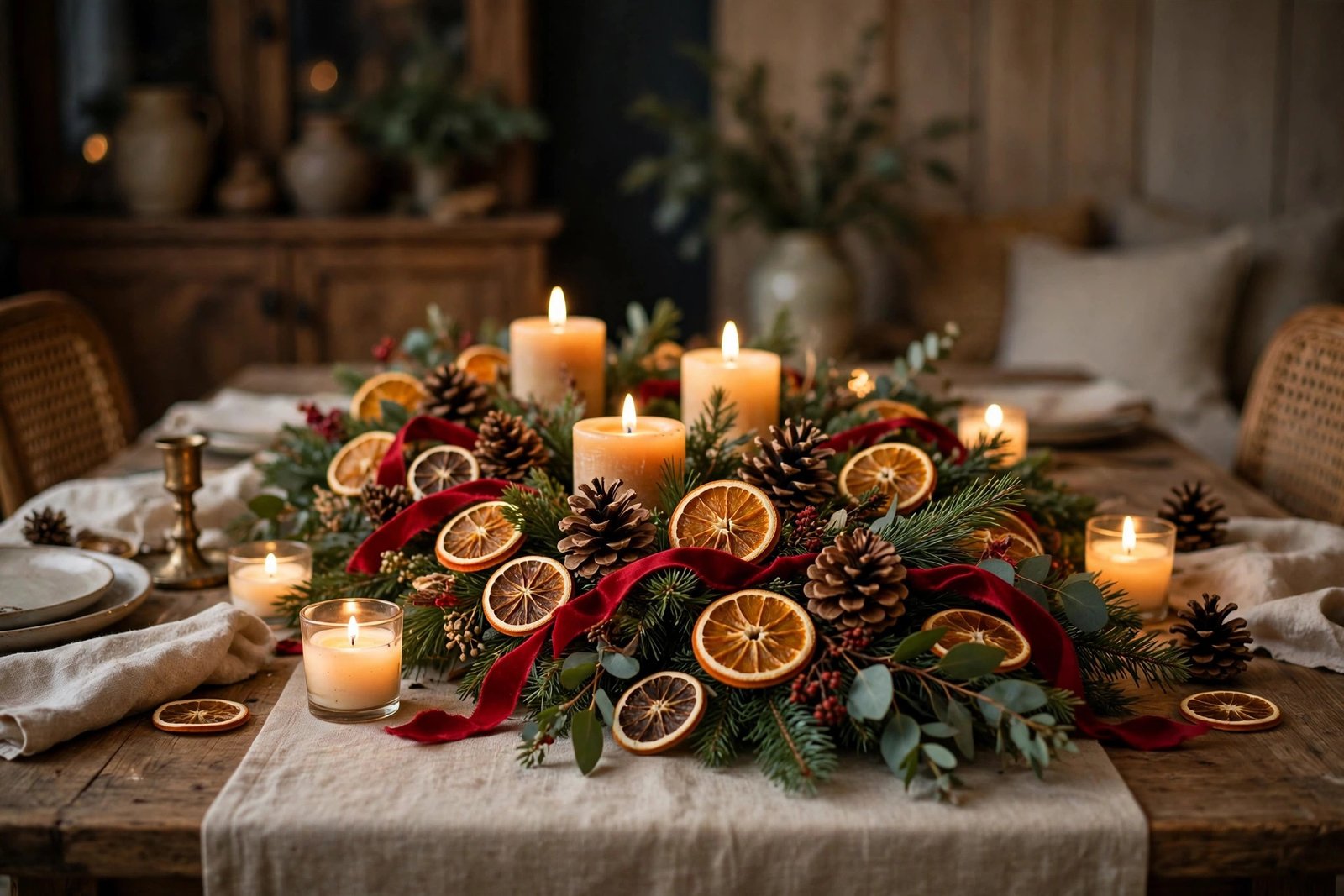
Build it low, keep it watered, and keep the flames clear of the greenery. Do that, and your table will look like December — and smell like it too.



