
How to Store Christmas Decorations So They Last for Years
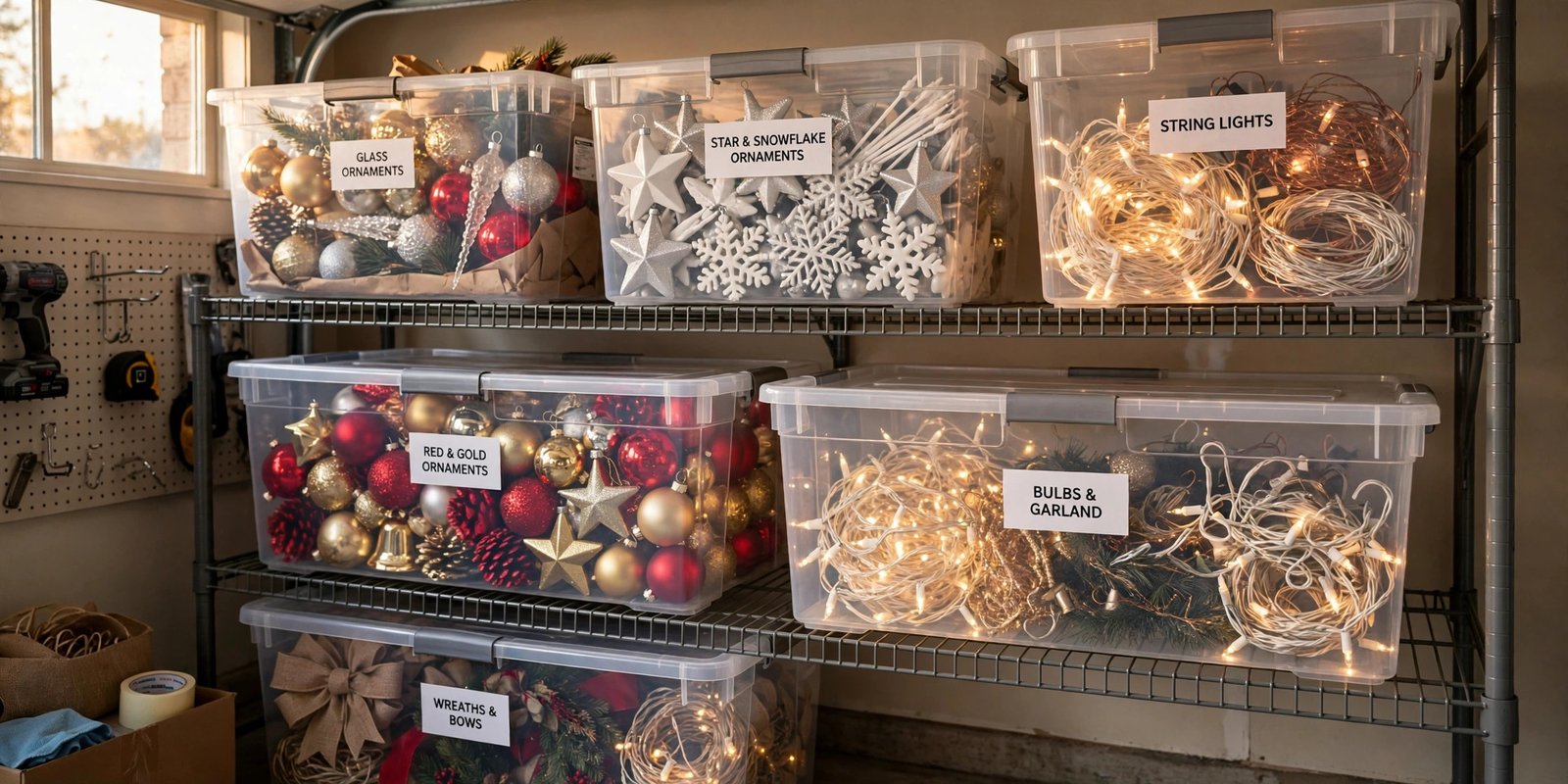
Every January, the same scene plays out everywhere: the tree comes down, the ornaments go into whatever box is closest, and the lights get shoved into a bag in one tangled knot. Eleven months later, you open those boxes to find a cracked heirloom bauble, lights that will never untangle, and a tree that smells of damp cardboard. Learning how to store Christmas decorations takes one afternoon — and it is the difference between replacing your collection every few years and handing pieces of it down to your kids.
Most decoration damage happens during those eleven months in storage: heat, damp, pests, and the pieces’ own weight. Nearly all of it is preventable with matching bins, acid-free tissue, cardboard reels, and a labelling habit.
Why Most Decorations Die in Storage, Not on the Tree
A glass ornament that survived twenty Christmases on a branch can crack in a single summer pressed against a hard surface in a bin that swings from freezing to sweltering. Paint and glitter go sticky in heat and fuse to their wrapping; glue softens, and the tiny snowman’s hat slides off somewhere between February and October. Heat is the biggest culprit: attics routinely climb past 120°F (49°C) under a summer roof, then drop below freezing in winter. The Canadian Conservation Institute, which advises museums on keeping objects intact, warns that many common plastics distort quickly above 60°C, and that each 5°C reduction in storage temperature roughly doubles an object’s lifetime.
Damp runs a close second. The same institute defines air above 75% relative humidity as damp and advises keeping plastics below 65% — mould grows on fabric and paper, metal corrodes, and damp cardboard boxes sag and collapse. A basement that smells musty in August is telling you what it will do to your wreaths. The fix is a system, and it starts before you pack a single thing.
How to Store Christmas Decorations by Type: The Packing Table
Different decorations fail in different ways, so they need different packing. Work through the table row by row and you will not miss anything.
| Item type | How to pack it | Container | Watch out for |
|---|---|---|---|
| Glass & ceramic ornaments | Wrap each one in acid-free tissue; one per compartment | Divided ornament box, or a bin with cardboard dividers | Pieces touching, newspaper ink, stacking heavy on light |
| Light strings | Wrap each strand around cardboard or a reel; bag separately | Bin with a lid; strands in individual zip bags | Tangling, kinked wires, bulbs pressed against each other |
| Artificial tree | Fold branches flat, tie sections, bag it | Tree storage bag (wheeled if the tree is large) | Original cardboard box, damp, crushing the tips |
| Wreaths & garland | Hang wreaths or lay flat in a shaped bag; coil garland loosely | Wreath bag, garment bag, or a hanging hook in a closet | Flattening, crushing under other bins, moths on natural fibres |
| Fabric (stockings, tree skirt) | Wash or air out, fold with tissue, seal | Vacuum-sealed bag or a lidded bin with cedar | Moths, damp, perfume or food smells absorbed in storage |
| Candles & wax figures | Wrap individually, store upright, keep separate | Their own small bin | Heat — wax melts and ruins everything it touches |
Dry everything before it goes away — a wreath bagged while still damp will come out in November smelling of mildew. Air fabric for a day, wipe ornaments with a soft cloth, and let the tree stand open for an hour after you take it down.
The Bin System: One Size, One Colour, One Label
The single best upgrade in how to store Christmas decorations is to stop using a random assortment of boxes. Buy matching, lidded plastic bins — same make, same size, same colour — and use them for everything. They stack squarely with no gaps, so nothing tips. Clear bins let you see contents at a glance; opaque bins are better anywhere sunlight reaches them, because light fades colours.
Plastic beats cardboard anywhere that is not climate-controlled: cardboard absorbs damp, attracts pests, and crushes under weight. Cardboard still has a role, though — a padded ornament box inside a plastic bin gives fragile pieces soft dividers inside and a moisture-proof shell outside. The guides to storing Christmas decorations at The Spruce make the same point: the container matters less than keeping the contents dry, dark, and still.
Sort by category, not by room: one bin for ornaments, one for lights, one for the tree skirt and stockings, one for outdoor pieces. Within the ornament bin, sort by type or colour so next December you can pull exactly the set you want. Label every bin on two sides plus the lid, in plain words — “ORNAMENTS — GLASS, FRAGILE” beats “XMAS 1” — and tape a photo of the contents to the outside. Keep a one-page inventory list in the first bin you will open next year: anything broken, anything to replace, and where the spare fuses and light clips live.
Ornaments: Wrap Every Piece Like It Matters (Because It Does)
Most ornament damage happens when pieces roll around and knock into each other. The fix is simple: wrap glass ornaments one by one in acid-free tissue — never newspaper, whose ink rubs off onto light-coloured and matte finishes — and give each its own compartment. Dedicated ornament boxes with dividers are worth the money if you own more than a couple of dozen fragile pieces; if you would rather not buy one, build your own from egg cartons, plastic cups glued to cardboard, or dividers cut to fit a bin, with shredded paper filling the gaps.
Work from the bottom of the tree upward, with a towel at the foot of the tree to catch anything that slips. Heavier ornaments go at the bottom of the bin, lighter ones on top, nothing heavy ever on glass. Store heirloom pieces in their own small, clearly marked box inside the main bin — if a bin ever gets dropped, the padded inner box is what saves them. Specialty Christmas ornament storage boxes with padded compartments keep each bauble in its own slot; whether you buy one or improvise with egg cartons, the rule is identical: one ornament, one space, no contact.
Lights: The Cardboard Reel Trick That Ends Tangling Forever
If one skill defines how to store Christmas decorations well, it is keeping the lights tangle-free. A light string thrown loose into a bag will knot itself into a mass that takes longer to undo than the whole rest of the takedown. The fix costs nothing: wrap each strand around a piece of sturdy cardboard or a purpose-made reel, secure the ends with a twist tie, and wrap loosely — tight coils kink the wire and stress the sockets.
Before you wrap, test every strand, replace dead bulbs, and pull the batteries out of any battery-operated pieces — batteries left in place for eleven months leak, and the corrosion can destroy a battery compartment for good. Store each wrapped strand in its own zip bag, labelled with where it goes, then put all the bags in one bin with the clips, extension cords, and spare fuses. For more on keeping the display itself safe, see our guide on how to hang Christmas lights safely, and if you are shopping for a new set, our roundup of the best Christmas lights covers the strands that hold up best in storage.
The Tree: Bag It, Don’t Box It
If you own an artificial tree, the storage bag is the single most important purchase in how to store Christmas decorations. Take the tree down section by section, fold the branches flat, tie each section loosely, and slide it into a proper tree storage bag — a wheeled one if your tree is seven feet or taller.
Skip the original cardboard box — it deteriorates, absorbs damp, and grows mould. A rip-stop nylon bag with reinforced handles protects the tree far better and keeps dust and pests out all year. Tree storage bags come sized to the tree, so measure yours before you buy — a bag that is too small crushes the branch tips. Store the bagged tree in a cool, dry place, upright if you have room, and never stack heavy bins on top of it. A small container of baking soda or unused coffee grounds inside the bag absorbs odours. If you are still choosing a tree, our guide to the best artificial Christmas tree covers which models pack down smallest — and if you have a real tree this year, read how to keep a Christmas tree fresh longer before it comes down.

Wreaths, Garland, and Fabric: Keep Their Shape
Wreaths lose their fullness when crushed flat in a box, so the best storage for a wreath is hanging: a wreath bag with a built-in hanger lets you hang it on a hook in a closet or on a rack in the basement, where it keeps its shape all year. With no hanging space, lay it flat in a shallow box with tissue padding and put nothing on top. Garland coils loosely into its own bag, and beaded garland gets the same coil-bag-label treatment as lights. Tinsel is the most fragile of the lot and rarely recovers from crushing, so give it a rigid container of its own.
Fabric pieces — stockings, the tree skirt, table runners — need a wash or a good airing, then a sealed home. Wool attracts moths, so wool pieces belong in a tightly sealed container with cedar blocks or lavender sachets. Vacuum-sealed bags keep out damp and insects, but never vacuum-seal beaded or embroidered pieces — the compression can crack them. Fold those in tissue instead.
Where to Store Christmas Decorations: Attic vs Basement vs Garage vs Closet
Where you keep the boxes matters as much as how you pack them. An interior closet is ideal — dry, dark, steady in temperature. A spare bedroom, the space under a bed, or a heated storage room all work the same way. The attic and basement are the usual defaults, and both can be a problem.
| Location | Main risk | Suits | Keep out |
|---|---|---|---|
| Attic | Summer heat near the roof; big temperature swings | Glass ornaments in padded boxes, metal stands | Light strings, candles, resin figures, inflatables |
| Basement | Humid air, floor water, musty smells | Lights, plastic bins on shelves, the tree bag | Fabric and paper sitting on the floor |
| Garage | Heat, cold, damp, dust, pests | Outdoor lights, sturdy plastic yard pieces | Heirlooms, candles, anything fabric or paper |
| Interior closet | Very little — the best option | Everything, especially glass, heirlooms, and fabric | Nothing, if it fits |
If the attic is your only option, use sealed plastic bins and keep the most heat-sensitive items — lights, candles, resin figures, anything plastic — somewhere cooler. Attics can top 120°F in summer, past the point where adhesives soften and plastic warps. If the basement is your only option, lift every bin off the floor on a shelf or pallet, leave a gap between bins and outside walls, and run a dehumidifier if it smells musty. The goal is staying comfortably below the damp line: the Canadian Conservation Institute classes air above 75% relative humidity as damp and advises keeping plastics below 65%.
The garage is the toughest call: convenient, and usually where the tree already lives, but garages swing with the seasons and invite dust and pests. Reserve it for sturdy outdoor pieces and lights in sealed bins; keep heirlooms, fabric, and candles inside. Whatever space you use, keep bins off the floor, away from exterior walls, and out of direct sunlight — a ten-dollar hygrometer tells you more about your storage spot than any amount of guessing.

The One-Afternoon Takedown Routine
Put it all together and this is how to store Christmas decorations in a single afternoon. Lay a towel at the foot of the tree and work from the bottom up, ornaments first: wipe each piece, wrap it, set it in its divided box. Test the lights as they come off, pull the batteries, wrap each strand on cardboard, bag it with its clips. Fold the tree sections, tie them, bag the tree. Hang the wreath, coil the garland, air the fabric, seal it away from moths. Label every bin on two sides, photograph the contents, write your inventory note — then walk the storage spot before you carry anything up or down. Stack heaviest at the bottom, the ornament bin where it will not be crushed, the lights bin where you can reach it first next year.
For supplies, the big home stores carry the basics: sturdy Christmas storage bins at Home Depot and the divided organizers in The Container Store’s ornament storage range. Buy the bins first, pack second — packing into whatever happens to be lying around is how the system fails.

Frequently Asked Questions
How long do Christmas decorations last in storage?
Decades. Glass ornaments in divided boxes in a closet routinely last twenty years or more; the pieces that fail early are the ones stored hot, damp, or loose.
Is it bad to store Christmas decorations in the attic?
It is not ideal. Attics get very hot in summer and cold in winter, and those swings crack paint, soften glue, and warp plastic. An interior closet is better. If the attic is your only option, use sealed plastic bins, keep candles, lights, and resin figures out, and store the most valuable pieces inside.
How do I keep Christmas lights from tangling?
Wrap each strand around a piece of sturdy cardboard or a storage reel, secure the ends, and put each strand in its own labelled bag. Test the strand and pull the batteries first. Never throw loose strands into a shared bag.
Can I store my artificial tree in its original box?
You can, but you should not. Original cardboard boxes deteriorate, absorb moisture, and can grow mould. A rip-stop nylon tree storage bag protects the tree far better, keeps dust out, and is much easier to carry — get a wheeled one for larger trees.
Conclusion
How to store Christmas decorations well is not a craft project — it is a system, and a simple one. Matching bins, labelled on two sides. Every glass ornament wrapped and given its own space, every light strand on cardboard in its own bag, the tree in a bag, not a box. Wreaths hung, fabric sealed, candles kept far from heat — and the whole collection somewhere cool, dry, dark, and still: a closet if you have one, a dry basement shelf if you do not, the attic only as a last resort.
Do it once, properly, and next December will feel completely different: everything intact, everything labelled, the lights ready to unwind. The decorations you love will last long enough to become the heirlooms someone else unwraps one day — worth one careful afternoon in January.



