

How to Make Hot Chocolate From Scratch: The Silky 5-Minute Way
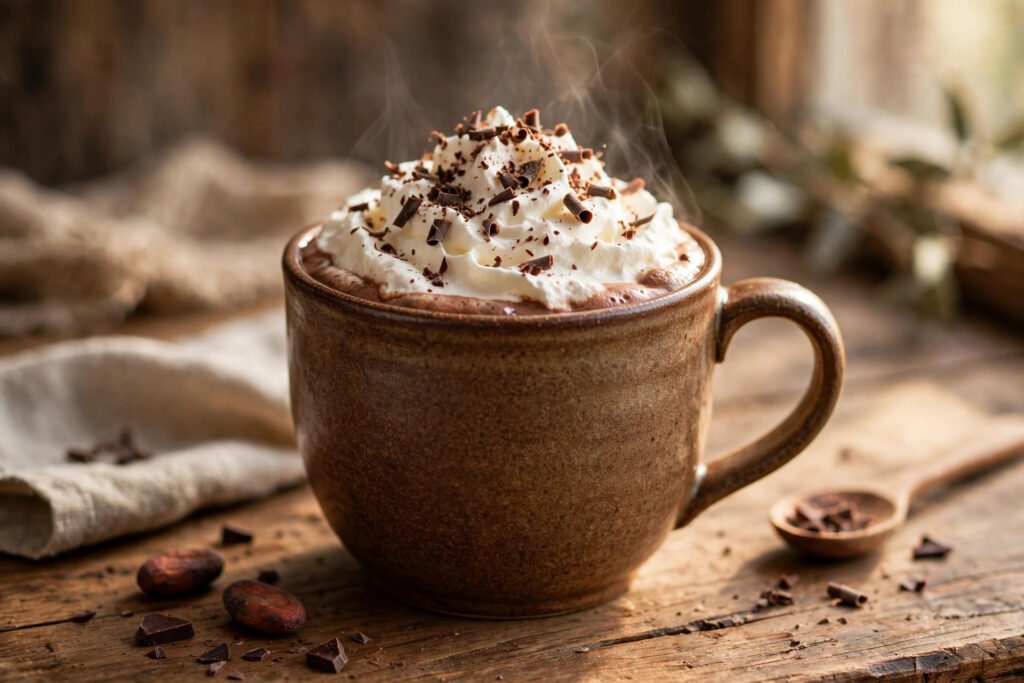
Table of Contents
There is a moment, about three minutes into making it, when you realise the packet version was never hot chocolate at all. The milk turns glossy, the chocolate melts into something thick and dark, and the kitchen smells like a café. Learning how to make hot chocolate from scratch takes five minutes, four ingredients, and one saucepan — and once you have tasted the real thing, the instant mix in the back of the cupboard starts to look like a different drink entirely.
This is not a fussy recipe. There is no tempering, no double boiler, and no special equipment beyond a whisk. What matters is the method: warming the milk gently, blooming the cocoa properly, and adding the chocolate off the heat so it melts into silk instead of seizing. Get those three things right and the result is café-quality every time, for a fraction of the café price.
Hot Chocolate vs Hot Cocoa: What Is the Difference?
People use the two terms interchangeably, but they describe different drinks. Hot chocolate is made from melted real chocolate whisked into warm milk, which gives it body, richness, and a texture closer to melted ganache. Hot cocoa is made from cocoa powder, which makes a lighter, thinner drink that is quicker to prepare. Both are good; they are simply different.
The best cup uses both. Cocoa powder blooms in warm milk and gives deep, intense chocolate flavour, while a handful of chopped dark chocolate provides the body and silky mouthfeel that powder alone cannot match. That combination — powder plus real chocolate — is the method used by most of the best from-scratch recipes, including the Love and Lemons homemade hot chocolate, which pairs cocoa powder with chopped dark chocolate for exactly this reason.
The Ingredients (One Mug)
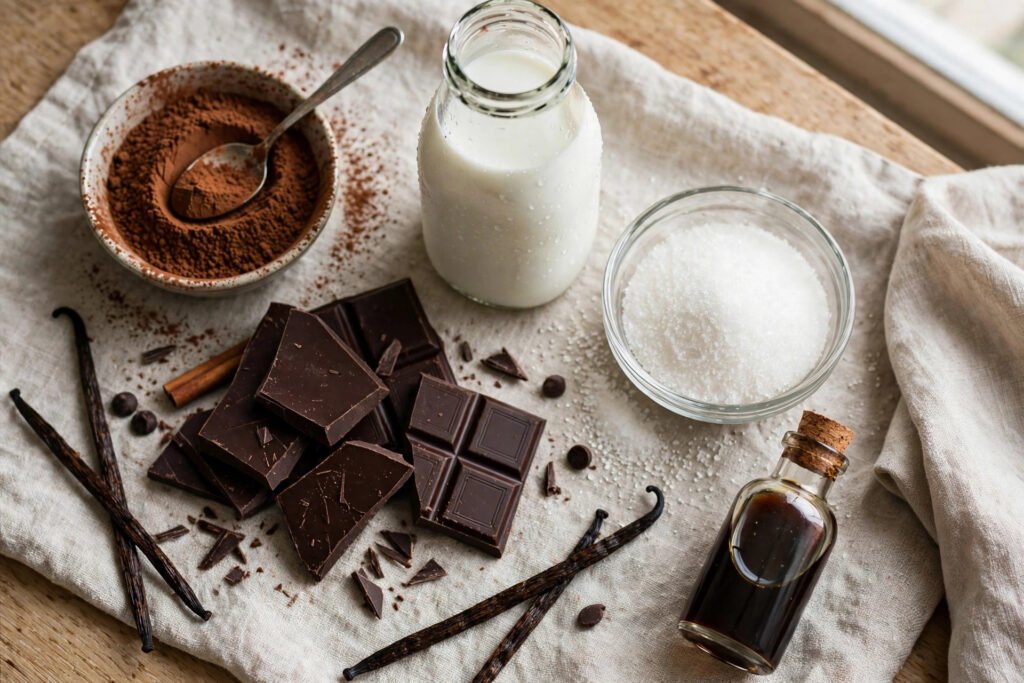
For one generous mug, you need 1 cup (240 ml) of whole milk, 2 tablespoons of unsweetened cocoa powder, 1 ounce (30 g) of dark chocolate (60–70% cacao), chopped, 1 tablespoon of sugar, a pinch of salt, and a drop of vanilla extract. That is the whole list. Whole milk matters: its fat carries the chocolate flavour and gives the drink its body. Skimmed milk works, but the result is thinner and less satisfying.
Choose your chocolate like it matters, because it does. A bar of dark chocolate in the 60–70% range gives depth without bitterness; milk chocolate makes a softer, sweeter cup that children usually prefer. Avoid chocolate chips for melting if you can — they contain stabilisers that help them hold their shape, which is the opposite of what you want in a drink. A chopped bar melts far more smoothly.
On cocoa powder: Dutch-process cocoa is darker and mellower, while natural cocoa is brighter and slightly fruity. Either works in this recipe, so use what you have. Just make sure it is unsweetened cocoa powder, not a sweetened drinking-chocolate mix — the recipe already has its own sugar, and a sweetened mix will make the cup cloying.
How to Make Hot Chocolate From Scratch: The 5-Minute Method
Step 1: Warm the milk gently
Pour the milk into a small saucepan and set it over medium-low heat. Warm it until it is steaming and small bubbles form around the edges — about two minutes. Do not let it boil. Boiling milk scalds, changes the flavour, and can make the chocolate seize when it hits the pan. If you see a skin forming, you have gone too far; take it off the heat and whisk it back in.
Step 2: Bloom the cocoa
Whisk the cocoa powder, sugar, and salt into the warm milk. Whisking the dry ingredients into the milk before adding the chocolate is the step that prevents lumps: cocoa powder clumps instantly in hot liquid unless it is dispersed first. Keep whisking for a minute until the mixture is smooth and a shade darker. The Mesney Home hot chocolate guide makes the same point — a splash of hot milk whisked into the cocoa first gives you a smooth paste that blends cleanly into the rest.
Step 3: Add the chocolate off the heat
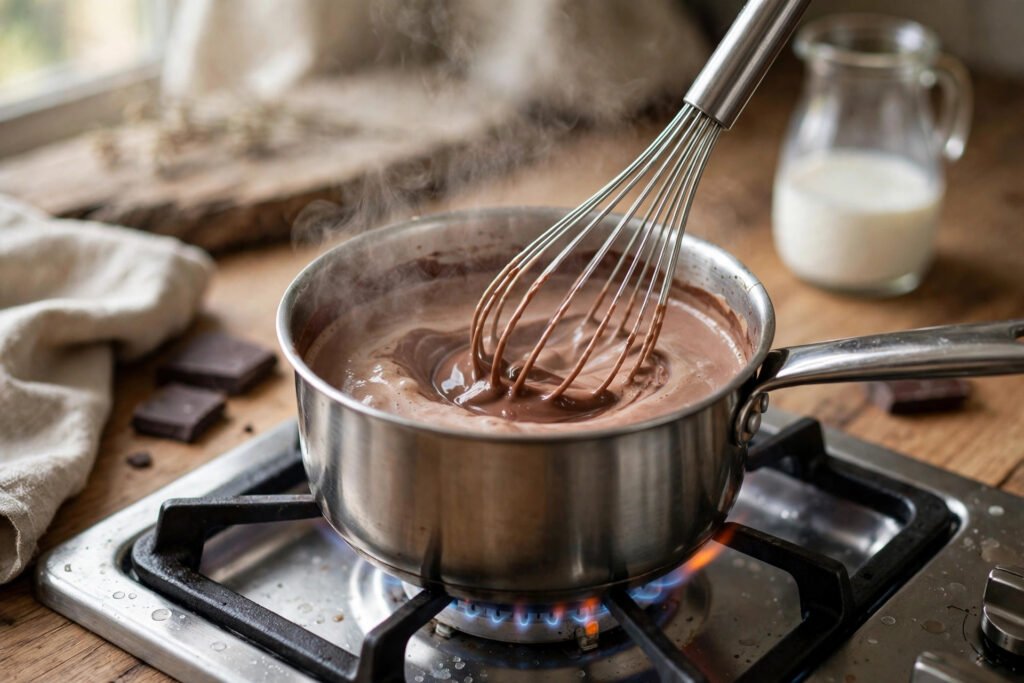
Take the pan off the heat and add the chopped chocolate. Let it sit for thirty seconds, then whisk until it is completely melted and the drink turns glossy. Adding chocolate off the heat is the single most important technique in the whole recipe: chocolate melts best between 45 and 50°C, and a pan that is still on the burner is far hotter than that. Melt it gently and it stays smooth; overheat it and it turns grainy.
Step 4: Finish and serve
Stir in the vanilla, give the drink a final vigorous whisk — this whips in a little air and creates a thin layer of foam on top that makes it feel café-made — and pour it into a warmed mug. A warmed mug is a small touch that matters: a cold mug steals heat from the drink in the first minute. Rinse the mug with hot water before you pour, and the chocolate stays hot to the last sip.
Getting the Texture Right
Texture is where homemade hot chocolate wins or loses — and it is the part of how to make hot chocolate from scratch that separates a good cup from a great one. If your cup is too thin, the fix is simple: add more chocolate, not more cocoa. A second ounce of chopped dark chocolate thickens the drink dramatically without making it bitter, because the cocoa butter in the chocolate adds body. A teaspoon of cornstarch, whisked into a little cold milk before adding it to the pan, gives the thick, almost pudding-like texture of traditional European drinking chocolate. The Fabled Alchemist’s best hot chocolate recipe uses the same two-chocolate approach — cocoa powder for flavour, solid chocolate for body — and explains why powder alone can never match it.
If your cup is lumpy, the cocoa was not bloomed properly. The rescue is a fine-mesh sieve: pour the drink through it into the mug and the lumps stay behind. Next time, whisk the cocoa with a splash of warm milk into a smooth paste before adding the rest of the milk. If the drink tastes flat, add a pinch more salt — salt does not make it salty, it makes the chocolate taste more like itself.
Five Variations Worth Trying
Once the base recipe is in your hands, it takes almost nothing to change it completely. For a spiced version, add a cinnamon stick to the milk as it warms and a pinch of cayenne — the Mexican style — or a grating of nutmeg for a winter-evening cup. For a mocha, replace a quarter of the milk with strong brewed coffee, or add a shot of espresso: our guide on how to make cold brew coffee at home gives you a smooth, low-acid coffee base that works beautifully here.
For a dairy-free version, oat milk is the best substitute — it is naturally creamy and does not split when heated the way almond milk sometimes can. Use a dairy-free dark chocolate and the result is barely distinguishable from the original. For a white hot chocolate, swap the dark chocolate for white chocolate and leave out the cocoa powder; add a drop of vanilla and a pinch of salt, and keep the heat low, because white chocolate scorches easily.
For a grown-up version, a spoonful of Baileys, amaretto, or dark rum stirred in at the end turns it into an after-dinner drink. Add the alcohol off the heat so it does not cook off, and go easy — a little goes a long way in a drink this rich.
And for a summer twist, the same recipe makes frozen hot chocolate: let the finished drink cool, blend it with a handful of ice, and pour it over more ice with whipped cream on top. It is the same silky flavour in a cold glass, and it works because the base recipe is already balanced — the cold just changes the temperature, not the taste.
Toppings That Actually Work
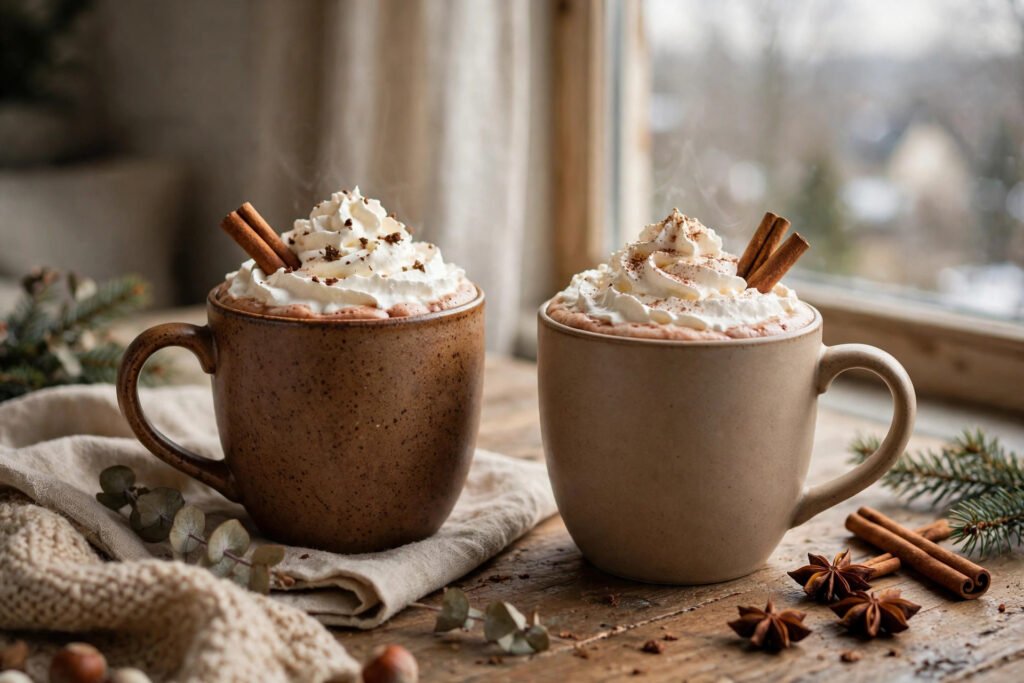
Toppings should add something, not just sit on top. Freshly whipped cream — cream whipped with a little sugar and vanilla, not the canned kind — melts slowly into the drink and adds richness with every sip. Toasted marshmallows are better than raw ones: a minute under the grill gives them a caramelised outside that holds its shape instead of dissolving into foam.
Chocolate shavings, made by running a vegetable peeler along the edge of a dark chocolate bar, look better than a dusting of cocoa and add tiny bursts of flavour. A cinnamon stick doubles as a stirrer. Crushed candy cane works in December, and a drizzle of salted caramel turns the cup into a dessert. What does not work: sprinkles, which add colour and nothing else, and anything that sinks straight to the bottom before you take a sip.
Mistakes to Avoid
The most common mistake is boiling the milk. It scalds, it skins, and it makes the chocolate grainy — and it is entirely avoidable by keeping the heat at medium-low and watching the pan. The second is using the wrong chocolate: sweetened drinking-chocolate mix instead of unsweetened cocoa, or chocolate chips that refuse to melt smoothly. Read the label before you buy.
The third is under-sweetening and then over-correcting. Taste before you add more sugar, and remember that the toppings add sweetness too — whipped cream and marshmallows on an already-sweet base make a cup that nobody finishes. The fourth is making it too far ahead: hot chocolate is at its best in the first ten minutes, while the foam is still there and the temperature is right. If you must make it ahead, reheat it gently and whisk it again before serving.
How to Store and Reheat Leftovers
Hot chocolate keeps well in the fridge for two to three days in a sealed jar or bottle. It will thicken as it cools and may separate slightly — that is normal. Reheat it gently in a saucepan over low heat, whisking constantly, and never let it boil. A splash of fresh milk restores the texture if it has thickened too much.
You can also make a dry mix for the pantry: combine cocoa powder, sugar, and a pinch of salt in a jar, and use three tablespoons per mug of hot milk, adding the chopped chocolate fresh each time. It keeps for months and makes a far better cup than any shop-bought mix, for a fraction of the price. If you enjoy making drinks from scratch, our iced latte vs iced coffee comparison is a good next read for the cold side of the same hobby.
Frequently Asked Questions
Can I make hot chocolate from scratch with just cocoa powder?
Yes. Whisk 2 tablespoons of cocoa powder and 1 tablespoon of sugar with a splash of hot milk into a smooth paste, then add the rest of the milk and heat until steaming. It will be lighter and thinner than a version with melted chocolate, but it is still far better than a packet mix.
What is the best chocolate for homemade hot chocolate?
A dark chocolate bar in the 60–70% cacao range, chopped from a bar rather than chips. It melts smoothly and gives the drink depth without bitterness. Milk chocolate works for a sweeter cup; white chocolate makes a white hot chocolate.
Why is my hot chocolate lumpy?
The cocoa powder was added to hot liquid without being dispersed first. Whisk it with a splash of warm milk into a smooth paste before adding the rest of the milk. If it is already lumpy, pour the drink through a fine-mesh sieve into the mug.
Can I make hot chocolate in the microwave?
You can, but the stovetop is better. Heat the milk in 30-second bursts, whisking between each one, then stir in the cocoa, sugar, and chocolate. The risk with a microwave is overheating the milk in one spot, which scorches the chocolate.
How do I make hot chocolate thicker?
Add more chopped dark chocolate — a second ounce thickens the drink dramatically — or whisk a teaspoon of cornstarch into a little cold milk and stir it into the pan as it heats. Both methods add body without making the drink sweeter.
Is homemade hot chocolate healthier than a packet mix?
Usually, yes. You control the sugar, and a from-scratch cup has no artificial flavours, stabilisers, or powdered oils. Cocoa itself is rich in flavanols, the compounds behind dark chocolate’s reputation, though a sweetened cup is still a treat rather than a health drink.
Conclusion
Learning how to make hot chocolate from scratch is one of the best returns on five minutes in the kitchen. A saucepan, a whisk, milk, cocoa, and a bar of dark chocolate are all it takes — and the result is richer, silkier, and cheaper than anything that comes from a packet or a café queue.
Make it tonight. Warm the milk gently, bloom the cocoa, melt the chocolate off the heat, and whisk it into a foam before you pour. Once you have tasted it, the packet in the back of the cupboard will stay there — and the five-minute version will become the winter-evening ritual it deserves to be.



