
SpaceX Catches Starship With Its Tower Arms for the First Time
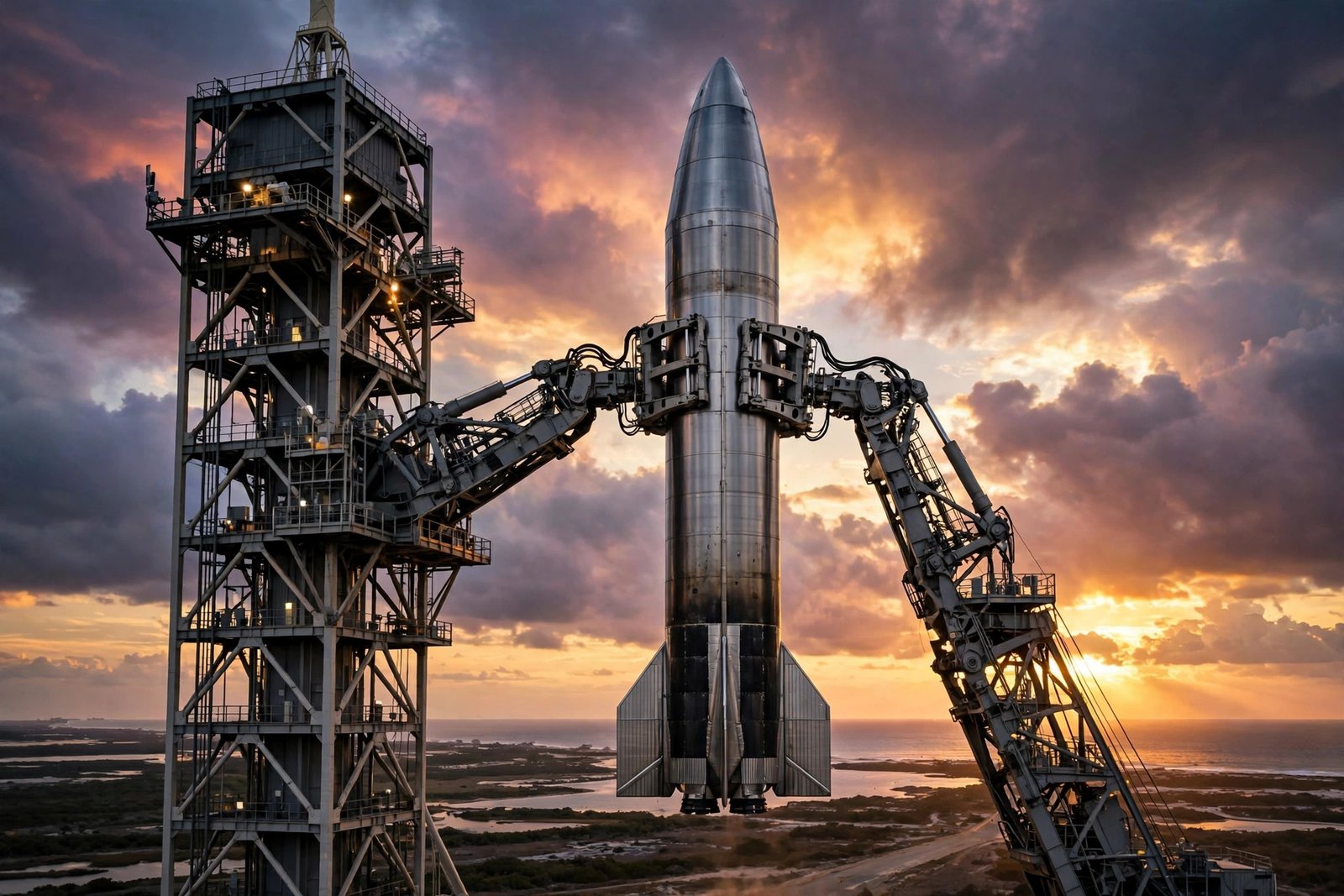
For the first time ever, a spacecraft the size of a fifteen-storey building fell out of orbit, flipped itself upright, and was caught in mid-air by the arms of the tower it launched from. The spacex starship catch november 2026 story is one of the most significant moments in the history of spaceflight — and it came on a flight where only half the plan worked. The ship made it. The booster did not.
Starship Flight 15 lifted off from Starbase, Texas, on Friday, November 13, 2026, at 5:47 p.m. ET. About 22 and a half hours later, on Saturday, November 14, the ship returned from orbit and settled between the launch tower’s two mechanical “chopstick” arms — the first time a Starship upper stage returning from orbit has been caught. This article covers what happened, what went wrong with the booster, and why the catch matters.
The Flight: Launch, Satellites, and a Day in Orbit
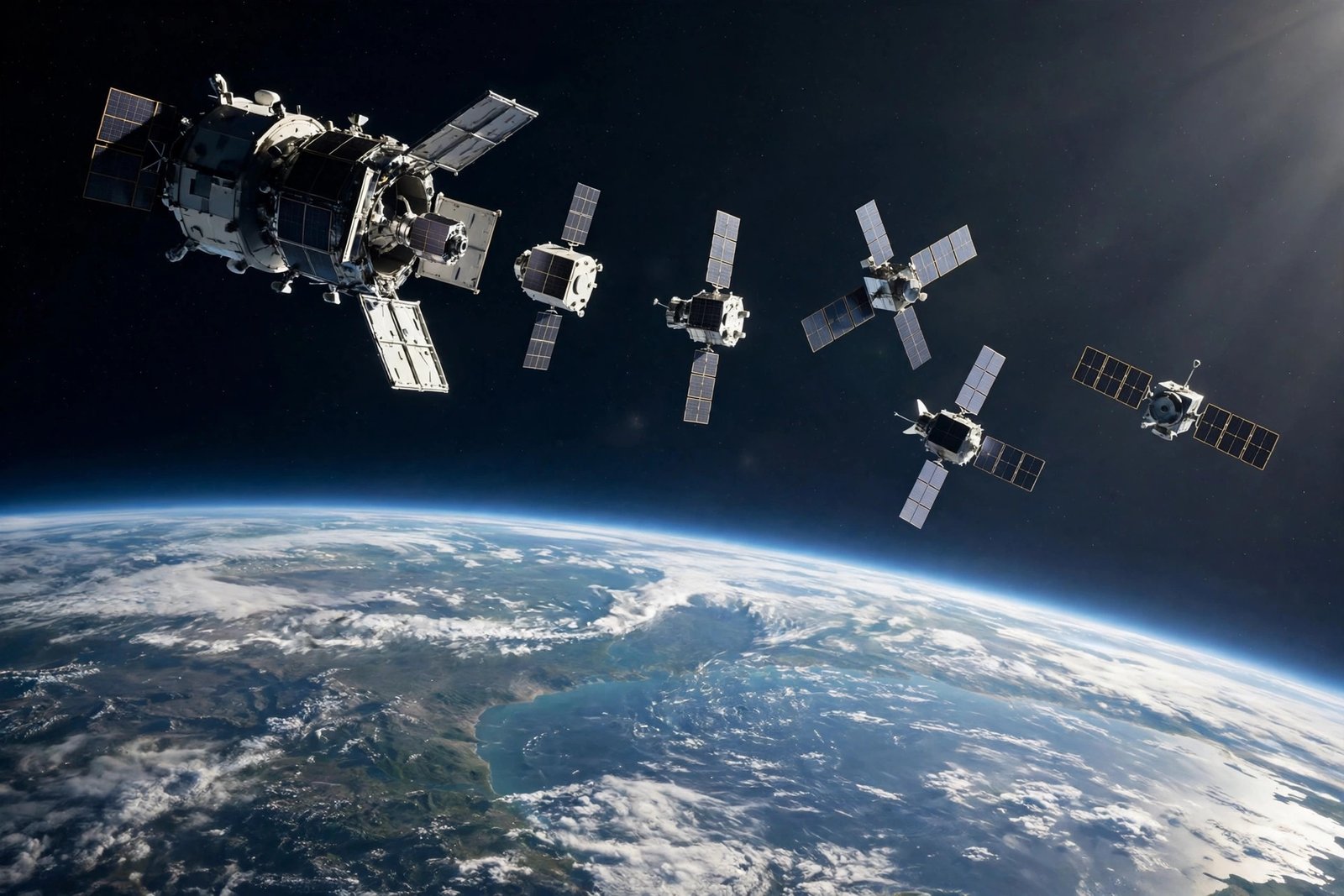
Flight 15 was Starship’s fourth launch of 2026. Ship 42 flew atop Super Heavy Booster 22, lifting off from Starbase, Texas, at 5:47 p.m. ET (22:47 UTC) on Friday, November 13, 2026. The mission’s first job was a satellite deployment: the ship released 26 Starlink V3 satellites into orbit.
Then came the long part. The ship stayed in orbit for about 22.5 hours, completing 14 orbits of the Earth. That extended stay was itself a test — a ship that will one day carry cargo and crew has to survive a full day in space, managing its power, temperature, and orientation, before coming home. By the time it began its return on Saturday afternoon, it had proved it could.
The flight was planned as a first attempt at a double catch: both the Super Heavy booster and the ship returning to the tower to be caught by the same mechanical arms. SpaceX had caught Super Heavy boosters three times before. It had never caught a ship. Saturday was the first try at doing both on the same flight.
The Catch: How Mechazilla Grabbed a Ship From Orbit
On Saturday, November 14, at about 4:20 p.m. ET, Ship 42 came home. The sequence is one of the most demanding manoeuvres in aerospace. The ship re-entered the atmosphere at orbital speed — roughly 27,000 kilometres per hour — enduring plasma heating on its heat shield as it bled off speed. Then it flipped from its belly-first re-entry orientation to vertical, lit three Raptor engines, and steered itself toward the launch tower.
The tower’s two mechanical arms, nicknamed “chopsticks” and known collectively as Mechazilla, closed around the ship as it descended, catching it by small pins on its sides and holding it in mid-air. It was the first time a Starship upper stage returning from orbit had been caught, and the first time any spacecraft had been recovered this way after a full orbital flight.
Why is the ship the harder catch? A booster returns from a short suborbital hop, at a fraction of orbital speed. A ship returns from orbit, at full orbital velocity, after surviving re-entry heating that turns the air around it into plasma — and it has to arrive at the tower at exactly the right place and speed, with its engines lit at exactly the right moment. There is no margin for a second attempt. Saturday, it worked.
How the Catch Works, Step by Step
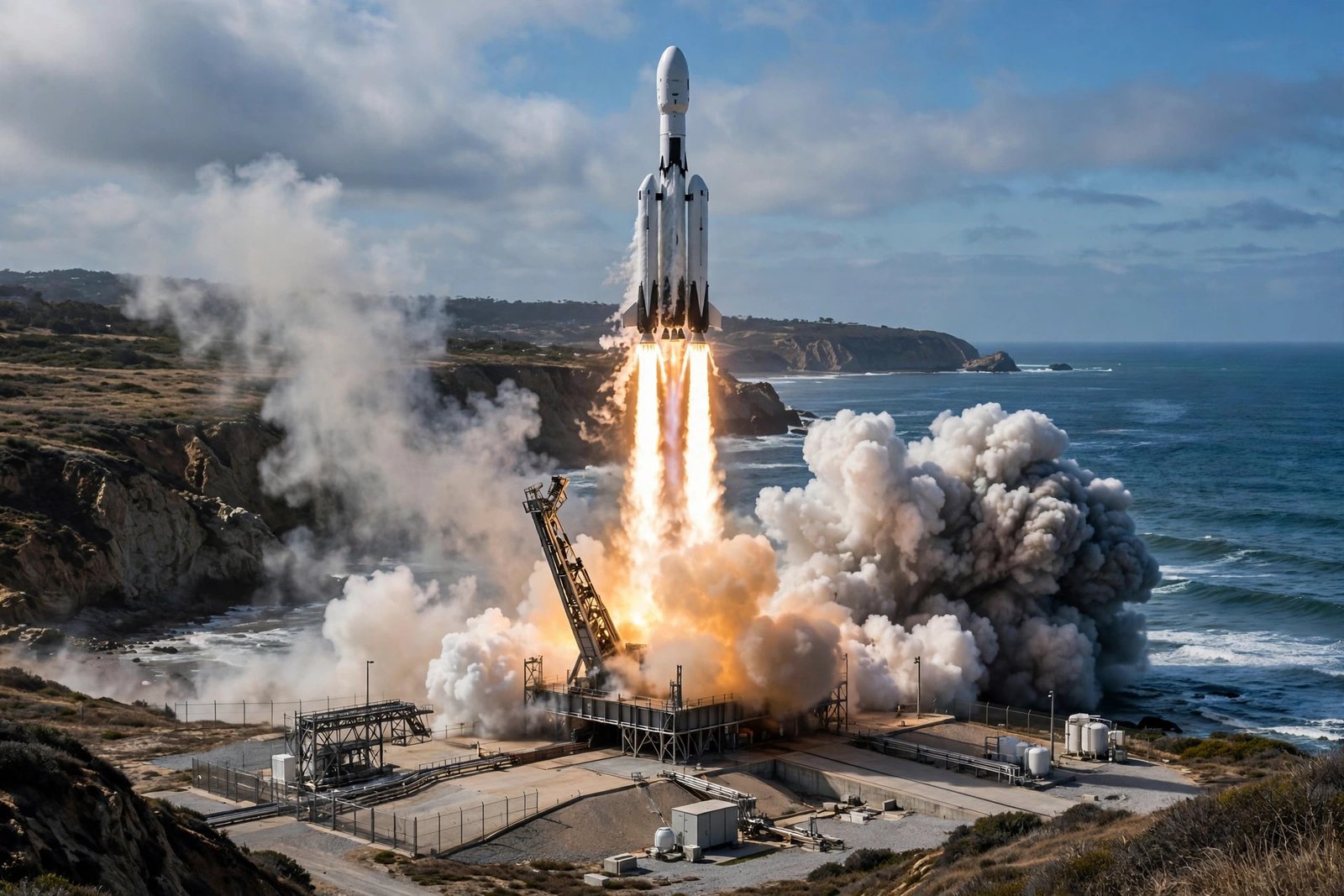
The catch looks simple in the footage — a rocket descends, two arms close, and it hangs there. The sequence behind it is anything but. After nearly a day in orbit, the ship began its return by re-entering the atmosphere at orbital speed, about 27,000 kilometres per hour, with plasma heating building up on its heat shield as it shed speed. That phase is the part no tower can help with: the ship has to survive re-entry intact, stay controllable, and arrive over the launch site on a precise path.
Then came the flip. The ship turned from its belly-first re-entry orientation to vertical, lit three Raptor engines, and steered itself toward the tower. The two mechanical arms — the “chopsticks” of the Mechazilla tower — closed around it as it descended, catching it by small pins on its sides and holding it in the air. There is no runway, no parachute, and no second attempt: the ship has to arrive at exactly the right place, at exactly the right speed, with its engines lit at exactly the right moment.
The tower itself is not new to this. It had already caught Super Heavy boosters three times before Flight 15, so the arms, the guidance, and the ground systems were proven on the booster. The ship was the unproven half: it returns faster, hotter, and from much further away, and Saturday was the first time the tower had ever been asked to catch one. The spacex starship catch november 2026 flight proved the arms could do it.
What Happened to the Booster
The booster did not make it back. That is the other half of this story, and it is important to get it right, because the flight is sometimes described as a double catch. It was not. Only the ship was caught.
Super Heavy Booster 22’s return went wrong early. Its boostback burn — the engine burn that turns the booster around and sends it back toward the launch site — ended early on a low-fuel-mass warning. With the burn cut short, the booster’s guidance system aborted the catch attempt and diverted the booster away from the tower, toward the Gulf of Mexico, where it exploded after flight termination was triggered. SpaceX says the root cause is under investigation.
The diversion is itself a safety feature working as designed. The tower catch is only attempted when the booster is on a precise trajectory with enough propellant to complete the landing burn. If either condition fails, the system sends the booster to a safe area over water rather than risking the launch site. The booster was lost; the tower, the ground equipment, and the ship’s mission were not.
Losing the booster on the same flight as the first ship catch is a reminder of how experimental Starship still is. The program has now caught boosters three times and a ship once, and it has also lost vehicles in both roles. Each flight is a test, and Flight 15 tested both halves of the recovery plan at once — one passed, one did not.
SpaceX Starship Catch November 2026 in Context
The spacex starship catch november 2026 flight — Flight 15 — was Starship’s fourth launch of 2026, and it was the first attempt at a double catch — both the Super Heavy booster and the ship returning to the tower on the same flight. That ambition is what makes the result worth reading carefully. It was not a flight with one objective and one outcome; it was a flight with two recovery attempts, and they went different ways.
The booster half had the better track record going in. SpaceX had caught Super Heavy boosters three times before, so a booster catch was a proven manoeuvre, not an experiment. The ship half had no track record at all: no Starship upper stage returning from orbit had ever been caught, by anyone, anywhere. Saturday reversed the expected outcome — the unproven half worked, and the proven half failed on a low-fuel-mass warning that cut its boostback burn short.
That reversal is normal for a test programme, and it is why each Starship flight carries more than one objective. The programme learns from both halves: the ship catch proves the tower can recover an orbital vehicle, and the booster loss gives SpaceX a root cause to investigate before the next attempt. Neither result on its own tells the whole story of the flight.
Timeline: Flight 15 in Brief
| Time | Event |
|---|---|
| Fri Nov 13, 5:47 p.m. ET | Starship Flight 15 launches from Starbase, Texas — Ship 42 atop Super Heavy Booster 22 |
| Fri Nov 13, shortly after launch | Ship 42 deploys 26 Starlink V3 satellites |
| Fri Nov 13 – Sat Nov 14 | Ship spends ~22.5 hours in orbit, completing 14 orbits |
| Sat Nov 14, ~4:20 p.m. ET | Ship 42 returns, flips vertical, lights three Raptor engines, and is caught by the tower’s chopstick arms |
| Sat Nov 14 | Booster 22 diverted to the Gulf of Mexico after an aborted catch; flight termination triggered |
Why Full Reusability Matters
Starship is designed to be fully reusable — both stages recovered, refuelled, and flown again, like an airliner rather than a firework. No orbital rocket has ever done that. The Space Shuttle reused its orbiter and its solid rocket boosters, but its external tank was thrown away every flight, and refurbishing the orbiter took months and a standing army of technicians.
Full reusability is what makes the economics work: if both stages are recovered, refuelled, and flown again, the cost of each launch falls, because the vehicle itself is the expensive part — not the fuel. If the vehicle flies once and is discarded, every launch pays for a new rocket. That is the difference between spaceflight as a rare, expensive event and spaceflight as routine transport.
The ship catch is the missing piece. SpaceX had already proved it could catch a booster, which is the larger and heavier stage. But the ship is the part that goes to orbit, carries the cargo and eventually the crew, and endures re-entry. Without recovering the ship, Starship is only half reusable, and the economics only half work. The spacex starship catch november 2026 flight closed that gap for the first time.
What comes next is reflying. SpaceX president Gwynne Shotwell has said the company will try to refly a caught upper stage early in 2027, alongside a ship-to-ship refuelling test — the other technology Starship needs for deep-space missions, since a ship heading to the Moon or Mars cannot carry enough propellant to get there in one launch. Both tests are scheduled for early 2027, and both are as demanding as the catch itself.
What This Means for Spaceflight
The catch changes the conversation about what is possible, and it does so in a way that is easy to miss if you only watch the launch. Launches are spectacular, but they are the solved part of spaceflight. Landing — especially landing a vehicle that has just come back from orbit — is the hard part, and it is the part that decides whether spaceflight gets cheaper.
There are still large steps ahead. The ship has to be caught and then actually reflown, which means proving the heat shield, the engines, and the structure survive re-entry well enough to fly again without a rebuild. The booster failure on Flight 15 is a reminder that the recovery system is not yet reliable. And the refuelling test, when it comes, will be a first-of-its-kind operation in orbit.
But the direction is now visible in a way it was not before Saturday. Three booster catches, one ship catch, and a fourth launch of the year: Starship is moving from proving it can fly to proving it can come back. If the early-2027 refly works, the conversation shifts again — from whether full reusability is possible to how fast it can be made routine.
The booster loss belongs in that picture too, not as a footnote. The flight was the first attempt at a double catch, and only the ship made it — the booster’s boostback burn ended early, the catch was aborted, and the vehicle was diverted to the Gulf. SpaceX says the root cause is under investigation, and the next flights will show whether the fix holds. A test programme that only ever succeeded would not be testing anything; the value of Flight 15 is that it proved the harder half of the plan while exposing a fault in the half that was supposed to be routine.
For readers who want to follow the next steps, SpaceX publishes flight updates and webcasts, and NASA publishes its own updates on the vehicle’s progress. Coverage of the flight also appeared from CNBC, the Associated Press, and Space.com; see CNBC, AP News, and Space.com for their reporting.
Frequently Asked Questions
Did SpaceX catch the Starship booster on Flight 15?
No. Only the ship was caught. The booster’s boostback burn ended early on a low-fuel-mass warning, its guidance system aborted the catch, and it was diverted to the Gulf of Mexico, where it exploded after flight termination was triggered. SpaceX had caught Super Heavy boosters three times before, but not on this flight.
When did the Starship catch happen?
Flight 15 launched on Friday, November 13, 2026, at 5:47 p.m. ET from Starbase, Texas, and the ship was caught on Saturday, November 14, at about 4:20 p.m. ET, after about 22.5 hours and 14 orbits.
How many satellites did Starship deploy on Flight 15?
Twenty-six Starlink V3 satellites, deployed shortly after launch. It was the first Starship flight to carry the new-generation satellites.
Why is catching the ship harder than catching the booster?
The booster returns from a short suborbital hop at a fraction of orbital speed. The ship returns from orbit at roughly 27,000 kilometres per hour, survives re-entry plasma heating, flips vertical, and must arrive at the tower precisely — with no chance of a second attempt.
What happens next for Starship?
SpaceX president Gwynne Shotwell has said the company will try to refly a caught upper stage early in 2027, alongside a ship-to-ship refuelling test. Flight 15 was Starship’s fourth launch of 2026.
How can I watch the next Starship flight?
SpaceX webcasts its launches live and announces launch windows in advance. NASA also publishes updates on the vehicle’s progress.
Conclusion
The spacex starship catch november 2026 flight will be remembered for the image that closed it: a giant silver ship hanging between two mechanical arms, caught out of the sky after a day in orbit. It was the first time a spacecraft returning from orbit had ever been recovered that way, and it closed the biggest remaining gap in Starship’s reusability plan.
It was not a clean success — the booster was lost, and the root cause is still under investigation — but that is the nature of a test programme. One half of the double catch worked, and it was the harder half. Early 2027 brings the next test: flying a caught ship again, and refuelling one in orbit. If both work, Saturday will look, in hindsight, like the day full reusability became real.
If this story caught your interest, our earlier coverage of SpaceX includes our report on SpaceX’s move into wireless services from October 2026, and our explainers on what Wi-Fi 7 is and how to speed up a slow laptop cover the technology the satellites above your head make possible — plus our roundup of the best budget wireless earbuds of 2026.



