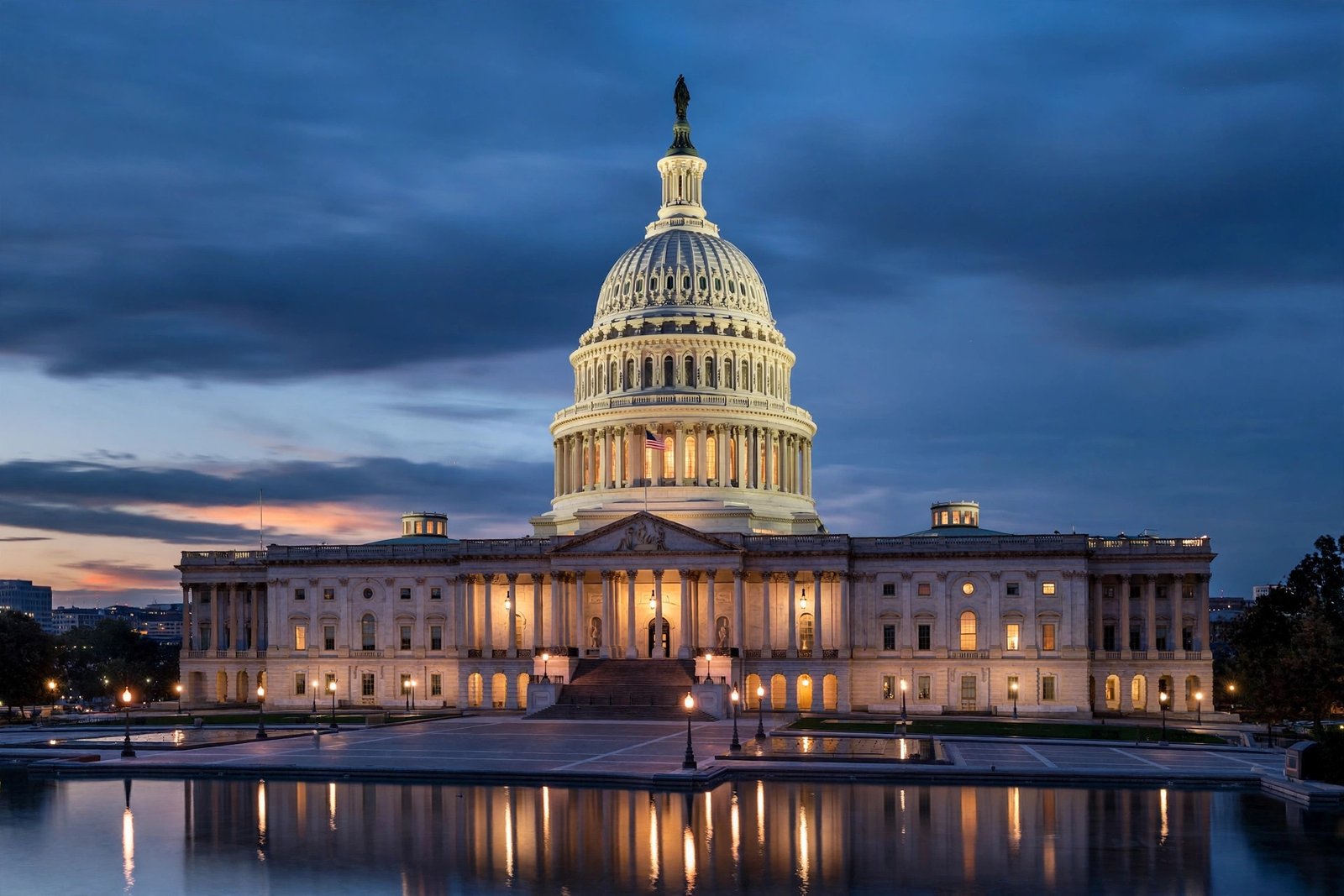

US Government Shutdown Ends November 2026? Senate Advances Deal After 40 Days
Table of Contents
After 40 days — the longest government shutdown in American history — the end is finally in sight: it would reopen the government once signed, if the remaining steps fall into place.
The vote does not reopen the government by itself. The legislation still needs final Senate passage, approval in the House of Representatives — which has not been in session since September 19 — and the President’s signature before federal agencies can reopen. But after five weeks of failed votes and hardening positions, Sunday night’s vote was the first real breakthrough, and it sets the shutdown on a path to end within days. This article explains what happened, what is in the deal, what it leaves out, and what happens next — as of the morning of Monday, November 9, 2026.
What Happened on Sunday Night
The Senate voted 60–40 on Sunday night to advance the funding package, with eight members of the Senate Democratic caucus joining Republicans to reach the 60-vote threshold needed to break the filibuster. The eight were Senators Dick Durbin of Illinois, John Fetterman of Pennsylvania, Maggie Hassan and Jeanne Shaheen of New Hampshire, Tim Kaine of Virginia, Catherine Cortez Masto and Jacky Rosen of Nevada, and independent Senator Angus King of Maine, who caucuses with the Democrats. Senate Democratic leader Chuck Schumer voted against advancing the package, along with most of his caucus.
The deal was brokered over the weekend by Senate Majority Leader John Thune, Senators Hassan, Shaheen, and King, Senate Appropriations Chair Susan Collins, and White House negotiators. The Straits Times report on the Senate vote confirms the 60–40 margin and the deal’s terms. It uses a House-passed stopgap bill as its vehicle and combines it with three full-year spending bills and an updated continuing resolution. The procedural vote was the breakthrough: the Senate had voted repeatedly on funding bills for more than a month without reaching 60 votes, and the shutdown had already surpassed the previous record of 35 days, set during President Donald Trump’s first term.
The Manila Metro report confirms the 60–40 margin and the 40-day duration, noting that the shutdown had left federal workers unpaid and delayed food assistance for millions.
What Is in the Deal?
The package has two main parts: a short-term funding extension for most of the government, and full-year funding for a handful of agencies.
Funding through January 30, 2027. The continuing resolution funds most of the federal government at existing spending levels through January 30, 2027, giving negotiators more time to strike a longer-term deal for the rest of the fiscal year. That date is the key number in the package: it reopens the government now, but it sets up another funding deadline in less than three months.
Full-year funding for five areas. The package includes three full-year appropriations bills covering the Department of Agriculture, the Food and Drug Administration, the Department of Veterans Affairs, military construction projects, and the legislative branch. Those agencies would be funded through the end of the fiscal year, September 30, 2027, rather than through the January stopgap.
Food assistance and back pay. The agreement fully funds the Supplemental Nutrition Assistance Program (SNAP), which serves about 42 million lower-income Americans, through September 2027. SNAP funding had become one of the most contentious issues of the shutdown, with benefit delays and court battles over whether the administration could keep the program running without an appropriation. The package also provides back pay for federal workers who went unpaid during the shutdown, and it includes protections for the more than 4,000 federal workers targeted for layoffs during the funding lapse, along with language barring further reductions in force through the length of the continuing resolution.
For readers trying to place the shutdown in the wider economic picture, our coverage of the US jobs report for November 2026 shows a labor market that has been absorbing the disruption so far — 165,000 jobs added, with unemployment at 4.1% — though the full economic cost of a 40-day shutdown will take time to measure.

What the Deal Leaves Out: Health Care Subsidies
The central sticking point of the entire shutdown was the fate of enhanced Affordable Care Act subsidies, and the deal does not resolve it. The subsidies, which were expanded during the COVID-19 pandemic and help about 24 million Americans afford health insurance, are set to expire at the end of this year. Democrats had demanded an extension as the price of their votes for five weeks; the final deal does not include one.
What it includes instead is a promise. Senate Majority Leader John Thune committed to holding a Senate vote on legislation extending the subsidies no later than the second week of December — a vote with no guaranteed outcome. That commitment was enough for the eight Democratic-caucus members who broke ranks, but it infuriated many of their colleagues, who argued that a promised vote is not the same as an extension, and that the party gave up its leverage for nothing.
If the December vote fails, millions of Americans will see their health insurance premiums rise sharply in January, just as the funding extension expires and Congress faces another deadline. The subsidies question is not settled; it has been postponed, and the December vote will be one of the most closely watched moments of the year. The Paisano report on the deal notes that the agreement contains no guarantee of an extension, and that the future of the subsidies remains uncertain.
Why Did the Shutdown Last 40 Days?
Government shutdowns happen when Congress fails to pass the annual spending bills — or a temporary continuing resolution — before the fiscal year begins on October 1. This one began on October 1, 2026, after the Senate repeatedly failed to reach the 60 votes needed to advance a funding bill. The core dispute was the health care subsidies: Democrats insisted that any funding bill include an extension, while Republicans insisted that funding and health care be dealt with separately.
For the first month, neither side moved. The Senate voted on the same basic funding bill more than a dozen times without success. Meanwhile, the effects accumulated. Federal workers — about 750,000 of them furloughed, with hundreds of thousands more working without pay — missed paychecks. Air traffic controllers working without pay called in sick in growing numbers, and flight delays and cancellations spread across major airports. National parks closed or operated with skeleton staff. Food assistance was disrupted. The longer it went on, the more pressure built on both parties, and the more the political cost of holding out rose.
The breakthrough came from the center. A group of centrist Democrats, led in the negotiations by Senators Shaheen, Hassan, and King, concluded that the shutdown was doing more damage than the leverage was worth, and that the promised December vote on subsidies was a better outcome than an indefinite closure. Their defection gave Republicans the 60 votes they needed, and it split the Democratic caucus in public — a division that will shape the party’s politics for months.
US Government Shutdown Ends November 2026? What Happens Next
The path from Sunday night’s vote to a reopened government has several steps, and each one takes time. First, the Senate must complete its procedural steps and pass the package in a final vote. Then the House of Representatives, which has not been in session since September 19, must return to Washington and approve it — the earliest House vote is expected on Wednesday. Then the President must sign it. Only then do federal agencies reopen, furloughed workers return, and back pay begin to flow.
That process could take several days, and the shutdown continues until the President’s signature. Federal workers will not be paid until the funding is law, and the flight disruptions and service closures will not unwind overnight.
There is also the January 30, 2027 deadline. The continuing resolution buys less than three months, and Congress will need to pass the remaining nine appropriations bills — or another extension — before then. If the December vote on health care subsidies fails and the January funding deadline arrives with no agreement, the country could face the same standoff again, barely two months after this one ends. The deal resolves the shutdown; it does not resolve the underlying disagreement. For the political backdrop, our coverage of the US midterm elections of November 2026 explains the new balance of power in Congress that will shape those fights.

How the Shutdown Affected Everyday Life
For most Americans, the shutdown’s effects arrived gradually and then all at once. The most visible disruption was air travel: as unpaid air traffic controllers called in sick, the Federal Aviation Administration ordered flight reductions at major airports, and delays spread through the system. Travelers faced cancellations and hours-long waits, and the disruption worsened in the final week as staffing shortages grew.
Food assistance was the most serious hardship. SNAP serves about 42 million lower-income Americans, and benefit delays during the shutdown left families uncertain about November groceries. The deal’s full funding of SNAP through September 2027 is one of its most consequential provisions, and it removes the immediate threat to the program.
Federal workers bore the direct cost. Hundreds of thousands went without pay for more than a month, with many turning to food banks, taking second jobs, or falling behind on rent and mortgages. Back pay will eventually make them whole financially, but a month without income leaves debts and late fees that a back-pay check does not erase.
The wider economy felt it too. Our report on US business activity in October 2026 showed growth cooling even before the shutdown’s worst weeks, and economists expect the shutdown to shave a meaningful amount off fourth-quarter growth. The full accounting will come in the months ahead.
Frequently Asked Questions
Has the government shutdown ended?
Not yet, as of the morning of Monday, November 9, 2026. The Senate voted 60–40 on Sunday night to advance a deal, but the legislation still needs final Senate passage, House approval, and the President’s signature before the government reopens. The House is expected to vote as early as Wednesday — and once it does, the US government shutdown ends November 2026 in full.
How long was the government shutdown?
Forty days, from October 1 to the Senate’s breakthrough vote on November 8, 2026. It is the longest government shutdown in US history, surpassing the previous record of 35 days set in 2018–2019.
What does the deal fund, and for how long?
Once the bill is signed, the US government shutdown ends November 2026, with most of the government funded at current levels through January 30, 2027. Five areas — Agriculture, the FDA, Veterans Affairs, military construction, and the legislative branch — receive full-year funding through September 30, 2027. SNAP food assistance is fully funded through September 2027.
Does the deal extend Affordable Care Act subsidies?
No. The deal does not extend the enhanced ACA subsidies, which expire at the end of 2026. Senate Majority Leader John Thune committed to a Senate vote on extending them by the second week of December, but that vote has no guaranteed outcome.
Will federal workers get back pay?
Yes. The package provides back pay for federal workers who went unpaid during the shutdown, and it protects workers targeted for layoffs during the funding lapse from further reductions in force through January 30, 2027.
Could there be another shutdown in January 2027?
Possibly. The continuing resolution expires on January 30, 2027, and Congress must pass the remaining spending bills or another extension before then. If the health care subsidies dispute is unresolved, another standoff is a real risk.
Conclusion
The Senate’s 60–40 vote on Sunday night, November 8, 2026, ends the longest government shutdown in American history — or at least begins its ending. The deal funds the government through January 30, 2027, gives full-year funding to Agriculture, the FDA, Veterans Affairs, military construction, and the legislative branch, fully funds food assistance through September 2027, and provides back pay to the federal workers who went 40 days without a paycheck. In short, the US government shutdown ends November 2026 — pending the House vote and the President’s signature.
What it does not do is settle the fight that caused the shutdown. The Affordable Care Act subsidies expire at the end of the year, and the December vote Thune promised is a gamble, not a guarantee. The House still has to vote, the President still has to sign, and January 30 is less than three months away. The shutdown is ending. The argument that caused it is not — and it will be back on the table before winter is over.




