
US Jobs Report November 2026: 165,000 Jobs Added, Unemployment 4.1%

The US jobs report November 2026 delivered the kind of surprise that moves markets: American employers added 165,000 jobs in October, nearly three times what economists expected, and the unemployment rate ticked down to 4.1%. The Bureau of Labor Statistics released the Employment Situation report for October 2026 on Friday, November 6, 2026, at 8:30 a.m. ET, and the numbers were strong in almost every direction — hiring beat forecasts, earlier months were revised sharply higher, and wages kept growing. For workers, borrowers, and the Federal Reserve, this was not a quiet report. It was the strongest hiring month in a year, and it arrived just weeks before the Fed’s December decision on interest rates.
Every figure below comes from the Bureau of Labor Statistics release of November 6, 2026, or from the market reaction reported the same day. If you want the original data, the BLS Employment Situation report is the primary source, and it is free to read in full.
The Headline Numbers at a Glance
Nonfarm payrolls rose by 165,000 in October 2026. That is the headline, and it is a big one: economists surveyed by Dow Jones had expected a gain of only around 59,000 — the Dow Jones consensus — while a Reuters poll put the consensus near 65,000, as Global Economy Charts’ jobs report breakdown records. Hiring came in roughly two and a half times the forecast. It was also far above the average monthly gain of 48,000 recorded over the previous twelve months, according to the BLS.
The unemployment rate edged down to 4.1% from 4.2% in September. The BLS described the change as small, and it was right to: the rate has sat in a narrow range of 4.1% to 4.3% since March. The number of unemployed people stood at 7.1 million, little changed over the month.
Average hourly earnings rose 0.4% in October from September, reaching $38.00, and were up 3.1% from a year earlier. That is solid wage growth — enough to stay ahead of inflation, but not so hot that it would alarm the Fed on its own. The combination matters: strong hiring plus steady wage growth is the outcome every policymaker hopes for and rarely gets.
The Revisions: The Real Story Behind the Headline
If the 165,000 figure was the surprise, the revisions were the confirmation. The BLS revised August’s job gain up from 133,000 to 186,000, and September’s from 29,000 to 60,000. Together, the two earlier months were revised up by a combined 84,000 jobs. Add those to October’s gain and the economy actually added 249,000 more jobs over the three months than the first estimates suggested.
Revisions matter because they change the story. September’s first estimate of 29,000 had looked alarmingly weak — the kind of number that makes people ask whether hiring was stalling. The revised 60,000 is still modest, but it is twice as strong, and August’s revised 186,000 turns a decent month into a strong one. The pattern now reads as a labour market that slowed in the late summer and then rebounded firmly in October, rather than one that was fading. That distinction is exactly what the Fed watches when it decides whether the economy needs support or restraint.
It is worth remembering that October’s 165,000 is itself a preliminary estimate. The BLS revises each month’s figure twice as more employer data arrives, so this number will move.
Where the Jobs Came From
Hiring was broad, but four sectors did most of the work. Professional and business services led with 70,000 new jobs, the largest gain of any sector and a sign that companies are hiring white-collar staff again — consultants, accountants, engineers, and temporary help. Healthcare added 42,000 jobs, continuing its run as the most reliable engine of American employment, with hospitals, home health care, and outpatient care all contributing. Transportation and warehousing added 25,000 jobs, a strong month for a sector tied to holiday-season logistics and e-commerce. Manufacturing added 19,000 jobs, continuing a modest upward trend.
What did not hire is almost as informative. Construction employment showed little change in October, a flat month for a sector that usually tracks housing and infrastructure spending closely. Financial services added a modest 7,000 jobs, according to BLS data reported the same day. The picture is a service-led expansion: offices, hospitals, and warehouses hiring, while the goods-producing sectors that build things stayed quiet.
For jobseekers, the sector mix is practical guidance. Healthcare hiring is structural — an ageing population guarantees demand — while professional services hiring tends to follow business confidence. If you are looking for work, those three sectors are where the openings are.

What the Report Means for Workers
For anyone with a job, the report is good news with a caveat. Unemployment at 4.1% means jobs are available and employers are competing for workers, which is the environment in which wages rise and people can change jobs for better pay. Average hourly earnings of $38.00, up 3.1% over the year, mean pay is growing in real terms for most workers — assuming inflation stays near its recent pace.
The caveat is in the detail the headline misses. The BLS also reported that the number of people working part-time for economic reasons — people who want full-time work but cannot find it — jumped by 339,000 to 4.8 million. And a broader measure of joblessness, called U-6, which adds those part-time workers and people who have recently stopped looking, rose to 7.9% from 7.6% in September. The official 4.1% rate counts only people with no job who are actively looking. The wider picture is less tidy: more people are stuck in part-time work than a month ago, even as headline hiring surged.
That split is the honest reading of this report. Full-time hiring is strong and employers are adding payroll jobs. At the same time, a growing group of workers cannot get the hours they want. The labour market can be strong on average and difficult at the margins at the same time. Both facts are true.
What the Report Means for Borrowers
For anyone with a mortgage, a car loan, or credit-card debt, the jobs report matters because it shapes what the Federal Reserve does next — and the Fed sets the direction of interest rates. A strong jobs report makes the Fed less likely to cut rates and more likely to raise them, because a hot labour market can push wages and prices higher. That is exactly what happened on November 6.
Before the release, traders were already leaning toward a December rate hike. After it, the odds jumped. CME FedWatch, the market tool that tracks traders’ bets on Fed decisions, put the probability of a rate hike at the Fed’s December 9 meeting at around 76.8% after the release. Other readings put it near 80%: a December hike is now the expected outcome, not a possibility.
What does that mean in plain English? If the Fed raises its benchmark rate in December, borrowing gets more expensive — or stays expensive for longer. Mortgage rates, which follow the bond market rather than the Fed directly, tend to rise when traders expect higher rates ahead. Credit-card rates, which track the Fed more closely, move up within a billing cycle or two. Savers get the other side of the deal: savings accounts and certificates of deposit pay more when rates rise.
None of this is certain until the Fed actually meets on December 9. The Fed will see one more jobs report — the November report, due Friday, December 4 — and fresh inflation data before it decides. But this report shifted the balance of expectations firmly toward a hike, and borrowers should plan as if higher rates are coming. Our earlier explainer on the Fed’s first rate hike in three years sets out how rate changes flow through to mortgages, loans, and savings in practice.
What the Report Means for the Fed
The Federal Reserve has two jobs: keep prices stable and keep employment high. This report makes both jobs harder at the same time. Hiring is strong, unemployment is low, and wages are growing — all of which argue against cutting rates. But the Fed is also watching inflation, and strong wage growth of 3.1% a year keeps upward pressure on prices in services, where labour is the biggest cost.
The December 9 meeting is now the focal point. The Fed raised rates in October, and this jobs report strengthens the case for another move in December. The market agrees: the CME FedWatch probability of a December hike jumped to around 76.8% after the release, and the odds of a hike are now firmly the majority view.
The counter-argument the Fed will weigh is the softer underbelly: the rise in part-time work and the U-6 rate climbing to 7.9%. A central bank that hikes too aggressively into a labour market with hidden slack risks turning a strong economy into a weaker one.
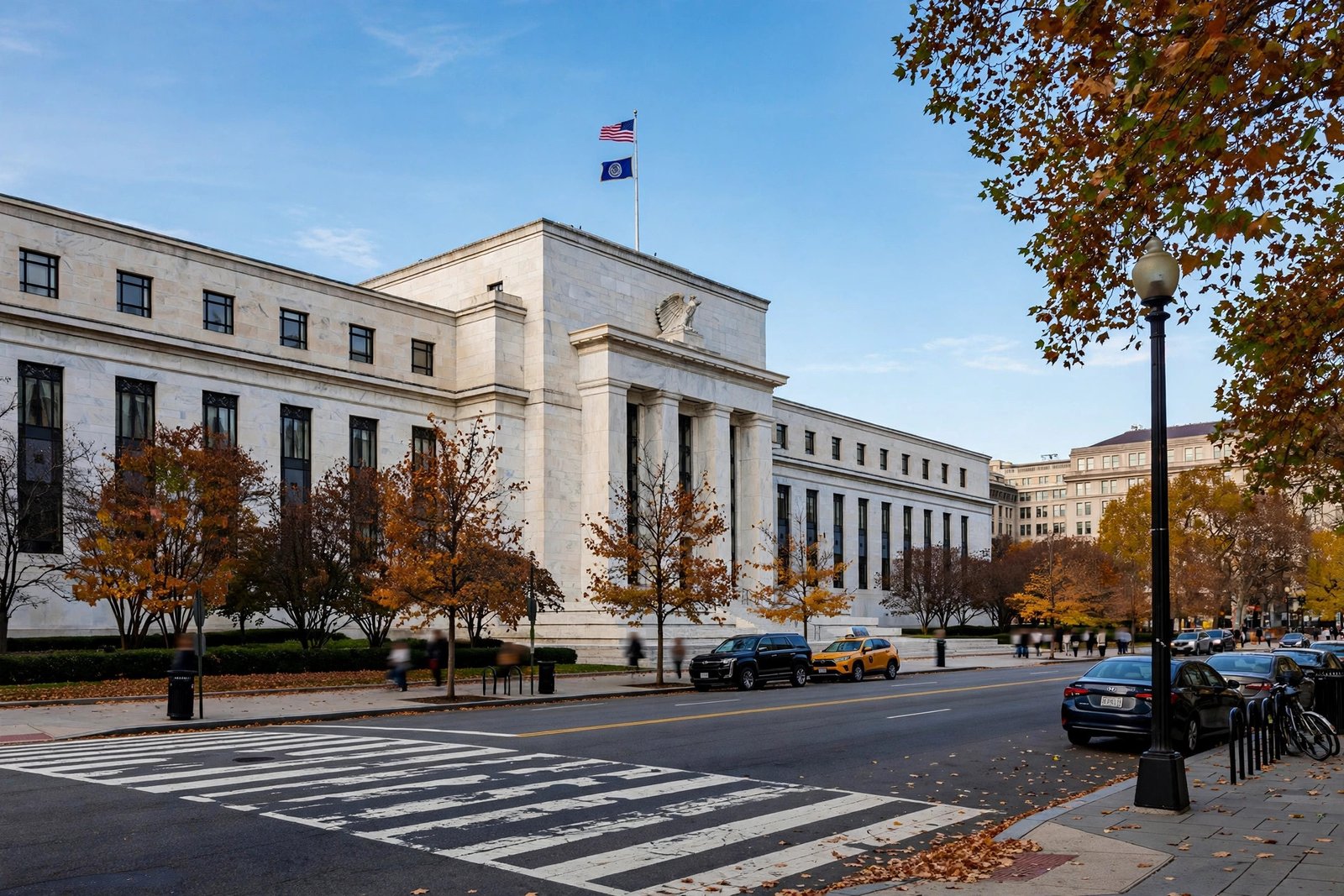
How Markets Reacted on November 6
Stock markets had a mixed day after the release, which tells you something about how investors read the numbers. According to Investopedia’s November 6 market roundup, the S&P 500 rose 0.31% and the Nasdaq-100 jumped 1.35%, while the Dow Jones Industrial Average fell 0.46%. Growth and technology stocks liked the report; the Dow’s more rate-sensitive names did not. The split makes sense: strong hiring supports company earnings, which helps stocks, but the higher probability of a December rate hike pushes up borrowing costs, which hurts them. The Nasdaq’s gain suggests investors decided the earnings story mattered more than the rates story on the day.
Bond markets are where the rate-hike expectation shows up most directly, and yields moved higher after the release as traders priced in the December hike. For ordinary investors, the practical takeaway is the direction of travel: the economy is hiring strongly, the Fed is likely to raise rates again in December, and the market has already started pricing that in.
If you are investing for the long term, the single most useful habit is to separate the noise of one report from the trend of many. This report is one strong month in a year of steady hiring. The trend is a labour market that is resilient, a Fed that is tightening cautiously, and an economy that keeps surprising forecasters on the upside. That is a decent backdrop for long-term investors, even if the ride is bumpy. Our guide on how to start investing with little money covers the basics for anyone putting their first money to work in this environment, and if the rate outlook has you thinking about your safety net, our explainer on how much emergency fund you need is worth a read before December.
What to Watch Next
The US jobs report November 2026 cycle does not end with this release. Three dates matter now. First, the October inflation report, due Tuesday, November 10. If inflation comes in hot alongside strong hiring, the case for a December hike becomes overwhelming. If it cools, the Fed gains room to wait. Second, the next jobs report — the Employment Situation for November 2026 — is scheduled for Friday, December 4, at 8:30 a.m. ET, five days before the Fed meets. A second strong month would seal the December hike; a weak one would reopen the debate. Third, the Fed meeting itself on December 9, when the decision lands.
Between now and then, watch the weekly jobless claims figures, which have been running near historic lows — 189,000 in the most recent week — and the Fed officials’ public comments. Claims that low mean layoffs are rare — the other side of a strong hiring report. For a wider read on where the economy is heading, our analysis of the US PMI for October 2026 shows growth cooling while prices surge — a useful counterweight to the hiring strength in this report.

Frequently Asked Questions
How many jobs did the US add in October 2026?
Employers added 165,000 nonfarm payroll jobs in October 2026, according to the Bureau of Labor Statistics report released November 6, 2026. That beat the Dow Jones consensus of around 59,000 and the Reuters poll of around 65,000, and it was far above the 48,000 average monthly gain of the previous twelve months.
What is the US unemployment rate now?
The unemployment rate was 4.1% in October 2026, down from 4.2% in September. The BLS described the change as small, and the rate has stayed in a narrow 4.1% to 4.3% range since March. About 7.1 million people were unemployed.
Which sectors added the most jobs?
Professional and business services led with 70,000 new jobs, followed by healthcare with 42,000, transportation and warehousing with 25,000, and manufacturing with 19,000. Construction employment was little changed, and financial services added a modest 7,000 jobs.
Will the Fed raise interest rates in December 2026?
The market thinks so. After the jobs report, CME FedWatch put the probability of a rate hike at the Fed’s December 9 meeting at around 76.8%, with some readings near 80%. The Fed will see the November jobs report on December 4 and fresh inflation data before it decides, so the hike is likely but not certain.
How much are wages rising?
Average hourly earnings rose 0.4% in October from September, reaching $38.00, and were up 3.1% from a year earlier. That is solid growth that keeps most workers ahead of inflation, without being so fast that it would force the Fed’s hand on its own.
When is the next US jobs report?
The Employment Situation report for November 2026 is scheduled for release on Friday, December 4, 2026, at 8:30 a.m. ET. It lands five days before the Federal Reserve’s December 9 meeting, so it will be the last major piece of jobs data the Fed sees before deciding on rates.
Conclusion
The US jobs report November 2026 was a genuine upside surprise: 165,000 jobs added against a forecast of roughly 59,000, unemployment down to 4.1%, earlier months revised up by 84,000, and wages growing 3.1% over the year. For workers, it means a labour market with real opportunities, especially in healthcare, professional services, and logistics — though the rise in part-time work is a reminder that the headline does not capture everyone’s experience. For borrowers, it means the December rate hike the market now expects, with a probability near 77%, is coming into focus. For the Fed, it means a December decision that is no longer close. Watch the inflation data on November 10 and the next jobs report on December 4. The story is simple: American employers are hiring, the economy is stronger than forecasters thought, and the cost of borrowing is likely to rise again before the year is out.



