
What Is a Home Warranty? What It Covers, What It Costs, and When It’s Worth It

Your furnace dies in mid-January. The repair quote runs into four figures, and your first thought is: why didn’t anyone warn me? So what is a home warranty, exactly? It is a service contract that pays to repair or replace major home systems and appliances when they break down from normal wear and tear — the furnace, the air conditioner, the plumbing, the refrigerator. You pay an annual premium plus a fee per visit, and the warranty company arranges and pays for the repair, up to the limits in your contract.
It sounds like a safety net, and for some homeowners it is. For others it becomes a yearly bill that never pays for itself — denied claims, coverage caps, and a repair process that moves at the warranty company’s pace, not yours. This guide explains what a home warranty covers, what it costs in 2026, what it will never pay for, and how to decide whether one makes sense for your home and budget.
The Plain-English Definition
Put simply, what is a home warranty? It is a service contract — not insurance — between you and a warranty company. You pay a monthly or annual premium. When a covered system or appliance breaks down through ordinary use, you file a claim, pay a service-call fee, and the company sends a contracted technician to diagnose the problem. If the failure is covered, the company pays for the repair or replaces the item up to the coverage cap in your contract.
Three things define every home warranty: the premium, the service-call fee, and the coverage caps. The premium is what you pay whether or not anything breaks. The service-call fee is what you pay every time a technician comes out, even if the repair turns out not to be covered. The caps are the maximum the company will pay per item, per claim, or per contract term — the fine print that decides whether a warranty actually saves you money. Most plans also have a 30-day waiting period, so you cannot buy a warranty on Monday and claim a broken water heater on Tuesday.
What a Home Warranty Covers
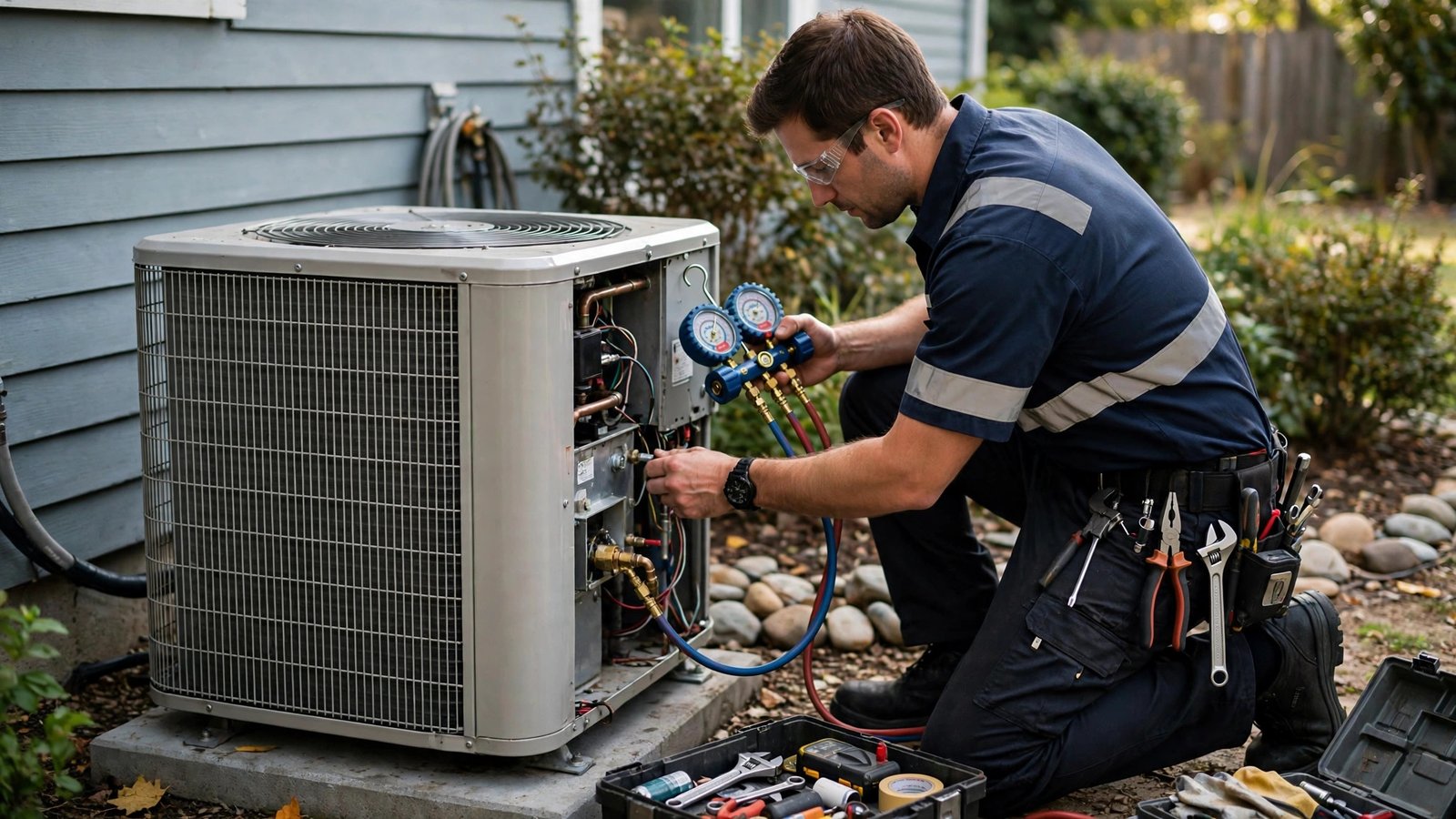
Most plans cover two groups of items: home systems and appliances. Systems coverage typically includes heating and cooling (furnace, air conditioner, heat pump), plumbing (pipes, drains, toilets, water heater), and electrical (wiring, outlets, breaker panel). Appliance coverage usually includes the refrigerator, oven and range, dishwasher, built-in microwave, garbage disposal, washer, and dryer. A systems-only plan covers the first group; an appliances-only plan the second; a combination plan both.
Coverage has limits, and the limits matter more than the list: a plan may cover your air conditioner but cap the payout, exclude the refrigerant recharge, or refuse a replacement if the unit is too old. Optional add-ons — usually $5 to $30 a month each — cover items the base plan skips: pools and spas, septic systems, well pumps, roof leaks, or a second refrigerator. If your home has any of these, check before you assume they are included.
What Is a Home Warranty vs Homeowners Insurance?
This is the confusion that causes the most disappointment. A home warranty covers breakdowns from wear and tear; homeowners insurance covers sudden, accidental damage — a fire, a storm tearing off roof shingles, a burst pipe flooding the kitchen, a burglary. The two products protect against different risks, and neither replaces the other.
| Home warranty | Homeowners insurance | |
|---|---|---|
| What it covers | Breakdowns from normal wear and tear | Sudden damage: fire, storms, theft, burst pipes |
| Required? | Never required by law or by a lender | Required by almost every mortgage lender |
| When you pay | Premium plus a service-call fee per visit | Premium plus a deductible per claim |
| Who does the work | The warranty company’s contractor | A contractor you choose yourself |
| What it never pays | Pre-existing problems, disasters, cosmetic damage | Wear and tear, maintenance, gradual breakdowns |
Your lender will require homeowners insurance and will usually collect it through escrow — if you are still working through what escrow is as a first-time buyer, that is the account your lender uses to pay insurance and taxes on your behalf. A home warranty, by contrast, is always optional. The Insurance Information Institute explains what standard homeowners insurance actually includes — worth reading before you assume the two products overlap.
What a Home Warranty Costs in 2026
The first question most people ask after learning what is a home warranty is what it costs. According to NerdWallet’s 2026 analysis of home warranty costs, the average plan costs $73 a month — $876 a year — with prices ranging from $28 to $191 a month depending on company, plan tier, and location. ConsumerAffairs puts the typical range at $350 to $900 a year; the spread is wide because plan tiers differ sharply:
| Plan type | Typical monthly cost | Typical annual cost |
|---|---|---|
| Systems only | $25–$45 | $300–$540 |
| Systems + appliances | $40–$65 | $480–$780 |
| Premium / all-inclusive | $65–$90 | $780–$1,080 |
Those numbers are only the premium. Every claim adds a service-call fee, and add-ons add $5 to $30 a month each, so a premium plan with a pool rider and two claims can easily cost $1,200 or more all-in. Get quotes from at least three companies for your exact home — introductory rates for new customers are often lower than renewal rates.
Home Warranty Costs by State
Where you live moves the price more than almost anything except plan tier, because companies price against local contractor labour rates, climate, and state regulation. ConsumerAffairs gathered quotes for a three-bedroom, two-bathroom house in each state’s most populous city in January 2026, and the gap is striking: the Northeast is the most expensive region; the Southwest among the cheapest.
| State | Average monthly cost | What drives the price |
|---|---|---|
| Connecticut | $89.86 | Older homes, high labour rates |
| Massachusetts | $87.14 | Boilers, older systems, high labour rates |
| New York | $82.36 | High contractor rates, strict regulation |
| New Jersey | $77.60 | High labour rates, older homes |
| Arkansas | $77.44 | Hot summers, heavy AC use |
| Alabama | $65.22 | Humidity, air conditioning wear |
| California | $63.65 | High labour rates offset by mild climate |
| Alaska | $61.51 | Fewer providers, heating demand |
| Arizona | $55.37 | Newer homes, competitive market |
These are averages for one standard home, so treat them as a benchmark, not a quote — your price will be higher if your home is large, your systems are old, or you add riders. For the full picture, see the ConsumerAffairs breakdown of home warranty costs by state.
Service-Call Fees: The Cost Nobody Mentions First
The service-call fee — sometimes called a trade service fee — is the flat amount you pay every time a technician visits under your warranty: typically $75 to $125 per visit, and $108.45 on average according to NerdWallet’s 2026 analysis. You pay it to the contractor at the time of the visit, even if the technician decides the problem is not covered or only makes a minor adjustment.
That detail changes the maths. Two claims in a year add roughly $150 to $250 in fees on top of your premium; three claims add $225 to $375. Some companies let you trade a higher service fee for a lower monthly premium, or vice versa — a $65 fee with a higher premium can be the better deal if you expect to claim often. Before you sign, do the arithmetic for your own likely claim count, not the advertised monthly price.
What Is Never Covered
The exclusions list is where most warranty disappointment lives, so read it before you buy, not after a claim is denied. Standard contracts exclude pre-existing conditions — anything already broken or failing when coverage starts, the most common reason a first-year claim is denied. They exclude damage from improper installation or a previous unlicensed repair, and failures caused by neglect or lack of maintenance. Routine maintenance is your job: changing filters, flushing the water heater, and seasonal work such as learning how to winterize your home before the first freeze.
Cosmetic damage — a dented refrigerator door, a scratched cooktop — is never covered, because the item still works. Damage from fire, flood, and storms belongs to your homeowners insurance, not your warranty. Structural components such as the foundation, framing, and roof structure are excluded, as are pools, hot tubs, and septic systems unless you bought them as add-ons. Code upgrades, permits, and hauling away the old unit are usually excluded too, even when the replacement is covered. And coverage caps bite hardest on big-ticket items: some plans cap an HVAC replacement at $1,500 to $2,000 even when a full replacement costs $5,000 to $12,000, leaving you to pay the difference. Those coverage caps deserve a careful look in any contract you are considering.

How the Claims Process Actually Works
Filing a claim is straightforward on paper: call the warranty company or file online, describe the problem, pay the service-call fee, and wait for the assigned contractor. The company, not you, chooses the technician — the first surprise for many homeowners, who generally cannot call their trusted local plumber and expect the warranty to pay the bill.
The second surprise is the pace. The contractor diagnoses the fault, reports back, and the company approves or denies the repair. If a part has to be ordered, or the company wants a second opinion, the wait stretches; in peak summer, when air conditioners fail everywhere at once, waits of several days are common. If the item cannot be repaired, the company may replace it with a model of similar quality, offer a cash payment, or pay up to the cap and leave you the balance. Keep records of every call, visit, and denial — if you appeal, the paper trail is your leverage.
When a Home Warranty Is Worth It — and When It Isn’t
A home warranty is worth considering in a few specific situations: you are buying an older home with ageing systems and the seller is offering to pay for the first year — a common negotiating point. You are a first-time buyer without a large emergency fund, and one $2,000 repair would break your budget. Or you have no DIY skills and no trusted contractor, so the convenience of one phone call has real value. In those cases the premium buys genuine peace of mind.
It is usually not worth it when your home and appliances are new and still under manufacturer or builder warranties, when you have a healthy emergency fund, or when you are handy and have a reliable contractor. It is also a poor fit for high-end or commercial-grade equipment, which standard plans often exclude or cap far below replacement cost. Solar panels are almost never covered by a standard home warranty — if you are weighing renewable energy, read how much it costs to install solar panels and check the installer’s own warranty instead.

How to Buy a Home Warranty Without Regretting It
Get three quotes for your exact home and compare them on the same basis: premium, service-call fee, per-item caps, and the annual aggregate limit. Then read a sample contract from each company — the real one, not the marketing summary — and check the exclusions and the caps on the items most likely to fail in your home, usually the HVAC system and the water heater.
Check the waiting period, whether you can choose your own contractor, and whether the company pays cash instead of repairing. Compare the total yearly cost against typical local home repair costs for the items you actually own: if your premium plus two service fees is close to the price of the repairs you are likely to need, self-insuring with a savings account may be the better deal. Finally, look up complaints and claim-denial patterns — a warranty is only as good as its claims department.
Frequently Asked Questions
What is a home warranty, and do I need one?
A home warranty is a service contract that pays for repairs or replacements when covered home systems and appliances break down from normal wear and tear. Nobody needs one — it is never required by law or by a mortgage lender. It is a budgeting choice: a predictable annual cost in exchange for protection against unpredictable repair bills.
Does a home warranty cover pre-existing conditions?
No. A failure that already existed when coverage began is excluded, and this is the most common reason first-year claims are denied. Most plans also have a 30-day waiting period, partly to prevent claims on problems that existed before you signed up. A pre-purchase home inspection helps, because it documents your systems’ condition on day one.
How much is the service call fee?
Most plans charge $75 to $125 per visit, and NerdWallet’s 2026 analysis puts the average at $108.45. You pay it every time a technician comes out, even if the problem turns out not to be covered — with two or three claims a year, fees add $150 to $375 to your total cost.
Can I choose my own repair technician?
Usually not. The warranty company assigns one of its contracted technicians, and using your own contractor without approval generally means the company will not pay. A few companies allow your own technician for an extra charge, so ask before you sign if this matters to you.
Is a home warranty worth it for a new home?
Usually not. A new home’s systems and appliances are typically covered by builder and manufacturer warranties for the first one to ten years, so a home warranty would duplicate coverage you already have. The money is usually better kept in an emergency fund until those warranties expire.
What happens if the warranty company denies my claim?
Ask for the denial in writing, with the contract clause it relies on, and check whether it is a genuine exclusion or a judgement call about wear and tear versus neglect. You can appeal with maintenance records and photos, or file a complaint with your state insurance regulator — home warranty companies are regulated in many states.
Conclusion
Now that you know what is a home warranty, the decision comes down to simple arithmetic and honest self-assessment. Add up the annual premium, the service-call fees for the claims you are likely to make, and the cost of any add-ons — then compare that total with the repairs your home’s ageing systems are likely to need. If you are buying an older home, or you would struggle to pay for a sudden $2,000 repair, a warranty can be a sensible safety net. If your home is new and your savings are healthy, the same money usually works harder in an emergency fund.
Either way, the contract is the product. Read the exclusions, check the caps on your HVAC system and water heater, and never buy on the strength of an advertisement alone. A home warranty you understand is a tool; one you bought blind is a bill.



