
What Is Boxing Day? The History, the Sales, and the Sport

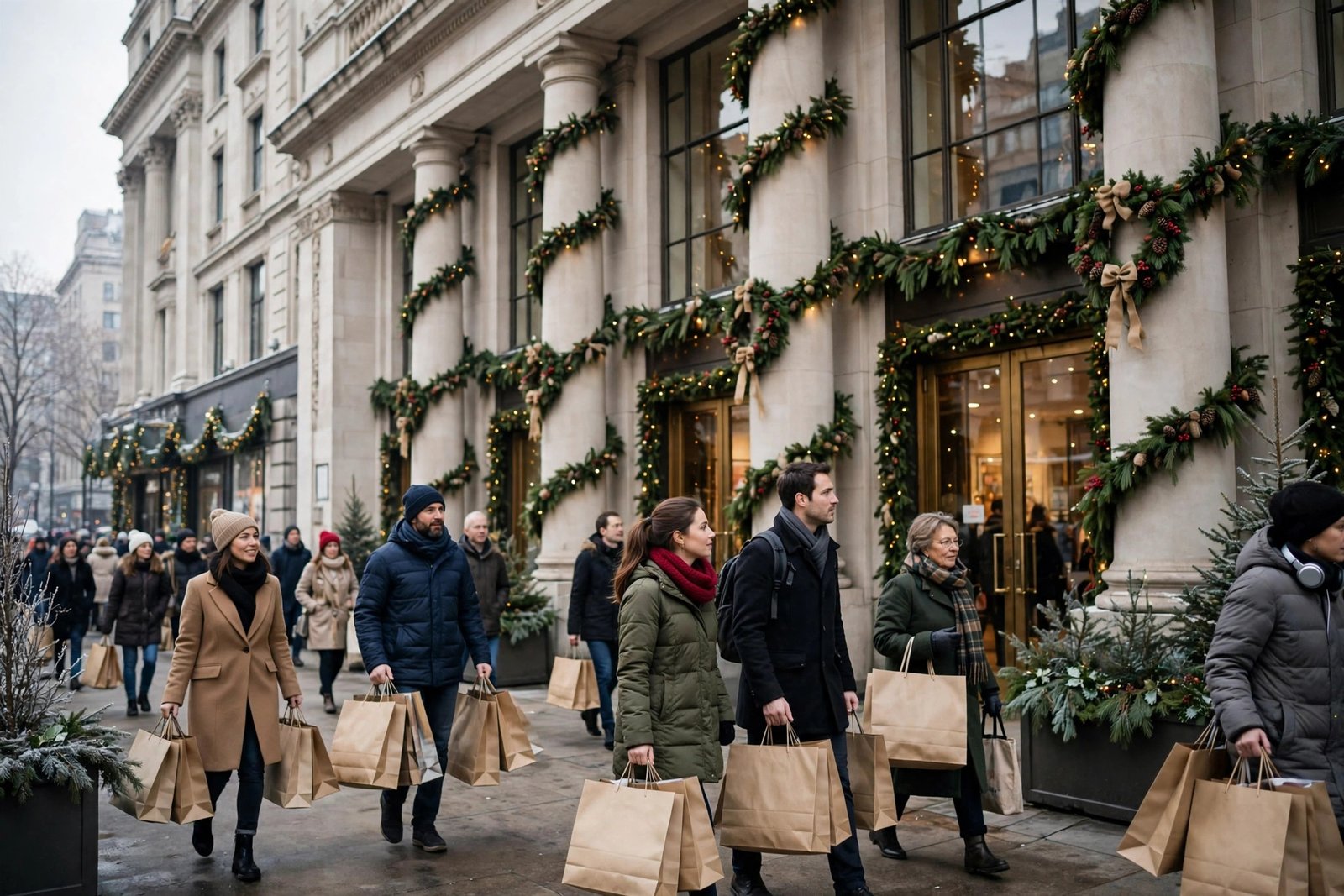
Every December 26, while much of America is still working through Christmas leftovers, millions of people across Britain and the Commonwealth are doing something entirely different: queuing outside department stores at dawn, settling in for an afternoon of football, or sprawling on the sofa in a brand-new Christmas jumper. So what is Boxing Day, really — and how did a quiet day of giving become a shopping and sporting landmark?
The short version is that it began as a day for handing out boxes of gifts, money, and food to servants, tradespeople, and people in need. The longer version is more interesting, because nobody knows for certain where the name came from — several old traditions likely melted into one holiday.
This year the date lands especially well. December 26, 2026 falls on a Saturday, which means a proper long weekend in the countries that mark it — and a full round of Premier League football. Here is the whole story: the disputed origins, who celebrates it, the sales, and the sport.
What Is Boxing Day? The Short Answer
Boxing Day is the public holiday observed on December 26, the day after Christmas Day, in the United Kingdom and many Commonwealth countries. It is also known as Offering Day, and shares its date with the feast of St Stephen, the first Christian martyr.
If you grew up in the United States, the closest comparison is the day after Thanksgiving — a day off work, leftovers, and, increasingly, serious shopping. The difference is the history. Boxing Day did not start as a sales event. It started as a day of giving, centuries before the first sale.
In Britain, Boxing Day is a bank holiday, which means banks, government offices, and most businesses close. If December 26 falls on a Saturday or Sunday, the official bank holiday moves to the following Monday, so nobody loses the day off. In Canada it is a federal statutory holiday, in Australia and New Zealand a public holiday, and in South Africa it is the Day of Goodwill.
Ask ten people what is Boxing Day and you will get ten different answers: a shopping day, a football day, a leftovers day, a day to thank the people who serve you all year. All of them are correct — the holiday has collected meanings the way a snowball collects snow.
Where Did the Name Come From? The Disputed Origins
Here is the part that frustrates historians: there is no single, proven origin for the name. The earliest printed mention comes from an 1830s Oxford English Dictionary, which defined it as “the first weekday after Christmas day, observed as a holiday on which postmen, errand boys, and servants of various kinds expect to receive a Christmas box.” But the customs are older than the word, and three of them could plausibly explain it — most likely a mixture.
Theory 1: The Church Alms Box
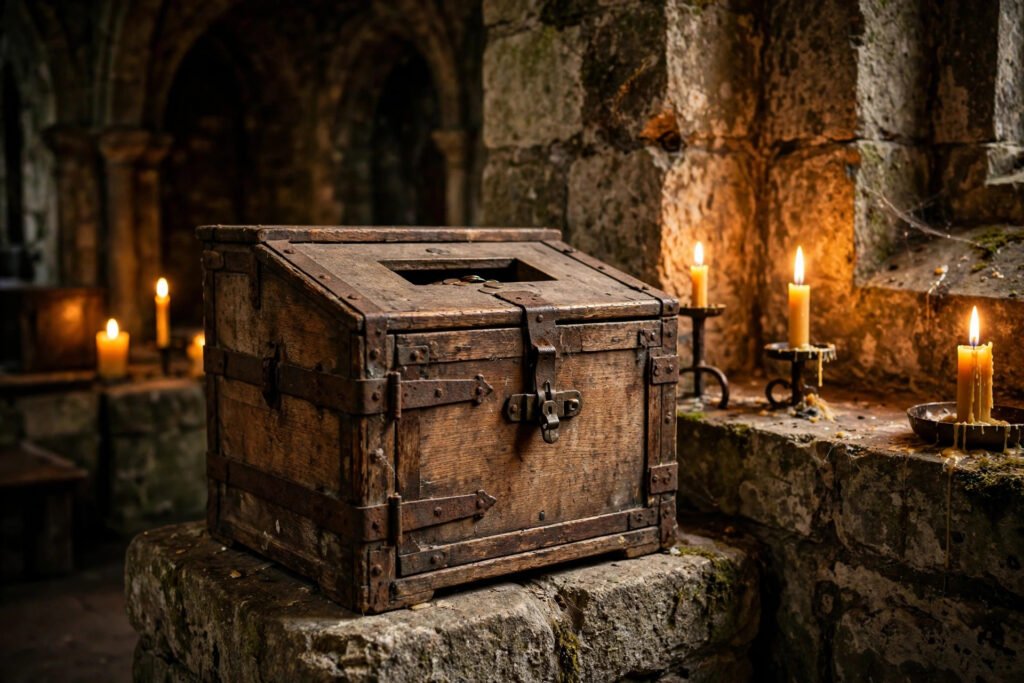
The oldest theory reaches back to the early Christian church. During Advent, churches placed wooden boxes near the door for coins for the poor. On December 26, the feast of St Stephen — a deacon remembered for serving the poor, and the first Christian martyr, stoned to death around AD 36 — the boxes were opened and the money handed out. Some accounts trace the practice to the second and third centuries.
It fits the date perfectly. St Stephen’s Day and Boxing Day are the same day on the calendar, and the carol “Good King Wenceslas” is built on exactly this scene: a tenth-century Bohemian duke, on the feast of Stephen, braving a blizzard to carry food and wine to a poor peasant. The origins of Boxing Day are inseparable from this tradition of charity, whatever else fed into the name.
Theory 2: The Servants’ Christmas Box
The second theory is the one most Britons will tell you first. In wealthy Victorian households, servants worked through Christmas Day, cooking and serving the family’s feast while their own families waited at home. On December 26 they were finally given the day off — and sent home carrying a box.
The box held gifts, a small cash bonus, and often some of the previous day’s food — for many servants, the closest thing to a Christmas of their own. In their employers’ absence, the family would eat an informal meal of leftovers, which is where the modern Boxing Day habit of cold turkey sandwiches arguably begins.
Theory 3: The Tradespeople’s Tips
The third theory is about everyone else who kept a household running: the milkman, the postman, the butcher, the chimney sweep. All the tradespeople who served a family through the year would call after Christmas to collect a “Christmas box,” a small gift of money or goods as thanks. Samuel Pepys recorded giving one in his diary on December 19, 1663. By 1710 the custom had grown so expensive that Jonathan Swift complained he would be “undone here by Christmas boxes.”
None of these three theories has ever been proven as the single origin. What the evidence does show is that giving boxes — to the poor, to servants, to tradespeople — was already old by the time anyone wrote the words “Boxing Day” down.
When Did Boxing Day Become an Official Holiday?
For most of its history, Boxing Day was a custom rather than a law. That changed in 1871, when the Bank Holidays Act made December 26 an official bank holiday in England, Wales, and Ireland; Scotland followed in 1974 — a turning point in the history of Boxing Day. That Act is why the date is protected even when it lands on a weekend.
The timing also explains the football tradition: once working people had two consecutive days off at Christmas, clubs in the industrial towns saw the opportunity immediately — more on that below.
Who Celebrates Boxing Day Around the World?
Boxing Day is observed in the UK and in many countries once part of the British Empire. Here is how it works in the five places where it matters most.
| Country | Status | Date | How it is marked |
|---|---|---|---|
| United Kingdom | Bank holiday (since 1871; Scotland since 1974) | December 26 (moves to Monday if on a weekend) | Sales, football, racing, walks |
| Canada | Federal statutory holiday; not observed in Quebec, Alberta or British Columbia | December 26 | Sales, ice hockey, World Juniors |
| Australia | Public holiday in all states | December 26 | Sales, cricket, Sydney to Hobart race |
| New Zealand | Public holiday | December 26 | Sales, cricket, beach days |
| South Africa | Public holiday as the Day of Goodwill since 1994 | December 26 | Family time and sport |
Canada shows how local the holiday can get. It is a federal holiday under the Canadian Labour Code, and statutory in Ontario — but not an official holiday in Quebec, nor statutory in Alberta or British Columbia. In parts of Atlantic Canada, many stores may not open on December 26 at all, so the big sales there start on December 27 instead.
Ireland does things differently again. There, December 26 is St Stephen’s Day, also known as Wren Day, after an old tradition in which “wrenboys” paraded a wren through the streets — today a fake one, in a celebration with music and dancing. Trinidad and Tobago and Hong Kong also mark the day as a public holiday.
Boxing Day vs Black Friday: How Do They Compare?
If Boxing Day is Britain’s answer to the day after Thanksgiving, how similar are the two? They share the same DNA — a holiday, a day off, retailers clearing stock — but grew up in different centuries. Here is the side-by-side picture.
| Boxing Day | Black Friday | |
|---|---|---|
| Date | December 26, the day after Christmas | The day after Thanksgiving, in late November |
| Where it is biggest | United Kingdom, Canada, Australia, New Zealand | United States, now spreading worldwide |
| Origin | Centuries-old custom of giving boxes to servants and the poor | Retail term from the 1960s, stores moving “into the black” |
| Original purpose | Charity and thanks | Clearing stock and launching Christmas shopping |
| What is on sale | Winter clothing, homeware, Christmas stock | Electronics, appliances, toys |
| Shopping style | Famous for dawn queues in the UK and Canada | Mostly online, sales start a week early |
| Other traditions | Football, racing, leftovers, walks | American football, doorbusters |
The two days are converging. In Canada, Boxing Day was historically the biggest retail shopping day of the year — until Black Friday crossed the border in the 2010s and started competing for the same wallets. In Britain, Black Friday has grown so fast that some retailers now treat it as the bigger event, with Boxing Day sales starting online on Christmas Eve and running for a week.
Boxing Day is not fading — it is changing, from a single frantic morning into a longer season of discounts, which is good news if you hate queues. If you are planning your spending, our guide to Black Friday explains the other half of the season, and our piece on how much to spend on Christmas gifts will help you set a budget before either sale tempts you into overspending.
Boxing Day and Football: A Premier League Tradition
No part of Boxing Day is more fiercely loved in England than the football. When it became a public holiday in 1871, working men suddenly had two days off at Christmas, and the Football League — founded in 1888 — packed the festive period with matches.
For seventy years, teams routinely played on both Christmas Day and Boxing Day, often against the same local rival on consecutive days. The last top-flight match on December 25 was in 1965, when Blackpool beat Blackburn Rovers 4–2. After that, Boxing Day kept the football all to itself.

The most famous Boxing Day of all came in 1963, when the top division produced a freak afternoon of avalanche scorelines fans still talk about.
What makes the tradition unusual is how lonely England is in keeping it. Most of Europe’s top leagues shut down for a winter break; the Premier League does the opposite, and the festive fixtures have become one of the most-watched stretches of the season — with more matches promised on Boxing Day now that the date falls on a Saturday in 2026.
Football is not the only sport on the day. Horse racing has been part of Boxing Day for centuries — the King George VI Chase at Kempton Park is one of the biggest jump races of the year — while Australia gets the Sydney to Hobart yacht race and the Boxing Day Test, and Canada the World Junior ice hockey championship.
How to Spend Boxing Day: Sales, Leftovers, and Giving Back
Now that you know what is Boxing Day, how should you actually spend it? A few patterns have emerged over a century and a half — and a few mistakes worth avoiding.

If you are going shopping
Go with a list, not a mood. The best deals are on winter clothing, homeware, and Christmas stock shops need to clear before January — but the worst mistake is buying something only because it is reduced. Check the price online before you queue, set a hard budget, and remember most sales run for days now.
Think about who you are buying for. The day began as a day of giving to the people who serve you — and a small, thoughtful gift still lands better than an expensive one bought in a panic. If you are stuck, our guide to gifts for grandparents has options for after Christmas too. And before you hand over your card, read our list of mistakes to avoid when buying Christmas gifts.
If you are staying home
Staying home is the original Boxing Day, and honestly the version most people enjoy most: cold turkey sandwiches, bubble and squeak, a walk, and the football or a film. After the work of Christmas Day, Boxing Day was the exhale.
One tradition worth reviving is the giving itself. The alms box is gone, but food banks run their busiest appeals in the week after Christmas. A bag of food or a coat you no longer wear is closer to the original meaning of the day than anything in a shopping centre.
Frequently Asked Questions
What is Boxing Day in simple terms?
Boxing Day is a public holiday on December 26, the day after Christmas, in the UK and many Commonwealth countries. It began as a day for giving boxes of gifts, money, and food to servants, tradespeople, and the poor; today it is known for sales, Premier League football, and relaxing with family.
Why is it called Boxing Day if it has nothing to do with boxing?
The name has nothing to do with the sport of boxing. It most likely comes from the “Christmas boxes” of money, gifts, or food given to servants, tradespeople, and the poor on December 26.
Is Boxing Day a bank holiday?
Yes. In the UK it has been a bank holiday in England, Wales, and Northern Ireland since 1871, and in Scotland since 1974. If December 26 falls on a Saturday or Sunday, the bank holiday is observed on the following Monday. In Canada it is a federal statutory holiday, though not in every province.
When is Boxing Day 2026?
Boxing Day 2026 falls on Saturday, December 26, 2026. Because it lands on a Saturday, UK workers get the following Monday, December 28, as the substitute bank holiday — a long weekend.
Which countries celebrate Boxing Day?
The main countries are the United Kingdom, Canada, Australia, New Zealand, South Africa (the Day of Goodwill), Trinidad and Tobago, and Hong Kong. Ireland marks it as St Stephen’s Day, also known as Wren Day. The United States does not observe it.
What do people do on Boxing Day?
In Britain: sales shopping in the morning, Premier League football in the afternoon, leftovers in the evening. In Canada, people shop the post-Christmas sales and watch ice hockey. In Australia, it is cricket, the Sydney to Hobart yacht race, and the beach. Everywhere, it is a day for rest, family, and Christmas dinner leftovers.
Conclusion
So, what is Boxing Day in the end? It is a holiday that started with a box and became a mirror. The boxes held charity for the poor, thanks for the servants, and tips for the tradespeople — and the day still carries all three meanings, even now the boxes have mostly been replaced by shopping bags and football scarves.
That is what makes it worth marking. Christmas Day is about the people you love most. Boxing Day is about everyone else: the people who serve you, the neighbours, the strangers in the queue, the team you support, and the family gathered around the leftovers. Now you know what is Boxing Day — spend it well, and it might just be the best day of the whole Christmas season.



