
What Is Hanukkah? The 2026 Guide to Dates, Traditions, and Meaning
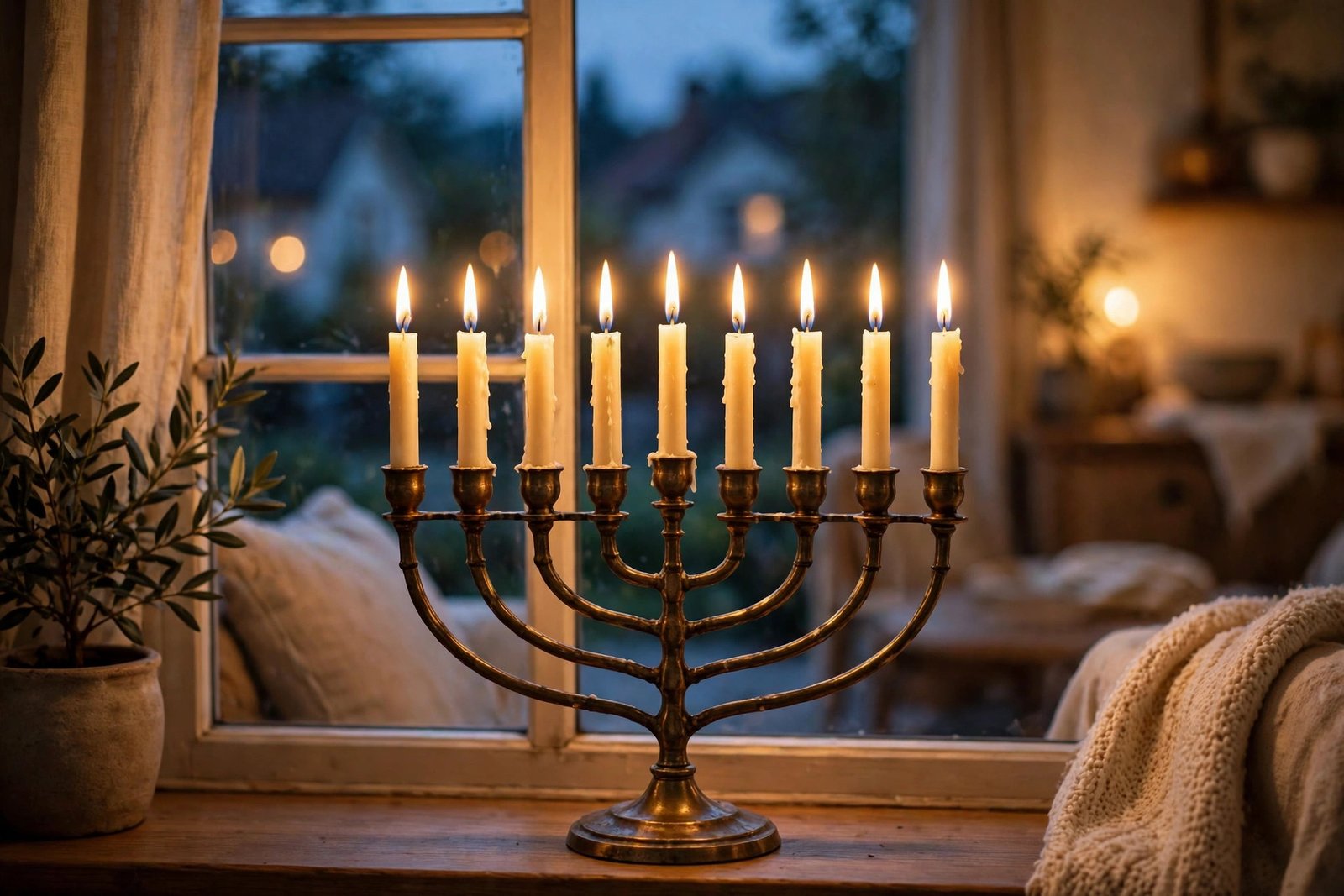
Every December, a warm glow starts appearing in windows across the world. Nine small flames, one more each night, until a whole menorah burns bright against the dark evening. If you have ever walked past one of those windows and wondered what is Hanukkah, you are not alone — it is one of the most visible Jewish holidays, and also one of the most misunderstood.
Hanukkah is an eight-night winter festival, often called the Festival of Lights. It celebrates a story of courage, faith, and a small jar of oil that should have run out in a day. This guide covers everything you need to know: the 2026 dates, the history, how families light the menorah, the foods, the games, and the gifts.
What Is Hanukkah? The Short Answer
Hanukkah is a Jewish festival that lasts for eight nights and days. It marks the rededication of the Second Temple in Jerusalem more than 2,000 years ago, after a small group of Jewish fighters known as the Maccabees reclaimed it from a king who had tried to stamp out their faith.
The heart of the story is a miracle of oil. According to tradition, when the Maccabees rededicated the Temple, they found only one small jar of pure olive oil — enough to keep the Temple lamp burning for a single day. That oil burned for eight nights, until new oil could be prepared. That is why the holiday lasts eight nights, and why oil is at the centre of almost everything Hanukkah families eat and do.
The name Hanukkah means “dedication” in Hebrew, and you may also see it spelled Chanukah — both spellings refer to the same holiday.
Hanukkah is a joyful holiday, but it is not one of the most religiously important days in the Jewish calendar. Its real significance is cultural and historical: a celebration of religious freedom, of holding on to your identity, and of light pushing back the dark.
Hanukkah 2026: Dates and Times
In 2026, Hanukkah begins at sundown on Friday, December 4, and ends at nightfall on Saturday, December 12. On the Hebrew calendar, that is 25 Kislev to 2 Tevet in the year 5787.
Hanukkah moves around the calendar each year because it follows the Hebrew lunar calendar, not the Gregorian one. That is why it sometimes falls in late November and sometimes stretches into late December.
The first candle is lit on the evening of Friday, December 4 — and because that evening is also the start of Shabbat, the Hanukkah candles are lit before the Shabbat candles. The eighth and final candle is lit on the evening of Friday, December 11. The holiday then runs through the following day, ending at nightfall on Saturday, December 12.
One candle is added each night, so the menorah grows brighter as the holiday goes on. Here is the full night-by-night schedule for 2026.
| Night | Date (2026) | Candles lit | Notes |
|---|---|---|---|
| Night 1 | Friday, December 4 | 1 | First candle lit before Shabbat candles |
| Night 2 | Saturday, December 5 | 2 | First night after Shabbat |
| Night 3 | Sunday, December 6 | 3 | Weekend night, often a family gathering |
| Night 4 | Monday, December 7 | 4 | Halfway point approaches |
| Night 5 | Tuesday, December 8 | 5 | More than half the menorah is lit |
| Night 6 | Wednesday, December 9 | 6 | — |
| Night 7 | Thursday, December 10 | 7 | One night to go |
| Night 8 | Friday, December 11 | 8 | All eight candles burn; holiday ends at nightfall Saturday, December 12 |
If you are planning around the holiday, the key dates to remember are December 4 and December 12. And if you miss it this year, mark your calendar early: next year, Hanukkah starts on December 24, 2027. A question that comes up every year is what is Hanukkah doing on a different date each time — the answer is the Hebrew lunar calendar, which is why the Gregorian dates shift.
For exact candle-lighting times in your city, check the Hebcal calendar, which lists local times for every night, or Chabad’s Hanukkah guide for a clear day-by-day breakdown.
The Story Behind the Festival
To understand the holiday, you need to go back to the second century BCE, more than 2,000 years ago. At the time, the land of Israel was ruled by the Seleucid king Antiochus IV, who tried to force the Jewish people to abandon their faith and adopt Greek customs instead.
He banned Jewish religious practices, desecrated the Temple in Jerusalem, and set up an altar to Zeus inside it. For many Jews, this was a breaking point. A family of priests known as the Maccabees led a revolt against the king’s forces. Against the odds, this small band of fighters won — and reclaimed the Temple.
When they returned to the Temple to rededicate it, they needed pure olive oil to relight the eternal lamp, which was supposed to burn constantly. They found only one small jar of oil that had not been defiled, enough for a single day. The story says that oil burned for eight days, until fresh oil could be pressed and prepared.
That is the miracle Hanukkah celebrates. The candles on the menorah are a reminder of it: one more flame each night, building up to a full blaze, as if to say that a little light can last far longer than anyone expects.
Historians note that the details vary between sources, but the meaning families take from it is steady: a small group stood up for what they believed in, and light outlasted the darkness. If you want the full historical background, My Jewish Learning has a thorough account of the Maccabean revolt and how the holiday developed over time.
How to Light the Menorah
The menorah used at Hanukkah is properly called a hanukkiah. It has nine branches: eight for the eight nights of the holiday, plus a ninth helper candle called the shamash, which is used to light the others.

The shamash usually sits higher than the other candles, in the centre or off to one side. It is lit first, and then it lights the night’s candles. The shamash is a helper, not one of the eight — so on the first night, you light the shamash and one other candle, and by the eighth night the whole row is burning.
Before lighting, families recite blessings. Two blessings are said every night, and a third is added on the first night. Many families also sing songs after the lighting, including the traditional “Maoz Tzur” (Rock of Ages), and children often receive a small gift or some chocolate coins after the candles are lit.
A practical note: never leave burning candles unattended, and keep the menorah on a stable, heat-resistant surface away from curtains and anything flammable. The light is meant to be shared, not to become a fire hazard.
Hanukkah Foods: Why Everything Is Fried
Because the holiday’s miracle is about oil, Hanukkah food is fried in oil. That single rule shapes the whole holiday table, and it produces some of the most beloved dishes in Jewish cooking.
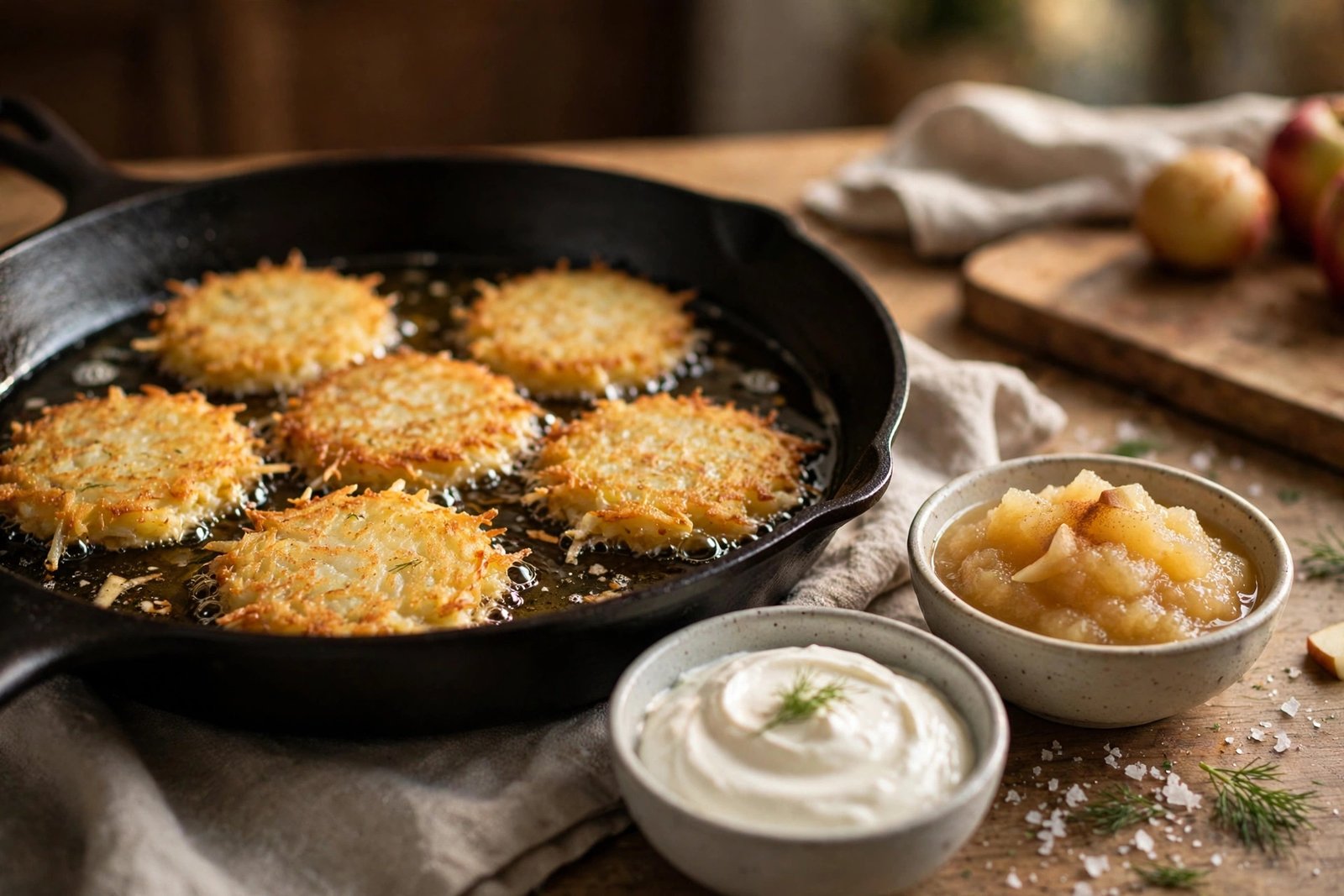
Latkes are the star of the show. These are potato pancakes — grated potato and onion mixed with egg and a little flour, then fried until crisp and golden. They are served hot, usually with sour cream or applesauce, and arguments about which topping is correct can get surprisingly heated in some families. A good latke is crisp at the edges and soft in the middle, and it never lasts long on the plate.
Sufganiyot are the other classic: jelly-filled doughnuts, fried and dusted with sugar, that are especially popular in Israel. They are soft, sweet, and rich — a once-a-year treat for most families.
Beyond the fried foods, many families serve brisket, roast chicken, or other hearty winter dishes as the main course, with the latkes and doughnuts as the stars of the side table. The meal is usually a family affair, eaten together after the candles are lit, and it is as much about who is at the table as what is on it. When people ask what is Hanukkah food really about, the honest answer is the oil — every fried dish is a small, edible reminder of the miracle.
The Dreidel Game and Gelt
The dreidel is a four-sided spinning top, and it is the holiday’s best-known game. Each side of the dreidel carries a Hebrew letter: nun, gimel, hei, and shin. Together, the letters stand for the phrase “a great miracle happened there.”

The game is simple. Each player starts with a pile of tokens — traditionally gelt, which are chocolate coins wrapped in gold foil, though nuts, raisins, or pennies work just as well. Players take turns spinning the dreidel: nun means do nothing, gimel means take the whole pot, hei means take half, and shin means put one token in.
Gelt itself has a history. The tradition of giving children money at Hanukkah goes back centuries, and the chocolate coins are the modern, kid-friendly version.
Hanukkah Gifts and Traditions
Gifts at Hanukkah are traditionally small, and they are given one night at a time rather than all at once. Children might receive a small present each of the eight nights, or a single larger gift on one night, with gelt and sweets on the others. For many families, the gifts are the least important part of the holiday — when people ask what is Hanukkah really about, the answer is the story and the candles, not the presents.
This is part of what makes the holiday feel different from Christmas. There is no single morning of unwrapping everything at once. Instead, the excitement stretches across more than a week, with the candles growing brighter and the gifts arriving a little at a time.
Common Hanukkah gifts include books, games, art supplies, and small toys for children, and candles, cookbooks, or food gifts for adults. Many families also give to charity during the holiday — a practice called tzedakah.
Greeting cards are common too. The standard Hanukkah greeting is “Happy Hanukkah,” and you may also hear “Chag Sameach,” which means “happy holiday” in Hebrew. If you are sending a card to Jewish friends, either greeting works, and the effort is always appreciated.
Hanukkah vs. Christmas: What’s Different?
Because the two holidays often fall close together, people sometimes treat Hanukkah as “the Jewish Christmas.” It is not. They are different holidays with different roots, different stories, and different traditions — they simply share a season.
| Hanukkah | Christmas | |
|---|---|---|
| Dates (2026) | December 4–12 | December 25 |
| Religious root | Jewish festival marking the Temple’s rededication | Christian celebration of the birth of Jesus |
| Central symbol | The menorah (hanukkiah) | The Christmas tree |
| Gifts | Small gifts, one per night, plus gelt | Gifts exchanged on Christmas Day |
| Signature foods | Latkes and sufganiyot, fried in oil | Varies by country — roast meats, puddings, cookies |
| Length | Eight nights | One day, within a longer season |
| Key theme | Religious freedom and the miracle of oil | The nativity and goodwill |
None of this is a contest. Plenty of families celebrate both holidays — especially interfaith families — and the season is big enough for both. The point of the comparison is simply to show that Hanukkah stands on its own: it is not a version of Christmas, but a holiday with its own history, food, and light.
How to Celebrate Hanukkah If You’re New to It
You do not have to be Jewish to enjoy Hanukkah — and you do not need to do everything at once. A good first step is simply to learn the story, light a candle, and try the food. If you have Jewish friends, ask them how their family celebrates. Most people are happy to share, and every family does it slightly differently. The best way to learn what is Hanukkah is to live one evening of it: a lit candle, a plate of latkes, and the story told out loud.
If you want to mark the holiday yourself, start small. Buy or borrow a menorah and a box of candles, and light one on the first night. Make a batch of latkes. Play a round of dreidel with whoever is at the table. That is already a real Hanukkah evening.
If you want more ideas for holiday reading and gifts, our guide to what is an advent calendar and our explainer on what is Secret Santa cover two more December traditions, and our piece on what is a white elephant gift exchange explains the party game that shows up at so many holiday gatherings. For something lighter, our round-up of the best Christmas movies 2026 is a good companion for a cold night in.
Frequently Asked Questions
When does Hanukkah start in 2026?
Hanukkah 2026 begins at sundown on Friday, December 4, and ends at nightfall on Saturday, December 12. The first candle is lit on December 4, and the eighth candle is lit on December 11.
How many candles does a menorah have?
A Hanukkah menorah, or hanukkiah, has nine branches: eight for the nights of the holiday, plus the shamash helper candle used to light the others. On the final night, all eight candles burn at once.
Is Hanukkah the Jewish Christmas?
No. Hanukkah is a Jewish festival celebrating the rededication of the Second Temple and the miracle of the oil. It falls near Christmas on the calendar, but it has its own history, traditions, and meaning.
What do you eat on Hanukkah?
Foods fried in oil, to recall the miracle of the oil. The classics are latkes (potato pancakes) and sufganiyot (jelly doughnuts), usually served with a hearty family meal after the candles are lit.
How do you play dreidel?
Players take turns spinning a four-sided top marked with Hebrew letters. Depending on the letter it lands on, you do nothing, take half the pot, take the whole pot, or add a token. Chocolate gelt coins are the usual playing pieces.
What is the Hebrew calendar date for Hanukkah 2026?
Hanukkah 2026 runs from 25 Kislev to 2 Tevet in the Hebrew year 5787. Because it follows the lunar Hebrew calendar, the Gregorian dates shift every year.
Conclusion
Hanukkah is a small holiday with a big heart. It began with a jar of oil that should have lasted a day and burned for eight, and it has been celebrated ever since by families lighting one more candle each night, frying latkes, spinning dreidels, and telling the same story to their children. So what is Hanukkah, in the end? It is a reminder that a little light, shared openly, can outlast the dark.
If you take one thing from this guide, let it be the dates: December 4 to December 12, 2026, with the first candle lit on the evening of December 4. Light a candle, try a latke, and let the light do what it has done for more than two thousand years — push back the dark, one flame at a time.



