
Best Travel Backpack 2026: 5 Picks That Survive Real Trips
Ask ten frequent travelers what the best travel backpack of 2026 is and you will get ten different answers — usually the bag they happen to own. I have spent the last few years watching real-world testing from people who actually live out of these bags, from ski trips in Japan to safaris in Africa, and a clear pattern has emerged: the winners are not the flashiest bags, they are the ones that still feel good on your back at the end of a long travel day. Here are the five travel backpacks that earned their place in 2026, what each one costs, and — just as important — how to avoid buying the wrong bag for your kind of travel.
Before the picks, the three rules that matter more than any brand name. First, 35 to 45 liters in a clamshell (suitcase-style) opening is the sweet spot for carry-on travel — big enough for a week with laundry, small enough to fit the overhead bin. Second, do not buy by liter count alone: a well-designed 35L carries more comfortably than a sloppy 45L. Third, the carry test — if you cannot comfortably walk with 20 to 25 pounds on your back for half an hour, the bag is wrong for you no matter how good the reviews are.
What to Look for in the Best Travel Backpack 2026
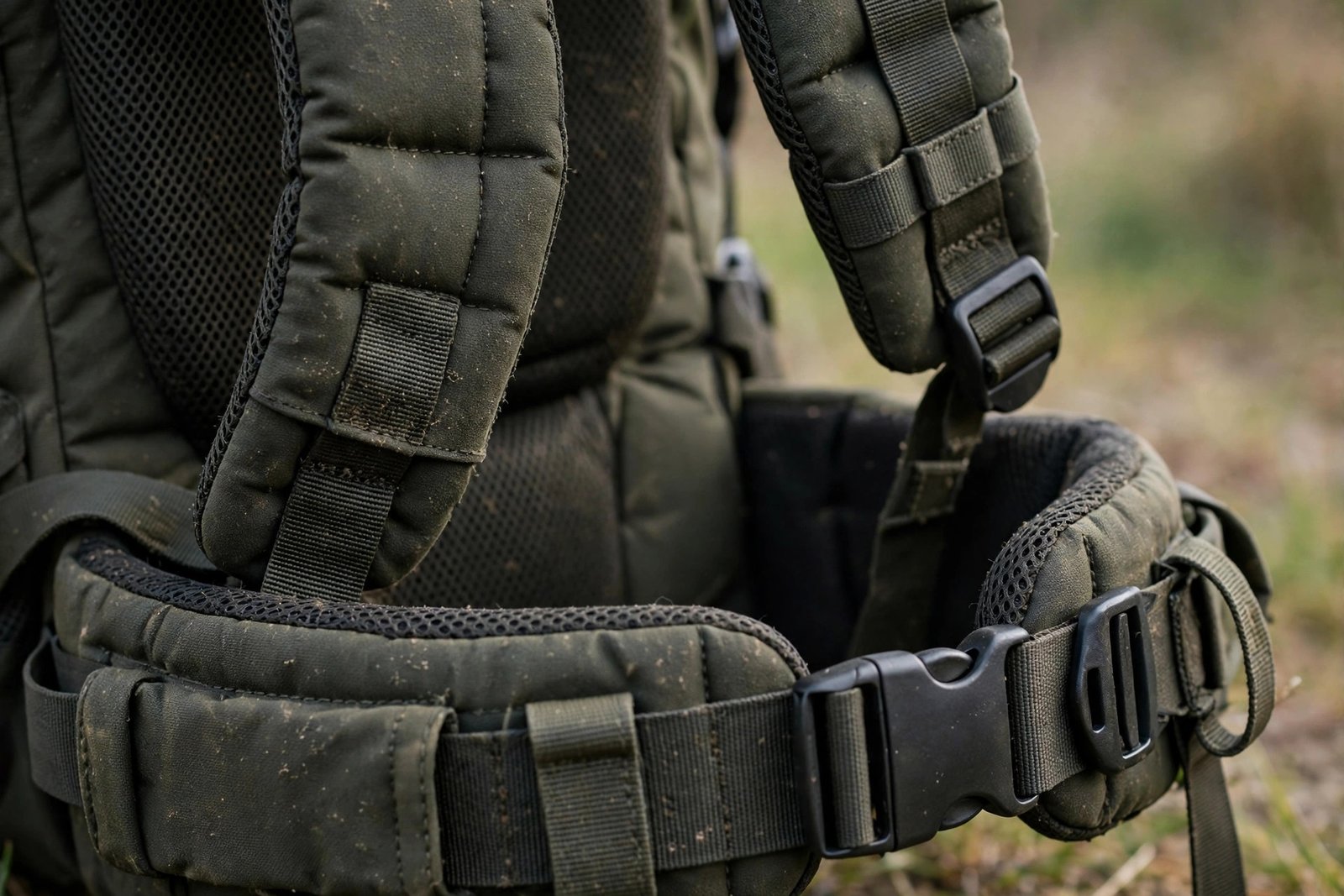
A great travel backpack is a compromise between four things: comfort (suspension, hip belt, and weight distribution), organization (clamshell opening beats top-loading every time), durability (zippers and fabric that survive baggage handlers), and carry-on compliance (roughly 22 x 14 x 9 inches for US airlines, smaller for European budget carriers). Weight deserves special attention: a 4.5-pound empty bag on a 7 kg budget-airline limit leaves you very little for actual stuff. And one feature is non-negotiable if you walk more than ten minutes with the bag on — a real hip belt that transfers weight to your hips instead of your shoulders.
The 5 Best Travel Backpacks of 2026
1. Peak Design Travel Backpack 35–45L — Best Overall ($300)
The Peak Design Travel Backpack remains the benchmark in 2026 testing, and it is the most-used bag of several full-time travel reviewers. It sits at 35L for carry-on, unzips to 45L when you are checking it, and compresses down to 30L when you are packing light. The clamshell opening plus side access means you are never digging from the top, and it pairs with Peak Design’s camera cubes, which makes it the default pick for photographers. At about 4.5 pounds it is heavy for its size, the hip belt is thin (fine for airports, not for all-day hikes), and expanded to 45L it can exceed some airlines’ carry-on limits. If cost is no object and you want one bag for everything from a city break to a safari, this is it. It carries a lifetime guarantee.
2. Osprey Farpoint 40 / Fairview 40 — Best Value and Best Fit ($240)
The Farpoint is the bag travel veterans recommend to beginners, and for good reason: its suspension is the best in its class, and at 40L it hits the carry-on sweet spot dead-on. The Farpoint is the men’s fit; the Fairview is the identical pack built for shorter torsos and narrower shoulders, which makes it easy for couples to buy one each. Downsides: internal organization is minimal, so budget for packing cubes, and the 55L and 70L versions (which add a zip-off daypack) are too big for carry-on with the daypack attached. If you want maximum carrying comfort per dollar, start here.
3. Tortuga Travel Backpack Pro 34L or 40L — Premium Pick ($350)
Tortuga builds bags specifically for one-bag travelers, and the Pro is the premium expression of that idea: a purpose-designed carry-on with the organization and harness of a much more expensive pack. Choose the 34L if you fly budget airlines with strict sizers, the 40L for maximum legal carry-on capacity. It is the priciest bag on this list, and worth it only if you travel often enough that the details — layout, materials, warranty support — pay you back trip after trip.
4. Cotopaxi Allpa 35L — Best Organization and Harness ($230)
The Allpa 35L is a longtime REI staff pick for best carry-on, and the redesigned version keeps what made it famous: a suitcase-style full-wrap zipper, genuinely comfortable air-mesh shoulder straps, and a harness that punches above its price. Specs are traveler-friendly — 35 liters, 22 x 12 x 10 inches, 2 lb 15 oz — with a 15-inch padded laptop sleeve, lockable YKK zippers, and a luggage pass-through strap. The Del Día colorways are made from remnant fabric, so every bag is one of a kind. If you want organization without paying the premium-tier price, this is the value play.
5. REI Co-op Ruckpack 40 — Best for Trips With Hiking ($159)
Most travel backpacks are designed for airports and apologise on trails. The Ruckpack 40 flips that: it is a genuine hiking-capable pack that happens to work as a carry-on. At $159 it is also the cheapest bag here by a wide margin, which makes it the smart pick for adventure trips where the bag will get dragged through bus terminals and up mountainsides alike. You give up some of the slick urban organization of the premium picks; you gain a suspension that does not punish you on day three.
Side-by-Side Comparison
| Backpack | Best for | Capacity | Price (USD) |
|---|---|---|---|
| Peak Design Travel | Best overall / photographers | 35–45L | $300 |
| Osprey Farpoint / Fairview 40 | Best value & fit | 40L | $240 |
| Tortuga Travel Backpack Pro | Premium carry-on | 34L / 40L | $350 |
| Cotopaxi Allpa 35L | Organization + harness | 35L | $230 |
| REI Co-op Ruckpack 40 | Trips with hiking | 40L | $159 |
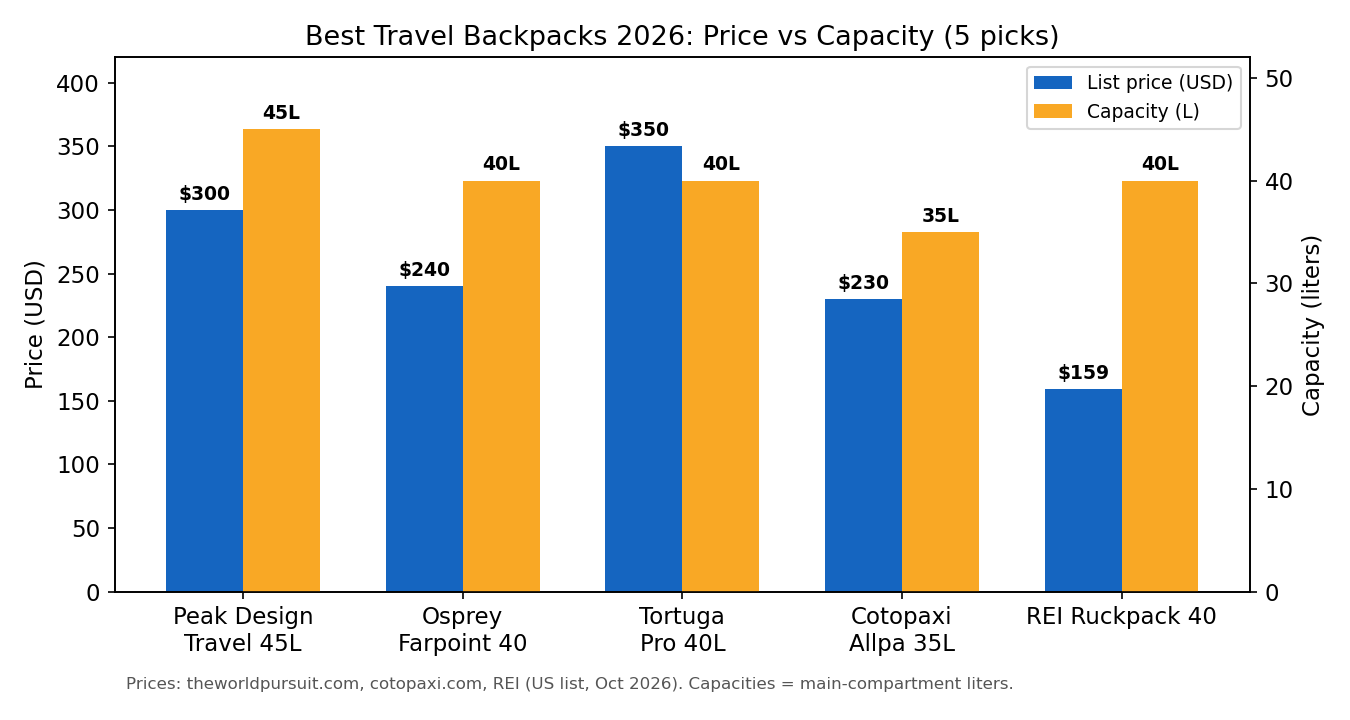
Prices are US list prices as of October 2026, drawn from The World Pursuit’s tested roundup and the manufacturers’ own listings (the Allpa 35L is listed at $230 on Cotopaxi’s site). Independent lab testing from OutdoorGearLab reaches similar conclusions on the category leaders, and a 2026 buyer’s guide roundup agrees that the 35–45L clamshell range is where most travelers should shop. The chart below visualizes the same five picks on price versus capacity.
4 Mistakes to Avoid When Buying a Travel Backpack
1. Buying a bag that is too big. The maximum carry-on for most international airlines is 22 x 14 x 9 inches, and many popular packs exceed it once expanded. The Peak Design at 45L, for example, is 22 x 13 x 11 inches expanded — those extra two inches of depth will get you gate-checked on Ryanair, EasyJet, and some Asian carriers. Measure before you buy, and check your specific airline’s sizer.
2. Ignoring empty weight. A 4.5-pound bag on a 7 kg airline limit leaves you about 11 pounds for everything else — a few shirts, pants, underwear, a toiletry kit, and a laptop, and you are done. If you fly budget airlines, empty weight is the single most important spec on the tag.
3. Buying a bag with no real hip belt. If you plan to walk more than ten minutes with the bag on, a hip belt is not optional. It transfers weight from your shoulders to your hips, and the difference is immediate. This is the main reason the Osprey Farpoint keeps winning comfort comparisons.
4. Overvaluing organization. Packing cubes solve organization better than any built-in compartment layout, and you can add them to any bag for about $30. You cannot add a good suspension system to a bag that lacks one. Comfort and weight first, pockets second.
How to Choose the Right Size
Match volume to trip length, not to ambition. A 20–30L pack covers 1–3 day trips and doubles as a personal item; 35L handles 4–7 days; 40–45L stretches to one or two weeks with laundry. Most one-bag veterans live in the 35–45L sweet spot — beyond 50L you have crossed into checked-luggage territory, and you have lost the entire point of a travel backpack. Pair your pick with a smart winter packing strategy and even a 35L can handle a cold-weather week, while the best carry-on luggage roundup covers the roller-bag alternative if your back disagrees with the whole concept.
One more practical note: a great bag does not fix a bad itinerary budget. If you are still finding cheap flights the hard way, sort that before upgrading your pack — and consider travel insurance for international trips, because the only thing worse than a broken strap in a foreign bus terminal is a broken ankle.
Frequently Asked Questions
What is the best travel backpack for 2026?
Across 2026 testing, the Peak Design Travel Backpack 35–45L ($300) is the most-cited top pick for its expandable capacity, clamshell access, and lifetime guarantee. The Osprey Farpoint 40 ($240) is the best value and comfort pick for most travelers.
What size backpack is best for carry-on travel?
35 to 45 liters in a clamshell design is the sweet spot: it fits most airlines’ overhead bins (about 22 x 14 x 9 inches in the US) while holding a week of clothes. Measure your specific bag against your airline’s sizer, especially on European budget carriers with stricter limits.
How much should I spend on a travel backpack in 2026?
Budget tier ($150–$200) gets you capable bags like the REI Ruckpack 40; mid-range ($230–$250) covers the Cotopaxi Allpa 35L and Osprey Farpoint 40; premium ($300–$350) buys the Peak Design Travel Backpack and Tortuga Pro. For frequent flyers, premium bags with lifetime warranties usually win on cost-per-trip.
Are travel backpacks better than rolling suitcases?
For multi-stop trips, cobblestones, stairs, and public transit — yes, overwhelmingly. For single-destination resort trips or travelers with back issues, a roller is still kinder. Many travelers own both and choose per trip.
Do I need a hip belt on a travel backpack?
If you will carry the loaded bag for more than about ten minutes at a time, yes. A hip belt moves the load to your hips and is the single biggest comfort upgrade on any pack. All five picks on this list include one.
Will a 40L backpack fit as a personal item?
No — 40L packs are carry-on size, not personal-item size. Personal-item territory is roughly 20–28L (think small daypacks). Do not try to squeeze a 40L under the seat in front of you on a strict airline.
Conclusion
The best travel backpack of 2026 is not the most expensive one — it is the one that matches your trips. Want one bag for everything and shoot photos? The Peak Design Travel Backpack at $300. Want the most comfort per dollar? The Osprey Farpoint 40 at $240. Need premium one-bag organization? The Tortuga Pro at $350. Want organization on a budget? The Cotopaxi Allpa 35L at $230. Hiking mixed into the itinerary? The REI Ruckpack 40 at $159. Whatever you choose, remember the three rules: 35–45L clamshell, never judge by liters alone, and walk it loaded with 20–25 pounds before you commit. Your back will thank you at every terminal, trailhead, and cobblestone street between here and home.