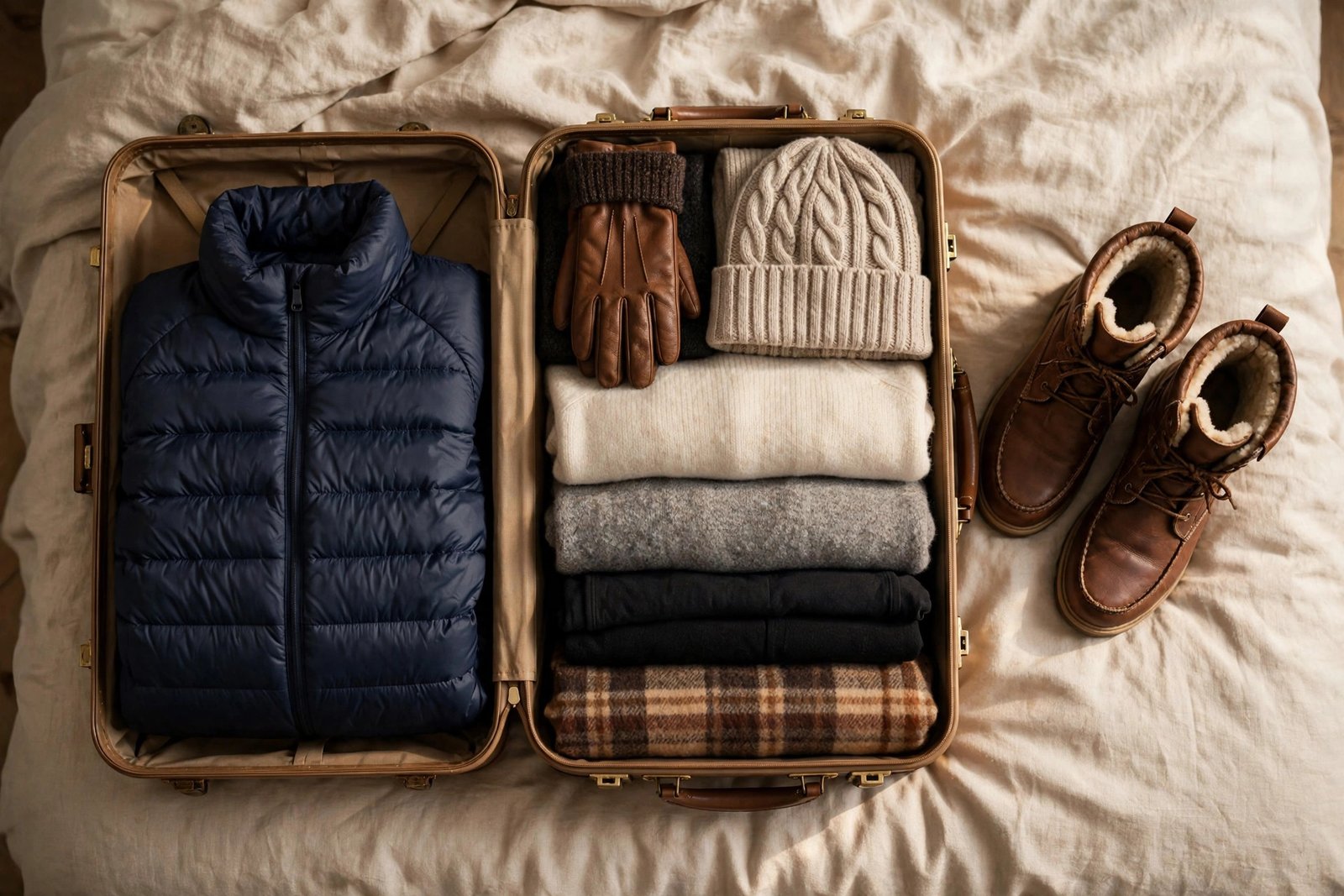

How to Pack for a Winter Trip: The Complete 2026 Guide
Packing for a winter trip feels impossible the first time you do it. The coat alone eats half the suitcase, your boots swallow the rest, and you’re left staring at a pile of sweaters wondering how anyone fits a week of cold-weather clothes into one bag. Here’s the good news: learning how to pack for a winter trip comes down to one core skill — layering — plus a handful of space-saving tricks that make bulky clothing shrink. This guide walks you through exactly what to bring, what to leave behind, and how to fit a full week of winter clothing into a single bag without paying a fortune in checked-bag fees.
The Golden Rule: Pack Layers, Not Bulk
Beginners try to pack one very warm outfit per day. Experienced winter travelers pack layers they can mix, match, and adjust. The reason is simple: a single heavy coat keeps you warm, but it gives you exactly one temperature setting. Layers let you dial your warmth up or down as you move between a freezing sidewalk, a heated museum, and a warm restaurant.
REI’s outdoor experts describe it as a three-part system: a base layer that wicks sweat off your skin, a middle layer that retains body heat, and an outer layer that shields you from wind and rain. Their layering basics guide is the clearest explanation of the system anywhere on the web.
Two fabric rules matter more than anything else when you’re learning how to pack for a winter trip:
- No cotton in your core layers. Cotton soaks up sweat and precipitation and dries slowly — REI calls it “a recipe for hypothermia.” Merino wool and synthetic fabrics (polyester, nylon) wick moisture and dry fast.
- Down beats synthetic for packability. Down insulation compresses dramatically smaller than synthetic fill. A good packable down jacket can stuff into its own pocket, which is why it’s the single highest-value item in a winter suitcase.
How to Pack for a Winter Trip: The 7-Day Checklist
This list covers a full week in genuinely cold weather (roughly 20–40°F / −7 to 4°C). Warmer winter destinations need less; ski trips need a few additions noted below. Everything on this list has to earn its place — if an item can’t be worn at least twice, it stays home.
Outerwear and mid-layers
- 1 packable down jacket — your main coat. Look for one that compresses into its own pocket; Switchback Travel’s tested winter jacket picks show top models weighing just over a pound.
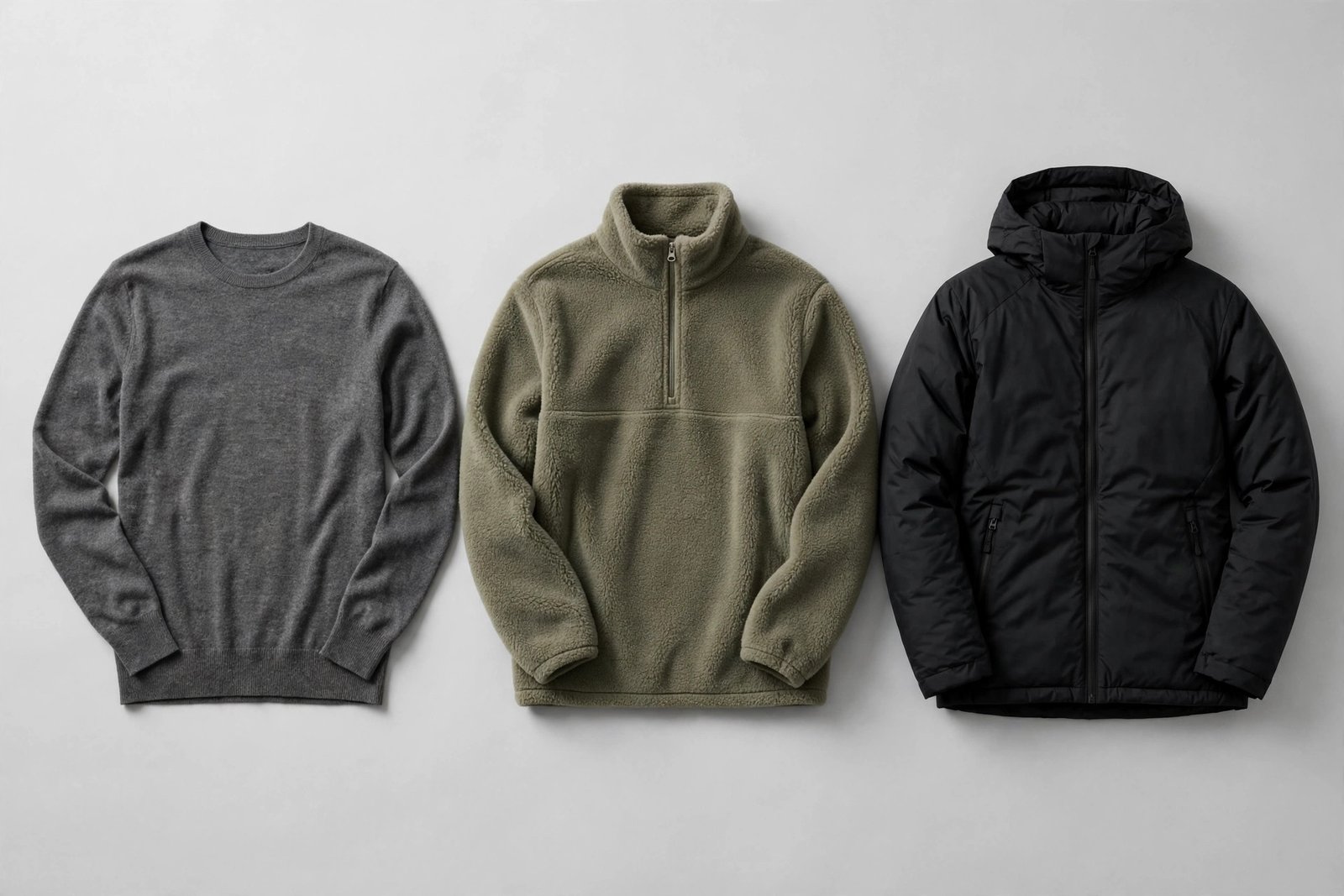
- 1 lighter jacket or heavy fleece — for days that aren’t bitter, or as a mid-layer under the down jacket on the coldest days.
- 2–3 sweaters or fleece mid-layers — wool or fleece, not cotton. Rotate these across the week.
- 3–4 long-sleeve base layers — merino wool or synthetic thermal tops. These sit against your skin, so plan to wash or rotate them mid-trip.
Bottoms
- 1 pair of thermal leggings or long underwear — worn under pants on the coldest days, this single item does more for warmth-per-ounce than anything else in your bag.
- 2 pairs of warm pants — lined jeans, wool-blend trousers, or fleece-lined pants. Jeans alone are a poor winter choice: they’re bulky, slow to dry, and offer almost no insulation.
- 1 pair of dressier or casual pants — something that works for a nice dinner.
Footwear
- 1 pair of insulated, waterproof winter boots — with real tread. This is the item to wear on the plane, not pack.
- 1 pair of comfortable walking shoes — for travel days and mild moments.
- 5 pairs of warm socks — wool or wool-blend. Socks are small; don’t ration them.
Accessories (small, critical, easy to forget)
- Warm hat or beanie that covers your ears
- Insulated gloves or mittens — mittens are warmer, touchscreen-compatible gloves are more practical
- A scarf or neck gaiter — sealing the gap at your collar makes a surprising difference
- Sunglasses — snow glare and low winter sun are blinding
- Lip balm and moisturizer — cold air and heated indoor air destroy skin in days
- Hand warmers — a few disposable pairs cost almost nothing and rescue cold sightseeing days
The non-clothing essentials
- Medications, chargers, and travel documents — always in your personal item or carry-on, never in a checked bag
- Travel-size toiletries in a quart bag (the standard 3.4 oz / 100 ml limit applies)
- A compact umbrella — sleet and freezing rain are worse than snow
- A small daypack or tote — for layers you shed mid-day
Space-Saving Packing Techniques That Actually Work
Knowing what to bring is half the battle; the other half is making it fit. These are the techniques that consistently work for winter clothes, in order of impact:
1. Wear your bulkiest items on the plane. This is the single biggest win, and it costs nothing. Board wearing your boots, your heaviest sweater, and your coat. A down jacket and boots can easily account for a third of your suitcase volume — moving them onto your body instantly frees that space.
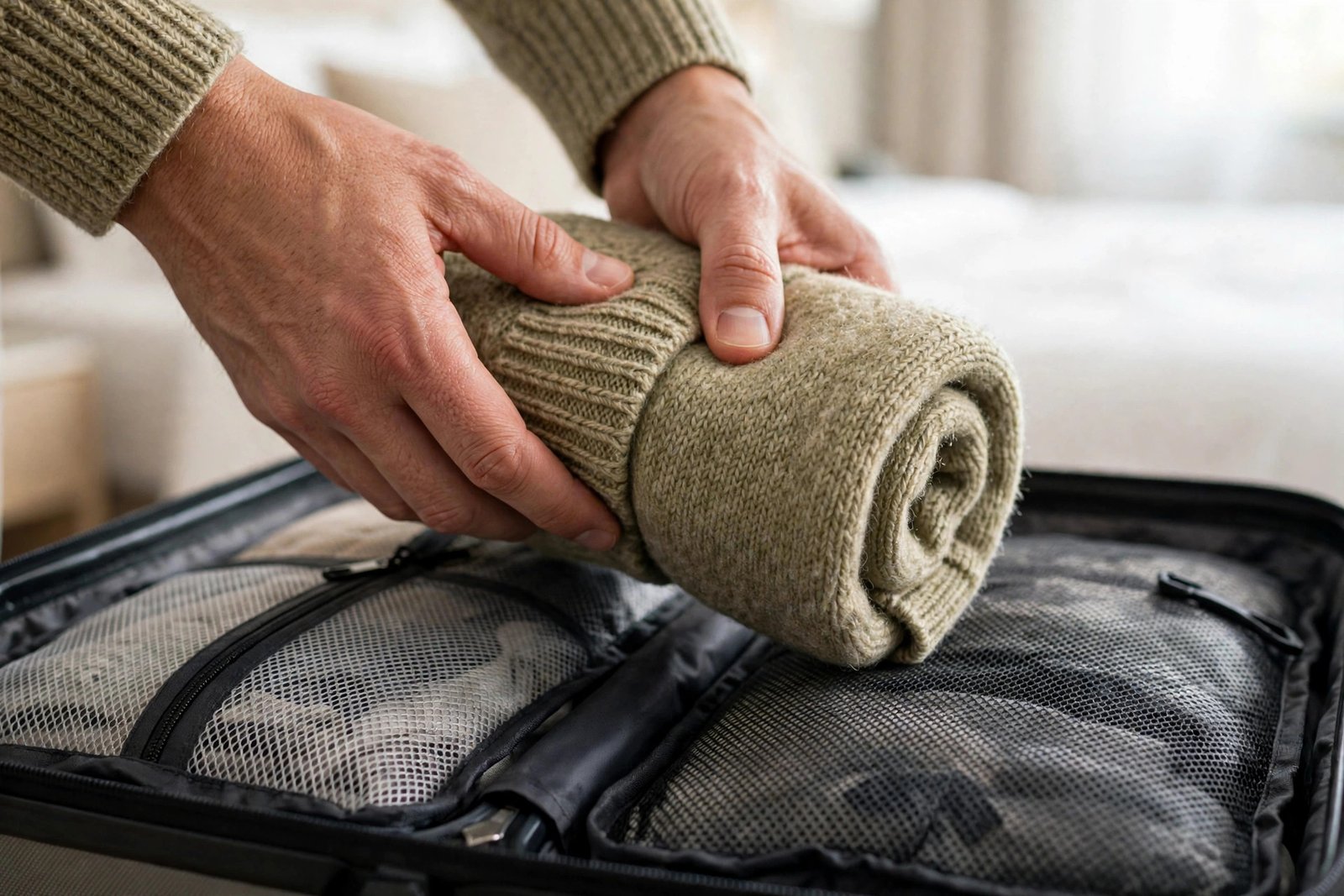
2. Roll knits, fold everything else. Rolling works best on soft, wrinkle-resistant items like sweaters, thermals, and fleece. Pack tightly — compressed clothing doesn’t shift, which is what causes wrinkles.
3. Use packing cubes. Cubes don’t magically create space, but they compress soft clothes and turn a chaotic suitcase into organized compartments. Sort by category: base layers in one cube, mid-layers in another. You’ll stop repacking the whole bag every morning.
4. Choose a packable down jacket. This deserves repeating because it changes the math. A thin-shell down jacket can compress to the size of a water bottle, while a bulky parka can fill most of a carry-on by itself.
5. Cut the “just in case” outfit. Every winter trip includes one outfit packed for a scenario that never happens. Plan for laundry instead: most hotels offer it, and a sink wash of base layers takes ten minutes. One versatile outfit per activity is enough.
Pick the Right Bag — and Know What Checking One Costs
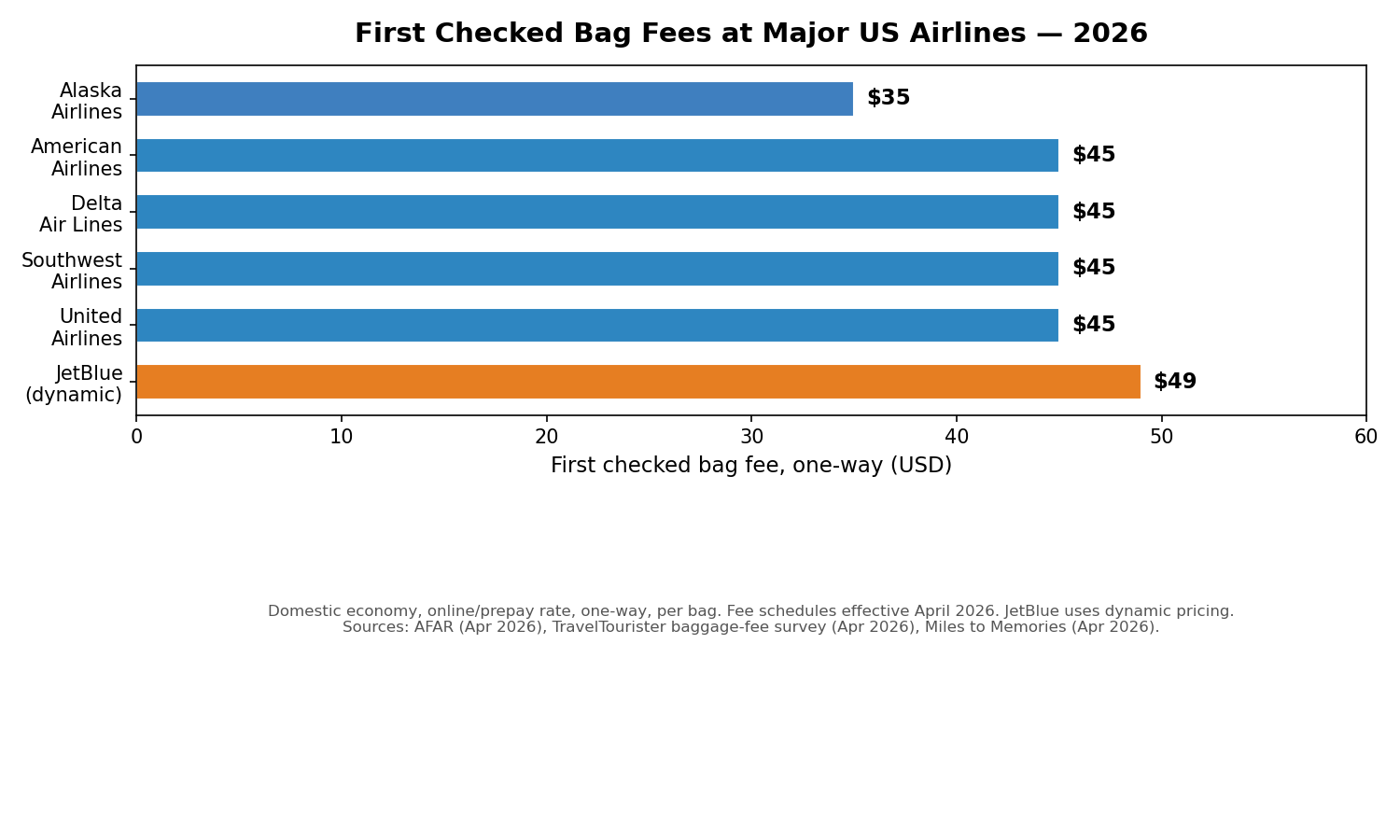
In April 2026, American, Delta, United, and Southwest all raised their first-bag fees to around $45 each way for domestic economy, with Alaska Airlines at $35–$40 and JetBlue using dynamic pricing between $39 and $59 depending on the route, according to AFAR’s April 2026 fee roundup. Southwest, which let bags fly free for 54 years, now charges like everyone else — the full 2026 baggage-fee comparison confirms the $45 figure across nearly every major US carrier.
For a couple checking one bag each on a round trip, that’s $180 before the trip even starts — real money, and a strong argument for packing carry-on only. If you do go carry-on, size it correctly: most US airlines cap carry-ons at 22 × 14 × 9 inches including wheels and handles, with gate enforcement getting stricter in 2026. Our best carry-on luggage comparison covers bags that fit those limits while maximizing interior space — worth reading before you buy, since an extra inch of depth makes a real difference with winter layers.
Pack for the Destination, Not the Season
“Winter trip” means very different things depending on where you’re going. Adjust the checklist above for your destination:
- City trips (New York, Chicago, Boston, European capitals): You’ll walk a lot on cleared but cold sidewalks. Prioritize warm, waterproof boots with grip and a coat that looks decent at restaurants. Skip the ski gear.
- Ski resorts: Add waterproof shell pants, ski socks (tall, cushioned, wool), a helmet liner or thin beanie, and goggles. Most resorts rent the bulky hard goods — never pack skis if you can rent.
- Iceland, Scandinavia, northern Canada: Wind is the enemy. Everything outer needs to be windproof, not just warm. Add a balaclava and consider traction cleats for icy sidewalks. Daylight is short, so a headlamp earns its place.
- Mild-winter destinations (Lisbon, Southern California, the Mediterranean): One warm layer and a light jacket are enough. Don’t pack like you’re going to the Arctic.
Winter trips also carry slightly higher disruption risk — storms delay flights and icy sidewalks cause injuries — so this is one trip type where insurance genuinely pays for itself. Compare travel insurance plans for international trips before you go. And if you haven’t booked yet, our guide on how to find cheap flights covers the shoulder-season sweet spots when winter destinations are cheapest.
The Complete Winter Packing List
| Item | Why you need it | Packing tip |
|---|---|---|
| Packable down jacket | Your main insulation; compresses tiny | Stuff into its own pocket, use as a travel pillow |
| Fleece or light jacket | Mid-layer or standalone on mild days | Roll it; doubles as a second pillow |
| 2–3 sweaters/fleece tops | Rotating mid-layers for a week | Roll knits to save space and prevent wrinkles |
| 3–4 thermal base layers | Moisture-wicking warmth against skin | Flat and thin — layer them between bulkier items |
| Thermal leggings | Warmth under pants on the coldest days | Weighs almost nothing; always bring a pair |
| 2 pairs warm pants | Insulated bottoms for daily wear | Fold along seams; wear the bulkiest pair on the plane |
| Winter boots | Warmth, waterproofing, and traction | Wear them on the plane — never pack boots if you can avoid it |
| Walking shoes | Travel days and mild moments | Stuff socks inside to use the dead space |
| 5 pairs wool socks | Warm feet; small enough to pack generously | Roll pairs together; fill shoe cavities with them |
| Beanie, gloves, scarf | Most heat loss is at the extremities | Tuck into coat pockets or boots to save space |
| Lip balm & moisturizer | Cold air wrecks skin fast | Travel sizes in your quart-size liquids bag |
| Compact umbrella | Freezing rain beats snow for misery | Slide along the suitcase edge or carry in your daypack |
5 Winter Packing Mistakes to Avoid
1. Packing cotton everything. Cotton hoodies and jeans feel cozy at home, but cotton holds moisture and dries slowly — the one fabric rule every outdoor expert agrees on. Build your core layers from wool or synthetics.
2. Bringing a coat you can’t layer under. A fashion coat that barely zips over a t-shirt is useless in real cold. Your outer layer needs room for a base layer and a mid-layer underneath. Try the full stack on at home before the trip.
3. Packing two pairs of jeans “just in case.” Jeans are among the bulkiest, slowest-drying items you can pack, and they insulate poorly. One pair is fine for casual evenings; spend the space on thermals and socks instead.
4. Putting essentials in a checked bag. If you check a bag, keep medications, chargers, documents, and one full warm layer in your carry-on. Winter is peak season for weather delays and misrouted luggage — you don’t want to be coatless at midnight in Minneapolis.
5. Breaking in new boots on the trip. Stiff new boots plus a full day of sightseeing equals blisters by dinner. Wear them for at least a week of normal life before the trip, with the socks you’ll actually wear.
Frequently Asked Questions
Can I fit a winter trip in a carry-on?
Yes, for trips up to about a week, if you wear your bulkiest items on the plane (boots, coat, heavy sweater) and pack a compressible down jacket instead of a parka. Layers mean fewer, thinner items instead of many thick ones.
How many outfits do I need for a 7-day winter trip?
Far fewer than seven. Plan on 3–4 base-layer tops, 2–3 mid-layers, 2–3 bottoms, and one coat, then re-wear outer layers across days. Base layers sit against your skin and need rotating; sweaters and coats don’t. A mid-trip sink wash of base layers extends everything.
Should I check a bag or carry on for a winter trip?
Carry-on if you can. In 2026, most major US airlines charge about $45 each way for a first checked bag — $90 round trip per bag — after the April 2026 fee increases. A couple checking one bag each pays $180 round trip. That’s a strong financial reason to master carry-on winter packing.
What’s the warmest thing I can pack that takes up almost no space?
Thermal base layers (top and leggings) and a packable down jacket. High-fill-power down compresses to a fraction of its worn size, while thermals add serious warmth for almost zero suitcase volume.
How do I keep winter clothes from smelling after re-wearing them?
Wool naturally resists odor far better than synthetics or cotton, which is another reason merino base layers are worth the investment. Air out mid-layers overnight instead of balling them up, and pack a couple of dryer sheets or a small fabric spray in your bag.
Conclusion
Learning how to pack for a winter trip is really about unlearning the summer-packing instinct to bring one outfit per day. Pack a three-layer system instead of bulky single pieces, wear your heaviest items on the plane, and let a packable down jacket do the heavy lifting. Do that, and a week of winter fits in a carry-on — saving you up to $90 per checked bag each way at today’s airline fees.



