
Best Cordless Drill for Beginners: 5 Picks Compared for 2026
Your first real power tool shouldn’t be the biggest or the most expensive one on the shelf. It should be the one that feels good in your hand, doesn’t terrify you when you pull the trigger, and actually finishes the job. If you’re hunting for the best cordless drill for beginners, the wall of yellow, red, and teal toolboxes at the hardware store can be genuinely overwhelming — and the spec sheets don’t help much if nobody has explained what any of it means.
Here’s the good news: you don’t need a pro-grade workhorse. You need a light, forgiving drill that drills pilot holes, drives screws, and hangs shelves without stripping every screw head in sight. That’s why this guide to the best cordless drill for beginners skips the contractor marketing and compares five real, current models — with verified specs and prices — so you can buy your first drill with confidence.
What Beginners Actually Need in a Cordless Drill
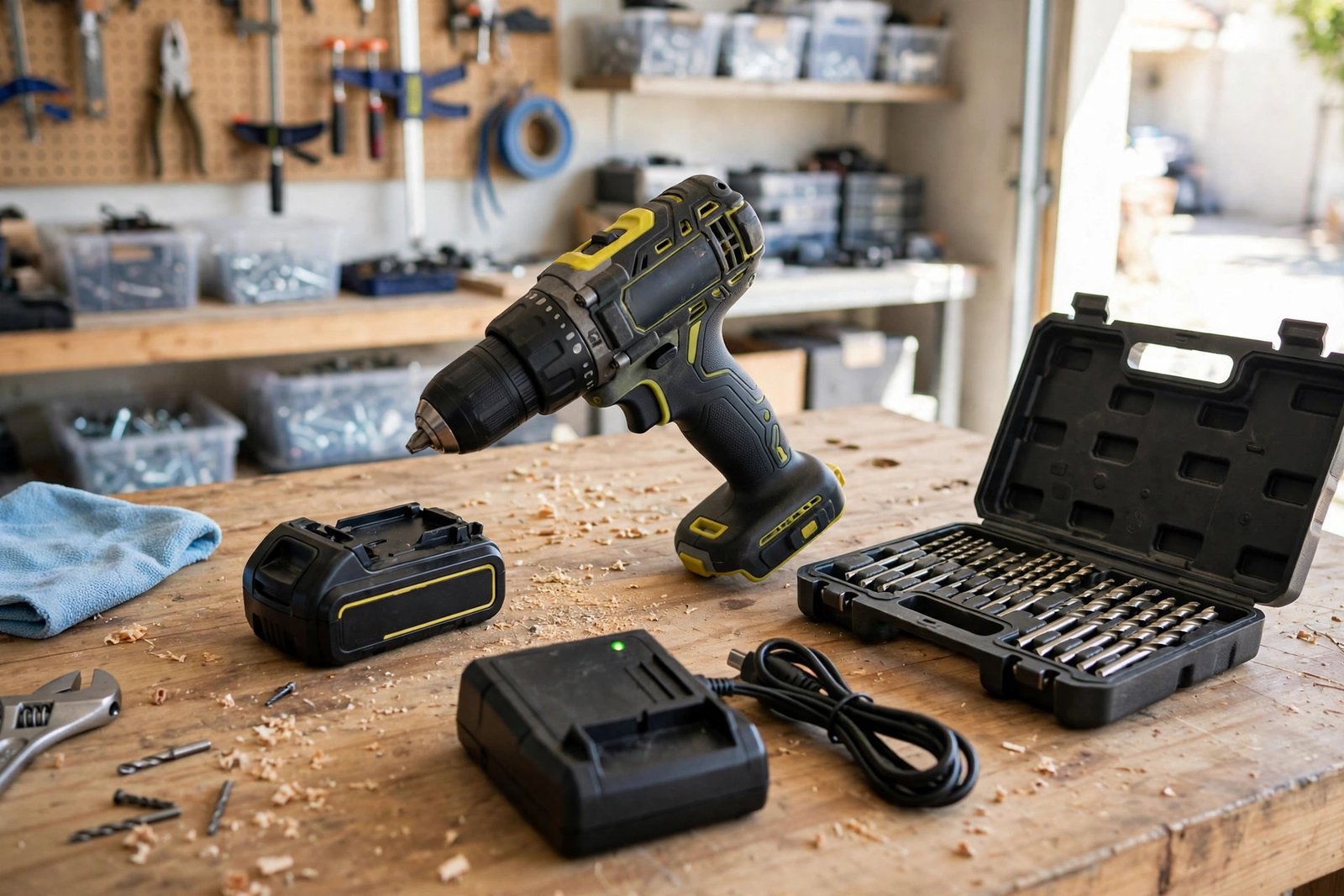
Before we touch a single model, let’s decode the spec sheet. Once you know what matters, the choice gets simple fast.
Voltage: 12V vs. 18V/20V
Voltage is the roughest measure of a drill’s muscle. Twelve-volt drills are lighter, smaller, and plenty for hanging curtains, assembling flat-pack furniture, and driving screws into pine. Eighteen-volt drills (sold in the US as “20V MAX” — the label refers to maximum initial voltage, while the nominal voltage is actually 18 volts, as BLACK+DECKER’s own product pages note) hit harder and are better if you ever plan to drill into studs or masonry. For your first drill, either works. If in doubt, a 12V drill is the friendlier tool to learn on because it’s lighter and easier to control overhead.
Chuck size: 3/8″ vs. 1/2″
The chuck is the clamp at the front that holds your bit. A 3/8-inch chuck handles every bit a beginner will touch — twist bits, spade bits up to a reasonable size, and all driver bits. A 1/2-inch chuck accepts bigger shanks for heavier work like large hole saws. Bigger isn’t better for learning; it just adds weight and bulk.
The clutch: your screw-saving dial
That ring of numbers behind the chuck is a clutch. Set it low and the drill stops turning before it buries a screw too deep or strips the head. This is the single most beginner-friendly feature on a drill. Look for at least 15+ clutch positions; 20 or more gives you finer control for delicate jobs like assembling IKEA cabinets.
Brushless vs. brushed motors
A brushed motor uses physical carbon brushes that wear over time and waste some energy as heat. A brushless motor ditches them, so it runs cooler, sips battery more slowly, and usually lasts longer. Brushless drills cost a bit more but are almost always the better buy if your budget stretches — especially since you’ll own this drill for a decade.
Speed and battery
Two-speed gearboxes (roughly 0–450 RPM for driving, 0–1,500+ RPM for drilling) are standard and worth having. Battery capacity is measured in amp-hours (Ah); a 2.0Ah battery is the sweet spot for beginners — light enough to keep the drill balanced, big enough to hang a whole room of shelves on one charge. And here’s a tip that matters more than any spec: buy a kit with two batteries, so one can charge while you work.
Best Cordless Drill for Beginners: Our 5 Picks Compared
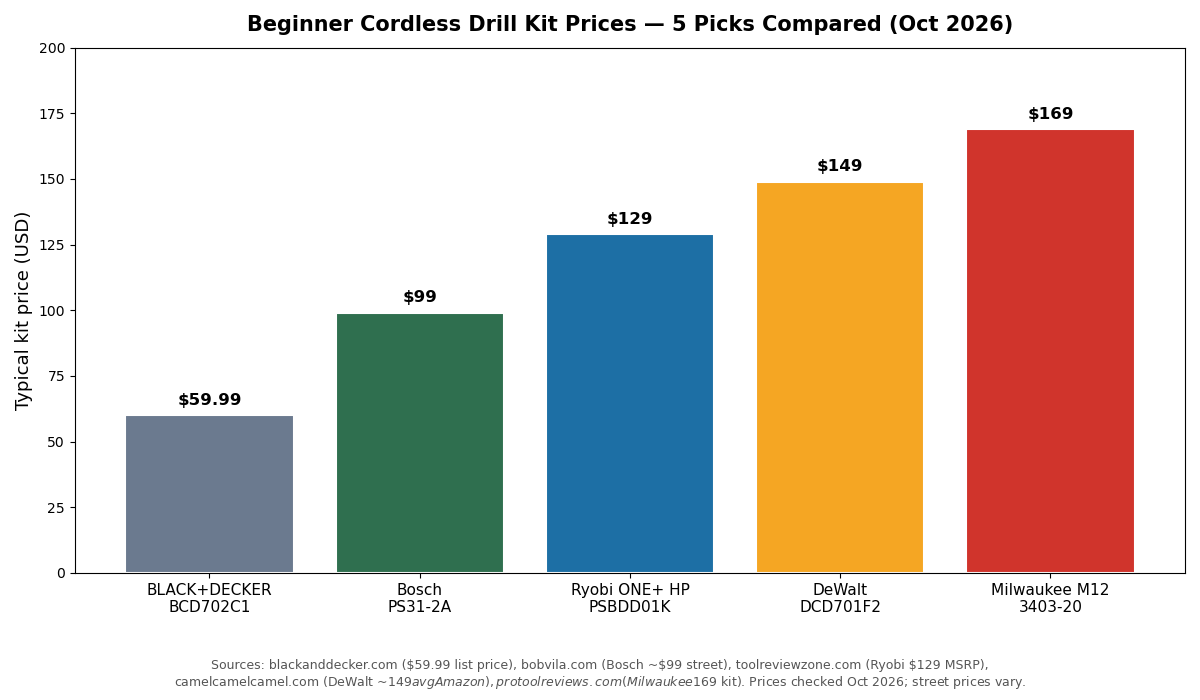
Here’s our shortlist for the best cordless drill for beginners, ranked by overall beginner-friendliness. Every spec below comes from the manufacturer’s product page or an independent review — no guessing, no inflated claims.
1. DeWalt DCD701F2 12V MAX XTREME — Best Overall for Beginners
This is the drill we’d hand to a friend who has never owned one. The DeWalt 12V MAX XTREME drill/driver kit is genuinely tiny — just under 6 inches long and about 1.9 pounds bare — yet its brushless motor earns a 250 UWO power rating from DeWalt, plenty for household jobs. You get a 3/8-inch chuck, a 15+1 clutch, and a two-speed gearbox (0–425 / 0–1,500 RPM) that covers everything from assembling furniture to drilling into studs. The kit ships with two 2.0Ah batteries, a charger, and a bag. Typical price hovers around $149 on Amazon, and it dips lower during sales. The only real compromise is the 3/8-inch chuck, which limits very large bits — but beginners won’t miss it.
2. Bosch PS31-2A 12V MAX — Best Value Pick
The Bosch PS31-2A has been the budget darling of the 12V class for years, and it still earns its spot. It delivers 265 inch-pounds of torque through a 3/8-inch chuck, with a 20+1 clutch — the finest screw control of any drill on this list — and a compact 7-inch body that disappears into a kitchen drawer. It’s a brushed motor, not brushless, which is how Bosch keeps the price down: street price is typically around $99, and it drops even lower during sale events. The kit includes two 2.0Ah batteries, a charger, bits, and a carrying bag. If you want the cheapest drill that is still genuinely good, this is it.
3. Milwaukee 3403-20 M12 FUEL — Best Compact Power
Milwaukee’s M12 FUEL line punches absurdly above its weight. The Milwaukee M12 FUEL drill/driver squeezes 400 inch-pounds of peak torque into a 5.9-inch, 2.2-pound body with a full 1/2-inch all-metal chuck — specs that would have required an 18V tool a few years ago. It spins 0–450 / 0–1,550 RPM, has a mechanical clutch, and the kit version bundles two batteries (2.0Ah and 4.0Ah) plus a charger for about $169. This is the pick for the beginner who suspects their “occasional shelf” might turn into a full workshop habit within a year. The bare tool runs about $129 if you ever expand into the M12 battery platform.
4. Ryobi 18V ONE+ HP Compact Brushless (PSBDD01K) — Best Battery Ecosystem
Here’s a different way to think about your first drill: buy into the right battery system. The Ryobi ONE+ HP compact brushless drill/driver kit delivers 400 inch-pounds of torque, a 1/2-inch chuck, a 24-position clutch, and a two-speed gearbox (0–450 / 0–1,700 RPM) in a 6.4-inch body. The $129 MSRP kit includes two 1.5Ah batteries, a charger, and a bag. The real selling point is the ONE+ platform: the same batteries power hundreds of Ryobi tools, from sanders to lawn mowers. If you see more DIY in your future — say, tackling projects like installing a ceiling fan or fixing a running toilet — one battery family that grows with you is genuinely convenient.
5. BLACK+DECKER BCD702C1 20V MAX — Cheapest Drill Worth Buying
Sometimes the right beginner drill is simply the cheapest one that isn’t junk. The BLACK+DECKER 20V MAX drill/driver kit is listed at $59.99 on the manufacturer’s site and includes the drill, a 1.5Ah battery, and a charger. It’s a brushed motor with a 3/8-inch chuck and a 600 RPM top speed — modest specs, but honest ones for hanging pictures, assembling furniture, and driving screws into drywall and pine. The trade-offs: only one battery in the box, and less power for dense hardwoods or long lag screws. But if you’re buying your very first drill and aren’t sure DIY is even your thing, sixty bucks is a low-stakes way to find out.
Side-by-Side Spec Comparison
| Drill | Voltage | Motor | Chuck | Max speed | Clutch | Power rating | Batteries | Typical price |
|---|---|---|---|---|---|---|---|---|
| DeWalt DCD701F2 | 12V | Brushless | 3/8″ | 0–1,500 RPM | 15+1 | 250 UWO (DeWalt rating) | 2 × 2.0Ah | ~$149 |
| Bosch PS31-2A | 12V | Brushed | 3/8″ | 0–1,300 RPM | 20+1 | 265 in-lbs | 2 × 2.0Ah | ~$99 |
| Milwaukee 3403-20 | 12V | Brushless (FUEL) | 1/2″ | 0–1,550 RPM | Mechanical | 400 in-lbs | 2.0Ah + 4.0Ah | $169 (kit) |
| Ryobi PSBDD01K | 18V | Brushless | 1/2″ | 0–1,700 RPM | 24 | 400 in-lbs | 2 × 1.5Ah | $129 (MSRP) |
| BLACK+DECKER BCD702C1 | 20V MAX* | Brushed | 3/8″ | 600 RPM | Adjustable | — | 1 × 1.5Ah | $59.99 (list) |
*”20V MAX” is a marketing label for maximum initial voltage; nominal voltage is 18V, per the manufacturer’s own spec notes. Prices checked October 2026; street prices change frequently.
How to Use Your First Drill Safely
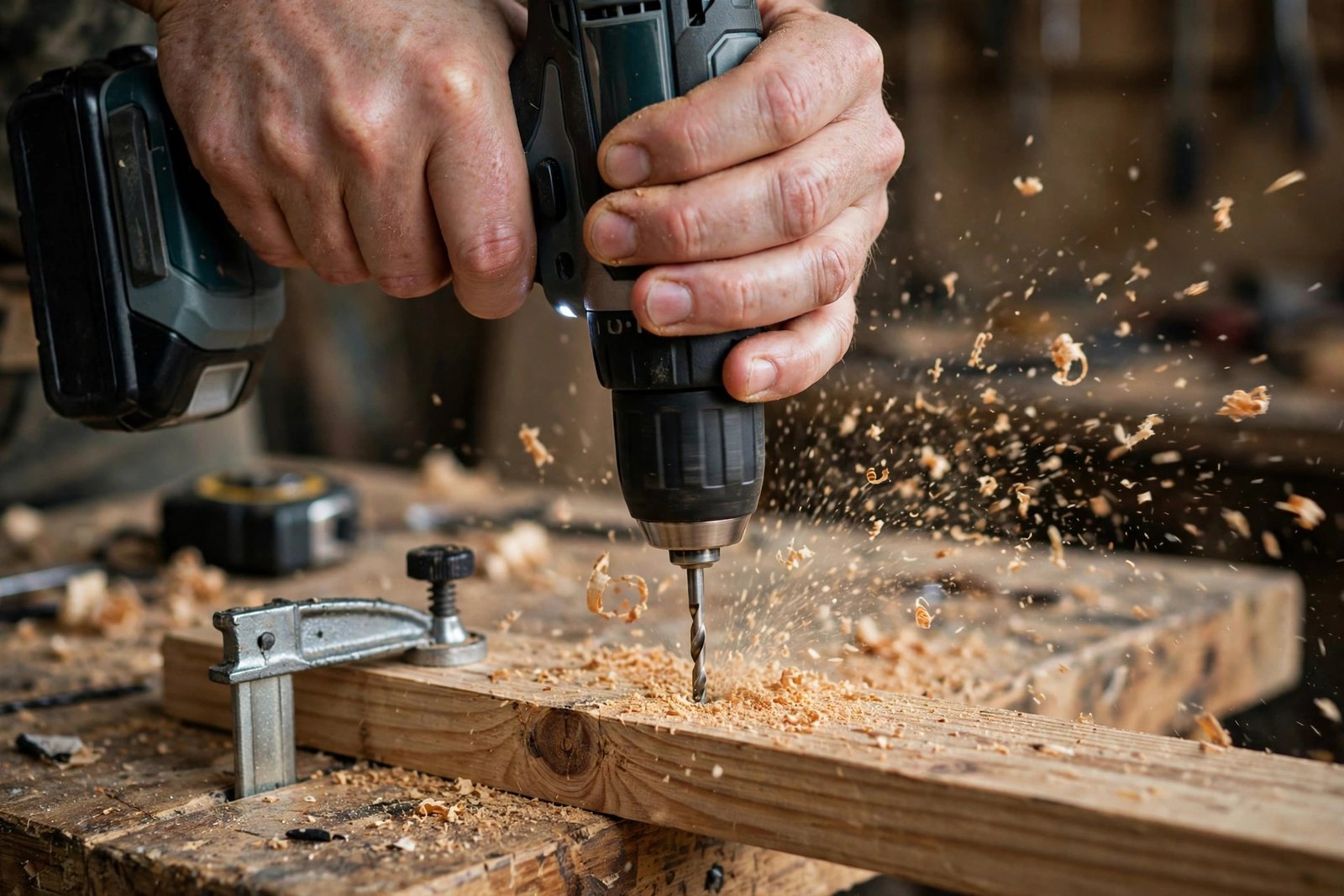
Even the best cordless drill for beginners can bite if you treat it casually. None of this is complicated — it just takes one careful afternoon to make it all habit.
- Wear eye protection. Drilling wood throws chips; drilling metal throws hot spirals. Cheap safety glasses live in the kit for a reason.
- Clamp your workpiece. Never hold a board in one hand and drill with the other. A slipping board plus a spinning bit is how injuries happen.
- Mark and punch your spot. Make a small dent with a nail or center punch where the hole goes. It keeps the bit from wandering across the wood.
- Start slow. Use the low-speed gear and squeeze the trigger gently until the bit bites, then increase speed. Full throttle from a standstill is how bits snap.
- Let the drill do the work. Steady, moderate pressure is enough. Leaning your body weight into it overheats the bit and the motor.
- Use the clutch for screws. Start on a low clutch setting and work up until screws sit flush. This one habit prevents 90% of stripped screw heads.
- Remove the battery before changing bits. A bumped trigger with your fingers near the chuck is a nasty surprise. Pop the battery out — it takes two seconds.
- Keep loose items clear. Tie back hair, roll up sleeves, and remove dangling jewelry. Spinning chucks grab loose things instantly.
- Respect the bit. Bits get hot. Let a metal bit cool before touching it, and never drill toward your own hand or body.
- Know what’s behind the wall. Before drilling into drywall, check for studs, pipes, and wiring with a stud finder. A drill bit through a water pipe turns a $15 shelf project into a $500 plumber visit — the same caution applies when you’re doing bigger jobs like fixing a leaky faucet, where knowing your shutoff valves matters just as much.
Accessories Worth Buying With Your First Drill
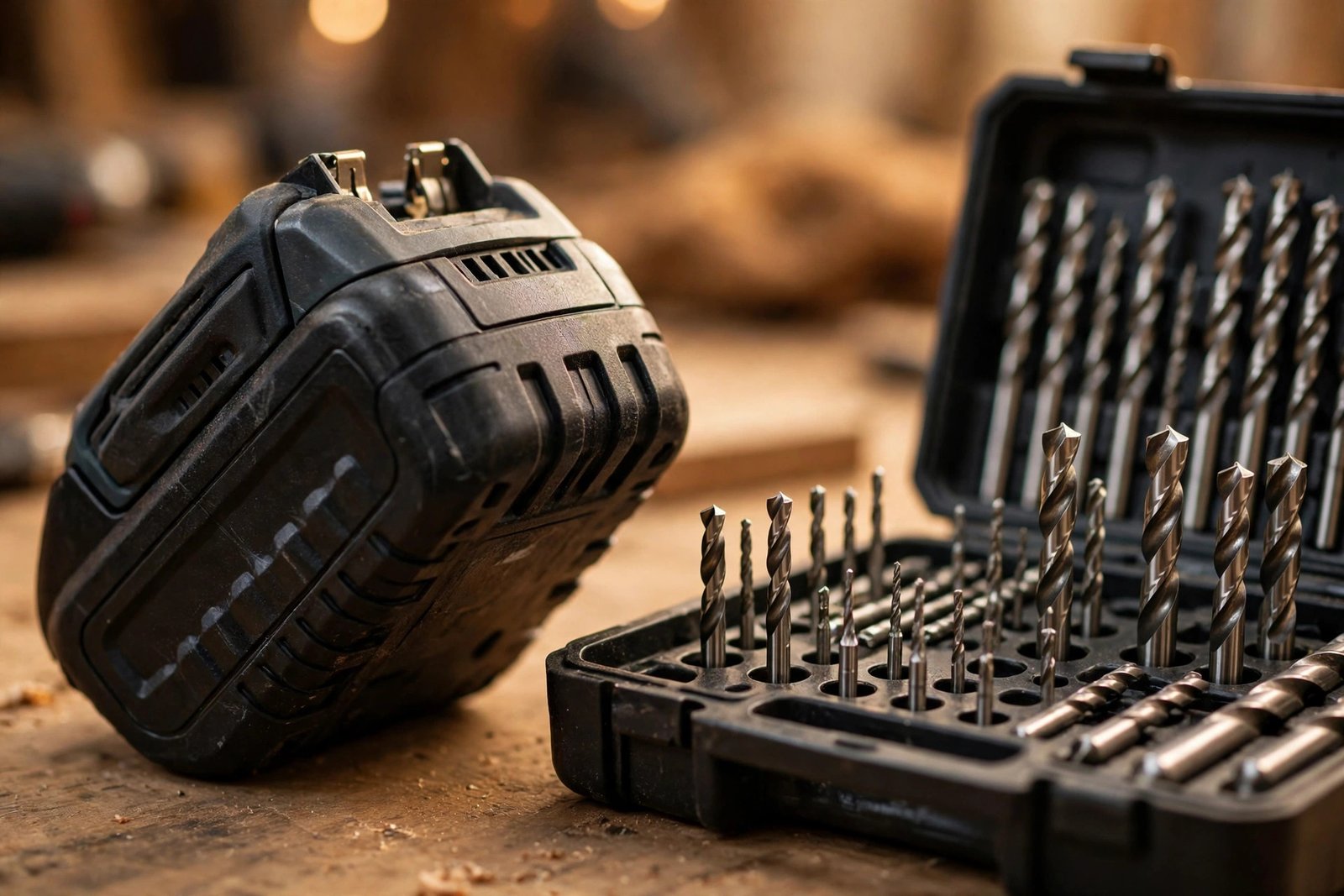
A drill without bits is a paperweight. Budget another $30–50 for these and you’ll be ready for almost any beginner project:
- A titanium twist-bit set (around 29 pieces). Covers wood, plastic, and thin metal. This is the one accessory every beginner should own on day one.
- A driver bit set with the common heads. Phillips #2, Torx T20/T25, and a few square-drive bits handle nearly all household screws.
- A magnetic bit holder. Extends your reach into tight spots and holds screws on the bit so you can start them one-handed.
- Spade bits (1/2″ to 1″). Cheap, fast, and perfect for boring holes for cables and bolts in wood.
- Safety glasses. If your drill kit doesn’t include them, a $5 pair is the best accessory investment you’ll ever make.
- Two clamps. A pair of basic bar clamps turns any table into a workbench and keeps your hands far from the bit.
- A stud finder. Essential before any wall drilling. Your future self — the one not repairing a punctured pipe — thanks you.
Skip for now: hole-saw kits, masonry bits, right-angle attachments, and pocket-hole jigs. They’re all useful eventually, but none of them belongs in a beginner’s first shopping cart.
FAQs
Is the best cordless drill for beginners a 12V or 20V model?
For most first-time buyers, 12V. A 12-volt drill is lighter, smaller, cheaper, and handles every common beginner task — hanging shelves, assembling furniture, mounting curtain rods. Step up to 18V/20V only if you know you’ll be drilling into studs, driving long deck screws, or building a deck, where the extra torque genuinely matters.
Do I need brushless, or is a brushed drill fine for a beginner?
Brushed is fine if your budget is tight — the Bosch PS31-2A and BLACK+DECKER picks above prove it. But brushless is the better long-term buy: cooler running, longer battery runtime, and no brushes to wear out. If you can stretch to the DeWalt, Milwaukee, or Ryobi brushless picks, do it.
How much should I spend on my first cordless drill?
Somewhere between $60 and $170 covers every sensible beginner option. At $60, the BLACK+DECKER gets you drilling. Around $99–$129, the Bosch and Ryobi kits add real capability and second batteries. At $149–$169, the DeWalt and Milwaukee kits are tools you may never need to replace. Don’t spend $200+ until you know what kind of projects you actually do.
Can a cordless drill drive screws too, or just drill holes?
Both — that’s why they’re all called “drill/drivers.” Swap the twist bit for a driver bit, dial the clutch down, and the same tool drives screws. The clutch is what makes it work: it slips before the screw buries itself or strips. Dedicated impact drivers drive screws faster, but a beginner doesn’t need one until screws become a daily event.
What’s the difference between a drill/driver and an impact driver?
A drill/driver spins smoothly and is ideal for drilling holes and driving screws with control. An impact driver adds concussive rotational “hits” that power through long, stubborn fasteners without twisting your wrist — great for deck screws and lag bolts, but twitchy and loud for delicate work. Start with the drill/driver; add an impact driver later if you outgrow it.
The Bottom Line
If we had to name the single best cordless drill for beginners in 2026, it’s the DeWalt DCD701F2: light enough to use one-handed, brushless, and sold as a complete two-battery kit that will handle everything from flat-pack furniture to mounting a TV. On a tighter budget, the Bosch PS31-2A delivers remarkable value around $99, and the BLACK+DECKER BCD702C1 proves you can get started for sixty dollars. Whichever you choose, learn the clutch, wear your safety glasses, and clamp your work — the drill is only half the equation. The other half is the careful, unhurried beginner holding it.



