
How to Make Your Home Smell Good Naturally
Walk into someone’s house and it hits you before the decor does — that unmistakable freshness, like clean linen, warm citrus, and something you can’t quite name. Then you walk back into your own place and wonder why it never smells like that. If you’ve been wondering how to make your home smell good naturally, you’re asking the right question, because the store-bought plug-ins and synthetic sprays most people reach for are the least effective way to do it.
Here’s what took me years of trial and error to learn: a home that smells genuinely good is never the result of one miracle product. It’s a system. You remove odors first, then you layer in natural scent on top of a clean base. Spraying fragrance over a stale house is like spraying perfume instead of showering — it just makes things worse. This guide walks you through the whole system, room by room, with honest science about what actually works and what doesn’t.
The Honest Truth First: Remove Odors, Don’t Just Mask Them
Most “natural scent” advice skips the most important step. Before you light a single candle or simmer a single orange peel, you need to deal with the sources of bad smells. The big offenders are almost always the same: stale cooking grease in the air, musty textiles, a forgotten corner of the fridge, pet areas, and — the one people underestimate most — stagnant indoor air.
Indoor air pollution levels can run 2 to 5 times higher than outdoor levels, and we spend roughly 90 percent of our time indoors, according to the U.S. Environmental Protection Agency’s indoor air quality guidance. Odors are one of the most noticeable signals that your indoor air isn’t getting exchanged enough. That means the single highest-impact move in this whole guide is also the cheapest: ventilation.
Your Simple System for how to make your home smell good naturally
The system has six steps, and the order matters. Steps one through three are odor removal — ventilation, source cleanup, and baking soda. Steps four through six are scenting — simmer pots, diffusers, and a daily reset routine. The secret to how to make your home smell good naturally is sequence: remove first, scent second. Skip the first half and you’ll be fighting a losing battle with fragrance.
Step 1: Ventilate Every Room, Every Day
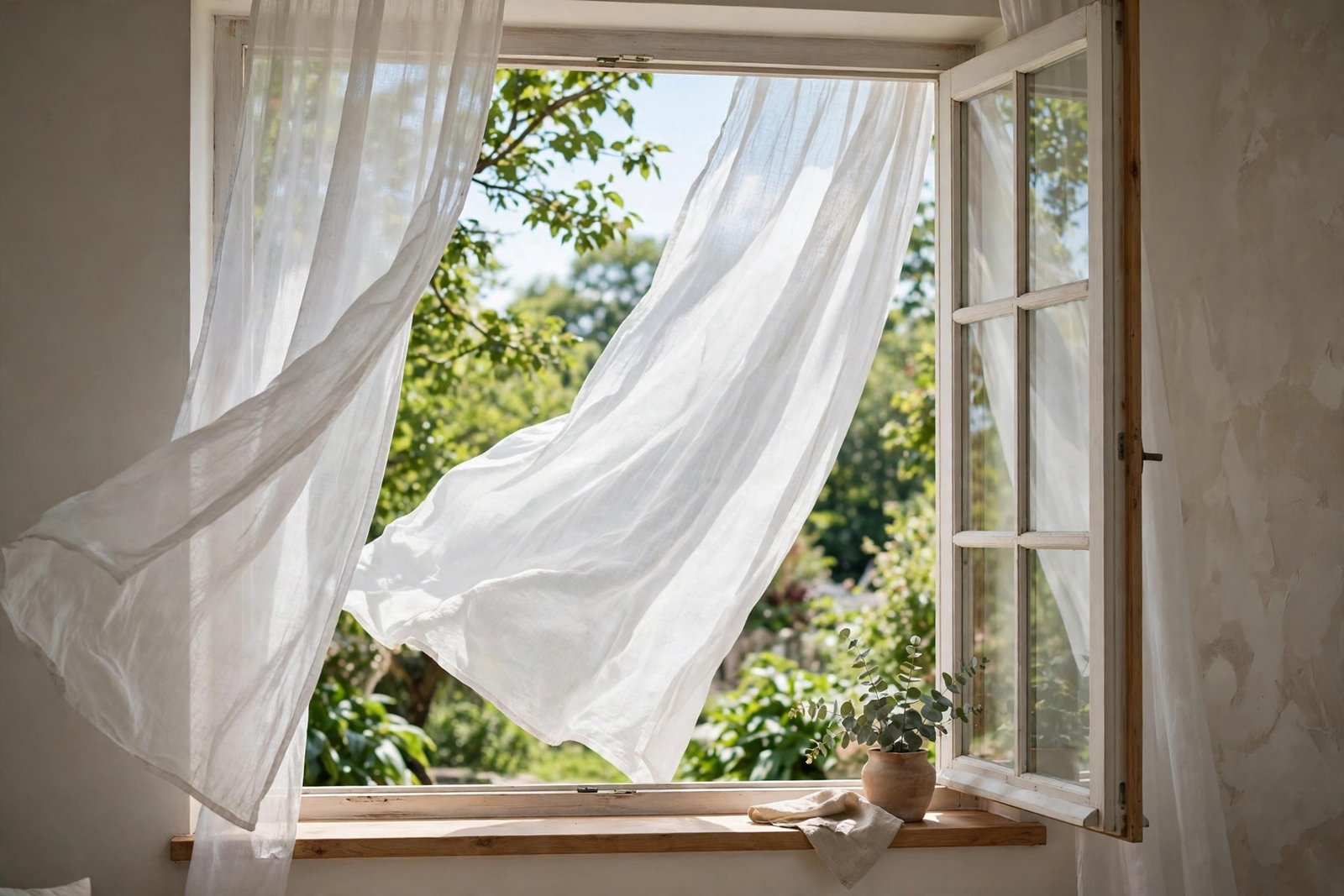
The U.S. EPA is blunt about it: increasing the amount of outdoor air coming indoors helps control pollutant levels and odors. In fact, the EPA’s ventilation guidance notes that homes should receive a minimum of 0.35 air changes per hour, with exhaust fans in kitchens and bathrooms to pull moisture and smells directly outside.
You don’t need to measure anything to put this into practice. The rule of thumb that actually works: open windows on opposite sides of the house for 10 to 15 minutes a day, even in winter. This “air exchange flush” pushes out accumulated cooking smells, pet odors, and the general staleness that builds up in a sealed home. Run the kitchen range hood every time you cook — not just when something burns — and run bathroom fans for 20 minutes after showers so moisture doesn’t turn musty in grout and drywall.
If you live somewhere too cold or too polluted to open windows daily, a portable air purifier with a carbon filter does the same basic job of scrubbing odors from the air. Either way, ventilation is the foundation. No amount of lavender oil fixes a house that never breathes.
Step 2: Hunt Down the Smell Sources, Room by Room
Walk your house with fresh eyes — or better, a fresh nose after you’ve been out for an hour. Check these hot spots:
The kitchen
The garbage disposal, the trash can lid, the fridge’s vegetable drawer, and the inside of the microwave are where kitchen smells hide. Wipe the disposal splash guard (it’s grim under there), take the trash out before it smells rather than after, and keep a small open box of baking soda in the fridge, replacing it monthly. Grease from cooking coats nearby surfaces over time; a degreasing wipe-down of the stovetop surround once a week keeps that old-fryer smell from settling in.
The bathroom
Run the exhaust fan longer than you think you need to. Wash bath mats and shower curtains regularly — they hold moisture and mildew like sponges. A few drops of essential oil on the inside of the toilet paper roll or on cotton balls tucked behind the toilet tank gives a subtle, continuous lift.
The living room
Soft furnishings are the memory foam of smells: they hold onto everything. Vacuum upholstery monthly with the brush attachment, wash throw pillow covers and curtains a few times a year, and give carpets a sprinkle-and-vacuum treatment with baking soda when they start smelling tired. Homes that smell fresh are almost always homes that are easy to keep clean — if clutter has been building up, decluttering your home first makes every step that follows more effective, since fewer surfaces collect dust and odor.
The bedroom
Wash sheets weekly — bodies, sweat, and skin oils transfer fast. Air out the mattress by pulling back the covers for an hour before making the bed. Open the closet doors on laundry day so stored clothes don’t go stale, and if you rotate your wardrobe with the seasons, make sure you’re storing winter clothes clean and bone-dry so they don’t bring musty smells back in spring.
Step 3: Let Baking Soda Do the Heavy Lifting
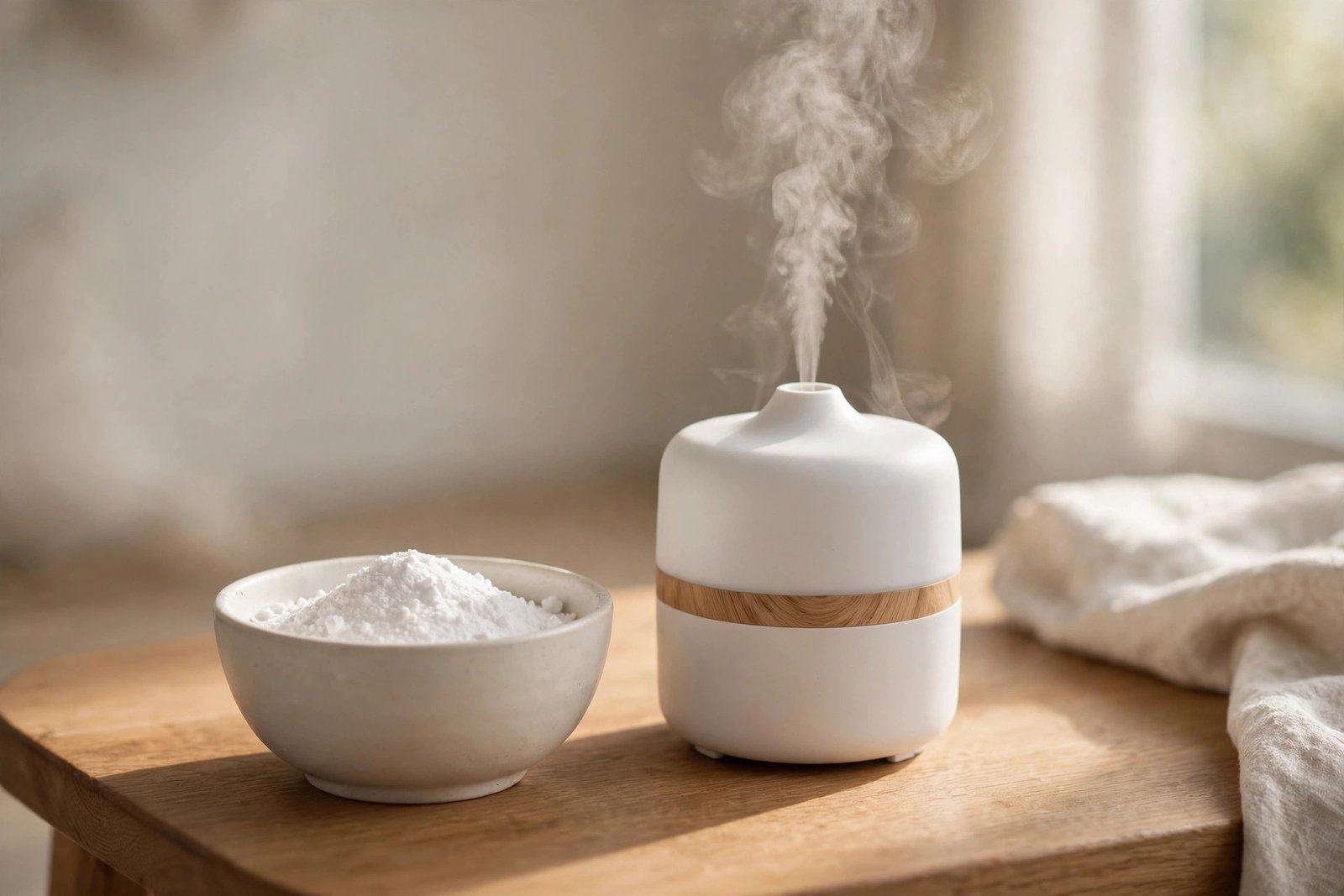
Baking soda’s reputation as a deodorizer is one of the few folk remedies with real chemistry behind it. It’s amphoteric, meaning it reacts with both acidic and alkaline odor molecules and converts them into neutral-smelling salts rather than covering them up — baking soda’s odor-neutralizing tricks are documented across dozens of household uses, from fridges to sneakers.
Put it to work this way:
- Fridge and freezer: an open box on the shelf, swapped every month, keeps food odors from building up.
- Carpets and rugs: sprinkle generously, wait at least 15 minutes (overnight is better for stubborn smells), then vacuum thoroughly.
- Trash cans and diaper pails: a layer in the bottom of the bin absorbs leaks and stink between cleanings.
- Mattresses: a dusting of baking soda left for a few hours before vacuuming freshens the whole bed.
- Shoes and gym bags: a spoonful in a small cloth sachet, replaced monthly.
One honest caveat: baking soda neutralizes, but slowly. It won’t fix a truly foul carpet in one pass, and it needs replacing — a box that’s been absorbing fridge odors for six months is saturated and doing nothing. Treat it as a maintenance tool, not a miracle.
Step 4: Simmer Pots for Instant, Whole-House Scent
If there’s one trick that defines how to make your home smell good naturally, it’s the simmer pot — sometimes called stovetop potpourri. Fill a saucepan with water, add sliced citrus, cinnamon sticks, cloves, a sprig of rosemary, and let it barely simmer with the lid off. Within 20 minutes the steam carries warm, spiced fragrance through the whole house, and it costs almost nothing.
Try these combinations:
- Classic cozy: orange slices, 3 cinnamon sticks, a handful of whole cloves, a bay leaf.
- Fresh and clean: lemon slices, 3 sprigs of rosemary, a teaspoon of vanilla extract.
- Autumn house: apple slices, 2 cinnamon sticks, star anise, a pinch of nutmeg.
- Spring bright: lemon and lime peels, fresh mint, a few slices of ginger.
Top up the water as it evaporates, and never leave it unattended — a boiled-dry pot is a fire risk and a cleanup nightmare. Two things stovetop simmer pots won’t do, despite what social media claims: they don’t purify the air and they don’t remove pollutants. They are a fragrance method — a genuinely lovely, cheap, chemical-free one — but they belong in the “scenting” half of the system, after you’ve handled the odor-removal half.

Step 5: Diffuse Essential Oils the Smart Way
Ultrasonic diffusers are the modern workhorse of natural home scenting: a few drops of oil in water, a cool mist, and a room that smells like a spa within minutes. The results depend entirely on two things — oil quality and restraint.
Buy from reputable brands that publish third-party purity testing rather than the cheapest bottle on a marketplace shelf. Reputable sellers like Plant Therapy’s essential oils, which are batch-tested for purity, are the benchmark to look for. A little goes a long way: 3 to 5 drops per 100 milliliters of water is plenty. Diffusing in 30- to 60-minute sessions rather than running all day prevents scent fatigue (where your nose goes blind to it) and keeps the air from getting heavy.
Good starting blends:
- Living room: sweet orange, clove, and a drop of cinnamon bark.
- Bedroom: lavender and cedarwood — genuinely relaxing, and one of the few pairings with actual sleep research behind it.
- Kitchen: lemon and rosemary — clean and herbaceous without fighting cooking smells.
- Bathroom: eucalyptus and tea tree — crisp and fresh.
Safety notes that matter: some oils are toxic to cats, dogs, and birds, so research pet-safe choices before diffusing around animals and always give pets a way to leave the room. Never ingest essential oils casually — aromatherapy bodies like the International Federation of Aromatherapists don’t recommend internal use without professional supervision. And skip the “therapeutic grade” marketing language; it’s a trademark, not a standard.
Step 6: The 10-Minute Daily Scent Reset
Fresh-smelling homes aren’t maintained with a monthly deep clean — they’re maintained with a short daily ritual. Here’s the one that keeps the whole system humming:
- Open two or more windows for the air flush (5 minutes).
- Take out anything that smells: trash, recycling with food residue, the diaper bag (2 minutes).
- Quick kitchen wipe-down: stovetop, sink, and the disposal splash guard (3 minutes).
That’s it. Combine this with the weekly tasks (laundry, baking-soda carpet treatment, bathroom fan discipline) and the seasonal ones (curtain washing, mattress freshening, deep-cleaning a washing machine so your laundry doesn’t come out smelling musty), and the house basically maintains its own freshness. The scent layer — simmer pots and diffusers — becomes the fun part you do for guests or for yourself on a Sunday afternoon, not a cover-up for neglect.
Natural Home Scenting: FAQ
What’s the fastest way to make my house smell good before guests arrive?
Start a simmer pot with orange, cinnamon, and cloves on the lowest heat, open a window in the living room for 10 minutes, and empty the kitchen trash. That trio covers scent, air, and the most common embarrassment source in under half an hour.
Do houseplants really clean the air and make it smell better?
Not in any meaningful way. The famous NASA studies were done in sealed chambers, not real living rooms, and later research has shown you’d need an impractical forest of plants to change room air chemistry. Plants do make rooms feel fresher and add a lovely green scent when you brush the leaves — enjoy them for that, not as air purifiers.
Why does my house smell fine to me but bad to visitors?
Olfactory adaptation — your nose tunes out constant background smells within minutes. That’s why the “come back with a fresh nose” walkthrough in Step 2 works, and why it’s worth asking a trusted friend for an honest sniff test after you’ve been home all day.
Are natural scents actually safer than synthetic air fresheners?
Generally, yes, with the usual caveats. Simmer pots and good-quality diffused oils avoid the phthalates and undisclosed “fragrance” blends found in many commercial products. But “natural” isn’t automatically harmless: some essential oils irritate skin and lungs in high concentrations and are genuinely dangerous to pets. Use everything in moderation and keep rooms ventilated.
How long do natural scent methods last?
A simmer pot scents the house while it’s going and for a few hours after; diffuser mist fades within an hour or two of switching off; baking soda works passively for weeks until it saturates. None of them are set-and-forget — that’s exactly why the daily 10-minute reset is the real engine of how to make your home smell good naturally without constantly masking odors.
Conclusion
The homes that smell amazing aren’t the ones with the most products — they’re the ones with the best system. Ventilate daily, hunt down smell sources room by room, let baking soda do the quiet passive work, and then add scent with simmer pots and diffusers on top of a genuinely clean base. Once you follow this order, how to make your home smell good naturally stops being a question you research and becomes a habit you barely think about. Your nose — and your guests — will notice the difference within the first week.