
How to Store Winter Clothes Properly: Keep Coats, Boots & Woolens Fresh Until Next Season
Learning how to store winter clothes properly is the difference between pulling out a coat next October that smells fresh and looks sharp — and opening a box to find moth holes, mustiness, and a puffer jacket that never got its loft back. Winter gear is the most expensive clothing most of us own, and months of careless storage can do more damage than a whole season of wear. The good news: storing coats, boots, and woolens well takes one focused afternoon, a few inexpensive supplies, and the right technique for each fabric.
Clean Everything Before You Store It
This is the step most people skip, and it’s the one that matters most. Never store a garment that has been worn even once since its last wash. Body oils, sweat, deodorant, perfume, and food stains are invisible to you after a few months — but they are a beacon to clothes moths, whose larvae feed preferentially on soiled patches of natural fibers.
Follow the care label, not your instincts. Wool coats and cashmere sweaters usually need dry cleaning or a gentle hand wash; down jackets should be washed with a down-specific detergent and tumble-dried on low with tennis balls to restore loft. If a coat needs buttons sewn on or a seam repaired, do it now; small damage gets worse, not better, in storage.
And make sure everything is completely dry before packing. Even slight dampness trapped in a sealed container invites mildew, which can permanently stain fabric and ruin down clusters.
How to Store Winter Clothes Properly by Fabric Type
There is no single method that works for every winter garment. Fabric determines everything: what hangs, what folds, what breathes, and what can be compressed. Here’s the right approach for each category.
Wool Coats and Cashmere Sweaters
Wool and cashmere are the crown jewels of your winter wardrobe — and the favorite food of clothes moth larvae, which digest keratin, the protein in animal fibers. Never hang heavy wool coats on wire hangers; the weight pulls the shoulders out of shape. Use wide, sturdy, padded or wooden hangers that fill the shoulder line, button the coat, and slip it into a breathable cotton or canvas garment bag — not plastic, which traps moisture.

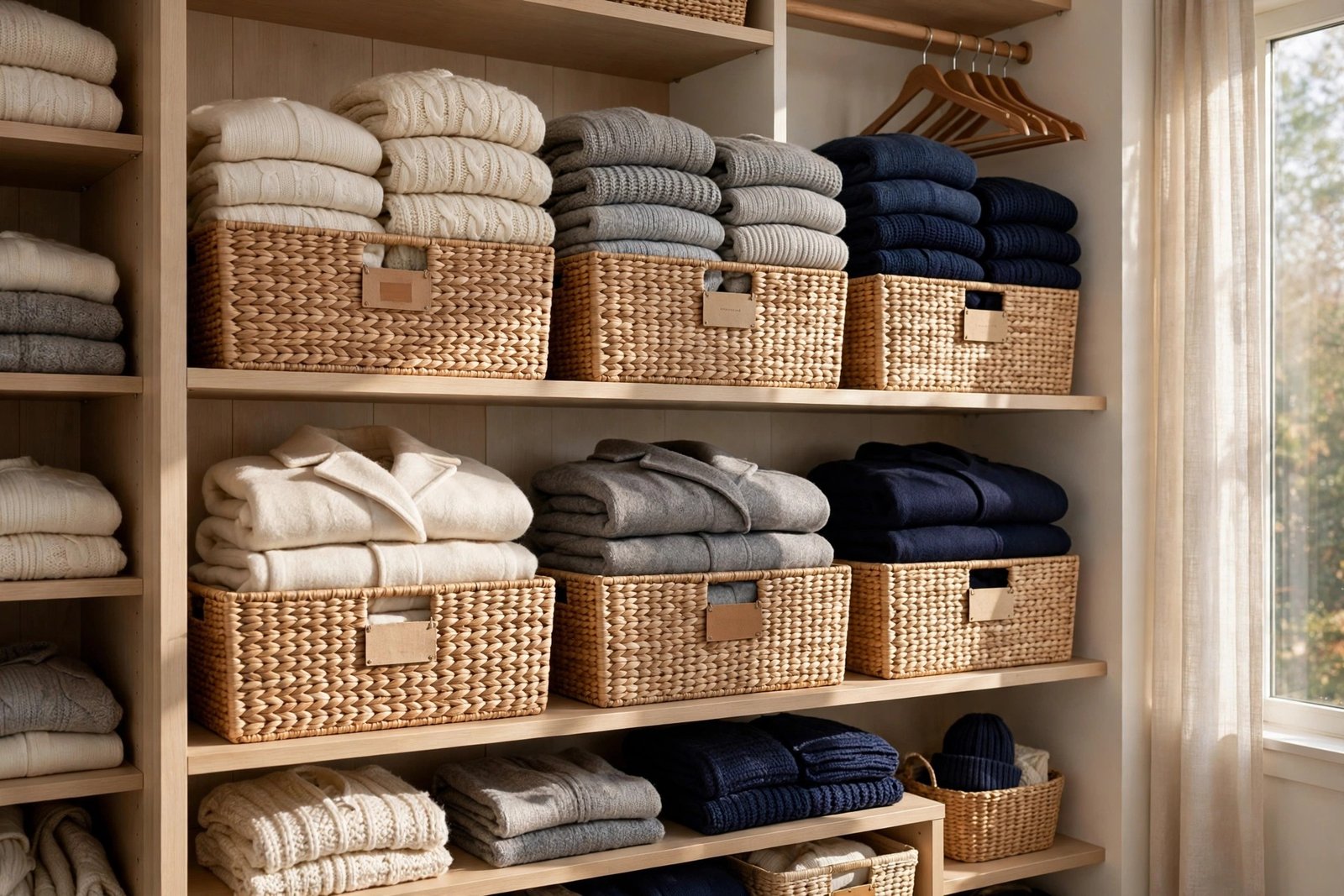
Knit sweaters should never be hung at all. Hanging stretches the knit and leaves “shoulder horns” that never quite go away. Fold sweaters gently, place acid-free tissue paper between layers to prevent wrinkles and creasing, and store them flat in breathable bins or drawers. Keep heavy pieces at the bottom of the stack and lighter knits on top so delicate fibers don’t get crushed.
Down and Synthetic Puffer Jackets
Puffer jackets live or die by their loft — the trapped air inside the down clusters or synthetic fill that actually keeps you warm. That’s why the single biggest rule for puffers is: don’t vacuum-seal them for long-term storage. Vacuum sealing can reduce bulk by 50–70%, but the extreme, sustained compression damages down clusters so they never fully re-loft. One 2022 textile study reported in industry coverage found down jackets vacuum-stored for six months recovered significantly less loft than garments stored loosely. The Environmental Literacy Council’s guidance is unambiguous: vacuum-sealing puffer jackets for long-term storage risks permanent loft damage —
After washing, make sure a down jacket is fully dry — damp fill clumps and can mildew — then hang it or fold it loosely. Synthetic-insulated jackets tolerate compression a bit better, but they still last longer stored uncompressed.

Leather Boots and Gloves
Leather needs air and shape. Stuff boots with acid-free tissue paper or boot shapers to hold their form, wipe them clean, and condition the leather before storage so it doesn’t dry and crack. Store boots upright, never folded or crushed under other items, and keep them out of plastic — leather trapped in an airtight bag can mildew. Gloves should be cleaned, laid flat or stuffed lightly with tissue, and stored in a breathable bag away from anything with hardware that could scratch.
Fleece, Thermals, and Scarves
These are the forgiving members of the family. Fleece, base layers, and synthetic thermals can be folded and stacked in drawers or bins without special treatment — just keep them clean and dry. Scarves and hats can be rolled rather than folded to save space and avoid creases. Silk scarves deserve tissue paper and a spot away from rough fabrics that could snag them.
Choose the Right Containers
Your container choice is half the battle. Here’s what actually works — and what the typical options cost at major US retailers, based on prices I checked in October 2026:
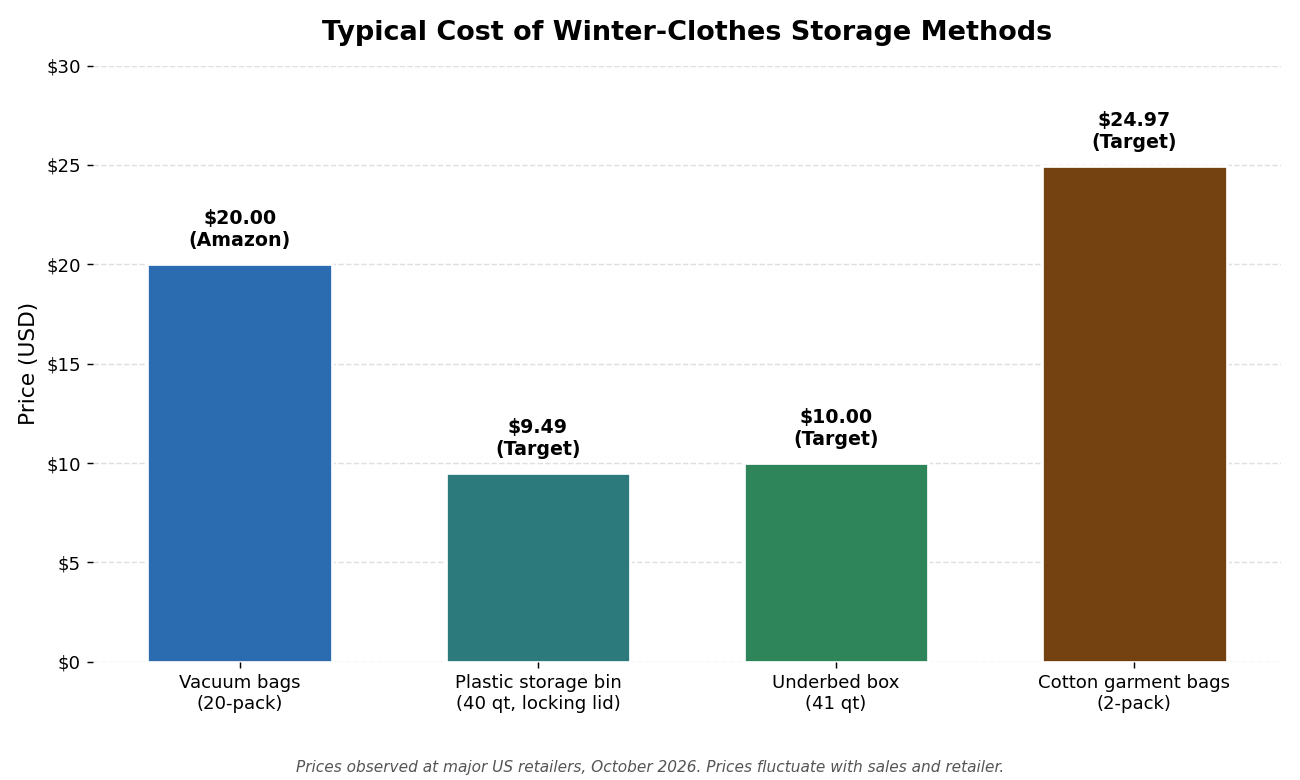
A few things that chart tells you: breathable bins and vacuum bags are both cheap, so price shouldn’t decide between them — fabric should. The general rules:
- Best for most winter clothes: clear plastic bins with tight-locking lids, or breathable fabric bins. Clear bins let you see what’s inside without opening them, and locking lids keep moths and dust out. Toss a desiccant packet in with plastic bins to absorb any residual moisture.
- Best for coats and suits: breathable cotton or canvas garment bags on sturdy hangers. These keep air circulating while blocking dust and light.
- Best for space-saving: vacuum storage bags — but only for synthetics, fleece, and casual knits, never for down or fine wool. They compress soft items dramatically, which is great under a bed or in a small closet.
- Avoid: cardboard boxes (they attract pests and absorb moisture) and regular trash bags or plastic sheeting wrapped tight around natural fibers, which traps humidity and invites mildew.
Where you put the containers matters as much as the containers themselves. Store in a cool, dark, dry spot — an interior closet, under the bed, or a spare room. Attics bake garments in summer heat, and basements invite dampness; both are among the worst places for textile storage. Storing winter clothes at around 70°F (21°C) or below, in a dry spot, is the widely recommended target.
Keep Moths Out Without Chemicals
Here’s the honest truth about the most common moth advice: cedar repellency claims are frequently overstated. A Colorado State University Extension fact sheet on clothes moths explains that the heartwood of eastern red cedar does contain volatile oils that can kill clothes moth larvae — but only at high concentrations, and the oils evaporate over time; their research notes that chests more than three years old are “practically useless” for killing larvae. Oregon State University’s Extension service is blunter: cedar chips “do nothing to repel clothes moths,” and their alternative moth control guidance recommends airtight containers with clean garments as the best protection.
So what does work? Layer your defenses:
- Start clean. Washing or dry-cleaning everything is the single most effective moth deterrent — it removes the food stains and body oils larvae target.
- Use airtight containers. Moths can’t damage what they can’t reach. Tight-locking bins and zippered bags are the real barrier.
- Use fresh cedar as a supplement, not a solution. Cedar blocks and rings do discourage egg-laying while their scent is strong. Sand the surface or add a drop of cedar oil each season to refresh them — and treat them as a pleasant-smelling backup to cleaning and sealing, not a replacement.
- Add lavender sachets for fragrance and a mild deterrent effect in drawers.
- Set pheromone traps. Sticky traps that catch adult male moths won’t stop an infestation, but they tell you early if moths are active — the National Pest Management Association recommends placing them in closets twice a year, spring and fall, as part of seasonal wardrobe rotation.
- Skip mothballs if you can. They do work, but only in truly airtight containers, and their active ingredients are insecticidal vapors that are unpleasant — and unhealthy — to breathe. If you use them, never place them directly on clothes.

One more line of defense costs nothing: before you pack, hold each garment up to good light and check seams, cuffs, collars, and folds for tiny holes, webbing, or grain-like pellets (frass — larval droppings). Catching an early infestation in one sweater saves the whole bin.
Control Temperature, Humidity, and Light
Textiles age the way food spoils: heat, moisture, and light are the enemies. Store winter clothes in the coolest dry spot you have — interior closets beat exterior-wall closets, which can run cold and damp. Keep garments away from direct sunlight, which fades dyes and weakens fibers over months. If your storage area runs humid, a few silica-gel desiccant packets per bin cost pennies and absorb excess moisture all season.
The Step-by-Step Packing Method
Here’s the full workflow in order, so nothing gets missed:
- Declutter first. Before you store anything, pull every winter item out and be honest: if you didn’t wear it this season and it isn’t a special-occasion piece, it doesn’t earn storage space. Our guide on how to declutter your home walks through the keep/donate/trash decision system — donate the good stuff now so your storage only holds what you’ll actually wear.
- Clean and repair. Wash, dry-clean, and fix everything. This is non-negotiable.
- Sort by fabric. Separate hanging items (coats, blazers) from folding items (sweaters, thermals) from upright items (boots).
- Prep containers. Wipe bins clean, line drawers with cotton or muslin, and place cedar blocks, lavender sachets, and desiccant packets.
- Pack with tissue. Fold knits with acid-free tissue between layers; stuff boots and structured bags to hold their shape.
- Label everything. A strip of masking tape and a marker — “Wool sweaters,” “Ski gear,” “Boots” — saves you opening six bins next fall.
- Store in the right spot. Cool, dark, dry. Elevated off the floor if the area ever gets damp.
- Set a calendar reminder. Check stored clothes once mid-summer: look for moisture, pests, or off smells while there’s still time to fix them.
Common Storage Mistakes to Avoid
- Storing dirty clothes. The number one cause of moth damage and set-in stains. Always clean first.
- Vacuum-sealing down jackets long-term. Great for a weekend trip; destructive for a six-month nap.
- Hanging knit sweaters. Gravity stretches knit shoulders permanently. Fold everything knit.
- Plastic-wrapping natural fibers. Wool, cashmere, and leather need to breathe — airtight plastic traps moisture and grows mildew.
- Storing in the attic or basement. Heat cooks fibers; dampness feeds mold. An interior closet wins every time.
- Trusting old cedar. Cedar older than a couple of years with no refreshing has lost most of its volatile oils — sand it or replace it.
- Forgetting the boots. Unstuffed boots slump and crease; a minute with tissue paper now saves the shape.
When to Unpack: Timing the Retrieval
In most of the US, the swap happens in October — which conveniently lines up with the rest of your cold-weather prep. While you’re pulling coats out of storage, it’s worth working through our checklist for how to winterize your home so the house is as ready as your wardrobe. And if an early-season trip is the reason you’re digging the puffers out, our guide to packing for a winter trip covers what to bring and how to fit it all in a suitcase.
When you unpack, air everything out for a day — hang coats near an open window or outside in shade (never in harsh direct sun for long). Give puffers a tumble in the dryer on low with tennis balls to restore loft, brush wool coats with a garment brush to revive the nap, and re-inspect for any moth activity before the clothes go into daily rotation. One afternoon of care in spring and one in fall, and your winter wardrobe can last for years instead of seasons.
Frequently Asked Questions
Can I vacuum-seal winter coats for storage?
It depends on the filling. Vacuum bags are fine for synthetic jackets, fleece, and casual sweaters — they save enormous space. But avoid vacuum-sealing down-filled coats for months at a time; sustained compression damages the down clusters and permanently reduces loft and warmth. Store down loosely or hung instead.
Do cedar blocks really keep moths away?
Partially. Fresh cedar’s volatile oils discourage moths from laying eggs, but university extension research finds the effect fades as the oils evaporate — and cedar does nothing against larvae already in the fabric. Use cedar as a supplement to the real defenses: cleaning everything before storage and using airtight containers.
How should I store a wool coat versus a puffer jacket?
Hang the wool coat on a wide padded hanger inside a breathable cotton garment bag. Store the puffer jacket loosely folded or hung — never vacuum-sealed long-term — so its insulation keeps its loft. Both should be cleaned before storage and kept in a cool, dark, dry place.
What’s the best temperature for storing winter clothes?
Around 70°F (21°C) or cooler, in a dry spot away from direct light. Interior closets are ideal; hot attics and damp basements are the two places to avoid. Add silica-gel desiccant packets to sealed bins if your home runs humid.
Should I store winter boots stuffed or empty?
Stuffed. Fill boots with acid-free tissue paper or boot shapers to hold their shape, clean and condition the leather first, and store them upright in a breathable space — never folded, crushed, or sealed in airtight plastic.
How do I get the musty smell out of stored winter clothes?
Air them outdoors in shade for a day, which usually clears mild mustiness. For stubborn odors, wash according to the care label and make sure the garment dries completely. To prevent it next year, ensure everything is bone-dry before packing and add desiccant packets to your bins.
Conclusion
Storing winter clothes properly isn’t complicated — it’s just deliberate. Clean everything, match the method to the fabric, hang what should hang, fold what should fold, keep down uncompressed, and seal the rest in labeled containers in a cool, dark, dry spot. Layer in honest moth defenses — cleaning and airtight bins first, fresh cedar and lavender as backup — and check once mid-summer. That one afternoon each spring protects hundreds of dollars of coats, boots, and woolens, and it means next October starts with a wardrobe that feels brand new. Your future self, pulling out a fresh-smelling coat on the first cold morning, will thank you.