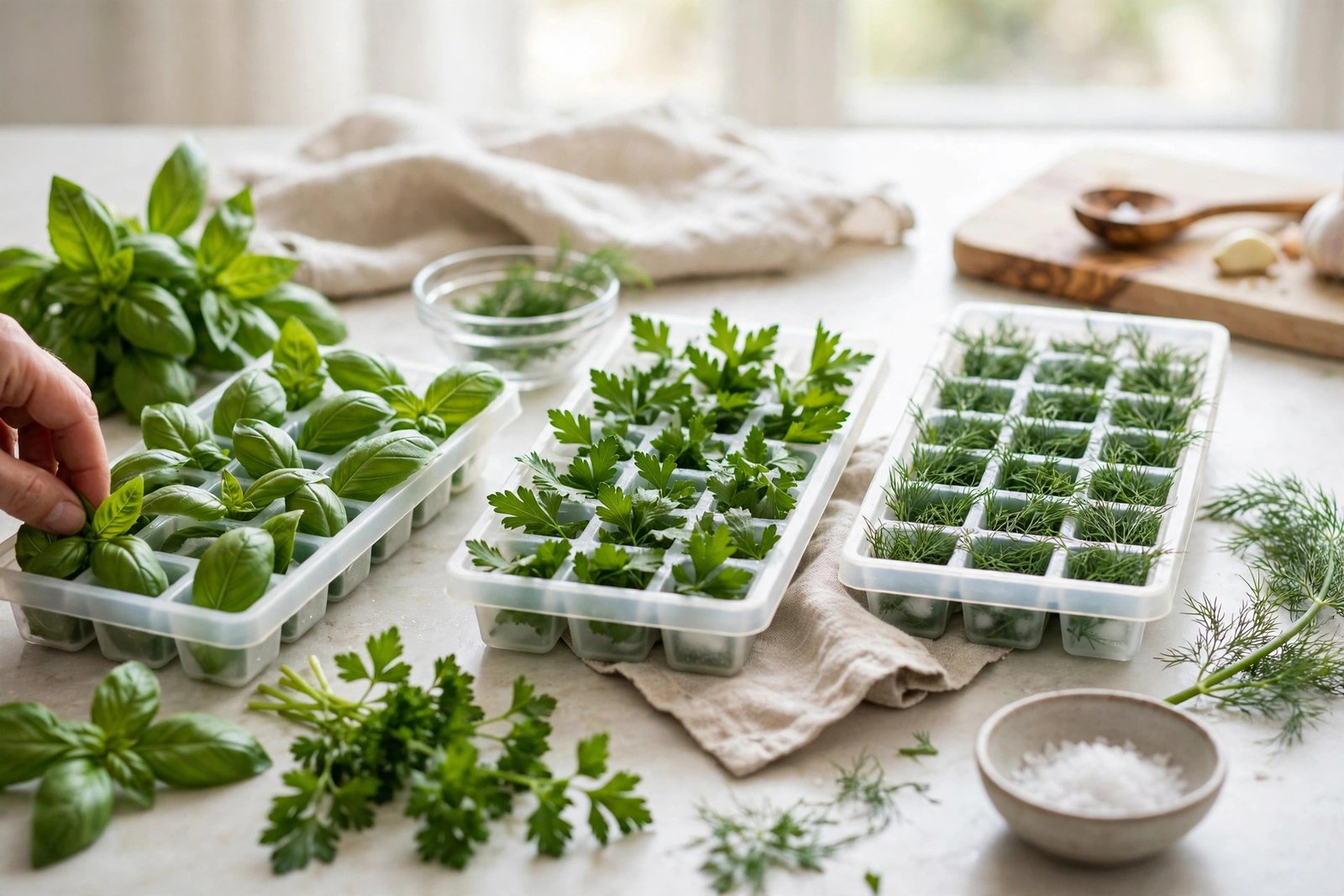

Every summer gardener knows the same heartbreak: a basil plant explodes in July, you cannot use it all, and by January you are paying supermarket prices for a sad plastic clamshell of herbs that tastes like nothing. There is a better way, and it takes about fifteen minutes. Learning how to freeze fresh herbs properly means your February tomato sauce can still taste like August — not exactly like fresh, but close enough that you will wonder why you ever threw a bunch away.
Freezing works because it locks in the aromatic oils that give herbs their flavor, and it does it faster and more faithfully than drying for most tender herbs. The trick is matching the method to the herb. Basil blackens if you freeze it raw and naked. Parsley and cilantro freeze beautifully with almost no effort. Woody herbs like rosemary and thyme barely need any help at all. Get those distinctions right and frozen herbs become one of the most useful things in your freezer.
Before You Freeze: Pick, Wash, and Dry
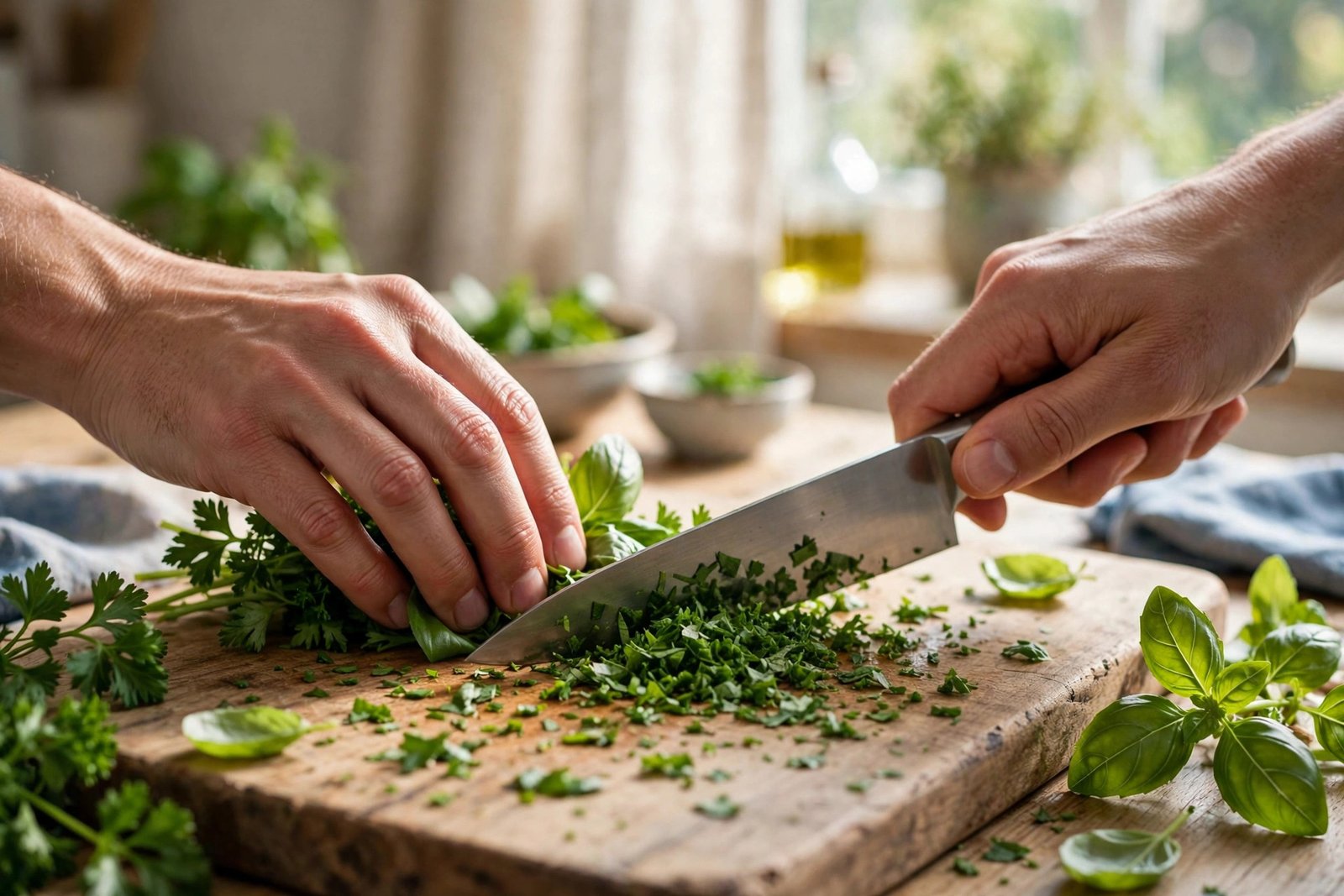
Knowing how to freeze fresh herbs starts with timing, which matters more than technique. Herbs are most flavorful when picked before they bloom, and in the morning after the dew has dried, according to UMass Extension’s herb preservation guidance. If you are freezing store-bought bunches, pick through them and discard any yellowed or slimy leaves — freezing preserves quality, it does not improve it.
Wash gently only if the herbs actually need it. Water can wash away valuable aromatic oils, so if your herbs are clean, skip the rinse. If they do need washing, rinse quickly in cold water, shake off the excess, and pat dry with a towel or spin them in a salad spinner. Surface water turns into ice crystals, and ice crystals are what make frozen herbs mushy. The drier the leaves going in, the better they come out.
Method 1: Ice-Cube Trays with Water
This is the classic method and the most versatile way to learn how to freeze fresh herbs for soups and stews. Finely chop the herbs, pack each ice-cube compartment about three-quarters full, and cover with water — cool water, and only about two-thirds of the way up, because water expands as it freezes. Freeze solid, then pop the cubes out and transfer them to a labelled freezer bag. The cubes drop straight into soups, stews, sauces, and braises, where they melt into the dish. One cube is roughly a tablespoon of chopped herbs, which makes measuring easy mid-recipe.
Water cubes are best for tender herbs you plan to cook with: parsley, cilantro, dill, and chives all do well here. They are also the prettiest option for drinks — mint or basil frozen in water makes a lovely addition to iced tea or lemonade, and the cube itself becomes part of the presentation. The downside is that water adds nothing to protect the leaves, so delicate herbs can darken over time. Use water cubes within a few months for the best color.
Method 2: Ice-Cube Trays with Oil
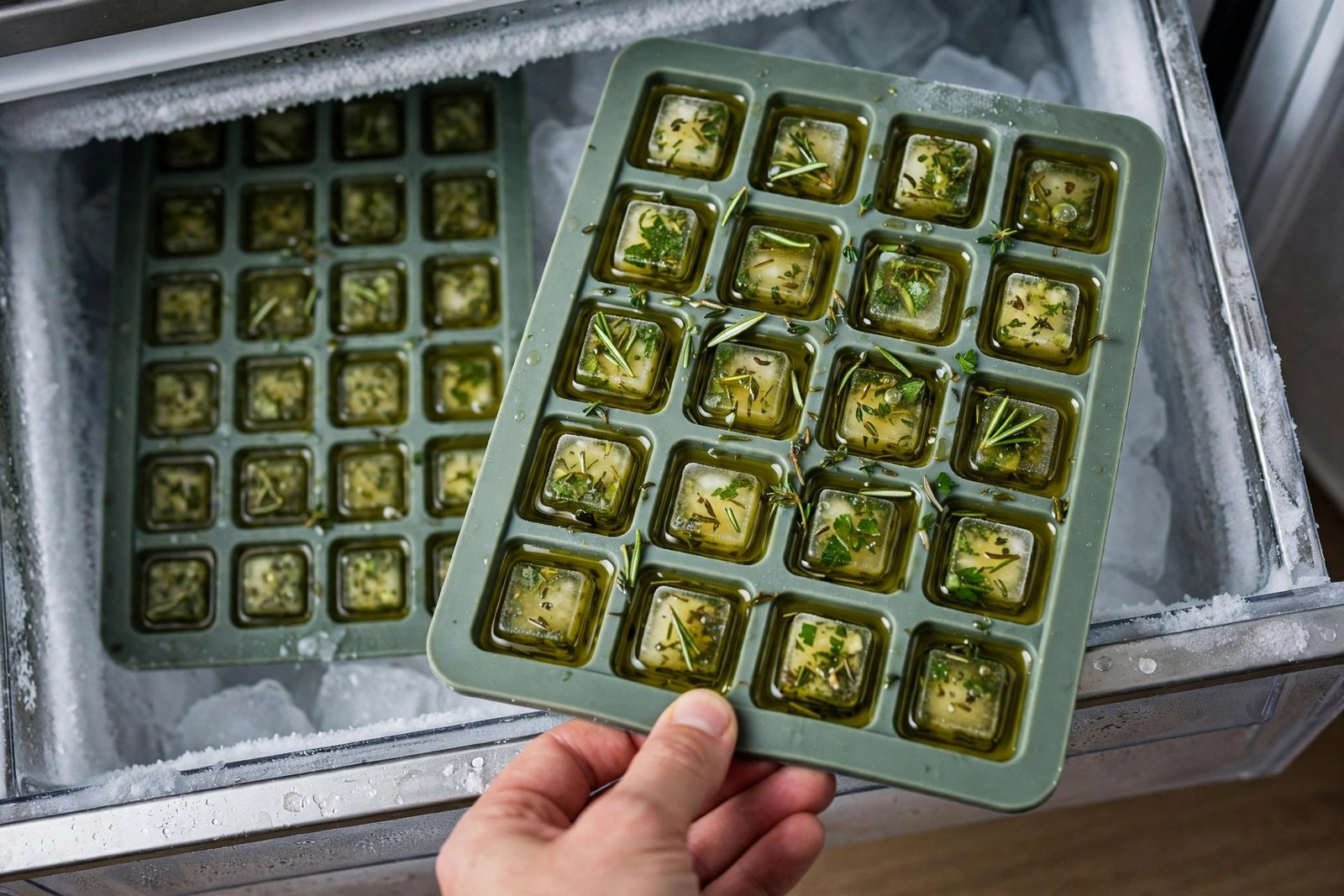
Oil is the better choice for herbs you want to cook in fat anyway — think basil for pasta sauce, or a rosemary-thyme mix for roast vegetables. Chop the herbs, pack the tray compartments, and cover with olive oil instead of water. Oil coats the leaves and shields them from air, which is what causes the blackening and freezer burn that ruin frozen basil. Freeze, pop out, and bag exactly as with water cubes.
The practical advantage is real: an oil cube melts directly into a hot pan, so you can start a sauce by dropping in two basil-oil cubes instead of measuring oil and herbs separately. One caution: never store fresh herbs in oil at room temperature or in the fridge for extended periods, because that creates a risk of botulism. In the freezer, though, oil cubes are safe — the cold stops bacterial growth. Just keep them frozen until the moment they hit the pan.
Method 3: Flash-Freezing Whole Leaves
For sturdy herbs, and for any herb you want to crumble rather than measure, flash-freezing is the fastest method of all. Spread clean, dry leaves in a single layer on a baking sheet, put the whole sheet in the freezer, and once the leaves are frozen solid, transfer them to a labelled freezer bag. Do not let them thaw during the transfer, or they will freeze together into a clump.
This is the method UMass Extension recommends for its simplest freezer routine: gather leaves and short stems, wash gently only if needed, pack into small freezer bags with a little air left in as a cushion, and freeze. Their charming trick for using them later is to take the bag out just before cooking, smack it on the counter to shatter the frozen leaves, and scoop out the crushed herbs — instant chopped parsley, cilantro, or dill, no knife required. Flash-freezing suits rosemary, thyme, and other woody herbs especially well, since their low moisture content means they freeze and crumble cleanly.
Method 4: Herb Paste and Pesto Cubes
If you have a glut of basil, this is the method that saves the most of it. Blend the leaves with a little olive oil — and garlic, nuts, and cheese if you are making actual pesto — then freeze the paste in ice-cube trays. Once solid, transfer the cubes to freezer bags. Pesto cubes keep for around three to six months depending on your freezer, and they turn a weeknight pasta into something that tastes deliberately cooked rather than assembled.
The same idea works beyond basil. A cilantro-lime paste for tacos, a parsley-garlic paste for chimichurri-style sauces, or a mint paste for teas and desserts all freeze the same way. The key is keeping the paste thick: too much liquid makes soft cubes that are hard to portion. A thin layer of oil on top of each compartment before freezing helps protect the surface from darkening.
How to Freeze Fresh Herbs, Herb by Herb
Basil: blanch it or oil it, never freeze it raw
Basil is the herb most people get wrong. Its leaves are thin, high in moisture, and packed with enzymes that turn them black when frozen unprotected. The fix is either oil — the oil-cube method above — or a quick blanch: dip the leaves in boiling water for a few seconds, shock them in ice water, squeeze dry, and freeze. Blanching dulls the color slightly but preserves the flavor far better than blackened raw leaves. If you want to learn more herb preservation methods, the University of Maine Extension guide covers oil, broth, and butter freezing in detail.
Parsley and cilantro: the easy winners
These two are the reason freezing herbs is worth doing. Both freeze exceptionally well by almost any method — water cubes, oil cubes, or flash-frozen whole leaves. UMass Extension lists parsley and cilantro among the herbs for which freezing provides the best flavor, alongside chervil, chives, tarragon, dill, and fennel. Flat-leaf parsley holds up slightly better than curly, but both are fine. Expect them to stay bright and flavorful for months.
Rosemary and thyme: the low-maintenance pair
Woody herbs are the easiest of all. Their leaves are tough and low in moisture, so they freeze well whole on a baking sheet and crumble straight from the bag. You can also freeze entire sprigs and strip the leaves off while still frozen — they come away cleanly. Because these herbs are also easy to dry, freezing is a choice rather than a necessity, but frozen rosemary and thyme keep a fresher, greener flavor than dried.
Mint, dill, and chives
Mint freezes well in water cubes and is one of the few herbs that is genuinely good frozen for drinks as well as cooking. Dill freezes well whole or chopped; its feathery fronds collapse a little but the flavor survives intact, making it ideal for fish dishes and pickling brines months later. Chives freeze beautifully chopped in water cubes, but lose their snappy texture — use them in cooked dishes and dips rather than as a raw garnish. For a second authoritative take on freezing times and techniques, see the NC State Extension guide to harvesting and preserving herbs.
How Long Do Frozen Herbs Last?
Quality, not safety, is the limit. Frozen herbs kept at a steady 0°F remain safe indefinitely, but their flavor and color fade over time. As a practical rule, use frozen herbs within around six months for peak quality — that figure lines up with extension guidance, which describes frozen herbs keeping for months in cooking and pesto cubes holding for around three to six months. Herbs stored in oil or as paste tend to hold their flavor a little longer than water cubes, because the fat shields them from air. If a bag smells flat or looks freezer-burned, it is past its best — compost it and freeze a fresh batch next season.
Labelling is the unglamorous habit that makes all of this work. Every bag gets the herb name and the date, written in marker before it goes in the freezer. Frozen herb cubes all look alike after a month, and nobody enjoys discovering that the “parsley” in their soup was actually mint. If you freeze a lot, keep a small inventory list on the freezer door — it takes ten seconds and saves you from buying herbs you already have.
What Frozen Herbs Are NOT Good For
Honesty matters here: frozen herbs are a cooking ingredient, not a garnish. Once thawed, tender leaves go soft and dark, so they will never sit prettily on top of a finished dish the way fresh herbs do. Do not use them for salads, tabbouleh, or any recipe where the herb is served raw and visible. They are also a poor substitute in recipes where the herb’s texture is the point, like a fresh pesto served uncooked — though pesto cubes melted into hot pasta are excellent.
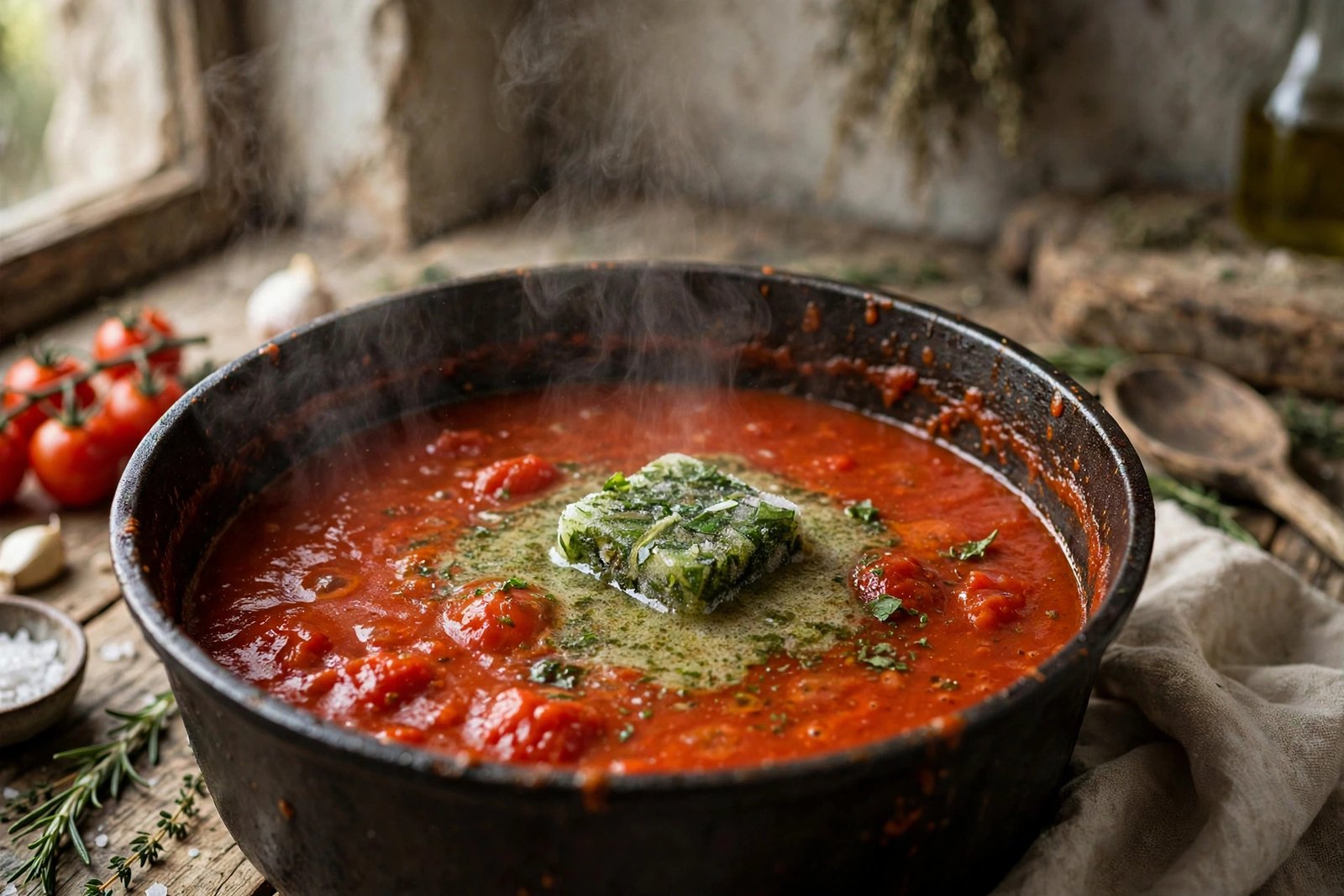
The other rule is never refreeze herbs after thawing. Take out only what you need, and drop frozen cubes directly into the cooking pot without thawing first. For flash-frozen leaves, work fast: measure what you need and get the bag back in the freezer before the leaves soften. A second freeze-thaw cycle destroys both texture and flavor.
Frozen herbs also pair beautifully with the rest of a from-scratch kitchen. If you are building up your cooking fundamentals, our guides to how to season a cast iron skillet, how to meal prep for beginners, and how to save money on groceries all complement a well-stocked herb freezer — frozen herbs are one of the cheapest ways to make batch cooking taste like it was cooked fresh.
Frequently Asked Questions
Can you freeze fresh herbs without blanching?
Yes, for most herbs. The basic method of how to freeze fresh herbs without blanching is simple: clean, dry, and freeze. Blanching is only really needed for basil, which blackens otherwise. Parsley, cilantro, dill, chives, rosemary, and thyme all freeze well raw — just make sure the leaves are clean and dry before they go in. Extension services note that blanching is optional, and that it preserves color at the cost of some flavor.
Is it better to freeze herbs in water or oil?
It depends on how you will use them. Water cubes are best for soups, stews, and drinks, where extra water does no harm. Oil cubes are better for basil and for anything you will sauté, because oil protects the leaves from air and melts straight into the pan. If you are unsure, water is the safer default — but never freeze basil in water alone and expect it to stay green.
How do you use frozen herbs in cooking?
Drop them in frozen, straight from the freezer. Cubes go directly into soups, sauces, and braises. Flash-frozen leaves can be crumbled into a dish by hand. Add frozen herbs a little later in the cooking process than you would fresh ones — the less they are cooked, the better their color and flavor survive, as UMass Extension points out.
Do frozen herbs lose their flavor?
Some, but far less than dried herbs do. Tender herbs like parsley and cilantro keep most of their flavor for around six months when frozen properly. The biggest flavor losses come from poor packing — air in the bag causes freezer burn, which dulls flavor fast. Squeeze out excess air, seal well, and use the herbs within the season.
Can you freeze herbs in olive oil safely?
In the freezer, yes. The botulism risk associated with herbs in oil applies to room-temperature and refrigerated storage, not frozen storage, because freezing halts bacterial growth. Keep oil cubes frozen until use, and never leave herb oil sitting out on the counter.
Which herbs should you not freeze?
Very few herbs are truly bad frozen, but some are not worth it. Delicate herbs grown mainly for garnish lose the texture that makes them special, and tarragon is traditionally considered a poor freezer — extension sources suggest preserving it in vinegar instead. For most kitchen herbs, though, freezing beats throwing them away every time.
Conclusion
Learning how to freeze fresh herbs is one of those small kitchen skills that pays off all winter. Start with the easy wins — parsley, cilantro, and dill in water cubes, rosemary and thyme flash-frozen whole — and graduate to oil cubes and pesto cubes once you have the habit. Label everything, use it within around six months, and never expect a frozen leaf to garnish a salad. What you will get instead is a freezer that quietly makes weeknight cooking taste like summer, for the cost of fifteen minutes and a few ice-cube trays.



