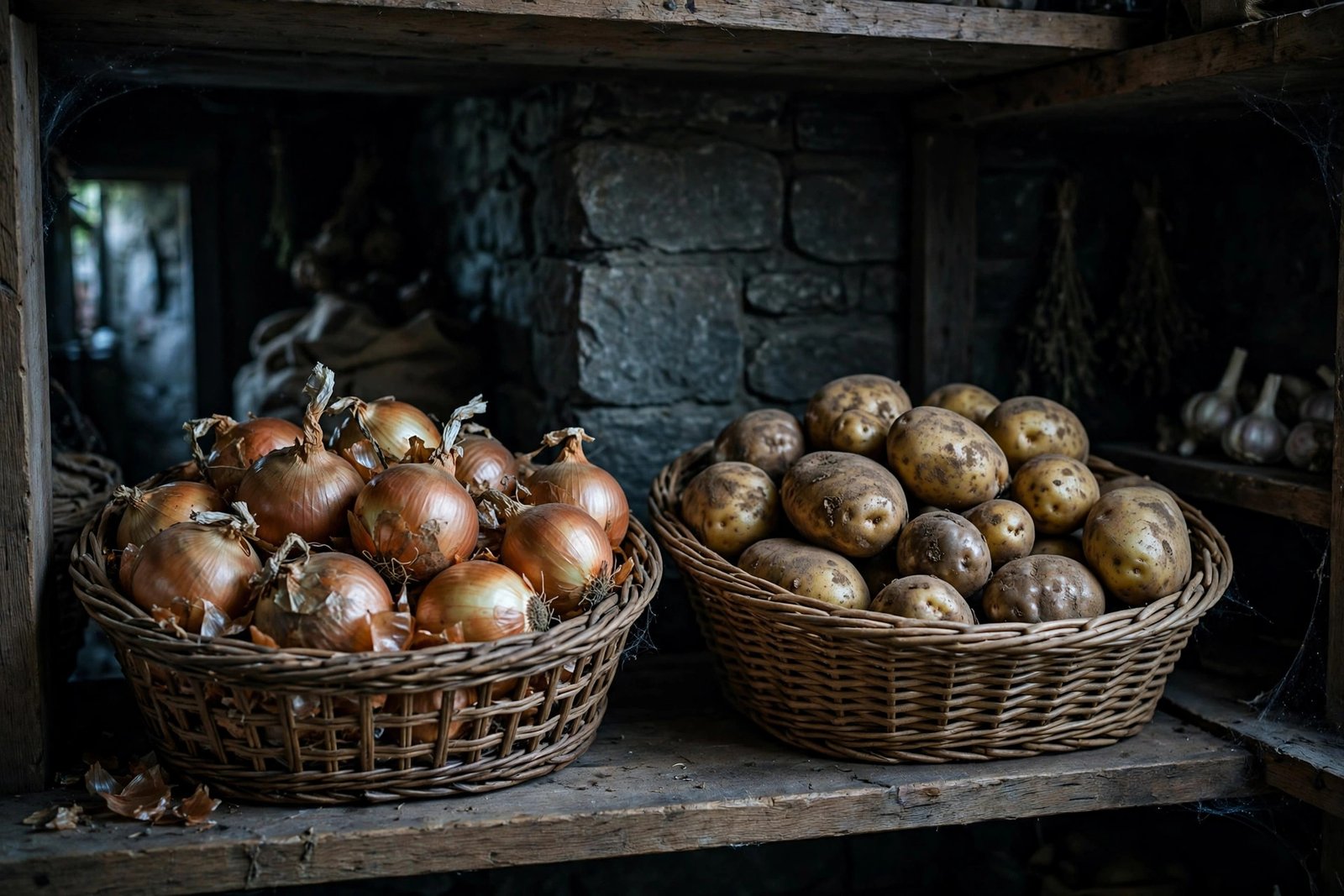

You buy a bag of potatoes with the best intentions, tuck it into the cupboard, and a week later it has sprouted little green shoots, gone soft in the middle, or turned an unappetising shade of green. The onions next to it have not fared much better. Learning how to store onions and potatoes properly changes that story completely, because both vegetables can genuinely last for months when they are kept in the right conditions, and they go off quickly when they are not.
The secret is not a gadget or a special container. It is understanding that potatoes and onions are living, breathing storage organs, still slowly respiring after harvest, and that they each want a slightly different version of the same thing: cool, dark, dry, and well-ventilated. Get those four conditions right, keep the two vegetables apart, and a sack bought in autumn can still be cooking well into winter.
This guide explains the golden rule that trips most people up, the exact conditions each vegetable prefers, how to tell storage onions from sweet onions, what to do with cut and green onions, and how to spot spoilage before it spreads to the rest of the bag. It also covers the question everyone asks about sprouted potatoes, so you can decide with confidence rather than guesswork.
The Golden Rule: Keep Them Apart
If you remember only one thing from this guide, make it this: never store onions and potatoes together. It feels tidy to keep them in the same basket or drawer, and in many kitchens that is exactly where they end up, but it is the fastest way to shorten the life of both.
The reason is gas. Onions release ethylene gas and moisture as they sit, and ethylene speeds up sprouting and decay in potatoes. Potatoes, in turn, give off moisture that encourages onions to soften and rot. Put them side by side in a closed space and each one actively works against the other. That is why, when you learn how to store onions and potatoes, separating them, even by a shelf or a different cupboard, removes that problem at a stroke.
That separation matters most in closed containers. A sealed bag or a lidded box traps the gases and moisture together, accelerating the damage. Open baskets, mesh bags, and ventilated boxes let air move and gases disperse, which is why traditional storage always favoured airflow over airtightness. Keep them apart, keep the air moving, and both vegetables will repay you with weeks of extra life.
How to Store Potatoes for Months
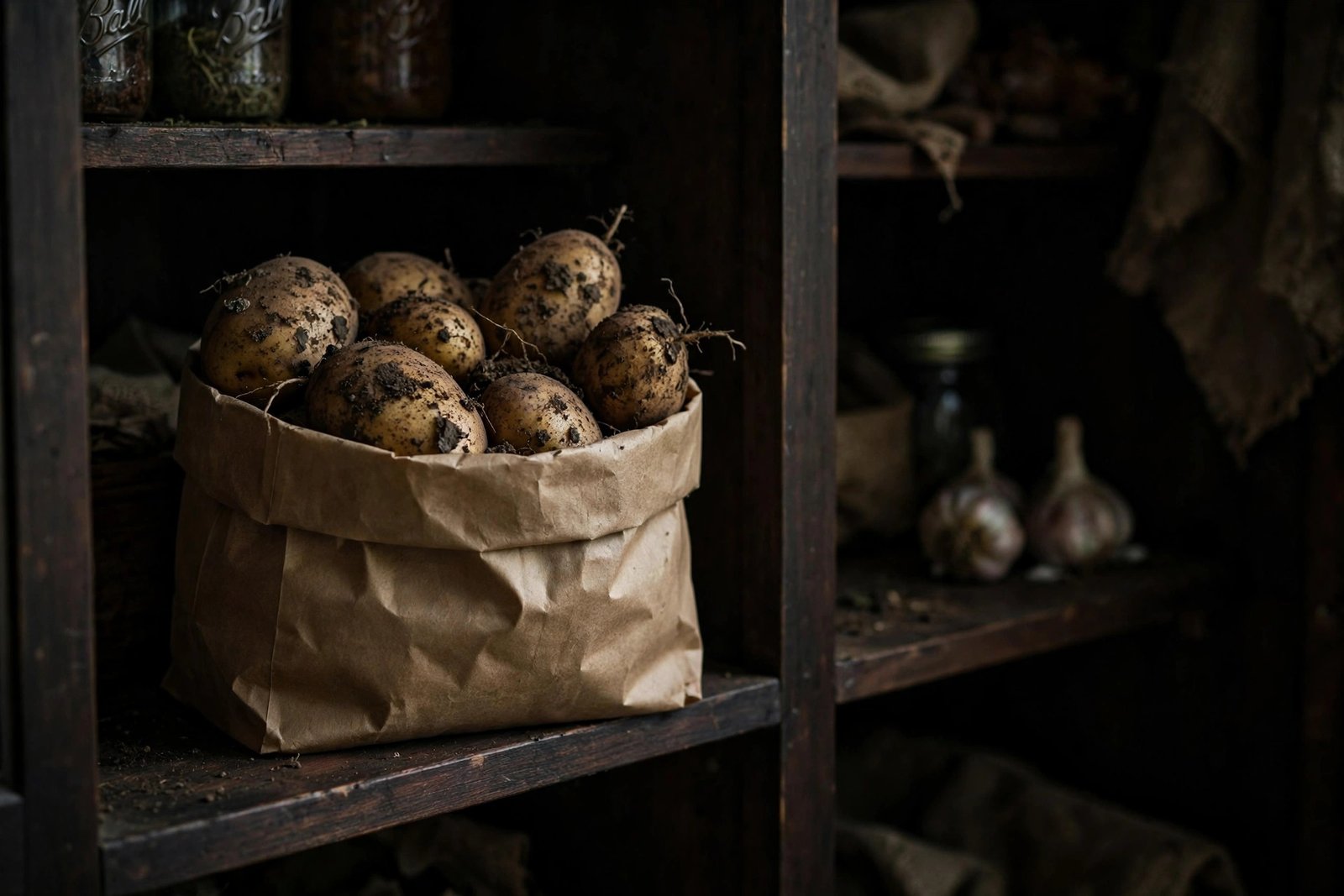
For potatoes, the first rule of how to store onions and potatoes is that potatoes want a cool, dark, dry place with good ventilation, ideally between 45 and 55 degrees Fahrenheit, or about 7 to 13 degrees Celsius. That temperature range is cooler than most kitchens but warmer than a fridge, which is why a cellar, a cool pantry, a garage that does not freeze, or a dark cupboard away from the oven works so well. At those temperatures, potatoes stay dormant, their starches convert slowly, and sprouting is delayed for months.
Darkness matters as much as temperature. Light triggers potatoes to produce chlorophyll, which turns the skin green, and with it a bitter compound called solanine. Green potatoes taste bitter and, in large amounts, solanine can cause stomach upset, so green parts should always be cut away generously, and badly greened potatoes should be discarded. A paper bag, a cloth sack, or a box with a lid that still allows airflow all block light while letting the potatoes breathe.
Ventilation is the third piece. Potatoes need air circulation to carry away moisture, so avoid plastic bags, which trap humidity and encourage rot. A mesh bag, a paper bag with holes, a basket, or a ventilated bin works far better. Do not wash potatoes before storing them, either. Soil left on the skin actually protects them, and washing adds moisture that invites mould. Brush off loose dirt, leave the skins intact, and wash only the potatoes you are about to cook.
Check the stored potatoes every week or two and remove any that have softened, sprouted heavily, or started to rot. One rotting potato can spread mould and moisture to its neighbours surprisingly fast, so culling the bad ones is the single most effective way to protect the rest of the bag. It takes two minutes and it is the difference between a bag that lasts and a bag that collapses.
Why Potatoes Should Not Go in the Fridge
It is tempting to think the fridge is the safest place for everything, but potatoes are a notable exception. Fridge temperatures, usually below 40 degrees Fahrenheit, convert potato starch into sugars more quickly. That sounds harmless, but it changes how potatoes cook: they brown too fast, taste sweeter than they should, and can form more acrylamide, a compound that forms when starchy foods are fried or roasted at high heat.
That does not mean a potato that spent a night in the fridge is dangerous to eat, but it does mean the texture and flavour will suffer, and the potato will not keep as well as it would in a cool pantry. If your home has no cool spot at all, the fridge is still better than a hot kitchen counter next to the oven, but treat fridge-stored potatoes as short-term storage and use them within a week or two rather than expecting months.
How to Store Onions Properly
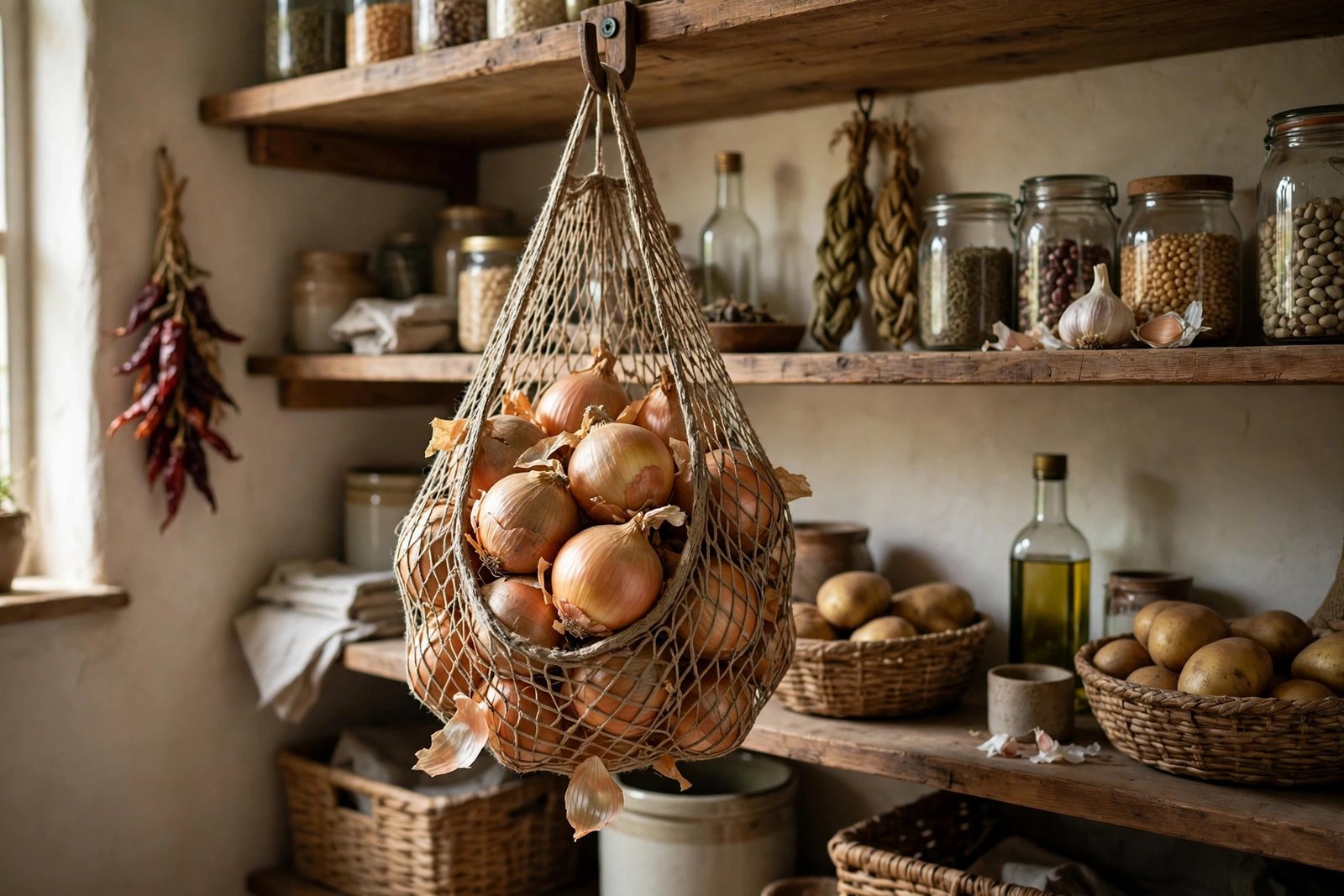
Onions, the other half of how to store onions and potatoes, want conditions similar to potatoes, cool, dark, dry, and ventilated, but they have their own preferences. They store best at similar cool temperatures, around 45 to 55 degrees Fahrenheit, with low humidity and plenty of air movement. A mesh bag, a net, or a basket is ideal, because it lets air circulate around every onion and stops moisture from pooling on the skins.
The skins themselves tell you a lot. A well-cured onion has dry, papery outer skins that rustle when handled. Those skins are a protective layer, so do not peel them off until you are ready to cook. Keep onions whole and unpeeled in storage, and only peel what you need. Once peeled or cut, an onion’s storage life drops from months to days, which is why whole storage is always the goal.
Do not store onions in plastic bags or sealed containers, for the same reason as potatoes: trapped moisture leads to mould and soft spots. Hanging onions in a mesh bag or an old pair of tights, with a knot between each onion, is an old-fashioned method that still works brilliantly, because it keeps every onion separate and fully ventilated. Even a simple open basket on a pantry shelf does the job well.
Like potatoes, onions should be checked regularly. Remove any that feel soft, smell strong, or show mould, before they affect the rest. A single soft onion in a closed bag can spoil its neighbours in days, while a basket that is checked weekly can keep good onions for two to three months or more. The habit of checking is as important as the storage spot itself.
Storage Onions vs Sweet Onions
Not all onions keep equally well, and knowing which type you bought helps set expectations. Storage onions, often yellow or red varieties with thick, tight, papery skins and a strong, pungent flavour, are bred to last. Kept properly, they can store for three months or longer, sometimes much longer. They are the workhorse onions of winter cooking, and they are the ones worth buying in bulk.
Sweet onions, such as Vidalia, Walla Walla, and similar mild varieties, are a different story. They have thinner skins, higher water content, and a milder, sweeter flavour, and they are not built for long storage. Even in good conditions, sweet onions typically last only a few weeks, and they should be used first. If you buy both types, cook the sweet onions within a couple of weeks and save the storage onions for later.
When shopping, choose onions that feel firm and heavy for their size, with dry skins and no soft spots or sprouting green shoots. An onion that is already soft or sprouting in the shop will not improve at home, however well you store it. Starting with good stock is half the battle, and it is worth taking a minute to pick through the bag rather than grabbing the first one on top.
Cut Onions, Green Onions, and Leftovers
Once an onion is cut, the rules change completely. A cut onion should go into an airtight container or a tightly wrapped bag in the fridge and be used within seven to ten days. The fridge, which is wrong for whole potatoes and whole onions, is exactly right for cut ones, because the cold slows bacterial growth and the sealed container stops the onion’s strong smell from flavouring everything else in the fridge.
Green onions, or spring onions, are also fridge vegetables. They are fresh, leafy, and high in moisture, so they need cold and a little humidity to stay crisp. Store them in the fridge, either in a damp paper towel inside a bag, or standing upright in a jar with a little water, loosely covered. Either method keeps them crisp for a week or more, far longer than leaving them on the counter, where they wilt within a day or two.
Potato leftovers follow a similar split. Cooked potatoes should be refrigerated promptly, within two hours of cooking, in a sealed container, and eaten within three to four days. Raw cut potatoes can be held briefly in cold water in the fridge to stop them browning, but they should be used within a day. In both cases, the fridge is for short-term leftovers, not long-term storage, and the pantry rules above apply only to whole, raw vegetables.
Signs of Spoilage and What to Do
Spoilage usually announces itself clearly if you know what to look for. Potatoes that have gone bad feel soft or wrinkled, smell musty or sour, or show dark, sunken spots and mould. Onions that have spoiled feel soft or squishy, especially at the neck, smell strongly even through the skin, or show black mould under the outer layers. Trust your hands and nose: a firm, dry vegetable with a normal smell is fine, while a soft, damp, or strongly smelling one is not.
For potatoes, green skin deserves special attention. Small green patches can be cut away generously, removing all the green and a margin around it, and the rest of the potato can be cooked normally. But if a potato is mostly green, heavily sprouted, soft, or bitter-smelling, discard it. The same caution applies to potatoes with long, extensive sprouts and wrinkled skin, which have lost much of their quality even if they are not unsafe.
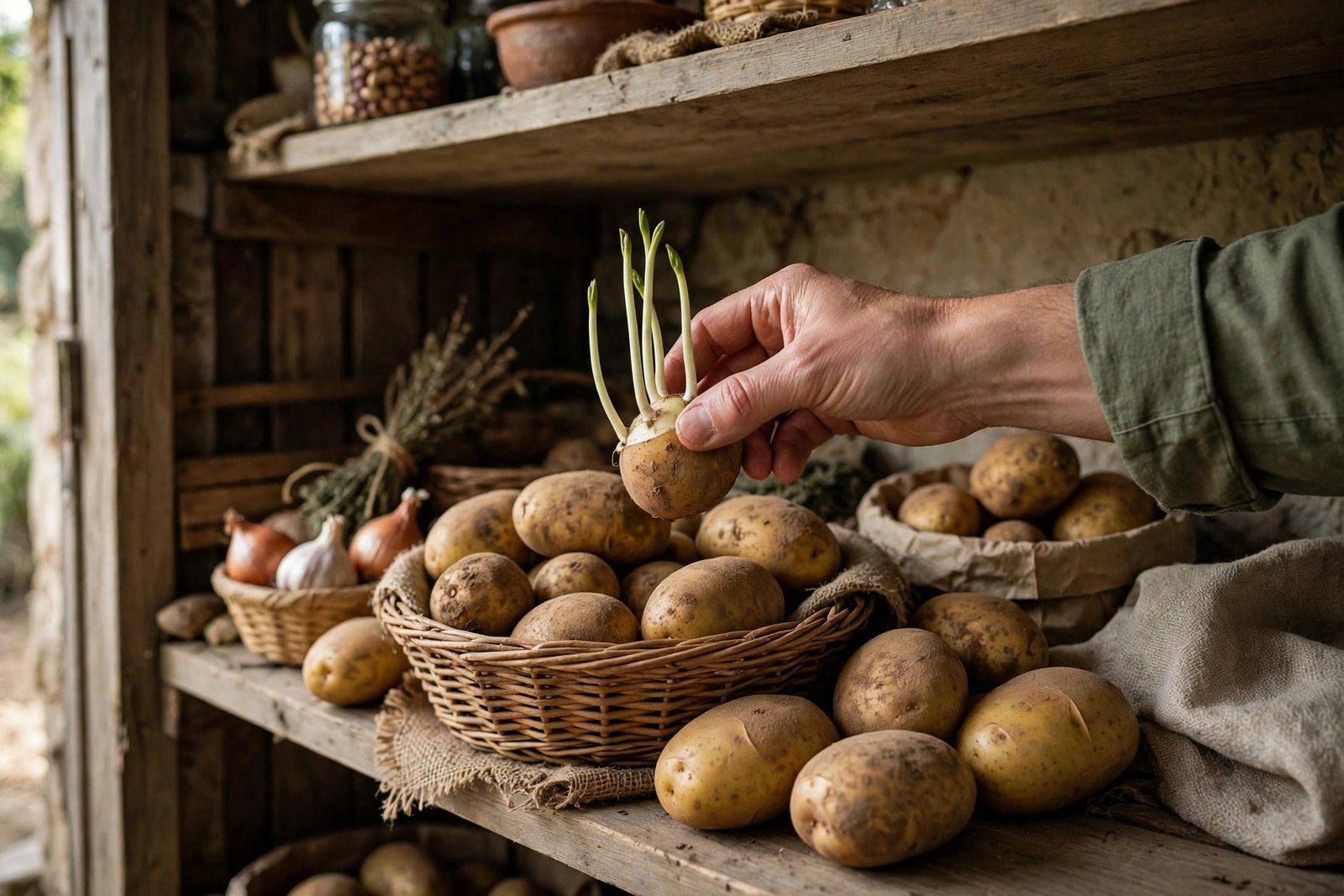
What about sprouted potatoes that are otherwise firm? This is the question every home cook asks, and the answer is reassuring. A potato with a few small sprouts, firm flesh, and no green skin is generally fine to eat once the sprouts are removed completely. Just snap or cut the sprouts off, peel the potato, and cook it as normal. The sprouts themselves should not be eaten. If the potato is also soft, shrivelled, or green, it is better to compost it than to salvage it.
How to Store Onions and Potatoes for the Long Term
A good storage setup does not need to be elaborate. One ventilated basket or mesh bag for potatoes in the coolest dark cupboard, another for onions on a different shelf or in a different cupboard, and a weekly two-minute check of both. That is the whole system, and it works because it respects what each vegetable actually needs rather than forcing them into the same drawer for tidiness.
For a clear explanation of why separation matters, the Food Network guide to storing onions and potatoes separately lays out the gas problem in plain terms, and the Farmers’ Almanac advice on storing potatoes and onions gives practical, season-by-season tips. For a broader produce-storage reference, the City of Saint Paul produce storage cheat sheet covers many fruits and vegetables in one handy page.
The same thinking applies to other kitchen storage. If you want to keep herbs fresh longer, our guide to how to freeze fresh herbs uses a similar principle of protecting flavour before it fades. And when you are deciding how to cook what you have stored, our comparison of cast iron versus stainless steel pans and our blender versus food processor guide will help you pick the right tool for the job.
Frequently Asked Questions
Can you store onions and potatoes together?
No, you should keep them apart. Onions release gases and moisture that speed sprouting and rot in potatoes, while potatoes give off moisture that softens onions. Store them in separate ventilated containers, ideally on different shelves.
Should potatoes be stored in the fridge?
Generally no. Fridge temperatures convert potato starch to sugar, changing flavour and cooking behaviour. Store potatoes in a cool, dark, ventilated spot at about 45 to 55 degrees Fahrenheit instead, and use the fridge only for short-term leftovers.
How long do stored onions last?
Storage onions kept cool, dark, dry, and ventilated can last two to three months or more. Sweet onions, with thinner skins and higher water content, typically last only a few weeks, so use those first.
Are sprouted potatoes safe to eat?
A firm potato with a few small sprouts is generally fine once the sprouts are removed completely and the potato is peeled. Do not eat the sprouts themselves, and discard potatoes that are also soft, wrinkled, or green.
Should I wash potatoes before storing them?
No. Leave soil on the skins and brush off only loose dirt. Washing adds moisture that encourages mould, so wash potatoes only just before cooking.
How do I store cut onions?
Put cut onions in an airtight container in the fridge and use them within seven to ten days. The sealed container stops the smell spreading to other foods, and the cold slows spoilage.
Conclusion
In short, how to store onions and potatoes well is not complicated, but it is specific. Keep them apart, keep them cool and dark, let air move around them, do not wash potatoes before storing, and check them regularly for the odd bad one. Those five habits are enough to turn a bag that sprouts in a fortnight into stock that lasts for months.
Start with the separation rule today, even if you change nothing else. Move the onions to a different shelf from the potatoes, and you have already removed the biggest reason both of them go off early. The rest is just good housekeeping, and your winter cooking will taste better for it.



