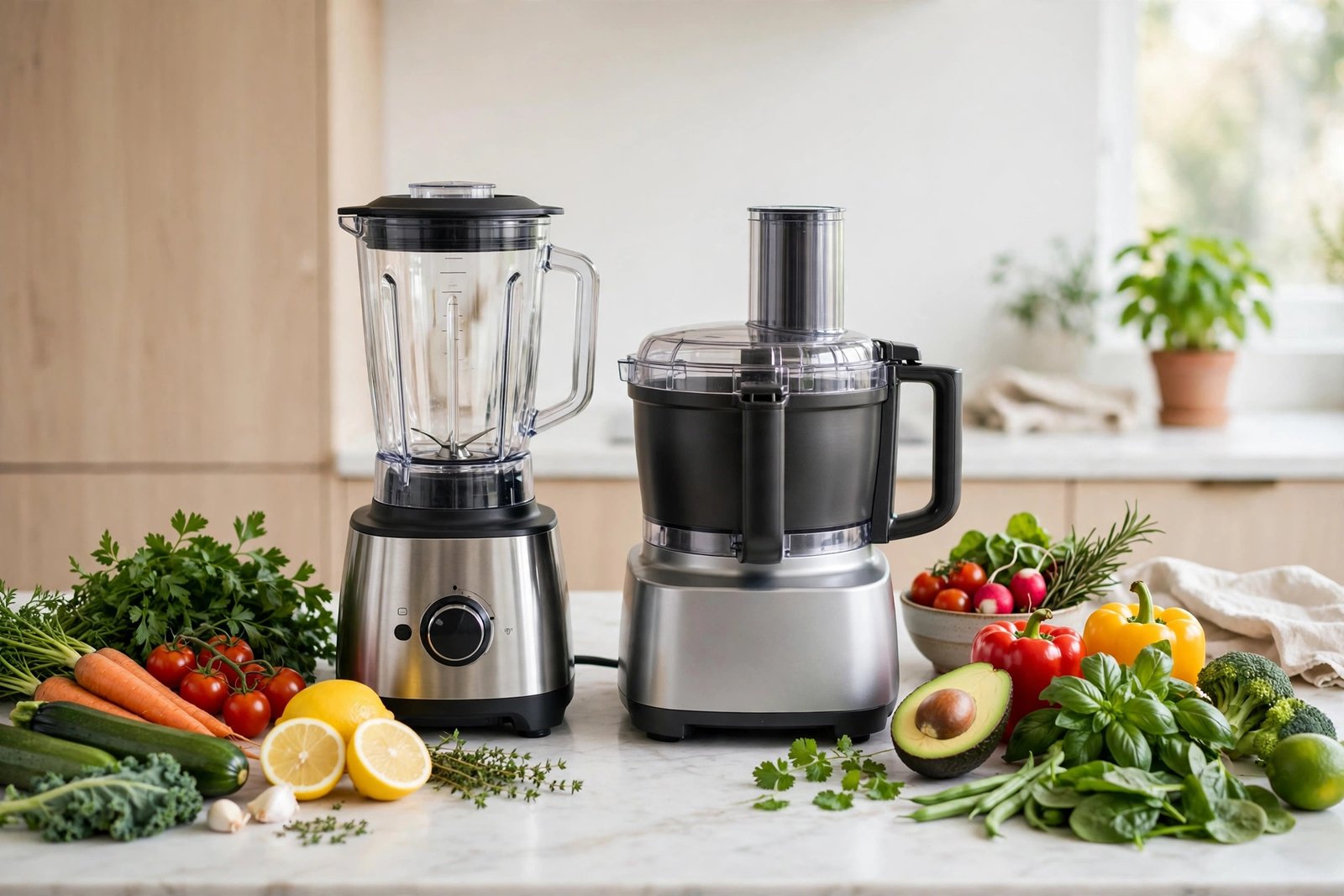

Every kitchen reaches the same crossroads eventually: the blender vs food processor debate. Both machines chop, both spin a blade at high speed, and both promise to make cooking faster — so why do so many kitchens end up owning one and ignoring the other? The honest answer is that they are built for opposite jobs. A blender is a liquid machine. A food processor is a solid-food machine. Buy the wrong one for the way you actually cook, and you will end up with an expensive appliance gathering dust next to the toaster.
This guide settles the blender vs food processor question task by task, so you can see exactly which machine wins at smoothies, soups, dough, salsa, and a dozen other everyday jobs. You will also get a simple decision rule for which to buy first, and a clear look at the combo systems that claim to replace both. By the end, you will know which machine earns a permanent spot on your counter — and which one, if either, you can skip.
Blender vs Food Processor: The Core Difference in One Minute
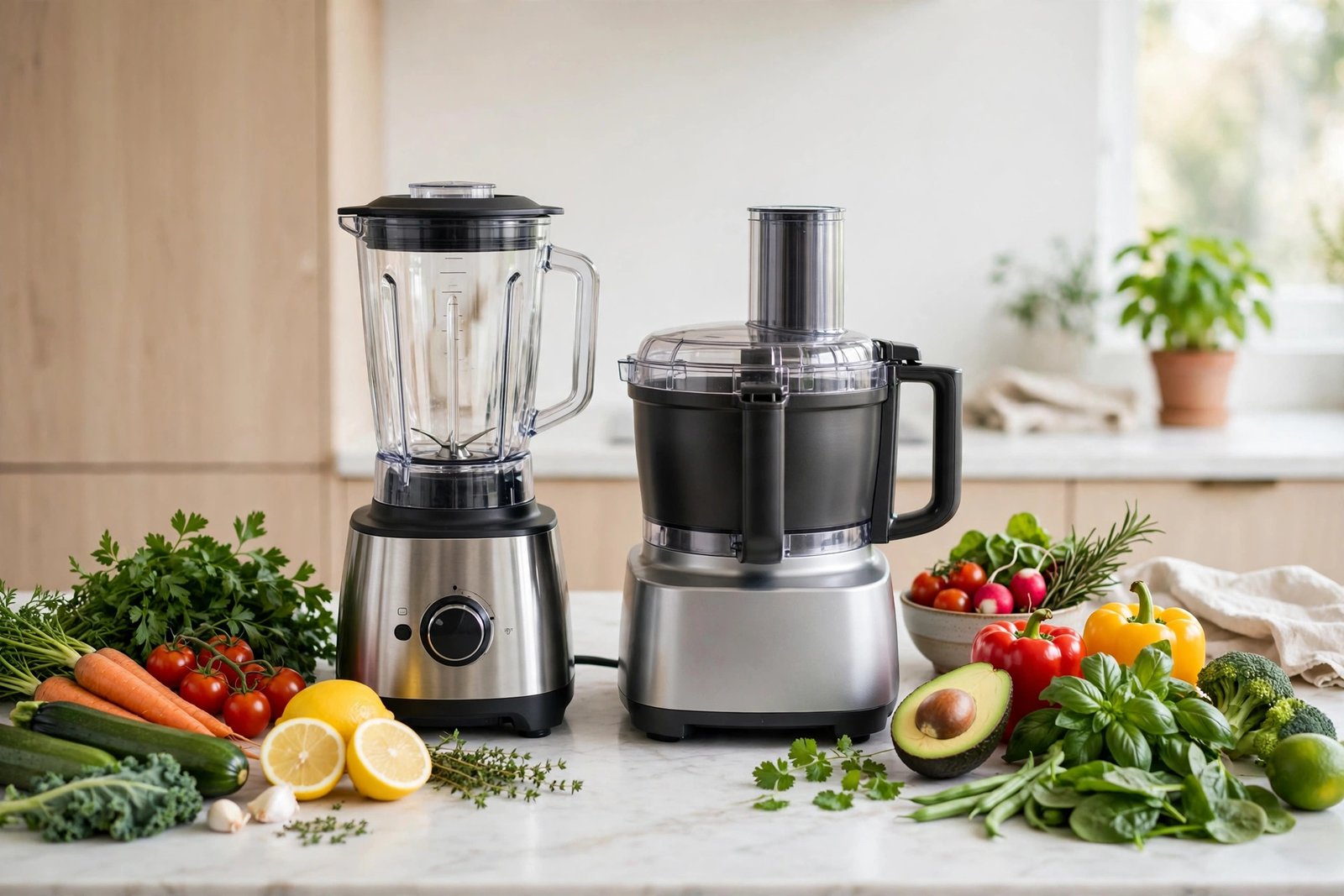
The difference comes down to blade, bowl, and physics. A blender has a small blade at the bottom of a tall, narrow jar. When it runs, it pulls food down into the blade and creates a vortex, which is perfect for liquids: smoothies, soups, sauces, and anything that needs to end up silky and pourable. The tall jar keeps liquid moving and gives the blade something to grab onto.
A food processor works the other way around. It has a wide, shallow bowl and a large S-shaped blade that sweeps a wide area. That design is ideal for solid food: slicing a pile of carrots, shredding a block of cheese, chopping onions, or pulsing butter into flour for pie dough. The wide bowl lets you work with dry ingredients and chunky mixtures that a blender jar would just fling to the sides.
Think of it this way: if the end result should pour, you want a blender. If the end result should pile, scoop, or hold its shape, you want a food processor. That single rule answers most of the confusion before you ever look at a spec sheet.
Blender vs Food Processor: Task-by-Task Verdict Table
Here is the honest head-to-head. “Clear winner” means the other machine either cannot do the job well or does it noticeably worse.
| Task | Blender | Food processor | Winner |
|---|---|---|---|
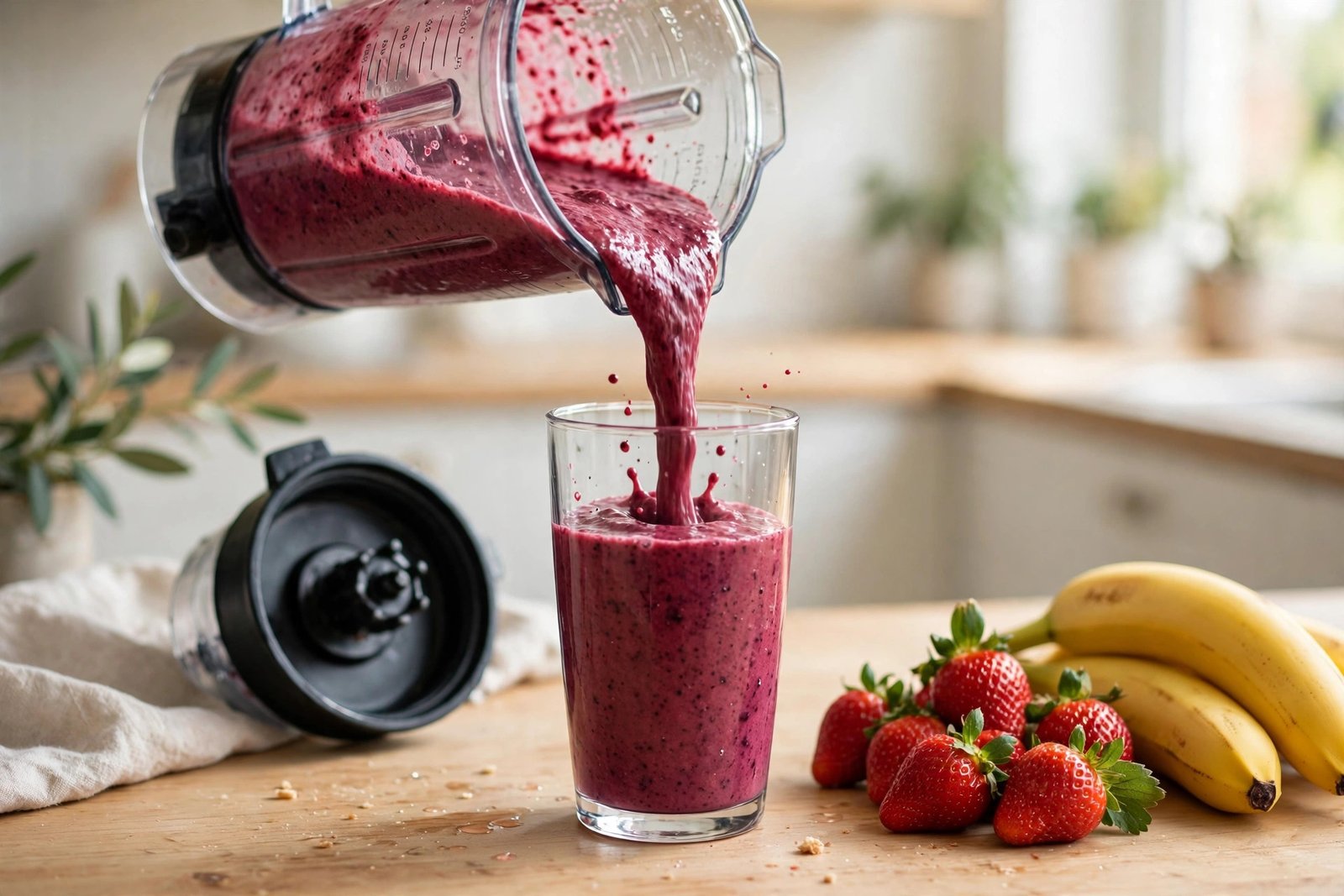
| Smoothies and shakes | Silky, fully blended, no chunks | Leaves grit and uneven bits | Blender |
| Hot soups, pureed | Velvety smooth (blend in batches) | Works, but texture is coarser | Blender |
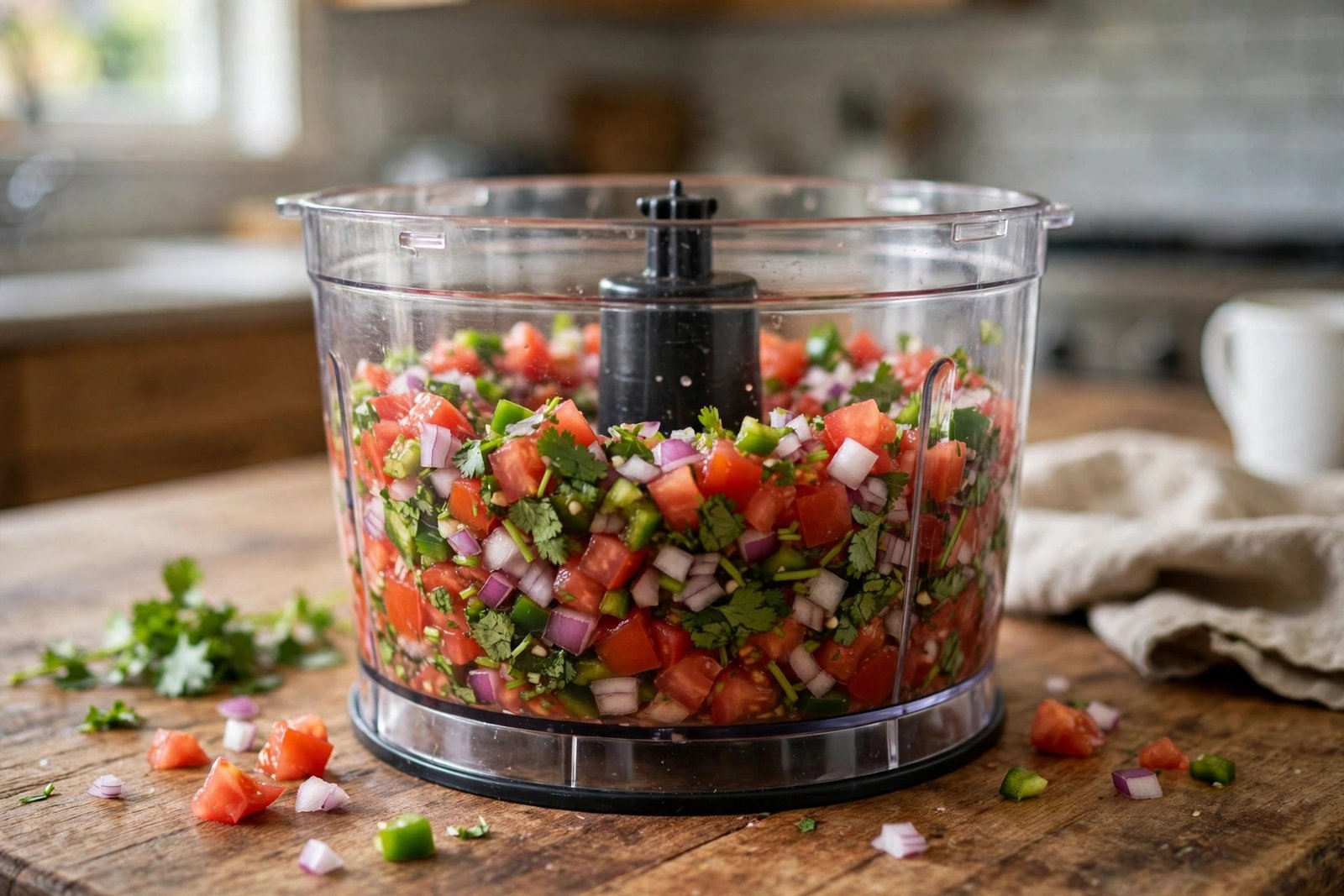
| Salsa and dips | Over-blends into sauce quickly | Pulse control keeps chunky texture | Food processor |
| Chopping onions, herbs, nuts | Uneven; small bits sink, big bits float | Even, fast, consistent | Food processor |
| Slicing and shredding | Cannot do it | Disc attachments slice and shred in seconds | Food processor |
| Pie dough and pastry | Cannot do it properly | Cuts butter into flour perfectly | Food processor |
| Bread dough kneading | Cannot do it | Handles small batches well | Food processor |
| Nut butter | Excellent if high-powered; needs tamping | Good, slower, slightly grainier | Blender (high-powered) |
| Crushing ice / frozen drinks | Built for it | Struggles; can dull the blade | Blender |
| Grating cheese in bulk | Cannot do it | Shreds a block in under a minute | Food processor |
| Baby food purees | Smoother results | Fine for chunkier stages | Blender |
| Cauliflower rice / veggie crumbs | Turns to mush fast | Pulses to perfect rice-sized bits | Food processor |
The pattern is unmistakable: liquids belong to the blender, solids belong to the processor. The few tasks where they overlap — nut butter, dips, purees — are won on texture, and texture is where each machine’s design shows.
Where the Blender Wins (and Why Power Matters)
A blender’s home turf is anything wet. Morning smoothies are the obvious example: frozen fruit, yogurt, spinach, and protein powder go in, and a silky drink comes out. The same vortex that makes smoothies also makes restaurant-style soups — blend a pot of roasted tomato soup in batches and it comes out velvety in a way no amount of mashing can match.
Power is the variable that matters most here. Budget blenders handle soft fruit and yogurt fine, but frozen fruit and ice expose them fast: they stall, overheat, or leave chunks. This is why high-performance blenders command higher prices — a stronger motor and a better jar design keep the vortex going under load instead of cavitating. If your daily routine involves frozen drinks, this is the single most important spec on the box, and it is worth reading blender guides from test kitchens before you buy, because wattage numbers alone do not tell the whole story.
One blender job people forget: emulsified sauces. Mayonnaise, vinaigrettes, hollandaise, and romesco all benefit from the high-speed vortex, which binds oil and liquid into a stable, glossy sauce. A food processor can approximate these, but the blender’s narrow jar gives you more control over the drizzle-and-emulsify technique.
Where the Food Processor Wins (and Why Size Matters)
The food processor’s superpower is prep work — the boring, time-consuming chopping, slicing, and shredding that stands between you and dinner. Slicing five potatoes for a gratin takes minutes by hand and seconds with a slicing disc. Shredding a block of cheddar for tacos is a thirty-second job instead of a ten-minute arm workout. If you cook from scratch several nights a week, the processor pays for itself in saved evenings.
Its second superpower is dough. A food processor cuts cold butter into flour faster and more evenly than most home bakers can by hand, which is the secret to flaky pie crust and tender scones. For bread dough, the dough blade handles small batches — a loaf or two — though serious bread bakers will still want a stand mixer for large quantities. Food processor reviews from independent test labs are the best place to compare bowl sizes and blade quality, because those two details decide how useful the machine is day to day.
Bowl size is the spec to get right. A small 3-cup processor is fine for chopping a single onion or making a cup of pesto, but it chokes on family-sized batches. A 11- to 14-cup bowl handles weeknight cooking for a household, while a mini chopper is a different appliance entirely — closer to a gadget than a workhorse. Buy the size that matches the meals you actually cook, not the ones you aspire to cook.
Blender vs Food Processor: Which to Buy First?
Here is the decision rule, and it works for almost everyone: buy the machine that matches your most frequent meal. Count the last ten things you cooked or prepared at home, and sort them into “liquid” or “solid” jobs.
Buy the blender first if: your mornings run on smoothies, you make soups regularly, you blend sauces and dressings, or you drink protein shakes. This is the most common profile for busy households, and it is why blenders outsell processors.
Buy the food processor first if: you cook from scratch most nights, you bake pie crusts or pastry, you prep large amounts of vegetables, or you grate and shred cheese often. Serious home cooks usually land here — the processor quietly becomes the most-used appliance in their kitchen.
Buy neither yet if: you mostly reheat, order in, or cook simple meals. In that case, a good knife and a little practice will serve you better than either machine, and the money is better spent elsewhere in the kitchen. Our guide to how to make cold brew coffee is a good example of a kitchen upgrade that costs almost nothing and gets used daily.
There is one more tiebreaker worth knowing: the blender is the easier machine to live with. It has fewer parts, it cleans faster, and most jars are dishwasher-safe. A food processor has a bowl, a lid, a blade, a pusher, and discs — all of which need washing and storage. If you are choosing between two machines you would use equally, pick the one you will actually clean, because the machine that is a chore to wash is the machine that stays in the cabinet.
Do Combo Systems Really Replace Both?
Combo systems — a single motor base with interchangeable blender jars and food processor bowls — sound like the perfect answer to the kitchen-appliance dilemma. And they have genuinely improved: the best ones now blend smoothies well and chop respectably. But the compromise is real, and it shows up in both directions.
As a blender, a combo system rarely matches a dedicated high-performance machine on frozen drinks and ice. The motor is tuned for versatility, not peak blending power, and the jar design is often a compromise. As a food processor, combos usually have smaller bowls and fewer discs than a dedicated machine, and the wide-bowl physics that make processors great at slicing are hard to replicate on a blender-style base. Food processor attachments from established brands show how much engineering goes into a dedicated bowl-and-blade system — engineering a combo has to split across two jobs.
The verdict: a combo system is a smart buy for small kitchens, first apartments, and anyone who uses both machines lightly. If you use either machine heavily — daily smoothies or serious baking — buy the dedicated machine for that job and add the other later. A combo is a good second machine, not a great first one.
Care, Cleaning, and Longevity Tips
Whichever machine you choose, a few habits keep it working for years. Never run a blender with the lid off — the vortex will redecorate your kitchen. For food processors, pulse rather than running continuously when chopping; short bursts give you control and prevent the dreaded onion paste. Wash blades by hand even when the manual says dishwasher-safe, because dishwasher heat dulls edges over time and clouds plastic bowls.
Store blades safely. A loose S-blade in a drawer is a cut waiting to happen, and it is also how blades get chipped. Most processors come with a blade sleeve or a storage case — use it. And if your machine starts smelling like burning or stalling under normal loads, stop and let the motor cool: that smell is the motor telling you it is being pushed past its design, and ignoring it is how a five-year machine becomes a one-year machine.
Finally, think about counter space the way you think about money: it is a budget. A machine that lives on the counter gets used; a machine that lives in a cabinet gets forgotten. If you can only keep one machine out, keep the one you reach for most — and store the other somewhere genuinely accessible, not on top of the fridge behind the fondue set.
Frequently Asked Questions
Can a blender replace a food processor?
Only for liquid jobs. A blender makes smoothies, soups, and sauces beautifully, but it cannot slice, shred, or make pastry dough, and it turns chopped vegetables into uneven mush. If your cooking is mostly liquids, a blender alone is fine — but it is not a replacement for a processor’s prep work.
Can a food processor make smoothies?
Technically yes, but the results disappoint. The wide bowl does not create the vortex a blender jar does, so smoothies come out gritty and uneven, and the machine struggles with ice. For an occasional smoothie it works in a pinch; for a daily habit, buy a blender.
Which is better for making dough?
The food processor, by a wide margin. It cuts butter into flour for pastry in under a minute and kneads small bread dough batches. A blender cannot make dough at all — the narrow jar and small blade are the wrong geometry entirely.
Do I really need both machines?
It depends on how you cook. If you blend drinks daily and cook from scratch nightly, yes — they do different jobs and neither replaces the other. If you only do one of those things regularly, buy that machine first and add the other only when you notice yourself working around its absence.
Are combo blender-food processor systems worth it?
For small kitchens and light use, yes — one base, two jobs, half the storage. But heavy users will notice the compromises: weaker blending than a dedicated blender and a smaller, less capable processor bowl. Treat a combo as a space-saving compromise, not as two machines for the price of one.
What size food processor should I buy?
For a household that cooks regularly, an 11- to 14-cup bowl is the sweet spot — big enough for family meals, not so big that small jobs rattle around. A 3-cup mini processor suits singles and small kitchens, but it cannot handle full recipes. When in doubt, size up: an oversized bowl still chops a small onion, but a small bowl cannot hold a doubled recipe.
Conclusion: Liquids or Solids — That Is the Whole Decision
The blender vs food processor debate ends up being simpler than the appliance aisle makes it look. Liquids go to the blender. Solids go to the processor. Count your own cooking, buy the machine that matches your most frequent meals, and treat combo systems as a smart compromise for small kitchens rather than a replacement for both. And if you are still torn, remember the cleaning test: the best machine is the one you will actually wash and use.
Once your kitchen setup is sorted, it is worth giving the same treatment to the rest of the house — a deep clean of your washing machine or a look at the best espresso machine under $200 are both upgrades that pay off daily, just like the right countertop machine.